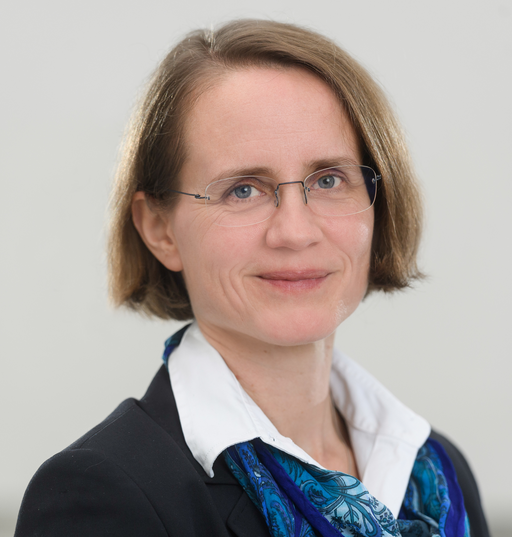
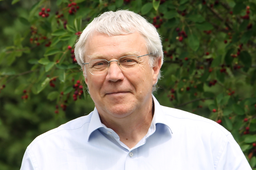
Jan Camphausen is a Professor of Technical Mechanics and Drive Technology at the Georg Agricola University of Applied Sciences (THGA) since 2013. Previously, he worked as a Calculation Engineer at Vestas Nacelles Deutschland GmbH (2009-2012) and as a Research Associate at Ruhr University Bochum (2003-2009), where he completed his doctoral studies on fatigue strength analysis of volumetric components. Education: Mechanical Engineering studies (1997-2003) and doctoral research (2003-2009) at Ruhr University Bochum. His research focuses on Mechanical Engineering and Materials Science , with expertise in technical drawing dynamics, transmission and drive technology, and strength of materials. His work emphasizes industrial applications such as wind turbine drivetrains and multiphase screw pumps, where he investigates fatigue analysis, vibration mitigation, and component optimization. Recent publications highlight his contributions to multibody simulations , corrosion phenomena in mechanical systems , and parametric design for reliability , particularly in offshore and industrial contexts. He is a member of the VDI (Verein Deutscher Ingenieure) and maintains active collaborations in mechanical engineering research.
Oliver G. Ernst is a Professor of Numerical Analysis at Technische Universität Chemnitz . His research focuses on Numerical Analysis , Uncertainty Quantification , and Inverse Problems , with applications in Thermo-Hydro-Mechanical (THM) processes , Electromagnetics , and Stochastic Partial Differential Equations . He is associated with the Numerical Analysis group at TU Chemnitz. Key Research Areas : Efficient numerical methods for PDEs Krylov subspace techniques Stochastic finite element methods Multi-physics modeling Geoscientific applications Recent Publications (2025-2010): THM simulations under uncertainty Neural network PDE solvers Bayesian inversion frameworks Rational Krylov algorithms Deflated restarting strategies Collaborations : TU Bergakademie Freiberg University of Manchester Technical University of Munich University of Maryland University of Geneva Software Development : Contributor to OpenGeoSys platform Developer of FEMALY MATLAB library Academic Recognition : h-index 32, i10-index 66, with over 4423 citations since 2020.
Dr. Thomas Eiter is a Young Investigator in the Collaborative Research Centre CRC 1114 at Freie Universität Berlin and a member of the Partial Differential Equations research group at the Weierstrass Institute of Applied Analysis and Stochastics (WIAS). He holds a PhD from Technical University of Darmstadt (2020), focusing on existence and spatial decay of periodic Navier-Stokes flows in exterior domains. His research emphasizes mathematical analysis of PDEs motivated by fluid mechanics, including existence of solutions, time-periodicity, unbounded domains, and asymptotic behavior. Teaching highlights include courses such as 'Introduction to Mathematical Modeling with PDEs' at Freie Universität Berlin and 'Harmonic Analysis' at University of Kassel. He has organized workshops like the 2025 'Mathematical Analysis of Fluid Flows by Variational Methods' at WIAS. Current projects include the SPP 2410 initiative on energy-variational solutions for hyperbolic conservation laws. His work bridges theoretical PDE analysis with applications in continuum mechanics, with contributions to viscous flow dynamics, Navier-Stokes equations, and material models. He actively participates in academic leadership through seminar organization and conference minisymposia on fluid mechanics and nonlinear analysis.
Prof. Anja Schlömerkemper holds the Chair of Mathematics in the Sciences at the University of Würzburg since 2011 and serves as Vice President responsible for Equal Opportunities, Career Planning, and Sustainability. She earned her PhD in Mathematics from the University of Leipzig (2002) and held postdoctoral positions at institutions including the University of Oxford and the Max Planck Institute for Mathematics in the Sciences. Her research focuses on mathematical analysis, particularly partial differential equations and calculus of variations, with applications to materials science and physics. She investigates mathematical methods to model material behavior at micro and macro scales, including elastic and magnetic materials. Her work bridges theoretical analysis and practical applications in continuum mechanics. She has contributed to fluid-rigid body interactions, magnetoelastic materials, and phase transitions. As Vice President, she promotes gender equality, supports early-career researchers, and advances sustainability across the university's research, teaching, and administration. Education: PhD in Mathematics (Leipzig, 2002) and Diploma in Physics (Göttingen, 1998). Professional Experience includes roles at the Universities of Bonn, Erlangen-Nuremberg, and Stuttgart, as well as the Max Planck Institute. Research interests also encompass homogenization theory, dislocation dynamics, and stochastic discrete systems. She leads interdisciplinary projects, collaborates internationally, and advises on academic policies.
Prof. Dr. Matthias Hieber is a Professor of Applied Analysis at the Fachbereich Mathematik, Technische Universität Darmstadt. His research focuses on Partial Differential Equations, Fluid Dynamics, Evolution Equations, and Harmonic Analysis. He leads the Applied Analysis research group and contributes to interdisciplinary projects involving geophysical fluid models. His editorial roles include Editor-in-Chief of Differential and Integral Equations and involvement with journals like Evolution Equations and Control Theory . Recent teaching activities include courses on Partial Differential Equations and Functional Analysis. He collaborates on DFG-funded projects analyzing nonlinear PDEs in geophysical contexts and liquid crystal dynamics. His work bridges pure mathematics with applications in fluid mechanics and climate modeling. Education: Doctorate in Mathematics (not explicitly stated, inferred from academic rank) Labs/Teams: Applied Analysis Research Group Grants: DFG Research Group on Geophysical Fluid Models, Humboldt Fellowship for Dr. Arnab Roy Research highlights include global well-posedness studies for the primitive equations and stochastic fluid models, analysis of liquid crystal dynamics, and rigorous justification of hydrostatic approximations. His contributions to operator theory and semigroup methods underpin many results in fluid dynamics and PDE analysis.
Prof. Philip Lederer is a Professor of Numerical Analysis at the University of Hamburg’s Department of Mathematics. He holds a position within the Applied Mathematics (AM) group under the Faculty of Mathematics, Computer Science, and Natural Sciences. His research focuses on advanced numerical methods for partial differential equations, particularly finite element methods for fluid dynamics and elasticity problems. His work emphasizes pressure-robust discretizations, divergence-free schemes, and high-order methods for incompressible flows. Key contributions include hybrid discontinuous Galerkin methods, stress-based formulations for Stokes equations, and error estimation techniques. He collaborates on projects like the FWF-funded initiative P35931, exploring computational methods for poroelasticity and biomechanics. Prof. Lederer frequently presents at international conferences such as ENUMATH, ICIAM, and the European Finite Element Fair. His publications span topics from turbulence simulation to multiphase flow dynamics and photonic crystal modeling. Despite no explicitly listed awards, his active research and peer-reviewed contributions highlight his expertise in computational mathematics. He advises on FWF-funded projects and collaborates with institutions like Aalto University, TU Wien, and the Weierstrass Institute. His teaching includes advanced numerical analysis courses, and his lab focuses on developing robust, high-fidelity computational tools for engineering and scientific applications.
Prof. Jan Torgersen is a Professor of Materials Science at the TUM School of Engineering and Design , Technical University of Munich. His research focuses on advanced materials, additive manufacturing, electrochemical systems, and biomedical applications. He leads projects exploring novel material synthesis techniques, corrosion-resistant coatings, and energy storage solutions. Key research areas include: - Design of architected carbon materials for fuel cells and energy storage - Development of bio-inspired materials for biomedical devices - Computational modeling of material failure and microstructural behavior - Solar energy systems and high-concentration photovoltaics - Atomic layer deposition (ALD) for thin film applications Recent work highlights: - Innovations in gas diffusion layer optimization for PEM fuel cells - Biomimetic designs enhancing mass transport in electrochemical systems - Corrosion mitigation strategies for biomedical implants - Breakthroughs in ultra-thin ALD membrane fabrication His interdisciplinary research bridges materials science with engineering applications, addressing challenges in sustainability, energy efficiency, and healthcare technologies.
Professor Siegfried Müller is a full professor at the Institute for Geometry and Practical Mathematics within the Faculty of Mathematics, Computer Science and Natural Sciences at RWTH Aachen University. His research focuses on developing advanced numerical methods for solving complex fluid dynamics problems, with particular expertise in conservation laws, adaptive multiscale techniques, and multiphase flow modeling. He maintains an active research program with numerous publications in leading computational mathematics journals and collaborates extensively with researchers across multiple institutions. Professor Müller's research interests span a wide range of computational mathematics topics including Conservation Laws, Finite Volume Schemes, Discontinuous Galerkin Methods, Adaptive Multiscale Techniques, and specialized applications in Fluid Dynamics. His work demonstrates particular strength in developing numerical methods for two-phase flow systems, transpiration cooling applications, and surface lubrication phenomena. His research bridges theoretical mathematical analysis with practical engineering applications, particularly in aerospace and mechanical engineering contexts. His recent publications reveal a strong focus on advancing numerical techniques for hyperbolic conservation laws, with increasing emphasis on stochastic methods, multilevel approaches, and coupled system modeling. His work spans both theoretical developments in numerical analysis and practical applications in fluid dynamics, with particular attention to multiphase flow systems and cooling technologies. The publications show a clear progression toward more complex, high-dimensional problems and increasingly sophisticated numerical techniques to address computational challenges. Professor Müller has led and participated in numerous research projects funded by German research organizations including DFG Priority Programmes, BMBF projects, and DFG Research Training Groups. His projects have focused on hyperbolic balance laws, adaptive numerical methods, transpiration cooling, and textured surface lubrication. He has organized multiple workshops on multiresolution methods and active drag reduction, demonstrating leadership in his research community. Professor Müller's research group at RWTH Aachen collaborates closely with engineering departments and industry partners to apply advanced numerical methods to practical engineering challenges. His team has developed specialized computational tools for simulating complex fluid phenomena, particularly in aerospace applications where cooling technologies and fluid-structure interactions are critical. The group maintains strong connections with international research communities in computational mathematics and fluid dynamics.
Harald Köstler is an Associate Professor and Head of Research at the Erlangen National High Performance Computing Center (NHR@FAU) within the Department of Computer Science at Friedrich-Alexander-Universität Erlangen-Nürnberg (FAU). He leads the research group on HPC Software Design at the Chair of Computer Science 10 (System Simulation), focusing on software engineering for high-performance computing and data analytics. His research interests include: Software Engineering for HPC Code Generation for Numerical Solvers Performance Engineering on Hybrid Architectures Discontinuous Galerkin and Lattice Boltzmann Methods Multigrid Solvers and Parallel Algorithms Performance Portability across CPUs, GPUs, and FPGAs The recent publications highlight a strong trend in developing efficient, scalable, and portable simulation frameworks for complex physical systems. His work emphasizes code generation, performance optimization, and the integration of classical model-driven and data-driven approaches. Key application areas include computational fluid dynamics, geotechnical engineering, and climate modeling, often leveraging the waLBerla and ExaStencils frameworks. Harald Köstler has no listed scientific awards in the provided text. He advises students in the areas of high-performance computing, numerical methods, and software engineering for scientific applications. His research is supported by collaborations within the FAU HPC ecosystem and likely involves grants related to national high-performance computing initiatives. He is a key contributor to the waLBerla framework, a block-structured, high-performance software for multiphysics simulations, and is involved with the ExaStencils project, which focuses on advanced multigrid solver generation. These frameworks form the core of his research team's efforts in scalable scientific computing.
Dr. Dirk Peschka is a researcher at the Weierstrass Institute for Applied Analysis and Stochastics (WIAS) in Berlin, Germany, where he contributes to the Partial Differential Equations Research Group (FG1) . He is affiliated with the Berlin Mathematics Research Center MATH+ , the Society for Applied Mathematics and Mechanics (GAMM) , and the German Physical Society (DPG) . Research Interests Mathematical modeling of fluid dynamics and materials science using partial differential equations (PDEs). Applications in thin film dynamics, semiconductor devices, and reactive multiphase flows. Development of gradient flow frameworks and thermomechanical models via GENERIC formalism. Analysis of contact line behavior, dewetting processes, and fluid-structure interaction. Numerical methods for semiconductor simulations and geoscience applications. Publications Trends His recent work (2022–2025) emphasizes energy-based modeling of thin films, reactive flows, and semiconductor degradation. Key themes include contact line dynamics, gradient flows, and multiscale analysis of materials and fluid systems. Memberships Weierstrass Institute for Applied Analysis and Stochastics (WIAS) Berlin Mathematics Research Center MATH+ Society for Applied Mathematics and Mechanics (GAMM) German Physical Society (DPG)
Prof. Dr.-Ing. habil. Anja Drews is a Professor for Process Engineering in Life Science Engineering at HTW Berlin - University of Applied Sciences. She specializes in membrane processes , bioprocess engineering , and interfacial catalysis within liquid multiphase systems. Education: Dipl.-Ing. (1997), Dr.-Ing. (2004) in Process Engineering from TU Berlin Academic Career: Research Assistant at TU Berlin (2004-2008), Departmental Lecturer at University of Oxford (2009), Habilitation in Process Engineering (2010) Her research focuses on: Multiphase Reaction Engineering - Pickering emulsions Mechanistic Modeling - Filtration kinetics Membrane Bioreactors - Fouling mitigation Fluid Dynamics - Bubble-induced shear stress Biocatalytic Process Design - Enzymatic membrane reactors Carbon Capture - Direct air capture technologies Recent publications highlight trends in: Interfacial enzyme catalysis within Pickering emulsions Quantitative analysis of multiphase systems Membrane fouling mechanisms in bioreactors Process intensification through colloidal stabilization Temperature effects on nanofiltration performance Integration of reaction and separation processes
Jochen Merker serves as Professor for Analysis and Optimization at the Faculty of Computer Science and Media, Leipzig University of Applied Sciences (HTWK Leipzig). His academic profile demonstrates deep expertise in mathematical analysis, numerical methods, and computational mathematics with applications across various scientific domains. Institution: Leipzig University of Applied Sciences (HTWK Leipzig) Faculty: Computer Science and Media Position: Professor for Analysis and Optimization Contact: Available by appointment via email Professor Merker's research spans multiple mathematical disciplines with particular emphasis on partial differential equations, numerical analysis, and mathematical modeling. His work bridges theoretical mathematics with practical applications in fluid mechanics, epidemiology, and machine learning. He has made significant contributions to the understanding of doubly nonlinear evolution equations, positivity preservation in numerical methods, and rate-induced tipping phenomena. His research demonstrates how advanced mathematical techniques can solve complex problems in physical systems and data science. Analysis of his publication trends reveals a consistent focus on mathematical rigor combined with practical applicability. His recent work shows increasing integration of mathematical theory with computational approaches, particularly in digital learning environments and e-assessment systems for STEM education. The interdisciplinary nature of his publications demonstrates how mathematical analysis serves as a foundation for solving problems across physics, engineering, epidemiology, and computer science. Primary research areas: Mathematical Analysis, Numerical Methods, Partial Differential Equations Application domains: Fluid Mechanics, Epidemiology, Machine Learning Methodological focus: Positivity preservation, Maximum principles, Numerical stability Educational contributions: Digital teaching in STEM fields, E-assessment systems Professor Merker actively contributes to the academic community through his research publications and educational initiatives. His work on digital teaching methods for STEM disciplines reflects his commitment to modernizing mathematical education. While specific grant information isn't available in the provided materials, his extensive publication record suggests sustained research activity across multiple projects. His laboratory or research team likely focuses on computational mathematics and numerical analysis, though specific details aren't provided in the source material.
Dr. Axel Sielaff is a Researcher at the Institute for Technical Thermodynamics at Technische Universität Darmstadt since 2008. His work focuses on boiling and evaporation phenomena, particularly in microgravity environments and complex fluids. He has conducted research visits at the Indian Institute of Technology Madras and the Royal Melbourne Institute of Technology. Education: He holds a Diplom in Mechanical Engineering (Energy and Process Engineering) from Leibniz University Hannover. He also completed visiting studies at the Chinese Academy of Sciences (Beijing), Zhuhai MTU Maintenance, and Brunel University, West London. Research Interests: His group investigates two-phase heat transfer, nucleate boiling dynamics, and the effects of microgravity on evaporation. Projects include multiscale experiments on complex fluids, numerical simulations of bubble growth, and applications in spacecraft thermal management via the RUBI experiment on the International Space Station. Key areas include microlayer formation, electric field effects on bubble detachment, and residue formation of fuels/AdBlue under high-velocity airflow conditions. Technical Contributions: Develops experimental setups for sub-millimeter scale analysis and high-precision infrared thermography. Collaborates internationally on projects such as the Multiscale Boiling Investigation (ISS-based) and Deposit Formation Studies. Labs/Teams: Active in the Boiling and Evaporation research group at TU Darmstadt, contributing to both fundamental and applied thermal engineering research.
Prof. Filip Sadlo is a Full Professor of Computer Science at Heidelberg University's Interdisciplinary Center for Scientific Computing (IWR), leading the Visual Computing Group. He serves as Dean of Studies for the Department of Informatics since 2022 and holds roles in multiple academic organizations including VGTC Executive Committee (2022–2025) and Associate Director of IWR (2022–present). His research focuses on visualization of complex scientific data, flow analysis, vector field topology, and high-performance computing. Education: PhD in Computational Visualization from ETH Zurich (2010), with prior roles at European Forest Institute and University of Freiburg. Research Interests: Specializes in visualization techniques for fluid dynamics, vector fields, and uncertainty quantification. Key areas include Lagrangian coherent structures, advection-diffusion processes, and interactive visualization systems. His work bridges computational methods with real-world applications in engineering and environmental science. Publications: Over 80 peer-reviewed papers since 2004, emphasizing visualization algorithms for dynamic systems, topological data analysis, and scientific computing. Recent work explores metacognition in data visualization and discontinuous vector field analysis. Grants & Projects: Principal investigator in DFG-funded projects on visualization in meteorology and MRI-based diagnostics, as well as initiatives in data integration and simulation science (e.g., SFB-TRR 191, HIDSS4Health). Labs & Teams: Heads the Visual Computing Group, fostering interdisciplinary research in computational visualization and scientific computing.
Holger Steeb is a Professor and Institute Director at the Institute of Applied Mechanics (MIB) at the University of Stuttgart, where he also holds the Chair of Continuum Mechanics. His academic journey includes a Diplom in Civil Engineering (1990–1995) and a Dr.-Ing. from the University of Stuttgart (2002). He has held positions at Saarland University, the University of Twente, and Ruhr-University Bochum. His research focuses on continuum mechanics, porous media, fluid dynamics, and fracture mechanics, leveraging computational methods and advanced imaging techniques like X-ray tomography. Steeb’s work integrates experimental and numerical approaches to study multiphase flows, geomechanics, and material behavior. He leads interdisciplinary projects involving collaborators from engineering, geology, and environmental science. Key methodologies include pore-scale modeling, additive manufacturing for micromodels, and fracture mechanics simulations. His contributions span energy storage (CO2 sequestration), glaciology, and material characterization of concretes and asphalt. Recent research emphasizes kinetic interface-sensitive tracers for reservoir characterization and the mechanical behavior of shape-memory polymers. His lab employs high-resolution imaging and machine learning for fracture detection and fluid displacement analysis. Steeb’s publications reflect a balance between theoretical frameworks and applied engineering solutions. Professional roles include leadership in the GeomInt initiative studying geomechanical integrity of host rocks. His work bridges micro-scale phenomena with large-scale environmental and infrastructural challenges, influencing both academic and industrial applications.