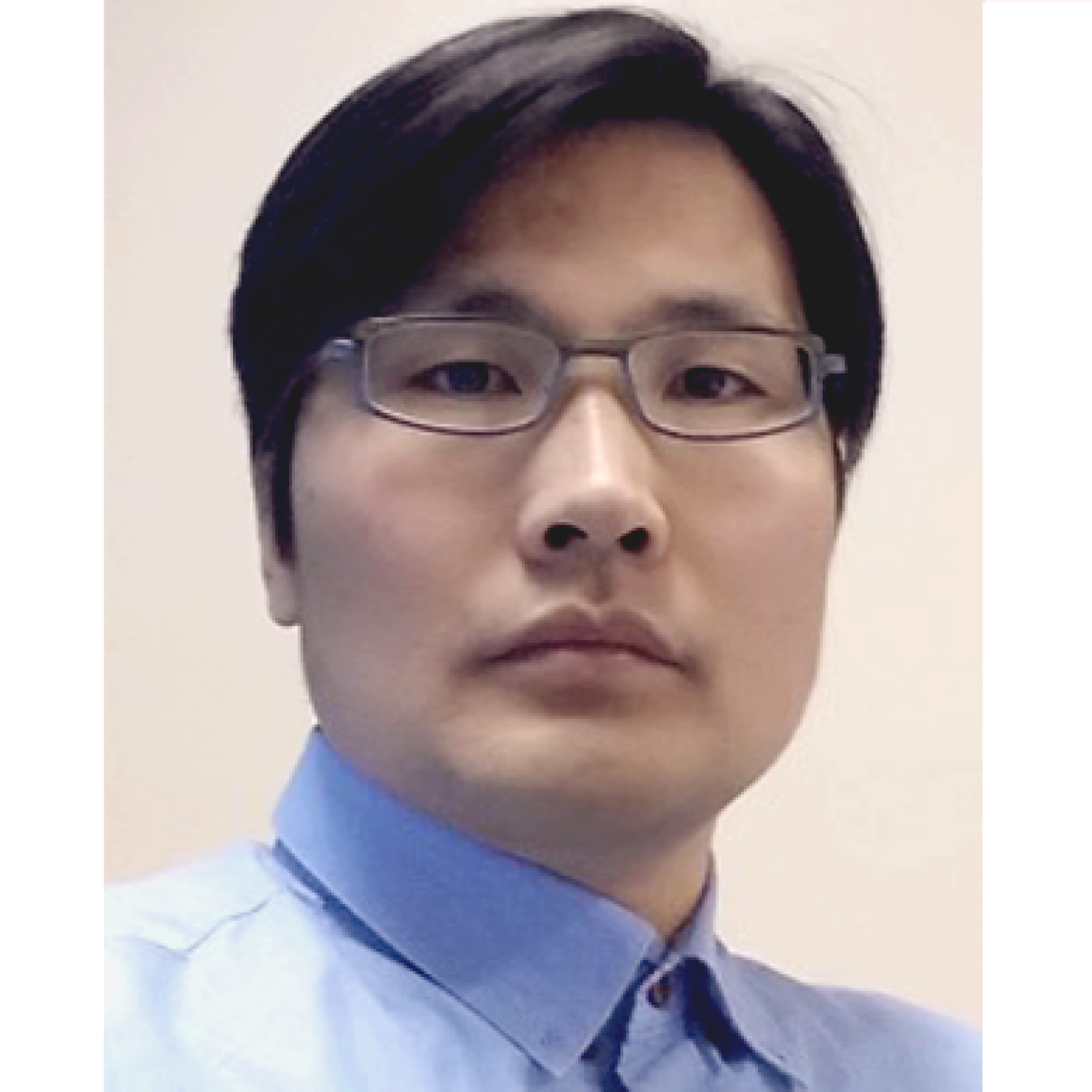
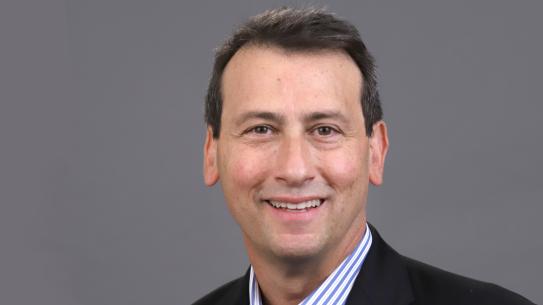
Rob Maaskant is a Professor at Chalmers University of Technology in the Department of Communication, Antennas and Optical Networks . His research focuses on advanced antenna systems, particularly in mm-Wave and massive MIMO technologies, with significant contributions to full-duplex communication, reconfigurable intelligent surfaces (RIS), and hybrid over-the-air (OTA) testing environments. Key Research Themes : Antenna array optimization, self-interference mitigation, contactless IC integration, and beamforming for satellite and terrestrial communication systems. Recent Publications (2025-2023) highlight innovations in neural network-driven antenna synthesis, back-scattering RIS characterization, and wideband quadraxial feed designs, emphasizing practical implementations in mm-Wave and 5G/6G systems. Collaborative Projects include hybrid test chamber development with colleagues like Oleg Iupikov and Pavlo Krasov, and co-design of power amplifier-integrated arrays with Marianna Ivashina.
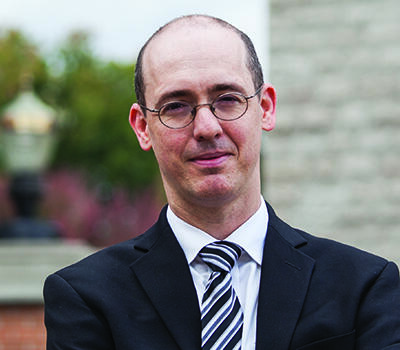
Cyrill Krähenbühl is a Postdoctoral Research Associate and Fellow at Princeton University, focusing on network security and path-aware networking. His research bridges theoretical innovation with practical applications in secure communication systems and infrastructure design. Education : Ph.D. and Master's degree in Computer Science from ETH Zürich. His work on public key infrastructures (PKI) introduces trust agility, enabling customizable security preferences while maintaining system availability. In path-aware networking (PAN), he advances the SCION architecture to support policy-driven intra-domain routing. His research intersects network efficiency, security, and standardization. At Princeton, he collaborates with academic and industry partners to analyze security-critical systems and develop real-world recommendations. He actively contributes to standardization efforts, co-authoring an IETF guidance RFC on path properties in path-aware networks. Scientific Awards : Best Paper and Best Presentation Awards at CoNEXT.
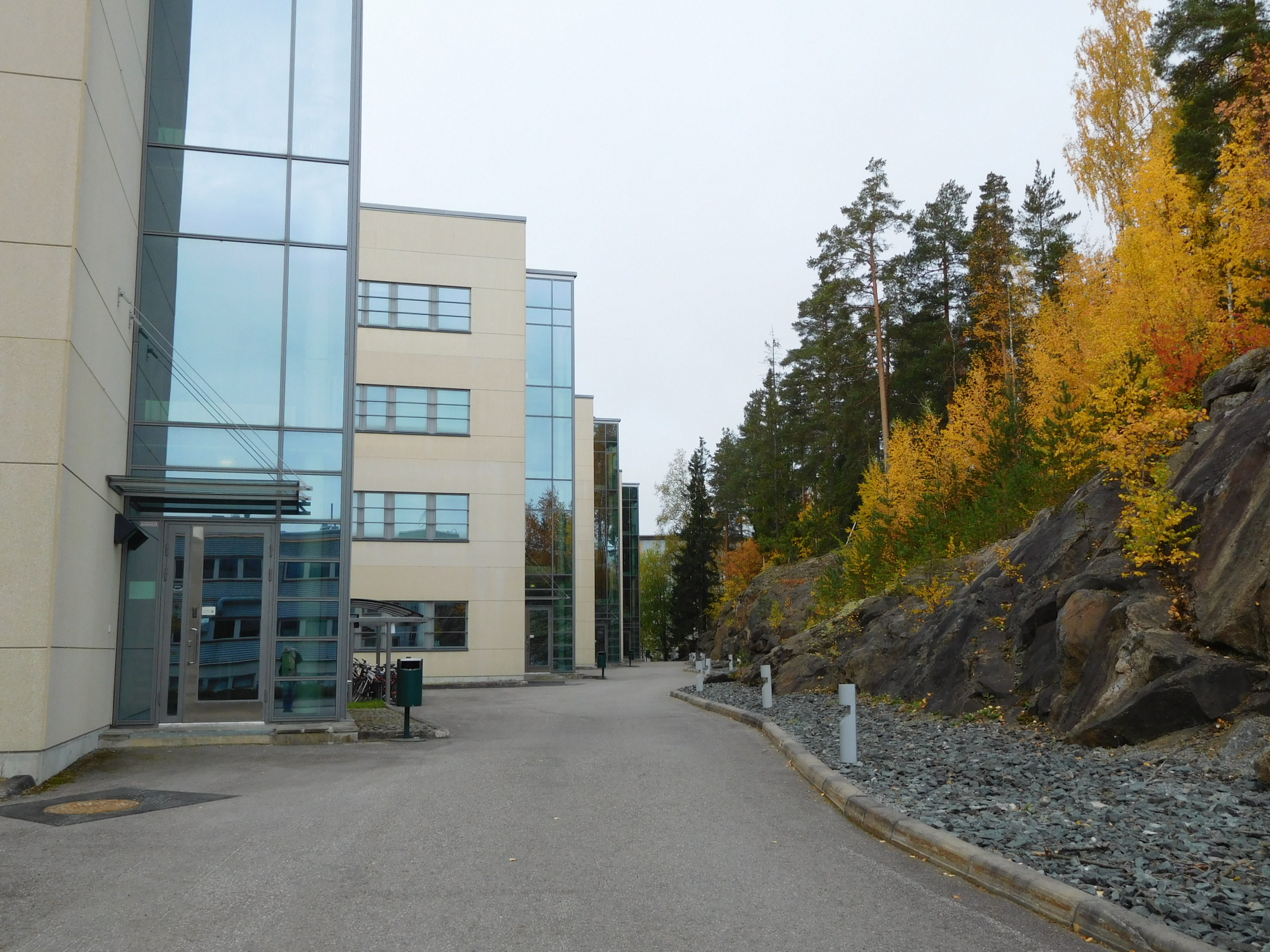
Ayush Bharti is an Academy Research Fellow (Research Fellow) in the Department of Computer Science at Aalto University, Finland. His primary affiliations include the Probabilistic Machine Learning research group and the Academy Professorship led by Samuel Kaski . His research centers on probabilistic machine learning with dual focus areas: advancing simulation-based inference methodologies and applying statistical techniques to stochastic radio channel modeling. Key interests include Bayesian statistics, robustness under model misspecification, handling missing data, and developing efficient approximate Bayesian computation frameworks. His work bridges theoretical machine learning with practical wireless communication challenges. Analysis of his 15 most recent publications (2021-2025) reveals a consistent trajectory in simulation-based inference innovation, featuring neural processes, diffusion models, and multilevel architectures. Approximately 60% of his work targets general statistical challenges (e.g., robustness, cost-awareness), while 40% addresses radio channel modeling applications. Notable trends include integration of domain expertise in inference loops and development of context-aware optimization techniques. No information is available regarding student supervision or research grants. Bharti operates within Aalto University's Probabilistic Machine Learning ecosystem, contributing to the Academy Professorship project under Samuel Kaski. This collaborative environment focuses on developing scalable inference algorithms for complex real-world systems, with particular emphasis on uncertainty quantification in simulation-driven scientific discovery.
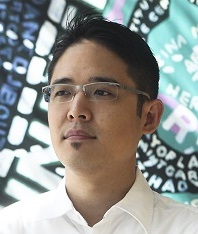
Sangtae Ha is an Associate Professor in the Computer Science Department at the University of Colorado Boulder. His research focuses on building practical computer systems spanning multiple disciplines, including machine learning/deep learning systems, networks and distributed systems, internet protocols, wireless networks, video streaming, storage systems, and security. He specializes in creating efficient and scalable solutions for real-world computing challenges. His work emphasizes interdisciplinary approaches, bridging theoretical computer science with practical system design. Key areas of exploration include optimizing neural network execution for edge computing, developing adaptive streaming protocols, and enhancing wireless network performance through novel signal processing and spectrum management techniques. Recent projects include frameworks for semantic offloading in neural networks and reinforcement learning-based cloud scheduling. No scientific awards or notable grants are explicitly mentioned in the provided materials. While no formal advisees are listed, his research team likely involves graduate students and collaborators. No dedicated labs or teams are named, though his work aligns with broader university initiatives in computer systems and networking.
Stephen Ramsey, an Associate Professor at Oregon State University, holds dual appointments in the School of Electrical Engineering and Computer Science (College of Engineering) and the Department of Biomedical Sciences (Carlson College of Veterinary Medicine). With a PhD in Physics from the University of Maryland, his postdoctoral training in computational genomics at the University of Washington, and professional experience at the Institute for Systems Biology and Center for Infectious Disease Research, Ramsey bridges computational methods with biomedical applications. Education : Ph.D., Physics, University of Maryland; M.S., Physics, University of Maryland; Sc.B., Mathematical Physics, Brown University Ramsey specializes in computational systems biology , focusing on bioinformatics , biomedical knowledge graphs , and precision medicine . His research integrates machine learning , gene regulatory network modeling , and multi-omics data analysis to address challenges in rare disease diagnostics , drug monitoring , and inflammatory disease mechanisms . Current work includes AI-driven biomedical translation and electrochemical biosensor development for non-invasive diagnostics . Recent publications highlight knowledge graph applications in translational biomedicine , causal network inference in clinical-environmental data integration , and cross-species cancer transcriptomics . His team develops tools like RTX-KG2 and PloverDB to standardize biomedical data sharing and semantic reasoning . Scientific Awards : 2019 Zoetis Award (Carlson College of Veterinary Medicine) 2016 NSF CAREER Award 2016 PhRMA New Investigator Award 2010 NIH K25 Mentored Quantitative Research Award Ramsey advises in computational biology courses (CS 446/546) and contributes to biomedical AI through projects like mediKanren for rare disease diagnostics . His NSF-funded research explores gene expression noise and regulatory network dynamics , while NIH and PhRMA grants support his translational medicine initiatives. He leads the Ramsey Laboratory , which develops graph-based reasoning tools for biomedical data translation and multi-omics integration . The lab's work spans comparative oncology models, electrochemical biosensors , and knowledge graph infrastructure for clinical decision support .
Gert Frølund Pedersen is a Professor at the Department of Electronic Systems , Aalborg University , within the Technical Faculty of IT and Design . His research focuses on antennas, propagation, and millimeter-wave systems. He leads projects like DRONES (30 million DKK from Innovationsfonden) for drone-based electromagnetic signature analysis and EcoSurf6G for energy-efficient reconfigurable surfaces in 6G networks. With over 758 research outputs and 21 PhD students supervised, he contributes extensively to wireless communication advancements. Antenna Engineering Millimeter-Wave Systems Reconfigurable Intelligent Surfaces Deep Learning in Antenna Design His recent work emphasizes millimeter-wave IoT applications , UWB propagation channels , and 5G/6G antenna arrays . Publications highlight innovations in transmitarray antennas , liquid crystal polarization control , and metasurface design using AI. His research spans from fundamental electromagnetic safety to cutting-edge wireless infrastructure. Notable awards include Best Reading Paper of the Issue (IEEE Transactions on Microwave Theory and Techniques, 2020), ESI Highly Cited Paper (2019), and Ridder af Dannebrog (2021). He frequently engages with media to address public concerns about mobilstråling (mobile radiation) and its safety.
Amir Masoud Molaei is a Research Fellow at the School of Electronics, Electrical Engineering and Computer Science, Queen's University Belfast. His research focuses on advanced radar imaging techniques, antenna engineering, and signal processing, with particular emphasis on near-field localization, MIMO systems, and computational imaging using metasurface antennas. He has collaborated extensively on projects involving millimeter-wave systems, sparse array configurations, and security applications. His work integrates theoretical models like Kirchhoff migration with experimental validation, emphasizing hardware-efficient designs and algorithmic improvements. Key themes include overcoming challenges in mutual coupling effects, optimizing dynamic antenna configurations, and enhancing 3D imaging resolution. He has explored applications ranging from medical imaging to security systems, with a strong focus on real-time processing and experimental validation. Notable contributions include pioneering studies on reconfigurable metasurface antennas for radar and computational imaging, as well as algorithmic advancements in direction-of-arrival estimation and mixed-field source localization. His research bridges electromagnetic theory, signal processing, and practical hardware implementations, often addressing trade-offs between computational efficiency and accuracy. Molaei has published over 40 papers since 2021, with a focus on IEEE journals and conferences. His work frequently addresses challenges in signal reconstruction, sparse sampling techniques, and the integration of machine learning with traditional signal processing methodologies.
Dr. Abolfazl Zaraki is a Senior Lecturer in AI and Robotics at the University of Hertfordshire's Department of Computer Science, part of the School of Physics, Engineering & Computer Science. He leads the Robotics Research Group and previously held roles at Cardiff University's School of Engineering and the IROHMS Research Centre. His academic journey includes a Master's in Mechatronics from University Technology Malaysia (2010) and a PhD in Automatic Robotic and Bioengineering from the University of Pisa (2014). He has held Research Fellow positions in Italy and the UK until 2019. Dr. Zaraki's research focuses on AI-driven autonomous systems, social robotics, and assistive technologies. Key projects include the EASEL, BabyRobot, and JAMES EU initiatives, alongside the Innovate UK-funded InSight project. His work emphasizes Human-Robot Interaction (HRI), trusted autonomy, and applications in healthcare and industrial contexts. Notable contributions include the development of the Kaspar humanoid robot for autism therapy and advancements in reinforcement learning for robotic control. His recent publications (2021–2025) explore agentic AI, memory-driven systems, and personalized LLMs for HRI, alongside technical advancements in robotic control, communication systems, and bio-inspired robotics. His research bridges theoretical AI innovation with practical applications in healthcare, education, and industrial automation. Zaraki has collaborated internationally across institutions and industry partners, contributing to 35+ research outputs. His work aligns with global trends in ethical AI, explainable systems, and human-centric robotics design.
Philip Brighten Godfrey is a Professor in the Department of Computer Science at the University of Illinois at Urbana-Champaign (UIUC) and Technical Director at VMware (formerly Broadcom). He co-founded network verification startup Veriflow, which was acquired in 2019. His research focuses on networked systems, blending theoretical and practical approaches to low-latency networking, software-defined architectures, microservices communication, and machine learning for network optimization. Education: Ph.D. in Computer Science (UC Berkeley, 2009), B.S. in Computer Science (Carnegie Mellon, 2002) His work spans data center design, network verification (e.g., VeriFlow), congestion control (PCC Vivace), and innovative projects like cISP (Speed-of-Light Internet). Recent publications address microservice tracing (TraceWeaver), fault localization (Flock), and XR device offloading (XRgo). Notable awards include the ACM SIGCOMM Rising Star Award, NSF CAREER Award, Sloan Research Fellowship, and multiple best paper recognitions. He has chaired SIGCOMM and HotNets, and his teaching excellence in courses like CS 538 Advanced Computer Networks has been repeatedly recognized. Scientific Honors ACM SIGCOMM Rising Star Award NSF CAREER Award (2012) Sloan Research Fellowship (2014) Best Paper Awards (SIGCOMM, HotSDN, CoNEXT) IEEE ComSoc Data Storage Best Paper Engineering Council Outstanding Advisor Award (2015) Godfrey leads research in the Coordinated Science Laboratory (CSL) and contributes to the LDOS NSF Expeditions project. His group advises Ph.D. students on topics ranging from network verification to XR systems optimization, with alumni now at Meta, Google, and academic institutions like ETH Zurich.
Elena Simona Lohan is a Professor at Tampere University's Faculty of Information Technology and Communication Sciences , leading the Signal Processing for Wireless Positioning research group. She also holds a Visiting Professor position at Universitat Autonoma de Barcelona's SPCOMNAV group. Education : MSc in Electrical Engineering (Politehnica University of Bucharest, 1997), DEA in Econometrics (École Polytechnique, Paris, 1998), PhD in Telecommunications (Tampere University of Technology, 2003) Research Focus : GNSS algorithms, interference detection, wearable computing, and 5G positioning convergence. Her work spans signal processing for GNSS (Galileo, GPS, GLONASS, BeiDou), indoor/outdoor localization, and IoT communication. She coordinates the H2020 MSCA European Joint Doctorate A-WEAR and serves as Associate Editor for the Journal of Navigation and IET Radar, Sonar & Navigation . Notable projects include GRAMMAR (Galileo receivers), UJI IndoorLoc Platform , and SP4TE collaborations. She has authored over 250 publications and 6 patents.
Prof. Dirk Heberling is a Universitätsprofessor at RWTH Aachen University, leading the Institute for High Frequency Technology. His research focuses on advanced antenna systems, radar technology, and electromagnetic field exposure assessment in 5G/6G networks. He specializes in high-frequency components, including leaky-wave antennas, reconfigurable intelligent surfaces, and robot-based antenna measurement systems. His work addresses challenges in antenna design, signal processing, and environmental compliance for next-generation communication infrastructure. Key research areas include: Development of wideband antennas for IoT and smart building applications Numerical analysis of near-field antenna measurements and phase recovery techniques Assessment of radio frequency exposure from massive MIMO base stations using digital twins Integration of radar systems with automotive technologies for self-localization and object detection Optimization of antenna arrays to mitigate grating lobes and phase synchronization issues His lab operates a state-of-the-art robot-based mm-wave test system capable of spherical near-field measurements and real-time auralization of aircraft noise. This infrastructure supports both fundamental research and industry collaborations in telecommunications, automotive radar, and environmental monitoring. Current projects emphasize: Exposure modeling for 6G networks considering increased base station utilization Generative adversarial networks for radar data synthesis Calibration techniques for polarimetric radar systems
Nitinder Mohan is a computer science researcher specializing in distributed systems and edge computing, currently affiliated with Delft University of Technology. Previously, he held positions at Technical University of Munich and completed his PhD at the University of Helsinki. His research focuses on optimizing edge computing platforms, cloud-edge architectures, and network protocols for next-generation distributed systems. Recent work investigates performance aspects of satellite networks (Starlink), virtualization orchestration, and multipath transport for aerial vehicles.
Jean-Christophe Cousin is a Lecturer at Télécom Paris, affiliated with the Radio-Frequency Microwaves and Millimeter Waves (RFM²) team and the Information Processing and Communication Laboratory (LTCI) within the Communications and Electronics (Comelec) department. His research focuses on wireless communication technologies, particularly microwaves, radar systems, and antenna arrays. His work addresses challenges in 6G wireless systems UWB localization Millimeter-wave propagation Antenna design and has contributed to understanding reflection coefficients, material permittivity, and channel delay spread in high-frequency environments. Publications highlight advancements in Indoor localization accuracy Signal propagation modeling Material characterization for 6G Antenna array optimization with applications in sensor networks and radar systems.
Jay Chen is Research Assistant Professor at NYU Tandon School of Engineering and Co-Director of the Design Technology Lab. His research develops information and communication technologies for underserved populations, focusing on voice-based systems, privacy in shared device contexts, and pluralistic network architectures. Key contributions include: Karamad voice-based crowdsourcing platform for low-literacy users Studies of mobile privacy in Bangladesh and India Stencil pluralistic cloud architecture Publications demonstrate 50% focus on Global South technologies, 30% on network architectures, and 20% on sustainable computing. Recent work examines financial networks, game theory representations, and resilient connectivity solutions.
Theodore (Ted) S. Rappaport is the David Lee/Ernst Weber Professor of Electrical Engineering at NYU Tandon School of Engineering, a Professor of Computer Science at NYU Courant Institute, and a Professor of Radiology at NYU School of Medicine. He is the Founding Director of NYU WIRELESS, a pioneering research center integrating engineering, computer science, and medicine. Education: Rappaport earned BS, MS, and Ph.D. degrees in Electrical Engineering from Purdue University. He holds honorary titles such as Distinguished Engineering Alumnus (Purdue), Neal Armstrong Distinguished Visiting Professor (Purdue), and Hagler Fellow (Texas A&M). Research Interests: His work focuses on millimeter-wave and terahertz communications, 5G/6G networks, antenna design, and channel modeling. He pioneered site-specific RF channel modeling for wireless networks and led the adoption of millimeter-wave spectrum for 5G. Research Contributions: NYU WIRELESS developed NYUSIM, an open-source channel simulator widely used in industry. His teams produced over 100 patents and 24 books, including bestsellers on wireless systems. Recent work emphasizes 6G spatial statistical models and energy-efficient network design. Awards: Recognized as a top-cited researcher globally, he was inducted into the IEEE Vehicular Technology Society Hall of Fame and received the RF Industry Icon Award. Labs/Teams: NYU WIRELESS leads 6G research, with labs exploring terahertz frequencies and AI-driven interference cancellation. Collaborations include NSF-funded projects on sub-THz industrial networks. Grants/Industry Impact: Research funded by NSF, DoD, and telecom firms. Founded Wireless Valley (acquired by Motorola) and TSR Technologies (acquired by CommScope), pioneering commercial wireless tools.