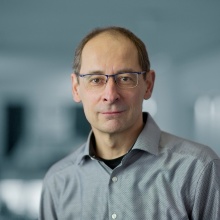
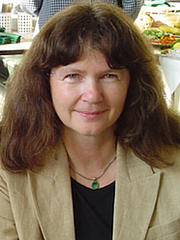
Sebastian Peitz is Professor of Safe Autonomous Systems at TU Dortmund University's Department of Computer Science since October 2024. His educational background includes a PhD in Mathematics from Paderborn University (2017), an MSc in Mechanical Engineering from RWTH Aachen (2013), and a BSc in Mechanical Engineering from RWTH Aachen (2011). His research focuses on physics-informed machine learning, data-driven modeling and control of complex systems, and multi-criteria optimization. These areas integrate computational mathematics with engineering applications to develop robust autonomous systems. Prof. Peitz's recent publications demonstrate strong emphasis on Koopman operator theory, reinforcement learning for PDE control, multi-objective optimization, and surrogate modeling. The computational methods span fluid dynamics, quantum systems, and mechanical design, frequently utilizing equivariant architectures and kernel techniques.
Dr. Daniel Ruffinelli is a Researcher at the Data and Web Science Group (DWS) at the University of Mannheim, affiliated with the School of Business Informatics and Mathematics. His research focuses on Natural Language Processing (NLP), particularly using interpretability methods to study how Large Language Models (LLMs) represent natural language internally. He also works on representation learning and machine learning, with prior PhD research on knowledge graph embeddings under Prof. Rainer Gemulla. Teaching responsibilities include advanced courses on Text Analytics, Information Retrieval, and Deep Learning, alongside tutorials for Machine Learning, Data Mining, and Large Scale Data Management courses. He has advised numerous MSc and BSc theses since 2018. Key research highlights include contributions to knowledge graph embeddings (e.g., pre-training strategies and evaluation methodologies) and the development of KGxBoard, an explainable leaderboard system for knowledge graph completion models. Notable recognition includes the Outstanding Paper Award at RepL4NLP@ACL 2019. His work bridges interpretability techniques with foundational AI research, emphasizing reproducibility through tools like LibKGE, a knowledge graph embedding library.
Carsten W. Scherer is a Professor and Head of the Institute of Mathematical Methods in Engineering, Numerical Analysis and Geometric Modeling at the University of Stuttgart, Faculty of Engineering. He holds the Chair of Mathematical Systems Theory and serves as Erasmus Coordinator for the Department of Mathematics. His research focuses on robust control, multiobjective control, linear matrix inequalities (LMIs), and semi-definite programming, with applications in mechatronics and flight control. He has authored numerous publications and contributed to advanced control theory methodologies. His research interests include exploring LMIs in control systems analysis, robust optimization techniques, and nonlinear control strategies. He has developed frameworks for model predictive control (MPC) and gain-scheduled control, leveraging integral quadratic constraints (IQCs) for system analysis and synthesis. Dr. Scherer’s work bridges theoretical advancements with practical applications, emphasizing convex optimization and its role in solving complex control problems. His contributions span both foundational theory and real-world implementations, particularly in aerospace and mechatronic systems. His publications reflect a sustained focus on robustness, optimization, and control system design, with recent work addressing data-driven methods, trajectory generation, and algorithmic synthesis. He leads research initiatives in mathematical systems theory and collaborates on interdisciplinary projects integrating control engineering with optimization and machine learning.
Prof. Clemens Thielen holds the Professorship for Optimization and Sustainable Decision Making at TUM Campus Straubing, Technical University of Munich. He previously served as Junior Professor at TU Kaiserslautern (2013–2019) and was appointed to the Professorship for Complex Networks at TUM Campus Straubing in 2019. His research focuses on discrete mathematical optimization, including network optimization, approximation algorithms for multiobjective problems, and practical applications like healthcare scheduling and infrastructure planning. He earned his PhD in Mathematical Optimization from TU Kaiserslautern in 2010, with studies at the University of Cambridge. Notable awards include the 2024 EURO Prize for OR for the Common Good and a 2018 teaching nomination. His work bridges theoretical advancements and real-world applications such as flood mitigation, traffic emission reduction, and crane logistics optimization. Education: PhD in Mathematical Optimization, Technical University of Kaiserslautern (2010) Studies in Mathematics at Technical University of Kaiserslautern and University of Cambridge Research Interests: Network optimization and approximation algorithms Multiobjective decision-making and sustainable resource allocation Applications in healthcare, transportation, and infrastructure Awards: EURO Prize for OR for the Common Good (2024) Nomination for Teaching Award of Rhineland-Palatinate (2018) Labs/Teams: Active in the Optimization and Sustainable Decision Making research group at TUM Campus Straubing, collaborating on projects such as municipal flood mitigation and healthcare scheduling.
Anita Schöbel is a Professor in the Department of Mathematics at the Rheinland-Pfälzische Technische Universität Kaiserslautern-Landau (RPTU) and serves as the Director of the Fraunhofer Institute for Industrial and Financial Mathematics (ITWM) in Kaiserslautern. She is a leading figure in operations research and mathematical optimization, with a strong focus on public transportation systems, robust optimization, and multi-objective decision-making. Her dual roles bridge academic research and industrial application, particularly in logistics, healthcare, and energy systems. Her research interests include: Robust and integer optimization Public transport planning (timetabling, line planning, delay management) Facility and hub location problems Multi-objective optimization under uncertainty Algorithmic methods in transportation networks The analysis of her recent publications reveals a consistent focus on integrating robustness into transportation planning, using machine learning to enhance schedule reliability, and advancing theoretical frameworks for multi-objective optimization. Her work often combines mathematical rigor with real-world applicability, especially in public transit and pandemic modeling. She has contributed significantly to the development of optimization models for public health during the COVID-19 crisis. Her scientific awards include leadership roles in major professional societies: President of the European Association of Operational Research Societies (EURO), 2022–2023 President of the German Society for Operations Research (GOR), 2019–2020 Anita Schöbel has been actively involved in grant-funded research and collaborative projects, including the DFG Research Group FOR2083 on integrated transportation planning, the EU project EASIER, and the BMBF project SynphOnie. She is currently co-spokesperson of the DFG Graduate College 2982 on 'Mathematics of Interdisciplinary Multiobjective Optimization'. She also serves on advisory boards such as the steering committee of HLRS and the Fraunhofer Strategic Research Field on Next Generation Computing. She leads the research group 'Optimization' at RPTU and is associated with initiatives like LinTim (software for transport planning), QuanTUK (quantum computing applications), and GRK 2982. Her leadership extends to academic governance, including membership in the RPTU University Council and the Departmental Council of Mathematics.
Biswarup Mondal is a Research Fellow at the Max Planck Institute for Dynamics of Complex Technical Systems , affiliated with the Department of Process Synthesis and Process Dynamics. Located in Room No. 112, University Building 07, his research focuses on Energy system modeling and management Process intensification Multiobjective optimization Design and operation of carbon neutral processes Decarbonisation strategy development Economic evaluation .
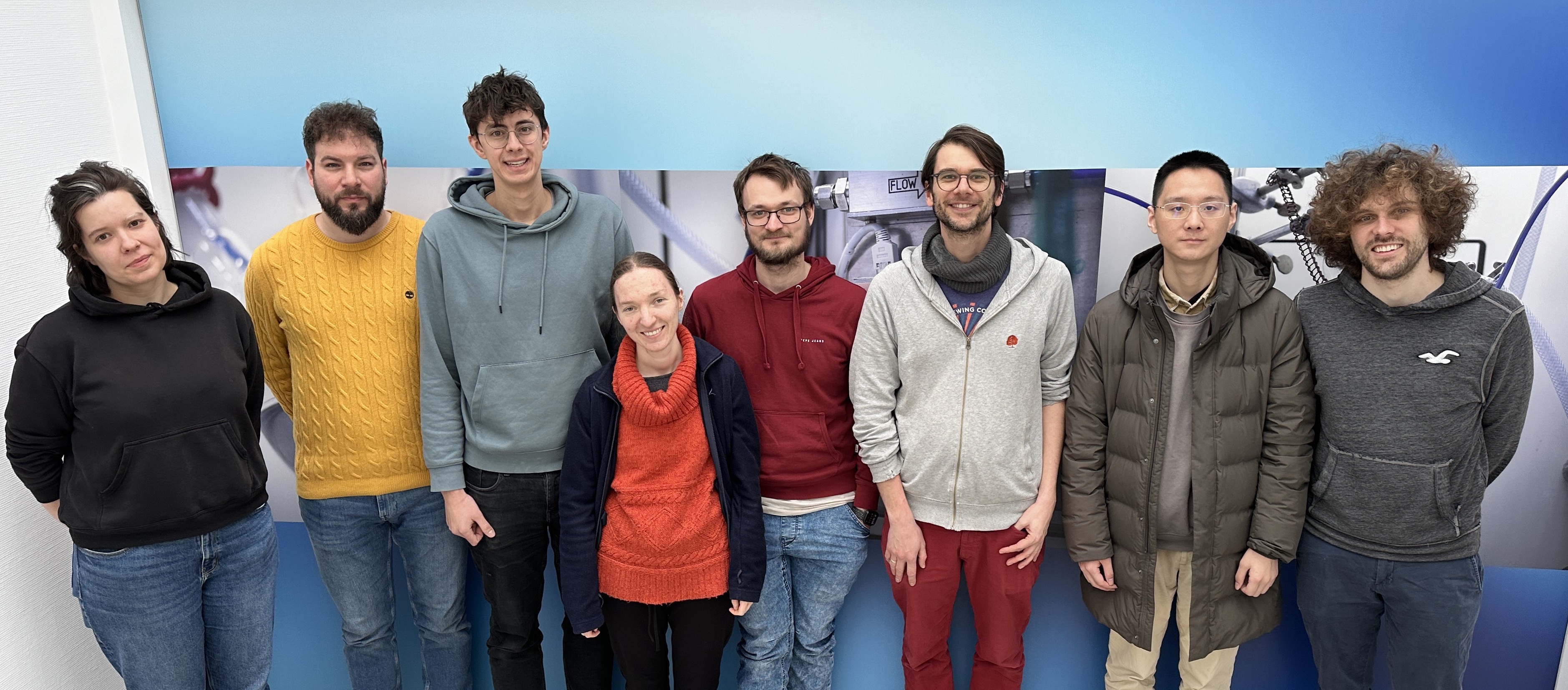
Prof. Johannes T. Margraf is a Professor and Chair of Physical Chemistry V: Theory and Machine Learning at the University of Bayreuth. His research group specializes in applying machine learning to chemical phenomena, including predicting properties of molecules and materials, understanding complex reaction networks, and developing data-efficient models that incorporate physical principles like size-extensivity and accurate descriptions of long-range interactions. The group also focuses on electronic structure theory, particularly bridging wavefunction and density functional methods. Margraf's research interests center on machine learning applications in chemistry and materials science, including non-local machine learning-based density functional theory, chemical reaction network analysis, and the development of physics-informed ML models. His work aims to achieve accurate chemical simulations at unprecedented scales for materials discovery and optimization. Analysis of recent publications shows a strong focus on machine learning potentials for materials simulation, density functional theory advancements, catalytic reaction networks, and computational spectroscopy. His research consistently integrates machine learning with fundamental physics principles to solve challenging problems in computational chemistry and materials science. Margraf leads a research team including postdoctoral researchers (Dr. Maciej Baradyn, Dr. Hyunwook Jung, Dr. Karlo Sovi´c) and PhD students (Nils Gönnheimer, David Greten, Konstantin Jakob, Sachin Rangaswamy, Robert Strothmann, Martin Vondrák). The group actively organizes scientific workshops and collaborates with institutions like the Fritz Haber Institute in Berlin.
Boris Mordukhovich serves as Distinguished University Professor of Mathematics at Wayne State University, where he leads groundbreaking research in variational analysis and optimization with significant theoretical and applied impact across engineering and medical fields. Education: Ph.D. in Applied Mathematics, Belarus State University, Minsk, Belarus Honorary Doctorates: National Sun Yat-sen University (Taiwan), Alicante University (Spain), University of Messina, Babes-Bolyai University (Romania), Vietnam Academy of Science and Technology, Vasile Goldis University (Romania) His research centers on variational analysis and optimization theory , specializing in generalized differential properties, convex/nonconvex optimization frameworks, and real-world applications including proton therapy treatment planning and energy exchange modeling. His theoretical contributions form foundational tools for modern optimization algorithms. Recent 2025 publications reveal continued innovation in differential properties of optimal value functions and multiobjective optimization for medical physics, demonstrating sustained leadership in bridging abstract mathematics with practical engineering solutions. Scientific Awards: Board of Governors Faculty Recognition Award, Wayne State University (2025) Inaugural ScholarGPS Highly Ranked Scholar in Mathematical Optimization (2024) Principal Lecturer, International School on Variational Analysis, China (2024) SIAM Fellow (2011), AMS Fellow (2012) Corresponding Member, Accademia Peloritana dei Pericolanti (2016) Foreign Member, National Academy of Sciences of Ukraine (2021) Multiple honorary doctorates from international institutions Secured major research funding including National Science Foundation grant DMS-22045519 (2022-2026) as Principal Investigator for "Variational Analysis: Theory, Algorithms and Applications" and Australian Research Council Discovery Project DP250101112 (2025-2028) as Principal Foreign Investigator for "Taming Hard Optimization in Measure Spaces for Modern Applications", reflecting sustained research leadership despite no student listings provided. Directs international research collaborations evidenced by 2024 lectures in China and upcoming 2026 workshops in Bulgaria and Chile, with active participation in global optimization communities through special journal issues and conference leadership.
Wei Xu is affiliated with the School of Management at Shenyang University of Technology, China. Their research focuses on operations research, industrial engineering, and decision support systems with applications in manufacturing, emergency management, and online education. Key publications include works on optimization models for cloud manufacturing, resource allocation in fuzzy environments, and learning strategies under major emergencies. Research interests emphasize solving complex problems in manufacturing systems, emergency response, and educational technology. Recent articles explore models for preventive maintenance, teacher-student interaction in online education, and multiobjective production planning in cloud manufacturing contexts. Xu collaborates with institutions such as Sun Yat-Sen University and Huazhong University of Science and Technology.
Prof. Heike Trautmann is a Professor of Data Science: Statistics and Optimization at the University of Münster, holding the Chair of Statistics and Optimization within the Department of Information Systems and Statistics, School of Business & Economics. She also serves as Vice Dean for Internationalization at the School. Her academic career includes roles such as Pascal Professor at Leiden University (2017) and a visiting position at the University of Twente (2021–2026). She earned her PhD (2004) and Habilitation (2013) in Statistics from TU Dortmund, focusing on optimization methodologies. Her research interests span Multiobjective Optimization, Evolutionary Algorithms, Automated Algorithm Selection, Data Stream Mining, and Social Media Analytics. Notable projects include the COSEAL consortium for algorithm selection, the Benchmarking Network for optimization heuristics, and the ERCIS Social Media Analytics Competence Center addressing online disinformation. She has led initiatives like MODERAT! (automated comment moderation) and Algorithmisierung und gesellschaftliche Interaktion (societal impact of algorithms). Awarded multiple best paper prizes, including at CBI 2019 and PPSN XIV 2016, she emphasizes interdisciplinary collaboration. Her work bridges technical advancements with societal implications, reflected in contributions to AI ethics and platform regulation. Active in international conferences (e.g., EMO, GECCO), she maintains roles in program committees and advisory boards such as CLAIRE and ACM SIGEVO. Funded projects include EU initiatives on algorithm configuration and DAAD collaborations on platform regulation. Her research outputs span over 50 peer-reviewed articles since 2012, focusing on algorithmic innovation and real-world applications in optimization and digital media.
Prof. Horst W. Hamacher is a Professor in the Department of Optimization at the University of Kaiserslautern's Faculty of Mathematics. His research focuses on optimization, operations research, and their applications in logistics, healthcare, and disaster management. Key areas include network flow optimization, evacuation planning models, radiation therapy treatment design, and hub location problems. He leads the Optimization Group (AG Optimierung), developing algorithms for complex systems. His work integrates theoretical advancements with practical solutions, such as minimizing beam-on time in radiation therapy and optimizing urban evacuation routes. He has authored/co-authored over 100 journal papers and book chapters, including seminal contributions to facility location theory and dynamic network flows. Collaborations span academic and industrial partners, addressing challenges in public transportation, medical engineering, and sustainable urban planning. Notable projects include the 'OptionS' initiative for sustainable water management optimization and the 'FlowLoc' framework for evacuation dynamics. He actively contributes to interdisciplinary education, bridging mathematics with real-world applications like robotic assembly and infrastructure design.
Chenren Xu is an Associate Professor in the Department of Computer Science at Peking University's School of Electronics Engineering and Computer Science. With a prolific publication record spanning from 2016 to 2025, Xu has established themselves as a leading researcher in wireless networking, mobile systems, and novel communication technologies. Their work frequently appears in top-tier conferences including SIGCOMM, MobiCom, NSDI, and SenSys, as well as leading journals such as IEEE Transactions on Mobile Computing and IEEE Journal on Selected Areas in Communications. Xu's research focuses on cutting-edge problems in wireless communications, with particular emphasis on visible light communication, backscatter networking, high-speed rail networking, and satellite-terrestrial integrated systems. Their work bridges theoretical innovation with practical implementation, often developing novel systems that address real-world networking challenges. Recent publications demonstrate growing leadership in the field, with Xu increasingly serving as first author on significant contributions. The research portfolio shows consistent evolution from foundational mobile networking concepts toward more specialized areas including acoustic sensing, visible light communication, and space-air-ground integrated networks. Xu's work demonstrates strong interdisciplinary connections between networking, systems, and hardware design, with practical applications spanning transportation systems, healthcare monitoring, and next-generation wireless infrastructure. Xu actively collaborates with researchers across institutions, maintaining particularly strong ties with Peking University colleagues including Daqing Zhang, Xuanzhe Liu, and Lingyang Song. Their research has practical implications for 5G/6G deployment, IoT systems, and future mobile networking architectures.
Christiane Tammer is a full Professor at the Institute of Mathematics , Faculty of Natural Sciences II, Martin Luther University Halle-Wittenberg. Her research spans variational methods, optimization, nonlinear functional analysis, approximation theory, duality principles, location theory, and inverse problems. She is actively involved in editorial roles as Editor-in-Chief of Optimization and serves on multiple journal editorial boards. Current affiliation: Theodor-Lieser-Str. 5, Halle (Saale), Germany Email: christiane.tammer@mathematik.uni-halle.de Her funded research includes projects on novel algorithms for combined tour and location optimization and multicriteria stochastic optimization and stochastic control theory . Recent publications focus on vector optimization under uncertainty, nonconvex separation techniques, and proximal gradient methods for multiobjective problems.
Dr. Constantin Christof is a researcher at the University of Duisburg-Essen, Germany, leading the AG Optimal Control of Partial Differential Equations research group. His academic activities include teaching Mathematical Imaging (lectures/exercises), Practical Course in Numerical Mathematics (case studies), and Bachelor Seminar Mathematics for the Summer Semester 2025. His research spans Variational Inequalities , Optimal Control , Numerical Analysis , PDE-Constrained Optimization , and Nonsmooth Optimization . Key contributions focus on theoretical foundations of obstacle problems, directional differentiability, and stability analysis for variational inequalities. Recent work extends to machine learning applications like physics-guided neural networks for gas source localization and neural network optimization landscapes. Christof's publication trend (2021-2025) reveals deep specialization in nonsmooth optimization for PDE-constrained problems, with 15+ high-impact journal articles in SIAM, ESAIM, and IEEE venues. His work bridges theoretical analysis (e.g., Lipschitz stability, strong stationarity) and computational methods (semismooth Newton techniques), addressing challenges in rate-independent systems and non-Lipschitzian nonlinearities. Scientific Awards: No awards documented in available records. Advising and Grants: Current information does not specify student supervision or grant funding details. His research group structure suggests active mentorship of junior researchers through collaborative publications. Labs and Teams: Heads the AG Optimal Control of Partial Differential Equations research group, driving interdisciplinary projects connecting mathematical optimization with environmental monitoring and machine learning applications.