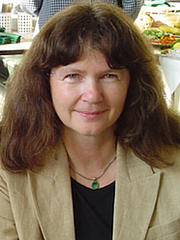
Christiane Tammer is a full Professor at the Institute of Mathematics , Faculty of Natural Sciences II, Martin Luther University Halle-Wittenberg. Her research spans variational methods, optimization, nonlinear functional analysis, approximation theory, duality principles, location theory, and inverse problems. She is actively involved in editorial roles as Editor-in-Chief of Optimization and serves on multiple journal editorial boards. Current affiliation: Theodor-Lieser-Str. 5, Halle (Saale), Germany Email: christiane.tammer@mathematik.uni-halle.de Her funded research includes projects on novel algorithms for combined tour and location optimization and multicriteria stochastic optimization and stochastic control theory . Recent publications focus on vector optimization under uncertainty, nonconvex separation techniques, and proximal gradient methods for multiobjective problems.
Roles and Affiliations: Distinguished Professor Saeid Nahavandi is the inaugural Associate Deputy Vice-Chancellor (Research) and Chief of Defence Innovation at Swinburne University of Technology. He leads defence innovation and research strategy, with a focus on autonomous systems, robotics, and AI. Previously, he served as Pro Vice-Chancellor (Defence Technologies) at Deakin University and founded its Institute for Intelligent Systems Research and Innovation. Research Focus: Specializes in robotics, haptics, autonomous systems, AI, and advanced modelling/simulation. His work bridges academia and industry, with collaborations spanning Airbus, Boeing, NASA, and NATO. He has secured over $150M in funding and established three tech startups. Key research areas include motion simulation, teleoperation systems, and defence technologies. Articles Overview: Over 1,300 publications span AI, robotics, and control engineering. Recent work emphasizes autonomous navigation reviews, uncertainty-aware AI, and motion cueing algorithms. His research addresses real-world applications like driver distraction detection and robotic ultrasound. Awards and Recognition: Recipient of the 2022 Clunies Ross Entrepreneur of the Year Award, 2021 Australian Space Awards Researcher of the Year, and multiple engineering excellence accolades. A Fellow of ATSE, IEEE, and other leading institutions. Grants & Industry Impact: Led ARC Training Centres for automated vehicles and energy storage. Notable grants include a $15M ARC Training Centre for Automated Vehicles in Rural/Remote Regions (2024–2029). Collaborates globally on defence, aerospace, and smart transportation projects. Labs & Teams: Heads Swinburne’s Defence Innovation Group and collaborates with Harvard University (as an Associate) and the University of Windsor (adjunct professor). Advises governments and industries on technology strategy and innovation.
Özgür Özpeynirci is an Assistant Professor at the Department of Logistics Management, Izmir University of Economics, where he has been employed since February 2008. His research focuses on multiobjective decision making, combinatorial optimization, and scheduling, bridging theoretical and applied aspects of operations research and logistics. B.S., M.S., and Ph.D. in Industrial Engineering from Middle East Technical University (2002, 2004, 2008) Researcher at TÜBİTAK (2001-2007) His scholarly work integrates operations research, decision theory, and logistics. He has pioneered interactive algorithms for multi-criteria sorting and resource allocation, addressing complex problems in transportation, biofuel contracts, and digital transformation. His research often applies mathematical modeling and optimization techniques to real-world scenarios. Scientific awards include the 2011 Best Doctoral Dissertation Award from the International Society on Multiple Criteria Decision Making. His publications span high-impact journals like Management Science and European Journal of Operational Research , emphasizing algorithm design, logistics performance, and multiobjective programming. Co-authors like Vincent Mousseau and Selin Özpeynirci indicate collaborative research across Turkey and global institutions.
Dr. Raghu Nandan Sengupta is a Professor at the Department of Management Sciences, Indian Institute of Technology Kanpur (IITK). With a Ph.D. from IIM Calcutta and a BE in Mechanical Engineering from BIT Mesra, he has held visiting positions at institutions including Princeton University, University of Warsaw, and Technische Universität Dresden. His academic leadership includes serving as Head of Department (2017-2020) and Chairman of GATE/JAM-2025. Research Focus: Sequential Estimation, Statistical Reliability Theory, Risk Analysis, Optimization Techniques in Finance, Meta Heuristic Algorithms, and Robust Optimization His publications span topics like reliability-based portfolio optimization , multiobjective decision-making , and brand sensitivity in B2B marketing . Key awards include DAAD Research Stays, EU-NAMASTE Erasmus Mundus Fellowship, and Indo-US S&T Forum Fellowship. He has advised 16 PhD students and contributed to editorial boards of journals including Sequential Analysis and Foundations of Computing and Decision Sciences . Scientific Awards: DAAD Research Stays (2017, 2015) EU-NAMASTE Erasmus Mundus Fellowship (2015) Indo-US S&T Forum Fellowship (2008) Erasmus Mundus Europe Asia Fellowship (2011) He has taught courses such as Probability and Statistics , Quantitative Methods for Decision Making , and Security Analysis & Portfolio Management at IITK, University of Warsaw, and IGIDR Mumbai. His work bridges statistical inference , financial engineering , and operations research , emphasizing practical applications in industry and academia.
António Ismael Freitas Vaz serves as Associate Professor with Habilitation at the School of Engineering, University of Minho, and holds a Senior Researcher position at the ALGORITMI Research Centre. As a core member of the SEOR (Systems Engineering and Operations Research) R&D Group, he directs research in mathematical optimization methodologies with applications spanning energy systems, additive manufacturing, and biomedical engineering. His institutional profile includes verified metrics: h-index 17, 1,505 citations, and 41 publications including 34 in Q1/Q2 journals. His research program centers on developing advanced optimization frameworks including multi-objective, derivative-free, and semi-infinite programming techniques. Key application domains feature renewable energy integration (demand-response co-optimization, cost-effectiveness analysis), 5-axis 3D printing (curved layer path planning, build orientation optimization), and medical diagnostics (automated tumor detection in wireless capsule endoscopy). Methodological innovations focus on particle swarm optimization, DC programming, and gradient descent complexity for complex constrained problems. Analysis of his 15 most recent publications (2018-2022) reveals three dominant research thrusts: energy systems optimization (33% of output), additive manufacturing (33%), and medical imaging (13%), with foundational optimization theory comprising the remainder. This distribution demonstrates strategic application of core methodologies to high-impact engineering challenges, particularly in sustainable energy transition and advanced manufacturing. The consistent publication in top-tier venues like Renewable and Sustainable Energy Reviews and Applied Energy underscores disciplinary influence. Scientific Awards: No specific awards, fellowships, or medals were documented in the provided profile information. Regarding academic advising, the source material contains no listings of PhD or Master's students supervised. The funding section explicitly indicates zero recorded projects ("Fundings (0)"), suggesting either institutional management of grants outside individual reporting or incomplete profile documentation. His h-index and publication volume imply significant research leadership despite absent grant details. As an integral contributor to the SEOR R&D Group at ALGORITMI, Vaz participates in a cross-disciplinary research ecosystem focused on operational research applications. The group maintains industry partnerships in energy, manufacturing, and healthcare sectors, facilitating translation of optimization algorithms into practical solutions for industrial partners and public administration through the Centre's thematic lines.
Dr. Maryam Eghbalizarch serves as Assistant Professor in the Department of Industrial and Systems Engineering at Kennesaw State University's Southern Polytechnic College of Engineering and Engineering Technology. Her institutional affiliations include: Current: Assistant Professor, Kennesaw State University Previous: Data Scientist, The University of Texas MD Anderson Cancer Center Previous: Postdoctoral Fellow, Wayne State University (2022-2024) Previous: Assistant Professor, Alzahra University (2021-2022) Visiting Researcher, University of Pittsburgh (2016-2017) Member, Cancer Intervention and Surveillance Modeling Network (CISNET) Member, Society for Medical Decision Making (SMDM) Member, INFORMS and IISE Her educational background features a Ph.D. in Industrial Engineering from the University of Tehran (2018), with M.Sc. and B.Sc. degrees from K.N. Toosi University of Technology. As director of the Health Systems Optimization Lab, she leads research at the intersection of advanced modeling techniques and healthcare applications. Dr. Eghbalizarch's work integrates Markov decision processes , multi-objective optimization , and machine learning to solve critical problems in cancer care (ovarian/lung cancer modeling) and diabetes management . Her methodology-driven approach focuses on sequential decision-making under uncertainty to improve healthcare delivery and patient outcomes through cost-effective interventions. Her recent publications (2024-2025) demonstrate strong momentum in oncology modeling and healthcare optimization, with multiple papers in high-impact journals including American Journal of Obstetrics and Gynecology and Lung Cancer. These works reveal consistent themes in histology-specific cancer modeling, natural history validation, and diabetes treatment optimization using advanced analytics. Key recognitions include: Institute for Data Science in Oncology Fellowship at MDACC Consecutive Postdoctoral Trainee Research Awards (Wayne State, 2023-2024) National Elites Foundation Award (Iran) International Affairs Department Research Grant Dr. Eghbalizarch maintains active grant funding through CISNET and currently recruits fully funded graduate students for Fall 2026. Her mentorship approach emphasizes hands-on research experience in healthcare analytics, with students contributing to high-impact projects in cancer screening optimization and diabetes management systems. The HSOpt Lab provides a collaborative environment focused on translating engineering methodologies into practical healthcare solutions, with strong connections to cancer research networks and clinical partners. Current projects emphasize data-driven decision support systems for medical practitioners and health policy makers.
Sébastien Le Digabel is a Full Professor in the Department of Mathematics and Industrial Engineering at Polytechnique Montréal. He holds affiliations with GERAD (Groupe d'études et de recherche en analyse des décisions) and IVADO (Institut de valorisation des données), where he contributes to research in optimization and artificial intelligence. Professor Le Digabel's research focuses on black-box optimization and derivative-free methods, particularly the Mesh Adaptive Direct Search (MADS) algorithm. His work spans three main areas: development of optimization methods, application to engineering problems, and development of optimization software. He has made significant contributions to extending MADS for constrained optimization, mixed-variable problems, multiobjective optimization, and stochastic optimization. His recent publications (2023-2025) demonstrate continued innovation in handling complex optimization challenges including categorical variables, hierarchical constraints, and multi-fidelity approaches. These works appear in top journals like Computational Optimization and Applications, SIAM Journal on Optimization, and Optimization and Engineering. Professor Le Digabel actively supervises graduate students, having completed 8 PhD theses and 10 Master's theses with topics spanning multiobjective optimization, hyperparameter tuning, smart grid applications, and power systems optimization. His research is supported by diverse funding sources including NSERC, FRQNT, InnovÉÉ, IVADO, Hydro-Québec, Rio Tinto, and Huawei-Canada, reflecting the broad applicability of his work across academic and industrial domains. Professor Le Digabel leads the NOMAD Research Group and is the primary developer of the NOMAD optimization software, which implements the MADS algorithm and serves as a standard tool in the derivative-free optimization community. The software is available at www.gerad.ca/nomad and continues to evolve with new capabilities for challenging optimization problems.
Dr. Carlos A. Coello Coello is a distinguished professor (CINVESTAV 3F Researcher) at the Center for Research and Advanced Studies of the National Polytechnic Institute (CINVESTAV-IPN) in Mexico City. He also serves as a Distinguished Visiting Professor in Computer Science and Computational Intelligence at Tecnológico de Monterrey's School of Engineering and Science, and as a visiting professor at the Basque Center for Applied Mathematics (BCAM) in Spain. Elected to El Colegio Nacional in 2023, he is the first computer scientist to join this prestigious Mexican institution, which groups the country's most important scientists, artists, and intellectuals. Dr. Coello's research focuses on evolutionary computation, particularly multi-objective optimization algorithms. His work spans genetic algorithms, evolutionary strategies, and bio-inspired optimization techniques with applications in engineering. He has made pioneering contributions to evolutionary multi-objective optimization, including developing the first genetic microalgorithm for multi-objective optimization, which has been applied in real-world contexts such as aerospace design. His research bridges computer science, applied mathematics, and operations research. Dr. Coello has published extensively since the 1990s, with recent publications focusing on advanced evolutionary algorithms, surrogate modeling for expensive optimization, and dynamic multi-objective optimization. His work shows a clear progression from foundational evolutionary computation techniques to sophisticated multi-objective and many-objective optimization approaches with practical engineering applications. MCDM Edgeworth-Pareto Prize (2024) Crónica Prize in Science and Technology (2023) SIGEVO Outstanding Contribution Award (2023) IEEE Computational Intelligence Society Evolutionary Computation Pioneer Award (2021) 2013 IEEE Kiyo Tomiyasu Award 2012 National Medal of Science and Arts IEEE Fellow (since 2011) Dr. Coello has successfully secured significant research funding through Mexico's CONACyT, with projects ranging from foundational algorithm development to advanced multi-objective optimization techniques. He has supervised PhD students, including Dr. Luis Vicente Santana-Quintero who received the Arturo Rosenblueth PhD Thesis Award. As Associate Editor for prestigious journals including IEEE Transactions on Evolutionary Computation, Dr. Coello plays an active role in shaping the field. His work has earned him international recognition, including being ranked 289th worldwide and 1st in Mexico among the 1000 most outstanding computer scientists in the 2022 Guide2Research Ranking.
Professor Andrzej Jaszkiewicz is a faculty member at the Faculty of Computer Science and Telecommunications, Poznań University of Technology, where he works in the Institute of Informatics. He holds the position of full professor with extensive experience in multiobjective optimization and evolutionary algorithms, as evidenced by his habilitation completed in 2001 and continuous research output through 2025. Professor Jaszkiewicz's research focuses on theoretical and practical aspects of multiobjective optimization, particularly addressing the challenges of many-objective problems. His work spans quality indicator development (hypervolume, R2), efficient data structures (ND-Trees), evolutionary algorithm design, and applications to combinatorial optimization problems. His publications demonstrate consistent theoretical rigor combined with practical implementation considerations. Recent publications (2022-2025) reveal continued productivity with multiple articles in top journals like IEEE Transactions on Evolutionary Computation and Physics of Fluids. These works explore theoretical properties of quality indicators, efficient calculation methods, and novel applications of optimization techniques to complex problems including fluid dynamics. Professor Jaszkiewicz has supervised doctoral research including Tarek Alkhaeir's 2021 dissertation on software quality metrics and Marek Kubiak's 2009 work on memetic algorithms. He has also reviewed numerous doctoral dissertations in related fields, demonstrating his standing in the academic community and commitment to graduate education. His scholarly output includes journal articles, conference papers, book chapters, and two books. The 2005 edited volume 'Advanced OR and AI methods in transportation' reflects his interest in practical applications of optimization techniques. His research demonstrates sustained scholarly activity from the 1990s to the present, with particular emphasis on advancing the state-of-the-art in multiobjective optimization theory and practice.