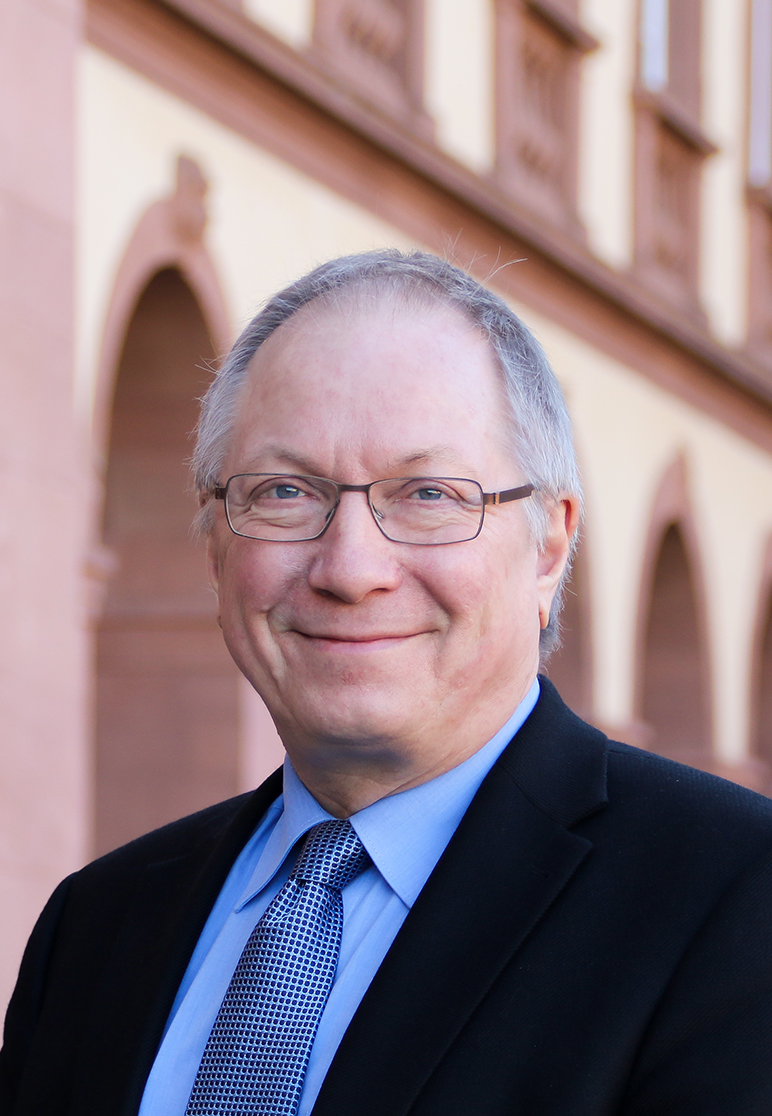
Dr. Edward Wei is a Research Fellow at the University of Sydney Business School's Institute of Transport and Logistics Studies (ITLS), where he has been since 2018. His work focuses on transport modeling, urban mobility, and policy analysis, with an emphasis on post-pandemic commuting patterns and sustainable transport initiatives. He holds a PhD from the University of Technology Sydney (UTS), an MBus from Queensland University of Technology (QUT), and a BEc from UIBE in China. Dr. Wei's research explores the intersection of work arrangements (e.g., hybrid work, flexi-time) and their impacts on transportation demand, urban planning, and environmental sustainability. His recent projects include developing state-wide transport models, analyzing micro-mobility adoption, and assessing the role of non-traditional mobility service providers in MaaS frameworks. Key areas of expertise include discrete choice modeling, transport demand forecasting, and policy evaluation. His publications span over 30 peer-reviewed articles, with recent contributions emphasizing post-pandemic commuting behavior, zero-emission truck transitions, and sustainable university travel strategies. His academic contributions bridge theoretical transport economics with practical policy applications, addressing challenges such as car tolling regimes, public transport patronage optimization, and the integration of remote work patterns into urban planning frameworks.
Harri Lähdesmäki is an Associate Professor (tenured) at the Department of Computer Science, Aalto University, where he leads the Computational Systems Biology research group. His work focuses on probabilistic machine learning and deep generative models with applications in biomedicine and molecular biology. Key Research Interests: Probabilistic machine learning, deep generative models, computational biology, bioinformatics, longitudinal data modeling Contact: harri.lahdesmaki@aalto.fi | Konemiehentie 2, 02150 Espoo, Finland His recent publications highlight advancements in: Gaussian process priors for scalable deep generative models Single-cell analysis of immune repertoires in leukemia and diabetes Probabilistic deconvolution methods for RNA-seq data Epigenetic analysis using hidden Markov and mixed models Transformer-based survival prediction and missing data handling Harri’s work integrates mechanistic modeling with Bayesian inference, particularly applied to immunology, cancer biology, and early disease prediction.
Tim Huh is a Professor and Chair of the Operations and Logistics Division at the University of British Columbia's Faculty of Commerce and Business Administration. He specializes in inventory control, supply chain management, and operations research, with a focus on dynamic decision-making under uncertainty. B.A., B.Math, M.Math from University of Waterloo M.A. from Regent College M.S., Ph.D. from Cornell University His research spans theoretical and applied topics including renewable energy systems, healthcare operations, and digital learning analytics. Recent work explores wind power storage optimization, asynchronous video usage in education, and multi-echelon inventory solutions. Scientific recognition includes the Canada Research Chair in Operations Excellence and Business Analytics He teaches core business analytics and operations management courses at both undergraduate and graduate levels, emphasizing quantitative decision-making and process fundamentals.
Theo Arentze is a Full Professor at Eindhoven University of Technology (TU/e) in the Department of the Built Environment, leading the Real Estate Management and Development group. He is affiliated with EAISI Health and EAISI Mobility research institutes. Education: MSc in Psychology (Cognitive Psychology & AI) from Groningen University, PhD from TU/e Urban Planning Research: Spatial choice behavior, decision support systems, activity-based modeling, agent-based simulation His research integrates bounded rationality into spatial choice models to enhance behavioral realism, with applications in real-estate management , neighborhood development , healthy cities , and hybrid work environments . Recent work includes child-friendly urban planning and energy-efficient housing impacts . Prominent article themes include: Hybrid work location decisions Urban public space affective experiences Child friendliness in residential choices Sustainable energy preferences Spatial decision support systems Social network modeling Scientific recognition includes: Best Poster Award (2025) - Computational Urban Planning Conference Long Paper of Distinction (2021) - Healthy Buildings Europe EuroFM Best Paper Award (2017) Pyke Johnson Award (2016) As an educator, he teaches courses in Urban Planning , Housing Economics , and Quantitative Research Methods . His multidisciplinary team combines expertise from psychology, sociology, and urban economics to create high-quality built environments through behavioral research.
Joseph P. Romano is a distinguished Professor of Statistics and Economics at Stanford University, where he has been on the faculty since 1986. He holds joint appointments in both the Department of Statistics and the Department of Economics, reflecting his interdisciplinary research that bridges statistical theory with economic applications. Romano has established himself as a leading scholar in mathematical statistics with significant contributions to econometrics, climate science, and multiple testing methodologies. Ph.D. in Statistics, University of California, Berkeley (1986) M.S. in Statistics, University of California, Berkeley (1983) A.B. in Statistics, Princeton University (1982), Summa Cum Laude Romano's research focuses on the theoretical foundations and practical applications of statistical methods, particularly in nonparametric statistics, bootstrap and resampling techniques, and multiple testing procedures. His work addresses the challenges of analyzing massive datasets with complex structures, such as those found in biotechnology, clinical trials, and econometrics. He has developed universal statistical tools applicable across diverse fields including climate science, genetics, finance, and education. His recent work emphasizes methods for multiple testing and multivariate inference driven by the availability of massive datasets, where he tackles issues like unknown dependence structures, heterogeneity, and high dimensionality. Analysis of Romano's recent publications reveals a consistent focus on developing robust statistical methodologies for complex data structures. His work spans theoretical advances in U-statistics with growing dimensions, practical applications in seroprevalence studies, and innovative approaches to ranking inference across various domains. The interdisciplinary nature of his research is evident in publications spanning economics journals, statistics journals, and even behavioral science preprints, demonstrating the broad applicability of his methodological contributions. 2021 LGBTQ+ Scientist of the Year, Out to Innovate Fellow, International Association of Applied Econometrics (2020) Fellow, Institute of Mathematical Statistics Presidential Young Investigator Award, National Science Foundation The Canadian Journal of Statistics Award Romano has mentored dozens of doctoral students throughout his career at Stanford, serving as dissertation advisor, co-advisor, and committee member for numerous PhD candidates in Statistics. His research has been consistently supported by National Science Foundation grants, including recent funding for computer-intensive inference with applications to social sciences (2020-2023) and randomization inference for contemporary statistical problems (2013-2016). He has served in various administrative roles at Stanford including Associate Chairman and Chair of Committee on Faculty Affairs. Beyond his academic pursuits, Romano is actively involved in the 500 Queer Scientists visibility campaign and maintains a balanced life with passions in music (having performed at Carnegie Hall), competitive tennis (ranked nationally in his age group), cooking, and architecture.
Konstantinos Pelechrinis is an Associate Professor in the Department of Informatics and Networked Systems at the University of Pittsburgh's School of Computing and Information. He holds a Ph.D. in Computer Science from the University of California, Riverside. His research focuses on network science, urban informatics, and sports analytics. He has been recognized with the Army Research Office Young Investigator Award for his contributions. Education: Ph.D. in Computer Science, University of California, Riverside Research Interests: Urban mobility patterns and infrastructure analysis Sports performance quantification and strategy Data-driven decision-making in transportation systems Network science applications in social and urban systems His recent work explores topics such as implicit biases in sports refereeing, anomaly detection in NFT markets, and optimizing bike-sharing systems using predictive models. He also investigates urban infrastructure resilience through projects like the Epui platform for experimental urban informatics. Awards: Army Research Office Young Investigator Award He contributes to academic outreach through courses like TELCOM2125 (Network Science and Analysis) and collaborates on initiatives like the Healthy Ride Pittsburgh bike-sharing study. His lab focuses on bridging theoretical models with real-world urban and sports datasets.
Yu Lan is a Research Fellow at the Yale School of Public Health , specializing in spatial epidemiology and health geography . Her work integrates genomic data (e.g., WGS) with geographic information systems (GIS) to analyze transmission patterns of infectious diseases like COVID-19 and tuberculosis . Education: PhD in Geography, University of North Carolina at Charlotte MA in Geography, University of North Carolina at Charlotte Research Interests focus on space-time disease modeling , infectious disease transmission , and data-driven public health tools . She develops web-based systems for real-time disease surveillance and environmental risk assessment, including tools for private well contamination and urban neighborhood dynamics . Scientific Awards include the SISMID Scholarship (2024) , Student Honors Paper Competition Finalist (2023) , and David Woodward Digital Map Award (2021) . Collaborations include work with the Ted Cohen Lab and researchers like Joshua Warren and Eric Delmelle . Her publications emphasize genomic-spatial integration and cluster detection algorithms for diseases such as tuberculosis and SARS-CoV-2.
Daniel Wilhelm is a Professor of Statistics and Econometrics at LMU Munich, with a courtesy appointment in the Department of Economics. His research focuses on econometric theory, nonparametric methods, measurement error modeling, and statistical inference. He leads the Statistics and Econometrics Group at LMU and holds affiliations with the Centre for Microdata Methods and Practice (CeMMAP), Institute for Fiscal Studies (IFS), and the Centre for Research and Analysis of Migration (CReAM). Wilhelm’s work includes groundbreaking contributions to NPIV estimation, robust statistical testing, and the development of R and Stata packages for rank inference and econometric analysis. His recent publications address topics like rank-based inference, measurement error detection, and high-dimensional independence testing. He organizes academic events such as the Munich Econometrics Seminar and the LMU-Todai Econometrics Workshop. His research emphasizes methodological rigor and practical applications, with a focus on improving statistical techniques for social science and policy analysis.
Dr. Sudhir R. Paul is a Professor in the Department of Mathematics and Statistics at the University of Windsor, Faculty of Science. He holds a Ph.D. from Wales and has received prestigious awards including Fellowships from the American Statistical Association (2006) and the Royal Statistical Society (1982). His research focuses on Biostatistics and Statistical Inference, with expertise in areas such as Generalized Linear Models, Clustered/Longitudinal Data Analysis, and Categorical Data Analysis. He has supervised numerous graduate students and maintains an active research program addressing topics like risk difference estimation, bias correction in statistical models, and applications in environmental and medical contexts. Education: Ph.D. (Wales). Research interests span advanced statistical methodologies, including zero-inflated models, measurement error correction, and dose-response modeling. His work bridges theoretical development and practical applications in epidemiology, clinical trials, and environmental studies. His publications reflect contributions to clustered data analysis, interval estimation, and generalized estimating equations. Awards highlight his impact in advancing statistical science through teaching, research, and service. Advising: Over 30 M.Sc. and Ph.D. students have been supervised, with current students engaged in doctoral and master’s research. Postdoctoral fellows include experts in statistical theory and applications.
Shunichi Ishihara is a Professor at the School of Culture, History & Language, The Australian National University, where he leads research in forensic linguistics and computational linguistics. His work focuses on forensic text and voice comparison, authorship attribution, and Japanese linguistic studies. He holds qualifications including a PhD (ANU), MSc (Macquarie), MA (ANU), and BEd (Shizuoka). Research Interests: Forensic Voice/Text Comparison Computational Linguistics Intonational Modelling Japanese Language Processing Stylometric Analysis Research Trends: Recent work emphasizes likelihood ratio-based systems for authorship verification, fusion of acoustic and text features for forensic analysis, and applications of deep learning in text evidence evaluation. His studies often explore cross-lingual comparisons (e.g., Japanese, English, Vietnamese) and system validation methodologies. Grants & Projects: "Likelihood project on author recognition" (2024-2026) "Big Australian Speech Corpus" (2010-2015) Multiple forensic voice/text comparison initiatives Labs & Teams: Director of the Speech and Language Lab, collaborating on speech corpus development and forensic linguistic systems.
Ryan Browne is an Assistant Professor in the Department of Statistics and Actuarial Science at the University of Waterloo. He holds a BMath (2004), MMath (2006), and PhD (2009) from the same institution. His research focuses on model-based clustering , classification , and measurement system quality assessment , with applications in multivariate analysis and statistical inference. He is particularly known for contributions to mixture models and their computational optimization. Education: BMath in Statistics, University of Waterloo (2004) MMath in Statistics, University of Waterloo (2006) PhD in Statistics, University of Waterloo (2009) Ryan’s work emphasizes flexible statistical methodologies , including advancements in skewed distributions, high-dimensional data analysis, and robust algorithms for clustering and classification. He has received the prestigious 2011 W.J. Youden Award from the American Statistical Association for his PhD research on measurement system evaluation. His research trends span computational statistics (e.g., sketching algorithms for big data) and model-based clustering innovations (e.g., mixtures of generalized hyperbolic distributions). Recent work explores parsimonious models, nested Gaussian structures, and efficient parameter estimation for complex datasets. Key Awards: 2011 W.J. Youden Award (American Statistical Association) Ryan collaborates on applied projects, including industrial ecology and sensory data analysis. He has developed R packages like mixture and MixGHD , which implement his methodological contributions.
Scott W. Linderman is an Assistant Professor of Statistics at Stanford University and a Faculty Scholar at the Wu Tsai Neurosciences Institute. He holds courtesy appointments in Computer Science and is affiliated with Stanford Bio-X and the Stanford AI Lab. His research focuses on developing probabilistic models and statistical methods to analyze neural data, bridging computational neuroscience and machine learning. Linderman earned his PhD in Computer Science from Harvard University, with postdoctoral training at Columbia University under Liam Paninski and David Blei. He previously worked as a software engineer at Microsoft and holds an undergraduate degree in Electrical and Computer Engineering from Cornell University. Research Interests : Machine learning, computational neuroscience, state space models, neural data analysis, and probabilistic modeling. His lab develops tools like the SSM and Dynamax packages, applying methods to problems such as neural decoding, behavioral tracking, and understanding latent neural dynamics. Awards : 2023 McKnight Scholar Award, 2022 Sloan Research Fellowship, Leonard J. Savage Award (2016). Linderman has advised over 20 PhD students and postdocs, contributing to breakthroughs in neuroscience and machine learning. His work includes collaborations with experimental neuroscientists like David Anderson and Sebastian Seung. Labs & Teams : Linderman Lab focuses on advancing statistical methods for neuroscience. Key projects include state space models (e.g., rSLDS, Gaussian Process SLDS) and behavioral analysis tools like Keypoint MoSeq. The lab emphasizes open-source software and interdisciplinary collaboration.
Ruben Loaiza-Maya is an Associate Professor (Research) in the Department of Econometrics and Business Statistics at Monash University. He holds a PhD in Econometrics from the University of Melbourne and an undergraduate degree in Economics from Universidad Nacional de Colombia (Medellin). His research focuses on Copula Modelling, Bayesian Estimation Methods, Time Series Analysis, and Macroeconomic/Financial Forecasting. Key contributions include advancements in variational inference, state space models, and robust forecasting techniques under model misspecification. He leads the active project 'Variational Inference for Intractable and Misspecified State Space Models' (2023–2026), funded as a Primary Chief Investigator. His work contributes to UN Sustainable Development Goals through methodological advancements in economic and financial analysis. Recent research emphasizes scalable Bayesian methods, hybrid variational approaches, and efficient computational techniques for high-dimensional models. Publications span prestigious journals like the International Journal of Forecasting, Journal of Econometrics, and Journal of Business and Economic Statistics. Notable collaborations include studies on copula-based time series forecasting and robust approximate Bayesian computation. His work bridges theoretical econometrics with practical applications in risk management and macroeconomic policy.
Edgar Erdfelder is a Full Professor of Psychology at the University of Mannheim, Germany, holding the Chair of Cognitive Psychology and Individual Differences since 2008. He is affiliated with the School of Social Sciences and has made significant contributions to cognitive psychology, statistical modeling, and decision-making research. Previously, he served as Full Professor at the University of Mannheim (2002–2008), Associate Professor at the University of Giessen (2001–2002), and Senior Lecturer at the University of Bonn (1987–2001). Ph.D. in Psychology, University of Trier (1986) Habilitation in Psychology, University of Bonn (2000) Diploma (M.Sc.) in Psychology, University of Göttingen (1980) Erdfelder's research focuses on statistical power analysis, multinomial processing tree (MPT) modeling, sequential statistical inference, and cognitive modeling. His work explores judgment and decision-making through mathematical and computational frameworks, integrating signal-detection theory with threshold models. He developed the widely used GPOWER software for statistical power analysis and advanced MPT models to measure cognitive process speeds. His recent publications with students highlight applications of Bayesian sequential methods, meta-analyses of sleep effects on memory, and theoretical extensions of the recognition heuristic. These studies span subfields like cognitive architecture, decision theory, and experimental design. Martin Irle Award (2020) Fellow of the Association for Psychological Science (2016) Heinz Heckhausen Award (1988) Erdfelder has held leadership roles, including Vice President of Research at the University of Mannheim and Academic Director of the Center of Doctoral Studies in Social and Behavioral Sciences funded by the DFG. He mentored numerous Ph.D. students and led the DFG-funded Research Training Group SMiP, focusing on statistical modeling in psychology.
Ntzoufras Ioannis is a Professor in the Department of Statistics at the Athens University of Economics and Business (AUEB), School of Information Sciences and Technology, where he has served continuously since 2004 (promoted to Professor in 2015). Previously, he held teaching positions at the University of the Aegean (2000-2004) and completed military service (1999-2000). Education B.Sc. in Statistics and Insurance Science (1994) M.Sc. in Statistics with Application in Medicine, University of Southampton (1995, with distinction) Ph.D. in Statistics, Athens University of Economics and Business (1999) Research Focus His work centers on Bayesian and computational statistics , specializing in categorical data analysis, statistical modeling, and variable selection methodology. He develops sophisticated models for applications in medical research (clinical trials, risk estimation), psychometrics (latent variable models), and sports analytics (football/basketball modeling), with emphasis on computational efficiency and real-world implementation. Publication Trends Recent publications (2023-2025) reveal three dominant trends: (1) Advanced Bayesian variable selection methods for high-dimensional data, (2) Sports analytics applications in football (goal modeling, competitive balance) and basketball (in-play performance), and (3) Development of specialized R packages (ssifs, PEPBVS) for statistical computation. His work consistently bridges theoretical innovation with practical domain applications. Scientific Awards Lefkopouleion Prize for Greece's best statistics thesis (1999-2000) PROSE Award Honorable Mention for 'Bayesian Modeling Using WinBUGS' (2010) Academic Leadership He has supervised graduate students across AUEB's Statistics, Business Analytics, and Data Science programs, and taught postgraduate courses at the University of Athens (Biostatistics), University of the Aegean (Business Administration), and Italian institutions (University of Pavia, Universita Cattolica, University of Bicocca-Milan). As General Secretary of the Greek Statistical Institute (2006-2007), he advanced national statistical initiatives. Research Community He founded and maintains grstats (http://grstats.forumotion.net/), Greece's primary online statistics community, facilitating collaboration among 1,200+ statisticians and data scientists through forums, workshops, and resource sharing.