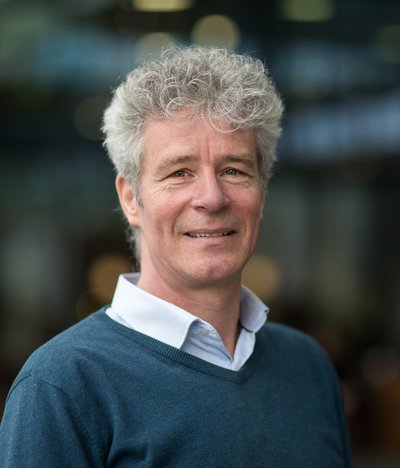
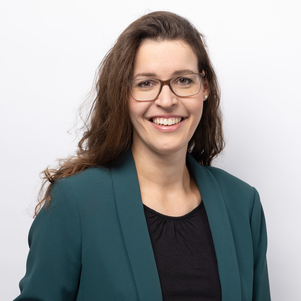
Peter Andriessen is a University Researcher at the Eindhoven University of Technology (TU/e), affiliated with the Department of Applied Physics and Science Education and the EAISI research institute. His work focuses on neonatal intensive care monitoring, integrative physiology, and long-term outcomes of preterm infants. He has co-supervised numerous master's and PhD projects since 2002 in collaboration with Máxima Medical Center and the Department of Clinical Physics. Key projects include the EPIDAF study (national follow-up of extremely preterm infants), the ALARM project (alarm management in NICUs), and the IMPULS II initiative. His research leverages machine learning and biomedical engineering to improve clinical predictions for conditions like late-onset sepsis and central apnea in preterm infants. Recent contributions include validating sepsis prediction models, developing explainable AI for apnea detection, and integrating ECG and fiber-optic motion sensing for NICU monitoring. These efforts aim to reduce clinical alarm fatigue and enhance patient outcomes through automated, non-invasive solutions. Collaborations span academic and industrial partners, including Philips Research via the Eindhoven MedTech Innovation Center (e/MTIC). His work bridges engineering and clinical practice to advance neonatal care technologies.
Simone Cardarelli is a Research Fellow in the Department of Electro-Optical Communication at Eindhoven University of Technology (TU/e), affiliated with the School of Electrical Engineering. His research focuses on advanced photonics and integrated optical systems. Research interests include: Waveguide physics and electro-optical beam steering Design of photonic integrated circuits for communication Optical switch engineering and multimode systems Applications in optical wireless networks and fiber alignment technologies His publications primarily explore optical device innovation, spanning topics from printed sensing surfaces to InP-based electro-optic systems. Recent work shows emphasis on energy-efficient optical components and high-precision manufacturing techniques. Cardarelli contributes to major projects: METRO : Developing 5G-aware optical networks (2017–2020) AUTOALIGN : Creating electronically aligned optical-fiber arrays (2015–2019) He is involved with the TU/e spinoff MicroAlign and has been featured in media for advancements in photonics.
B.H.W. Hendriks is a Professor in the Department of Mechanical Engineering at Delft University of Technology, specializing in Medical Instruments & Bio-Inspired Technology. His research develops optical and signal processing solutions for medical applications, particularly in surgical environments and tissue analysis. His primary research domains include: Biomedical Engineering Optical Spectroscopy (Diffuse Reflectance) Medical Device Development Surgical Technology Cardiac Signal Processing Tissue Characterization Analysis of his 55+ publications reveals dual expertise: (1) Intraoperative optical sensing (e.g., fiber-optic tissue identification during spine surgery and electrosurgery), and (2) Advanced signal processing for cardiac diagnostics (atrial fibrillation mapping via electrograms/ECG). His work bridges mechanical engineering with clinical practice through real-time surgical workflow analysis and tissue-mimicking phantoms. Hendriks actively supervises research students and has generated 3 significant datasets for tissue characterization. His fingerprint shows dominant activity in spectroscopy (100%), surgery (93%), and tissue analysis (91%), with emerging work in human pose tracking for cardiac catheterization laboratories.
Eduward Tangdiongga is an Associate Professor in Electrical Engineering at Eindhoven University of Technology (TU/e). He leads research in the Electro-Optical Communication System group, focusing on optical access networks, hybrid optical-radio communication, and photonic technologies for wireless systems. His work emphasizes low-cost, high-performance solutions for last-mile communication and indoor networks. He holds MSc (1994) and PhD (2001) degrees from TU/e, with early research at the Institute for Photonic Integration. He has led EU and Dutch projects like ALPHA, POF-PLUS, and BROWSE+, contributing over 500 publications. His expertise spans passive optical networks, radio-over-fiber systems, and photonic-assisted wireless technologies. Research Areas: Optical Wireless Communication, LiFi, Multimode Fibers, Photonic Integration, 5G/6G Infrastructure Key Projects: BROWSE+, ELIoT, FlexCom, Smart-One, KPN Smart Two+ He has been recognized with the Corning Outstanding Student Paper Competition Finalist (2025). His lab infrastructure collaborations enable cutting-edge advancements in optical wireless systems, supporting PhD/postdoc research in areas like beam steering, high-speed transmission, and network scalability.
Ali Mefleh is an Associate Professor in the Department of Electrical Engineering at Eindhoven University of Technology. His research focuses on electro-optical communication systems, edge computing, and low-latency networking. He specializes in high-speed fiber optics, infrared light communication, and photonic integration. Key research interests include multimode fiber transmission, beam-steered optical wireless communication, and time-sensitive networks. His work emphasizes practical applications such as mobile device receivers, sub-microsecond control planes, and full-duplex systems. Mefleh has contributed to 17 peer-reviewed publications since 2020, with notable outputs in Journal of Lightwave Technology and major conferences like CLEO and ICTON. His recent studies address record-breaking data rates over multi-mode fibers and novel architectures for low-latency edge computing. He supervises graduate research projects and collaborates internationally on optical communication innovations. No specific awards are listed, but his work has been cited widely in the field.
Dr. Liubov Amitonova is an Assistant Professor at the Faculty of Science, Vrije Universiteit Amsterdam, affiliated with the Physics of Nanolithography department and LaserLaB - Biophotonics. Her research focuses on multimode fiber engineering, biophotonics, and advanced imaging techniques. She teaches courses such as Practicum Natuurkunde voor SBI and contributes to interdisciplinary projects in nanoscale metrology and computational imaging. Education: Not explicitly listed in the provided text. Research Interests: Dr. Amitonova’s work spans multimode fiber applications, label-free imaging, and high-resolution optical systems. She explores innovations in diffractive metasurfaces, wavefront shaping, and super-resolution imaging through experimental and computational methods. Her contributions address challenges in biomedical imaging, nanoscale displacement metrology, and fiber-optic endoscopy for neuroscience. Publications: Recent works include advancements in quantitative phase imaging, nanometer precision displacement metrology, and super-resolution fiber imaging. These studies highlight her focus on translating fundamental optics research into practical biomedical and engineering solutions. Awards: No scientific awards explicitly mentioned. Advising & Grants: Supervised 1 PhD thesis, though specific details are not provided. Active in collaborative research projects, as evidenced by international co-authorships and 49 total publications. Labs/Teams: Affiliated with LaserLaB - Biophotonics, a leading group in microscopy and biophotonics technologies.
Hamed Abbasi is affiliated with Erasmus University Rotterdam's Erasmus MC, Department of Otorhinolaryngology and Head and Neck Surgery. He holds a PhD from the University of Basel (2016–2020) and holds an external position at Delft University of Technology since March 2023. His research focuses on Biomedical Optics, with emphasis on spectroscopic techniques like Raman spectroscopy and laser-induced breakdown spectroscopy for medical applications. Research interests include developing optical tools for surgery guidance, cancer diagnostics, and histology-independent fiber mapping. His work bridges disciplines such as biomedical engineering, oncology, and nanotechnology. Key contributions include integrating Raman spectroscopy with fluorescence imaging and advancing photocatalytic material studies. Recent publications highlight innovations in micron-resolution fiber mapping, photocatalytic efficiency optimization, and surgical imaging systems. His talks and activities emphasize translational research in optical surgery guidance and minimally invasive techniques.
Oded Raz is an Associate Professor in the Department of Electrical Engineering at Eindhoven Technical University of Technology (TU/e). He specializes in optical communication networks, optical interconnects, and programmable photonics, with a focus on developing novel packaging solutions for data center modules and introducing programmability into photonic integrated circuits using advanced materials like hydrogenated amorphous silicon. He co-founded PhotonX Networks, a TU/e spin-off commercializing packaging technologies for data communication products. Oded has over 15 years of teaching experience, including courses in electrical engineering and applied physics for early-year students. His work also spans microwave photonics and optical communications systems. Education: BSc (Cum Laude), Electrical Engineering, Technion - Israel Institute of Technology (1993) MSc (Cum Laude), Electrical Engineering, Tel Aviv University (2002) PhD, Microwave Photonics, Tel Aviv University (2006) Research Interests: Oded’s research focuses on optimizing photonics for data center networks, including optical interconnects, programmable photonic materials, and scalable optical systems. His work addresses challenges in low-latency interconnects and energy-efficient optical solutions. Recent projects include the PASSION initiative (disaggregated metro networks) and leadership in the ECO group’s data center optics activities. Industry & Entrepreneurship: Before TU/e, Oded held roles at Lucent Technologies and Corrigent Networks. As CEO of PhotonX Networks since 2018, he oversees commercialization efforts for TU/e-developed packaging technologies in data communication devices. Grants & Collaborations: Oded leads or co-leads projects like the Zwaartekracht ECO Research Centre for Integrated Nanophotonics (2014–2025) and PASSION (2017–2021). His work spans international collaborations in photonics, materials science, and network engineering.
Dr. Ahmed Dorrah is an Assistant Professor in the Department of Applied Physics and Science Education at Eindhoven University of Technology (Netherlands). He leads research in light-matter interaction, structured light, and flat optics, focusing on meta-optics for applications in remote sensing, micromanipulation, and optical communications. Previously, he was a Postdoctoral Researcher at Harvard University (2019–2024) and earned his PhD (2019) and MASc (2015) from the University of Toronto. His work integrates nanophotonics with quantum materials and advanced imaging techniques. Research Interests: His studies span the design of next-generation metasurfaces, 3D holography using curved light sheets, and high-efficiency structured light generation. Recent publications (2023–2025) highlight breakthroughs in bilayer metasurface fabrication, Mueller matrix imaging, and AI-driven holography techniques. His work is driven by creating compact, scalable optical systems with applications in wearable tech, satellite communications, and biological microscopy. Education & Career: Dorrah holds a BASc from Cairo University (2011). He has held visiting scholar roles at Lawrence Berkeley National Lab (USA) and the University of the Witwatersrand (South Africa). He currently oversees the Photonics and Semiconductor Nanophysics group and contributes to the Eindhoven Hendrik Casimir Institute. Funded PhD positions are available through TU/e's vacancies portal. Awards: No specific awards listed, but his research has been published in top-tier journals like Science Advances , Nature Communications , and Light: Science and Applications . He mentors students in photonics, nanophysics, and applied optics, emphasizing interdisciplinary collaboration with engineering and AI groups. Labs & Teams: Active in the Photonics and Semiconductor Nanophysics (PSN) group, his lab develops metasurface-based tools for optical manipulation and imaging. Collaborations include TU/e's Eindhoven Artificial Intelligence Institute (EAISI) and international partners in quantum materials research.
Xaveer Leijtens is an Associate Professor at the Department of Electrical Engineering, Eindhoven University of Technology. He is affiliated with the Photonic Integration Group and the Center for Quantum Materials and Technology Eindhoven , where he contributes to advancing integrated photonics technologies. Education: MSc in Physics (1988) - University of Amsterdam PhD in Physics (1993) - University of Amsterdam His research focuses on photonic integrated circuit (PIC) design, generic photonic integration, and measurement automation. He has pioneered the development of compact photonic devices like temperature sensors, sub-kilohertz linewidth lasers, and ultracompact MMI power splitters, with applications in quantum communication, coherent systems, and optical MEMS. His work emphasizes compatibility with foundry processes and scalable fabrication techniques. Recent publications highlight his contributions to monolithic temperature sensing, inverse-designed optical components, and enhanced extinction ratios in QKD transmitters. He leads efforts in open standards through initiatives like openEPDA.org and co-developed the Nazca Photonic IC design software . Collaborations span European Union-funded programs (e.g., Eurostars FLEXFIX) and Microsoft Research Ph.D. Scholarships. As co-founder of PhotonIP B.V. , he bridges academic research with industrial innovation. His work addresses thermal management, alignment tolerance, and photonic integration challenges, supporting advancements in photonic integrated circuits and quantum technologies.
Miriam Menzel is an Assistant Professor of Imaging Physics at the Department of Imaging Physics (ImPhys) within the Faculty of Applied Sciences at Delft University of Technology since 2022. She leads the Menzel Lab focused on developing Computational Scattered Light Imaging (ComSLI) for biomedical applications, particularly in neuroimaging and tissue structure analysis. Prior to her current position, she was a Visiting Postdoctoral Scholar at Stanford School of Medicine (2021-2022) and a PostDoc at Forschungszentrum Jülich's Institute of Neuroscience and Medicine (2018-2022). Her educational background includes: PhD in Physics from RWTH Aachen University / Forschungszentrum Jülich (2018) M.Sc./B.Sc. in Physics from RWTH Aachen University (2009-2013) Imperial College International Diploma in Physics, London (2012-2013) Dr. Menzel's research focuses on exploiting the scattering of visible light to resolve complex fiber structures in biological tissues. Her lab developed Computational Scattered Light Imaging (ComSLI), a technique that allows disentangling densely interwoven fiber pathways with micrometer resolution using standard optical components. Unlike other techniques requiring dedicated equipment and time-consuming raster-scanning, ComSLI provides fiber orientational information for all image pixels in parallel. The technique is label-free and can be applied to various tissue types including brain, muscle, and collagen fibers, making it highly versatile for both research and potential clinical applications. Her recent publications demonstrate a clear trajectory toward improving ComSLI's speed through compressed sensing, expanding applications to multiple tissue types beyond neuroanatomy, and developing multimodal integration with polarimetry. The research spans fundamental optics development, advanced signal processing, and clinical translation, particularly in cancer diagnostics through tissue architecture analysis. Her scientific recognition includes: Klaus Tschira Boost Fund (2021) Helmholtz Doctoral Prize (2019) Klaus Tschira Boost Fellow designation Dr. Menzel actively supervises Master's thesis projects at TU Delft, welcoming students with backgrounds in applied physics, nanobiology, microscopy, or data science to work at the interface of computational imaging and biomedical research. Her lab is currently developing hardware for high-throughput ComSLI measurements, advanced signal analysis techniques using machine learning, multimodal imaging systems combining scattered and polarized light, and exploring clinical applications in cancer diagnostics through tissue architecture analysis. The Menzel Lab is establishing ComSLI as a powerful tool for visualizing complex fiber structures across multiple biological systems, with ongoing work focused on hardware miniaturization for clinical applications and expanding the technique's capabilities to provide additional tissue metrics like fiber diameter information.
Bas P. de Hon is an Assistant Professor in the Electromagnetics group at TU/e's Department of Electrical Engineering. His research focuses on analytical techniques and numerical modeling for electromagnetic, acoustic, and elastic field problems, ranging from exploration geophysics to THz and optical applications. His educational background includes an MSc from Delft University of Technology and a PhD from TU/e. His research group specializes in multi-scale modeling techniques including MD, DSMC, hybrid MD-DSMC, and CFD, validated through experimental methods like micro-PIV and 3D micro-PTV. Recent publications demonstrate a focus on electromagnetic scattering analysis, optical fiber connections, and computational methods. Research trends show advanced applications in wave propagation, numerical optimization, and photonic device modeling. Laboratory affiliations include the Electromagnetic and Multi-Physics Modeling and Computation Lab at TU/e and collaborations with industry partners including ASML and Philips.
Hugo de Waardt is an Associate Professor and track leader of high-capacity trunk transmission within the ECO group at the Department of Electrical Engineering, Eindhoven University of Technology (TU/e). His key areas of expertise include: Telecommunication engineering Optical communication Optical amplifiers Opto-electronic transmitters and receivers High capacity fibre-optic transmission Hugo's research interest has always been in trying to reach the highest possible transmission capacity, initially using high speed direct laser modulation in combination with optical pre-amplified detection. Later, he researched wavelength division multiplexing technologies and optical time domain multiplexing, eventually exploring few mode transmission in combination with coherent detection. His research fingerprint shows strong activity in transmission engineering (100%), multiplexing physics (40%), photonics physics (28%), warm dark matter physics (22%), mode fiber engineering (21%), modulation format physics (20%), phase shift keying physics (16%), and digital signal processing physics (15%). His recent publications demonstrate a continued focus on high-capacity optical transmission systems, with research spanning from fundamental optical fiber technologies to practical implementations in data center networks and metro systems. The work shows progression from traditional single-mode systems to more advanced spatial mode multiplexing techniques. Hugo de Waardt has held significant leadership roles: Since 2012: Coordinator of the post-doctoral engineering programme in ICT Since 2016: Director Graduate Program at the faculty of Electrical Engineering Project leader of Freeband Broadband Photonics (2004-2008) Task manager in the SmartMix MEMPHIS program (2006-2012) He has coordinated TU/e participation in ACTS Upgrade, ACTS BLISS, ACTS APEX and IST FASHION, and has been involved in FP7 ICT projects MODE-GAP and IDEALIST. His projects portfolio includes Pan-European Photonics Task Force, BONE, MEMPHIS ECO, and FASHION: Ultrafast switching in high-speed networks, demonstrating sustained contribution to the field over nearly two decades.
Prof. Johannes de Boer is a Full Professor at the Faculty of Science, Vrije Universiteit Amsterdam, affiliated with the Biophotonics and Medical Imaging department and the LaserLaB research group. His research focuses on advancing optical coherence tomography (OCT) and biophotonics technologies for medical imaging applications, including lung disease diagnostics, ophthalmology, and semiconductor metrology. He holds ancillary roles as an advisor at ScinVivo and director at PolderOptics, demonstrating industry collaboration in medical device development. Research interests emphasize innovative imaging techniques such as polarization-sensitive OCT for fibrosis assessment, immuno-OCT for cancer detection, and multimode fiber imaging for super-resolution applications. His work aligns with UN Sustainable Development Goals related to health and technological advancement. Over 257 research outputs and 13 supervised PhD theses highlight his prolific contributions to biophotonics and medical engineering. Key Technologies: Optical Coherence Tomography, Digital Holographic Microscopy, Multimode Fiber Imaging Applications: Lung Disease Diagnosis, Ocular Imaging, Semiconductor Metrology Notable Achievements: Developed novel correction methods for OCT artifacts and pioneered endoscopic immuno-OCT systems Current projects include advancing AI-driven retinal imaging for Alzheimer’s diagnosis and improving overlay metrology in semiconductor manufacturing. His lab’s work bridges fundamental research with translational medical and industrial applications.
Alberto De Luca is an Assistant Professor at the Image Sciences Institute, Division Imaging & Oncology, University Medical Center Utrecht. He holds a BSc in Biomedical Engineering (2011), MSc in Bioengineering (2013), and PhD (2017) from the University of Padova, Italy, where his thesis focused on non-Gaussian diffusion in the brain and skeletal muscle. His research specializes in diffusion MRI methodologies for neurological diseases and cancer, with key interests including: Fiber-specific quantification in grey/white matter Multi-center MRI data harmonization Physiological parameter estimation via inverse methods Response prediction modeling He leads projects in cerebral small vessel disease and pediatric oncology, utilizing advanced 7T MRI and AI techniques. Recent publications (2025) demonstrate strong focus on: AI-driven lesion-symptom mapping in vascular cognitive disorders Diffusion MRI harmonization across research sites Advanced tractography validation frameworks Pediatric cancer imaging biomarkers He contributes to the Translational Neuroimaging Group and International Society for Tractography, with external collaborations including Erasmus MC (Frontotemporal dementia research) and Hogeschool Utrecht (guest lecturing on brain networks).