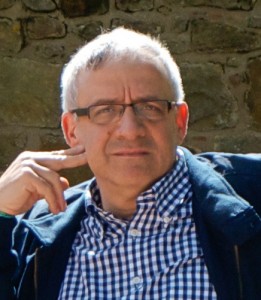
Gian-Luca Oppo is Professor of Computational and Nonlinear Physics at the University of Strathclyde and Director of the Institute of Complex Systems. His research spans nonlinear photonics, quantum cavity solitons, Bose-Einstein condensates, and optical pattern formation. Oppo develops theoretical models for laser dynamics, quantum correlations in light sources, and soliton formation in microresonators. Recent work (2024-2025) explores topological photonics applications in frequency combs, polarization symmetry breaking for optical Ising machines, and optomechanical quantum droplet dynamics. He has made fundamental contributions to understanding spontaneous symmetry breaking in Kerr resonators and control of extreme optical events. Oppo's group collaborates internationally on experimental implementations of photonic computing architectures and quantum sensing technologies. Honors include the Occhialini Medal (2011), Royal Society-Leverhulme Senior Research Fellowship (2003), and fellowships from the Royal Society of Edinburgh, OSA, and Institute of Physics.
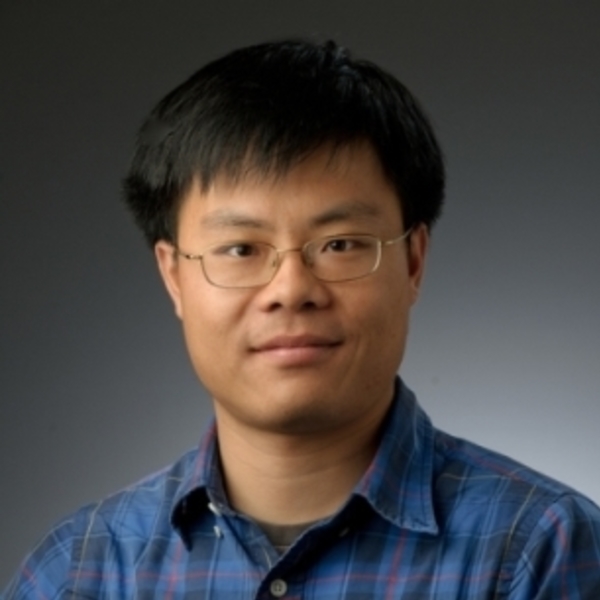
Jun Li is a Full Professor in the Department of Applied and Computational Mathematics and Statistics at the University of Notre Dame's College of Science. He specializes in developing statistical and computational methods for big data, with a focus on interdisciplinary applications in bioinformatics, machine learning, and data mining. His career includes tenure as an Assistant Professor (2012–2017) and promotion to Associate Professor (2017) before becoming Full Professor (2020). Dr. Li holds a Ph.D. in Statistics from Stanford University (2012), supervised by Robert Tibshirani, and earlier degrees from Tsinghua University: a B.E. in Automation (2004) and an M.S. in Pattern Recognition and Intelligent Systems (2007). Research Interests : Dr. Li’s work centers on advancing computational frameworks for handling large-scale datasets, integrating statistical rigor with algorithmic innovation. Recent themes include AI-driven code improvement, ethical LLM applications in HCI, and GUI automation. His methodologies emphasize human-AI collaboration and transparency in algorithmic systems. Publications : His 2025 work explores LLM vulnerabilities in GUI agents, AI-assisted education tools like GLITTER, and ethical challenges in HCI research. Earlier studies (2024–2023) address topics such as natural language database queries, privacy-preserving app promotion analysis, and multimodal task learning. Lab/Teams : Affiliated with Notre Dame’s computational statistics research groups, focusing on interdisciplinary projects bridging statistics, computer science, and applied mathematics. His work often involves collaborations with industry and academic partners to translate theoretical advancements into practical applications.
Prof. Bernhard U. Seeber is an Extraordinary Professor at the Technical University of Munich (TUM), leading the Chair of Audio Signal Processing within the TUM School of Computation, Information and Technology. His work bridges auditory neuroscience and engineering, focusing on improving hearing aids, cochlear implants, and virtual acoustic systems. He holds affiliations with the Bernstein Center for Computational Neuroscience, Munich Institute of Biomedical Engineering, and others. Education: Studied and earned his PhD (2003) in Electrical Engineering and Information Technology at TUM. Postdoctoral research included time at UC Berkeley and the MRC Institute of Hearing Research (UK), where he pioneered studies on binaural hearing and cochlear implant optimization. Research Interests: Combines experimental and theoretical approaches to explore auditory scene analysis, binaural unmasking, and spatial hearing. Key areas include signal coding for cochlear implants, virtual acoustics, and non-destructive acoustic monitoring. His work emphasizes interdisciplinary collaboration with industry and academia. Awards: Lothar Cremer Award (2010), Emmy Noether Fellowship (2007), and recognition from the German Acoustical Society. Teaching: Offers courses on audio communication, computational neuroscience, and technical acoustics. Projects: Leads initiatives like HAPPAA and Auralization, advancing sound field synthesis and hearing aid algorithms. Current Roles: Head of Chair of Audio Signal Processing, Board Member of DEGA, and spokesperson for the ITG Technical Committee on Hearing Acoustics.
Rosella Gennari is an Associate Professor in Computer Science at the Faculty of Engineering, Free University of Bozen-Bolzano, where she conducts research and teaches in Human-Computer Interaction (HCI). Her work is centered on designing interactive technologies for children, focusing on physical-digital (phygital) artefacts, Technology-Enhanced Learning (TEL), and inclusive design. She leads the Research Unit Human-Centred Intelligent Systems and is actively involved in institutional leadership, including serving on the Third-Mission Board. Ph.D. : Computer Science, Amsterdam University (2002) Postdoctoral Experience : CWI, Amsterdam (ERCIM Alain Bensoussan Fellow); FBK-irst, Trento Leadership : Scientific & Technological Coordinator of the FP7-EU TERENCE project Her research explores how children interact with and design smart technologies, including IoT and AI, through playful and tangible interfaces. She investigates socio-emotional learning, digital well-being, and responsible design, often employing participatory and action research methods. Her work bridges computer science, education, and social impact, aiming to empower young learners as co-creators of technology. The analysis of her recent publications reveals a strong trend in developing and evaluating toolkits and frameworks for children and pre-teens to engage in designing smart things, IoT systems, and sustainable cities. Her work consistently emphasizes inclusivity, reflection, and responsible design, often in collaboration with teachers and learners. The publications span top HCI venues and journals, demonstrating a focus on practical applications in educational settings and the impact of technology on young users. Scientific Awards and Recognition ERCIM Alain Bensoussan Fellowship for talented young researchers Editorial Board Member, Journal of Child Computer Interaction (Elsevier, Q1) Regular reviewer for top HCI conferences and journals Advising and Grants : While specific advisees are not listed, her leadership role in the FP7-EU TERENCE project and numerous other research initiatives indicates extensive experience in securing and managing competitive grants. She mentors students through her research group and teaching, fostering the next generation of HCI researchers. Her collaborative network is extensive, with frequent co-authorship with researchers such as Alessandra Melonio, Maristella Matera, and Mehdi Rizvi. Labs and Teams : She leads the Human-Centred Intelligent Systems research unit, which serves as her primary lab and team. This group focuses on placing humans at the center of computer science and information engineering research. She is also a core member of the organizing committee for the MIS4TEL international conference series, highlighting her role in building and sustaining a global research community in Technology-Enhanced Learning.
Frank Russo is a Professor in the Department of Psychology at Toronto Metropolitan University, where he holds the NSERC-Sonova Senior Research Chair in Auditory Cognitive Neuroscience. He leads the Science of Music Auditory Research and Technology (SMART) Lab and holds affiliate and adjunct positions at the University Health Network and the University of Toronto, respectively. Research Interests: Dr. Russo's work lies at the intersection of auditory cognitive neuroscience, music psychology, and rehabilitation. His research explores how humans perceive music and speech, particularly under challenging conditions such as hearing loss or non-native accents. He investigates the cognitive and neural mechanisms of listening effort, emotional speech processing, and the social and therapeutic benefits of music, especially through community choirs and digital interventions. Publication Trends: His recent publications emphasize objective measurement of listening effort using functional near-infrared spectroscopy (fNIRS), music-based interventions for Parkinson’s disease and dementia, vocal and emotional responses to singing, and multisensory integration in beat perception. The work is highly translational, bridging basic cognitive neuroscience with clinical and community applications. Scientific Awards and Honors: NSERC-Sonova Senior Research Chair in Auditory Cognitive Neuroscience Fellow of the Canadian Psychological Association Fellow of Massey College Fellow of the Canadian Society for Brain, Behavior and Cognitive Science Past President of the Canadian Acoustical Association Advising and Grants: Dr. Russo actively mentors students and researchers, as evidenced by his co-authorship with numerous junior colleagues. He has secured major funding through NSERC and industry partnerships, enabling the development of impactful technologies such as hearing aid algorithms, sensory substitution systems, and digital therapeutics. His SingWell project fosters collaboration across academic, clinical, and community sectors. Labs and Teams: He directs the SMART Lab at Toronto Metropolitan University, a hub for interdisciplinary research on music, hearing, and cognition. The lab collaborates extensively with KITE Research Institute, Rehabilitation Sciences at the University of Toronto, and various community organizations focused on aging, hearing loss, and neurodegenerative conditions.
Dr. Richard Gault is a Lecturer in the School of Electronics, Electrical Engineering and Computer Science at Queen's University Belfast. His research focuses on computer vision and deep learning applied to microscopy data, particularly in medicine, health, and life sciences. He leads a team developing novel methods for medical image analysis, including histopathology and digital pathology, with applications in cancer diagnosis and environmental science. He is actively involved in teaching, having received Excellence in Teaching awards from Queen's University Belfast in 2019 and 2022. His work bridges computational intelligence and healthcare, with notable contributions to AI-driven diagnostics, stain normalization in histopathology, and multimodal data fusion. Dr. Gault's research interests include ensemble learning, fuzzy systems, and generative models like diffusion networks. He supervises multiple PhD students and has mentored graduates now working in machine learning engineering and postdoctoral research. His team’s achievements include awards such as the 2023 Best Oral Presentation at the Pan Ireland Ophthalmology Day and a 2021 Best Paper Award from his school. Key contributions include the LymphoSight AI application for detecting lymphoid structures and HistoClean , open-source software for improving CNN development in histopathology. He has been recognized as a Senior Member of IEEE and a Fellow of the Higher Education Academy. His work is supported by grants such as the R5131ECI project on 3D quantifier approximation via 2D video analysis (2019–2025). He actively engages in academic activities, including conference organization and PhD external examinations across Europe.
Dr. Joseph Wang is the Distinguished Professor of Nanoengineering and the SAIC Endowed Chair at UC San Diego. He leads the NBE Lab and directs the Center of Wearable Sensors and the Center for Mobile-health Systems. With over 50 researchers in his team, his work focuses on nanomachines, wearable sensors, electrochemistry, and analytical chemistry. His global citation ranking places him #13 in Chemistry and #31 in Materials Science, with an H-index of 217 and over 180,000 citations. He has been a Highly Cited Researcher since 2014 and ranks #4 in Nanoscience & Nanotechnology in the 2025 World Top 100 Scientists list. His research has led to groundbreaking innovations, including microrobots for lung cancer treatment, multiplexed microneedle sensors, and wearable devices for real-time health monitoring. He has been honored with prestigious awards such as the 2024 ACS Award in Analytical Chemistry, IEEE Sensors Council Award, and IUPAC Medal. He holds honorary doctorates from Comenius University and Charles University, and Woxsen University named its Chemistry Department after him. Key contributions include pioneering work in biohybrid microrobots, self-healing wearable devices, and sweat-based health monitoring systems. His lab’s work has been featured in Nature, Science, and The Economist. He co-authored influential books like Analytical Electrochemistry (4th ed.) and Nanomachines , and his research spans clinical applications, environmental sensing, and personalized medicine.
Steven Farber is an Associate Professor in the Department of Human Geography at the University of Toronto . His research focuses on transport geography , spatial analysis , accessibility , and public transportation equity , with a strong emphasis on Geographic Information Science (GIS) and social sustainability . Current research: Distributional aspects of transit accessibility, personal mobility, activity participation Teaching: Undergraduate courses on multivariate analysis and transportation geography, graduate seminars on transportation and urban form Key research trends include: Transport equity and social inclusion Time-geography in urban mobility Spatiotemporal accessibility modeling Behavioral impacts of transport infrastructure GIS-based spatial econometric methods Grants include multiple SSHRC Insight awards, Ontario Ministry of Research funding, and municipal partnerships for transport equity studies.
Deepa Kundur is the Professor & Chair of The Edward S. Rogers Sr. Department of Electrical & Computer Engineering at the University of Toronto. She earned her BASc, MASc, and PhD in Electrical and Computer Engineering from the same institution in 1993, 1995, and 1999, respectively. Current roles: IEEE Spectrum Advisory Board Conference leadership: General Chair of 2018 GlobalSIP Symposium, TPC Co-Chair for IEEE SmartGridComm 2018, among others Her research focuses on cybersecurity , signal processing , and complex dynamical networks , particularly in smart grid applications. She has authored over 200 publications and pioneered techniques for detecting false data injection attacks, enhancing grid resilience, and integrating machine learning into power systems. Her recent work spans quantum learning for grid security , LLM-based mental health prediction , and resilient control systems . She has received 14 best paper recognitions, including IEEE SmartGridComm (2015) and IEEE INFOCOM Workshop (2008). Fellowships: IEEE Fellow (2015), Canadian Academy of Engineering Fellow (2016), Massey College Senior Fellow (2019) Teaching awards: Tenneco Meritorious Teaching Award (2005), Gordon Slemon Teaching of Design Award (2002) Early career honors: NSERC Scholarships (PGS A/B), Canada Scholarship She leads the Kundur Research Group , developing models for cyber-physical systems in smart grids and autonomous vehicle networks. Her team explores reinforcement learning for grid defense , transmissibility-based fault detection , and privacy-preserving smart grid analytics .
Björn Ross is a Lecturer in Computational Social Science at the University of Edinburgh's School of Informatics, where he is affiliated with the Institute for Language, Cognition and Computation. He serves as Director of the SMASH research group and is part of the management team for the Centre for Doctoral Training in Natural Language Processing (CDT in NLP). His educational background includes: PhD (2019) from the University of Duisburg-Essen MSc in Computer Science (2016) from the University of Münster Exchange year (2014-2015) at the University of Strasbourg BSc in Information Systems (2013) from the University of Münster Ross's research focuses on computational social science, particularly using natural language processing, social network analysis, and agent-based modeling to study social media phenomena. His work examines misinformation, hate speech, bot activity, and the ethical implications of computational methods. He also investigates how social media can be leveraged for social good, especially in crisis communication contexts. A significant portion of his recent research addresses bias and fairness issues in AI systems, particularly regarding marginalized communities and LGBTQ+ identities. His work spans both technical development of computational methods and critical examination of their societal impacts. Analysis of his recent publications reveals a strong trend toward examining bias in AI systems, particularly regarding marginalized communities. His work spans multiple methodologies including computational analysis of social media data, development of NLP techniques, and critical examination of AI ethics. He frequently collaborates across disciplines, working with researchers in computer science, social sciences, and healthcare domains. His professional recognition includes: Best Paper Award at the Hawaii International Conference on System Sciences (HICSS) in 2018 Associate Editor for Business & Information Systems Engineering Active membership in professional organizations including AIS, ACL, and ACM Ross currently supervises multiple PhD students including Agostina Calabrese, Eddie Ungless, Sandrine Chausson, Wendy Zheng, Seraphina Goldfarb-Tarrant, and Mahmoud Ibrahim. At the University of Edinburgh, he teaches courses such as 'Text Technologies for Data Science' and 'Evidence, Argument and Persuasion in a Digital Age,' reflecting his expertise at the intersection of computational methods and social implications.
Neil Shah is a Lead Research Scientist at Snap Inc., leading initiatives in user modeling, personalization, and trust and safety across Snapchat. His research focuses on advancing machine learning algorithms for large-scale structured data, including graph and sequential representations, with applications to recommendation systems and social platform security. PhD in Computer Science, Carnegie Mellon University (2017), advised by Christos Faloutsos B.S. in Computer Science, North Carolina State University Current research interests span: Graph Neural Networks (GNNs) for real-time inference and scalable training Cross-domain recommendation systems and generative modeling Test-time augmentation and hyperbolic geometry in representation learning Explainability methods for GNNs and fairness-aware outlier detection Recent publications highlight productionized GNN frameworks (GiGL), multimodal graph benchmarks, and novel approaches to link prediction and collaborative filtering. His work has appeared at top venues like KDD, ICLR, NeurIPS, and WWW. Scientific recognition includes: Outstanding Service Award at WSDM 2022 Best Paper Honorable Mention at CHI 2019
Chao Liu is a Research Scientist at CNRS (French National Center for Scientific Research) since 2008, affiliated with the DEXTER team and the Department of Robotics, LIRMM at University of Montpellier, France. He earned his Ph.D. in Electrical & Electronic Engineering from Nanyang Technological University, Singapore (2006). Current research focuses on surgical robotics , haptics , teleoperation , and nonlinear control theory with applications in computer vision. His work addresses challenges in robotic-assisted telesurgery, including: Stable and transparent human-robot interaction through wave variable compensators and passivity filters Physiological motion compensation using spatio-temporal LSTM and dual Kalman filters EMG-based motion recognition for surgical skill assessment 3D soft-tissue reconstruction with stereo-endoscopes and deep learning Dr. Liu leads European and French projects like: TS2RT (CNRS-funded): Safer teleoperation with motion compensation ROBACUS (ANR-funded): Needle positioning with MPC control HaTUMoCo (CNRS-funded): Haptic teleoperation with uncertainty handling ARAKNES (EU-funded): Microrobotic systems for endoluminal surgery Scientific honors include Senior Member of IEEE and Member of Sigma Xi . He supervises Ph.D. and Master's students working on topics such as concentric tube robot optimization, haptic teleoperation, and EMG-based force estimation. Dr. Liu serves on IEEE Technical Committees for Telerobotics and Haptics , and as Technical Editor of IEEE/ASME Transactions on Mechatronics.
Raymond J. Mooney is a Professor in the Department of Computer Science at the University of Texas at Austin, where he has been a faculty member since 1987. He is the Director of the UT Artificial Intelligence Laboratory and affiliated with multiple research groups including the Machine Learning Research Group, UT Computational Linguistics Lab, and the UT Center for Computational Biology and Bioinformatics. He holds a B.S., M.S., and Ph.D. in Computer Science from the University of Illinois at Urbana-Champaign, where his thesis was supervised by Gerald DeJong. His research spans diverse areas in artificial intelligence, machine learning, and natural language processing: Natural Language Learning Connecting Language and Perception Statistical Relational Learning Information Extraction Transfer and Active Learning Abductive Reasoning Text Mining and Clustering Recommender Systems Knowledge-Base Refinement Recent publications highlight trends in grounded language processing, human-robot interaction, and multimodal reasoning. He has been recognized with prestigious fellowships including ACL (2014), ACM (2010), and AAAI (2005). Scientific awards: Fellow of the Association for Computational Linguistics (2014) Fellow of the Association for Computing Machinery (2010) Fellow of the American Association for Artificial Intelligence (2005) Classic Paper Award (2019) Best Paper Awards (2007, 2004, 1996) He teaches graduate courses like CS 371R: Information Retrieval and Web Search (Fall 2025) and CS 395T: Grounded Natural Language Processing (Spring 2025). His research labs include: UT Artificial Intelligence Laboratory Machine Learning Research Group UT Computational Linguistics Lab UT Center for Computational Biology and Bioinformatics
Jennifer Beavers, Ph.D. , is an Associate Professor of Music Theory at the University of Texas at San Antonio (UTSA) in the College of Liberal and Fine Arts. Her research intersects early twentieth-century music analysis, timbre/orchestration studies, and music theory pedagogy, with a focus on Maurice Ravel’s compositions and curriculum innovation. Awarded Faculty Mentor Award for Undergraduate Research (2019) Co-founder of UTSA Music Theory Club initiatives Active presenter at Society for Music Theory , American Musicological Society , and College Music Society conferences Research Themes : Analytical approaches to Ravel’s neurological decline, timbre as structural marker, flipped pedagogy, and interdisciplinary collaborations. Her publications span journals like Music Theory Online and Indiana Theory Review , emphasizing timbral transformations and pedagogical innovation. Scientific Awards : Faculty Mentor Award for Undergraduate Research (2019) Teaching Contributions : Courses include Aural Skills , Basic Skills , 20th-Century Analysis , and graduate Research Methods . Her pedagogical research addresses improvisation, pitch-matching, and AP curriculum alignment.
Sergiusz Michalski is a Professor at the Institute of Art History within the Faculty of Philosophy at the University of Tübingen, where he has held his position since 2001. Previously, he served as Managing Director of the Art History Institute at TU Braunschweig from 1996-2001 and completed his Habilitation at Goethe University Frankfurt in 1995. His distinguished academic career spans multiple European institutions including universities in Munich, Leipzig, Frankfurt, Kiel, Fribourg, Zurich, and Torun. Michalski's research focuses encompass Reformation and Art, Mannerism, 16th and 17th century Dutch and Flemish painting, Art theory, 18th century French painting, 20th century art, Public monuments, and Methodological questions in art history. His scholarly output includes approximately 270 publications with notable books such as 'The Reformation and the Visual Arts' (1992), 'Public Monuments' (1998), 'L'art de l'Europe Centrale' (2008), and 'Einführung in die Kunstgeschichte' (2015). His recent publications demonstrate continued engagement with contemporary issues in art history, particularly in public monument discourse, digital methodologies, and Central European art traditions. Michalski has edited several prominent art history journals including Ars Artibus et Historiae, Folia Historiae Artium, and Ikonotheka. Member of Royal Swedish Academy for Literature and Humanities Member of Polish Academy for Sciences and Arts Member of Göttingen Academy of Sciences Member of Academia Europaea / The Academy of Europe London Member of Latvian Academy of Sciences Member of Council of Experts of European Science Foundation Michalski maintains an active research profile with recent publications addressing digital methodologies in art history, contemporary monument discourse, and Central European art traditions. His international scholarly network is reflected in his editorial roles and academy memberships across Europe.