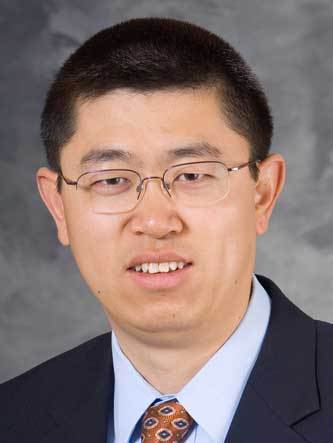
Dr. Ziquan Liu is a Lecturer (Teaching & Research) at Queen Mary University of London's School of Electronic Engineering and Computer Science, affiliated with the Centre for Multimodal AI. He holds a PhD from City University of Hong Kong (2023) and dual B.Sc./B.Eng. degrees from Beihang University (2017). His research focuses on trustworthy machine learning, adversarial robustness, and uncertainty quantification in foundation models. He has served as a reviewer for top conferences like NeurIPS, ICLR, and CVPR, earning an Outstanding Reviewer Award in 2021. His teaching includes modules on machine learning for visual data analysis and principles of machine learning. He supervises PhD students in AI safety and reliability, with notable work on conformal prediction, adversarial attacks, and multimodal learning. His research outputs span top venues such as ICML, CVPR, and NeurIPS, addressing challenges in algorithmic fairness, model certification, and cross-modal alignment.
Azhar Zam is an Associate Professor of Bioengineering at NYU Abu Dhabi (NYUAD) and associated faculty at NYU Tandon School of Engineering's Biomedical and Electrical Engineering departments. He holds a B.Sc. from University of Indonesia, M.Sc. from University of Luebeck (Germany), and Ph.D. from Friedrich-Alexander-University Erlangen-Nuremberg (Germany). His research focuses on developing smart optical devices for medical imaging/diagnostics, including laser surgery, OCT, photoacoustics, and AI-driven imaging systems. He leads the Laboratory for Advanced Bio-Photonics and Imaging (LAB-π) at NYUAD and has authored 85+ publications/patents. Education: Bachelor of Science, University of Indonesia M.Sc. Biomedical Engineering, University of Luebeck Ph.D. Engineering, Friedrich-Alexander-University Erlangen-Nuremberg Research Interests: Innovations in biomedical optics, optical-based smart sensors, AI-enhanced diagnostics, and miniaturized medical imaging systems. His work integrates advanced optical technologies with surgical robotics and clinical applications. Professional Contributions: Associate Editor for Frontiers in Photonics Biophotonics section; Reviews Editor for Frontiers in Ophthalmology Retina section. Previously held positions at University of Basel (Assistant Professor), University of Waterloo, and other institutions globally. Labs & Teams: Directs NYUAD's LAB-π lab focusing on bio-photonics innovations. Collaborates across NYU's global network and international partners.
Ehud Sharlin is a Professor in the Department of Computer Science at the University of Calgary, Faculty of Science. His research focuses on Human-Computer Interaction (HCI) with specializations in human-robot interaction, tangible interfaces, virtual/augmented reality, and autonomous vehicle interactions. He holds a Ph.D. in Computing Science from the University of Alberta (2003), and M.Sc. and B.Sc. degrees in Electrical and Computer Engineering from Ben-Gurion University of the Negev (1997 and 1990). Teaches CPSC 481: Human-Computer Interaction I Recipient of the NSERC Discovery Accelerator Award (2019), ACM Creativity & Cognition Honourable Mention (2018), and multiple academic excellence awards Active in industry collaborations, particularly in medical simulation (e.g., VRSpineSim) and geosciences (e.g., PLANWELL) Research explores: Embodied interaction through robotics and wearables Autonomous vehicle-pedestrian communication systems Immersive tools for creative and professional domains Accessibility in human-technology interfaces Publications span over 100 peer-reviewed works, emphasizing design methodologies, user experience in XR systems, and ethical considerations in sociotechnical systems. His work bridges technical innovation with human-centered design principles.
Ana Luísa Daniel da Silva is a Principal Researcher at the University of Aveiro, Portugal, affiliated with CICECO - Aveiro Institute of Materials (Group 1: Porous Materials and Nanosystems). She holds a BSc in Chemical Engineering from IST, Lisbon (2000) and a PhD in Materials Science from the University of Alicante, Spain (2005). Her research focuses on functional nanomaterials for water purification, biomedical applications, and environmental nanotechnology. She has supervised 10 ongoing PhD students, 25 MSc students, and contributed to over 110 SCI-indexed publications, earning an h-index of 35 (Scopus). Key research areas include surface-modified nanomaterials for pollutant removal and biodetection. She coordinates projects like BIOMAG under Portugal 2020, emphasizing industrial collaboration. Awards include recognition as a top 2% global scientist by Stanford University (2022–2023). Teaching involvement includes courses in Chemistry and Chemical Engineering. Education: BSc Chemical Engineering, IST, Lisbon (2000) PhD Materials Science, University of Alicante (2005) Her work bridges nanotechnology and sustainability, with patents on magnetic nanosorbents and biomolecule detection platforms. Current projects address carbon-neutral building technologies (ILLIANCE) and advanced drug delivery systems for diabetes and melanoma.
Sharmistha Guha is an Assistant Professor in the Department of Statistics at Texas A&M University, part of the College of Arts & Sciences. Her research focuses on Bayesian methods for analyzing complex, high-dimensional data, with applications in neuroscience, network security, and social sciences. She develops techniques for supervised network data analysis, causal inference, and data privacy preservation. Education: Ph.D. in Statistical Science (Duke University, implied by dissertation recognition). Research Interests: Bayesian high-dimensional regression, object-oriented regression, causal inference in randomized trials, probabilistic record linkage, Bayesian nonparametric mixture models, and integration of heterogeneous data types like networks and functional data. Her work addresses challenges in neuroimaging (dMRI/fMRI) and big data analytics. Recent Contributions: Her articles span Bayesian methodologies for network analysis, differential privacy in treatment effect estimation, and applications in environmental health (e.g., PM2.5 exposure studies). Notable trends include leveraging Bayesian hierarchical models for complex data structures and advancing causal inference frameworks. Awards: 2022 Blackwell-Rosenbluth Award (ISBA) 2021 Savage Award Honorable Mention 2024 NSF-DMS Grant 2413721 Grants & Advising: Secured NSF funding for heterogeneous data integration research. Mentored students like Jose Rodriguez-Acosta (NSF GRFP Fellow) and Jacob Pagel (NIH-funded CoSIBS participant). Lab/Team: Leads a research group integrating statistical method development with domain collaborations in neuroscience and network security. Active in organizing workshops and serving on panels to foster academic engagement.
Weibo Cai is an Associate Professor in the Department of Biomedical Engineering at the University of Wisconsin-Madison, with additional affiliations in Materials Science and Engineering and Radiology. He is based at Room 7137, 1111 Highland Avenue, Madison, WI 53705, and can be reached at (608) 262-1749 or via email at wcai@uwhealth.org. His research is centered on the development of multimodality molecular imaging agents, integrating positron emission tomography, optical imaging, and magnetic resonance imaging for early disease diagnosis and monitoring therapeutic responses. A key focus area is nanomedicine, where he designs multifunctional nanoplatforms that combine both diagnostic and therapeutic capabilities, enabling image-guided therapy and personalized medicine. Dr. Cai's scientific work bridges engineering, materials science, and clinical radiology, aiming to translate novel imaging agents from bench to bedside. His contributions support advancements in cancer imaging, targeted delivery, and theranostic systems. Although specific awards and honors are referenced in his profile, they are not listed in detail in the provided text. He mentors students and researchers in biomedical imaging and nanotechnology, though no named advisees are listed. His work likely involves collaborative grants and interdisciplinary projects across engineering and medical disciplines. Dr. Cai leads a research laboratory focused on molecular imaging and nanomedicine, where his team develops innovative imaging probes and evaluates their performance in preclinical models.
Diane Jakacki is a Research Fellow in the Writing and Communication Program at Georgia Tech, specializing in early modern printed drama and digital humanities. She holds a PhD from the University of Waterloo, where she focused on social semiotic analysis of early modern theatre and contributed to federally-funded digital humanities projects. At Georgia Tech, she integrates digital tools into pedagogy, notably developing a digital edition of Tarlton’s Jests and exploring the touring relationship between Elizabethan clown Richard Tarlton and the Queen’s Men. She is a software consultant for imageMAT and the Records of Early English Drama. Her research spans digital humanities methodologies, early modern performance history, and innovative teaching practices. Collaborations include presenting at the Renaissance Society of America (2012) and co-authoring work on digital image annotation. She received the CIOS Teaching Excellence Award and contributed to the Georgia Tech It Gets Better video project, addressing LGBTQ+ support on campus. She emphasizes interdisciplinary approaches, blending literary analysis with technology to enhance student engagement in courses like #DigitalBard: New Media Approaches to Shakespearean Drama . Her future work continues examining Tarlton’s legacy and advancing digital pedagogical frameworks. She is actively involved in the Communication Center’s design, fostering spaces for 21st-century communication skills.
Univ.-Prof. Dr. Dr. hc NJ Shah is a prominent academic and researcher in medical imaging physics. He serves as the Institute Director of the Institute of Neuroscience and Medicine – Medical Imaging Physics (INM-4) at Forschungszentrum Jülich and holds a Professorship in the Department of Neurology at RWTH Aachen University. He also co-directs the Jülich-Aachen Research Alliance (JARA-Brain). His research focuses on advanced MRI techniques, multimodal neuroimaging, and applications in neuro-oncology and mental health. Shah has held roles such as Distinguished Professor at Monash Institute of Medical Engineering (2015–2017) and has been recognized with awards including the Veski Award and Honorary Doctorate from the Georgian Technical University. Education: PhD (1987, University of Manchester), Diploma in Advanced Studies in Science (1984, Manchester), BSc (1983, University of Sheffield). Research interests include MRI physics, ultra-high-field imaging (7T/9.4T), brain tumor imaging, and neuroimaging data science. His work bridges clinical and experimental MRI, with contributions to quantitative water content mapping and multimodal integration of MRI-PET-EEG. His publications highlight advancements in neuroimaging methodologies and their applications in understanding neurological and psychiatric conditions. Awards and honors include Fellowships from the Royal Society of Chemistry, Royal Society of Medicine, and Institute of Physics. Shah leads the MR Physics team at INM-4 and collaborates internationally, including roles at Maastricht University and the University of New Brunswick. His work emphasizes translating imaging innovations into clinical practice for precision medicine.
Özlem Özgöbek is an Associate Professor at the Department of Computer Technology and Informatics, Norwegian University of Science and Technology (NTNU). Her research spans artificial intelligence, machine learning, and recommender systems with a focus on privacy, fake news detection, and educational technology. NTNU - Department of Computer Technology and Informatics Her work explores multimodal fake news detection, privacy implications in recommender systems, and technology-enhanced classroom interaction. Recent publications analyze digital education trends and classroom tools. Özgöbek collaborates with international researchers and contributes to news recommendation workshops. Her projects address ethical AI, environmental sustainability, and real-time information processing.
Dr. Hamidreza Mohades Kasaei is an Associate Professor in the Department of Artificial Intelligence at the University of Groningen, Netherlands. He holds positions in both the Faculty of Science and Engineering and the Faculty of Medical Sciences/UMCG, focusing on Robotics and image-guided minimally-invasive surgery. His work bridges theoretical advances in machine learning with practical robotic applications. Dr. Kasaei's research focuses on developing algorithms for adaptive perception systems through interactive environment exploration and open-ended learning. His specific interests include 3D object perception, grasp affordance detection, object manipulation, and active perception. He has evaluated his research on various robotic platforms including PR2, UR5e, Kinova, Franka robotic arms, and humanoid robots. His work enables robots to learn from past experiences and intelligently interact with non-expert human users using data-efficient techniques. Analysis of his recent publications reveals strong trends toward increasingly sophisticated manipulation capabilities, particularly in dual-arm coordination and handling dense clutter. There's a clear progression toward integrating language models with robotic control systems, as seen in works like 'Lifelong Robot Library Learning' and 'Towards Open-World Grasping with Large Vision-Language Models.' His research consistently addresses real-world challenges in agricultural robotics, assistive technologies, and service robotics applications. Gratama Science Award (2022) Google Research Scholar Award in Machine Learning (2023) Outstanding Associate Editor for IEEE Robotics and Automation Letters (2023) Dr. Kasaei has successfully supervised multiple PhD students including Zhenxing Zhang (thesis on 'Generative Adversarial Networks for Diverse and Explainable Text-to-Image Generation') and Hamed Ayoobi (thesis on 'Explain What You See: Argumentation-Based Learning and Robotic Vision'). His research is supported by significant grants including the Google Research Scholar Award for 'Continual Robot Learning in Human-centered Environments' and various conference organization roles including workshops at RSS 2023 and NeurIPS 2022. He leads the Lifelong Interactive Robot Learning Lab (IRL-Lab), which focuses on six key research directions: Perception and Perceptual Learning, Object Grasping and Manipulation, Lifelong Interactive Robot Learning, Dual-Arm Manipulation, Dynamic Robot Motion Planning, and Exploiting Multimodality. The lab develops cutting-edge approaches for robots to learn in open-ended fashion through interaction with non-expert human users, with applications in assistive robotics for people with disabilities.
Katrin Vogt is a Group Leader at the University of Konstanz and an Affiliated Scientist at the Max Planck Institute of Animal Behavior. She serves on the IMPRS Board and Faculty, focusing on behavioral neuroscience in Drosophila larvae. Her research explores how social context and internal states (e.g., hunger) modulate neural circuits and behavior, utilizing genetic tools like optogenetics, RNAi, and CRISPR. Key Research Areas: Behavioral flexibility under internal state changes Neural integration of sensory and state signals in the antennal lobe Role of serotonin (CSD neuron) in modulating output pathways Computational modeling of state-dependent circuit dynamics Notable Achievements: Discovered state-dependent olfactory valence switching (e.g., geranyl acetate shifts from aversion to attraction under food deprivation) Elucidated glutamatergic inhibition mechanisms in picky local interneurons Identified 5-HT7 receptor's role in upregulating uniglomerular projection neuron activity Recent Publications: 2025: PLoS Biology on multimodal sensory neurons 2024: Current Biology commentary on behavioral neuroscience 2023: Current Biology on multisensory memory merging Academic Affiliations: University of Konstanz (Group Leader, Department of Collective Behavior) Max Planck Institute of Animal Behavior (Affiliated Scientist) IMPRS for Organismal Biology (Faculty Member) Scientific Awards: DFG Research Fellowship (Project No. 345729665) Students & Collaborators: PhD students: Hari P. Narayanan, Akhila Mudunuri Research assistants: Nora Tutas, Julius Klein, Constantin Dyroff DAAD summer student: Élyse Zadigue-Dubé Recent graduates: Amelie Edmaier (BSc 2023), Constantin Dyroff (BSc 2023)
Shweta Yadav is an Assistant Professor in the Department of Computer Science at the University of Illinois Chicago (UIC). Prior to this, she was a Bridge to the Faculty (B2F) fellow at UIC and a postdoctoral research fellow at the U.S. National Library of Medicine, NIH. She holds a Ph.D. in Computer Science from the Indian Institute of Technology Patna, India. Education: Ph.D. in Computer Science, Indian Institute of Technology Patna, India Research Interests Her research focuses on the intersection of Natural Language Processing (NLP), Healthcare Informatics, Biomedical Text Mining, and Computational Social Science. She develops machine learning algorithms to advance AI applications in healthcare, particularly in medical document summarization , disease progression modeling , and health outcome prediction using electronic health records and social media data. Her work emphasizes interdisciplinary collaboration to address real-world healthcare challenges. Recent Publications Her recent publications highlight advancements in Multimodal Mental Health Analysis , Perspective-aware Healthcare Summarization , and Biomedical Relation Extraction . She employs techniques like Transformer models , Contrastive Learning , and Attention Frameworks to tackle low-resource settings and extract insights from complex data sources.
Dr. Silvia Martínez Martínez is a Researcher in the Department of Philology and Translation at the University of Granada, specializing in German Philology with a PhD completed in 2015. Her academic work centers on accessibility in audiovisual translation, particularly subtitling for the deaf and hard of hearing (SpS), and audio description across multilingual contexts. Her research interests include: Audiovisual Translation Accessibility for Deaf and Hard of Hearing Subtitling for the Deaf Translation Technology German-Spanish Translation Audio Description Terminology Analysis of her 15 most recent publications (2022-2025) reveals dominant trends in AI-driven accessibility solutions, cross-linguistic corpus studies (German/Spanish/English), and innovative pedagogical applications. Key thematic clusters include sound translation in streaming/VOD platforms, gamification in STEM education, vitivinicultural terminology, and cultural adaptation in music translation, demonstrating her interdisciplinary approach spanning translation technology, medical accessibility, and sociological studies. She has received the Premio Francisco Ayala (2012) for her contributions to translation studies, recognizing her work on accessibility frameworks and specialized translation methodologies. Dr. Martínez Martínez actively contributes to educational innovation through projects like DESAM (accessible museum resources) and OPERA (cultural accessibility), while her supervision of PhD candidates and development of didactic tools for audio description training underscore her commitment to advancing inclusive translation practices in academic and professional settings.
Tianming Liu serves as a Distinguished Research Professor in the School of Computing at the University of Georgia, with courtesy faculty appointments in the Department of Epidemiology and Biostatistics at the College of Public Health and the Institute of Bioinformatics. His academic career at UGA spans from Assistant Professor (2008-2013) to Associate Professor (2013-2015) to full Professor (2015-present), culminating in his recognition as a Distinguished Research Professor in 2017. He also serves as Graduate Program Faculty in the School of Computing. Education: Ph.D. in Computer Engineering, Shanghai Jiaotong University, China (2002) Master of Science in Computer Science, Northwestern Polytechnical University, China (1999) Bachelor of Arts in Computer Science, Northwestern Polytechnical University, China (1998) Dr. Liu's research focuses on the intersection of computer science and neuroscience, with particular expertise in biomedical image analysis, computational neuroscience, and biomedical informatics. His work centers on cortical architecture imaging and discovery, developing advanced computational methods for analyzing brain structure and function. His research spans multiple disciplines including neurosciences, cognitive sciences, biomedical engineering, and clinical sciences, with applications in understanding Alzheimer's disease progression, brain connectomics, and neural architecture. Analysis of Dr. Liu's recent publications reveals a strong trajectory in applying deep learning techniques to neuroimaging data. His work increasingly focuses on developing sophisticated neural network architectures specifically designed for brain connectome analysis, with particular attention to spatiotemporal dynamics and hierarchical organization of brain networks. Recent publications demonstrate his leadership in applying neural architecture search methods to optimize brain network analysis pipelines, with applications spanning from Alzheimer's disease research to fundamental neuroscience questions about cortical folding patterns. Scientific Recognition: Distinguished Research Professor at the University of Georgia (2017) Dr. Liu has secured substantial research funding through multiple competitive grants from NIH and NSF, demonstrating the significance and impact of his work. His most notable projects include the NIH R01 grant "Developing an Individualized Deep Connectome Framework for ADRD Analysis," the NIH R01 grant "Mapping Trajectories of Alzheimer's Progression via Personalized Brain Anchor-nodes," and the NSF CRCNS grant "Exploring the Mechanism of 3-Hinge Gyral Formation and its Role in Brain Networks." These projects highlight his leadership in applying computational methods to address critical challenges in neuroscience and medicine, particularly in the domain of Alzheimer's Disease and Related Dementias (ADRD). Dr. Liu collaborates extensively across disciplines, working with researchers at institutions including University of Virginia, Emory University, UNC Chapel Hill, and UT Arlington. His work has contributed to the development of BiomedGPT, an open-source visual-language foundation model for biomedical applications, demonstrating his commitment to creating accessible tools for the broader research community.
Prof. Tomaso Fontanini is a researcher at the Department of Engineering and Architecture, University of Parma. His academic contributions span multiple disciplines, including computer science, artificial intelligence, and computer vision. 2025/2026: Deep Learning and Generative Models (Master's in Computer Engineering) 2024/2025: Processing Systems (Bachelor's in Prevention Techniques) 2023/2024: Processing Systems (Bachelor's in Prevention Techniques) 2022/2023: Processing Systems (Bachelor's in Prevention Techniques) Research Focus: His work primarily explores generative models, image synthesis, and style transfer with a strong emphasis on semantic control and attention mechanisms. Recent research has advanced state space models for efficient style transfer (Mamba-ST), semantic image synthesis via class-adaptive cross-attention, and diffusion model acceleration through U-shape architectures. Scientific Contributions: Publications include breakthroughs in controllable face synthesis, mask-based generative modeling, and video anomaly detection. His work bridges theoretical advancements in neural architectures with practical applications in remote sensing and educational technology. 2025: FLAV (audio-video generation), Swin2-MoSE (remote sensing) 2024: MARS (text-based person search), MCGM (mask conditioning) 2023: FrankenMask (face part editing), Student attendance systems