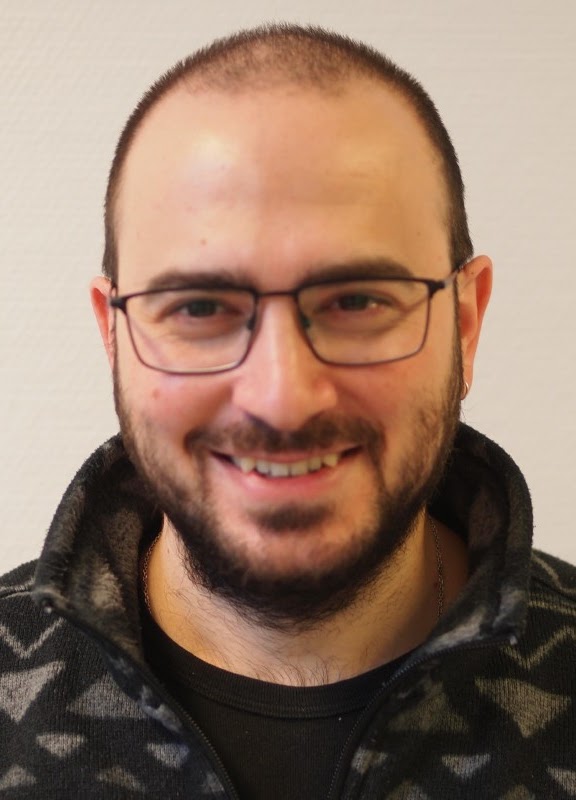
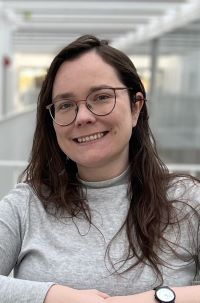
Anders Søgaard is a Professor at the University of Copenhagen , affiliated with both the Department of Computer Science and the Department of Communication. His research bridges Natural Language Processing and Machine Learning with a focus on AI ethics , explainability , and human-AI interaction . Primary Affiliation: Department of Computer Science, University of Copenhagen Secondary Affiliation: Department of Communication, University of Copenhagen Email: soegaard@di.ku.dk, soegaard@hum.ku.dk Research Interests His work spans Natural Language Processing , Machine Learning , and AI ethics , with recent studies addressing: Trustworthiness in AI systems Explainable AI (XAI) frameworks Multilingual model fairness and alignment Human-AI collaboration in reasoning tasks Ethical implications of social robots Mental health analytics using ML Recent Publications His 2025 output highlights trends in: AI ethics (e.g., fairness metrics, trustworthy systems) Multilingual model analysis (knowledge retention, cross-lingual transfer) Human-centric AI (gaze data, cultural considerations) Applications in healthcare and social good
Desmond Elliott is an Associate Professor in the Natural Language Processing section at the Department of Computer Science, University of Copenhagen (UCPH). His research focuses on multimodal and multilingual models with specific emphasis on vision-language integration and tokenization-free NLP approaches. He teaches Bachelor and Master's level courses including Advanced Topics in Natural Language Processing (since 2019), Grundlæggende Data Science (since 2023), and previously Data Science (2021-2023). His research interests center on building and understanding multimodal and multilingual models , particularly exploring vision and language interactions through billion-parameter systems. Current work investigates cultural representation disparities in vision-language models, parameter-efficient captioning, and multimodal distributional semantics across diverse domains including food culture and medical imaging. His methodology emphasizes real-world applicability in non-English contexts and ethical considerations in multimodal systems. Elliott's recent publications (2025) demonstrate leadership in multimodal NLP, with significant contributions to vision-language pretraining, multilingual evaluation frameworks, and clinical NLP applications. His work spans theoretical advancements in model architectures and practical implementations addressing challenges in low-resource languages and domain adaptation. Best Long Paper Award at EMNLP 2021 Best Poster Award at COLING 2019 As an active educator, Elliott contributes to courses on Fair and Transparent Machine Learning and previously taught Information Retrieval. His research collaborations span international institutions with particular focus on European and non-English language contexts, reflecting UCPH's recognition as Europe's #1 institution for HCI research over the past decade.
Daniel Hershcovich is a Tenure Track Assistant Professor at the Department of Computer Science (Faculty of Science, University of Copenhagen) specializing in Natural Language Processing and Machine Learning . His research focuses on cross-cultural adaptation of language models, integrating human values into AI, and analyzing food-related cultural narratives for sustainable diets. Education: Ph.D. in Computational Neuroscience from Hebrew University of Jerusalem B.Sc. in Mathematics and Computer Science from Open University of Israel Recent publications highlight his work on multimodal models (haptic captioning, visual assistants for the blind), historical text analysis (Danish/Norwegian literature, euphemism detection), and cross-cultural NLP (recipe adaptation, cultural value alignment, climate awareness). His projects frequently combine AI ethics with domain-specific applications like food studies, historical linguistics, and accessibility research. Key collaborative networks include institutions in Denmark, Israel, and international partnerships through conferences like ACL, EMNLP, and workshops on cross-cultural NLP. The NLP section at DIKU serves as his primary affiliation for these efforts.
Serge Belongie is a Professor at the Department of Computer Science (DIKU) at the University of Copenhagen, where he holds dual affiliations with the Pioneer AI research section and the Image Analysis, Computational Modelling, and Geometry section. His academic position places him at the forefront of interdisciplinary research connecting computer vision with language models, geospatial analysis, and cultural understanding. Professor Belongie's research program encompasses several critical domains in modern artificial intelligence: Advanced computer vision and image analysis techniques Vision-language model integration and multimodal systems 3D point cloud processing and semantic segmentation Geospatial representation learning for environmental applications Fine-grained object recognition and detection Cultural context understanding in AI systems His recent publication record reveals a sophisticated trajectory toward developing precise control mechanisms for vision-language models, with applications spanning forensic analysis, cultural heritage preservation, and social media understanding. The research demonstrates increasing sophistication in handling cultural context and enabling fine-grained manipulation of visual content through natural language interfaces. Professor Belongie maintains an active research group producing significant scholarly output, with over 280 research publications documented in his academic profile. His work is supported by research funding that enables cutting-edge exploration in multimodal AI systems with practical societal impact. He plays a key role in the Pioneer AI center at the University of Copenhagen, which focuses on advancing artificial intelligence through interdisciplinary collaboration and innovative research approaches that bridge theoretical computer science with real-world applications.
Anders Kalsgaard Møller is an Associate Professor in the Department of Culture and Learning at Aalborg University's Faculty of Humanities and Social Sciences. He is actively engaged in research and innovation in learning design, digital technologies, and artificial intelligence in education. His work is centered around the L-ILD (IT and Learning Design), Green Society, and MASSHINE Xlab – Design, Learning and Innovation research environments. His research interests span Learning Design , Computational Thinking , Artificial Intelligence in Education , Human-Robot Interaction , and Environmental Literacy . He investigates how emerging technologies can be integrated into educational practices to enhance collaborative learning, literacy development, and sustainable thinking. His work often involves participatory and co-design methods with educators and children. The recent publications of Anders Kalsgaard Møller reflect a strong trend toward the application of generative AI, robotics, and digital tools in language and primary education. His scholarly output emphasizes interdisciplinary collaboration, technological innovation, and real-world educational impact, particularly in K-12 and higher education contexts. Principal Investigator, 'Using artificial intelligence in English teaching at upper secondary schools' (2023–2026) Co-PI, 'Co-Designing Robot-Assisted Learning for Children' (ongoing) Co-PI, 'Labor market-oriented AI skills at cand.it.' (2024–2026) Co-PI, 'Understanding and fostering future consumers' environmental literacy' (2024–2025) Anders Kalsgaard Møller has been involved in media outreach, including coverage on children's interactions with social robots and discussions on AI in education. He has also contributed to academic leadership through conference organization and editorial roles, such as in the DLI conference series. He is affiliated with key research labs including: L-ILD – IT and Learning Design Green Society MASSHINE Xlab – Design, Learning and Innovation These labs focus on digital innovation, sustainability, and human-centered design in educational contexts.
Georgios Arvanitidis is an Associate Professor at the Technical University of Denmark (DTU) in the Department of Applied Mathematics and Computer Science, specifically within the Section for Cognitive Systems (CogSys). He has established himself as a leading researcher in geometric machine learning, focusing on the application of differential geometry principles to enhance machine learning models. His work bridges theoretical mathematics with practical applications in artificial intelligence, with particular emphasis on understanding the geometric structure of data manifolds and latent spaces. Dr. Arvanitidis completed his educational journey with a Bachelor's degree from the Department of Informatics at the Aristotle University of Thessaloniki, followed by a Master's degree in Computer Science from Saarland University supported by the Max Planck Institute for Informatics. He earned his PhD at DTU's Cognitive Systems section under the supervision of Søren Hauberg, with additional research experience at Philipp Hennig's Probabilistic Numerics group. Prior to his current position as associate professor, he was a PostDoc at the Max Planck Institute for Intelligent Systems working with Bernhard Schölkopf. Dr. Arvanitidis's research primarily focuses on differential geometry in machine learning , where he explores how geometric structures can enhance representation learning and statistical modeling. His work in generative models investigates how learning the geometry of data manifolds can improve deep learning architectures. In the domain of deep learning theory , he examines why deep learning models generalize effectively on unseen data, with particular attention to the curvature properties of loss landscapes. His research in approximate Bayesian inference applies geometric principles to improve uncertainty quantification in neural networks. Through his innovative approaches, Dr. Arvanitidis has established himself as a leading researcher in geometric machine learning, contributing to both theoretical foundations and practical applications across various domains including robotics and life sciences. The publication trends of Dr. Arvanitidis reveal a consistent and evolving focus on geometric approaches to machine learning problems. His recent work (2023-2025) demonstrates increasing sophistication in applying Riemannian geometry to deep learning architectures, with particular emphasis on latent space geometry, optimization on manifolds, and geometric interpretations of neural network behavior. A notable pattern is the progression from foundational work on geometric representations to more applied research in areas like robotics and causal inference. His publications span top-tier conferences including NeurIPS, ICML, ICLR, and AISTATS, reflecting the high impact of his research. The interdisciplinary nature of his work is evident in collaborations across mathematics, computer science, and robotics domains, with recent papers addressing challenges in multimodal sampling, safety guarantees for dynamical systems, and counterfactual explanations. Dr. Arvanitidis has received several notable scientific awards and recognitions: Sapere Aude starting grant from the Independent Research Fund Denmark (DFF) GADL funding i-Rase, Pathfinder, and EIC (European Innovation Council) funding Best reviewer award for NeurIPS 2019 Best reviewer award for NeurIPS 2018 Best student paper award at Robotics: Science and Systems (R:SS) 2021 Dr. Arvanitidis actively mentors PhD students and researchers, currently supervising Alejandro Valverde, Johanna Gegenfurtner, and Albert Kjøller Jacobsen. He has previously co-supervised Alison Pouplin's PhD and worked with research assistant Georgios Pantis. His group receives substantial funding through multiple prestigious grants including the Sapere Aude starting grant from the Independent Research Fund Denmark, as well as European Innovation Council funding. He has been instrumental in creating opportunities for students interested in geometric machine learning, offering BSc and MSc thesis projects focused on generative models, deep learning theory, and optimization techniques. Dr. Arvanitidis also contributes significantly to the academic community as a reviewer for top conferences including ICLR and TMLR, and as an area chair for NeurIPS, ICML, AISTATS, and UAI. He co-organized the Machine Learning Summer School 2020 in Tübingen, further demonstrating his commitment to education and community building. Dr. Arvanitidis leads a vibrant research group focused on geometric machine learning within the Cognitive Systems section at DTU. His team includes multiple PhD students working on cutting-edge research at the intersection of differential geometry and artificial intelligence. The group has developed notable software tools, including the "geometric_ml" GitHub repository with over 70 stars, which contains implementations for applying Riemannian geometry in machine learning. His research has practical applications in robotics, where geometric approaches enable more robust motion planning, as evidenced by his work on "Reactive Motion Generation on Learned Riemannian Manifolds" which received a best student paper award. Additionally, his methodologies have found applications in life sciences, as mentioned in his 2022 AISTATS paper. The collaborative nature of his work is evident through extensive partnerships with researchers at institutions including the Max Planck Institute for Intelligent Systems, University of Cambridge, and various European universities. His recent news items indicate active engagement with the academic community through talks, conference presentations, and ongoing supervision of new PhD students joining his group.
Mojtaba Zarei is a researcher at the Department of Clinical Research, Faculty of Health Sciences, University of Southern Denmark, with additional affiliations at Odense University Hospital (OUH) and Karolinska Institutet (KI). His primary research unit is the Neurology Research Unit in Odense, focusing on advanced neuroimaging techniques and their applications in neurological and sleep disorders. Dr. Zarei's research spans multiple domains within neuroscience, with particular expertise in Positron Emission Tomography (PET), Diffusion Tensor Imaging (DTI), and cognitive function assessment. His work frequently addresses Alzheimer's Disease, Parkinson's Disease, and insomnia disorders, utilizing both clinical and computational approaches. His fingerprint analysis shows strong activity in neuroscience (100% for PET), diffusion tensor imaging (66%), cognitive function (45%), and Alzheimer's Disease (40%). His recent publications reveal a clear trajectory toward integrating multimodal imaging techniques with machine learning approaches for improved diagnosis and understanding of neurological conditions. The work on OPETIA (Odense-Oxford PET Image Analysis) demonstrates his contribution to developing standardized tools for neuroimaging analysis. His research increasingly bridges computational methods with clinical neuroscience, as evidenced by his work on image stitching algorithms and machine learning applications for insomnia classification. Dr. Zarei actively collaborates with researchers across multiple institutions, with notable external collaborations visible on the international network map. His work has been mentioned by peer review sites, picked up by news outlets, and shared across social media platforms, indicating growing impact in his field. Within his research unit of Neurology in Odense, Dr. Zarei appears to be part of a multidisciplinary team working at the intersection of clinical neurology, advanced imaging, and computational analysis, contributing to both methodological development and clinical applications of neuroimaging techniques.
Henning Langberg is a Professor in the Department of Public Health at the University of Copenhagen's Faculty of Health and Medical Sciences. He serves as Research leader for CopenRehab and has held significant external positions including Chief Innovation Officer at Copenhagen University Hospital until October 2023 and CEO of Bestyrelsen for Kulturarvens Forskerskole until April 2020. Starting October 2024, he will serve as a Consultant for LangbergPLUS consulting. Langberg's research interests focus on rehabilitation science, particularly in the areas of: Cancer rehabilitation, especially for lung cancer patients Physical activity interventions for chronic conditions like diabetes Use of technology in healthcare and rehabilitation Gerontechnology and aging-related health interventions Cardiopulmonary rehabilitation His 251 research outputs demonstrate a strong focus on evidence-based rehabilitation approaches. Recent publications show trends toward systematic reviews and meta-analyses of rehabilitation interventions, particularly examining the effectiveness of early postoperative rehabilitation, remote monitoring for chronic disease management, and comparative exercise methodologies. His work bridges clinical practice with research evidence, often focusing on patient-centered outcomes and quality of life improvements. Langberg has been actively involved in research networks and committees, including membership in Sundhedsstyrelsen (the Danish Health Authority) from 2012 to 2015 and leadership of CopenRehab since 2012. His research has garnered significant attention with numerous citations and mentions across social media and academic platforms. He leads the CopenRehab research group, which focuses on developing and evaluating rehabilitation interventions across various patient populations. The team employs both quantitative and qualitative methodologies to understand the effectiveness of rehabilitation programs and the factors influencing patient engagement and outcomes.
Patrizia Paggio serves as an Associate Professor and Senior Researcher within the Department of Nordic Studies and Linguistics at the University of Copenhagen's Faculty of Humanities, concurrently holding a full professorship at the University of Malta's Institute of Linguistics and Language Technology since September 2011. Her scholarly work centers on the intricate relationship between verbal and nonverbal communication modalities, with international recognition for advancing methodologies in multimodal analysis. Academic Background: PhD in Computational Linguistics from the University of Copenhagen (1997), dissertation: "The Treatment of Information Structure in Machine Translation" Professor Paggio's research program investigates how gestures, head movements, and other nonverbal cues interact with spoken language to construct meaning in natural communication. She has pioneered methodologies for constructing and analyzing multimodal corpora, while maintaining technical expertise in machine translation systems, grammar engineering, and content-based querying frameworks. Her theoretical work spans formal syntactic structures, discourse phenomena, information packaging, and ontological representations for linguistic data, consistently bridging computational methods with linguistic theory. Analysis of her recent publications (2020-2025) reveals a sustained focus on computational approaches to nonverbal communication, particularly the automatic detection and annotation of head movements and gestures in both physical and digital environments. Key contributions include the GEHM Zoom corpus for online interaction analysis, eye-tracking studies of emoji processing, and diachronic modeling of historical language change. Her work strategically integrates eye-tracking, corpus linguistics, and machine learning techniques, establishing her at the convergence of linguistic theory, cognitive science, and artificial intelligence applications. Professional Leadership: Coordinator of the international GEHM (Gestures and Head Movements in Language) research network Organizer of MULTIMODAL CORPORA 2018, 4th European/Nordic Symposium on Multimodal Communication, and LREC2022 Workshop on People in Vision, Language and the Mind
Kristín Björg Arnardóttir is a Research Fellow at POLIMA, University of Southern Denmark. Her research focuses on quantum optics, condensed matter physics, and theoretical physics, particularly in polariton dynamics, light-matter interactions, and open quantum systems. She holds a BSc in Physics from the University of Iceland, an MSc in Theoretical Physics from Stockholm University, and a PhD from Nanyang Technological University (Singapore), where her work centered on strong light-matter coupling in solid-state systems. Prior to joining SDU in 2024, she conducted postdoctoral research at the University of St Andrews, UK, investigating organic polaritons and non-Markovian dynamics under Professors Jonathan Keeling and Brendon Lovett. Her current research at POLIMA explores polariton-mediated energy transfer and chiral polaritons under the supervision of Christos Tserkezis. Her academic trajectory includes significant contributions to understanding cavity quantum electrodynamics, nanocavity lasing mechanisms, and topological effects in materials. Recent work emphasizes non-Markovian effects in long-range energy transfer and temporal dynamics in polariton systems. Projects span theoretical modeling and interdisciplinary applications of quantum phenomena in optoelectronic systems. Key research themes include: Polariton-mediated energy transfer mechanisms Organic polariton lasing dynamics Non-equilibrium quantum systems Cavity QED in low-dimensional structures Topological effects in condensed matter No scientific awards or grants are explicitly listed in the provided information. Her work is part of the POLIMA research group, focusing on advancing theoretical frameworks for quantum optical systems with applications in next-generation optoelectronics and quantum technologies.
Andreas Møgelmose is an Associate Professor at Aalborg University's Department of Architecture, Design and Media Technology under the Technical Faculty of IT and Design. His research focuses on computer vision, artificial intelligence, and their applications in autonomous systems, driver assistance, and industrial vision. He leads projects like AI Color Fashion and Real-world adaption of generative AI for architecture. Møgelmose teaches introductory programming, computer vision, and advanced master's courses, emphasizing practical project-based learning. His work includes developing datasets such as the Multi-view Traffic Intersection Dataset (MTID) and exploring vision-language models for autonomous vehicle safety. He actively engages in media discussions on AI ethics and societal impacts. Research interests span dynamic gesture interpretation for cooperative autonomous vehicles, surgical skill assessment via automated metrics, and multimodal classification of environmental data. He has contributed to over 50 publications, including work on 3D object detection frameworks and generative AI education. Møgelmose collaborates on projects funded by industry partners like COWI and Danish government initiatives. His teaching philosophy centers on blended learning and practical application, fostering innovation in AI and computer vision education. Notable projects include AI:Xpertise Lab (2025–present), which explores AI-driven expertise systems, and collaborations on forest biodiversity analysis using LiDAR and orthophotos. His recent media engagements highlight societal AI challenges, emphasizing responsible implementation in public sectors.
Davide Mottin is an Associate Professor at the Department of Computer Science, Aarhus University. His primary research focuses on graph theory, machine learning, and data mining, with significant contributions to knowledge graphs, algorithm design, and interdisciplinary applications in drug discovery and material science. He holds a leadership role in large international conferences such as CIKM 2024 as a Program Chair. His research explores scalable graph algorithms (e.g., subgraph matching, alignment), robust knowledge graph cleaning, and leveraging large language models for scientific tasks. Mottin has pioneered work on spectral methods for graph analysis (e.g., NetLSD, VERSE embeddings) and developed frameworks for interactive data exploration (e.g., X2Q, MetaExp systems). Key contributions include FUGAL for graph alignment and Ucode for community detection Active in reproducibility efforts, as seen in retraction notices and algorithmic redesigns Focus on practical applications in drug discovery via evolution-based models (EvolMPNN) He has authored over 60 peer-reviewed publications and holds grants supporting interdisciplinary research at the intersection of computer science and life sciences. Mottin is affiliated with the university's AI and data science initiatives, contributing to both theoretical advancements and real-world system implementations.
Brady Wagoner is a Professor in the Department of Communication and Psychology at Aalborg University's Faculty of Social Sciences and Humanities, where he co-directs the Centre for Cultural Psychology. He has established himself as a leading figure in cultural psychology with over 200 publications spanning two decades of research. Wagoner earned his PhD in Psychology from the University of Cambridge. His academic journey has led him to develop a distinctive approach to psychology that emphasizes cultural and social contexts in human meaning-making processes. His research program investigates the dynamic processes through which individuals and societies construct meaning, with particular focus on memory, history, and the public understanding of science. Methodologically, he prioritizes examining unfolding processes rather than static mental characteristics, exploring how change occurs at both individual and societal levels and how these interact. His work integrates perspectives from psychology, anthropology, philosophy, and sociology to create a more comprehensive understanding of human experience. Analysis of his recent publications reveals a strong emphasis on memorial sites, narrative processes, cultural memory, and contemporary social phenomena including conspiracy theories and vaccine hesitancy. His work demonstrates consistent engagement with both theoretical development and empirical investigation of culturally situated psychological processes. Humboldt Research Award (2021) - prestigious lifetime achievement award from the Alexander von Humboldt Foundation Collegium de Lyon fellowship (2021) Netherlands Institute for Advanced Studies Research Fellowship (2021) Lucienne Domergue Award (2019) Institute for Advanced Studies Lyon Research Fellowship (2018) Wagoner has created and co-directed the professional kandidate program in Cultural Psychology since 2013 and teaches courses in social psychology with social theory, general psychology, and the psychology of religion. He regularly supervises student projects across multiple semesters and offers PhD courses on visual methods. His current research projects include analyzing memorial sites, studying the romantic philosophical roots of psychology, and conducting longitudinal research on conspiracy theorists and anti-vaxxers. He leads the MAKINGHISTORIES project (2023-2026) and participates in the Niels Bohr Centre for Cultural Psychology, demonstrating sustained research activity and grant acquisition throughout his career. As co-director of the Centre for Cultural Psychology, Wagoner oversees a research environment focused on culturally sensitive psychological approaches. His collaborative network spans international institutions, as evidenced by his involvement in projects like the Memorandum of Understanding between Aalborg University and Ritsumeikan University in Japan. His work with colleagues such as Carolin Demuth, Ignacio Brescó de Luna, and Salem Awad demonstrates his commitment to interdisciplinary and international research collaborations.
David Robert Shannon is an Instructor at the Department of Computer Science, University of Copenhagen. He contributes to teaching and research within the Machine Learning section, which participates in the SCIENCE AI Centre. University: University of Copenhagen Department: Department of Computer Science Section: Machine Learning His research interests span theoretical and applied machine learning, focusing on natural language processing, information retrieval, medical image analysis, computational biology, and quantum computing applications. He utilizes the department's powerful compute cluster for projects involving AI's environmental impact, quantum algorithms, and biomedical data modeling. Recent publications highlight work in quantum-inspired neural networks, sustainable AI, medical diagnostics, and cross-cultural computational frameworks. Key themes include ethical considerations in AI, hybrid quantum-classical systems, and multimodal data analysis. David collaborates with the Machine Learning section and SCIENCE AI Centre, leveraging resources like TreeSense for remote sensing and deep learning of global tree resources. The section's activities range from foundational research to applications in sustainability and biological data modeling.
Rico Krueger is an Associate Professor at the Department of Technology, Management and Economics within the Transport Division at the Technical University of Denmark (DTU). His research focuses on developing models and technologies at the intersection of behavioral modeling, machine learning, and simulation to improve human-centric and sustainable transport systems. Key areas include travel demand forecasting, multimodal systems, and emerging technologies like virtual reality for understanding human decision-making. Education: Ph.D. in Civil and Environmental Engineering from UNSW Sydney (Australia), followed by postdoctoral research at École Polytechnique Fédérale de Lausanne (EPFL), Switzerland. He holds a prestigious European Research Council Starting Grant (2024–2029) for his project IMMERSION , exploring human decision-making through choice and process data integration. Research emphasizes interdisciplinary approaches, combining data science with behavioral theories to address challenges in urban mobility, sustainability, and public health. His work bridges theoretical advancements with practical applications, such as optimizing policy interventions during pandemics and enhancing ride-sourcing systems. Awards: ERC Starting Grant for IMMERSION project. Grants: Focus on behavioral modeling and pandemic-related transport policies. Labs/Teams: Active in DTU’s Intelligent Transport Systems Section, leading interdisciplinary projects on mobility and health.