Richard Nisan Fine is a Clinical Professor (Part-Time) specializing in Pediatrics with a focus on pediatric nephrology and transplantation medicine. His research emphasizes kidney-related diseases such as focal segmental glomerulosclerosis (FSGS), pediatric renal transplantation outcomes, and growth disorders in transplant recipients. He has extensively studied immunosuppressive therapies, post-transplant quality of life, and long-term patient management strategies. Dr. Fine’s work includes evaluating clinical trial designs for kidney diseases and exploring genetic etiologies of pediatric glomerulopathies. His studies address practical challenges such as medication adherence, growth hormone therapy efficacy, and transitioning adolescent transplant patients to adult care. He has contributed to understanding kidney retransplantation outcomes, tolerance induction in solid organ transplants, and the impact of renal replacement therapy timing on pediatric mortality. His research integrates clinical, immunological, and pharmacological perspectives, aiming to improve outcomes for children with end-stage renal disease and other chronic kidney conditions.
Ekaterina Kim is an Associate Professor at the Department of Marine Technology, Norwegian University of Science and Technology (NTNU), within the Faculty of Engineering. She specializes in Arctic engineering, focusing on ice mechanics, structural analysis, and AI-driven solutions for extreme environments. Her work bridges fundamental material science principles with engineering applications, addressing challenges such as ice-structure interactions, risk management in ice-covered waters, and autonomous systems for sea ice monitoring. Education: Formal engineering training at Peter the Great Polytechnic University (St. Petersburg), followed by a PhD at NTNU (2010–2017). Her research integrates interdisciplinary approaches, including machine learning for sea ice classification, probabilistic risk models, and numerical simulations of ice dynamics. Research Interests: Arctic technology and digitalization AI applications in extreme environments Risk analysis for ice navigation Sea ice parametrization and segmentation Structural analysis of icebreakers Publications: Over 30 peer-reviewed articles, focusing on Bayesian networks for risk modeling, autonomous sea ice mapping systems, and material models for ice impact. Recent work emphasizes AI-driven solutions for operational safety and data-driven decision support in the Arctic. Awards & Recognition: While no specific awards are listed, her contributions to Arctic research are highlighted through collaborative projects like the Arctic Hive Mind Group and the AIDing Arctic initiative. She also contributes to education, teaching courses on finite element methods and ice-structure interaction. Labs & Teams: Leads the Arctic Hive Mind Group at NTNU, fostering interdisciplinary collaboration between engineers, data scientists, and Arctic experts. Involved in the Risk Group within the Department of Marine Technology.
Kristian Olesen is an Associate Professor in strategic spatial planning at the Department of Sustainability and Planning, Aalborg University, affiliated with The Technical Faculty of IT and Design. He is a member of the Planning for Urban Sustainability (PLUS) research group and serves as program coordinator for the Urban Planning and Management master’s program. His work focuses on linking spatial planning to politics, urban infrastructure investments, and neoliberalization trends in Denmark. Research Interests: Strategic spatial planning at multiple scales (transnational to neighborhood) Urban redevelopment of deprived neighborhoods via housing associations Integration of energy and urban planning for Positive Energy Districts Neoliberalization of Danish spatial planning systems Urban governance and public participation Projects: Lead investigator for PED-JUST (2025-2027): Energy transition strategies in disadvantaged neighborhoods FLEXPOSTS (2022-2025): Flexible positive energy district systems Fremtidens Boligorganisation (2021-2025): Housing associations as urban developers Teaching: 10+ years leading problem-based learning in urban planning aligned with UN SDGs Focus on sustainable development goals integration in curricula Collaborations: Active partnerships with Realdania, Landsbyggefonden, and Innovation Fund Denmark International collaborations on Nordic housing policy and urban development
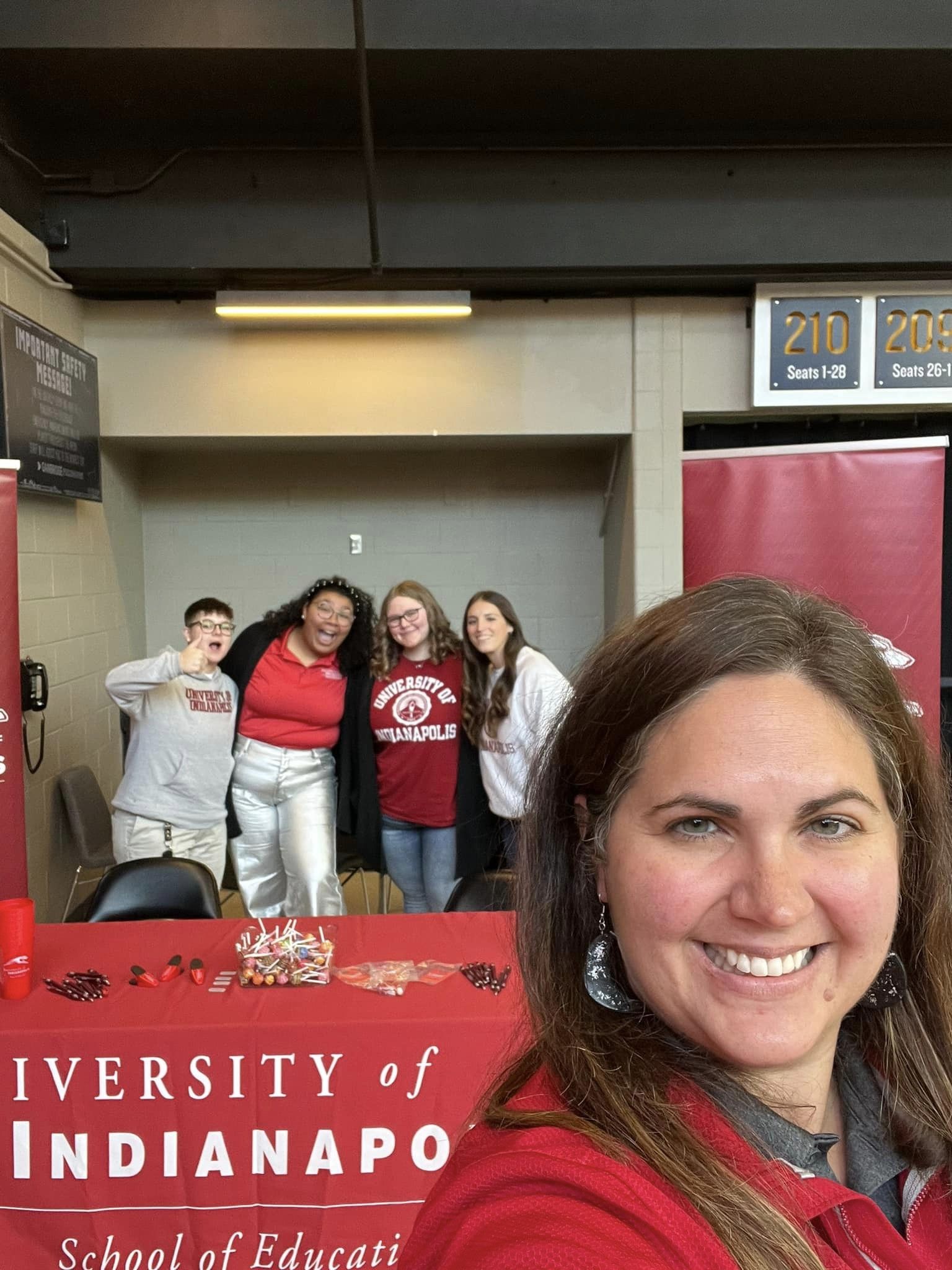
Dr. Kate Reinhardt is an Assistant Professor of Practice and Director of the Clinical Partnership Academy in the School of Education at the University of Indianapolis, within the College of Education & Behavioral Sciences. She teaches courses on multimodal content literacy , working with English-language learners , and explorations in education , while coordinating secondary education student teachers. Her research focuses on preparing teachers to support English-language learners (ELs) in general education classrooms, emphasizing culturally responsive teaching methods and practical strategies for inclusive classrooms. Reinhardt transitioned from high school teaching to university-level education due to her passion for sharing language and cultural learning. She has led the Student Education Association (now Aspiring Educators) for a decade, guiding the group to earn campus and state awards, including: Recognition for leadership and innovation Membership roles such as a student elected State President of Indiana She pioneered traditions like the School of Education Launch Party and maintains close ties with former students. Her teaching philosophy prioritizes early clinical experience, embedding practicum opportunities in undergraduate coursework. This approach builds confidence and helps students discern teaching as a career path early on. Reinhardt highlights the collaborative culture at UIndy, emphasizing the value of working with "thoughtful, smart, and fun" colleagues. Beyond academia, she enjoys baking pies with her sister and dreams of operating a food truck named Pie Sunday . Travel to Lima, Peru, during her college years profoundly shaped her commitment to cross-cultural learning.
Professor Max Massi is a distinguished academic at Curtin University, where he serves as a Professor in the Department of Chemistry within the School of Molecular and Life Sciences, Faculty of Science and Engineering. His research focuses on transition metal and lanthanoid coordination chemistry, with particular emphasis on photophysical properties and applications of luminescent compounds in materials and life sciences. Professor Massi leads an active research group that bridges fundamental chemistry with practical applications in biomedical imaging and materials development. Professor Massi's educational background includes: 2001: Laurea (equivalent to M.Sc.) in Industrial Chemistry, University of Bologna 2005: Ph.D. in Chemistry, University of Bologna His research program centers on developing novel luminescent compounds with applications spanning materials science and biomedical imaging. Professor Massi's group investigates transition metal and lanthanoid coordination chemistry, focusing on the photophysical and photochemical properties of these complexes. A significant portion of his work involves creating molecular probes for bioimaging applications, particularly for lipid visualization and cellular processes. His research bridges fundamental chemistry with practical applications in medical diagnostics and materials development, with strong emphasis on iridium, rhenium, and lanthanoid complexes. Analysis of Professor Massi's recent publications reveals a strong focus on $$\text{Ir(III)}$$ and $$\text{Re(I)}$$ complexes, lanthanoid-based materials, and their applications in bioimaging, OLED technology, and medical diagnostics. His work demonstrates interdisciplinary collaboration across chemistry, materials science, and biomedical research, with particular emphasis on the photophysical properties and practical applications of luminescent compounds. The research spans from fundamental coordination chemistry to applied medical imaging and materials science. Professor Massi's scientific achievements have been recognized through prestigious fellowships and memberships: ARC Future Fellowship (2013-2017) Advanced Spectroscopy in Chemistry Visiting Scholar Fellowship (2013) ARC Postdoctoral Research Fellowship (2009-2012) Member of the Royal Australian Chemical Institute (RACI) Member of the Royal Society of Chemistry (RSC) Professor Massi has successfully mentored numerous students and early-career researchers, as evidenced by the many publications featuring junior researchers as first authors. His research group has secured significant funding including BioSA Research Project ($175,000), ITEK Catalyst Grant ($105,000), ARC Future Fellowship ($705,120), and ARC Linkage Infrastructure ($170,000). His collaborative approach is evident in the diverse range of research projects spanning bioimaging, materials science, and medical applications, with strong connections to industry and clinical partners. The Massi Research Group operates as a dynamic interdisciplinary team focused on developing luminescent compounds for practical applications. Their work integrates synthetic chemistry, photophysical characterization, and biological testing to create novel materials with real-world utility. The group maintains strong collaborations with researchers across Australia and internationally, contributing to its reputation as a leading center for coordination chemistry research. Current research directions include developing molecular probes for lipid imaging, creating novel materials for OLED applications, and investigating therapeutic potential of metal complexes.
Patricia DeLucia is a Professor in the Department of Psychological Sciences at Rice University, specializing in human factors research with applications across transportation, healthcare, and military domains. Her work bridges cognitive psychology with practical applications to improve safety and performance in complex systems. Dr. DeLucia earned her Ph.D. from Columbia University in 1989 followed by a National Research Council postdoctoral associateship at Wright Patterson Air Force Base from 1989-1991. Her expertise spans perception of collision across multiple sensory modalities, multisensory integration in normal and impaired vision, and virtual reality applications. Her research interests focus on human factors in transportation (manual and automated driving, pedestrian street-crossing), health care applications (nursing, medication administration, patient safety, minimally-invasive surgery, telehealth), and military applications (UAVs, night vision goggles). She has made significant contributions to understanding time-to-collision judgments, driver behavior, and perceptual processes in real-world contexts. Analysis of her recent publications reveals consistent focus on automated driving systems, human-machine interaction in healthcare settings, and perceptual processes related to collision avoidance. Her work increasingly addresses the challenges of human-automation interaction across multiple domains. Dr. DeLucia has received numerous professional honors including: Texas Tech University Faculty Distinguished Leadership Award (2016) Human Factors and Ergonomic Society's Paul M. Fitts Education Award (2015) American Psychological Association Division 21's Franklin V. Taylor Award (2014) Texas Tech University Barnie E. Rushing, Jr. Faculty Distinguished Research Award (2012) She previously served as Editor-in-Chief of Human Factors (2014-2021) and held leadership positions including President of APA Division 21 (2011) and Chairperson of the Accreditation Committee for the Human Factors and Ergonomics Society (2010-2013). Her professional service includes standing review panels for NASA and the Agency for Health Research Quality, demonstrating her impact across multiple scientific domains.
Dr. Meead Saberi Kalaee is an Associate Professor at the School of Civil and Environmental Engineering at the University of New South Wales (UNSW), Sydney. His academic journey includes a PhD in Transportation Systems Analysis and Planning from Northwestern University (2013), MSc in Transportation Engineering from Portland State University (2010), and BSc in Civil Engineering from Ferdowsi University of Mashhad (2007). He leads the CityX research lab under rCITI, focusing on urban mobility through data analytics, simulation, and network modeling. Current Research : Traffic flow theory, mixed autonomy networks, pedestrian dynamics, active transport modeling, and AI-assisted infrastructure mapping (via footpath.ai spinout) Selected Grants : ARC Linkage Grant LE240100118 (National Cycling Data Platform), ARC Discovery DP220102382 (AI footpath modeling), DP210102089 (Sustainable bicycling exposure), LP190100650 (Logistics optimization) Recent Publications (2023–2025) span advanced topics like pedestrian traffic assignment , mixed autonomy emissions , reinforcement learning for vaccine allocation , and AI-driven transport equity , with methodological innovations in simulation-based optimization and network fundamental diagrams. Industry Collaborations include Adiona, Mitsubishi Heavy Industries, Cisco, KPMG, and government bodies like Transport for NSW and VicRoads. Supervision : Current PhD projects on traffic signal optimization, pedestrian activity estimation, and AI mapping. Former students' work addresses autonomous driving, dynamic demand modeling, and urban safety.
Stacey Scott is a Professor and Director of Graduate Studies at the University of Guelph 's School of Computer Science. With a focus on Human-Computer Interaction and User-Centred Design , her research explores interface design for emerging technologies in entertainment and agriculture. She leads the Collaborative Systems Laboratory (CSL), which operates in both Guelph's School of Computer Science and Waterloo's Department of Systems Design Engineering . Her interdisciplinary work spans: Precision Livestock Farming (digital technologies for animal welfare) Animal-Computer Interaction (designing interfaces for non-human species) Multi-Display Environments (collaborative spaces with digital tabletops/walls) Global Fan Experiences (K-pop live streaming interfaces) Recent publications demonstrate expertise in cross-device interaction , awareness systems , and collaborative workflows . She is actively seeking students with backgrounds in psychology, sociology, or animal behavior who possess strong technical capabilities.
Sourya Roy is an Assistant Professor in the Department of Computer Science at the University of Iowa. Prior to his academic career, he worked as a Data Scientist at Foursquare. He earned his PhD in Computer Science from the University of California, Riverside in 2022, advised by Silas Richelson and Amey Bhangale. Education: PhD in Computer Science (University of California, Riverside, 2022) His research spans theoretical and applied domains, focusing on pseudorandomness, coding theory, and cryptography in theoretical computer science, while also contributing to computer vision and machine learning applications. Recent publications emphasize expander graph theory, coding algorithms, and spatio-temporal modeling. Dr. Roy is actively seeking PhD students to collaborate on theoretical computer science projects. His publications highlight expertise in pseudorandomness, expander graphs, and scalable unsupervised learning techniques. Key conferences include FOCS, ECCV, and IEEE Transactions on Information Theory.
Gabriel Gomila Lluch is a Full Professor at the University of Barcelona's Department of Electronics and Group Leader at the Institute for Bioengineering of Catalonia (IBEC). His research at the Nanoscale Bioelectrical Characterization group integrates Scanning Probe Microscopy, Artificial Intelligence, and Organic Bioelectronics to advance label-free characterization tools for Life Sciences and nanomedical diagnostics. PhD in Physics (University of Barcelona, 1997) Ramón y Cajal Fellowship recipient (2001) ICREA Academia awardee (2014) His research spans: Bioelectrical characterization of cells, bacteria, and nanocarriers Autonomous microscopy systems with AI integration Organic Bioelectronics for biosensing and signal transduction Cable bacteria conduction mechanisms Scientific contributions include: First supervised machine learning algorithm for Scanning Dielectric Microscopy data Breakthrough in confined water dielectric constant measurement (Science 2018) Pioneering work on nanoscale capacitance microscopy Key innovation areas: High-throughput multimodal characterization Autonomous probe microscopy systems Dielectric nanotomography Protein nanowire conductivity analysis
Lorena Diéguez serves as Researcher and Group Leader of the Diéguez Research Group at the International Iberian Nanotechnology Laboratory (INL), focusing on translating scientific innovation into clinical health solutions through microfluidics and nanobiosensor technologies for disease diagnosis and treatment. Her research program spans four pillars: biomarker enrichment from liquid biopsies for minimally invasive monitoring; ultrasensitive nanobiosensors for early disease detection; advanced 3D disease models using spheroids and organ-on-chip systems; and optical medical instrumentation development. These efforts specifically target cancer diagnostics, infectious disease monitoring, and precision medicine applications. Analysis of recent publications reveals strong translational momentum toward clinical implementation, particularly in microfluidic isolation of circulating tumor cells and leukemia blasts, graphene-based biosensors, and machine learning-enhanced diagnostic platforms. The group pioneers data analytics integration to overcome historical barriers in SERS clinical adoption. Dr. Diéguez directs major funded projects including IMAge-D (nanoscale endothelium imaging), 3DSecret (metastasis modeling via single-cell spheroids), and WINGS (spinal cord injury neural guidance). She mentors PhD students and postdocs within a 20+ member multidisciplinary team spanning engineering, nanotechnology, and clinical domains. The Diéguez Group operates as an integrated unit combining research scientists, application engineers, and clinical collaborators to rapidly prototype and validate diagnostic technologies from bench to bedside, with recent work highlighted in BMC Biomedical Engineering, ACS Sensors, and Frontiers in Microbiology.
Professor Konstanze F. Winklhofer is a full Professor of Molecular Cell Biology at the Institute of Biochemistry and Pathobiochemistry, Faculty of Medicine, Ruhr University Bochum, Germany. She additionally serves as Vice-Speaker of the Research Department of Neuroscience and heads the Winklhofer Lab, which is equipped with state-of-the-art imaging core facilities including super-resolution microscopy, lattice-SIM, holotomography, and high-content screening platforms. Education & Career: Current: Professor (W3) at Ruhr University Bochum, Faculty of Medicine, Institute of Biochemistry and Pathobiochemistry. Role: Vice-Speaker, Research Department of Neuroscience. Research Focus: The Winklhofer laboratory investigates molecular, cellular, and systems-level mechanisms underlying neurodegenerative diseases. Central themes include: Ubiquitin system & proteostasis: understanding how linear ubiquitination and E3 ligases such as Parkin and LUBAC control neuronal integrity. Mitochondrial biology: deciphering mitochondria-centric stress response pathways, inter-organellar communication, and innate immune signaling (NF-κB axis). Phase separation & condensate biology: studying how proteins such as NEMO, α-synuclein, and prion protein undergo liquid-liquid phase separation and how this impacts aggregation and clearance by autophagy. Advanced imaging: exploiting super-resolution microscopy (SIM, PALM/dSTORM), live-cell lattice-SIM, FRAP/FRET, and holotomography to visualize dynamic cellular processes in real time. Publications & Trends: Across more than 150 peer-reviewed articles since 2000, the group has progressively shifted from elucidating basic ubiquitin biochemistry to integrating these insights with emerging concepts of phase separation and mitochondrial signaling hubs. Recent high-impact works (2023-2025) in Nature Communications , EMBO Journal , Cell , and Life Science Alliance highlight novel roles for NEMO, PACRG, and LUBAC in aggregate clearance and neuroinflammation. Scientific Awards: No specific awards detailed in the provided text. Funding & Collaborations: The lab is funded by the German Research Foundation (DFG) through major consortia including: RESOLV Cluster of Excellence (EXC 2033) SPP2453 “Integration of mitochondria into the cellular proteostasis network” FOR2848 “Nanoscale Architecture and Heterogeneity of the Mitochondrial Inner Membrane” RTG2862 “Monoaminergic Neuronal Networks and Disease” IMPRS for Living Matter Lab & Imaging Core: The Winklhofer group operates an open-access Imaging Facility housing Zeiss Elyra PS.1, Elyra7 Lattice-SIM, Nanolive CX-A holotomography, Cytation 5 MPW multimode reader, and Sapphire Biomolecular Imager. Custom pipelines in Imaris and CellProfiler enable advanced segmentation, particle tracking, and machine-learning-assisted analysis.
Kristen Kelly Burton, MD, serves as Assistant Professor of Clinical Anesthesiology and Critical Care at the University of Pennsylvania, practicing at Hospital of the University of Pennsylvania and Penn Presbyterian Medical Center. Her clinical expertise centers on complex anesthesia for transplant surgery and critical airway management. Her educational foundation includes: Medical School: West Virginia University School of Medicine Residency: Hospital of the University of Pennsylvania Dr. Burton's research program focuses intensely on transplant anesthesia innovation , particularly for liver and uterine transplantation . She pioneers solutions for high-risk scenarios including portopulmonary hypertension in transplant candidates and intraoperative cardiac arrest. Her work integrates advanced monitoring techniques like combined somatic-cerebral oximetry to optimize physiological management during complex procedures. Current investigations address critical gaps in perioperative care standards for transplant recipients. Analysis of her publication trajectory (2008-2024) reveals consistent specialization in transplant-related complications, with increasing focus on multicenter validation of risk factors and novel interventions. Her most recent work (2024) establishes new viability criteria for liver transplantation in challenging pulmonary hypertension cases. As a clinical faculty member, Dr. Burton contributes to Penn Medicine's academic mission through active patient care, research leadership in transplant anesthesia, and likely participation in resident/fellow education. Her hospital privileges at two major academic centers facilitate comprehensive clinical research and specialized patient care. Her laboratory infrastructure operates within Penn's Department of Anesthesiology and Critical Care, leveraging the institution's transplant program resources. While no standalone lab is documented, her research utilizes clinical data systems and multidisciplinary collaboration networks across Penn Medicine's transplant services.
Claudio Roncoli is an Associate Professor at the KU Leuven Faculty of Engineering Science , Department of Mechanical Engineering. His research focuses on traffic management and urban mobility, particularly in connected and automated vehicle systems, multimodal transport networks, and environmental impact analysis. Institution: KU Leuven Academic Rank: Associate Professor Department: Mechanical Engineering Recent publications highlight his work in: Trajectory reconstruction algorithms Network congestion control CO2 emission quantification Transit signal priority systems Geospatial emission modeling Cyclist route integration in demand models His projects emphasize intelligent transportation systems and equitable urban mobility solutions.
Dr. Kasun De Silva Wijayaratna is a Senior Lecturer in the School of Civil and Environmental Engineering at the University of Technology Sydney (UTS), with over 14 years of combined industry and academic experience in transport engineering and research. His work focuses on practical applications across network modeling, traffic management, parking systems, and car-sharing solutions, making significant contributions to understanding transport network reliability and vulnerability. His educational background includes: PhD in Civil Engineering (Transport Modelling) from the University of New South Wales (2016) Bachelor of Engineering (Civil Engineering, Honours 1) from the University of New South Wales (2011) Bachelor of Commerce (Finance with Distinction) from the University of New South Wales (2011) Dr. Wijayaratna's research primarily investigates travel behavior under different information scenarios, with particular emphasis on shared spaces, personalized mobility solutions, and transport network reliability. His recent work demonstrates a strong focus on integrating AI and big data analytics into transport modeling, examining pandemic impacts on mobility patterns, and developing innovative approaches to shared road infrastructure. His publications reveal a consistent trajectory toward more sophisticated modeling techniques and increasingly complex real-world applications. His scientific achievements include the prestigious 2016 SIDRA Solutions Postgraduate Award as the most outstanding transport engineering researcher in Australia and New Zealand, along with multiple research funding successes totaling over $1.5 million from state and local government sources. He has secured significant grants through iMOVE CRC and Transport for NSW for projects examining shared spaces, transport system optimization, and road safety innovations. As an educator, Dr. Wijayaratna serves as subject coordinator for Roads and Transport Engineering and Traffic and Transportation courses at UTS. He has been recognized as an innovator in tertiary education for developing blended learning approaches that effectively engage contemporary student cohorts. His teaching philosophy integrates practical industry experience gained during his time at Cardno with academic rigor, creating a dynamic learning environment that prepares students for real-world transport engineering challenges.