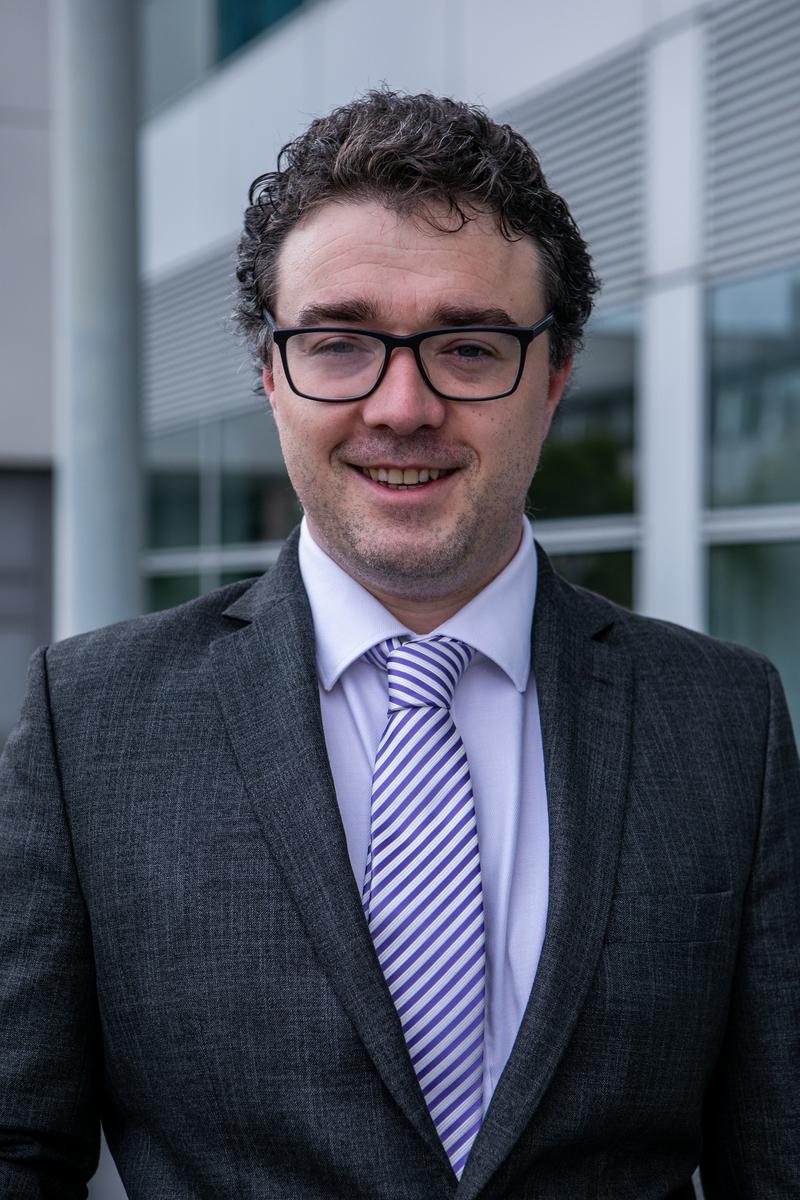
Dr. Andrew Hines is a Researcher at the School of Computer Science, University College Dublin, specializing in machine learning applications for signal processing in speech, audio, and video domains. His work focuses on Quality of Experience (QoE) modeling, speech quality assessment, and immersive media analysis. He has held leadership roles in European COST Actions like Qualinet and CryptoAction, and previously worked in industry as a Director of Engineering. University: University College Dublin Role: Director of Research, Innovation and Impact Key Collaborations: IEEE (Senior Member), Audio Engineering Society (Ireland) Research interests center on machine learning for QoE optimization, audio-visual integration, and healthcare applications like heart sound classification and stroke rehabilitation. His recent publications explore self-supervised learning, neural speech codecs, and contextual factors in speech/audio quality assessment. Scientific contributions include awards like IEEE Senior Membership, and his work spans both academic research and industrial engineering in finance and aviation sectors. He leads the QxLab research team at UCD and develops open-source platforms such as WARP-Q and AQP for quality metrics.
Katarina Domijan is an Associate Professor in Statistics at the Department of Mathematics and Statistics, Maynooth University, Ireland. She holds a PhD in Statistics from Trinity College Dublin (2008) and has been affiliated with Maynooth University since 2008, transitioning from Lecturer/Assistant Professor to her current role in 2024. Her academic career includes editorial roles as Associate Editor for The R Journal (2021–present) and the Journal of Computational and Graphical Statistics (2015–2024). Research Interests focus on Bayesian methods for high-dimensional data, particularly in classification problems. She specializes in feature selection and model visualization, with applications spanning agricultural data analysis (e.g., hyperspectral imaging for lactose prediction), medical diagnostics (e.g., sepsis and cancer detection), and space physics (e.g., Saturn Kilometric Radiation classification). Her work bridges theoretical statistics with real-world challenges, including socio-economic studies and forensic science. Key Research Areas Bayesian statistical inference Machine learning for large feature spaces Statistical computing and model interpretability Data visualization and chemometrics Scientific Contributions include leading projects like VistaMilk Phase II (2024–2030, €152,300) and Measuring Carbon Sequestration (2024–2028, €174,788.90). Her 15 most recent publications highlight advancements in ensemble modeling, spatial statistics, and medical diagnostics. Scientific Awards Associate Editor, The R Journal (2021–present) Associate Editor, Journal of Computational and Graphical Statistics (2015–2024) Student Supervision includes PhD and MSc graduates such as Dr. Bruna Wundervald (2024) and Dr. Mark O’Connell (2017). She also collaborates with researchers across disciplines, including Dr. Nadim Akasheh in food hypersensitivity studies.
Dr. Le-Nam Tran is a researcher at the UCD School of Electrical & Electronic Engineering , University College Dublin. His work focuses on optimizing the last hop of 5G/6G wireless networks through mathematical programming, with emphasis on energy efficiency, interference management, and security against eavesdropping. Develops low-cost, low-complexity transmission techniques Projects supported by Science Foundation Ireland Career Development Award Author of over 80 peer-reviewed publications Research Keywords: Wireless Communications Network Security Signal Processing Energy-Efficient Systems Beamforming Optimization Interference Mitigation
Dr. Barry Cardiff is an Assistant Professor in the School of Electrical and Electronic Engineering at University College Dublin (UCD), where he has been a member of academic staff since September 2013. His career spans both industry and academia, with significant experience at Nokia Mobile Phone (UK) Ltd and Silicon & Software Systems (S3 group) before returning to complete his PhD at UCD. Education: B.Eng (1992), M.Eng.Sc. (1995), PhD (2011) from University College Dublin Professional Experience: Design Engineer at Nokia (1993-2001), Systems Architect at S3 group (2001-2007, 2011-2013) Current Position: Assistant Professor at UCD School of Electrical and Electronic Engineering Dr. Cardiff's research focuses on Digital Signal Processing applications in communication systems, with particular emphasis on theoretical analysis and practical implementation. His work bridges traditional communication theory with emerging biomedical applications, especially in wearable IoT sensors. He has made significant contributions to power/complexity reduction techniques in circuit design, specifically DSP algorithms for digitally assisted analog circuits. His research program addresses critical challenges in biomedical signal processing, sensor fusion, and efficient data transmission for healthcare applications. His recent publications demonstrate a strong trend toward biomedical applications of signal processing techniques, with a focus on ECG analysis, atrial fibrillation detection, and respiratory rate estimation using multimodal sensor fusion. The research shows a clear progression from traditional communication systems toward healthcare applications, with an emphasis on edge computing solutions that reduce power consumption in wearable devices. IEEE BioCas best paper award (2024) IEEE senior member since 2019 Active reviewer for multiple IEEE journals including Transactions on Biomedical Circuits and Systems, Circuits and Systems, and VLSI Systems Dr. Cardiff has supervised numerous research projects and has been instrumental in developing curriculum for digital communications, signal processing, and wireless systems. His teaching philosophy emphasizes open, friendly, and hands-on approaches that encourage independent thinking. He coordinates multiple modules including Communication Theory, Digital Electronics, DSP Technology, and Wireless Systems, demonstrating his commitment to both theoretical foundations and practical applications of electrical engineering principles. His research group works at the intersection of signal processing, machine learning, and biomedical engineering, developing innovative solutions for wearable healthcare monitoring. Current projects focus on event-driven processing architectures, decentralized classification systems, and signal quality-aware fusion techniques that enable robust performance in noisy real-world environments.
Prof Noel O'Connor is a Full Professor at Dublin City University's School of Electronic Engineering, specializing in cutting-edge research at the intersection of artificial intelligence (AI), medical imaging, robotics, and smart city technologies. His work spans applications such as cardiac MRI reconstruction, robotic manipulation using reinforcement learning, and the development of the Smart DCU Digital Twin for autism-friendly university environments. Research interests include AI-driven medical diagnostics, multimodal data fusion, and adaptive systems. His contributions to cardiac MRI reconstruction and transformer-based medical imaging analysis reflect a strong focus on healthcare innovation. He also explores ethical AI practices to reduce social bias in foundation models. Recent work emphasizes smart infrastructure projects, such as optimizing parking recommendations for electric vehicles and enhancing accessibility through digital twin frameworks. His research often integrates real-time sensor data and multi-agent systems to address complex urban challenges. No scientific awards are listed. Collaborations include the ASU-DCU International Research Program on Sensors and Machine Learning. Advising details and grant information are not explicitly provided.
Alessandro Ragano is a Postdoctoral Researcher at the Insight Centre for Data Analytics , where he has been investigating Quality of Experience (QoE) aspects of audio archives and developing data-driven approaches for QoE estimation and audio restoration using deep learning since 2018. Education: MSc in Computer Science and Engineering from Politecnico di Milano (Italy) BSc in Computer Engineering from Università Degli Studi di Salerno (Italy) His research integrates machine learning , audio signal processing , and multimedia quality assessment to improve speech enhancement, audio restoration, and perceptual modeling. Recent trends in his publications focus on self-supervised learning , objective quality metrics , and audio dataset generation with applications in speech separation, music representation, and audio inpainting. He actively contributes to open-source tools like Binamix and AQP for audio research and quality evaluation.
Jonny O'Dwyer is a Lecturer in the Department of Accounting and Business Computing at the Faculty of Business and Hospitality. His research focuses on affective computing, leveraging eye tracking, speech, and head cues for continuous emotion prediction. He employs machine learning and computer vision techniques to advance human-computer interaction and emotion recognition systems. O'Dwyer has published four peer-reviewed conference papers, with two in 2017 and two in 2019, exploring multimodal data fusion and real-time affect prediction models. His work emphasizes interdisciplinary approaches, combining artificial intelligence with bioinformatics to address challenges in emotion analysis. Recent studies highlight applications in facial expression analysis, convolutional neural networks, and discrete-time feature extraction. O'Dwyer’s contributions aim to enhance communication environments and human-computer interfaces through multimodal sensing and open-source software integration.
Viet Quoc Pham is an Assistant Professor in Networks and Distributed Systems at Trinity College Dublin's School of Computer Science and Statistics and a CONNECT Associate Investigator. His research integrates convex optimization, game theory, and machine learning to advance edge computing, wireless AI, and next-generation networking for 6G, IoT, and blockchain applications. Education: PhD in Telecommunications Engineering, Inje University, Korea (2017) His work centers on three interconnected thrusts: (1) Computing innovations in edge AI, aerial computing, and edge of things; (2) Intelligence through wireless AI and federated learning; and (3) Networking advancements in 6G, IoT, intelligent surfaces, metaverse, and blockchain. This cross-disciplinary approach optimizes cloud-edge systems and wireless infrastructure using mathematical frameworks. Recent publications (2021-2024) demonstrate applied impact across security (smart speaker intrusion detection), environmental science (satellite carbon monitoring), healthcare (mental disorder detection), and e-commerce (basket recommendation systems), reflecting his methodology of adapting AI/optimization to domain-specific challenges. Scientific Awards: Korea NRF funding for outstanding young researchers (2019-2024) Best Ph.D. Dissertation Award, Inje University (2017) Top Reviewer Award, IEEE Transactions on Vehicular Technology (2020) Golden Globe Award, Vietnam Ministry of Science (2021) IEEE ATC Best Paper Award (2022) Enterprise Ireland Coordination Support Award (2023) Dr. Pham secured competitive funding including Korea NRF and Enterprise Ireland grants. As Editor for Journal of Network and Computer Applications and Scientific Reports, and Lead/Guest Editor for IEEE Internet of Things Journal, IEEE Transactions on Consumer Electronics, and Computer Communications, he shapes discourse in networking and computer systems through rigorous peer review and special issues. Through the CONNECT Centre, he collaborates with industry partners on Ireland's national research initiative for future networks, focusing on practical implementations of 6G architectures, IoT security protocols, and edge AI frameworks for real-world deployment.
Giacomo Severini is a Lecturer in Biomedical Engineering at the School of Electrical and Electronic Engineering, University College Dublin. His research focuses on human motor control, motor learning, and rehabilitation robotics, aiming to develop innovative tools for rehabilitating individuals with movement impairments. He holds an MS (2008) and PhD (2012) in Electrical Engineering and Biomedical Engineering from Roma Tre University, Italy, and previously worked as a Research Associate at Spaulding Rehabilitation Hospital (2011–2015) and postdoctoral researcher at Harvard Medical School (2012–2015). Research Interests: Dr. Severini investigates neuromuscular control mechanisms using robotics, computational modeling, and clinical biomechanics. Key areas include: Rehabilitation engineering for stroke, cerebral palsy, and spinal injuries Muscle synergy analysis to decode motor recovery patterns Robot-assisted gait and upper-limb training Neural-inspired controllers for adaptive movement Biomechanical assessments of sit-to-stand, walking, and cycling Publication Trends: His 15 most recent articles (2023–2025) emphasize quantitative rehabilitation science , with recurring themes in muscle synergy applications for clinical diagnostics, robot-assisted therapy efficacy, and predictive simulations of movement. Studies frequently integrate multimodal data (EMG, EEG, kinematics) and target neurological populations (stroke, cerebral palsy). Awards: No scientific awards mentioned in available sources. Affiliations: As a Funded Investigator in the Personal Sensing research group, he collaborates on projects bridging engineering and clinical rehabilitation. No specific labs or student advising details are provided.
Dr. Enda Bates is an Assistant Professor and Deputy Course Director in the Music and Media Technologies Programme at Trinity College Dublin. He leads research in spatial music, spatial audio for VR, and electroacoustic aesthetics while maintaining active roles as a composer, producer, and performer. His work bridges academic and artistic domains, with notable contributions to immersive media, accessibility in health data design, and interdisciplinary digital humanities projects. Educated at Trinity College Dublin, he completed a PhD titled *The Composition & Performance of Spatial Music* in 2010. His research has been supported by grants from Trinity College Dublin and Rode Microphones, focusing on projects like the Trinity 360 initiative producing immersive 360-degree music videos. He collaborates widely, including with the Spatial Music Collective and on virtual reality adaptations of Samuel Beckett’s works. Research interests span spatial audio technologies, VR audio design, and the aesthetics of contemporary electroacoustic music. He explores the intersection of sound and technology in performance contexts, such as augmented instruments and site-specific compositions. His work on accessibility includes evaluating health data representations for older adults, emphasizing user-centric design principles. Recent publications highlight advancements in ambisonic decoder methodologies, VR audio systems, and interdisciplinary arts. Awards include the Gaudeamus Music Prize shortlist (2009) and Música Viva Competition Prize (2010). His music has been performed globally by ensembles like the RTÉ National Symphony Orchestra and Crash Ensemble. Bates advises on audio engineering projects and leads collaborative initiatives like *Virtual Play, after Samuel Beckett*, merging theater, VR, and sound design. His lab’s work often explores the technical and creative potentials of 360 media and free-viewpoint video.
Dr. Helard Becerra is an Assistant Professor in the School of Computer Science at University College Dublin (UCD). He holds a PhD from the University of Brasília and has held postdoctoral roles at UCD's Insight Centre for Data Analytics and Samsung R&D Institute Brazil. His research focuses on multimedia quality assessment (audio/video/speech) and AI-driven healthcare solutions for stroke rehabilitation. Key contributions include developing NAViDAd (a deep learning-based quality metric) and predictive models for stroke recovery outcomes. Education: B.Sc. (UNSAAC, Peru, 2010); M.Sc. & Ph.D. (UnB, Brazil, 2013/2019). Professional experience includes roles at Samsung (2019), DIT (2017-2018), and leadership in EU projects like Precise4Q (Horizon 2020). Research interests span: 1) Perceived quality in multimedia systems, 2) Explainable AI for healthcare, 3) Predictive modeling in stroke rehabilitation. Notable work includes gradient boosting models for social risk prediction and Elo rating systems for personalized therapy. Teaching responsibilities include coordinating modules on Software Engineering, Parallel Computing, and Programming. He actively supervises graduate students and serves on UCD's Equality, Diversity & Inclusion Committee. Awards include the 2019 Best Student Paper Award at International Symposium on Electronic Imaging. He reviews for top conferences (ACM MMSys, IEEE ICIP) and journals (IEEE Access, IEEE Signal Processing Letters).
Prof. Tahar Kechadi is a Principal Investigator at the Insight Centre for Data Analytics , specializing in Machine Learning & Statistics and Optimisation & Decision Analytics . His research spans interdisciplinary domains including agriculture, healthcare, and cybersecurity. University : Insight Centre for Data Analytics Role : Principal Investigator Ranks : Professor His current research focuses on applying machine learning to smart agriculture (e.g., crop yield prediction, data engineering), blockchain technologies (e.g., energy trading, e-voting), and privacy-preserving systems in healthcare and cybersecurity. Publications highlight advancements in multi-modal analysis , deep learning architectures , and game-theoretic clustering . Recent work explores data contamination in LLMs , privacy-aware blockchain systems , and distributed reputation management . His team develops tools for agro-climate modeling , medical diagnostics , and cloud forensic readiness . Contact: tahar.kechadi@insight-centre.org
Graham Healy is Assistant Professor and COMSCI Programme Board Chair at Dublin City University's School of Computing. His research develops hybrid human-computer interaction systems using bioelectric signals (EEG), eye-tracking, and machine learning. Current projects include the CASTLE multimodal dataset, AMBER BCI dataset for naturalistic settings, and DERCo EEG-reading comprehension corpus. Dr. Healy creates interactive retrieval systems like VEAGLE (eye gaze-assisted video browsing) and LifeInsight (lifelog search engine), winning competitive evaluations at Video Browser Showdown and Lifelog Search Challenge events. His neuroergonomics research investigates pre-stimulus EEG for predicting driver reaction times, while health informatics projects develop machine learning models for early gestational diabetes prediction using electronic health records. With PhD expertise in brain-computer interfaces from DCU, Dr. Healy's work spans experimental neuroscience, information retrieval, and clinical applications. Recent publications address reproducibility challenges in medical AI and validate diagnostic coding in electronic health systems. His NeuroScore framework evaluates GAN performance using neural responses, advancing quality assessment in synthetic media.
Harry Nguyen (Hoang D. Nguyen) is a Lecturer and Programme Director for the MSc in Computing Science at University College Cork. Affiliated with the SFI Research Centre for Data Analytics, he leads research in reliable AI systems for healthcare and sustainability. Research Focus: Develops robust ML models integrating graph networks and multimodal learning, with applications in medical diagnosis (e.g., COVID-19 detection via cough analysis) and environmental monitoring. Directs the Reliable Machine Intelligence research group. Advising: Mentors 15+ graduate students on projects spanning federated learning, sound-based diagnostics, and conversational AI for diabetes care. Secured funding from Science Foundation Ireland for CRT-AI initiatives.
Ronan Flynn is a Lecturer in Computer and Software Engineering, researching human-centered multimedia systems. His work integrates physiological signal analysis with immersive technology design to model Quality of Experience (QoE). Key research areas: ECG/respiration-based QoE prediction using deep learning AR/VR instructional efficacy for procedural training Multimodal distraction analysis in virtual environments Developed WheelSimAnalyser for wheelchair simulator data analysis and investigated GAN-based solar radio burst simulation. Contributes to IEEE QoMEX and ISMAR conferences on affective computing in XR.