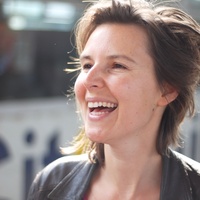
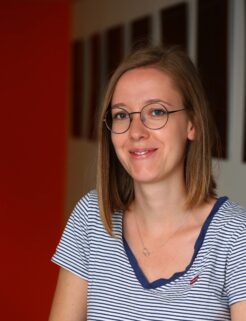
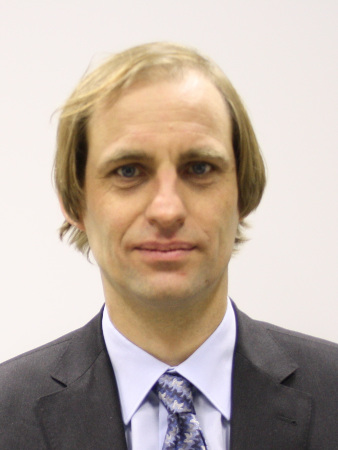
Maarten De Vos is a Professor at the Department of Electrical Engineering (ESAT) , KU Leuven , with dual appointments in the Faculty of Medicine and Faculty of Engineering Science . He leads interdisciplinary research at the intersection of artificial intelligence and biomedical signal processing.
Els Lefever is an Associate Professor at Ghent University, where she works with the LT3 (Language and Translation Technology) research team. Her position focuses on computational linguistics and natural language processing research, with strong ties to both theoretical and applied aspects of language technology. Dr. Lefever earned her PhD in Computer Science from Ghent University in 2012 with her dissertation titled "ParaSense: Parallel Corpora for Word Sense Disambiguation." Her academic journey began as a computational linguist at the R&D department of Lernout & Hauspie Speech Products before transitioning to academia. Els Lefever's research spans multiple areas within computational linguistics with particular expertise in multilingual natural language processing. Her work focuses on computational semantics, cross-lingual word sense disambiguation, and multilingual terminology extraction. Recent research directions include automatic detection of irony in online text, argumentation mining in social media, sentiment analysis of financial news, language modeling for low-resourced languages, and computational approaches to Byzantine Greek epigrams. Her research demonstrates a consistent pattern of bridging theoretical computational linguistics with practical applications across diverse language domains and historical periods. Professor Lefever actively supervises PhD research on several cutting-edge topics including terminology extraction from comparable corpora, event extraction and sentiment mining of financial news, language modeling for low-resourced languages, argumentation mining in social media, and the automatic detection of links between Byzantine Greek epigrams. Her supervision portfolio demonstrates her commitment to advancing multiple frontiers of computational linguistics simultaneously. As an educator, Professor Lefever teaches courses in Terminology and Translation Technology, Language Technology, Localisation, Digital Text Analysis, and Digital Humanities. Her teaching reflects her research interests, providing students with both theoretical foundations and practical skills in language technology applications. The LT3 research group, where Professor Lefever is a key member, maintains strong connections with both academic and industry partners. The group has participated in numerous international conferences and shared tasks including SemEval competitions across multiple years, demonstrating consistent contributions to benchmark datasets and evaluation methodologies in natural language processing.
Bénédicte Dubois is a full professor at the Faculty of Medicine, KU Leuven , leading the Experimental Neurology Research Group and the Laboratory for Neuroimmunology . She is also a member of the KU Leuven Brain Institute and KU Leuven Cancer Institute , focusing on neuroimmunology and multiple sclerosis (MS) research. Researcher - Experimental Neurology Research Group, KU Leuven Chair - Academic Consultants for Medicine, KU Leuven Research Interests : Her work spans neuroimmunology , multiple sclerosis , and neuroinflammation , with expertise in single-cell transcriptomics , microglial activation , and Epstein-Barr virus interactions in MS. Key projects include: Exploring exosomal miRNA and Epstein-Barr virus mechanisms in MS Decoding pathogenetic pathways in MS using multimodal single-cell analysis Investigating natural killer cell subsets in MS brain pathology Validating MRI-based brain atrophy measurements for MS patients Publications : Recent studies highlight her contributions to MS prognosis via biomarkers like CHIT1, optical coherence tomography as a predictive tool, and genetic mosaicism in immune cells. Her work is frequently presented at major conferences like the Joint ECTRIMS-ACTRIMS meeting. Academic Contributions : She supervises numerous PhD students, serves on institutional councils (including the Faculty Council of Medicine ), and leads multidisciplinary collaborations. Her research integrates clinical neurology , genomics , and immunology to advance MS understanding.
Dante Mantini is a full professor at the KU Leuven , affiliated with the Faculty of Movement and Rehabilitation Sciences and the Department of Movement Sciences . He serves as the department chair and leads the Movement Control & Neuroplasticity Research Group , while also holding interim leadership at the Bakala Athletic Performance Facility. Research focuses on neural engineering , neuroinformatics , and neuroscience , particularly brain-muscle interactions, movement-related neural dynamics, and neuroprosthetic development. Active projects include multimodal studies on stroke recovery , gait impairments , sleep's impact on motor performance , and neuroprosthetic device fabrication via advanced printing techniques. He contributes to European College of Sport Science and collaborates internationally, notably with Italy's G.D’Annunzio University on brain imaging in athletes. Teaching responsibilities include Research Topics in Motor Control , Advanced Medical Imaging , and Master’s thesis guidance in human movement sciences. His work is funded by the Bijzonder Onderzoeksfonds (BOF), with a sabbatical focused on expanding mobile EEG applications for dynamic movement studies.
Ali Mohammed Mohammed Al-Zawqari is a postdoctoral researcher at Vrije Universiteit Brussel (Brussels, Belgium). His research focuses on interdisciplinary areas combining natural language processing (NLP) with engineering applications, particularly in Arabic debate analysis and photonics design. He has collaborated internationally on projects involving machine learning models for argumentation mining and optimization algorithms for antenna systems. Key research interests include computational linguistics for Arabic discourse analysis, generative photonics modeling, and stochastic optimization in microwave engineering. His work bridges computational methods with real-world applications in both humanities and technical domains. Recent publications (2023-2025) highlight advancements in Arabic debate corpus development, neural argumentation classification, and automated antenna design optimization. He actively participates in academic conferences, presenting at events like ICALP 2023/2024 and the International Conference on Microelectronics (ICM 2024). Al-Zawqari holds an ORCID identifier (0000-0002-6649-7705) and has an h-index of 98 with over 500 citations. His research spans collaborations across multiple countries and institutions, reflecting a global approach to interdisciplinary challenges.
Xavier De Tiège is a Professor at Université libre de Bruxelles (ULB) and works at Erasme Hospital, ULB's academic hospital. He serves as Director of the Department of Functional Neuroimaging within the Service of Nuclear Medicine and as a senior researcher at the ULB Neuroscience Institute's Laboratoire de Cartographie fonctionnelle du Cerveau. Professor of Neuroanatomy, ULB Senior Researcher, ULB Neuroscience Institute Director of Functional Neuroimaging Department, Erasme Hospital Member of the UR2NF research lab His research focuses on functional neuroimaging applications for presurgical mapping in refractory focal epilepsy and investigating cortical entrainment through sensory-motor processes and cortico-cortical interactions. Recent work employs multimodal imaging (MEG, fMRI) and computational models to study brain synchronization, language control, and neural plasticity in epilepsy patients. Key publication trends include epilepsy diagnostics , brain connectivity modeling , cognitive neuroimaging , and neurological AI applications . While no specific awards are listed in the provided text, his role as a senior researcher and lab director indicates significant academic contributions. Advises doctoral candidates via collaborative publications Leads multidisciplinary team in UR2NF lab
Dr. Alexander Bertrand is a Professor at the Faculty of Engineering Sciences , KU Leuven, heading the Dynamic Systems, Signal Processing and Data Analysis (STADIUS) division. He leads the Department of Electrical Engineering (ESAT) and contributes to Leuven.AI institute, with expertise spanning wireless sensor networks, brain-computer interfaces (BCI), and biomedical signal processing. Research Focus : Wireless acoustic/EEG sensor networks, distributed signal enhancement, adaptive filtering, neural decoding of auditory/visual attention, and AI-driven time series analysis. Key Projects : EEG-Linx platform for modular brain recordings (2025-2027) Calibration-free BCI systems (2025-2029) AI quality assessment for time series data (2024-2028) Wireless EEG patches for hearing technology (2024) Publications (2023-2025) demonstrate leadership in distributed signal processing , auditory attention BCI , and scalable sensor architectures , with applications in education, healthcare, and wearable tech. Teaching includes courses on digital signal processing, biomedical data analysis, and medical technology design.
Jitka Annen is a Postdoctoral Researcher at the Coma Science Group within the Faculty of Medicine at the University of Liège, Belgium. Her work focuses on multimodal neuroimaging approaches to study brain structure-function relationships in disorders of consciousness and space neuroscience applications. Education: PhD in Biomedical Sciences and Pharmaceutics (Multimodal Neuroimaging in Patients with Disorders of Consciousness), University of Liège, Belgium (2019) MSc in Biomedical Sciences, Neurobiology, University of Amsterdam, The Netherlands (2014) BSc in Psychobiology, Neurobiology, University of Amsterdam, The Netherlands (2012) Her research integrates neuroimaging and neurophysiology across spatio-temporal scales to investigate consciousness mechanisms, brain connectivity in pathological states, and the effects of extreme environments like zero gravity on neural systems. She employs complementary data acquisition techniques to study disorders of consciousness, including coma, unresponsive wakefulness syndrome, minimally conscious state, and locked-in syndrome, with recent work extending to cosmonaut brain adaptations. Analysis of her publication record reveals consistent focus on advancing neuroimaging methodologies for consciousness assessment, developing computational models of brain dynamics in pathological states, and exploring novel therapeutic interventions including neuromodulation and psychedelic compounds. Her work bridges clinical applications with fundamental neuroscience questions about consciousness mechanisms. Research Leadership: Active member of Coma Science Group at GIGA research institute Collaborator on international space neuroscience projects studying brain changes in cosmonauts Contributor to development of standardized assessment protocols for disorders of consciousness
Evangelia Tsiligianni is a postdoctoral researcher in the Department of Electronics and Informatics at Vrije Universiteit Brussel , Belgium. Her work focuses on deep learning, image processing, and computer vision, particularly for multimodal image restoration and super-resolution tasks. Active in deep learning and neural networks . Specializes in image resolution , compressed sensing , and medical imaging . Her recent research explores graph regularization for depth map super-resolution and interpretable deep learning in financial and healthcare domains. She has presented at conferences like ICASSP, MICCAI, and EUSIPCO.
Dick Botteldooren is a full Professor of Acoustics at Ghent University, Belgium, leading the WAVES (Wireless, Acoustics, Environment & Expert Systems) research unit. He serves as I-INCE vice-president for Europe and Africa and previously held leadership roles as Editor-in-Chief of Acta Acustica (2004-2013) and president of the Belgian Acoustical Society (until 2018). His educational background includes: MSc in Electronic Engineering (1986, Ghent University) PhD in Applied Science (1990, Ghent University) Professor Botteldooren's research spans acoustic modeling, noise mapping, environmental sensor networks, computational intelligence, and human-inspired machine listening. His work integrates biomonitoring (particularly EEG), health impact assessment of sound, urban sound planning, and soundscape design with strong policy implications. Recent focus areas include AI-driven analysis of animal vocalizations and therapeutic soundscape design for dementia care. Analysis of his 2021-2025 publications reveals three dominant trends: (1) Machine learning applications in bioacoustics (especially broiler chicken vocalization monitoring for welfare assessment), (2) EEG-based attention detection systems using spiking neural networks and cross-modal transfer, and (3) Soundscape augmentation for dementia care through auditory processing-driven environmental interventions. His work consistently bridges computational methods with real-world acoustic challenges. His scientific recognition includes: Fellow of the Acoustical Society of America Professor Botteldooren has advised national and international health councils and noise policymakers, translating research into practice. His work has received sustained funding from the Belgian National Fund for Scientific Research and other international bodies, supporting both fundamental acoustics research and applied policy development. The WAVES research unit under his leadership conducts interdisciplinary work combining wireless sensor networks, computational intelligence, and human-centered acoustics, with active projects in urban noise monitoring, bioacoustic surveillance, and neuroacoustic applications.
Lukas Van Oudenhove is a Full Professor at the Faculty of Medicine, KU Leuven , affiliated with the Department of Chronic Diseases and Metabolism and the Translational Research in GastroIntestinal Disorders unit. He is a member of interdisciplinary institutes including the Leuven Centre for Health Humanities , KU Leuven Brain Institute , and Leuven.AI . His research focuses on the gut-brain axis , neuroinflammation , and psychosomatic mechanisms in functional disorders. Academic Rank: Professor Key Affiliations: Faculty of Medicine (KU Leuven), LCH², LBI, Leuven.AI His research spans functional brain imaging of visceral pain, stress-modulated fear memory, microbiome metabolite effects on cognition, and neuroinflammatory mechanisms in fatigue. He leads projects like The gut-immune-brain axis as key to IBD fatigue and Neuroinflammation in sleep-pain relationships . Recent work explores butyrate's epigenetic modulation of fear memory and erythritol's impact on reward systems . Scientific contributions include a psychobiological model for gut-brain disorders and insights into interoceptive differences in fibromyalgia. Awards: Poster Prize Award (4th European Stress Conference, 2025) He serves on governance bodies: Council of the Faculty of Medicine (senior academic staff) Council/Board of the Department of Chronic Diseases and Metabolism
Professor Bart De Moor is a full professor at the KU Leuven Faculty of Engineering Sciences, affiliated with the Department of Electrical Engineering (ESAT) and the STADIUS Center for Dynamic Systems, Signal Processing, and Data Analysis. His research spans mathematical engineering, system theory, and biomedical data science, with significant contributions to Machine Learning Medical AI Time Series Analysis High-Dimensional Data Optimization underpinned by an ERC Advanced Grant and the Order of the Crown (2025). His recent work includes AI-driven clinical decision support systems ( BJOG , 2025), spatial omics pipelines for pancreatic cancer ( Cancer Research , 2025), and energy demand forecasting ( Applied Energy , 2025). He has supervised over 93 PhD students and founded 9 spin-offs, including Health House and Athumi .
Bart Boets is a Professor at the Faculty of Medicine, KU Leuven , leading the Center for Developmental Psychiatry within the Department of Neuroscience. His research focuses on neurodevelopmental disorders, particularly autism spectrum disorder (ASD), investigating neural mechanisms of social cognition, facial expression processing, and oxytocin-based interventions. He collaborates with institutions like the Leuven Brain Institute (LBI) and Leuven Child & Youth Institute (L-C&Y) . His recent work explores neural sensitivity to faces and voices in preterm children and ASD populations using EEG, eye-tracking, and fMRI. Projects emphasize co-regulation dynamics , biobehavioral synchrony , and stress physiology in family systems. Current studies include oxytocin therapy combined with sensorimotor training for social attunement in autism. Collaborates with Matthijs Moerkerke , Katja Alaerts , and Jean Steyaert Teaches courses like Advances in Neurobiology of Psychiatric Disorders and Hot Topics in Neurobiology of Psychiatric Disorders Involved in clinical trials assessing oxytocin’s effects on neural processing and stress regulation in autistic children His lab integrates multimodal methodologies (EEG, fMRI, eye-tracking) to study self- and co-regulation dynamics in vulnerable populations, with applications in preventive mental health and ecological intervention design .
Brigitte Charlier is a researcher affiliated with the Université libre de Bruxelles , active in the Language, Cognition, Development (LC-LD) lab under the CRCN research center. Her work focuses on multimodal language perception and hearing disabilities, particularly in deaf children with cochlear implants and cued speech interventions. Key research themes: cochlear implant speech processing, bilingual speech production, cued speech applications Collaborates with Cécile Colin and other speech-language therapy experts Her recent publications examine speech accuracy in bilingual children, short-term memory dimensions in implant users, and reading comprehension interventions. While no formal awards are documented, her research has been presented at major conferences like the European Speech and Language Therapy Association Congress. Students supervised include Van der Straten Waillet, P. , whose dissertation investigated bilingual speech therapy practices. Charlier's lab (LC-LD) investigates language development in deaf populations, with multidisciplinary projects involving speech acoustics, neuroimaging, and educational interventions.
Thomas Lapauw is a postdoctoral researcher at the Vrije Universiteit Brussel (VUB), affiliated with the Electronics and Informatics department in the Research - Development - Innovation division. His work focuses on advancing fluorescence lifetime imaging (FLT) systems, particularly through the development of novel time-gated cameras and sensors. He has contributed to projects like CoDaFlight and IOF GEAR, which aim to enhance tumor imaging and surgical guidance using fluorescent tracers and imaging technologies. His research interests span biomedical engineering, photonics, and medical imaging, with a focus on real-time fluorescence lifetime imaging systems, time-gated camera design, and applications in oncology. Lapauw received the IMEC award for best master thesis in 2017 and was part of the team honored with the SPIE Europe 2022 Innovation prize for their project on fluorescence imaging systems. Lapauw’s work involves collaborations on fluorescent probe development, endoscopy imaging, and preclinical studies using animal models. His contributions include the design of compact sub-nanosecond time-gated cameras like the tauCAMTM, which enable high-speed FLT imaging for clinical and diagnostic applications. Key Projects: CoDaFlight: Developing fluorescence imaging for tumor detection. IOF GEAR: Exploring single-domain antibodies in fluorescence-guided surgery. Notable Publications: Fluorescence Lifetime Endoscopy with a Nanosecond Time-Gated CAPS Camera (2025) Near-Infrared azaBODIPY Probes for In Vivo Imaging (2025)