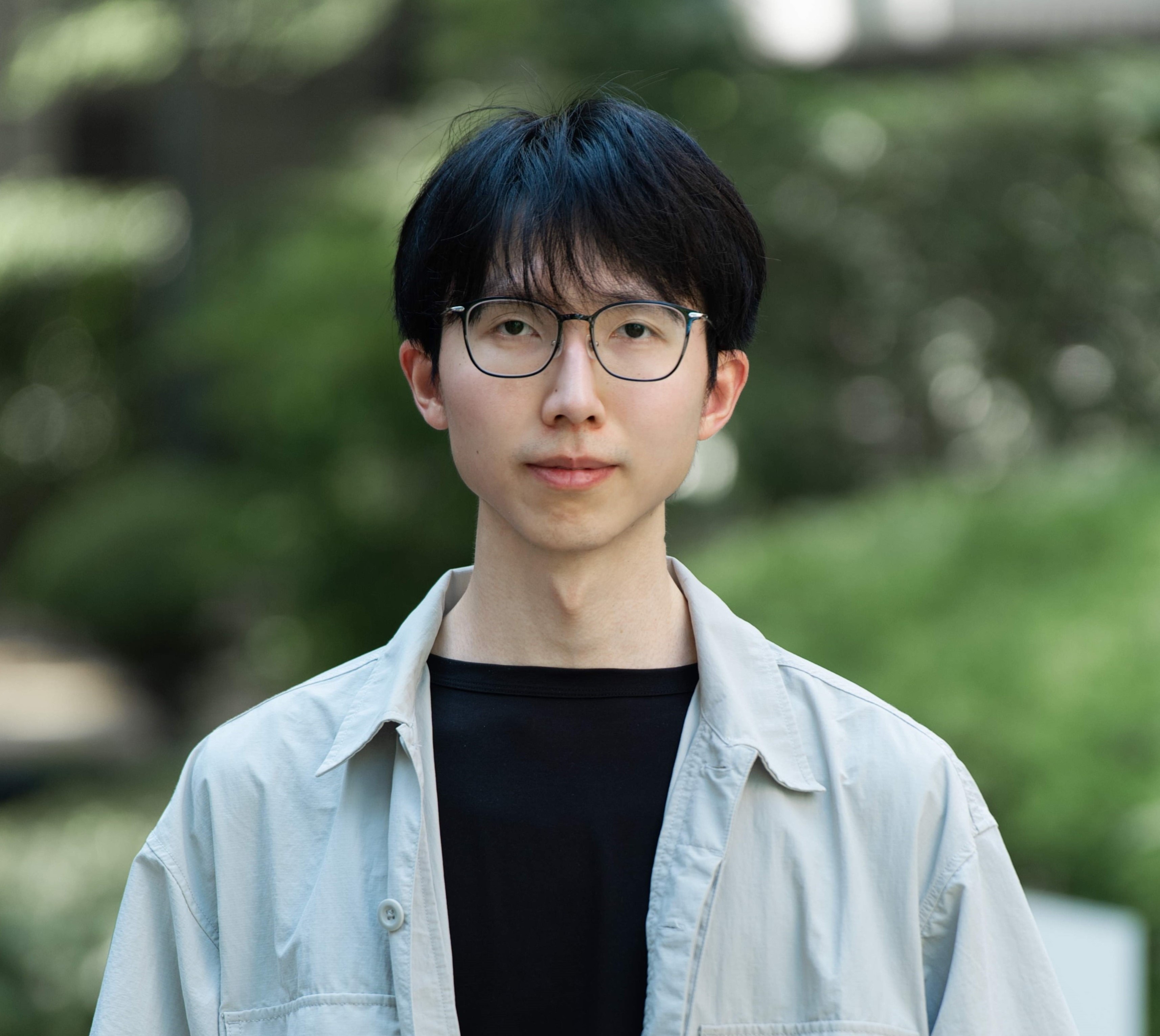
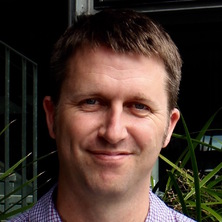
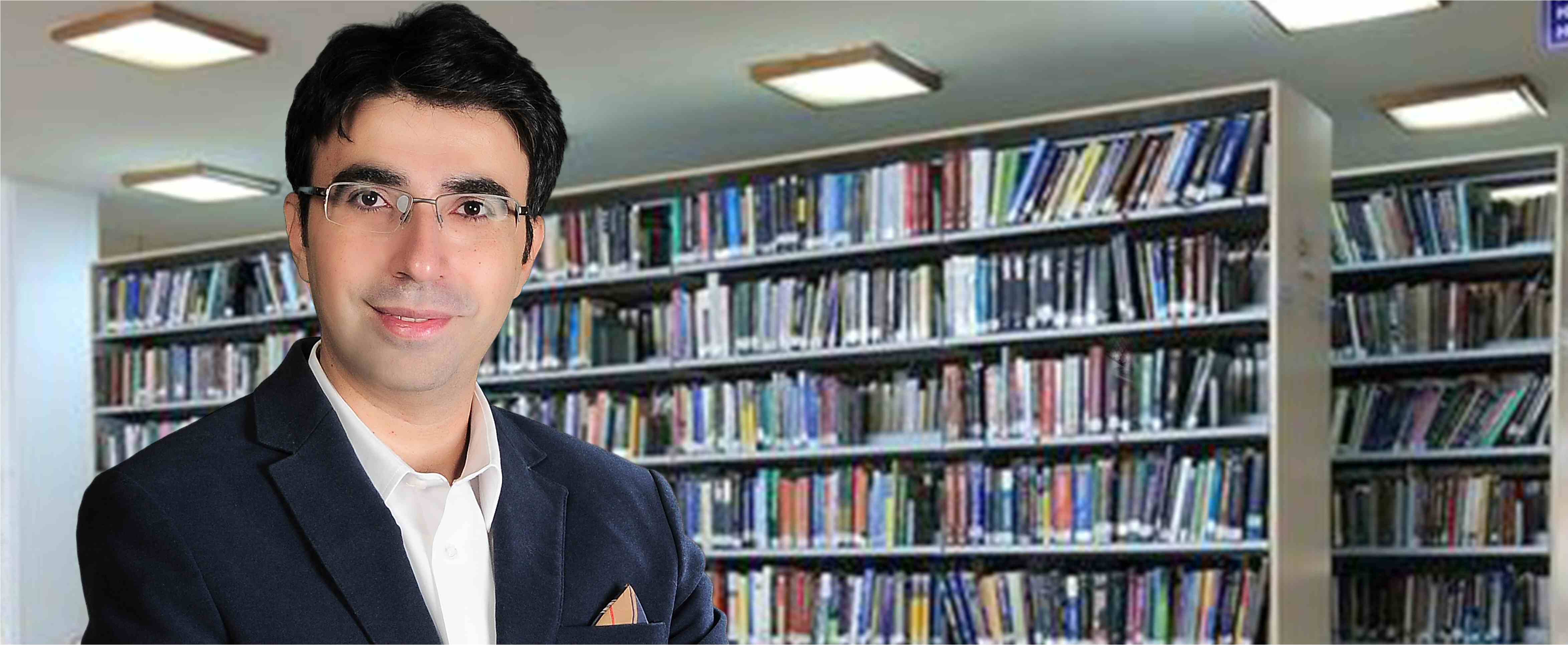
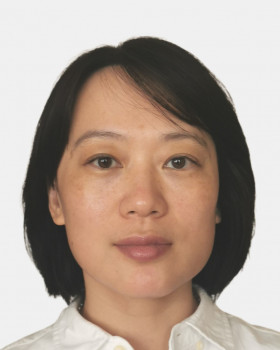
Andi Han is a Lecturer in Data Science at the School of Mathematics and Statistics, University of Sydney . He earned his PhD in Business Analytics from the University of Sydney Business School in 2023 and served as a postdoctoral researcher at RIKEN AIP’s Continuous Optimization Team until 2025. Research Interests: Large generative models (diffusion models, large language models) Optimization on manifolds Efficiency of foundation models Graph neural networks for biology and chemistry Awards: DAAD AInet Fellowship (2025) PhD Completion Award (USYD, 2023) Best Paper Award (IEEE SCCI, 2022) University Medal (USYD, 2019) Business Analytics Prize (USYD, 2018) Teaching: STAT5002: Introduction to Statistics (Unit Coordinator & Lecturer, S2 2025) MATH1061: Mathematics 1A (Lecturer, S2 2025) His recent publications focus on Riemannian optimization techniques, diffusion models, and graph neural networks (GNNs), with applications in protein sequence generation, transformer optimization, and AI for science. Collaborative work spans institutions like RIKEN, Zhejiang Lab, and A*STAR. He actively organizes workshops, including Deep Generative Model in Machine Learning: Theory, Principle and Efficacy at ICLR 2025.
Chao Zhang is an Assistant Professor at the School of Computational Science and Engineering within the College of Computing at Georgia Institute of Technology. He holds affiliations with the Institute for Data Engineering and Science (IDEaS) and the Machine Learning Center (ML@GT). His research focuses on making it easier to build domain-customized foundation models and AI agents for task-solving and decision-making, with technical emphasis on data efficiency, computation efficiency, and model robustness. Dr. Zhang's research interests span multiple cutting-edge areas of AI, with particular focus on four main themes: Data-Centric LLMs for adapting language models to target domains through data-efficient methods; LLM Agents & Reasoning for improving language model capabilities through environmental interaction; AI Alignment for ensuring responsible deployment through uncertainty quantification and factuality; and AI for Science for leveraging foundation models in material science, biomedical research, and urban science. His work emphasizes weakly-supervised learning, out-of-distribution generalization, and interpretable machine learning approaches. His publication record shows consistent high-impact contributions across top AI conferences including NeurIPS, ICML, KDD, ACL, and ICLR, with recent work focusing on enhancing LLM capabilities, improving model robustness, and applying AI to scientific discovery. The trend in his publications demonstrates a clear trajectory from foundational machine learning techniques toward increasingly sophisticated applications of large language models and their integration with scientific domains. NSF CAREER Award (2022) Google Faculty Research Award (2020) Amazon AWS Machine Learning Research Award (2020) Facebook Faculty Research Award (2021) Kolon Faculty Fellowship (2021) ACM SIGKDD Dissertation Runner-up Award (2019) Georgia Tech CoC Outstanding Junior Faculty Award (2024) Dr. Zhang actively mentors a large group of graduate students across computer science, machine learning, and computational science programs, with alumni securing positions at leading tech companies and research institutions. His research has been generously supported by NSF grants (IIS CAREER-2144338, IIS-2106961, IIS-2008334), ONR MURI funding, and industry partnerships with Kolon, HomeDepot, ADP, and Adobe. His lab focuses on developing practical AI systems that address real-world challenges while advancing fundamental understanding of machine learning principles. Dr. Zhang leads research efforts in the Georgia Tech AI ecosystem that bridge theoretical advances with practical applications, particularly in scientific domains. His group develops methods for data-efficient LLM adaptation, LLM agent reasoning capabilities, uncertainty quantification, and domain-specific foundation models, with active collaborations across material science, biomedical research, and urban science domains.
Lei Li is an Associate Professor in the Department of Computer Science at the University of California, Santa Barbara (UCSB), where they serve as Co-Director of the UCSB NLP Group. Their research focuses on developing algorithms and systems for machine learning, natural language processing, machine translation, reasoning, and AI-powered drug discovery. Dr. Li received their PhD from Carnegie Mellon University and completed their undergraduate studies at Shanghai Jiao Tong University. Dr. Li's research spans multiple critical areas in artificial intelligence and machine learning. Their work in natural language processing encompasses machine translation, speech translation, multilingual NLP, large language models, text generation, program synthesis, reasoning, privacy, and watermarking. Additionally, they have made significant contributions to AI applications in drug design and efficient machine learning techniques. Their research bridges theoretical foundations with practical applications, particularly in the emerging field of AI for biological discovery. Analysis of Dr. Li's recent publications reveals a strong focus on advancing natural language processing capabilities while addressing critical challenges in model efficiency, security, and evaluation. Their work spans machine translation systems that handle hundreds of languages, techniques for improving large language model capabilities in zero-shot settings, methods for evaluating text generation quality, and novel approaches for protecting intellectual property in language models. Notably, they've also made significant contributions to applying AI to biological problems, particularly in antimicrobial peptide discovery and protein sequence design. Dr. Li has received notable recognition for their research, including: Best Paper Award at ACL 2021 for "Vocabulary Learning via Optimal Transport for Neural Machine Translation" Dr. Li actively advises PhD and Master's students in computer science at UCSB, with recent advisees working on topics including antimicrobial peptide discovery, protein sequence design, diffusion models, speech translation, and language model watermarking. Their research group, the UCSB NLP Group, appears to be well-funded and productive, with consistent publications in top-tier conferences including ACL, EMNLP, ICML, KDD, and NeurIPS. The group has developed several influential frameworks and benchmarks, including MTG (Multilingual Text Generation benchmark) and SEScore2 (text generation evaluation metric). The UCSB NLP Group, co-directed by Dr. Li, maintains an active research agenda with multiple ongoing projects spanning natural language processing, machine learning, and their applications to scientific discovery. The group collaborates with researchers across disciplines, particularly in the biological sciences for drug discovery applications.
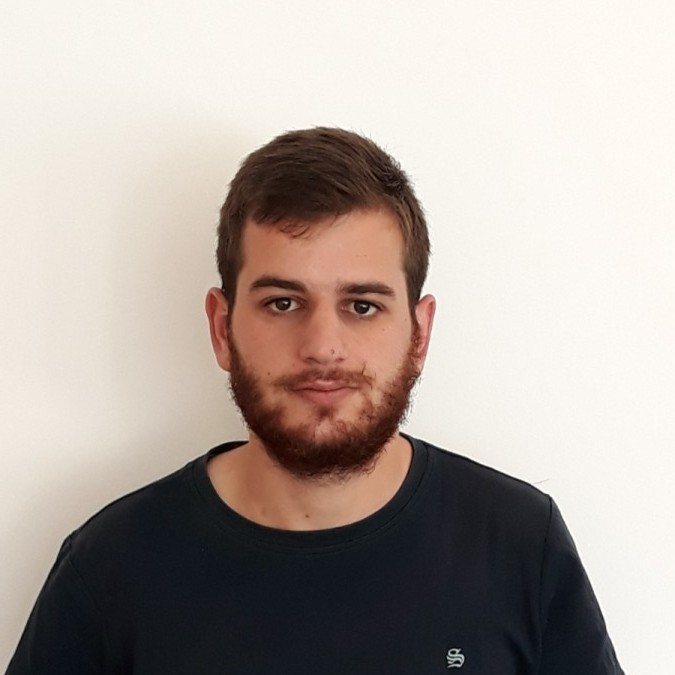
Saul Santos is a Ph.D. candidate and researcher at the Instituto Superior Técnico (University of Lisbon) and Instituto de Telecomunicações , focusing on neural models for memory and attention in natural language generation and computer vision. Ph.D. in Electrical and Computer Engineering (2023–2027) M.Sc. in Aerospace Engineering (2018–2020) B.Sc. in Aerospace Engineering (2015–2018) His research bridges machine learning with physics-informed architectures , exploring continuous-time memory models, vision-language integration, and structured Hopfield networks. Recent work includes training-free frameworks for long video understanding and advancements in associative memory retrieval. Key trends from his publications include applications of neural networks in multimodal learning , attention mechanisms , and physics-aware deep learning , with collaborations across institutions like the University of Lisbon, ICLR, and ICML. Scholarship from Google and Zendesk for Lisbon Machine Learning School (2024) He has contributed to projects like DAISEN visualization tool and StreaMemory benchmark , reflecting his interdisciplinary expertise in engineering and AI research .
Professor David Copland at The University of Queensland is a leading speech pathologist and researcher in aphasia and language neuroscience. He directs the Queensland Aphasia Research Centre (QARC) and co-directs the STARS Education & Research Alliance and NHMRC Centre of Research Excellence in Aphasia Rehabilitation. His work focuses on post-stroke language disorders, neural recovery mechanisms, and high-dose aphasia treatments like CHAT. Bachelor (Honours) in Speech Pathology Researcher in aphasia, language neuroscience, and neuroimaging Research Interests include: Post-stroke aphasia treatment Neurobiological predictors of language recovery Dopamine's role in language learning Effects of sleep/exercise on word acquisition Implementation science in aphasia rehabilitation His grants include NHMRC CRE in Aphasia Rehabilitation, MRFF Bridging the Digital Divide, and UQ LIFT program funding. He supervises PhD students in: Communication partner training for bilingual patients Neuroimaging predictors of aphasia recovery Cost-effectiveness of aphasia rehabilitation Virtual reality therapy for communication disorders Recent publications analyze CHAT implementation, neural markers of language recovery, and cross-disciplinary interventions in aphasia. He leads multicenter trials on high-dose therapy and collaborates with Metro North Health Service and La Trobe University.
Nancy Zlatintsi is a Postdoctoral Research Associate at the National Technical University of Athens (NTUA) in the Computational Vision and Signal Processing (CVSP) group at the School of Electrical and Computer Engineering. She earned her Diploma in Media Engineering from KTH Royal Institute of Technology (2006) and a Ph.D. in Audio and Multimedia Processing from NTUA (2013). Her research focuses on Music Information Retrieval (MIR) , audio signal processing , and multimodal interaction , with applications in human-robot interaction and movie summarization . Her work has been funded by the European Social Fund (Heracleitus II program) and she has contributed to European projects like iMuSciCA and e-Prevention . Her research spans multimodal saliency detection , audio event recognition , and computational models for emotion tracking . Key scientific contributions include publications in top venues such as IEEE ICASSP , CVPR , and EURASIP Journal on Image and Video Processing . She is also involved in assistive robotics and gerontechnology applications. Email: nzlat@cs.ntua.gr Office: 2.2.19, NTUA
Ziad Al-Halah is an Assistant Professor in the Kahlert School of Computing at The University of Utah, where he has worked since January 2023. His academic journey includes a postdoctoral fellowship at the University of Texas at Austin, research roles at NAVER (South Korea), Twitter (UK), and Disney Research (Pittsburgh), and a PhD from Karlsruhe Institute of Technology (summa cum laude) in Germany. Current: Assistant Professor, University of Utah Education: PhD in Computer Science, Karlsruhe Institute of Technology Previous: Postdoc at UT Austin, researcher at NAVER, visiting researcher at Twitter and Disney Research His research focuses on computer vision , artificial intelligence , and multimodal learning , with emphasis on transfer learning , zero-shot learning , and embodied AI . His work addresses problems like audio-visual navigation , view selection in instructional videos , and material-aware acoustic modeling . Recent publications highlight his contributions to environment acoustic modeling (ICCV 2025, CVPR 2025), egocentric video analysis (CVPR 2024, CVPR 2023), and lifelong learning frameworks (Neural Networks 2023). He serves as Area Chair for CVPR 2025 and NeurIPS 2025. Scientific Awards: Outstanding Reviewer (NeurIPS 2024, CVPR 2023), Winner of 2020 Habitat Challenge Workshops: Organizer of CVFAD and EC3V at CVPR 2024
Dr. Ismail Sengor Altingovde serves as an Associate Professor in the Department of Computer Engineering within the College of Engineering at Middle East Technical University (METU) in Ankara, Turkey. Previously, he completed his B.S. and M.S. degrees at Bilkent University, followed by a Ph.D. in Computer Engineering from Bilkent in 2009. His academic journey includes post-doctoral research at Bilkent University (2009-2011) and L3S Research Center in Hannover, Germany (2011-2012) before joining METU. His educational background includes: B.S. in Computer Engineering, Bilkent University (1999) M.S. in Computer Engineering, Bilkent University (2001) Ph.D. in Computer Engineering, Bilkent University (2009) - Thesis: "Improving The Efficiency of Search Engines: Strategies for Focused Crawling, Searching, and Index Pruning" Dr. Altingovde's research focuses on Information Retrieval , particularly Web Search and Mining, Big Data analysis, and Database Management Systems. His work addresses critical challenges in search result diversification, query performance prediction, and scalable indexing techniques. He has pioneered approaches in handling zero-result queries, integrating social signals into search, and developing neural information retrieval models. His research bridges theoretical algorithm design with practical implementations for real-world search engines. His publication record demonstrates a strong trajectory in search technologies, with recent work emphasizing neural information retrieval, social media integration in search, and cross-lingual search systems. The research shows consistent focus on improving search relevance while addressing scalability challenges in modern web-scale systems. His work spans both theoretical contributions and practical implementations with industry relevance. Among his notable recognitions: Distinguished Young Scientist 2016 award (GEBIP) from Turkish Academy of Sciences (TUBA) 2013 Yahoo! Faculty Research and Engagement Program (FREP) award (selected from 27 researchers across 24 countries) Dr. Altingovde actively contributes to the research community through professional service including co-chairing ECIR 2017 short paper track and serving on program committees for CIKM, SIGIR, and Web Science conferences. He has secured multiple research grants from TÜBITAK (Scientific and Technological Research Council of Turkey) including projects on query result caching, semantic relationships for search scalability, and domain-specific search engines. His work connects academic research with practical applications through collaborations with industry partners like Yahoo! Research. He leads research within METU's Computer Engineering Department, contributing to projects like LivingKnowledge (focusing on fact, opinions and bias in time) and previously participating in European projects like MUSCLE (Multimedia Understanding through Semantics, Computation, and Learning). His laboratory work emphasizes experimental validation of search algorithms with real-world datasets and practical implementations.
Dr. Mahsa Khorasani is a Postdoctoral Researcher at Aalto University's Department of Energy and Mechanical Engineering. She actively contributes to the Marine and Arctic Technology research group, focusing on advanced analytics in engineering systems and social media data. Current affiliation: Aalto University Department: Energy and Mechanical Engineering Research group: Marine and Arctic Technology Her research spans multiple domains including: Mechanical Engineering: Anomaly detection in machinery plants using Bi-LSTM-DVAE frameworks. Arctic Operations: Process modeling and qualitative analysis of icebreaker operations. AI & Social Media: Multi-view learning for autism detection and bipolar disorder identification on social media. Data Science: Concept drift detection in business processes via trace embedding techniques. Recent publications highlight her expertise in predictive maintenance, Arctic logistics, and mental health diagnostics through computational methods. Her laboratory affiliations include Aalto University's Marine and Arctic Technology group, where she applies cutting-edge machine learning techniques to complex engineering and social challenges.
Simon Bartels is a researcher affiliated with the Department of Computer Science at the University of Copenhagen , contributing to the Machine Learning section. His work spans interdisciplinary applications of artificial intelligence, including quantum computing, healthcare diagnostics, and environmental modeling. Research activities at the department cover both theoretical and applied machine learning, with participation in the SCIENCE AI Centre . Key domains include medical data analysis , remote sensing , sustainability , and biological data modeling . Recent publications highlight contributions to quantum-inspired neural networks , geospatial biodiversity analysis , and energy-aware AI systems . Collaborations include rare disease research (e.g., MOSAIC framework ) and quantum computing optimizations.
Constanza Catalina Fierro Mella is a PhD Fellow and Postdoc in the Natural Language Processing section at the Department of Computer Science, University of Copenhagen's Faculty of Science. Her research bridges computational linguistics with philosophical inquiry into knowledge representation in language models. Her primary research interests include Multilingual Language Models , Knowledge Representation , Mechanistic Interpretability , and Cross-cultural NLP . Fierro's work examines how language models remember and represent facts across languages, with particular attention to the epistemological foundations of artificial intelligence. Her publication record shows a strong focus on understanding the inner workings of language models, with recent papers exploring how multilingual models remember facts, the intersection of philosophy and mechanistic interpretability, and knowledge representation in large language models. Her research often involves collaboration with Anders Søgaard and other members of Copenhagen's NLP group. Fierro has received significant attention for her work, with papers like 'Challenges and Strategies in Cross-Cultural NLP' garnering over 100 citations. Her research spans both theoretical foundations and practical applications of natural language processing. She has contributed to diverse areas including multimodal learning (investigating connections between vision and language models), healthcare applications (predicting hospital readmissions), and historical document analysis (date recognition in parish records).
Jiaang Li is a PhD Fellow and Guest Researcher at the Department of Computer Science , University of Copenhagen. His research spans Natural Language Processing , Computer Vision , and Multimodal Learning , focusing on vision-language models, word order sensitivity, and cross-modal understanding. PhD Fellow , Department of Computer Science, Pioneer AI (P1AI) Guest Researcher , Department of Computer Science, Natural Language Processing Research interests include: Vision-Language Model Analysis Multimodal Dataset Development Language Model Interpretability Human-Centred AI Applications Model Robustness and Ethics Recent publications highlight trends in: Vision-Language Concept Alignment Task-Oriented Model Evaluation Visual Culture Understanding Bias and Cultural Theory in AI Retrieval-Augmented Generation
Maarten Sap is an Assistant Professor at Carnegie Mellon University's Language Technologies Institute , with a courtesy appointment in the Human-Computer Interaction Institute . He also serves as a part-time Visiting Research Scientist & AI Safety Lead at the Allen Institute for AI (2024–present). PhD in Computer Science & Engineering (2015–2022) from University of Washington, advised by Noah Smith and Yejin Choi BSc in Communications and Information Systems (2010–2014) from École Polytechnique Fédérale de Lausanne His research focuses on socially intelligent AI systems through three core areas: (1) measuring and improving AI's social/interactional intelligence, (2) assessing and mitigating socio-cultural biases in language models, and (3) building narrative technologies for prosocial outcomes. Key themes include AI ethics, toxicity detection, cultural adaptability, and human-AI collaboration . Recent publications highlight his work on safety frameworks like HAICOSYSTEM, clinical reasoning alignment (ALFA), multilingual moderation (PolyGuard), and social intelligence evaluation (SOTOPIA). He received the 2025 Okawa Research Grant and NAACL 2025 Best Paper Runner-Up award. His lab advises 10 PhD/MLT students across CMU and MIT, with co-advising relationships at UW and EPFL. Scientific Awards : 2025 Okawa Research Grant (7 US recipients) NAACL 2025 Best Paper Runner-Up EMNLP 2023 Outstanding Paper FAccT 2023 Best Paper Advising : Primary advisor to Joel Mire , Mingqian Zheng , Jimin Mun , and Akhila Yerukola Co-advisor to Dan Chechelnitsky , Karina Halevy , Jocelyn Shen , and Xuhui Zhou Leadership : Co-organizer of Agent Workshop @ CMU (2025) Advisory board member for Socially Responsible Language Modeling (NeurIPS 2024) Senior Program Committee - ACL (2020–present)
Qianni Zhang is a Senior Lecturer and PhD/PDRA Engagement Lead at the Centre for Multimodal AI within the School of Electronic Engineering and Computer Science at Queen Mary University of London. She leads research initiatives at the intersection of artificial intelligence and healthcare applications, with a particular focus on medical image analysis. Dr. Zhang's research interests center on machine learning and computer vision with specific applications in medical image computing . Her work spans multiple domains including medical imaging analysis for cardiology, ophthalmology, and oncology. She has developed numerous deep learning approaches for image segmentation, registration, and analysis, particularly focused on intravascular ultrasound, optical coherence tomography, and MRI applications. Her research bridges theoretical computer vision with practical clinical needs, creating tools that have potential to improve diagnostic accuracy and treatment planning in healthcare settings. Her recent publications demonstrate a clear trajectory toward increasingly sophisticated multimodal AI approaches for medical imaging. The trend shows progression from basic image segmentation techniques to complex fusion networks that combine multiple imaging modalities and incorporate anatomical knowledge. Many of her papers focus on cardiovascular applications, particularly intravascular ultrasound analysis, while others address ophthalmological and general medical imaging challenges. The consistent theme across her work is the application of cutting-edge deep learning techniques to solve real-world medical imaging problems with clinical relevance. ARCNET (Barts and the London Charity, £15,496, 2025-2026) Deep Learning based Multispectral Image Analysis for Retinal Lesion Detection (Royal Society, £12,000, 2022-2025) Anatomical And Functional Analysis Of The Soft Palate (Barts Health NHS, £132,620, 2022-2025) Machine learning for improved graphics in sport broadcast (Innovate UK, £214,061, 2022-2024) Dr. Zhang supervises a diverse group of PhD students working on various aspects of medical image computing and multimodal AI. Her students' projects span multiple healthcare domains including cardiovascular imaging, ophthalmology, dentistry, and general medical diagnostics. She has established herself as a leading researcher in applying deep learning to medical imaging challenges, with particular expertise in segmentation, registration, and multimodal fusion techniques for clinical applications.
Niels Pinkwart is a Professor at Humboldt University of Berlin within the Faculty of Mathematics and Natural Sciences and Institute of Computer Science, serving as Member of the Faculty Council. His research group focuses on Computer Science and Society and Computer Science Didactics, developing AI-driven educational solutions for diverse learning contexts including vocational training, language acquisition, and autism support. His research centers on human-centered AI in education, with emphasis on adaptive learning systems, creativity assessment in programming environments, and inclusive technologies. Recent work examines physical embodiment in educational robots, bias mitigation in assessment algorithms, and neural engagement patterns in VR learning for neurodiverse populations. He investigates how multimodal feedback systems and LLM integration can enhance language learning while maintaining pedagogical alignment. Current publications reveal a strong trend toward practical AI implementation in real-world educational settings, particularly in vocational contexts and global health education. His team develops deployable tools like the AI Campus 2.0 platform and Zirkus Empathico 2.0 game, with increasing focus on ethical AI deployment and cross-cultural applicability as evidenced by Nigeria-based healthcare studies. The research consistently bridges theoretical frameworks with classroom-ready applications. Professor Pinkwart supervises doctoral candidates including Heinrich Mellmann, Kerstin Wagner, Gregor Wrobel, and Michael Piechotta, with disputation dates scheduled through late 2025. His work receives funding through collaborative projects like the Verbundprojekt KI-Campus 2.0, where HU Berlin leads the platform development component. The research group maintains strong industry and international healthcare partnerships, particularly in digital transformation initiatives for resource-constrained environments. He directs development of specialized educational technologies including sound-driven robot quiz systems with fair responder detection and multimodal feedback, alongside serious games for social-emotional development in autism. Current lab activities focus on scaling bias-mitigated exam assembly tools for vocational education while expanding VR-based cognitive engagement metrics across neurodiverse populations.