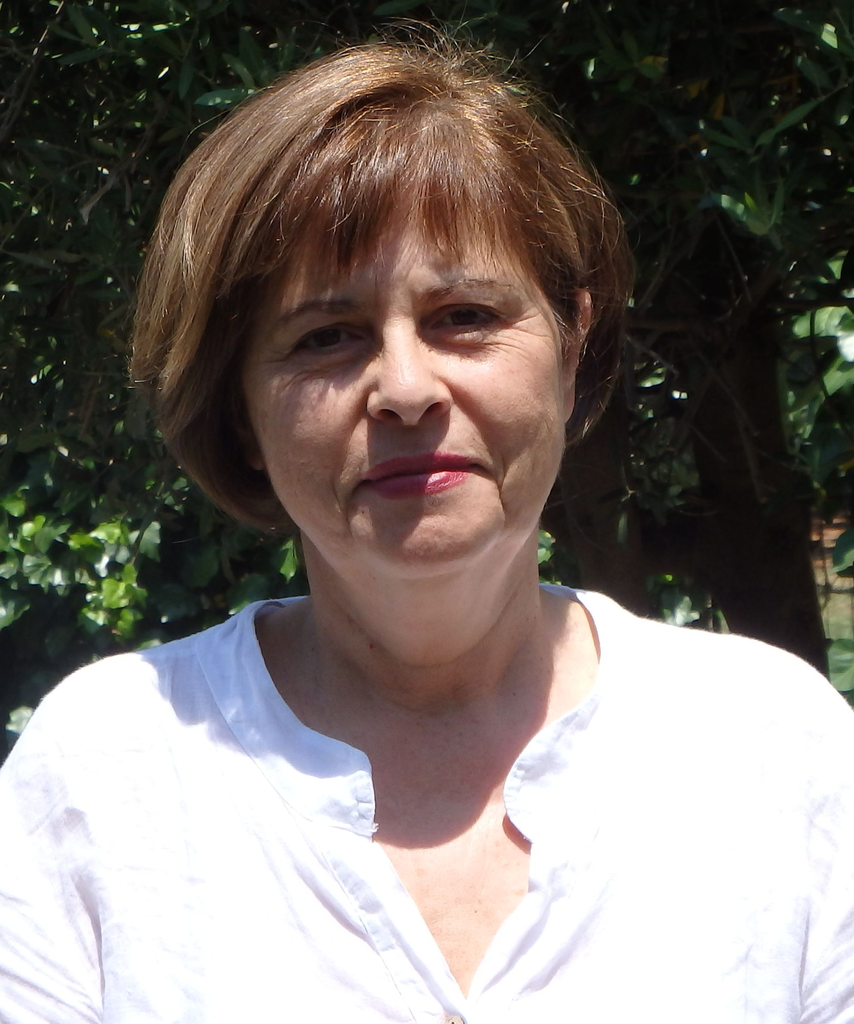
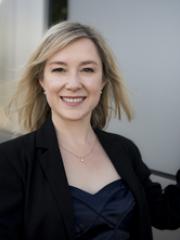
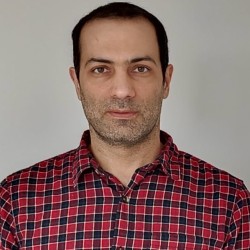
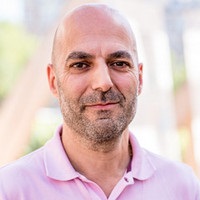
Professor Maria Papadopoulou is a faculty member in the Department of Language and History at the School of Early Childhood Education, Aristotle University of Thessaloniki. Her expertise spans literacies, multilingual education, refugee integration, and multimodal communication. She has held roles in curriculum development, teacher training, and policy analysis, focusing on inclusive practices for marginalized groups. Education & Professional Background: Established career in early childhood and language education with a focus on refugee and multilingual contexts. Administrative Roles: Contributed to academic governance and international conferences, including the Hellenic Semiotics Society. Her research emphasizes critical literacy, digital tools in education, and refugee education policy. Key projects include interventions for noise awareness in preschools and studies on Roma literacy practices. She has collaborated with NGOs and policymakers to bridge theory and practice in multicultural education settings. Publications span over 30 years, addressing topics like semiotics in advertising, multimodal texts, and task-based language teaching. Her work highlights the interplay between cultural context, technology, and pedagogy to foster inclusive learning environments.
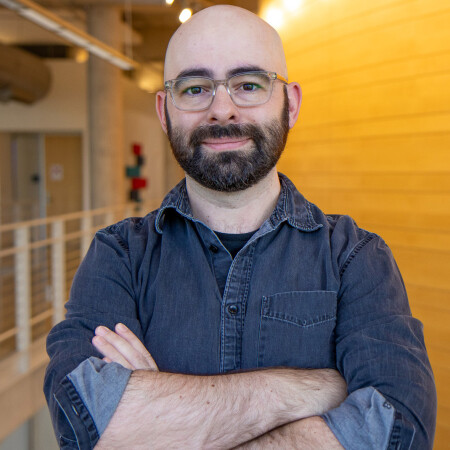
Kevin Sweet is an Assistant Professor of Design and Interactive Arts: Immersive Experience at the University of Texas at Dallas, affiliated with the Harry W. Bass Jr. School of Arts, Humanities, and Technology. His work bridges art, science, and technology to explore possibilities for social transformation through creative play. Sweet's practice spans digital media, performance, virtual reality, and community-based projects that address social justice issues and interdisciplinary collaboration. Education PhD in Emergent Technologies and Media Art Practices, University of Colorado Boulder (2022) MFA in Film/Video, Massachusetts College of Art and Design (2012) BA in Film Studies, Keene State College (2009) Research Focus Sweet's research centers on narrative refiguration through embodied creative play at intersections of art, science, and technology. His work explores how digital media can address systemic inequities, preserve cultural heritage, and create new communal storytelling forms. Recent projects focus on community media labs, ancestral land rights, and speculative methodologies challenging anthropocentric narratives. He investigates how virtual and augmented reality can be leveraged for social justice and community empowerment, as evidenced by his ongoing work with high school students in San Luis, Colorado. His practice demonstrates a commitment to using art and technology as tools for community engagement and historical preservation. Publication Trends Sweet's creative output shows a clear trajectory from traditional film and video toward increasingly complex interdisciplinary projects. His early work focused on material properties of analog media (like 'Intervals'), while recent projects integrate virtual reality, AI, and community-based practices. His publications reveal a pattern of ambitious cross-disciplinary collaborations, from partnerships with astrophysicists in 'Sound Planetarium' to community-based projects like 'La Sierra' addressing systemic inequities. There's a consistent evolution toward more socially engaged work addressing land rights, historical memory, and non-human agency. Professional Activities Faculty board member, UTD Student Media Operating Board President of the Board of Directors, Denver Digerati 501(c)(3) (2022-2024) Co-Principal Investigator, Sound Planetarium (astrophysics and art collaboration) Head of Creative Development, JoyceStick (VR adaptation of James Joyce's Ulysses) Former Director of Media, Guestbook Project (international peacebuilding organization) First Artist in Residence, Institute of Liberal Arts at Boston College Labs and Community Engagement Sweet has developed community media labs, partnering with History Colorado to build a local media lab in San Luis, Colorado. This initiative creates critical digital arts curriculum for high school students, empowering them to become authors of their community's history. His collaborative work involves interdisciplinary teams spanning artists, scientists, community organizers, and educators working on issues of land rights, historical memory, and cultural preservation.
Stacey Campbell is an Associate Professor and Chair of Discipline (Early Childhood Education and Care) at the Faculty of Education, Southern Cross University. Her research focuses on early childhood literacy, particularly phonics, phonological awareness, and family-teacher partnerships. She holds a PhD in Early Childhood Research from Macquarie University, complemented by advanced degrees in Children’s Literature and Academic Practice. Dr. Campbell’s work bridges theory and practice, with editorial roles in journals like Practical Literacy and Literacy Research . Her educational background includes a primary teaching qualification from Charles Sturt University and early childhood teaching credentials from Macquarie University. With a strong industry connection, she has served as a kindergarten director and primary teacher. Dr. Campbell’s research employs mixed methods to explore literacy development, emphasizing the interplay between phonics instruction, oral language, and play-based learning. Her articles highlight critical debates in early literacy pedagogy, including the balance between phonics and holistic approaches, parental expectations, and the role of technology. She actively supervises HDR students and has received awards for teaching excellence. Current projects examine the impact of community programs like the Pyjama Foundation’s initiative and the integration of children’s literature in diverse learning contexts.
Joonha Park is an Assistant Professor in the Department of Mathematics at the University of Kansas (since 2020), affiliated with the College of Liberal Arts & Sciences. His research focuses on computational statistics, including sequential Monte Carlo (SMC) and Markov chain Monte Carlo (MCMC) methods, with applications to public health, Bayesian analysis, and spatio-temporal systems. He holds a Ph.D. in Statistics from the University of Michigan (2018), an M.A. from KAIST (2012), and a B.S. from MIT (2007). Education: Ph.D. in Statistics, University of Michigan, 2018 M.A. in Mathematical Sciences, KAIST, 2012 B.S. in Mathematics, MIT, 2007 Research Interests: Computational methods for statistical inference, spatiotemporal modeling, Bayesian statistics, and applications to public health. His work emphasizes developing scalable algorithms for implicitly defined models and high-dimensional systems. Publications: Recent work includes cross-cultural studies on well-being, computational inference methods (e.g., the sbi R package), and epidemiological modeling. His research bridges statistical methodology and real-world applications, often involving international collaborations. Labs/Teams: Active in computational statistics research groups, contributing to open-source tools like sbi and athmc . Collaborates with interdisciplinary teams on public health data analysis and spatiotemporal dynamics.
George Tzanetakis is a Professor in the Department of Computer Science at the University of Victoria, Canada, affiliated with the Faculty of Engineering and Computer Science. He holds a PhD from Princeton University. His research focuses on computer audition, audio signal processing, machine learning, and music information retrieval, with applications in human-computer interaction, music education, and robotics. He is involved in the Music and Sound Interdisciplinary Centre, exploring innovative technologies for music performance, analysis, and interaction. Key areas of exploration include real-time gesture-based control systems, robotic musical instruments, and audio-based health monitoring. His work integrates multimodal data (e.g., audio, motion) and leverages deep learning to address challenges in music technology, bioacoustics, and healthcare analytics. Recent projects include developing frameworks for audio representation evaluation, modular synthesis systems, and PU learning models for healthcare prediction. His research has led to advancements in music transcription, sound event detection, and interactive musical interfaces. Collaborations span academia and industry, emphasizing practical applications of computational methods in music and beyond. No specific awards or grants are listed in the provided text.
Brennan R. Payne is an Associate Professor in the Department of Psychology at the University of Utah, specializing in Cognitive and Neural Science (CNS). He leads the LaMA Lab, focusing on interdisciplinary research that integrates cognitive neuroscience, gerontology, linguistics, and quantitative psychology. PhD, University of Illinois (2014) MS, University of Illinois (2012) BA, SUNY Oswego (2009) Payne's research investigates language and memory systems across the adult lifespan, examining how attentional control modulates these systems and their functional organization in the human brain. His lab employs a multi-method approach combining: Cognitive electrophysiology (ERPs, TMS-EEG) Physiological measurements (pupillometry) Eye-tracking and behavioral experiments Advanced statistical modeling techniques Recent publications highlight trends in semantic prediction mechanisms, noise-induced cognitive load, and temporal dynamics of language processing. Key subfields include neural correlates of memory, age-related cognitive changes, and multimodal integration. Payne mentors undergraduate research assistants, honors thesis students, and human factors certificate candidates. The LaMA Lab offers graduate opportunities in experimental psychology and cognitive neuroscience. Contact: Office 1034 BEHS | Phone: 801-581-5040 | Email: brennan.payne@utah.edu
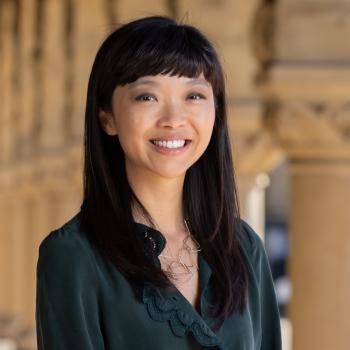
Judith Ellen Fan is a Courtesy Assistant Professor at Stanford University, holding primary appointment in the Department of Psychology and courtesy appointments in the Graduate School of Education and the Department of Computer Science. She directs the Cognitive Tools Lab, focusing on how humans use physical representations to learn, communicate, and solve problems through interdisciplinary approaches combining cognitive science, computational neuroscience, and AI. Her research interests span cognitive tool development, data visualization literacy, educational technology, and developmental psychology. Key areas include understanding how drawing and sketching shape memory and conceptual representation, evaluating machine comprehension of visual and physical concepts, and designing human-centered AI systems. Recent work emphasizes benchmarking human and machine abilities in physical dynamics understanding (Physion++), evaluating data visualization literacy (CHART-6), and analyzing large-scale drawing datasets (THINGS-drawings). These projects bridge cognitive science with AI to advance both fields through shared benchmarking frameworks. Judith has received funding for projects on cognitive tool development and human-AI collaboration. Her lab collaborates across disciplines, emphasizing empirical studies with human participants and algorithmic benchmarking. Notable datasets include the 1,854-concept THINGS-drawings collection and Physion++ physical prediction benchmarks.
Dr. Mary Broughton is a Senior Lecturer at the School of Music, University of Queensland (UQ), and an affiliate of the Research Centre in Creative Arts and Human Flourishing. She holds a Bachelor of Music (Griffith University), Master's (Australian National University), and PhD (University of Western Sydney). Her interdisciplinary research bridges music psychology and performance studies, focusing on how music impacts human thought, emotion, and behavior. Key areas include music perception/cognition, audience engagement, early childhood music development, and music's role in promoting wellbeing through active participation. As a percussionist, she performed with Queensland Symphony Orchestra, West Australian Symphony Orchestra, and international chamber/solo engagements. Her creative works include performances at TV Week Logie Awards and marimba compositions like 'Bang' series and 'Action and Reaction... Mark II'. Recent projects include evaluating UQ Voices (community choir for international students), analyzing emotional responses to music, and exploring music's psychosocial health mechanisms. Her work integrates neurophysiological, behavioral, and qualitative methods to study music's societal and individual impacts. Education: B.Mus (Griffith), M.Sc (ANU), PhD (UWS) Affiliations: School of Music, Research Centre in Creative Arts and Human Flourishing Performance Experience: Queensland Symphony Orchestra, International Marimba Festivals Key Projects: UQ Voices Choir Evaluation, Logie Awards Performances, Marimba Performance Analysis
Dr. Jennifer MacRitchie is a Senior Research Fellow at the University of Sheffield's Department of Music, affiliated with the School of Languages, Arts and Societies. She holds an M.Eng in Electronics with Music from the University of Glasgow and a PhD in Science and Music Research from the same institution. Previously, she held roles at the Conservatorio della Svizzera Italiana and Western Sydney University as a Research Lecturer and Senior Research Fellow. Her research focuses on the intersection of music, technology, and health, particularly designing assistive technologies for older adults with dementia and their carers. Key collaborations include work with Prof. Renee Timmers, Prof. Luc de Witte, and Prof. Andrew McPherson. She co-supervises PhD students exploring topics like dementia-friendly musical interfaces and notation systems. Research interests span music performance neuroscience, technology-enhanced music education, and interdisciplinary methods combining engineering, psychology, and healthcare. Notable projects include the UKRI Future Leaders Fellowship-funded initiative to develop new musical technologies for dementia care and the Active Minds Music Ensemble study. Grants include a £1.18M UKRI Fellowship and an Australian Research Council Discovery Project. Her work has appeared in journals like Alzheimer's & Dementia , Music & Science , and Frontiers in Psychology . Awards include prestigious fellowships and grants supporting her innovative research.
Amir Ghalamzan is an Associate Professor at the University of Surrey's School of Computer Science and Electronic Engineering, leading the Intelligent Manipulation Lab. His research focuses on robot learning, robotic grasping, teleoperation, and agri-food robotics. Previously, he held roles at the University of Lincoln and University of Birmingham. Education: PhD in Robot Learning (Politecnico di Milano, 2015), M.Sc. in Mechanical Engineering (Iran University of Science and Technology, 2009). Research Interests: He addresses real-world challenges like labor shortages in agriculture through robots for extreme conditions, such as strawberry picking. His work integrates advanced perception, AI, and control systems. Notable projects include developing autonomous strawberry-picking robots and haptic-guided teleoperation systems. Key Projects: Led the £310K CERES Agtech project (2020-2021) for autonomous strawberry robots, and contributed to the £1.5M Agri Open-Core project (2023-2027) for open-source harvesting software. Collaborated with institutions like Imperial College London and companies like Saga Robotics. Labs/Teams: Directs the Intelligent Manipulation Lab, focusing on tactile sensors (e.g., AST Skin) and soft robotics innovations.
Sebastian Michelmann is an Assistant Professor of Psychology at New York University's College of Arts and Science. His research focuses on understanding how temporal dynamic content is neurally represented and processed in episodic memory, with particular emphasis on fast-timescale memory retrieval mechanisms and their interaction with event knowledge. He employs electrophysiological methods (EEG/MEG), computational modeling, and behavioral experiments to study memory formation under naturalistic conditions. Education: PhD in Psychology from the University of Birmingham (2018), thesis awarded the Glushko Dissertation Prize (2020) Master's (Diploma) in Psychology from Julius-Maximilians-Universitaet Wuerzburg (2014) Postdoctoral research at Princeton University (2018–2023) under Professors Ken Norman and Uri Hasson Research interests include neural oscillations, event segmentation, and the role of generalized event knowledge in memory retrieval. His work bridges cognitive neuroscience with computational approaches, exploring how the brain encodes, stores, and retrieves temporally precise information. Key research directions involve studying how memory processes are embedded in continuous experience and developing tools to analyze neural data (e.g., intracranial EEG re-referencing). Recent studies explore event boundary detection using large language models and investigate the neural correlates of natural language comprehension through ECoG datasets. Scientific Awards: Glushko Dissertation Prize (2020) Laboratory activities focus on future projects combining electrophysiology with computational modeling to understand interactive dynamics of episodic memory. Collaborative efforts include developing semi-automatic alignment tools and cloud-based neuroimaging frameworks.
Prof. dr. Lambert Schomaker is a Full Professor of Artificial Intelligence at the University of Groningen, leading the Artificial Intelligence and Cognitive Engineering (ALICE) institute within the Faculty of Science and Engineering. His work spans perceptual intelligence, machine learning, and neuromorphic computing, with significant contributions to handwriting recognition, robotics, and historical document analysis. Affiliations: Bernoulli Institute, CogniGron (Cognitive Systems & Materials), and Data Science & Systems Complexity (DSSC) centers. Education: M.Sc. (1983) and Ph.D. (1991) in Psychophysiology/Psychology from Nijmegen University. Research Interests: AI, pattern recognition, neural networks, autonomous systems, and applications in cultural heritage (e.g., the MONK system for handwritten archive indexing). He has pioneered handwriting recognition methods used in modern devices like tablets and led the 30MEuro Target project for large-scale data mining. Grants & Projects: Includes NWO-funded initiatives (e.g., Catch, TriGraph) and EU projects (MANTIS, MANIC). Current focus areas include neuromorphic computing with electronic materials and AI-driven analysis of the Dead Sea Scrolls. Awards: IBM Faculty Awards (2011, 2012), IAPR Best Paper Award (2012), Ching Yee Suen Special Award (2012). Advising: Supervised over 20 PhD students in AI, robotics, and document analysis. Active in industry collaborations (e.g., HP, Microsoft). Labs/Teams: Director of ALICE, contributor to CogniGron, and leader of the MONK system team. Current research includes neuromorphic hardware development and AI applications in maintenance systems.
David Terburg is Associate Professor in Social Neuroscience at Utrecht University's Department of Psychology (Faculty of Social and Behavioural Sciences). His research examines neurobiological mechanisms of social behavior using multimodal approaches including hormone administration, fMRI, and lesion studies. His research focuses on: Neural basis of social motivation and aggression Amygdala function in threat processing and escape behaviors Hormonal modulation of social decision-making Cross-species validation of social neuroscience findings Analysis of his publications shows strong emphasis on the basolateral amygdala's role in rapid threat responses, and hormonal influences (testosterone, oxytocin) on social cognition. Recent work develops neurocomputational models of cerebellum-amygdala interactions. Scientific awards include: NWO Veni Award (2013) for research on neuroendocrine mechanisms of defense behaviors He teaches courses in neuropsychology and social neuroscience, employing methods like eye-tracking and psychophysiology. His lab uses pharmacological interventions and neuroimaging to study clinical populations including psychopathy and social anxiety. Research is supported by Dutch Science Foundation grants and involves international collaborations across Europe and South Africa.
Roberto Bresin is a Professor of Media Technology at KTH Royal Institute of Technology's Division of Media Technology and Interaction Design (MID), part of the School of Electrical Engineering and Computer Science (EECS). He leads the Sound and Music Computing group and serves as Director of Studies for the Media Technology program and Director of NAVET, a center for art, technology, and design research. His work bridges music, robotics, and human interaction. Research focuses include expressive music performance, emotion in sound, robot sound design, and sonification. He holds a PhD in Music Acoustics from KTH (2000) and has extensive experience in sound engineering and interactive systems. Key projects involve designing auditory feedback for robots and exploring light's psychological impacts. His publications span robotics, sonification, and human-centered technology. Recent articles address robot sound aesthetics, daylight effects on behavior, and sonification of computer processes. Bresin collaborates internationally, contributing to EU initiatives like SAME and Nordic SMC networks. His work emphasizes cross-disciplinary innovation, with applications in education, healthcare, and environmental science.
Richard Savery is an Honorary Research Fellow at Macquarie University's Faculty of Arts, affiliated with the Performance and Expertise Research Centre and the Centre for Applied Artificial Intelligence. His work bridges artificial intelligence, robotics, and music, focusing on creative interactions and trust-building through robotic musicianship. He holds a PhD in Music Technology from Georgia Institute of Technology (2021) and a Master's from UC Irvine. Key roles include developing the NSF-funded Keirzo rapping/drumming robot and publishing the edited book Sound and Robotics (2023). Research interests include emotional musical prosody, human-robot collaboration, and robotic performance. Notable projects include Shimon the singing robot and IVF sonification. Awards include a GANG Award (2015) for game audio. Active in interdisciplinary collaborations, he has composed music for films, ads, and video games, including Gunman Taco Truck and Gathering Sky . His work spans academic grants ($800k NSF-NRI grant), industry partnerships, and public installations like the Un[contained] Arts Festival's beehive exhibit. Over 50 publications highlight his contributions to robotics, music tech, and AI ethics.