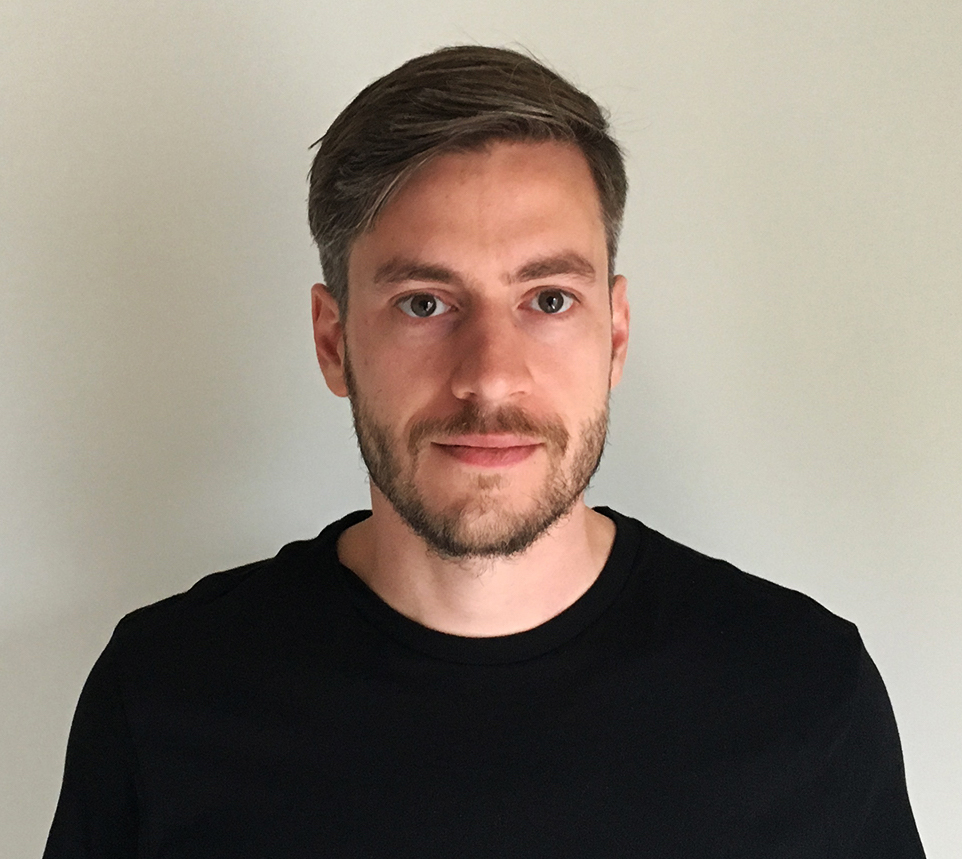
David Lindlbauer is an Assistant Professor at the Human-Computer Interaction Institute (HCII) of Carnegie Mellon University . He leads the Augmented Perception Lab and co-directs the CMU Extended Reality Technology Center . His research focuses on enhancing human perception and interaction with digital information through novel Augmented Reality and Virtual Reality technologies. Research Interests : Computational interaction techniques Adaptive user interfaces Spatial audio and haptic feedback Dynamic interface element placement Environmental context awareness Noticeability prediction models Scientific Recognition : Best Paper Honorable Mention at ACM CHI 2024 Best Paper Award at ACM ISS 2023 ETH Zurich Postdoctoral Fellowship Multiple best paper recognitions at ACM UIST and IEEE VR Professional Engagement : Subcommittee Chair for CHI 2025 Workshops Co-Chair for UIST 2023 Doctoral Symposium Chair for ISS 2023 Regular reviewer for top venues like CHI, UIST, SIGGRAPH, and IEEE VR Education : PhD from TU Berlin Postdoctoral Researcher at ETH Zurich
Enrico Rukzio is a Professor at the University of Ulm, Germany, leading a prominent research group focused on human-computer interaction with particular emphasis on automotive user interfaces, mixed reality, and accessibility. His research spans multiple domains including automated vehicles, virtual reality, and sustainable interaction design, with consistent publication output in top-tier venues such as CHI, UIST, and AutomotiveUI. Professor Rukzio's research interests center around the intersection of human factors and emerging technologies. His work investigates how users interact with automated systems, particularly in transportation contexts, with significant contributions to external vehicle communication, in-vehicle interfaces for automated driving, and accessibility solutions for diverse user populations. His research group has pioneered methods for optimizing user interfaces through Bayesian optimization and has conducted extensive studies on user acceptance of automated vehicle technologies. His publication portfolio reveals a clear trajectory of research evolution from foundational HCI work to specialized applications in automated transportation systems. Recent work shows increasing focus on accessibility aspects of automated vehicles, particularly for users with visual impairments, as well as exploration of emerging domains like Urban Air Mobility. The research demonstrates strong methodological diversity, incorporating controlled experiments, field studies, and computational optimization techniques. Professor Rukzio has supervised numerous doctoral students who have become active researchers in the field, including Mark Colley, Pascal Jansen, and Luca-Maxim Meinhardt. His research group maintains strong international collaborations and has secured funding for multiple projects at the forefront of automotive user experience research. The group's work has practical implications for automotive manufacturers and technology developers creating next-generation transportation interfaces.
Marina Grishakova serves as Chair Professor of Literary Theory and Intermedial Studies at the Institute of Cultural Research, Faculty of Arts and Humanities, University of Tartu. Elected to Academia Europaea in 2016, she holds prominent leadership roles including membership on the International Comparative Literature Association (ICLA) Executive Council and supervision of the International Research Training Group Baltic Peripeties (Universities of Greifswald, Tartu, and Trondheim). Her academic trajectory shows steady progression from Lecturer (1993-2004) to Associate Professor (2008-2015) and finally to full Professor (2015-present), with significant international engagement through Fulbright, DAAD, and British Academy fellowships. Professor Grishakova's research spans narratology, literary theory, intermedial studies, and semiotics of culture, with particular focus on narrative complexity, literature-film relationships, and cognitive approaches to narrative. Her scholarly evolution demonstrates movement from early work on Nabokov's spatial models toward increasingly sophisticated interdisciplinary frameworks that bridge humanities with cognitive science. She has made substantial contributions to understanding how narrative structures shape human cognition and cultural evolution, especially during periods of crisis and transformation. Her recent publications reveal thematic concentration on narrative complexity, intermediality in digital contexts, and pandemic narratives. The 15 most recent articles show consistent exploration of how narrative forms adapt to represent complex systems and experiences, with growing emphasis on cross-media applications and the epistemological dimensions of fiction. Her work increasingly integrates insights from cognitive science, systems theory, and media studies to develop new theoretical frameworks for understanding narrative representation. Member of Academia Europaea (2016) British Academy Visiting Scholar grant (2011) Honorary badge of the University of Tartu (2011) Fulbright scholarship for senior researchers (2008) DAAD research scholarship (2007) NordForsk grant as project leader (2008) Special issue of CompLit nominated for ESCL Excellence Award (2023) Professor Grishakova has supervised 9 doctoral students and 5 postdoctoral researchers across international institutions, with projects spanning cognitive approaches to fiction, narrative ethics, and digital storytelling. She has led major international collaborations including the European Network of Comparative Literary Studies (2011-2013) and Nordic Network of Narrative Studies (2007-2011), and currently participates in COST Action INDCOR on Interactive Narrative Design and the CELSA project 'Re-Familiarizing the Body and its Umwelt.' Her extensive service includes editorial board membership for five international journals and advisory roles for prestigious book series. Directing the Narrative, Culture, Cognition research group at the University of Tartu, Professor Grishakova maintains an active international presence with over 30 recent guest lectures and plenary presentations across Europe. Her scholarly impact extends through translation of her works into French, Spanish, Czech, Bulgarian, and Chinese, demonstrating significant global influence in literary theory and narratology.
Michal Kosinski is an Associate Professor of Organizational Behavior at Stanford University's Graduate School of Business, specializing in computational social science, artificial intelligence, and psychometrics. He holds a Ph.D. in psychology from the University of Cambridge, where he pioneered methods for predicting psychological traits from digital footprints. His research examines how digital behaviors reveal personality, political views, and cognitive traits, with applications in AI ethics and privacy protection. Current work focuses on theory of mind emergence in large language models, facial recognition biases, and psychographic profiling. Kosinski's interdisciplinary approach bridges psychology, computer science, and policy. Publications show consistent focus on AI's societal impacts: 38% examine ethical implications of predictive algorithms, 25% analyze personality computing techniques, and 20% investigate political/ideological bias in AI systems. Recent work demonstrates growing emphasis on LLM cognition and multimodal AI evaluation. Major Scientific Awards: ARP Early Career Award (2025) SPSP Distinguished Fellowship (2024) William Stern Honorary Award (2024) EAPP Early Achievement Award (2023) APS Rising Star Award (2015) Top 1% Highly Cited Researcher Kosinski advises government agencies (FTC, DoJ, EU Parliament) and technology companies on AI ethics and policy. His research directly informed privacy regulations including the $5 billion FTC fine against Facebook. He leads Stanford's Computational Psychology Lab, focusing on human-AI interaction and digital behavior modeling.
Fumihiro Kano is a comparative psychologist at the Centre for the Advanced Study of Collective Behavior, University of Konstanz, and an Affiliated Scientist at the Max Planck Institute of Animal Behavior. His research focuses on the evolutionary origins of social intelligence, using cutting-edge technologies like eye-tracking, motion-capture, and thermal imaging to study social cognition in great apes, monkeys, and birds. Education: PhD in Biological Sciences (Primate Research Institute, Kyoto University) Key Collaborations: Max-Planck Institute for Evolutionary Anthropology, University of Oxford, Kumamoto Sanctuary (Kyoto University) Kano’s work spans comparative analysis of gaze behavior, emotional processing, and collective decision-making. He has developed wearable sensors for free-flying pigeons and non-invasive methods for studying primates in sanctuaries. His studies on the human eye’s uniformly white sclera have provided experimental support for the gaze signaling hypothesis . Recent research integrates large-scale motion-capture systems with gaze-tracking to analyze interspecies interactions in pigeons, crows, and humans. He specializes in quantifying attention dynamics during collective behavior, including vigilance in birds and social cognition in apes. Scientific Awards: Heidelberg Academy of Sciences Manfred Fuchs Preis (2023) APA Division 6 Early Carrier Investigator Award (2020) Japanese Psychological Association International Award (2018) Kano leads interdisciplinary teams combining computer vision, psychology, and behavioral ecology. His work bridges evolutionary biology and technological innovation, with applications for understanding human uniqueness and animal cognition.
Dima Damen is a Professor of Computer Vision at the School of Computer Science, University of Bristol , and leads the Machine Learning and Computer Vision Group . She also holds a position as Senior Research Scientist at Google DeepMind. Her research focuses on egocentric vision , video understanding , and action recognition , with significant contributions to human routine modeling , hand-object interaction analysis, and multimodal learning from real-world environments. EPSRC Early Career Fellow (2020-2025) ELLIS Society Member Active in organizing workshops and challenges (e.g., EPIC, Ego4D, EgoVis) Her recent work explores temporal discrimination in video captioning ( It's Just Another Day ), active memory representations for long egocentric videos ( AMEGO ), and hand-object interaction referral ( HOI-Ref ). She has co-authored 15+ articles in top venues like CVPR, ICCV, NeurIPS, and IJCV, with a focus on egocentric scene modeling , audio-visual binding , and cross-scenario generalization . Awards include the Best Paper at ACCV 2024 and recognition as an Outstanding Reviewer at CVPR 2020 . She has supervised numerous PhD students and postdocs , including Adriano Fragomeni, Jacob Chalk, Alexandros Stergiou, and others who now hold academic or industry roles. Her funded projects include VISUAL AI (EPSRC Programme Grant) and UMPIRE (EPSRC Early Career Fellowship), supporting innovations in egocentric dataset creation , real-time tracking , and industrial workflow assistance .
El Mustapha Mouaddib is a Professor in the Perception and Robotics department at Universite de Picardie Jules Verne, affiliated with Laboratory Heudiasyc (UMR CNRS 7253). His research bridges advanced robotics with cultural heritage preservation, focusing on developing novel computer vision techniques for complex documentation challenges. His primary research interests include omnidirectional vision systems , hyperspectral imaging , and 3D reconstruction methodologies , with significant emphasis on applications for cultural heritage documentation. Mouaddib's work particularly addresses challenges in temporal illumination compensation , laser scanning registration , and multi-scale digitization of historical structures, as evidenced by his extensive Notre-Dame de Paris cathedral research. Analysis of his 15 most recent publications reveals a consistent trajectory toward heritage robotics - developing specialized computer vision algorithms for cultural preservation. His work demonstrates increasing sophistication in integrating multi-modal sensor data (TLS, hyperspectral, RGB-D) solving illumination challenges in historical documentation developing adaptive robotic systems for complex environments Notably, his Notre-Dame research forms a cohesive body of work examining structural changes through advanced 3D analysis. Mouaddib actively participates in major interdisciplinary projects including SAMURAI , ASSIDUITAS , SCANBOT , ADAPT , and SUMUM , which focus on heritage digitization and robotic exploration. His collaborative approach is evident through extensive co-authorship with institutions like CNRS and international partners in Japan and Italy. His laboratory work centers on the E-Cathedrale initiative, creating comprehensive digital twins of Gothic cathedrals through multi-temporal and multi-scale documentation. This involves developing specialized hardware (like the HDROmni camera system) alongside novel algorithms for processing challenging heritage environments.
Dr. Xinyu Zhang is a Research Fellow at the Australian Institute for Machine Learning (AIML), University of Adelaide's Faculty of Sciences, Engineering and Technology. Her research bridges computer vision and machine learning, focusing on image/video generation, self-supervised learning, and multimodal retrieval for human-centric AI applications. Zhang's current investigations include: Causal representation learning and multimodal integration Bayesian deep learning frameworks Video generation with temporal consistency Lightweight detection transformers Unsupervised person re-identification Analysis of recent publications reveals strong emphases on generative modeling innovations (especially video synthesis), efficient transformer architectures for real-time applications, and self-supervised representation learning. Her work frequently addresses the alignment between latent representations and human perception across vision-language tasks. Dr. Zhang co-supervises graduate students on projects involving multi-agent 3D scene generation and knowledge transfer in low-supervision learning. She serves as conference reviewer for premier venues including CVPR, ICCV, and NeurIPS, contributing to the advancement of computer vision research.
Roope Raisamo is a Professor in the Department of Computing Sciences at Tampere University, part of the Faculty of Information Technology and Communication Sciences. His research focuses on advanced human-computer interaction, virtual/augmented reality systems, haptic feedback technologies, and their applications in medical, automotive, and assistive technology domains. He leads multidisciplinary projects involving collaboration with industry partners like car manufacturers and healthcare institutions. Key areas of expertise include: (1) Design of immersive XR environments with multimodal feedback integration, (2) Haptic actuator development using smart materials like magnetorheological fluids, (3) Ergonomic interfaces for autonomous vehicles, and (4) Accessibility solutions for seniors and disabled populations. His work bridges theoretical HCI research with practical applications seen in surgical training systems, automotive UIs, and wearable communication aids. Raisamo's research outputs from 2023-2025 show strong focus on: - Sensory augmentation in food perception through XR (2025) - Medical VR applications for surgical planning and tumor visualization (2024-2025) - Haptic-mediating technologies for automotive and industrial interfaces (2023-2025) He has pioneered the use of embedded haptic waveguides in steering wheel interfaces and developed novel textile-based AAC systems for non-verbal communication. Current projects include exploring the medical metaverse for collaborative surgical planning and creating AI-enhanced research tools like TAUCHI-GPT.
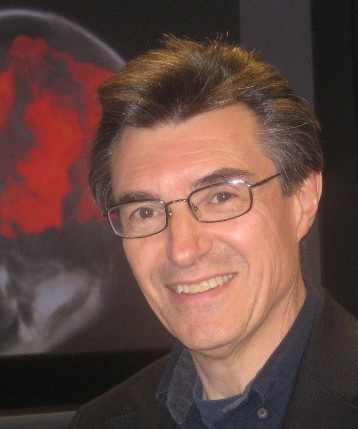
Marcel Just is the D.O. Hebb University Professor of Psychology and Biomedical Engineering at Carnegie Mellon University, where he also serves as the Director of the Center for Cognitive Brain Imaging. His academic journey began with a B.Sc. in Honors Psychology from McGill University in 1968, followed by a Ph.D. from Stanford University in 1972. Over his distinguished career, Just has pioneered the application of fMRI technology to investigate the neural basis of cognitive processes. His research focuses on understanding how concepts are neurally represented in the brain, with particular emphasis on: How familiar and technical concepts are represented through fMRI-measured brain activation patterns The decomposition of these patterns into meaningful components (e.g., how motor regions represent the action of holding an apple) Applications for diagnosing psychiatric illnesses by detecting alterations in concept representations Assessing how students learn new technical concepts in educational settings Just's work has made significant contributions to both conceptual and language processing research (funded by ONR and NIMH grants) and autism research (funded by NICHD). His laboratory developed the influential frontal-posterior underconnectivity theory of autism, which has shaped understanding of neural connectivity differences in autism spectrum disorders. His research employs machine learning and dimension reduction techniques applied to fMRI data, bridging cognitive psychology with advanced neuroimaging methodologies. This interdisciplinary approach has yielded insights across multiple domains including language comprehension, visual thinking, problem-solving, working memory, social judgment, and multi-tasking. Among his notable scientific awards are: Appointment as University Professor at Carnegie Mellon (2013) Distinguished Scientific Contribution Award from the Society for Text & Discourse (2012) Outstanding Research Award from the Advisory Board on Autism and Related Disorders (2001) NIMH Senior Scientist Award (1997) Throughout his career, Just has mentored numerous researchers and collaborated extensively with colleagues across disciplines. His work has been supported by multiple grants from organizations including the Office of Naval Research (ONR), National Institute of Mental Health (NIMH), and National Institute of Child Health and Human Development (NICHD). These collaborations have led to innovative applications of neuroimaging in understanding both typical cognitive processes and clinical conditions. At the Center for Cognitive Brain Imaging, Just leads a multidisciplinary team that combines expertise in psychology, neuroscience, biomedical engineering, and machine learning to advance the field of cognitive neuroimaging. The center serves as a hub for cutting-edge research that continues to deepen our understanding of the relationship between brain activity and cognitive processes.
Lisa Lee is a Research Scientist at Google DeepMind, focusing on creating AI agents that emulate biological learning and adaptability. She previously taught at Princeton University and received TA awards for Deep Reinforcement Learning and Probabilistic Graphical Models. Education: PhD in Machine Learning from Carnegie Mellon University (advised by Ruslan Salakhutdinov and Eric Xing); A.B. in Mathematics from Princeton University (advised by Sanjeev Arora). Her research centers on AI embodiment, intrinsic motivation, and hierarchical planning. She explores how evolutionary-inspired inductive biases and memory mechanisms can enable agents to generalize across physical and conceptual domains, as demonstrated in her work on robotic agility benchmarks and multimodal transformers. Notable scientific contributions include the Barkour quadruped robot benchmark, Gemini multimodal models, and theoretical work on causal language models. She co-organized key AI workshops at NeurIPS and ICML, and her awards include Princeton's TA of the Year for technical courses. Leadership: ICML Workflow Chair (2019), NeurIPS workshop co-organizer (2019, 2021), peer reviewer for top AI conferences.
Sandra Waxman is a Professor of Cognitive Psychology and holds the Louis W. Menk Chair in Psychology at Northwestern University. She is an IPR Fellow, leading research at the intersection of developmental science, cognitive psychology, and cultural studies. Her work focuses on how infants and young children acquire language and conceptual knowledge across linguistic and cultural contexts. She directs the Infant and Child Development Center, exploring cross-linguistic development in languages like English, Mandarin, and Spanish, as well as cultural influences on understanding human-nature relationships. Her research bridges disciplines, emphasizing the interplay between language and cognition. Collaborations include projects with Native American communities and Argentina’s CONICET. Waxman’s studies reveal how early language shapes cognitive development and how cultural frameworks influence children’s reasoning about the natural world. She also investigates how infants integrate sensory and linguistic information to form concepts, with implications for education and policy. Waxman’s contributions span over 200 publications, addressing topics like infant categorization, bilingualism, and the role of context in learning. Her work underscores the universality and diversity of developmental processes, advocating for interdisciplinary approaches to understand childhood cognition. She actively engages with policymakers through IPR, translating research into strategies that support early childhood development.
Ke Yan is an Associate Professor in the Department of Computer Science at the National University of Singapore's College of Design and Engineering. With extensive research output from 2021-2026, their work spans computer vision, artificial intelligence, and multimodal learning systems. National University of Singapore (Primary Affiliation) Collaborations with University of Electronic Science and Technology of China Research ties with Tencent Youtu Lab in Shanghai Research focuses on advancing computer vision techniques, particularly in medical image analysis, vision-language integration, and fault diagnosis systems. Their work bridges theoretical AI development with practical applications in healthcare, industrial systems, and environmental monitoring. Notable contributions include novel approaches to multimodal learning, medical image segmentation with sparse annotations, and improving reliability of large vision-language models. Recent publication trends (2024-2026) demonstrate increasing focus on multimodal systems, with significant contributions to vision-language model reliability, medical AI applications, and efficient transfer learning techniques. Their work frequently addresses critical challenges like hallucination mitigation in large models and sparse data scenarios in medical imaging. As an advisor, they mentor multiple researchers including Junlong Du, Shouhong Ding, and Zhiwen Lin, with whom they frequently collaborate on cutting-edge computer vision projects. Their research group maintains strong industry connections, particularly with Tencent's AI research division. The research is conducted within NUS's computer vision and AI research ecosystem, collaborating with multiple laboratories focused on multimodal intelligence and practical AI deployment in real-world systems.
Shahab Bakhtiari is an Adjunct Professor in the Department of Psychology at the University of Montreal's Faculty of Arts and Sciences. His research focuses on NeuroAI, exploring the intersection of neuroscience and artificial intelligence, particularly in visual perception and learning mechanisms in biological systems and artificial neural networks. He holds a PhD in Neuroscience from McGill University and conducted postdoctoral research at Mila, Quebec AI Institute. Education: Bachelor's and Master's in Electrical Engineering, University of Tehran PhD in Neuroscience, McGill University His research interests include computational neuroscience, machine learning, visual system modeling, and energy-efficient predictive coding. He teaches courses on AI, cognitive neuroscience, and deep learning applications in psychology. Key grants include a CRSNG grant (2023–2029) for comparative visual system studies and the UNIQUE strategic initiative (2022–2029), co-led by 50+ researchers. He has supervised one Master's student, Hamza Abdelhedi, on AI-human face recognition comparisons. His work bridges AI and biological systems, leveraging neuroimaging and deep learning to model brain dynamics and improve AI's biological plausibility.
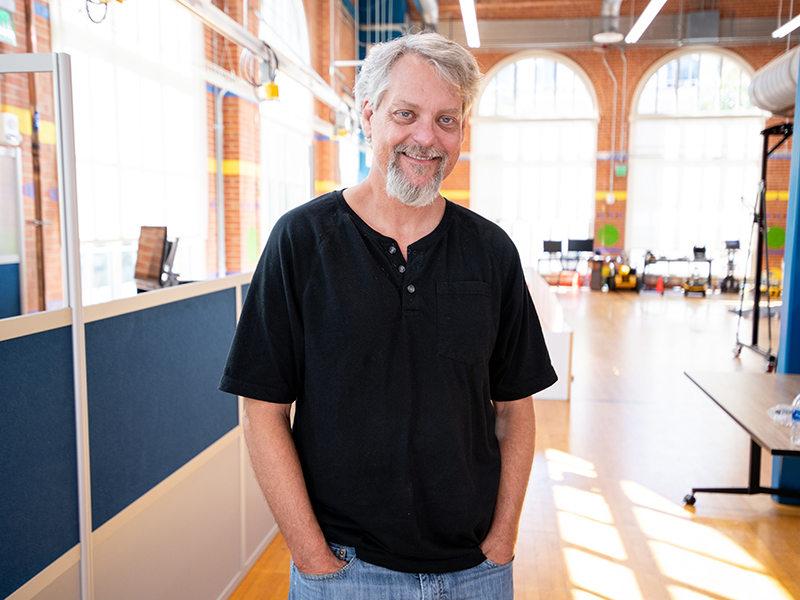
Mitchell Pryor is a Research Professor in the Department of Nuclear and Radiation Engineering at the University of Texas at Austin. He specializes in applied robotics and automation, particularly in hazardous environments such as nuclear facilities, energy sectors, and defense applications. Pryor earned his BSME from Southern Methodist University (1993), followed by an MS (1999) and PhD (2002) in Mechanical Engineering from UT Austin. His research focuses on robotics for hazardous environments, including nuclear waste management, autonomous systems, and human-robot collaboration. He leads the Nuclear & Applied Robotics Group (NRG) and co-founded RAPID, an industry affiliate program supporting automation in energy sectors. His work spans robotics in extreme environments, augmented reality interfaces, and task planning frameworks. Key collaborations include Army Futures Command (AFC), NASA, DARPA, and DOE national labs such as INL, LANL, and ORNL. Pryor’s contributions include developing the TeMoto software framework for robotic autonomy, virtual fixture systems, and radiation surveying methodologies. He chairs the ANS Robotics & Remote Systems Division and actively participates in IEEE, ASME, and other professional societies. His research emphasizes interdisciplinary approaches to deploy robotics in complex, uncertain environments for tasks like material handling, mobile manipulation, and environmental monitoring. Notable projects include AR-STAR for real-time robot data modification, MaRMOT for object tracking, and TeMoto 2.0 for task execution formalisms. His work bridges theoretical robotics with practical applications in nuclear safety, energy infrastructure, and defense systems.