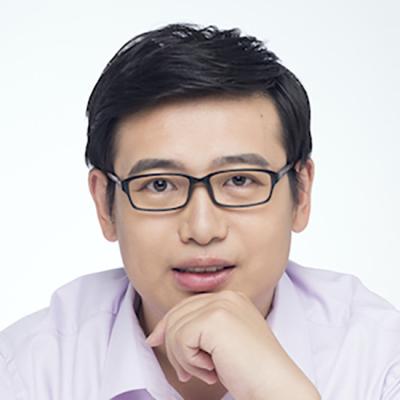
Marc Erich Latoschik is a Professor in the Department of Human-Computer Interaction at the University of Würzburg, Germany. He previously held roles at Bayreuth University, Bielefeld University, and FHTW Berlin. His research focuses on virtual and augmented reality, embodiment, human-computer interaction, and applications in health, education, and social systems. Education: Completed his PhD in 2001 at Bielefeld University with a thesis on multimodal interaction in virtual reality. Research Interests: Embodied interaction, virtual embodiment, presence and plausibility in VR/AR, avatar design, social virtual reality, health applications (e.g., VR therapy for body image issues), and XR security/privacy. Active in developing frameworks like Reality Stack I/O and MAIL for VR/AR research. Key Projects: ViTraS study on body image exercises in VR, avatars for mass use via smartphone reconstruction, and motion-based biometrics in XR. Collaborates with medical teams on cybersickness detection and emergency training simulations. Labs/Teams: Leads research groups on immersive technologies and social VR applications. Involved in interdisciplinary projects combining HCI, AI, and healthcare.
Jiajun Wu is an Assistant Professor of Computer Science and, by courtesy, of Psychology at Stanford University. He holds multiple affiliations including membership in Bio-X, Faculty Affiliate status at the Institute for Human-Centered Artificial Intelligence (HAI), and membership in both the Wu Tsai Human Performance Alliance and Wu Tsai Neurosciences Institute. Dr. Wu earned his Ph.D. and S.M. in Electrical Engineering and Computer Science from the Massachusetts Institute of Technology before joining Stanford. Dr. Wu's research program focuses on creating AI systems that understand and interact with the physical world through the integration of computer vision, machine learning, robotics, and cognitive science. His work emphasizes physics-based modeling combined with deep learning to develop systems capable of perceiving, reasoning about, and predicting physical interactions. Key research areas include 3D scene understanding, neurosymbolic AI approaches, multimodal perception (combining vision, sound, and language), and embodied intelligence for robotics applications. His lab develops novel frameworks that bridge the gap between neural networks and symbolic reasoning to create more interpretable and robust AI systems. Analysis of Dr. Wu's recent publications reveals a strong trajectory toward integrated multimodal understanding for embodied AI. His work increasingly combines vision, sound, and language processing with physical reasoning to create systems that can interact meaningfully with the physical world. There's a clear progression from foundational computer vision research toward practical robotics applications, with significant emphasis on foundation models for robotics, sim2real transfer techniques, and creating comprehensive datasets for embodied AI research. Dr. Wu's exceptional contributions have been recognized with numerous prestigious awards including the NSF CAREER award (2024), Young Investigator Programs from ONR (2024) and AFOSR (2023), the Okawa research grant (2024), and being named to IEEE Intelligent Systems' 'AI's 10 to Watch' (2024). He has received multiple best paper awards at leading conferences including ICRA (2024), SIGGRAPH Asia (2023), and CoRL (2023). Dr. Wu actively mentors a large cohort of students across multiple levels, serving as primary advisor for doctoral candidates, master's students, and numerous independent researchers. His research is supported by substantial funding from major technology companies including Google, Meta, Amazon, Samsung, and J.P. Morgan, as well as government agencies like NSF, ONR, and AFOSR, reflecting the significance and impact of his work in physical AI and multimodal perception systems. Dr. Wu leads a dynamic research group at Stanford that collaborates extensively with the Wu Tsai Neurosciences Institute and Institute for Human-Centered AI. Current projects include developing neurosymbolic models for computer graphics, creating multisensory datasets like OBJECTFOLDER 2.0 for sim2real transfer in robotics, and building foundation models for embodied intelligence that can understand and manipulate objects with human-like physical intuition.
Dr. Brady D. Lund is an Assistant Professor at the University of North Texas, focusing on interdisciplinary research at the intersection of information science, artificial intelligence, and ethics. His work addresses AI adoption in libraries, data privacy, academic integrity, and international development. He holds a Ph.D., M.S., and B.S. from Emporia State University and Wichita State University. Education: Ph.D., Emporia State University M.S., Emporia State University B.S., Wichita State University Research Interests: Dr. Lund explores how AI impacts information seeking behaviors, data privacy literacy, and library services. His work emphasizes ethical AI deployment in academic and clinical settings, with a focus on marginalized communities. Key areas include AI-driven library systems, blockchain applications for academic integrity, and the societal implications of generative AI. Research Trends: Recent publications analyze AI's role in health information, cybersecurity threat intelligence, and library leadership in minority-serving institutions. He critiques AI authorship policies, evaluates large language models, and advocates for equitable AI access in developing countries. Labs & Teams: Leads the Computational Humanities and Information Literacy Lab and the CyberCrews initiative, focusing on AI ethics, digital literacy, and interdisciplinary collaboration.
Michael Riegler is a Researcher at the AI Department, Simula Research Laboratory , focusing on interdisciplinary applications of Artificial Intelligence in healthcare, sports analytics, and multimedia systems. His work bridges Machine Learning , AI Alignment , and Applied AI across clinical and real-world domains. Key Affiliations: Simula Research Laboratory (AI Department Head) Research Themes: Explainable AI in medicine, multimodal data analysis, and AI-driven health monitoring Research Interests include: Developing AI/ML algorithms for medical imaging (e.g., polyp detection, embryo analysis) Addressing missing data challenges in healthcare through novel imputation techniques Creating multimodal virtual avatars for investigative interview training Designing edge AI systems for sports analytics and sustainable fishing Recent Publications highlight collaborations with institutions in Norway and globally, with a focus on: Medical Applications: Polyp segmentation, ECG analysis, and explainable models for disease detection Sports Analytics: Athlete performance prediction and soccer video processing Data Infrastructure: Lifelogging datasets (ScopeSense), semantic representation frameworks Labs & Teams include leadership in Simula’s AI Department and participation in projects like Medico Multimedia Task , ImageCLEF , and MediaEval workshops. His work emphasizes responsible AI innovation in public sectors and privacy-preserving systems for edge environments.
Florian Shkurti is an Assistant Professor in the Department of Computer Science at the University of Toronto Mississauga (UTM), affiliated with the UofT Robotics Institute, Vector Institute, and Acceleration Consortium. His research focuses on robotics, machine learning, and computer vision, emphasizing safe and effective autonomous systems in dynamic environments. He directs the Robot Vision and Learning (RVL) lab, exploring areas like environmental monitoring, autonomous navigation, and mobile manipulation. Research Interests: His work spans robotics, machine learning, and computer vision. Key areas include robot perception, planning under uncertainty, safe exploration, imitation learning, and applications in field robotics, autonomous vehicles, and chemistry lab automation. He develops methods enabling robots to perceive, reason, and act safely in collaboration with humans. Publications: Recent work includes advancements in safe multitask learning, interactive crowd navigation, and diffusion models for trajectory planning. His research bridges theoretical foundations with real-world applications in environmental science and autonomous systems. Affiliations: Faculty Member, UofT Robotics Institute; Faculty Affiliate, Vector Institute; Faculty Member, Acceleration Consortium. He also holds positions at UTM's Mathematical & Computational Sciences department. Teaching: Courses include Imitation Learning for Robotics, Neural Networks, and Mobile Robotics. He emphasizes hands-on experience with autonomous systems through projects involving RC cars and simulation tools. Labs & Teams: Leads the RVL lab, collaborating on projects like RoboCulture (automated biological experimentation) and SICNav (safe crowd navigation systems). The lab focuses on cross-disciplinary robotics solutions for real-world challenges.
Chaowei Xiao is an Assistant Professor at the University of Wisconsin-Madison (starting 2023), affiliated with the School of Computer, Data & Information Sciences. His research focuses on securing AI systems, particularly exploring robustness in trustworthy machine learning, autonomous systems, and large language models (LLMs). He holds a Ph.D. from the University of Michigan, Ann Arbor, and a B.S. from Tsinghua University. Before joining UW-Madison, he worked as a research scientist at NVIDIA (2020–2022) and at Arizona State University (2022–2023). His work bridges model and system perspectives to ensure practical robustness and provable guarantees in AI applications like autonomous driving, healthcare, and IoT. Key research areas include adversarial robustness, AI security, and ethical AI. Recent contributions include frameworks for detecting LLM hallucinations, mitigating jailbreak attacks, and securing multi-modal systems. His work on diffusion models for adversarial purification and physical-world attacks on autonomous driving systems has been widely recognized. Notable awards include the 2024 USENIX Security Distinguished Paper Award, ACM Gordon Bell Finalist (2024), and Schmidt Sciences AI2050 Fellowship. He has advised students like Xiaogeng Liu (NVIDIA Fellow) and secured grants from Amazon, Apple, and UW-Madison. His lab actively publishes at top venues like NeurIPS, ICML, and CVPR.
Tianmin Shu is an Assistant Professor in the Department of Computer Science at Johns Hopkins University , with a joint appointment in the Department of Cognitive Science . He is the founding director of the Social Cognitive AI (SCAI) Lab and was previously a Research Scientist at MIT, working with Josh Tenenbaum and Antonio Torralba. His research goal is to advance human-centered AI by engineering machine social intelligence —building systems that understand, reason about, and interact with humans in real-world settings. His work is inherently interdisciplinary, integrating machine learning, computer vision, robotics, and social cognition. Research Interests: Theory of Mind Reasoning: Developing models that infer human mental states from multimodal behavioral data. Embodied Assistance: Creating agents capable of assisting humans in physical environments through verbal and non-verbal collaboration. Learning from Human Feedback: Extracting reward-relevant preferences from rich human input to guide agent behavior. Social Scene Understanding: Recognizing and reasoning about group activities and social roles from visual and physical cues. Computational Social Cognition: Modeling how humans perceive and interpret social and physical interactions. Scientific Awards: Outstanding Paper Award at ACL 2024 for "MMToM-QA: Multimodal Theory of Mind Question Answering" Grants & Collaborations: Tianmin Shu has led or co-organized several high-impact workshops and tutorials, including the NeurIPS 2023 Tutorial on "Language Models Meet World Models" and the RSS 2024 Workshop on "Social Intelligence in Humans and Robots". His lab has also developed open-source platforms like VirtualHome-Social and SimWorld for multi-agent interaction research. Lab & Team: As director of the Social Cognitive AI (SCAI) Lab at Johns Hopkins University, Tianmin Shu leads a multidisciplinary team focused on building socially intelligent systems. His lab is located in Malone Hall 213 and collaborates closely with the Departments of Computer Science and Cognitive Science.
Mohamed Bouri is a Senior Lecturer and Researcher at École Polytechnique Fédérale de Lausanne (EPFL), where he is affiliated with the School of Engineering (STI) and specifically the Microengineering Department (SCI-STI-MB). He is part of the ReHAssist research group (http://rehassist.epfl.ch), which focuses on rehabilitation robotics and human-robot interaction. His office is located in the MED Building (MED 3 1016) at Station 9, 1015 Lausanne. Dr. Bouri's research spans several key areas in robotics and rehabilitation engineering. His primary focus is on the development and control of exoskeleton systems for mobility assistance and rehabilitation. He has made significant contributions to hip exoskeleton technology, adaptive control strategies, and human-robot interaction paradigms. His work bridges engineering principles with clinical applications, particularly for individuals with mobility impairments and neurological conditions. Additional research interests include sensory substitution techniques, balance control systems, and astronomical instrumentation involving robotic fiber positioners for multi-object spectrographs. Analysis of Dr. Bouri's recent publications reveals a strong emphasis on practical applications of robotics in rehabilitation settings. His work increasingly focuses on user-centered design, adaptive control systems that respond to individual user needs, and ecological validity in testing environments. There's a clear trend toward developing systems that can function effectively in real-world scenarios rather than controlled laboratory settings. His research also shows growing integration of physiological feedback mechanisms and multimodal sensing to enhance human-robot cooperation, with applications spanning from Parkinson's disease rehabilitation to astronomical instrumentation. Dr. Bouri has supervised numerous doctoral students whose theses reflect the breadth of his research interests, including work on lower-limb exoskeletons, robotic control systems, and rehabilitation technologies. His collaborative approach is evident in the extensive list of co-authored publications across multiple institutions and disciplines, demonstrating his ability to bridge engineering with clinical and astronomical applications. Based at EPFL's Microengineering Department, Dr. Bouri leads research activities within the ReHAssist laboratory, which specializes in rehabilitation assistance technologies. The lab focuses on developing innovative robotic solutions for mobility assistance, with particular expertise in exoskeleton design, control algorithms, and human-robot interaction paradigms. His work on projects like TWIICE One has demonstrated real-world impact in assistive technology development.
Erkut Erdem is a Professor in the Department of Computer Engineering at Hacettepe University, where he leads the Computer Vision Laboratory (HUCVL). His research focuses on computer vision and machine learning, particularly on incorporating different kinds of context (spatial, temporal and cross-modal) into visual processing across all levels from low to high-level vision. He received his Ph.D. (2008), M.Sc. (2003), and B.Sc. (2001) from Middle East Technical University. Prior to joining Hacettepe University in 2010, he completed a post-doctoral fellowship at Ecole Nationale Supérieure des Télécommunications (2009-2010) and held visiting researcher positions at UCLA (2007) and Virginia Tech (2004). His current research interests include Visual Saliency Prediction, Automatic Image Description, Video/Photoset Summarization, Image Filtering, and Image Editing. Recent work has focused on multimodal learning with video-language models, diffusion-based image editing, and event-based vision for low-light conditions. His research has been published in top venues including NeurIPS, ICLR, ICCV, SIGGRAPH, and ACL. He has received significant recognition including The Young Researcher Award from Turkish Academy of Sciences and being named a 2022 Outstanding Associate Editor of IEEE Transactions on Multimedia. He has secured multiple research projects funded by TUBITAK and received gift funds from Adobe Research for text-guided image synthesis work. Current Teaching: BBM202: Algorithms, AIN434/BBM444: Fundamentals of Computational Photography Graduate Supervision: 6 current Ph.D. students, numerous recent graduates including Burak Ercan (2024) and Aysun Kocak (2023) Professional Affiliations: Co-affiliated with Koç University and İş Bank AI Center (KUIS AI)
Dr. Andrew Hines is a Researcher at the School of Computer Science, University College Dublin, specializing in machine learning applications for signal processing in speech, audio, and video domains. His work focuses on Quality of Experience (QoE) modeling, speech quality assessment, and immersive media analysis. He has held leadership roles in European COST Actions like Qualinet and CryptoAction, and previously worked in industry as a Director of Engineering. University: University College Dublin Role: Director of Research, Innovation and Impact Key Collaborations: IEEE (Senior Member), Audio Engineering Society (Ireland) Research interests center on machine learning for QoE optimization, audio-visual integration, and healthcare applications like heart sound classification and stroke rehabilitation. His recent publications explore self-supervised learning, neural speech codecs, and contextual factors in speech/audio quality assessment. Scientific contributions include awards like IEEE Senior Membership, and his work spans both academic research and industrial engineering in finance and aviation sectors. He leads the QxLab research team at UCD and develops open-source platforms such as WARP-Q and AQP for quality metrics.
Dominik Schörkhuber is a PreDoc Researcher at the Vienna University of Technology (TU Wien) in the Computer Vision department. With a background in Informatics (BSc, Dipl.-Ing.), he focuses on computer vision applications for autonomous driving, robotics, and human-machine interaction. His work spans driver action recognition, pedestrian prediction, and adaptive lighting systems. Current projects: Empathic Vehicle (2024–2026), SyntheticCabin (2021–2025), SmartProtect (2020–2025) Research themes: Video transformers, synthetic data transfer learning, multi-task learning, and sensor-lighting integration Specializes in 3D sensing, nighttime driving analysis, and mobile video creation tools
Chuang Gan is an Assistant Professor at the University of Massachusetts Amherst, affiliated with the College of Information and Computer Sciences and the Department of Computer Science. His work focuses on advancing artificial intelligence, robotics, computer vision, and embodied agents through interdisciplinary research combining neural networks, physical simulations, and multimodal learning. Research interests include generative models, reinforcement learning, vision-language integration, and scalable autonomous systems. He explores topics like world modeling for robots, adaptive policy learning, and physics-driven AI. His projects often involve creating systems that learn from visual, auditory, and tactile inputs to perform complex tasks such as object manipulation, navigation, and decision-making in dynamic environments. Recent research trends emphasize embodied AI systems capable of long-horizon planning, compositional reasoning, and efficient learning from limited data. His work bridges theory and practice, with applications in robotics, simulation platforms, and multimodal generation. Key contributions include frameworks for 3D scene understanding, adaptive world models, and novel training paradigms for large language models. His research has been applied to robotics platforms like RoboDreamer and UBSoft, focusing on unbounded soft environments. Collaborations involve designing benchmarks for physical scene understanding (e.g., Physion++), and creating tools like DiffTactile for tactile simulation. His work often integrates principles from differential geometry, PDE dynamics, and game theory. Chuang Gan’s research group develops open-source tools and benchmarks, such as the SoftZoo robot co-design platform and the SOK-Bench situated reasoning benchmark. His team emphasizes scalable alignment methods beyond human supervision and explores ethical AI through principles like symmetry-enhanced training.
Prof. Jochen Hartmann holds the Digital Marketing professorship at the TUM School of Management (Munich). Previously, he was an assistant professor at the University of Groningen's School of Business and Economics and worked as a management consultant at McKinsey & Company. He earned his doctorate from the University of Hamburg and coordinated the DFG research group FOR 1452 (2019-2022). His research focuses on digital marketing and machine learning, particularly analyzing unstructured data (computer vision, NLP) and generative AI. Key themes include social media, algorithmic fairness, diversity in advertising, and human-machine interactions. Education: Ph.D. in Business Administration (University of Hamburg), Management Consulting experience at McKinsey & Company. Research interests combine cutting-edge AI techniques with marketing challenges. Recent work explores generative AI's impact on advertising, algorithmic bias in finance, and visual search innovations. His text/image mining studies rank among top-cited articles in marketing journals like the International Journal of Research in Marketing and Journal of Marketing Research. Awards include the EMAC-Sheth Sustainability Award, Lindau Nobel Laureate Meetings' Young Economist distinction, and multiple best dissertation awards. Grants: Led DFG-funded research group (2019-2022). Affiliated with Columbia Business School (visiting scholar) and Mannheim Business School (lecturer in machine learning). Labs/Teams: Active in interdisciplinary research groups focusing on AI applications in marketing and business analytics.
Mohammad T. Alhawary is Professor of Arabic Linguistics and Second Language Acquisition at the University of Michigan's Middle East Studies department within the College of Literature, Science, and the Arts. He serves as Director of both the MA Program in Arabic for Professional Purposes (APP) and the MA Program in Teaching Arabic as a Foreign Language (TAFL). His educational background includes a Ph.D. from Georgetown University (1999). Prior to joining the University of Michigan, he contributed to developing Arabic and Middle Eastern Studies programs at various US institutions. Professor Alhawary's research spans both theoretical and applied Arabic linguistics, with particular focus on second language acquisition processes. His work examines how factors like age, input quality, output practice, and first language transfer affect Arabic language learning. He has made significant contributions to understanding Arabic language pedagogy, curriculum design, proficiency testing, and the application of technology in language learning. His research also extends to bilingualism, multilingualism, language impairment, and Arabic medieval grammatical traditions. His publications reflect a strong trajectory in Arabic linguistics research, with recent works focusing on practical language teaching applications, reading comprehension mechanisms, code-switching patterns in digital communication, and multilingual acquisition processes. The 2023 publication 'Teaching Arabic as a Foreign Language' represents his latest contribution to language pedagogy methodology. 2019 AATA Book Award for 'Arabic Second Language Learning and Effects of Input, Transfer, and Typology' As an academic leader, Professor Alhawary serves as Executive Director of the American Association of Teachers of Arabic and edits both the Journal of Arabic Linguistics Tradition and Al-'Arabiyya journal. He continues to develop empirical research on Arabic second language acquisition to inform teaching practices both in America and globally.
Professor Michael Burke holds a full professorship in Rhetoric at Utrecht University (Faculty of Humanities) and teaches at University College Roosevelt (UCR) in Middelburg. Previously, he served as UU Honours Dean (2016–2021). His research focuses on rhetoric, stylistics, cognitive aspects of language, and education. He earned his Ph.D. in English Language and Literature from the University of Amsterdam, where he also completed his undergraduate studies. Research interests span written, oral, and digital rhetoric, emphasizing pedagogical, cognitive, stylistic, and neuroscientific dimensions. He has held visiting roles at institutions like the University of Cambridge and University of Bologna. Editorial roles include series editor for Routledge’s 'Research Monographs in Linguistics' and board memberships with journals like Language and Literature . Teaching includes undergraduate courses on classical rhetoric, argumentation, and public speaking at UCR, plus leadership and interdisciplinary research modules for Utrecht’s Honours College. He supervises PhD students in the UiL-OTS linguistics research school. Notable publications include The Routledge Handbook of Stylistics (2023) and studies on critical thinking, digital literacy, and cognitive literary science. Professional activities include keynote speaking at conferences like PCST and EARS, and contributions to projects such as ‘Undergraduate Research in the Netherlands’. His work bridges rhetoric, cognitive science, and education, emphasizing practical applications for students and educators.