Karon MacLean is a Professor in the Department of Computer Science at the University of British Columbia (UBC) , with degrees in Biology and Mechanical Engineering from Stanford (BSc) and MIT (MSc/PhD). She previously worked as a robotics engineer at the University of Utah and as a haptics researcher at Interval Research Corporation. At UBC since 2000, she directs the Designing for People Research Cluster and the CREATE graduate training program , which spans 11 departments across 5 faculties. Her research focuses on haptic interaction design for human-computer interfaces, emphasizing cognitive, sensory, and affective aspects. Applications include: Robotic interfaces Handheld devices Embedded computing environments Key research areas: Continuous/expressive control systems Low-attention interfaces Power-efficient haptic devices Standardized evaluation methods Scientific awards include: IEEE Fellow CHI Best Paper Awards (multiple) NSERC Collaborative Research Grant UBC Killam Fellowship She leads the SPIN Lab (Sensory Perception and Interaction Research Group) and has advised over 20 graduate students and research trainees.
Florentin Wörgötter is a faculty member at the Department for Computational Neuroscience , Georg August University of Göttingen, Germany. His research bridges robotics , computational neuroscience , and machine learning , focusing on action prediction, neural networks, and human-robot interaction. Key Research Areas : Action segmentation, semantic decomposition of manipulation sequences, 3D object reconstruction, and sensor fusion for infant movement classification. Recent Trends : Combining task-dependent learning with optimal path search, using foundation models for graph-based action recognition, and improving CNN interpretability through influence functions. He collaborates extensively with researchers like Minija Tamosiunaite , Tomas Kulvicius , and Poramate Manoonpong , contributing to journals such as NeuroImage , Robotics and Autonomous Systems , and IEEE Transactions on Neural Networks . His work often integrates deep learning , semantic reasoning , and biologically inspired models for robotic applications.
Letizia Bollini is a Professor at the Faculty of Design and Arts of the Free University of Bozen-Bolzano , specializing in Digital Design . Her work bridges physical and digital realms ("phygital"), focusing on cultural heritage, memory preservation, and user experience. Role : Professor of Digital Design Institution : Free University of Bozen-Bolzano Key Themes : Phygital narratives, cultural heritage ecosystems, digital mortality Research Interests include: Designing multimodal interfaces for cultural heritage Temporal dimensions of digital memory Accessibility in digital typography Geo-referenced storytelling for urban history Gender perspectives in design technology Her scientific contributions span from 2018 to 2024, addressing digital humanities, user experience, and sustainable design practices. Though no explicit awards are listed, her work has been showcased in events like the World Usability Day in Bozen (2023-2024).
Balandino Di Donato is a Lecturer in interactive audio at Edinburgh Napier University's School of Computing Engineering and the Built Environment. His research focuses on soundscapes in mountaineering environments and embodied human-computer interaction in music. He led AHRC-funded projects on Sound Design Pipeline for Cross-platform 360 Virtual Productions BSL in Embodied Music Interaction and chaired the Audio Mostly 2023 conference. Education includes a 2021 PhD from Royal Birmingham Conservatoire (Birmingham City University) in Designing Embodied Human-Computer Interactions in Music Performance . Prior academic roles featured collaborations with Goldsmiths (ERC BioMusic project), De Montfort University (Creative AI Dataset), and University of Leicester (INCITE project). Research spans Mountain soundscape analysis Accessible audio-visual-haptic systems Biosignal-driven musical instruments 360 audio design British Sign Language integration Interactive sound art installations Scientific achievements include Biennale awards (2018, 2019) Audio Mostly steering committee Conference chair and session roles EPSRC and AHRC grant reviewer
Ziang Xiao is an Assistant Professor in the Department of Computer Science at Johns Hopkins University's Whiting School of Engineering and a member of the Data Science and AI Institute. His research bridges human-computer interaction, natural language processing, and social psychology to understand human behavior at scale through AI systems. His educational background includes a Ph.D. in Computer Science from the University of Illinois Urbana-Champaign (co-advised by Prof. Hari Sundaram and Prof. Karrie Karahalios), where he also earned dual Bachelor's degrees in Psychology and Statistics & Computer Science under Prof. Dov Cohen. Prior to joining JHU, he was a postdoctoral researcher in the Fairness, Accountability, Transparency, and Ethics group at Microsoft Research Montréal. Xiao's research focuses on three interconnected areas: AI for Social Science (using LLMs to simulate human behavior), Human-centered Model Evaluation (developing frameworks like ECBD for evidence-centered benchmark design), and Information Seeking (studying how AI systems affect information diversity). His work emphasizes democratizing technology to operationalize human intuitions about behavior and decision-making, with notable contributions to LLM evaluation metrics and ethical AI design. Analysis of his recent publications reveals a strong trend toward human-centered AI evaluation, with increasing focus on LLM safety, value alignment, and interdisciplinary applications across social science domains. His work consistently appears in top-tier venues including CHI, ACL, and NeurIPS, with a 2024 CHI Best Paper Award for research on LLM-powered search systems. Best Paper Award at CHI 2024 for 'Generative Echo Chamber? Effect of LLM-Powered Search Systems on Diverse Information Seeking' Multiple publications in ACM/IEEE flagship conferences (CHI, ACL, NeurIPS) Research featured in Johns Hopkins news for social robot interruption handling and chatbot bias studies Xiao actively advises doctoral students and postdocs, with current advisees including Yu Lu Liu, Nikhil Sharma, and Han Jiang. His teaching includes graduate courses on Human-Computer Interaction and Advanced HCI Research Methods. He co-leads research initiatives at the intersection of AI and social science, collaborating with the Data Science and AI Institute to develop frameworks for responsible AI deployment. Current projects examine LLM vulnerabilities in GUI agents, multilingual information disparities, and adaptive decision support systems that balance automation with user control.
Hu Cao is a postdoctoral research associate at the Chair of Robotics, Artificial Intelligence and Real-Time Systems (Prof. Alois Knoll) at the Technical University of Munich (TUM) . Holding a Ph.D. from TUM, his research bridges autonomous driving , robotic grasping , medical image analysis , and dense prediction (classification, detection, segmentation). Education : Ph.D. from TUM Hu's work explores: Autonomous Driving : Perception under adverse conditions, multi-sensor fusion, and risk-based safety models Robotic Grasping : Vision-language integration for 6D pose estimation Medical Imaging : Transformer-based segmentation techniques (e.g., Swin-Unet) His recent publications include 15+ works at top venues like CVPR , ICCV , IEEE TPAMI , and IEEE TIV , with 6052+ Google Scholar citations . Notably, Swin-Unet ranks among the top 3 most cited ECCV papers in 5 years, and his work on event-based autonomous driving perception was featured in IEEE Xplore Innovation Spotlight . Editorial roles include: Associate Editor for Visual Intelligence and Frontiers in Neurorobotics Editorial Board member of Artificial Intelligence and Autonomous Systems (AIAS) Topic Editor for Frontiers in Robotics and AI and Frontiers in Neuroscience He has reviewed for 20+ top journals (e.g., Nature Computational Science , IEEE TRO ) and served on program committees for NeurIPS , CVPR , ICCV , and MICCAI .
Muskaan Singh is a Lecturer in Data Analytics at the Intelligent Systems Research Centre (ISRC) within the School of Computing, Engineering and Intelligent Systems at Ulster University . A member of the Cognitive Analytics Research Lab (CARL) , her work bridges Natural Language Processing (NLP) , Artificial Intelligence , and Practical Applications in domains ranging from machine translation to biomedical diagnostics. Education: PhD in Machine Translation (Thapar Institute of Engineering and Technology, 2016-2020) Master’s in Machine Translation (IIIT Hyderabad, India) Her research spans NLP and AI with applications in code-switched language modeling , depression detection , social media analytics , and medical diagnostics . She has developed multilingual tools for automatic minuting, including DeepCon and ALIGNMEET , and contributed to EU-funded projects like ROXANNE (criminal network analysis) and ELITR (European Live Translator). Key scientific awards include first prizes in international NLP competitions (EVAL4NLP, LT-EDI, SMM4H) and recognition at EMNLP , ACL , and COLING . She received the Inclusion and Diversity Grant (EMNLP 2021) and GHC Scholarship (2019). Current projects include AI-EPOCMON (AI-Enabled Point-of-Care Monitoring) and T3-NCP (crime prevention for safer communities). Dr. Singh has supervised grants from UKRI and Alzheimer’s Research UK , focusing on AI for health and IT operations . Her team at ISRC collaborates globally with institutions in Switzerland , Czech Republic , and India . She also leads research for the Center for Data Science and Artificial Intelligence at IIIT Lucknow, India.
Prof. PhD Anastasia Nicheva Petrova is a distinguished Professor in the Department of General Linguistics and Old Bulgarian Studies at the Faculty of Modern Languages, University of Veliko Tarnovo ("St. Cyril and St. Methodius" University). With an extensive publication record spanning over three decades, she has established herself as a leading expert in Balkan linguistics, phraseology, and linguistic-cultural studies. Her academic career demonstrates deep engagement with the complex linguistic landscape of the Balkan region, examining both historical and contemporary aspects of language contact and convergence. Prof. Petrova's research interests span multiple dimensions of linguistic inquiry, with particular emphasis on the Balkan linguistic union, phraseology, and the intersection of language with culture and cognition. Her work explores how linguistic structures reflect cultural models, examining everything from semantic fields to the multimodal nature of perception and expression. She has made significant contributions to understanding how Slavic lexical elements have been incorporated into other Balkan languages, the phonetic motivation behind phraseological units, and the mythological programming of everyday language. Her research bridges theoretical linguistics with cultural anthropology, creating a comprehensive framework for understanding the Balkan linguistic space as both a historical phenomenon and a living, evolving system. The analysis of Prof. Petrova's 15 most recent publications (2019-2025) reveals a consistent focus on the intricate relationships between language, culture, and cognition in the Balkan context. Her work demonstrates a sophisticated methodological approach that combines comparative analysis with cultural interpretation. A notable trend is her increasing attention to multimodal aspects of language, examining how perception, emotion, and cultural concepts are linguistically encoded. Her research shows a clear evolution from traditional comparative linguistics toward more integrated approaches that incorporate cognitive science, anthropology, and cultural studies. Prof. Petrova has been actively involved in numerous research projects that strengthen international academic collaboration. She has participated in projects focused on Balkan linguistic and cultural symbiosis, digital humanities, and the development of academic networks across Southeastern Europe. Her work with international teams from universities in Nis, Warsaw, and Craiova demonstrates her commitment to building sustainable academic partnerships that transcend national boundaries. She has also contributed to projects aimed at enhancing doctoral education and research, helping to establish platforms for young researchers to showcase their work.
Erik Wolf is a research associate at the University of Hamburg's Department of Informatics, specializing in Human-Computer Interaction (HCI) and Extended Reality (XR) technologies. His work focuses on optimizing presence in virtual environments through studies of plausibility , co-presence , and place illusion , particularly in the Horizon Europe project 'PRESENCE'. Prior to this role, he completed his PhD at the University of Würzburg, investigating Individual-, System-, and Application-Related Factors Influencing the Perception of Virtual Humans in Virtual Environments . Education : Bachelor's and Master's in Human-Computer Interaction from the University of Würzburg Visiting researcher at University of Queensland's Cognitive Engineering Research Group (2016-2017) Research Interests : XR User Experience Virtual Human Perception Body Awareness & Self-Identification in VR Digital Health Applications Presence & Immersion Scientific Contributions : Developed validated scales for virtual human plausibility Explored avatar personalization effects on body perception Investigated multimodal interaction frameworks Created tools for intelligent virtual humans development His work has been recognized with multiple awards including the DIVR Science Award 2019 and multiple Best Paper distinctions. He serves as a reviewer for leading conferences including IEEE VR, ACM CHI, and IEEE ISMAR.
Margaretha Nydahl serves as a Professor at Uppsala University's Department of Food Studies, Nutrition and Dietetics , focusing on nutritional science within elderly care contexts. Her research spans clinical dietetics, food safety, and health communication strategies specifically tailored for aging populations. Her primary research interests encompass elderly nutrition , malnutrition management , oral nutritional supplements , and food safety practices in geriatric care. Nydahl investigates how dietary interventions impact appetite regulation, meal satisfaction, and overall quality of life among older adults, with particular attention to sarcopenic obesity and vitamin D status. Her work bridges clinical practice with policy implementation, examining how national regulations translate to local elderly care settings. Analysis of her recent publications reveals a strong emphasis on qualitative methodologies exploring patient and dietitian perspectives, alongside quantitative studies measuring nutritional outcomes. Her research consistently addresses the practical implementation challenges of nutritional guidelines in real-world elderly care environments, with growing focus on the interplay between physical activity and nutritional status in aging populations. Nydahl maintains extensive collaborations with researchers including Liljeberg, Lövestam, and Andersson across multiple projects examining oral nutritional supplement adherence, malnutrition risk assessment, and foodservice reform in Swedish elderly care. Her work demonstrates leadership in translating nutritional science into clinical practice guidelines and policy recommendations.
Tobias Hallmen is a Researcher at the University of Augsburg 's Chair of Human-Centered Artificial Intelligence within the Faculty of Applied Computer Science . His work focuses on multimodal conversation analysis using machine learning and artificial intelligence in psychotherapy and medical/educational training contexts. Research interests include: Automated evaluation of conversational quality through multimodal data (audio, video, text) AI-based assessment systems for therapy sessions and parent-teacher interviews Development of real-time feedback mechanisms for skill improvement Integration of behavioral signal processing and empathy modeling Recent publications demonstrate expertise in vocal burst analysis , emotional mimicry prediction , and multimodal foundation models for behavioral annotation. Key technical domains: deep learning architectures , cross-modal data correlation , and computer vision applications . The Chair team under Prof. Dr. Elisabeth André currently includes 23 members with 10 projects active, including TherapAI (psychotherapy analysis) and KodiLL (medical training systems). Tobias Hallmen's work particularly addresses speaker classification , reception signal analysis , and remote physiological measurement techniques like video-based heart rate detection .
Valeria Anna Sovrano is an Associate Professor at the Center for Mind/Brain Sciences (CIMeC) and the Department of Psychology and Cognitive Science at the University of Trento. Her research focuses on comparative cognition , brain asymmetries , and spatial-numerical skills in fish and reptiles , with a particular emphasis on visual perception of illusions and environmental geometry encoding . She leads the Lower Vertebrates Behavior and Neurobiology Unit at CIMeC and has supervised numerous doctoral projects. PhD in Experimental Psychology (University of Padua, 2004) Master degrees in Legal Psychology, Criminology, and Human Rights Recent work explores neurodevelopmental disorders in zebrafish models , inhibitory control in reptiles , and environmental pollutant impacts on cognition . Her studies on fish spatial navigation and numerical discrimination have been widely cited across cognitive science and developmental psychology. Notable awards include the AIP Section of Experimental Psychology award (2000) and the Gold Medal of the Italian President (2007) . She has taught courses like Biological bases of social behavior , Animal Cognition , and Psychobiology of stress , while coordinating STEM outreach programs and serving on equality & diversity committees.
Shweta Bhardwaj is a Researcher at Google Research (via Optimum InfoSys Ltd), working in the Mixed-Mode User Understanding team. Previously, she served as a Data Scientist at Flipkart (2019-2021) and held a research internship at NVIDIA Bangalore (2018). She holds an M.S. (by Research) from IIT Madras (2016-2019), advised by Dr. Mitesh M. Khapra, and a B.Tech. in Computer Science from Guru Nanak Dev University. Education: M.S. (by Research), IIT Madras, 2016-2019 B.Tech. in Computer Science, Guru Nanak Dev University Her research focuses on Computer Vision , Explainable AI , and Model Compression . She emphasizes ethical AI applications for societal challenges like criminal justice and healthcare. Recent work includes developing input-adaptive neural networks for fine-grained visual recognition and benchmarking AI systems for sustainability goals. Her publications span topics like video classification optimization, neural network plasticity, and interpretable subspaces in image representations. She collaborates on benchmarks like Colorbench (2025) and Editval (2023), advancing AI robustness and multimodal understanding. Advising & Grants: Advised by Dr. Gaurav Aggarwal (Google Research), Dr. Shourya Roy (Flipkart), and Dr. Mitesh M. Khapra (IIT Madras). No explicit grants mentioned in the text. Labs & Teams: Associated with RBC-DSAI Lab at IIT Madras (led by Dr. Balaraman Ravindran) and currently part of Google's Mixed-Mode User Understanding team.
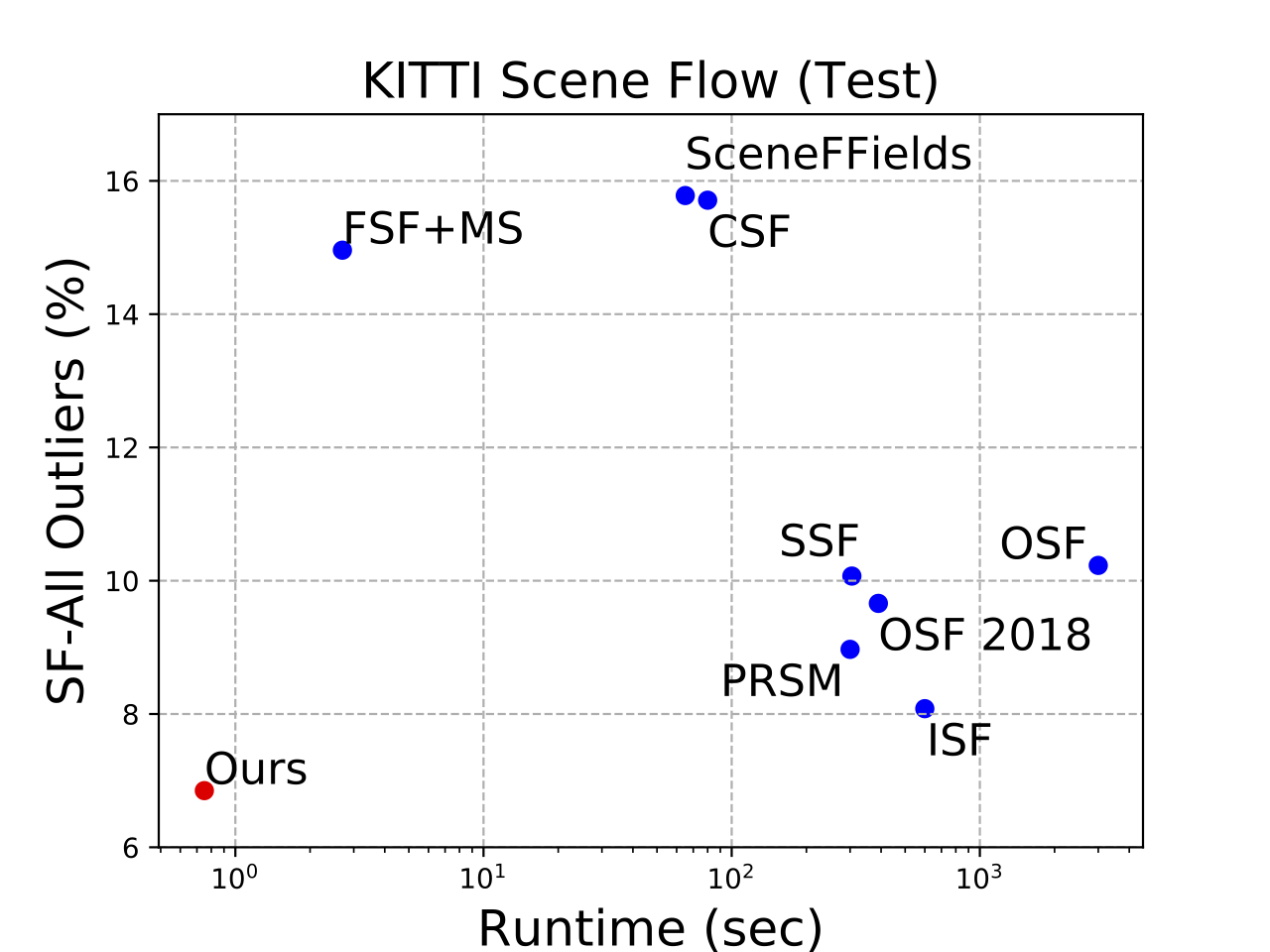
Wei-Chiu Ma is an Assistant Professor of Computer Science at Cornell University, where he leads research at the intersection of 3D/4D computer vision and robotics. His work focuses on building AI systems that can understand, reconstruct, and re-simulate our dynamic world to enable more robust autonomous systems and advance entertainment applications. Prior to joining Cornell, Dr. Ma was a Young Investigator/Postdoc at AI2 / University of Washington. He received his Ph.D. from MIT, working with Antonio Torralba and Raquel Urtasun. Before his Ph.D., he was a Senior Research Scientist at Uber ATG R&D and Waabi working on self-driving vehicles, and completed his M.S. in Robotics at Carnegie Mellon University under the advisement of Kris M. Kitani. Dr. Ma's research interests span several interconnected areas in computer vision and robotics: 3D/4D Computer Vision: Focused on scene reconstruction, modeling, and understanding from visual inputs Neural Radiance Fields (NeRF): Developing techniques for novel view synthesis and scene representation Robotics and Simulation: Creating realistic sensor simulation for autonomous systems Digital Twins: Building interactive, game-engine compatible virtual environments Self-Driving Technology: Working on scene flow estimation, sensor simulation, and vehicle localization His recent publications demonstrate a strong focus on pushing the boundaries of 3D scene understanding, with particular emphasis on extreme-view geometry, neural rendering techniques, and creating realistic simulations for autonomous systems. His work often bridges theoretical computer vision with practical applications in robotics and autonomous vehicles. Dr. Ma has received several notable recognitions including being selected as a Cyber-Physical Systems (CPS) rising star and a Siebel Scholar. He has also earned the Best Application Award for his work on TDTOS: T-Shirt Design and Try On System. As an educator and mentor, Dr. Ma is actively involved in guiding the next generation of researchers. He hosts pro bono office hours for students from underrepresented groups and is committed to fostering diversity in the field. He is currently building his research group at Cornell and plans to hire 1-2 graduate students during the 2024-25 cycle. Dr. Ma has organized several influential workshops including the "Synthetic Data for Computer Vision" workshop at CVPR 2025, the "Agent in Interaction, from Humans to Robots" workshop at CVPR 2025, and the "3D Modeling, Reconstruction, and Generation in the Wild" workshop at ECCV 2024, demonstrating his leadership in the computer vision community.
Dr. David Vinson is a Senior Lecturer in the Department of Experimental Psychology at University College London (UCL), where he conducts research at the intersection of language, cognition, and emotion. His academic profile demonstrates a strong commitment to understanding how humans process and represent meaning across various communication modalities. Dr. Vinson received his Doctor of Philosophy from University College London in 2009 and his Bachelor of Arts from Northwestern University in 1991. His educational background spans transatlantic institutions, providing him with a diverse academic foundation for his interdisciplinary research. His primary research focuses on language representations and processes, with particular emphasis on word, phrase and sentence meaning and its relation to other cognitive functions. A significant thread throughout his work examines the relationship between language and emotion, investigating how emotional content influences semantic processing. Dr. Vinson also explores how different communicative expressions integrate in multimodal contexts, studying both spoken language and sign systems. His methodological approach combines behavioral experimentation with selective neuroimaging techniques to provide comprehensive insights into language processing mechanisms. Dr. Vinson's publication record reveals consistent scholarly output across multiple high-impact journals in psychology, linguistics, and cognitive neuroscience. His recent work demonstrates growing interest in interdisciplinary semantic frameworks, with contributions to understanding how semantic representations differ for concrete versus abstract concepts, how iconicity functions in language, and how multimodal cues contribute to meaning construction. His research increasingly bridges theoretical linguistics with empirical cognitive science, reflecting contemporary trends in psycholinguistic research. As an educator, Dr. Vinson serves as module convenor for PSYC0004 Language and Cognition, an undergraduate second-year course at UCL. He actively contributes to the academic community as an ad hoc peer reviewer for numerous journals in psychology and neuroscience, a role he has maintained since 2002.