Željka Car is a Professor at the Faculty of Electrical Engineering and Computing (FER) , University of Zagreb, Croatia. She serves as Head of the Department of Telecommunications and focuses on research in telecommunications, software engineering, and human-computer interaction. Research Interests : Accessibility in digital systems, augmented reality, assistive technology, serious games for education, machine learning applications, network reliability, and project management. Teaching : Leads courses in project management and software development methodologies. Projects : Involved in developing ICT-AAC applications for children with developmental disabilities, VR/AR tools for military and educational use, and software process improvement frameworks. Publications highlight trends in accessible software design, gesture-based interfaces, and integration of emerging technologies with augmentative and alternative communication (AAC) systems.
Dr. Andreas Aristidou is an Associate Professor at the Department of Computer Science, University of Cyprus, and a Senior Research Fellow at CYENS Centre of Excellence. He leads the Graphics & Extended Reality Lab and specializes in character animation, motion capture, and digital heritage. His research integrates machine learning, generative AI, and VR/AR technologies to preserve cultural heritage and advance interactive virtual environments. Educations: PhD in Signal Processing and Communications (University of Cambridge, 2007–2010) MSc in Mobile and Personal Communications (King's College London, with honors) BSc in Informatics and Telecommunications (National and Kapodistrian University of Athens) Research Interests: Focus on character animation analysis/synthesis, motion capture techniques, cultural heritage digitization, and applications of Conformal Geometric Algebra. His work bridges computer graphics with tangible/intangible cultural preservation. Key Projects: Lead Principal Investigator for Horizon Europe-funded HAMLET (2024–2027) to democratize generative AI for cultural industries. Principal Investigator for PREMIERE (2022–2025), enhancing performing arts with AI/XR. Developed the Virtual Dance Museum and 3D Reptiles Database for cultural and ecological documentation. Awards & Grants: Received ΔΙΔΑΚΤΩΡ Fellowship (2012–2014) and NVIDIA GPU Grant (2017). Secured over €8M in funding from Horizon Europe, ERASMUS+, and Cyprus Seeds. Best Paper Award at Eurographics Workshop on Graphics and Cultural Heritage (2014). Editorial & Community Roles: Editorial board member of The Visual Computer and Heritage journals; active in SIGGRAPH, Eurographics, and ACM-SCA program committees. Served in Cyprus’s Parallel Parliament for research policy (2020–2021).
Dr. Matthew Kempton is a Reader in Neuroimaging Psychiatry at King's College London's Institute of Psychiatry, Psychology & Neuroscience, within the School of Academic Psychiatry and Department of Psychosis Studies. His research focuses on structural MRI analysis in psychosis disorders, including schizophrenia and bipolar disorder, with a particular emphasis on improving neuroimaging sensitivity and developing tools like the ENIGMA VBM software. He leads the Precision in Neuroimaging project to enhance MRI accuracy and chairs the Department of Psychosis Studies PhD Committee. His work involves extensive meta-analyses on psychiatric disorders and collaborations with the ENIGMA consortium. He has been funded by the MRC, NIHR, Wellcome Trust, and EU. Teaching responsibilities include statistics for Masters students and neuroimaging lectures, alongside Deputy Programme Leadership for the Psychiatric Research MSc. His team develops open-access tools such as ALVIN (MRI segmentation) and databases like depressiondatabase.org for major depressive disorder research. Recent research highlights include identifying grey matter changes in early-onset psychosis and investigating stress and adversity impacts on brain structure. Awards include an MRC Career Development Fellowship. His research group emphasizes translational neuroscience, aiming to bridge neuroimaging findings with clinical practice through initiatives like the SLaM Image Bank and Psy-ShareD data resource. Advising and grants involve MRC DTP studentships and King’s China Council scholarships. Current projects explore cannabis use in psychosis risk, proteomic prediction models, and neuroimaging reliability in multicenter studies. His work integrates clinical, neuroimaging, and genetic data to advance precision medicine in psychosis.
Lili Jiang is an Associate Professor at the Department of Computing Science, Umeå University, where she serves as Director of Studies and Programme Director for the MSc in Computing Science. She holds a PhD in Computer Science with expertise in AI trustworthiness, data mining, and natural language processing. Her research bridges computer science and artificial intelligence, focusing on privacy, fairness, and federated learning systems. Her research interests center on: Developing trustworthy AI systems with emphasis on privacy-preserving techniques Ensuring algorithmic fairness in socio-technical decision-making Advancing few-shot learning methods for NLP tasks Creating robust data federation frameworks for cross-database analysis Recent publications demonstrate strong focus on few-shot learning (particularly in NLP), privacy-preserving AI , and applied data mining for industrial/environmental systems. Her work consistently addresses real-world challenges through multimodal learning and explainable AI techniques. She leads the Deep Data Mining research group and collaborates with the Interpresence institute. Key projects include: Explainable, Safe, Contact-Aware Planning for Heavy Machinery (XSCAVE, 2024-2028) Assessment and Engineering of Equitable AI Systems (2022-2024) Privacy-aware Federated Database Infrastructure for Micro-Data Analysis (2018-present)
Hans-Arno Jacobsen is a Professor at the Faculty of Computer Science (Technische Universität München, TU Munich) and affiliated with the Department of Electrical and Computer Engineering at the University of Toronto. His work spans Computer Science , Distributed Systems , and Artificial Intelligence . Research interests include Blockchain Technology , Consensus Algorithms , Graph Neural Networks , and Quantum Computing . Recent projects focus on decentralized consensus , energy-efficient databases , and federated learning in edge environments. His 15 most recent articles (2024–2025) explore topics such as dynamic resource orchestration , CRDT-based blockchains , and multimodal depression recognition . Collaborates with researchers like Ruben Mayer , Gengrui Zhang , and Shiqiang Wang on systems for federated computing , blockchain benchmarking , and distributed GNN training .
Ian Lane is an Associate Professor in the Computer Science and Engineering Department at the University of California, Santa Cruz's Baskin Engineering school, serving as Program Director for the Natural Language Processing Professional Master's Degree Program. He joined UCSC in Fall 2022 after an extensive career spanning academia and industry. His research centers on computational systems that understand spoken human language, spanning speech recognition, transcription, meaning interpretation, and contextually appropriate responses. Key research areas include: Natural Language Processing for real-world applications Conversational AI systems development Speech-to-speech translation technologies Multimodal interaction (audio-visual integration) Language technologies that learn through real-world interaction His recent publications demonstrate strong focus on hallucination detection in LLMs, tabular data understanding, explainable AI, and robust speech recognition systems. Current work emphasizes "in the wild" language technologies that adapt through user interaction. Dr. Lane has received recognition through impactful industry applications including Jibbigo (the first mobile speech translation app) and military translation systems deployed in Iraq and Afghanistan. He actively mentors students and collaborates across UCSC's Silicon Valley Campus programs including Games and Playable Media and Human-Computer Interaction. His vision includes integrating NLP with virtual environments for language learning and skill acquisition.
Luca Cagliero is an Associate Professor in the Department of Control and Computer Engineering at Politecnico di Torino (Polytechnic University of Turin), Italy. His research spans multiple domains within computer science, with particular expertise in data mining, machine learning, natural language processing, and multimodal analysis. He has established a prolific research career with over 150 publications spanning from 2009 to the present, demonstrating consistent scholarly productivity. Dr. Cagliero's research interests focus on the intersection of artificial intelligence and practical applications. His work addresses fundamental challenges in data mining, information retrieval, and educational technology, with recent publications showing increasing emphasis on large language models, multimodal analysis, and explainable AI. He has made significant contributions to text summarization techniques, database systems, and applying machine learning to educational contexts. His recent publications (2023-2025) demonstrate a clear research trajectory toward multimodal AI systems, with particular attention to the integration of vision and language processing. His work spans theoretical contributions in machine learning methods as well as practical applications in educational technology, social media analysis, and document understanding. The breadth of his collaborations across different application domains indicates a versatile research profile that bridges theoretical and applied computer science. Dr. Cagliero has mentored numerous researchers who have become his frequent collaborators, including Lorenzo Vaiani, Moreno La Quatra, and Davide Napolitano. His work has appeared in top-tier venues including ACL, IEEE Transactions on Knowledge and Data Engineering, and Expert Systems with Applications, reflecting the high quality and impact of his research contributions.
Dr. Qicheng Yu is an Associate Professor (Enterprise) at the School of Computing and Digital Media, London Metropolitan University. As Subject Standard Board Chair of Computer Science and Applied Computing, he leads the Data Analytics MSc and Information Technology (Distance Learning) MSc programs. His research spans AI, cyber security, and big data, with a focus on practical applications in education, finance, and urban development. His research interests include Artificial Intelligence , Machine Learning , and Cyber Security , with projects ranging from fraud detection to student performance prediction. Recent work highlights multimodal data analysis for fake review detection and data dashboard development for business intelligence. Fellow of the Higher Education Academy (FHEA) Member of Data Science Association and Cyber Security Systems Research Centre Recipient of Innovate UK grants (2022: £131,296; 2019: £19,200; 2015: £115,000) He supervises PhD students in data science and AI , while contributing to cross-disciplinary initiatives like the Empowering London Lab and SME cyber security clinics.
Andrea Bottino is an Associate Professor at the Department of Control and Computer Engineering (DAUIN) at the Polytechnic University of Turin. He has been actively involved in the Computer Graphics and Vision Group and leads various VR@POLITO initiatives. Chair of the Master HUMANAIZE program Coordinator of multiple Machine Learning for Vision and Multimedia courses Research Focus : Augmented and Virtual Reality for education and safety Computer Vision with applications to medical imaging and kinship analysis Human-Computer Interaction in immersive environments Multimodal Learning systems XR for Cultural Heritage Publication Trends : Recent works focus on AI applications , XR training systems , and computer vision techniques applied to medical diagnostics and cultural preservation . Leadership Roles : Scientific Director for MEI - Interactive Egyptian Museum Coordinator of PNRR Mission 4 projects Principal Investigator for Holo-BLSD and ALPTECH initiatives Labs and Collaborations : Active in Visionary LAB and VR@POLITO Collaborates with Balletto Teatro di Torino for cultural XR applications Partners with Fondazione Museo Egizio and Robin Studio
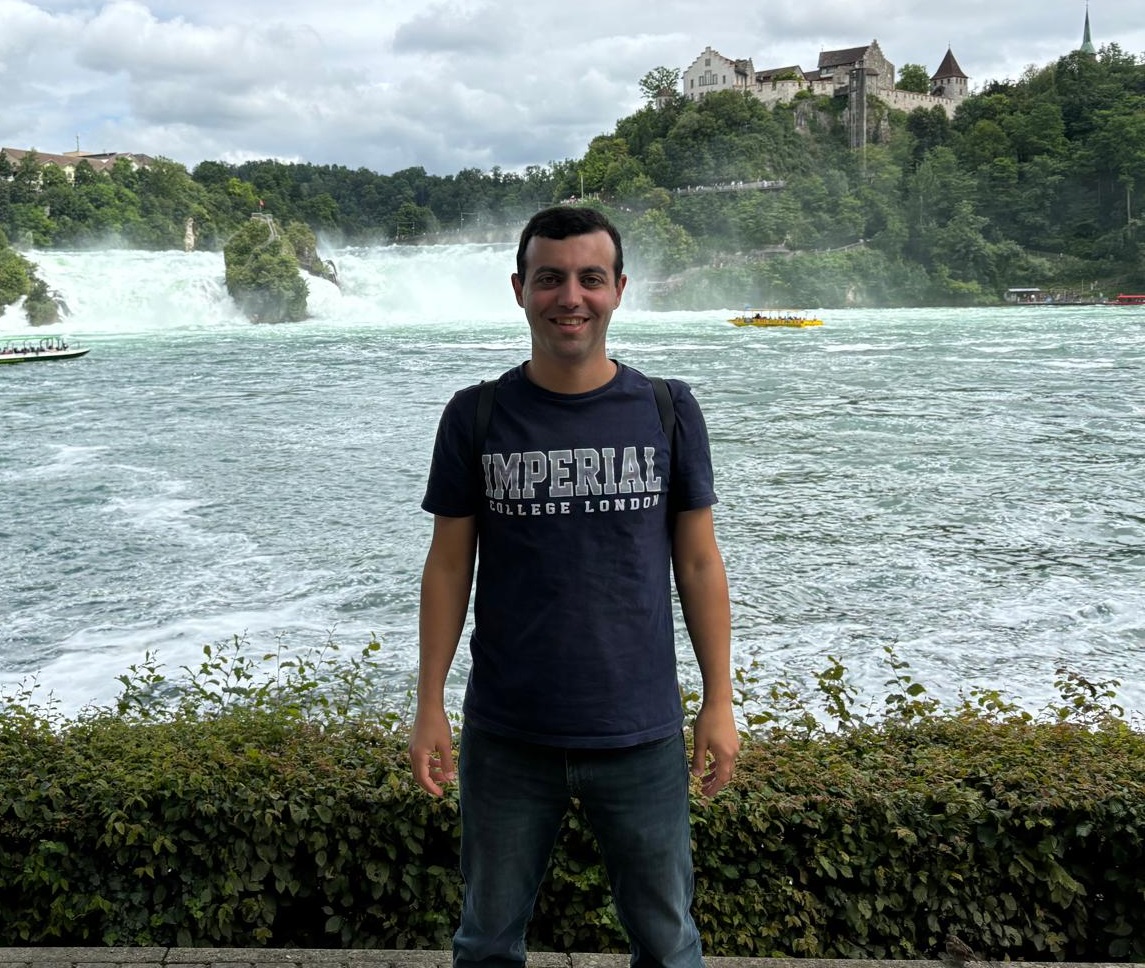
Ovidiu Șerban is a Research Fellow at the Data Science Institute, Imperial College London, leading the Data Observatory group. His work focuses on real-time Natural Language Processing, Data Curation, and Large Scale Visualization Systems. PhD in Computer Science (2013) - Joint from INSA de Rouen Normandy and Babeș-Bolyai University MSc in Artificial Intelligence (2009) - Babeș-Bolyai University BSc in Computer Science (2008) - Babeș-Bolyai University Research interests span Artifical Intelligence, Natural Language Processing, Interactive Systems, Affective Computing, and Deep Learning. Recent publications emphasize knowledge graph completion, temporal graph analysis, and multimodal data processing frameworks. Contributed to development of OVE (Open Visualization Environment) for scalable data rendering Created TKGQA dataset for temporal knowledge graph validation Advanced conflict-aware multilingual knowledge graph techniques Projects include SENTINEL for real-time event detection, Watchme for workplace analytics, Intuitel for e-learning enhancement, and Agentslang for distributed interactive systems. Affiliations include Imperial College London, University of Cambridge, and University of Reading.
Victoria Camilieri-Asch is a researcher affiliated with the Australian Government and the Australian Society for Fish Biology. Her work focuses on the neuroanatomy, sensory systems, and physiological adaptations of marine and deep-sea fishes, particularly chondrichthyans (sharks, rays, and holocephalans). Through collaborations with institutions like Parks Australia and researchers such as Shaun P. Collin and Dietmar W. Hutmacher, she has contributed to studies on olfactory sensitivity, electrosensory morphology, and conservation strategies using acoustic telemetry. Research Interests: Neuroanatomy of marine fishes, sensory system adaptations, olfactory and electrosensory biology, deep-sea physiology, and application of imaging techniques (diceCT, multimodal neuroimaging). Key Projects: Investigating olfactory pathways in sharks vs. teleosts; analyzing electrosensory systems in deep-sea chondrichthyans; studying cartilage under pressure for deep-sea adaptation; and applying citizen science to fish connectivity studies. Publications: Over 15 contributions from 2013–2025 in journals like Current Biology , Scientific Reports , and Brain, Behavior and Evolution , alongside conference proceedings at the Australian Society for Fish Biology and International Congress of Neuroethology.
Harald Baayen is a Professor at the University of Tübingen within its Faculty of Humanities, Department of Linguistics . His work spans computational linguistics, psycholinguistics, and phonetics, with a focus on discriminative learning models for lexical processing. After studying under Geert Booij in Amsterdam (PhD 1989), he held positions at the Max Planck Institute for Psycholinguistics (1990-1998), Radboud University (Associate Professor via Dutch Science Foundation award), and the University of Alberta (Full Professor 2007-2011). His 2011 Alexander von Humboldt Award and 2025 Honorary Doctorate from Tartu reflect his scholarly impact. Education: PhD in General Linguistics (Amsterdam, 1989) Awards: Alexander von Humboldt (2011), Dutch Science Foundation Career Advancement (1998) Teaching: Courses in Linguistics for Cognitive Science and Statistical Methods since 2011 at Tübingen Research Synthesis Baayen's research bridges computational modeling and empirical phonetics . Notable projects include: Linear Discriminative Learning (2019): A unified framework for morphological processing without morphemes Articulatory Phonetics : Using EMA and ultrasound to study dialect variation and articulation practice effects Statistical Methods : Pioneering generalized additive models and quantile regression in psycholinguistic analysis His 2025 publications explore Mandarin-English semantic differences , Ukrainian grammatical number , and deep learning alternatives to discriminative frameworks. His work consistently challenges traditional morphological theories by integrating discriminative learning with real-world phonetic data .
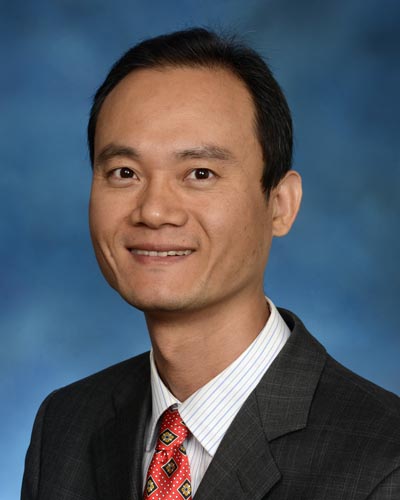
Rong Chen is an Associate Professor in the Department of Diagnostic Radiology and Nuclear Medicine at the University of Maryland School of Medicine. He serves as Associate Vice Chair of AI and leads the Biomedical Data Mining Laboratory, focusing on integrating machine learning, computational neuroscience, and neuroimaging to decode brain-behavior relationships. His work spans clinical and translational research for disorders like Alzheimer’s, Parkinson’s, autism, and HIV, and he develops open-source software (GAMMA suite, Advanced Connectivity Analysis) for neuroimaging data analysis. Education: BS in Biomedical Engineering, Southeast University, China (1996) MS in Electrical Engineering, The Graduate School of Chinese Academy of Sciences (1999) PhD in Electrical and Computer Engineering, Washington State University (2003) Postdoctoral Researcher in Radiology, University of Pennsylvania (2005) MTR in Translational Research, University of Pennsylvania (2012) Research Interests: Computational modeling of neural activity and behavior Development of machine learning frameworks for neuroimaging Brain-inspired AI and therapeutic concepts Longitudinal analysis of brain disorders Distributed data mining for heterogeneous databases Software tools for biomarker detection and functional connectivity Scientific Contributions: 20+ years of advanced modeling and algorithm development Two open-source neuroimaging software packages (GAMMA suite, ACA) NIH and BRAIN initiative-funded research Editorial roles in journals like Frontiers in Computational Neuroscience Honors: Senior Member of IEEE Labs & Collaborations: Dr. Chen collaborates with institutions like NIH and Oracle, and his lab has developed tools used in studies on sickle cell disease, autism, and traumatic brain injury.
Gražina Korvel is a Professor and Senior Researcher at the Image and Signal Analysis Group of Vilnius University's Faculty of Mathematics and Informatics. Her work bridges speech signal processing , machine learning , and natural language processing , with a focus on applications like noise profiling , Lombard effect modeling , and propaganda detection . She leads projects such as the HUMAN-INSPIRED SPEECH ENHANCEMENT (2024–2027) and CLINICAL NLP FOR RECORDS (2024). Education : Doctor of Science in Computer Engineering (2013, Vilnius University), Master’s in Computer Science (2009, Vilnius Pedagogical University), Bachelor’s in Mathematics (2007, Vilnius Pedagogical University). Her research interests include speech enhancement , deep learning for audio analysis , and cross-linguistic emotion recognition . Recent work explores fake news detection , synthetic speech , and Lithuanian language modeling . From 2020–2024, she taught Natural Language Processing at Vilnius University. She has held visiting research roles at Gdańsk University of Technology and International Hellenic University, and serves on editorial boards for Journal of Intelligent Information Systems and Informatica .
Recep Firat Cekinel is a Turkish NLP researcher who recently obtained his Ph.D. in Computer Engineering from Middle East Technical University (METU). He spent 13 months as a visiting predoctoral researcher at the University of Tübingen and is currently a researcher on the EU-funded EXA4MIND project, where he develops NLP pipelines that convert natural language into database queries using large language models. His research focuses on responsible, scalable AI systems and bridges foundational NLP work with real-world applications. Education: Ph.D. in Computer Engineering, Middle East Technical University (METU), Türkiye Visiting Predoctoral Researcher, University of Tübingen, Germany (13 months) Research Interests: Dr. Cekinel’s work spans natural language processing , multimodal fact-checking , explainable AI , and large language models . He is particularly interested in building responsible and scalable AI systems that integrate foundational research with practical deployments, such as natural-language interfaces for high-performance computing environments. Recent Publication Trends: His 2025 publications reveal a concentrated effort on multilingual and multimodal fact-checking , satire-style debiasing , and NL-to-database-query generation . Earlier work explores graph-based event extraction , Turkish irony detection , and cultural-heritage text mining , demonstrating a trajectory from low-resource Turkish NLP toward globally applicable, responsible-AI systems. Contact & Code: Email: rfcekinel@ceng.metu.edu.tr Office: METU Computer Eng. Dept. A-206, 06800 Ankara, Turkey Phone: +90-(312)-210-5593 GitHub: firatcekinel Google Scholar: profile available





.jpg)