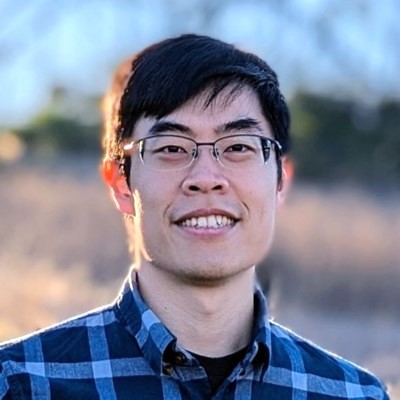
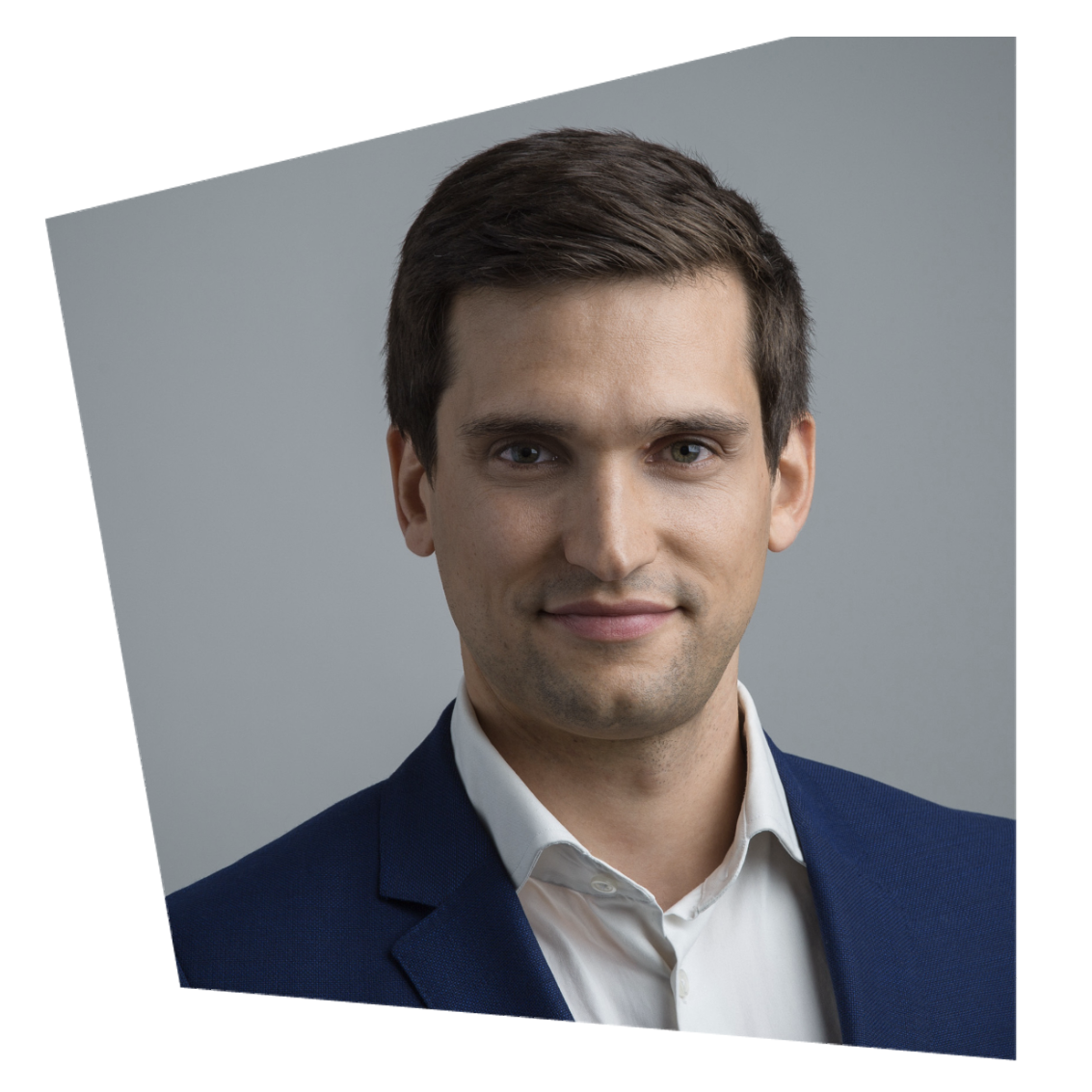
Denny Yu is an Associate Professor at the Edwardson School of Industrial Engineering, Purdue University. His work bridges human factors, neuroergonomics, and healthcare safety through advanced sensor systems and AI. Primary Affiliation : Edwardson School of Industrial Engineering, Purdue University Research Themes : Surgical ergonomics, autonomous vehicle human factors, cognitive workload assessment, multimodal physiological sensing Dr. Yu's research focuses on neuroergonomics and human-robot interaction , particularly in surgical and transportation contexts. His team develops sensor-based systems for workload monitoring, including: EEG-eye tracking fusion for situation awareness Wearable exoskeletons for surgical posture support Computer vision tools for lifting task risk analysis Smart infusion pump usability frameworks AI-driven surgical coaching systems Recent publications emphasize deep learning applications in soft tissue deformation estimation and real-time adaptive systems for robotic surgery augmentation. His work spans both occupational health (veterinary surgeons, airport workers) and medical device innovation domains.
Arianna Bisazza is an Associate Professor in the Computational Linguistics Group at the University of Groningen, where she leads the InClow research group focused on Interpretable, Cognitively inspired, Low-resource language models. Her work bridges computational linguistics, cognitive science, and language acquisition to develop more robust and interpretable language processing algorithms that can adapt to diverse linguistic phenomena worldwide. Dr. Bisazza's research interests span statistical modeling of human languages in multilingual contexts, with particular focus on improving language model performance for "challenging" or low-resource languages. Her work explores how insights from human language acquisition can inform better language modeling techniques, and she investigates methods to make state-of-the-art NLP systems more interpretable and transparent. As a cross-disciplinary researcher, she actively seeks to enhance our understanding of human language processing and evolution through computational modeling tools. Her recent publications reveal a strong emphasis on multilingual evaluation frameworks (like TurBLiMP and MultiBLiMP), interpretability of language models, and connections between human language acquisition and neural network learning. Her work consistently addresses the challenge of making language technology more robust across diverse linguistic structures and typological features. Outstanding Paper Award at the BabyLM Challenge (CoNLL'24 Shared Task) for "BabyLM Challenge: Exploring the Effect of Variation Sets on Language Model Training Efficiency" Dr. Bisazza currently leads a Vidi project funded by the Dutch Research Council (NWO) on improving low-resource language modeling through child language acquisition insights. She is also part of two national consortium projects funded by NWA-ORC initiatives: InDeep (Interpreting deep learning models for language, speech & music) and LESSEN (Low Resource Chat-based Conversational Intelligence). She supervises multiple PhD students, including two China Scholarship Council (CSC)-funded researchers working on simulating human patterns of language learning and change. Her earlier research was supported by a Veni grant (2017-2021) focused on understanding and improving the encoding of linguistic structure in Neural Machine Translation models. As head of the InClow research group, Dr. Bisazza oversees a team investigating interpretable, cognitively inspired approaches to low-resource language modeling. The group's work combines insights from cognitive science and linguistics with cutting-edge NLP techniques to develop language models that better reflect human language processing capabilities, particularly in resource-constrained settings.
Maurice van Keulen is an Associate Professor affiliated with the University of Twente's research institutes including Datamanagement & Biometrics, Digital Society Institute, and TechMed Centre. His multidisciplinary work bridges computer science, healthcare, and social systems. Research Focus: Van Keulen specializes in artificial intelligence applications with emphasis on: Data management (quality, integration, probabilistic databases) Explainable AI and interpretable machine learning models Healthcare informatics (cancer prediction, medical imaging, outcome analysis) Natural language processing and social media analytics His recent work explores dynamic sparse training, meta-learning for data imputation, and ethical AI frameworks. Publication Trends: Recent articles (2023-2025) show strong focus on: Interpretable AI methods in healthcare diagnostics Robust machine learning under data corruption Meta-learning approaches for data preprocessing 3D medical imaging and reconstruction techniques Awards: Beste paper award (2018) for work on probabilistic data conditioning Supervision & Activities: Has supervised 14 research projects and serves on executive boards including EDBT (Extending DataBase Technology) and IFIP WG 2.6. Leads research on ethical dimensions of AI systems.
Sezer Karaoglu is a Lecturer and part-time postdoctoral researcher at the Computer Vision Group, Informatics Institute, University of Amsterdam. He is also the CTO and Co-Founder of 3DUniversum, a technology spin-off of the University of Amsterdam that provides state-of-the-art 2D/3D computer vision solutions. Additionally, he has co-founded other startups including Scanm and 3DHealthScan. Dr. Karaoglu received his PhD from the Computer Vision Group, Informatics Institute, University of Amsterdam, with research funded by the COMMIT project. His educational background includes a double master's degree: an optics, image and vision master's degree from University Jean Monnet in France and a media technology master's degree from Gjovik University College in Norway. He completed his undergraduate studies with honors at Istanbul Technical University in Telecommunication Engineering. His research focuses on Artificial Intelligence and 3D Computer Vision, with specific interests in SLAM, re-localization, 3D reconstruction, 3D object detection and segmentation, synthetic media, generative AI, deep fake creation and detection, and VR/AR technologies. His work has significant applications in healthcare, particularly in using deepfake technology for therapy for victims of sexual violence-related PTSD and moral injury, as documented in a Frontiers in Psychiatry article. Analyzing his recent publications reveals a strong trend toward neural scene reconstruction, intrinsic image decomposition, and the application of diffusion models to computer vision problems. His research increasingly integrates 3D scene understanding with language models, as evidenced by his work on language-to-3D scene generation. The applications span from healthcare (deeptherapy.ai) to media authenticity (deepfake detection) and industrial applications. ICT.OPEN Poster Award (3rd Position), Oct'13 Pascal VOC'12 Classification challenge, 2nd Position, Sep'12 Pascal VOC'12 Detection challenge, 3rd Position, Sep'12 Best project award at Nokia and CIMET project competition Outstanding reviewer at CVPR'21 PROVADA Future Startup Battle winner Best Dutch AI startup by Valuer Dr. Karaoglu has supervised numerous PhD, Master's, and Bachelor's students, demonstrating his commitment to academic mentorship. His research has attracted significant media attention, with features on Dutch national TV programs including NPO, VPRO, RTL, and international outlets like BBC News. He has received research funding through the COMMIT project during his PhD studies and has successfully translated his research into commercial applications through his startups. His work on deepfake technology has been applied in innovative therapeutic contexts through DeepTherapy.ai, showing the real-world impact of his research. Dr. Karaoglu leads research efforts at the Computer Vision Group Amsterdam and through his company 3DUniversum, which has developed applications like weScan, DeepTherapy, and FairFake.ai. His team collaborates with various institutions including the Netherlands Film Academy for grief therapy applications using deepfake technology. The DeepTherapy project represents a particularly impactful application of his work, using deepfake technology to help victims of sexual violence confront perpetrators in therapeutic settings.
Malihe Alikhani is an Assistant Professor at Khoury College of Computer Sciences , Northeastern University , a Visiting Fellow at the Brookings Institution specializing in AI policy, and serves as the Ethics Chair of the Association for Computational Linguistics . She is also a member of the Northeastern Ethics Institute . Her research focuses on developing AI systems that enhance communication, decision-making, and knowledge-sharing through rigorous integration of cognitive and social sciences with machine learning. Her work spans academic, policy, and applied research domains, emphasizing contextual AI systems. She leads the Contextual AI Lab , which develops models capturing human interpretation to support collaborative meaning construction between humans and machines. Her recent publications address uncertainty modeling in dialogue systems, bias mitigation in sign language processing, and ethical AI frameworks. Key contributions include: Advancing sign language understanding in NLP Developing uncertainty-aware dialogue systems Creating discourse-coherent task-oriented dialogue frameworks Formalizing equity in text generation Scientific Awards: Best Theme Paper Award (ACL 2021) Best Paper Award (UAI 2022) She mentors students and researchers in areas spanning sign language processing, dialogue systems, and ethical AI. Her lab collaborates with Deaf and Hard-of-Hearing communities and cognitive science experts to ensure inclusive AI development.
John Guttag is the Dugald C. Jackson Professor in Electrical Engineering and Computer Science at MIT. His work focuses on AI-driven healthcare solutions, biomedical systems, and advanced computer vision applications. He leads research in medical image analysis, machine learning reliability, and healthcare equity. Guttag's contributions include innovative frameworks like MultiMorph and Scale-Space Hypernetworks, addressing challenges in medical imaging and clinical decision-making. Affiliations: MIT Electrical Engineering & Computer Science Department (EECS) Research emphasizes AI for healthcare, particularly in segmentation, predictive analytics, and ethical algorithm design. Notable projects include real-time fraud detection systems and studies on racial disparities in clinical risk scores. His work bridges computer science with clinical practice through tools like Voxelmorph for medical image registration and ScribblePrompt for interactive biomedical segmentation. Recent publications highlight advancements in uncertainty-aware AI, contrastive learning, and scalable medical data processing. Guttag’s methodologies prioritize practical clinical applications, aiming to improve diagnostics and healthcare workflows. His lab develops open-source tools and frameworks that enhance accessibility to advanced medical imaging technologies.
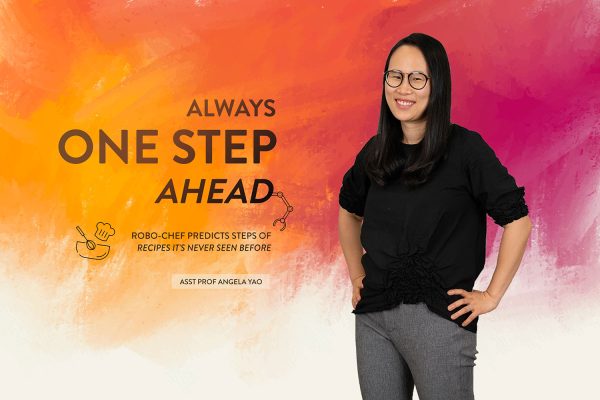
Angela Yao is a Dean's Chair Associate Professor and Assistant Dean of Research at the National University of Singapore's School of Computing, Department of Computer Science. She leads the Computer Vision and Machine Learning Group and specializes in visual perception of people, focusing on both high-level semantics of human actions and lower-level physical modeling. Her research interests span Computer Vision , Machine Learning , and Artificial Intelligence , with specific expertise in human action recognition, 3D human modeling, video understanding, and small data AI. Dr. Yao's work bridges theoretical advances with practical applications, particularly in activity anticipation and human-computer interaction. Dr. Yao's publication trends reveal a strong focus on zero-shot learning for activity anticipation, 3D human modeling, and techniques for working with limited training data. Her research has evolved from foundational work in 3D pose estimation to more recent innovations in diffusion models and cross-modal learning, demonstrating consistent contributions to advancing computer vision capabilities. NRF Fellowship for Artificial Intelligence (2019) German Pattern Recognition (DAGM) Award (2018) Dr. Yao has successfully mentored PhD students including Fadime Sener and secured significant research funding including the NRF Fellowship. Her research group focuses on developing AI systems capable of understanding and anticipating human activities with applications in robotics and human-computer interaction. She teaches CS4243 Computer Vision and Pattern Recognition and leads the Computer Vision and Machine Learning Group at NUS Computing.
Hao-Wen Dong is an Assistant Professor in the Department of Performing Arts Technology at the University of Michigan, with an affiliation to the Computer Science and Engineering Department. His research focuses on Human-Centered Generative AI for content creation, emphasizing music, audio, and video domains. He holds a Ph.D. in Computer Science from UCSD, advised by Julian McAuley and Taylor Berg-Kirkpatrick. Affiliations: University of Michigan (Primary), UCSD (Ph.D.), National Taiwan University (B.S.) Research Pillars: Generative AI models for new domains, AI-assisted creative tools, and multimodal content creation His work spans music generation (e.g., MuseGAN), audio synthesis (e.g., ViolinDiff), and multimodal systems (e.g., TeaserGen). He has led over 25+ publications in top venues like ISMIR, ICASSP, and ICLR. He advises students in interdisciplinary projects and teaches courses on AI Music and Generative AI for Music/Audio Creation. Notable awards include the Doctoral Award for Excellence in Research (2024) and Rising Stars in AI (2024).
Dr Miao Xu is a Research Fellow at the University of Queensland (UQ), affiliated with the School of Electrical Engineering and Computer Science within the Faculty of Engineering, Architecture and Information Technology. She holds an Australian Research Council DECRA Fellowship (ARC DECRA), recognizing her early-career research excellence. Her research focuses on machine learning, data science, and time series analysis, with applications in healthcare, materials science, and algorithmic fairness. Dr Xu's work addresses challenges in noisy label handling, unlearning mechanisms, and adaptive modeling for irregular data. Education: She earned a Doctor of Philosophy (PhD) from Nanjing University. She is actively involved in supervising research and contributes to the Centre for Enterprise AI at UQ. Research Interests: Dr Xu’s expertise spans machine learning , time series analysis , deep learning , and unsupervised learning . Her recent work emphasizes robust learning with noisy or incomplete labels, model unlearning, and applications in alloy design and medical informatics. She explores methods like instance-attention GNNs for irregular time series and confidence-guided techniques for adversarial attack detection. Publications: Her recent work includes advancements in GNN-based time series modeling, bias mitigation in text classification, and active learning for alloy design. Key themes include improving generalization, reducing algorithmic bias, and enhancing model transparency. Awards: Her ARC DECRA fellowship (202X–202X) supports her research on data-driven methodologies. Supervision & Grants: Available for PhD supervision in machine learning and data science. Her grants include funding for projects in unlearning mechanisms and spatiotemporal modeling. Labs/Teams: Affiliated with the Centre for Enterprise AI at UQ, collaborating on enterprise-scale AI applications and interdisciplinary research.
Prof Conrad Bessant is a Professor of Bioinformatics at Queen Mary University of London (QMUL), affiliated with the School of Biological and Behavioural Sciences. He leads the MSc Bioinformatics program and is academic lead of the UKRI AI for Drug Discovery Doctoral Training Programme. His research focuses on automating scientific discovery in biomedicine using AI, machine learning, and network science. Key areas include drug response prediction, kinase networks, and health data analytics from online forums. Research interests span data science, computational biology, and AI applications in healthcare. He has contributed to projects on tumor microenvironment analysis, proteomics, and biomarker discovery in rheumatoid arthritis. His work integrates multi-omics data with machine learning to identify therapeutic targets and predict drug responses. Recent grants include AI-driven omics data integration (BBSRC), biomarker studies in ALS (Barts Charity), and collaborations with pharmaceutical companies like Exscientia and Merck. Publications highlight contributions to automated cell identification, kinase network modeling, and health informatics. He has pioneered tools like MRMaid for proteomics and Galaxy workflows for transcriptomics-informed analyses.
Andreas Hein is an Assistant Professor of IT Management at the University of St. Gallen's Institute of Information Systems and Digital Business (IWI-HSG). His research focuses on digital services, AI literacy, conversational agents, and ethical design in education and business contexts. He holds a PhD (summa cum laude) from the University of Kassel and has led projects funded by SNSF and Innosuisse. Hein is an AIS Distinguished Member Cum Laude and has received numerous awards for research and academic service, including the AIS Best Conference Paper Award (2024) and Best Paper Awards at DESRIST (2023) and HICSS (2020). His work bridges design science and interdisciplinary collaboration, addressing topics like privacy nudges, gamification in learning, and lawful technology development. Hein actively contributes to academic communities, serving as associate editor for ECIS, ICIS, and AOM divisions, and has organized conferences like the Wirtschaftsinformatik-Nachwuchs-Treffen 2023. His teaching spans undergraduate to graduate levels, emphasizing data-driven service innovation and research practices. Hein's research has been published in top journals (ISR, JAIS, EJIS) and frequently recognized for innovation and impact. Education: PhD in Business Information Systems (Kassel University, 2018), Master of Arts in Communication Management, Diplom in Economic Sciences (Kassel University). Key Achievements: Over €2.2m in third-party funding, 60+ co-authors, and impactful contributions to digital education and AI ethics. His work on privacy nudges and conversational agents has been featured in leading conferences and journals.
Nitisha Jain is a Postdoctoral Researcher at King's College London's Department of Informatics, part of the Faculty of Natural, Mathematical & Engineering Sciences. She holds a PhD in Knowledge Graphs from the Hasso Plattner Institute (University of Potsdam) and a Master's in Research from the Indian Institute of Science (IISc). Her research focuses on neuro-symbolic AI, ethical AI standards, multimodal knowledge graphs, and knowledge engineering using large language models. Her work includes contributions to the Croissant metadata standard for machine-readable datasets and the development of interpretable embeddings aligned with semantic aspects. She has published extensively in venues like NeurIPS, ACL, and ISWC, and serves on program committees for conferences such as ESWC and DEEM. Key achievements include a spotlight paper at NeurIPS 2024 and a best paper award at DEEM 2024. She supervises students in areas like knowledge graph embeddings and neuro-symbolic methods, and has taught courses on network data analysis and knowledge engineering at both bachelor’s and master’s levels.
Prof. Dr. Kai Essig is a Professor of Human Factors and Interactive Systems at the Faculty of Communication and Environment, Rhine-Waal University of Applied Sciences, Kamp-Lintfort, Germany. He has a strong interdisciplinary background combining computer science, cognitive science, and human-computer interaction, with a focus on eye tracking, visual perception, and assistive technologies. Master of Science in Computer Science and Chemistry, Bielefeld University (1998) Ph.D. in Computer Science, Bielefeld University (2007) His research centers on eye tracking, human-computer interaction, usability engineering, visual attention, and cognitive interaction technology . He investigates how movement expertise influences visual perception and how multimodal software can support real-time human actions. His work integrates computer vision, machine learning, and neuroscience to develop intelligent systems that adapt to user behavior. The 15 most recent publications reflect a consistent trend in eye movement analysis, mental representations, brain-machine interfaces, and assistive technologies . These works span domains such as sports psychology, robotics, augmented reality, and cognitive neuroscience, demonstrating a strong interdisciplinary approach. Key themes include gaze-based interaction, automated annotation of visual behavior, and the implementation of smart systems for daily living assistance. Scientific recognition includes: Landmark in the Land of Ideas (2018) – for the ADAMAAS project, awarded by 'Land of Ideas', a joint initiative of the German government and the Federation of German Industries Prof. Essig has been actively involved in research projects such as ADAMAAS (Adaptive and Mobile Action Assistance in Daily Living Activities), which received national recognition. He has collaborated extensively with the Neurocognition and Action-Biomechanics Research Group at Bielefeld University and the Excellence Cluster CITEC. While no formal advising of students is listed, his publications suggest mentorship and collaboration with junior researchers. His lab work is centered on eye-tracking systems, multimodal interaction, and cognitive modeling , particularly within applied environments like smart glasses and assistive technologies.
Rui Ning is an active Assistant Professor in the Department of Computer Science at Old Dominion University (ODU), within the Batten College of Engineering & Technology. His academic journey includes a B.S. in Computer Science & Engineering from Lanzhou University (China), an M.S. in Computer Science from the University of Louisiana at Lafayette, and a Ph.D. in Electrical & Computer Engineering from ODU. Dr. Ning's research focuses on cybersecurity, privacy-preserved AI, and secure AI systems, with particular emphasis on backdoor detection in neural networks, federated learning security, and privacy-preserving deep learning. His work bridges theoretical security mechanisms with practical implementations in real-world AI systems, addressing critical vulnerabilities in modern machine learning frameworks. Analysis of his publication trends reveals a strong focus on adversarial machine learning, with increasing attention to multimodal AI security since 2022. His research shows consistent growth in addressing sophisticated attack vectors while developing practical defense mechanisms applicable to industry settings. Notably, his work spans both theoretical contributions and practical implementations, often achieving high acceptance rates at top-tier conferences. Mark Weiser Best Paper Award, IEEE PERCOM, 2018 Best In-session Presentation Award, IEEE INFOCOM, 2019 NSF CRII Award, 2022 Ph.D. Researcher of the Year, ODU ECE, 2019 Dr. Ning actively mentors graduate students, currently supervising multiple Ph.D. candidates and an M.S. student at ODU. His grant portfolio demonstrates significant research impact, with over $1.5 million in funding as PI or Co-PI from sources including NSF, DoD, NSA, and industry partners like Interdigital. His research addresses critical challenges in AI security with practical applications for cybersecurity infrastructure. Dr. Ning also contributes substantially to academic service as a reviewer for top conferences and journals, and serves on program committees for major AI and security venues.
Professor Felix Naumann is Chair for Information Systems at the Hasso Plattner Institute (HPI) at the University of Potsdam in Germany, where he leads the Information Systems research group. He is also Coordinator for MSc. Data Engineering and for the Data and AI track for MSc. Computer Science, and Speaker of the Research School on Data Science and Engineering. His extensive academic career includes visiting positions at CIRES Centre in Brisbane (2024-2025), SAP's Innovation Center (2020), AT&T Research (2016), and QCRI (2012). Professor Naumann's research focuses on data profiling, data cleansing, data integration, and data quality assessment with over 200 scientific publications. His work spans theoretical foundations and practical applications, with significant contributions to data quality metrics, metadata extraction, and AI-driven data preparation techniques. His research group develops prominent systems like Metanome for data profiling and Metis for data quality assessment. His recent publications demonstrate continued innovation in data management, with a growing intersection between traditional database research and AI applications. The 15 most recent papers show increasing focus on data quality for AI applications (KITQAR), multimodal data analysis (MELArt), and practical data cleaning frameworks that bridge database systems with machine learning pipelines. GI Dissertationspreis 2000 for best computer science PhD thesis IBM Research Division Award, 2002 Distinguished ACM member since 2021 Distinguished Reviewer Award - SIGMOD 2023 Best paper award at EDBT 2024 for Tasheeh paper Professor Naumann has successfully advised over 30 PhD students who now hold prominent positions at institutions like MIT, Google, Snowflake, and universities worldwide. His research has been funded by major grants including DFG Nachwuchsforschergruppe (2003-2008), IBM SUR Grant (2007), and DFG Forschergruppe Stratosphere (2010-2016). He leads the Information Systems research group at HPI, which includes PostDocs, PhD students, and student assistants working on projects like Metanome, Metis, KITQAR, and Janus, focusing on data profiling, quality assessment, and change exploration in data systems.