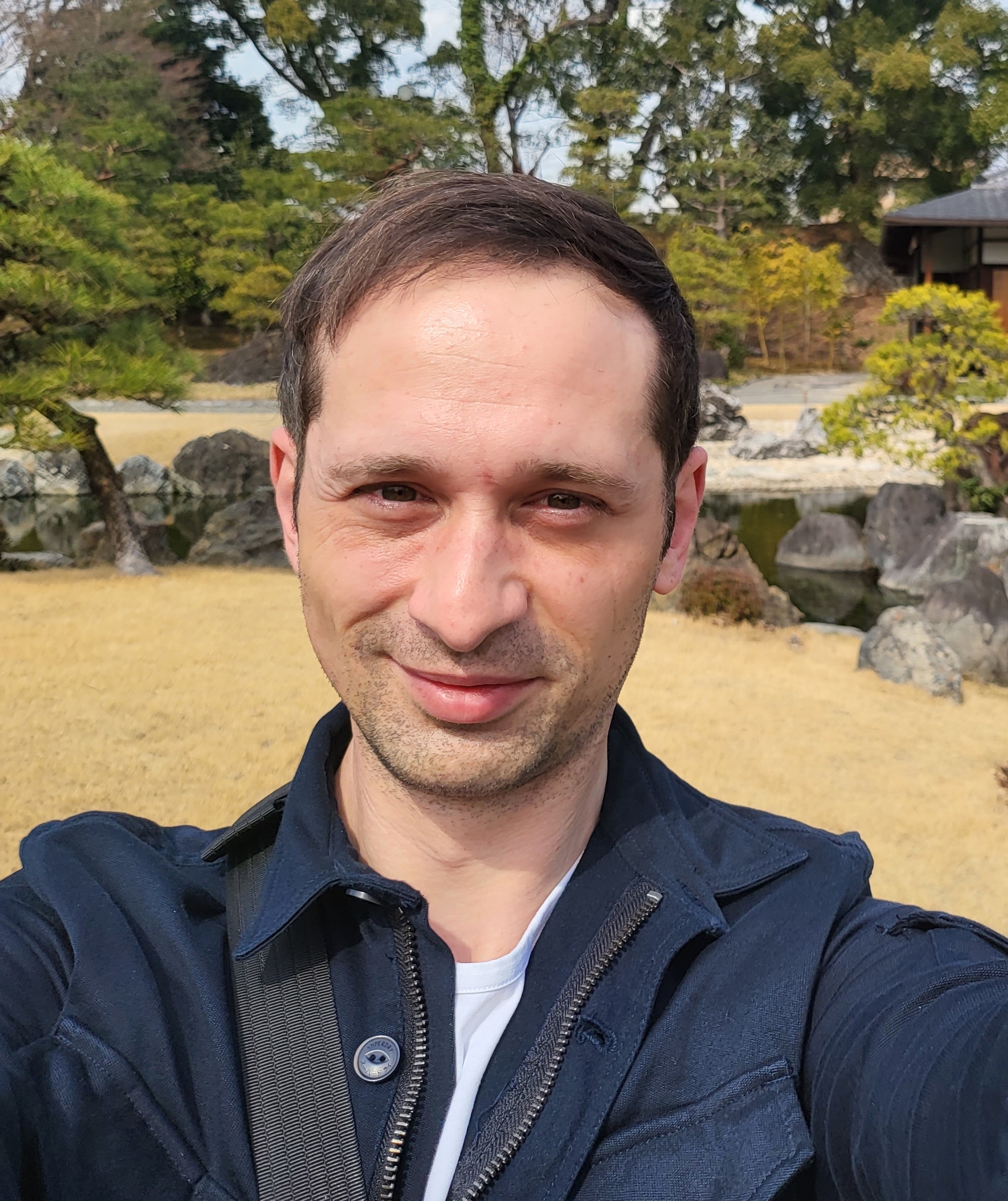
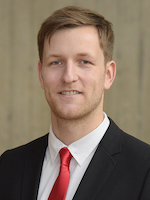
Dr. Lukas R.A. Wilde is a Full Professor of Media Studies at the Department of Art and Media Studies, Norwegian University of Science and Technology (NTNU). He holds a PhD from the University of Tübingen and has held academic positions including Associate Professor at NTNU, Post-Doc researcher at Collaborative Research Center 923 “Threatened Orders,” and research roles at institutions such as the University of Tübingen and Dôshisha University Kyoto. His expertise spans Generative AI imagery, Transmedia Studies, Comic/Manga Research, Emoji Semiotics, and Japanese Popular Culture. Education: Master’s in Theatre and Media Studies (FAU Erlangen-Nuremberg), Doctoral Scholarship from the German Academic Foundation Key Affiliations: Second Board Member of ComFor, Member of GfM’s Comic Research Group, Founder of Comic Solidarity Initiative Research focuses on the intersection of media theory, visual culture, and digital transformation. Notable awards include the Roland-Faelske-Preis (2018) and GIB Dissertations-Wissenschaftspreis (2021). Teaching includes courses on Media Analysis, AI Ethics, and Digital Humanities at NTNU, alongside seminars on Transmedia Characters and Comic Narratology.
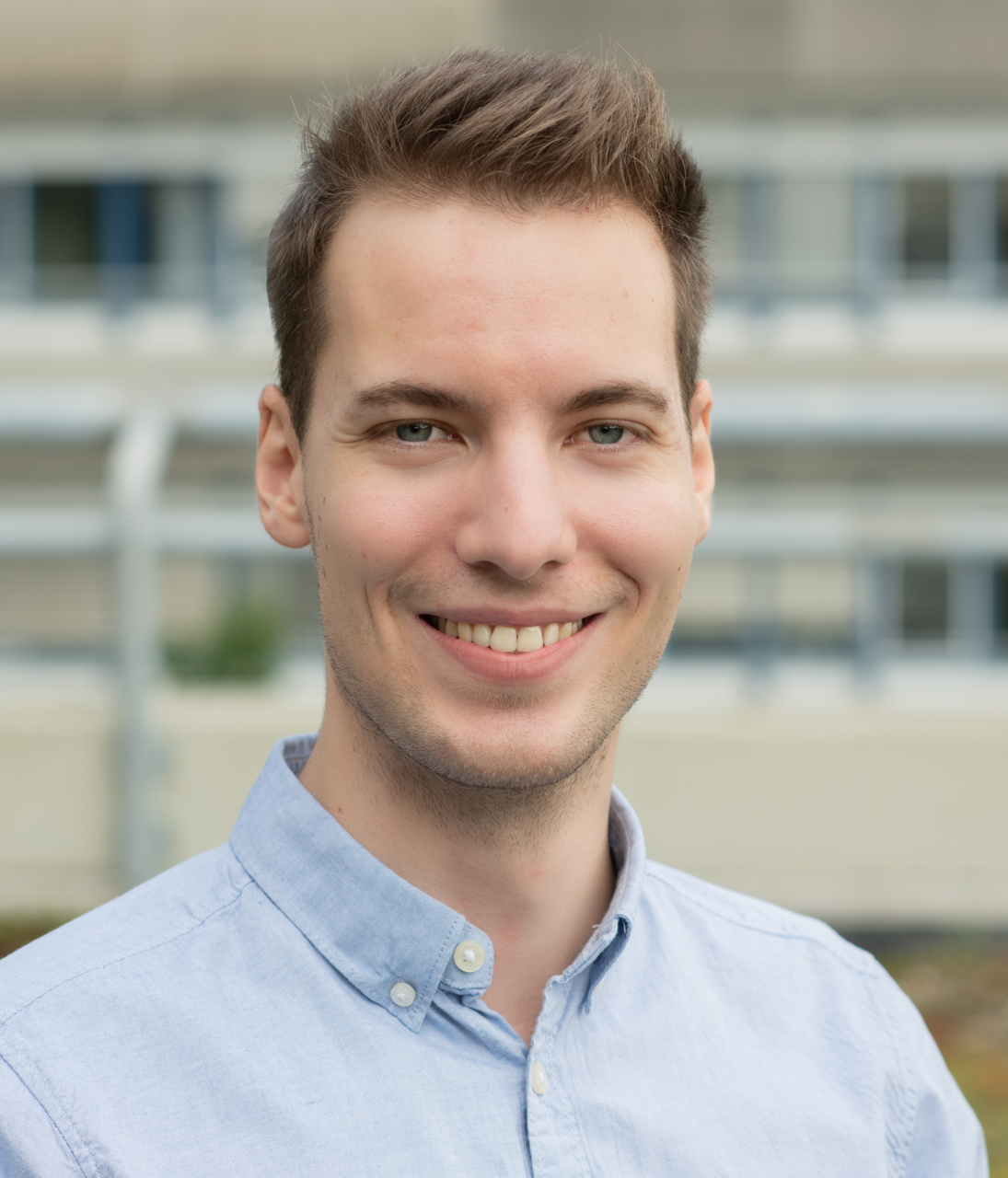
Dr. Torsten Kai Jachmann is a Postdoctoral Researcher in the Psycholinguistics Group at the Department of Language Science and Technology , Saarland University. His work focuses on the interplay of speaker gaze , ERP neurophysiological correlates , and information structure in situated language comprehension . Current teaching: Experimental Methods in Psycholinguistic Research (SS2025) , Japanese language courses Key methodologies: ERP experiments, reaction time studies, statistical modeling Research themes: predictive processing , multimodal integration , discourse expectations His peer-reviewed publications span journals like Cognition and Brain and Cognition , with conference presentations at venues including CogSci, AMLaP, and CUNY Sentence Processing. He holds a magna cum laude PhD in Psycholinguistics from Saarland University (2020), supervised by Prof. Matthew W. Crocker. Education: PhD (2020) - Psycholinguistics, Saarland University (SFB1102) MSc (2015) - Language Science and Technology BSc (2013) - Computational Linguistics Teaching experience includes advanced Japanese language instruction and experimental methods training since 2013. His collaborative research frequently involves interdisciplinary teams from the Cluster of Excellence (MMCI) and SFB1102.
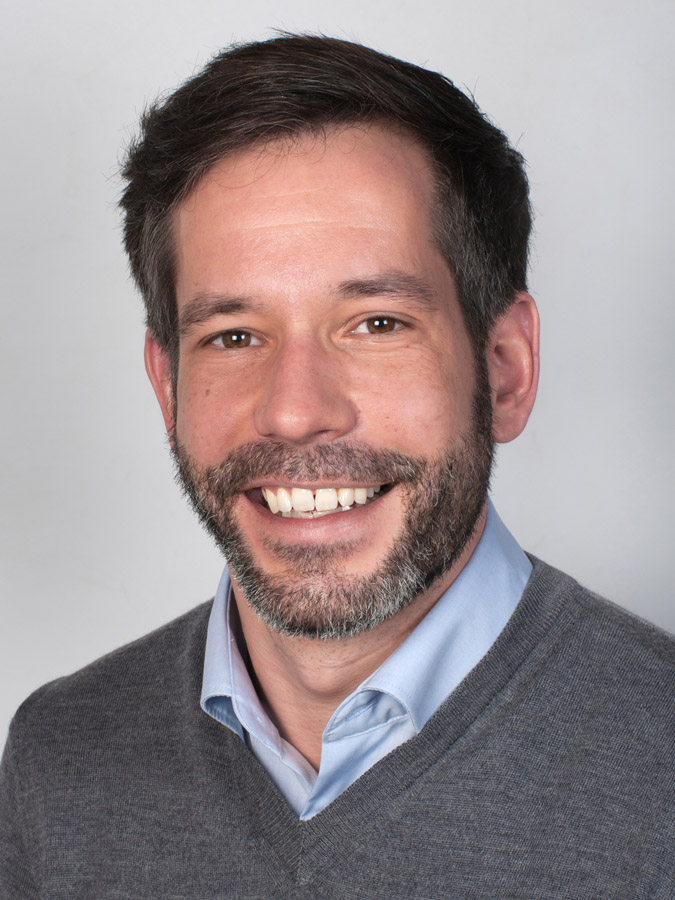
Björn Petrak is a Researcher in the Chair for Human-Centered Artificial Intelligence at the University of Augsburg's Faculty of Applied Computer Science, part of the Institute of Computer Science. His research focuses on proxemics in human-robot interaction (HRI), human-computer interaction (HCI), and positive computing. He holds an M.Sc. and has published extensively on topics such as robot navigation ethics, adaptive learning systems, and novel input modalities. His work bridges technical innovation with social and psychological aspects of technology use. Key research interests include: - Proxemics in social robotics - Emotional and spatial awareness in HRI - Multimodal input systems - Wellbeing-oriented technology design - Human-centered AI applications His recent publications (2018–2025) explore: - Robot behavior in public spaces - Personalized vocational education tools - Comparative studies of input modalities (mouse/touch/fich) - Stress reduction apps for commuters - Proxemic-aware ambient AR displays Petrak collaborates with interdisciplinary teams on projects like FORSocialRobots and KodiLL, addressing ethical robotics, interaction design, and ubiquitous computing. His work appears in top venues like IEEE RO-MAN and ACM MUM conferences.
Schloss Dagstuhl - Leibniz Center for InformaticsGermany
Zhe Liu is a researcher at Jiangsu University , School of Computer Science and Telecommunication Engineering, China. He has extensive collaborations across institutions including University of Edinburgh , IBM Almaden Research Center , and Nanyang Technological University . His research focuses on medical image segmentation , deep learning , and multimodal learning . Key areas include liver vessel segmentation , pancreas segmentation , lesion detection , and healthcare AI . He has developed frameworks like MMMViT and HI-Net to address challenges in missing modality handling and feature fusion . Recent publications highlight trends in 3D convolutional networks (RC-3DUNet with SOM), semi-supervised learning for segmentation, and anomaly detection in time-series medical data. His work often combines computer vision with clinical applications , emphasizing robustness and data efficiency . He has co-authored over 60 publications (2012-2025), frequently collaborating with Kai Han , Yuqing Song , and Victor S. Sheng on topics like medical imaging , deep learning , and biomedical signal processing .
Beuth University of Applied Sciences BerlinGermany
Dennis Ritter is a Research Assistant at Beuth University of Applied Sciences Berlin, affiliated with the Data Science +X Graduate School. He works under Prof. Dr. Kristian Hildebrand in the SynthNet project (BMBF-funded), focusing on data quality in machine learning systems. His research spans AI applications in healthcare, including projects like COMFORT (EU-funded) for multimodal AI models in cancer care, and APPL-FM (DFG-funded) for health+cell biology integrations. He contributes to initiatives like Berlin ZOO and Cross-Lingual Knowledge Transfer for clinical phenotyping. His technical expertise includes trustworthy AI development using medical imaging, health records, and biomarkers. Collaborations involve interdisciplinary teams addressing challenges in reproducibility and interpretability of machine learning results.
Schloss Dagstuhl - Leibniz Center for InformaticsGermany
Yong Cheng is a prolific researcher with significant contributions to computer science, artificial intelligence, and mathematical logic. His work spans biomedical image segmentation, federated learning, robotics, and formal logic, reflecting a multidisciplinary approach to solving complex technical challenges. Key Research Areas: Machine Learning, Natural Language Processing, Computer Vision, Remote Sensing, Robotics, Privacy-Preserving Techniques. Publication Trends show a focus on deep learning architectures (e.g., Transformer, U-Net), adversarial training, and applications in healthcare, autonomous systems, and geospatial analysis. His 2025 work on biomedical imaging and logic theorems highlights ongoing interests in theoretical and applied domains. Scientific Contributions include foundational work in Gödel's incompleteness theorems and practical innovations in edge computing and fusion robotics. While no formal honors are listed, his collaborations with institutions like IEEE and ACM suggest industry-wide recognition.
Schloss Dagstuhl - Leibniz Center for InformaticsGermany
Xiaoyang Zeng is a Professor at Tsinghua University's School of Information Science and Technology, Institute of Microelectronics, with an extensive research portfolio in VLSI design, integrated circuits, and hardware acceleration systems. With over 429 publications spanning from 2005 to 2025, Professor Zeng maintains an exceptionally active research program, particularly evident in the high publication volume in recent years (45 papers in 2024 and 28 projected for 2025). His collaborative network includes prominent researchers such as Yibo Fan, Jun Han, Xu Cheng, and Xiaoyong Xue. Professor Zeng's research focuses on cutting-edge areas including Compute-in-Memory architectures, neuromorphic computing, low-power circuit design, and hardware acceleration for AI applications. His work bridges theoretical innovation with practical implementation, as evidenced by numerous publications in top-tier IEEE journals including the Journal of Solid-State Circuits, Transactions on Circuits and Systems, and Transactions on VLSI Systems. Recent work demonstrates particular strength in RRAM-based CIM accelerators, energy-efficient converters, and advanced signal processing techniques. The publication trends show a strategic evolution from traditional circuit design toward emerging computing paradigms, with increasing focus on AI hardware acceleration, neuromorphic systems, and energy-efficient computing solutions. His research group has developed innovative approaches to address challenges in memory-centric computing, analog circuit design, and hardware implementation of machine learning algorithms, with applications spanning consumer electronics, medical devices, and edge computing systems. Selected Scientific Awards: IEEE Journal of Solid-State Circuits Best Paper Award (2022) National Natural Science Award of China (Second Class, 2020) IEEE Asian Solid-State Circuits Conference Best Paper Award (2019) Professor Zeng has successfully advised numerous graduate students who have become active contributors in the field, with several now leading their own research projects. His research has been supported by multiple national-level grants from the National Natural Science Foundation of China and the Ministry of Science and Technology, focusing on next-generation computing architectures and advanced circuit design methodologies. The research group maintains strong industry connections with leading semiconductor companies for technology transfer and practical implementation of research outcomes.
Prof. Dr. Andrea Horbach is a Professor of 'Teaching and Learning in the Digital World' at Christian-Albrechts-University of Kiel (CAU) and the Leibniz Institute for Science and Mathematics Education (IPN). She leads the EduNLP junior research group, focusing on Natural Language Processing (NLP) for educational applications. Previously, she held a Junior Professorship in Digital Humanities at Hildesheim University and led the EduNLP group at FernUniversität Hagen. Her research emphasizes automated essay scoring, feedback generation, and language technology for education. Education: PhD in Computational Linguistics, Saarland University (2018) MSc (Diplom) in Computational Linguistics, Saarland University (2008) Postdoctoral Research at Duisburg-Essen University (2016–2021) Research Interests: NLP for education, automated content scoring, AI-driven feedback systems, and cross-lingual learning applications. Her work bridges technical NLP advancements with practical classroom needs, aiming to enhance writing and assessment tools for learners. Articles & Projects: Recent contributions address automated scoring weaknesses, AI feedback effectiveness, and benchmarking visio-linguistic models. She co-edits proceedings for NLP in education and collaborates on projects like CATALPA to integrate language-centric digital tools into teaching. Awards: None explicitly listed. Advising & Grants: Supervised over 20 theses on topics like adversarial input detection in scoring systems and multilingual spellchecking. Active in funding initiatives for educational NLP and has led CATALPA’s EduNLP group. Labs/Teams: Leads the EduNLP group and collaborates with CATALPA, focusing on predictive analytics and advanced learning technologies.
Prof. Dr. Christian Hänig is a Professor at the Department of Computer Science and Languages and a Temporary Lecturer at the Department of Electrical Engineering, Mechanical Engineering and Industrial Engineering at Anhalt University of Applied Sciences. He advises the Data Science (Full-Time Program) Master of Science degree and teaches courses such as Artificial Intelligence, Data Mining, and Deep Learning. His research focuses on Machine Learning, Deep Learning, Natural Language Processing (NLP), Computer Vision, Medical Imaging, Multimodal Document Processing, and Data Science. Recent work emphasizes applications in financial domains (e.g., German financial language models and corpus development) and agricultural sector benchmarking. Earlier research includes VR education analytics, unsupervised NLP techniques, and knowledge extraction from unstructured data. Key publications (2024) include developing benchmarks for Ukrainian language models, evaluating agricultural LLMs, and creating financial domain corpora. His contributions span over 20 years, addressing challenges in domain-specific NLP, clinical text mining, and industrial quality analysis. Prof. Hänig’s academic service includes roles as a degree program advisor and committee member. Office hours are Thursdays 4:30–6:00 PM (by appointment) at the Ratke Building, Room 23-114, Köthen campus.
Prof. Dr. Elisabeth André is a Full Professor of Computer Science and Chairholder for Human-Centered Artificial Intelligence at the University of Augsburg. She leads the Human-Centered Artificial Intelligence research team within the Institute of Computer Science, Faculty of Applied Computer Science. Her academic career includes roles such as Managing Director of the Institute of Computer Science (2004-2006) and leadership in major research initiatives like the DFG-funded CEEDs and FORSocialRobots projects. Education: 1988: Diploma in Computer Science from Saarland University (Thesis: 'Generierung natürlichsprachlicher Äußerungen zur simultanen Beschreibung von zeitveränderlichen Szenen') 1995: PhD from Saarland University (Thesis: 'Ein planbasierter Ansatz zur Generierung multimedialer Präsentationen') Research Interests: Focuses on multimodal interaction, affective computing, social robotics, and ethical AI applications. Key areas include embodied conversational agents, emotion recognition systems, and human-centered AI design principles. Awards: 2021 Gottfried Wilhelm Leibniz Prize (Germany's highest research honor) ICMI Sustained Accomplishment Award (2021) Member of Bavarian Academy of Sciences and Humanities (2022) Selected as one of 'Ten Influential Minds in German AI History' (GI, 2019) Grants and Leadership: Has coordinated EU projects (e.g., CEEDs, CALLAS) and led national initiatives. Currently serves on the Bavarian Artificial Intelligence Council and the German Ethics Council for AI. Founded the FMLA Forum for Machine Learning at Augsburg. Labs/Teams: Leads the Human-Centered AI Lab with 20+ researchers including Dr. Michael Dietz, Dr. Matthias Kraus, and Dr. Florian Lingenfelser. Active in interdisciplinary projects like VIVA (social robots) and TherapAI (healthcare applications).
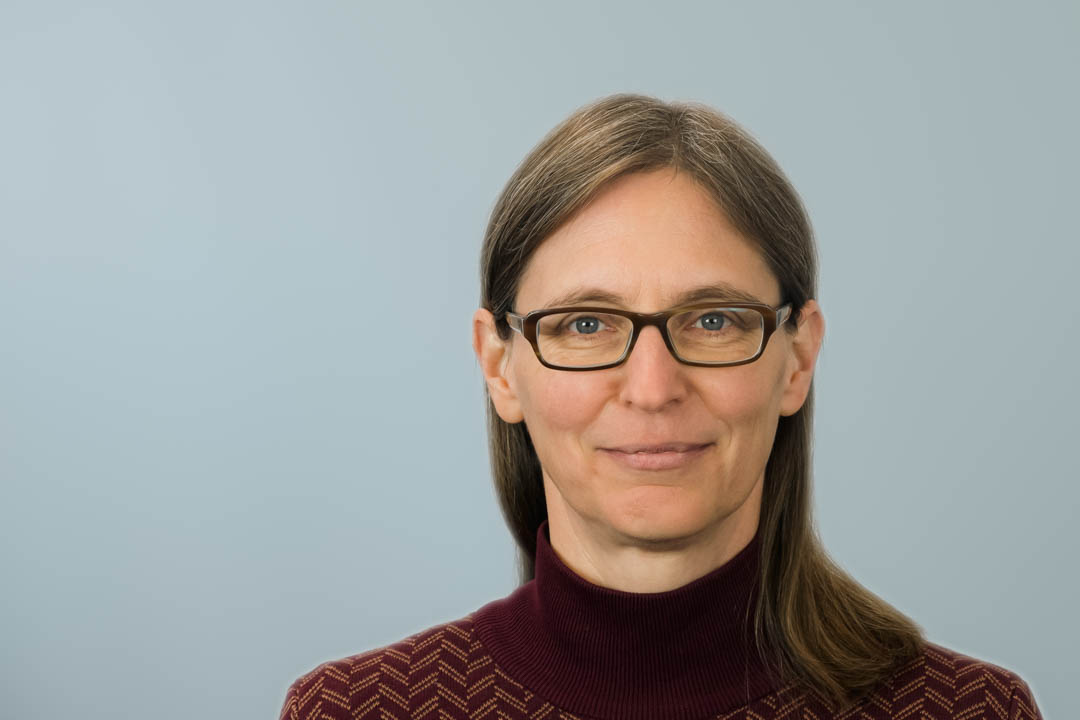
Dr. Stefanie Dencks is a Senior Scientist at the Institute for Medical Engineering at Ruhr-University Bochum, Germany, where she has been conducting research since 2011. Her work focuses on advancing medical ultrasound technologies, particularly in the areas of signal analysis, imaging, and image processing. Her educational background includes: Electrical engineering studies at the University of Hannover, Germany Biomedical engineering studies at the Technical University of Dresden, Germany Dipl.-Ing. degree in 2002 with supplementary Latin America studies including research in Santiago, Chile Dr.-Ing. degree in electrical engineering from Ruhr-University Bochum in 2009 Dr. Dencks' research primarily centers on medical ultrasound, with specific focus on ultrasound localization microscopy (ULM) and enhancing the visibility of cannulas in ultrasound monitoring. She has made significant contributions to understanding microbubble behavior, image reconstruction methods, and vascular imaging techniques. Her early career included work on ultrasound characterization of bone within the EU-project FEMUS and the DFG-project 'Multimodal ultrasound-based assessment of cortical bone strength.' From 2009-2011, she researched high-intensity focused ultrasound therapy monitoring at Germany's national metrology institute. Her work bridges engineering principles with medical applications, developing novel algorithms that have important implications for cancer diagnosis and treatment monitoring. Analysis of her recent publications reveals a strong focus on super-resolution ultrasound imaging techniques, with particular emphasis on improving localization precision, developing novel reconstruction algorithms, and applying these technologies to clinical problems like breast cancer imaging and interventional guidance. Her research integrates traditional signal processing methods with modern deep learning approaches, representing the cutting edge of medical ultrasound technology development. Dr. Dencks has maintained a consistent publication record spanning over two decades, with more than 40 publications that demonstrate a clear evolution from fundamental ultrasound signal analysis to sophisticated imaging applications. Her collaborations with researchers across Germany and internationally reflect her standing in the medical ultrasound community.
Pascal Kerschke is a Professor at the Chair of Big Data Analytics in Transportation at TU Dresden, Germany. Previously, he held positions at the University of Münster, including Head of the Research Group for Machine Learning and Data Science. His research focuses on Exploratory Landscape Analysis, Black-Box Optimization, Algorithm Selection, and Multi-Objective Optimization. He earned his PhD in Information Systems from the University of Münster (2013–2017), and Master's and Bachelor's degrees in Data Science and Management from TU Dortmund. Education: PhD in Information Systems, University of Münster (2013–2017) MSc in Data Science, TU Dortmund (2010–2013) BSc in Data Analysis and Management, TU Dortmund (2007–2010) His research interests span algorithm selection, multi-objective optimization, and the application of machine learning in optimization problems. He has contributed to the development of the R package flacco for landscape analysis and co-organized conferences like EMO 2017. Awards include the Dissertation Prize (2018) and PPSN XIV Best Paper Award (2016). He has supervised over 15 students and actively participates in initiatives like the Benchmarking Network and COSEAL. Key projects include work on automated algorithm selection, multimodal optimization, and benchmarking frameworks for iterative heuristics.
Pascal Jansen is a PhD candidate and research associate at the University of Ulm's Institute of Media Informatics, specializing in Human-Computer Interaction (HCI). He joined the HCI group in June 2021, holding an M.Sc. (distinction) in Media Informatics (2021) and B.Sc. in Computer Science (2018) from Ulm University. His master’s thesis, SwiVR-Car-Seat , explored vehicle motion effects on VR interaction quality. Research Interests : Jansen focuses on inclusive UI design, computational modeling, and ubiquitous personalization in automotive systems, urban mobility, and AR/VR. He investigates motion-aware interfaces, automated vehicle visualization, and Bayesian optimization for context-aware UIs. His work bridges HCI with robotics and sustainability. Publications & Awards : Over 15 peer-reviewed papers include CHI, AutomotiveUI, and IMWUT contributions. Notable achievements include a 2025 CHI Honorable Mention (OptiCarVis) and multiple "Special Recognition for Outstanding Reviews" awards from top venues. His work has been featured at the Long Evening of Science (2024, 2023) and the German Computer Game Awards (2021). Projects : AutoVis (automotive UI analytics), UAM-SUMO (urban air mobility simulation), PedSUMO (AV-pedestrian interaction). Teaching : Lectures on Automotive UIs, UI Software Technologies, and media informatics seminars since 2021. Grants : Co-investigator in SituWare (2023), a project optimizing driver situation awareness in automated vehicles. His research also addresses energy-saving home appliances (IMWUT 2024) and precision agriculture robotics (CHI 2025).
Dr. Felix Schüssel is a researcher at the University of Ulm, previously serving as a Research Associate. His work focuses on Multimodal Interaction and Affective Computing, with contributions to the Sonderforschungsbereich/Transregio 62 project on companion-technology for cognitive technical systems. He has taught courses such as Ubiquitous Computing , Human-Computer Interaction , and Interaction in Cognitive Technical Systems . His research emphasizes adaptive systems, multimodal fusion, and user-centered design, with over 15 publications since 2011. Notable contributions include works on companion-system architectures, error detection via interaction histories, and affective computing applications. He has supervised numerous theses on topics like emotion-based interaction and multimodal fusion frameworks. Key projects include developing a smart mirror ( Fitmirror ) for wellbeing and exploring VR driving simulations. His work bridges theoretical HCI principles with practical applications in smart environments and assistive technologies. Dr. Schüssel’s publications span journals like i-com and conferences such as HCI International and ACM Multimodal Interaction.
Susanne Hummel is a Researcher at the University of Hamburg (UHH), contributing to interdisciplinary projects in Human-Computer Interaction and Digital Humanities. Her work focuses on eye tracking in online learning contexts and collaborative research data curation initiatives like the Beta maṣāḥǝft project. She has co-authored studies exploring eye movement synchronicity's impact on test performance and visualizing collective attention in educational settings. Her research integrates technologies like eye tracking with educational theory, while her data science contributions emphasize open science practices through structured datasets. Collaborations span international teams in computer science, linguistics, and education.