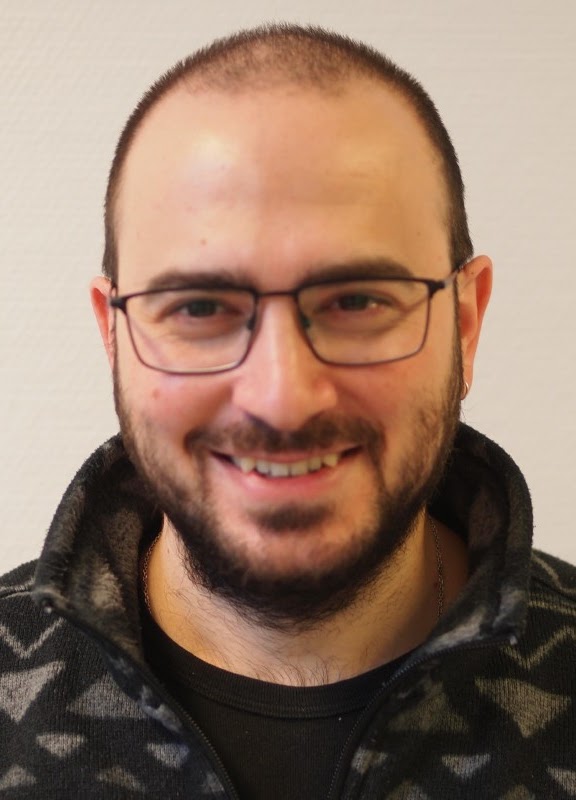
Anders Søgaard is a Professor at the University of Copenhagen , affiliated with both the Department of Computer Science and the Department of Communication. His research bridges Natural Language Processing and Machine Learning with a focus on AI ethics , explainability , and human-AI interaction . Primary Affiliation: Department of Computer Science, University of Copenhagen Secondary Affiliation: Department of Communication, University of Copenhagen Email: soegaard@di.ku.dk, soegaard@hum.ku.dk Research Interests His work spans Natural Language Processing , Machine Learning , and AI ethics , with recent studies addressing: Trustworthiness in AI systems Explainable AI (XAI) frameworks Multilingual model fairness and alignment Human-AI collaboration in reasoning tasks Ethical implications of social robots Mental health analytics using ML Recent Publications His 2025 output highlights trends in: AI ethics (e.g., fairness metrics, trustworthy systems) Multilingual model analysis (knowledge retention, cross-lingual transfer) Human-centric AI (gaze data, cultural considerations) Applications in healthcare and social good
Manex Aguirrezabal Zabaleta is an Associate Professor in the Department of Nordic Studies and Linguistics at the University of Copenhagen. He previously held positions as a Postdoc (2017-2019) and Assistant Professor at the same institution. His educational background includes: PhD in Natural Language Processing from the University of the Basque Country (UPV/EHU), conducted at the IXA NLP group. Master's degree in Natural Language Processing from UPV/EHU. Bachelor's degree in Computer Science (5 years) from UPV/EHU. Dr. Aguirrezabal's research focuses on the computational analysis of poetry , particularly stress patterns in English. He explores whether computers can effectively analyze poetic structures, a field with roots in the 1980s but revitalized by modern techniques. Additionally, he investigates language generation , computational morphology and phonology , and finite-state methods . His work bridges traditional linguistic inquiry with cutting-edge natural language processing. Recent publications (2023-2024) demonstrate a diverse engagement with computational linguistics, including poetry generation, multimodal corpus development, clickbait analysis, and fact-checking. His research often employs zero-shot learning and language models, reflecting current trends in AI-driven linguistic analysis. He has contributed to international collaborations such as ParlaMint (multilingual parliamentary corpora) and the GEHM Zoom corpus. While specific grant details are not provided, his active publication record indicates ongoing research support. Dr. Aguirrezabal maintains a strong connection to his Basque heritage, having pursued his early education in the Basque language.
Anders Krogh is a Professor at the Department of Computer Science, University of Copenhagen, and also holds a position at the Department of Public Health in the Section for Health Data Science and AI. He serves as the head of the Center for Health Data Science (HeaDS) in the Faculty of Health and Medical Sciences. Previously, he was affiliated with the Department of Biology at the University of Copenhagen until 2020. Dr. Krogh earned his PhD in theoretical physics but transitioned into machine learning and bioinformatics during his doctoral studies. His research spans both theoretical foundations and practical applications in these fields. He is particularly renowned for his pioneering work on hidden Markov models for biological sequences, which has had significant impact in computational biology. In recent years, Krogh's research has focused on deep generative models applied to gene expression data and other biomedical applications. His work bridges computer science with healthcare, developing AI-driven approaches for precision medicine, cancer diagnostics, and analysis of complex biological systems. His current research integrates machine learning with quantum computing applications in biomolecular modeling. Analysis of his recent publications reveals a strong trend toward applying artificial intelligence to healthcare challenges, particularly in rare diseases, cancer diagnostics, and personalized medicine. His work increasingly incorporates federated learning approaches to address privacy concerns while enabling collaborative research across institutions. There's also a growing emphasis on quantum computing applications in biomolecular modeling and drug discovery. As head of the Center for Health Data Science, Krogh leads interdisciplinary research efforts that bring together computer scientists, medical researchers, and clinicians. His team develops novel computational frameworks like MOSAIC for multimodal analysis of rare cancers and multiDGD for multi-omics data integration. These tools are designed to translate AI innovations into clinical practice while addressing the unique challenges of medical data.
Desmond Elliott is an Associate Professor in the Natural Language Processing section at the Department of Computer Science, University of Copenhagen (UCPH). His research focuses on multimodal and multilingual models with specific emphasis on vision-language integration and tokenization-free NLP approaches. He teaches Bachelor and Master's level courses including Advanced Topics in Natural Language Processing (since 2019), Grundlæggende Data Science (since 2023), and previously Data Science (2021-2023). His research interests center on building and understanding multimodal and multilingual models , particularly exploring vision and language interactions through billion-parameter systems. Current work investigates cultural representation disparities in vision-language models, parameter-efficient captioning, and multimodal distributional semantics across diverse domains including food culture and medical imaging. His methodology emphasizes real-world applicability in non-English contexts and ethical considerations in multimodal systems. Elliott's recent publications (2025) demonstrate leadership in multimodal NLP, with significant contributions to vision-language pretraining, multilingual evaluation frameworks, and clinical NLP applications. His work spans theoretical advancements in model architectures and practical implementations addressing challenges in low-resource languages and domain adaptation. Best Long Paper Award at EMNLP 2021 Best Poster Award at COLING 2019 As an active educator, Elliott contributes to courses on Fair and Transparent Machine Learning and previously taught Information Retrieval. His research collaborations span international institutions with particular focus on European and non-English language contexts, reflecting UCPH's recognition as Europe's #1 institution for HCI research over the past decade.
Prithvi Ravi Kantan is a full-time Researcher at Aalborg University's Department of Architecture, Design and Media Technology within The Technical Faculty of IT and Design. His work focuses on developing sound-based and multimodal feedback systems for motor rehabilitation, integrating principles from music technology and biomedical engineering. Education: PhD in Embodied Sonification Design (2021-2023) M.Sc. in Sound and Music Computing (2018-2020) B.E. in Electronics and Telecommunications (2009-2013) Research interests include real-time auditory feedback systems for neurological rehabilitation, user-centered design of clinical technologies, and the application of generative music in data sonification. He actively contributes to projects like HearWalk (2023-2027), exploring sound-facilitated motor learning in cerebral palsy patients. Notable achievements include winning the Danish Sound Day Research Pitch Battle (2023) and receiving the Best Student Paper Award at ICAD 2024. His work aligns with UN SDG 3 (Good Health) and SDG 4 (Quality Education). Teaching responsibilities include coordinating bachelor and master-level courses in PBL-based learning, emphasizing interdisciplinary approaches. He has supervised multiple student projects and contributed to over 39 publications since 2013.
Jesper Rindom Jensen is an Associate Professor in the Department of Electronic Systems at Aalborg University, Denmark, under the Technical Faculty of IT and Design. He is the Head of the Audio Analysis Lab, a leading research group in audio signal processing, since 2023. His work bridges theoretical signal processing and practical applications in artificial intelligence and audio systems. Full Name: Jesper Rindom Jensen Institution: Aalborg University School: The Technical Faculty of IT and Design Department: Department of Electronic Systems Research Lab: Audio Analysis Lab Email: jrj@es.aau.dk Office: Fredrik Bajers Vej 7B, B5-206, 9220 Aalborg Øst, Denmark Education: M.Sc. in Electronic Systems, Aalborg University (cum laude, 2009) Ph.D. in Signal Processing, Aalborg University (2012) Research Interests: Jesper Rindom Jensen's research centers on audio signal processing, with a strong emphasis on artificial intelligence, speech enhancement, noise reduction, beamforming, and multichannel systems. His work applies to diverse domains including robot and drone audition, spatial audio, and active noise control. He develops novel filtering techniques, including variable span linear filters and harmonic beamformers, to improve speech quality and intelligibility in noisy and reverberant environments. Publication Trends: His recent publications (2023–2025) show a strong trend toward integrating deep learning with classical signal processing, particularly in direction-of-arrival estimation, underwater acoustics, and robust multichannel systems. There is a clear focus on real-world applications, including sound zone control, active noise control, and limited-data scenarios using knowledge distillation. His work consistently emphasizes robustness, efficiency, and practical deployment. Scientific Awards and Recognition: AAU Talent for emerging research leaders Recipient of a competitive postdoc grant from the Danish Independent Research Council Advising and Grants: Jesper has supervised multiple PhD and master’s students, including Nørholm, Karimian-Azari, Zhang, and Wang. He has led significant research projects such as 'Sound Processing for Robots and Drones' (2018–2020) and participated in others related to joint audio-visual tracking and speech enhancement. His research has been supported by national funding bodies, reflecting its innovation and impact. Labs and Teams: He is a founding and core member of the Audio Analysis Lab at Aalborg University, which focuses on cutting-edge audio signal processing and AI-driven solutions. The lab fosters interdisciplinary collaboration and has produced numerous publications, datasets, and real-world applications. Jensen’s leadership since 2023 underscores his pivotal role in shaping the lab’s research direction.
Francisco Camara Pereira is a Professor and Head of Section at the Department of Technology, Management and Economics at the Technical University of Denmark (DTU). His research focuses on Intelligent Transportation Systems, Machine Learning, and Data-Driven Decision-Making in transportation contexts. He actively contributes to advancing transportation science through interdisciplinary approaches combining simulation, optimization, and AI techniques. His work addresses challenges in public transport analysis, charging infrastructure planning, and multimodal demand prediction. Recent projects include developing graph-based optimization methods for electric vehicle networks and causal discovery frameworks for transportation systems. He supervises multiple PhD students in areas like federated learning for cyclist safety, causal graph neural networks, and socially aware AI models. Key contributions include publications on smart card data analysis for travel surveys, stochastic infrastructure expansion models, and transfer learning for bike-share systems. His research aligns with UN Sustainable Development Goals related to sustainable cities and innovation. Dr. Pereira collaborates internationally on transportation policy and infrastructure projects. His lab focuses on translating theoretical advancements into practical solutions for urban mobility challenges.
Daniel Hershcovich is a Tenure Track Assistant Professor at the Department of Computer Science (Faculty of Science, University of Copenhagen) specializing in Natural Language Processing and Machine Learning . His research focuses on cross-cultural adaptation of language models, integrating human values into AI, and analyzing food-related cultural narratives for sustainable diets. Education: Ph.D. in Computational Neuroscience from Hebrew University of Jerusalem B.Sc. in Mathematics and Computer Science from Open University of Israel Recent publications highlight his work on multimodal models (haptic captioning, visual assistants for the blind), historical text analysis (Danish/Norwegian literature, euphemism detection), and cross-cultural NLP (recipe adaptation, cultural value alignment, climate awareness). His projects frequently combine AI ethics with domain-specific applications like food studies, historical linguistics, and accessibility research. Key collaborative networks include institutions in Denmark, Israel, and international partnerships through conferences like ACL, EMNLP, and workshops on cross-cultural NLP. The NLP section at DIKU serves as his primary affiliation for these efforts.
Erik Bjørnager Dam is a Professor in the Machine Learning section at the Department of Computer Science, University of Copenhagen (UCPH). His research spans theoretical foundations of machine learning to practical applications in medical data analysis, sustainability, and materials science. His key research interests include: Small-scale and resource-efficient deep learning Medical image analysis and segmentation Sustainable and environmentally conscious AI development Graph neural networks for materials science Resource-constrained AI systems Professor Dam's recent publications demonstrate a strong focus on making AI more accessible and sustainable while maintaining high performance standards. His work on 'Performance Per Resource Unit' metrics addresses critical challenges in deploying AI in resource-limited environments, particularly in healthcare applications. His research bridges theoretical machine learning with practical implementations across multiple domains. His notable professional activities include: Co-founding Cerebriu A/S (since 2018) Co-founding Biomediq A/S (since 2008) Delivering lectures on AI's role in green transition (April 24, 2023) Media contributions on deep learning applications in plant research (September 13, 2018) With 74 documented research outputs, Professor Dam maintains an active research profile with significant contributions in 2023-2025 across medical imaging, sustainable AI, and materials science applications.
Serge Belongie is a Professor at the Department of Computer Science (DIKU) at the University of Copenhagen, where he holds dual affiliations with the Pioneer AI research section and the Image Analysis, Computational Modelling, and Geometry section. His academic position places him at the forefront of interdisciplinary research connecting computer vision with language models, geospatial analysis, and cultural understanding. Professor Belongie's research program encompasses several critical domains in modern artificial intelligence: Advanced computer vision and image analysis techniques Vision-language model integration and multimodal systems 3D point cloud processing and semantic segmentation Geospatial representation learning for environmental applications Fine-grained object recognition and detection Cultural context understanding in AI systems His recent publication record reveals a sophisticated trajectory toward developing precise control mechanisms for vision-language models, with applications spanning forensic analysis, cultural heritage preservation, and social media understanding. The research demonstrates increasing sophistication in handling cultural context and enabling fine-grained manipulation of visual content through natural language interfaces. Professor Belongie maintains an active research group producing significant scholarly output, with over 280 research publications documented in his academic profile. His work is supported by research funding that enables cutting-edge exploration in multimodal AI systems with practical societal impact. He plays a key role in the Pioneer AI center at the University of Copenhagen, which focuses on advancing artificial intelligence through interdisciplinary collaboration and innovative research approaches that bridge theoretical computer science with real-world applications.
Martin Nordal Petersen is an Associate Professor at the Department of Electrical and Photonics Engineering , Technical University of Denmark (DTU) . His work spans Internet of Things (IoT) , optical networking , and wireless communication systems, with notable contributions to LoRa , NB-IoT , and LPWAN technologies. He actively supervises PhD projects on topics such as machine learning in IoT edge devices , secure 5G communication , and smart community architectures . Active projects (2024–2027): Machine Learning in IoT Edge Devices , Deterministic and Secure 5G Communication Finished projects (2021–2024; 2018–2021; 2015–2018): Reliable M2M/IoT Communication , Smart Communities , IoT 100% , Network Slicing His research explores: IoT Reliability : Multi-RAT communication, backup systems, and signal propagation Optical Networks : Alien wavelength integration, SDN control, and network emulation platforms Wireless Innovation : GPS-free geolocation, maritime NB-IoT use cases, and multimode fiber distribution Current collaborations emphasize cross-disciplinary applications of IoT in healthcare , industrial ergonomics , and smart environments .
Raghavendra Selvan, an Assistant Professor (Tenure Track) at the University of Copenhagen, holds joint appointments in the Machine Learning Section (Department of Computer Science), Kiehn Lab (Department of Neuroscience), and the Data Science Laboratory. His academic journey includes a PhD in Medical Image Analysis (2018), MSc in Communication Engineering (2015), and BSc in Electronics and Communication Engineering (2009). PhD - Medical Image Analysis, University of Copenhagen (2018) MSc - Communication Engineering, Chalmers University (2015) BSc - Electronics and Communication Engineering, BMS Institute of Technology, India (2009) His research focuses on Bayesian Machine Learning with emphasis on Medical Image Analysis, Graph-based Learning, Tensor Networks, Approximate Inference, and Multi-Object Tracking Theory. Recent publications highlight his contributions to environmentally sustainable AI practices, efficient deep learning in medical imaging, and novel applications of tensor networks. Key research areas: Green AI and Environmental Sustainability Medical Image Analysis Graph Neural Networks Crystal Structure Prediction Model Compression Materials Science Applications
Anders Kalsgaard Møller is an Associate Professor in the Department of Culture and Learning at Aalborg University's Faculty of Humanities and Social Sciences. He is actively engaged in research and innovation in learning design, digital technologies, and artificial intelligence in education. His work is centered around the L-ILD (IT and Learning Design), Green Society, and MASSHINE Xlab – Design, Learning and Innovation research environments. His research interests span Learning Design , Computational Thinking , Artificial Intelligence in Education , Human-Robot Interaction , and Environmental Literacy . He investigates how emerging technologies can be integrated into educational practices to enhance collaborative learning, literacy development, and sustainable thinking. His work often involves participatory and co-design methods with educators and children. The recent publications of Anders Kalsgaard Møller reflect a strong trend toward the application of generative AI, robotics, and digital tools in language and primary education. His scholarly output emphasizes interdisciplinary collaboration, technological innovation, and real-world educational impact, particularly in K-12 and higher education contexts. Principal Investigator, 'Using artificial intelligence in English teaching at upper secondary schools' (2023–2026) Co-PI, 'Co-Designing Robot-Assisted Learning for Children' (ongoing) Co-PI, 'Labor market-oriented AI skills at cand.it.' (2024–2026) Co-PI, 'Understanding and fostering future consumers' environmental literacy' (2024–2025) Anders Kalsgaard Møller has been involved in media outreach, including coverage on children's interactions with social robots and discussions on AI in education. He has also contributed to academic leadership through conference organization and editorial roles, such as in the DLI conference series. He is affiliated with key research labs including: L-ILD – IT and Learning Design Green Society MASSHINE Xlab – Design, Learning and Innovation These labs focus on digital innovation, sustainability, and human-centered design in educational contexts.
Georgios Arvanitidis is an Associate Professor at the Technical University of Denmark (DTU) in the Department of Applied Mathematics and Computer Science, specifically within the Section for Cognitive Systems (CogSys). He has established himself as a leading researcher in geometric machine learning, focusing on the application of differential geometry principles to enhance machine learning models. His work bridges theoretical mathematics with practical applications in artificial intelligence, with particular emphasis on understanding the geometric structure of data manifolds and latent spaces. Dr. Arvanitidis completed his educational journey with a Bachelor's degree from the Department of Informatics at the Aristotle University of Thessaloniki, followed by a Master's degree in Computer Science from Saarland University supported by the Max Planck Institute for Informatics. He earned his PhD at DTU's Cognitive Systems section under the supervision of Søren Hauberg, with additional research experience at Philipp Hennig's Probabilistic Numerics group. Prior to his current position as associate professor, he was a PostDoc at the Max Planck Institute for Intelligent Systems working with Bernhard Schölkopf. Dr. Arvanitidis's research primarily focuses on differential geometry in machine learning , where he explores how geometric structures can enhance representation learning and statistical modeling. His work in generative models investigates how learning the geometry of data manifolds can improve deep learning architectures. In the domain of deep learning theory , he examines why deep learning models generalize effectively on unseen data, with particular attention to the curvature properties of loss landscapes. His research in approximate Bayesian inference applies geometric principles to improve uncertainty quantification in neural networks. Through his innovative approaches, Dr. Arvanitidis has established himself as a leading researcher in geometric machine learning, contributing to both theoretical foundations and practical applications across various domains including robotics and life sciences. The publication trends of Dr. Arvanitidis reveal a consistent and evolving focus on geometric approaches to machine learning problems. His recent work (2023-2025) demonstrates increasing sophistication in applying Riemannian geometry to deep learning architectures, with particular emphasis on latent space geometry, optimization on manifolds, and geometric interpretations of neural network behavior. A notable pattern is the progression from foundational work on geometric representations to more applied research in areas like robotics and causal inference. His publications span top-tier conferences including NeurIPS, ICML, ICLR, and AISTATS, reflecting the high impact of his research. The interdisciplinary nature of his work is evident in collaborations across mathematics, computer science, and robotics domains, with recent papers addressing challenges in multimodal sampling, safety guarantees for dynamical systems, and counterfactual explanations. Dr. Arvanitidis has received several notable scientific awards and recognitions: Sapere Aude starting grant from the Independent Research Fund Denmark (DFF) GADL funding i-Rase, Pathfinder, and EIC (European Innovation Council) funding Best reviewer award for NeurIPS 2019 Best reviewer award for NeurIPS 2018 Best student paper award at Robotics: Science and Systems (R:SS) 2021 Dr. Arvanitidis actively mentors PhD students and researchers, currently supervising Alejandro Valverde, Johanna Gegenfurtner, and Albert Kjøller Jacobsen. He has previously co-supervised Alison Pouplin's PhD and worked with research assistant Georgios Pantis. His group receives substantial funding through multiple prestigious grants including the Sapere Aude starting grant from the Independent Research Fund Denmark, as well as European Innovation Council funding. He has been instrumental in creating opportunities for students interested in geometric machine learning, offering BSc and MSc thesis projects focused on generative models, deep learning theory, and optimization techniques. Dr. Arvanitidis also contributes significantly to the academic community as a reviewer for top conferences including ICLR and TMLR, and as an area chair for NeurIPS, ICML, AISTATS, and UAI. He co-organized the Machine Learning Summer School 2020 in Tübingen, further demonstrating his commitment to education and community building. Dr. Arvanitidis leads a vibrant research group focused on geometric machine learning within the Cognitive Systems section at DTU. His team includes multiple PhD students working on cutting-edge research at the intersection of differential geometry and artificial intelligence. The group has developed notable software tools, including the "geometric_ml" GitHub repository with over 70 stars, which contains implementations for applying Riemannian geometry in machine learning. His research has practical applications in robotics, where geometric approaches enable more robust motion planning, as evidenced by his work on "Reactive Motion Generation on Learned Riemannian Manifolds" which received a best student paper award. Additionally, his methodologies have found applications in life sciences, as mentioned in his 2022 AISTATS paper. The collaborative nature of his work is evident through extensive partnerships with researchers at institutions including the Max Planck Institute for Intelligent Systems, University of Cambridge, and various European universities. His recent news items indicate active engagement with the academic community through talks, conference presentations, and ongoing supervision of new PhD students joining his group.
Sadegh Talebi is a Tenure Track Assistant Professor in the Machine Learning Section at the Department of Computer Science, University of Copenhagen . His research focuses on theoretical aspects of reinforcement learning, Markov decision processes, online learning, stochastic multi-armed bandit problems, and resource allocation in networks. Education BSc in Electrical Engineering (minor: Electronics) from Iran University of Science and Technology (IUST) (2004) MSc in Electrical Engineering (minor: Communication Systems) from Sharif University of Technology (2006) PhD in Electrical Engineering from the Department of Automatic Control at KTH Royal Institute of Technology (supervised by Alexandre Proutiere and Mikael Johansson) Research Specializes in theoretical foundations of reinforcement learning and online learning Key contributions in stochastic optimization, MDPs, and bandit algorithms Collaborates on applications in resource allocation and quantum computing Publications include high-impact work on offline RL, differentially private exploration, and scalable MDP solutions in journals like Neural Processing Letters and conferences such as NeurIPS and UAI.