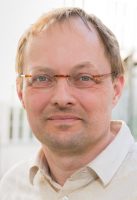
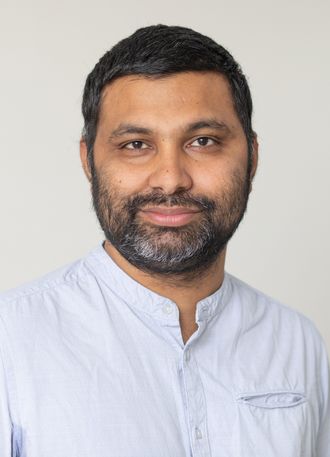
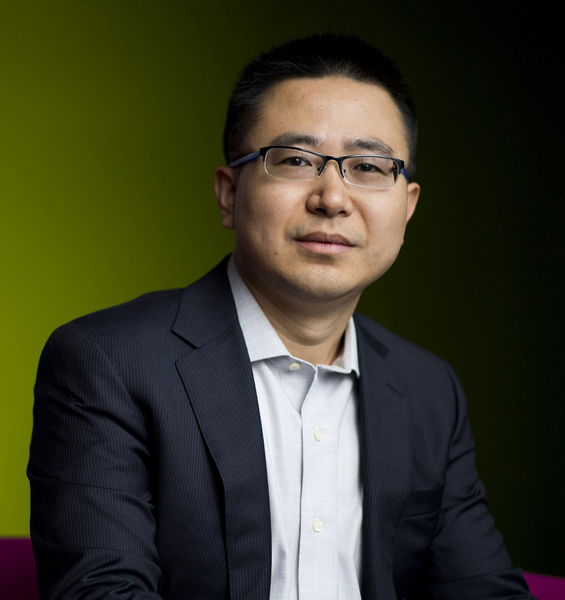
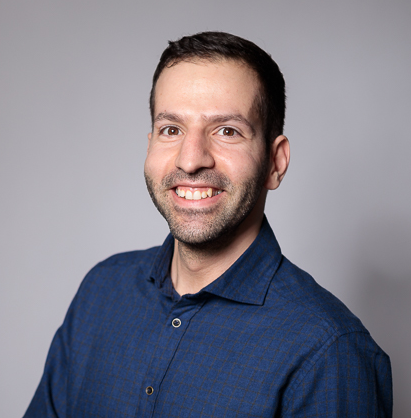
Katja Hose is a Full Professor of Data Management at TU Wien's DBAI research unit, heading the Data Management and Knowledge-Driven AI Lab. She previously held a Poul Due Jensen Foundation Professorship at Aalborg University. Her research focuses on data and knowledge engineering, including graph databases, knowledge graphs, querying, analytics, and machine learning, with interdisciplinary applications in bioscience, healthcare, and environmental assessment. Education: PhD in Computer Science (Ilmenau University of Technology, 2009), Postdoc at Max Planck Institute for Informatics (2009–2012). Academic roles include Program Co-Chair for ISWC 2024 and EDBT 2023, and editorial board membership at VLDBJ and TGDK. She leads projects like TARGET (health virtual twins) and ARMADA (data management). Research Interests: Knowledge Graphs, Semantic Web, Big Data, Machine Learning, Data Integration, and Provenance Systems. Key contributions include SHACL shape extraction, conversational data analytics, and environmental knowledge graphs. Awards include the 2025 Distinguished Meta-Reviewer Award and 2024 Manfred Paul Award. Advising and Grants: Supervised students including E. Pürmayr (Diploma Thesis 2025). Active in EU projects (TARGET, ARMADA) and grant coordination. Labs/Teams: DMKI Lab at TU Wien, collaborating with interdisciplinary teams in healthcare and environmental science.
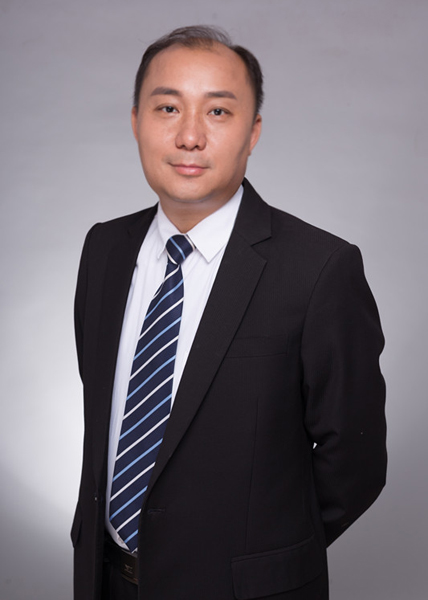
Huamin Qu is a Chair Professor in the Department of Computer Science and Engineering at the Hong Kong University of Science and Technology (HKUST). He serves as the Founding Dean of the Academy of Interdisciplinary Studies (AIS), Founding Head of the Division of Emerging Interdisciplinary Areas (EMIA), and was the Founding Acting Head of Computational Media and Arts (CMA) at HKUST(GZ). Qu directs the VisLab and coordinates the Human-Computer Interaction (HCI) group. He obtained his BS in Mathematics from Xi'an Jiaotong University and MS/PhD in Computer Science from Stony Brook University. Qu's research integrates Data Visualization , Human-Computer Interaction , and Human-Centered AI , with applications in urban informatics, social networks, and explainable AI. His work focuses on developing interactive systems for big data analytics, visual storytelling, and AI-driven decision support. Research extends to multimodal communication, fintech, and augmented reality applications. His publications emphasize visual analytics for complex datasets (mobility, social media, financial), interaction techniques for immersive environments, and AI-enhanced visualization tools. Recent works explore explainable AI interfaces and large-scale data communication frameworks. IEEE Visualization Academy (2020) IEEE VGTC Technical Achievement Award AI 2000 Most Influential Scholar (2019, 2023, 2024) 21 Best Paper/Honorable Mention awards IBM Faculty Award (2009) APICTA Merit Award (2015) Yelp Dataset Grand Prize (2018) Qu has advised 48 PhD graduates (21 now faculty at institutions like UC Davis, University of Minnesota, Texas A&M) and 30 MPhil students. He secured major grants including RGC theme-based projects (digital citizenship, air pollution), UGC AoE (slope safety), and China's 973 Program. As VisLab director, he leads 20+ researchers in visualization/HCI projects adopted by Microsoft, IBM, Huawei, and Tencent.
Dominik Schörkhuber is a PreDoc Researcher at the Vienna University of Technology (TU Wien) in the Computer Vision department. With a background in Informatics (BSc, Dipl.-Ing.), he focuses on computer vision applications for autonomous driving, robotics, and human-machine interaction. His work spans driver action recognition, pedestrian prediction, and adaptive lighting systems. Current projects: Empathic Vehicle (2024–2026), SyntheticCabin (2021–2025), SmartProtect (2020–2025) Research themes: Video transformers, synthetic data transfer learning, multi-task learning, and sensor-lighting integration Specializes in 3D sensing, nighttime driving analysis, and mobile video creation tools
Markus Vincze is an Associate Professor at the Institute of Automation and Control Engineering (ACIN) at Vienna University of Technology (TU Wien). He founded the Vision for Robotics (V4R) group in 1996 to advance robotic perception, particularly in real-world environments and homes. His work focuses on cognitive computer vision techniques for robotics. Education: Diplom in Mechanical Engineering (1988) and PhD (1993) from TU Wien; M.Sc. (1990) from Rensselaer Polytechnic Institute. V4R coordinates EU projects like ActIPret, robots@home, HOBBIT, and national initiatives like vision@home. Markus has edited a book on Robust Vision with Gregory Hager and authored 62 peer-reviewed journal articles and over 400 reviewed publications. His recent research explores zero-shot 6D pose estimation, sim-to-real transfer, and transparent object detection. Markus has served as program chair for ICRA 2013 and organized HRI 2017 in Vienna. He has advised numerous students and secured grants from the Austrian Academy of Sciences for work at HelpMate Robotics and Yale's Vision Laboratory. The V4R group leads innovations in robotic vision, including frameworks for synthetic data generation (Unrealgensyn), depth completion (CAGT), and educational robotics applications for sustainability. Their work spans household robotics (RH3), agricultural robotics (EdgeSoil), and human-robot collaboration.
Hongbo Jiang is a Distinguished Professor and Vice Dean of the College of Computer Science and Electronic Engineering at Hunan University, China. He holds concurrent roles as Director of the Trusted Systems and Networking Key Laboratory of Hunan Province and Director of the Hunan International Technical Cooperation Base for High-Performance Computing and Distributed Systems. His academic journey includes tenures as a Professor at Huazhong University of Science and Technology and a Hong Kong Scholar Research Fellow at The Chinese University of Hong Kong. Education: PhD in Computer Science (Case Western Reserve University, 2008), B.S./M.S. in Mathematics (Huazhong University of Science and Technology, 2002). Research Interests: Distributed systems, mobile computing, smart sensing, wireless networks, IoT, and edge computing. Ongoing projects include mobile/wireless applications, data science in IoT, and edge computing platforms. His work emphasizes practical implementations such as DriverSonar for driving safety and SmileAuth for biometric authentication. Key Achievements: Elected Member of Academia Europaea (2022), Fellow of AAIA, IET, and BCS. Notable awards include the Wu Wenjun Science and Technology Award (2020) and multiple best paper recognitions. Over 100+ publications in top venues like ACM MobiCom, IEEE/ACM Transactions. Professional Contributions: Editorial roles across 8+ journals including IEEE Transactions on Mobile Computing and ACM Transactions on Sensor Networks. Conference leadership includes co-founding ACM TURC and EAI ICECI. Active in technical committees for INFOCOM, MOBIHOC, and ICDCS. Labs/Teams: Leads research groups focused on networking, IoT, and edge computing. Current openings for PhD/MSc students and PostDoc researchers with strong mathematical and systems backgrounds.
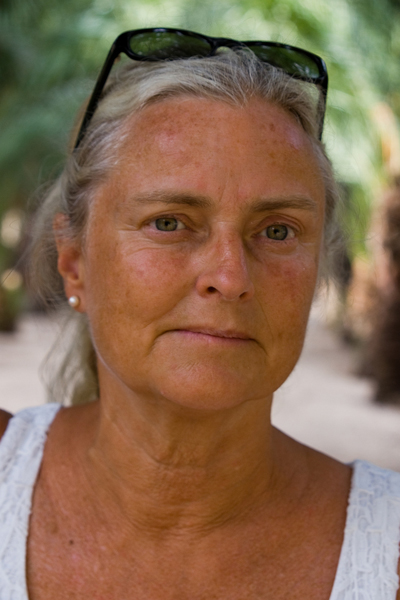
Carita Paradis is a Professor Emerita at Lund University's Centre for Languages and Literature, specializing in English Linguistics. She holds a PhD from Lund University (1997) and has held leadership roles including Chair of the Swedish Research Council's Linguistics panel (2010–2015). She coordinates the Language, Cognition and Discourse@Lund (LCD@L) research group, focusing on discourse meaning, language acquisition, and sociocultural variation. Her research spans cognitive linguistics, discourse analysis, semantics, and sensory language. She has authored/co-authored over 100 refereed publications, 5 books, and edited 10 journal volumes. Awards include membership in Academia Europaea (2016) and leadership roles in Scandinavian linguistic associations. She has supervised 14 PhD students and 8 postdocs, taught at all academic levels, and participated in numerous national/international research projects. Her editorial roles include serving on Cognitive Semantics, Languages, and Human Cognitive Processing series.
Armin Kirchknopf serves as a Junior Researcher at the Media Computing Research Group within the Institute of Creative Media/Technologies, Department of Media and Digital Technologies at the University of Applied Sciences St. Pölten. His interdisciplinary work bridges artificial intelligence, computer vision, and social media analysis, with significant contributions to misinformation detection and disaster response systems. Based at Campus-Platz 1 in St. Pölten, Austria, he actively collaborates on EU-funded projects and publishes in top-tier AI venues. His educational journey spans humanities and technology: a Bachelor of Arts in Egyptology and Master of Arts in Classical Archaeology from the University of Vienna (including fieldwork at excavation sites across Austria, Germany, and Egypt), followed by a Bachelor of Science in Media Technology from FH St. Pölten. This unique background informs his human-centered AI research approach. Kirchknopf's research centers on explainable multimodal AI systems for real-world challenges. His recent work demonstrates expertise in transformer-based architectures for cross-lingual fake news detection, sexism identification, and flood monitoring through social media imagery. He pioneers techniques like Grad-CAM for object detection explainability and develops visualization tools for complex data interpretation, emphasizing transparency and social impact in AI deployment. Analysis of his 13 publications (2017-2022) reveals a strategic shift toward applied AI in societal contexts , particularly using social media data for disaster management and combating online toxicity. His projects consistently integrate computer vision with natural language processing, showing increasing sophistication in multilingual capabilities and model interpretability frameworks. His scientific recognition includes: Creative Business Award for co-developing the Tenjin learning quiz application No documented student advisement or grant leadership appears in current records, though he actively mentors through project-based collaborations. His work with the Media Computing Research Group drives innovation in educational technology and public safety applications. Kirchknopf contributes to the Media Computing Research Group's portfolio including Fake News Detection, SAiEX (Safe AI with explainable integrity), InfraBase (building footprint segmentation), and Ressel Center music therapy projects. His cross-disciplinary collaborations span computer scientists, archaeologists, and social scientists, reflecting the group's commitment to human-centric technological solutions .
Dr. Alexander Plopski is an Assistant Professor at the Institute of Visual Computing, Technische Universität Graz. His research focuses on advancing augmented reality (AR) technologies, human-computer interaction (HCI), and optical display systems. He holds a PhD, M.Sc., and BSc in relevant fields. His work emphasizes perceptual optimization in AR displays, eye tracking integration, and accessibility solutions for color vision deficiencies. Key research areas include gaze-contingent AR interfaces, light field manipulation for extended reality, and multimodal interaction techniques. Notable contributions include the development of the 'guitARhero' interactive AR guitar tutorial system and studies on focal distance effects in optical see-through displays. His publications span topics from AR display calibration to gesture recognition using radar sensing. He has explored applications in industrial training, medical AR, and robotic telemanipulation. His work often bridges theoretical perceptual studies with practical system implementations, aiming to enhance user experience and accessibility in AR/VR environments.
Susanne Reichl is a full Professor at the Department of English and American Studies within the Faculty of Philological and Cultural Studies at the University of Vienna. She serves as Head of the interdisciplinary research platform Mediatised Lifeworlds: Young people's narrative constructions, connections and appropriations, a position she has held since autumn 2021 for its second period. Reichl maintains an active teaching schedule, offering courses on contemporary British literature, children's and young adult literature, and teaching methodology for literature and culture. Her research interests span contemporary British literature and culture, children's and young adult literature, cognitive approaches to literature, tales of time travel, Black and Asian British literature, and teaching literature at university and school. Reichl's work demonstrates a consistent focus on how young people engage with literature and media, particularly examining narrative construction in digital environments and the intersection of reading practices with identity formation. Reichl's recent publications reveal a strong trend toward interdisciplinary research connecting literary studies with media studies, cognitive science, and educational theory. Her work on youth media practices, particularly through the #YouthMediaLife platform, demonstrates innovative approaches to understanding how young people navigate contemporary digital landscapes through narrative construction. She has made significant contributions to understanding time travel narratives, multimodal literature, and social reading practices, particularly on platforms like Goodreads. Figdor-prize of the Austrian Academy of Sciences for literary studies (2005) Erwin-Schrödinger international scholarship by the FWF (Austrian research fund) (2005/2006) Reichl has supervised numerous master's students, though she has announced she cannot take on new master supervision until March 2026. Her research platform Mediatised Lifeworlds has secured significant institutional support at the University of Vienna, indicating successful grant acquisition. Reichl maintains an active research agenda with consistent publication output across multiple formats including monographs, edited collections, journal articles, and book chapters. As Head of the interdisciplinary research platform Mediatised Lifeworlds, Reichl leads a collaborative team examining young people's narrative constructions in digital environments. This platform brings together researchers from multiple disciplines to investigate how youth appropriate and connect through mediatised experiences, with particular attention to the narrative frameworks they employ in social media and other digital spaces.
Shah Nawaz is an Assistant Professor at the Institute of Computational Perception , Johannes Kepler University Linz. His research focuses on multimodal systems, deep learning applications in healthcare, and cross-modal learning frameworks. He leads projects addressing challenges like missing modalities in machine learning, face-voice association, and medical image analysis. Key research interests include machine learning for medical diagnostics (e.g., breast cancer detection, skin lesion segmentation), speech recognition, and adaptive neural network architectures. He has contributed to frameworks like Chameleon for robust multimodal learning and the FAME challenge for face-voice association in multilingual environments. Publications emphasize practical applications, such as bilingual healthcare chatbots for pregnant women and light-weight speech recognition models for resource-constrained systems. His work bridges theoretical advancements and real-world deployment in healthcare and security domains. Shaw Nawaz actively participates in academic communities through workshops like DaQuaMRec@RecSys2025 and has developed open-source frameworks for image restoration and multimodal fusion. His lab focuses on scalable solutions for multimodal data challenges in both technical and clinical contexts.
Andreas Fink serves as a University Professor at the Institute of Psychology within the Faculty of Natural Sciences at Karl-Franzens-University Graz, Austria. His research bridges cognitive neuroscience, psychology, and sports science with a particular emphasis on understanding the neurobiological foundations of creative thinking and emotional processing. As a leading figure in creativity neuroscience, Professor Fink employs advanced methodologies including EEG, fMRI, and ambulatory monitoring to investigate how physical activity influences brain function and cognitive performance. His work has significant implications for mental health interventions and cognitive enhancement strategies across various populations. Professor Fink's research interests center on three interconnected domains: biological mechanisms of cognitive and affective functions, creativity neuroscience, and the relationship between physical activity and brain health. His laboratory investigates how physical exercise influences neural processes related to creativity, emotion regulation, and cognitive performance through both basic neuroscience research and applied interventions. A hallmark of his approach is examining EEG alpha power during creative ideation tasks while simultaneously exploring how running, dance, and other physical activities can improve mental health outcomes and cognitive functioning. His work spans from laboratory-based experimental designs to real-world interventions with ecological validity. Analysis of Professor Fink's recent publication trajectory reveals a sophisticated evolution in his research focus, with increasing emphasis on the intersection of physical movement, brain function, and creative cognition. His work has progressively incorporated more ecologically valid approaches using ambulatory monitoring to study creativity in natural contexts, while maintaining rigorous neuroscience methodology. A consistent theme across his publications is neuroplasticity, particularly how physical exercise interventions induce structural and functional brain changes, with special attention to hippocampal volume and white matter integrity. His research has expanded to explore specialized forms of creativity including malevolent creativity and the nuanced relationship between everyday movement patterns and creative cognition. 2009 Psychology Prize for innovative scientific or practical work for his habilitation thesis 'The neuroscientific study of creative thinking' from the Professional Association of Austrian Psychologists (BÖP) and the Austrian Psychological Society (ÖGP) Professor Fink currently leads multiple significant research initiatives funded by the Austrian Science Fund (FWF), including 'Neuronal mechanisms underlying the generation of creative solutions in complex environments' (2016-2018), 'Running Away From Depression with Your Brain and Your Heart' (2022-2025), and 'Dance and Brain' (2024-2026). These projects demonstrate his commitment to translating basic neuroscience findings into practical interventions for mental health. While specific doctoral students aren't listed in the provided materials, his position as a full professor and principal investigator on multiple grants indicates active mentorship of junior researchers and graduate students. His collaborative approach is evident through interdisciplinary partnerships spanning psychology, neuroscience, sports science, and clinical practice. Professor Fink is an active member of the 'Complexity of Life' profile area at the University of Graz and participates in the 'Brain and Behavior' research network. His laboratory environment fosters interdisciplinary collaboration, bringing together researchers from diverse backgrounds to tackle complex questions about the brain-mind-body connection. Current projects suggest his team employs a multimodal approach combining neuroimaging, physiological monitoring, behavioral assessments, and intervention studies to comprehensively investigate how physical activity influences brain function and creative cognition. His 'Running Away From Depression' project exemplifies his translational research focus, directly connecting basic neuroscience findings to clinical applications for mental health improvement.
Prof. Dr. Gernot R. Müller-Putz is Head of the Institute of Neural Engineering and the Graz Brain-Computer Interface Lab at Graz University of Technology. He serves as Dean of the Faculty of Computer Science & Biomedical Engineering and holds editorial roles at Frontiers in Human Neuroscience IEEE Transactions in Biomedical Engineering Brain-Computer Interface Journal . With over 212 peer-reviewed publications and an h-index of 80, his research focuses on Brain-Computer Interfaces , Neuroprosthetics , and EEG-based Motor Control . His work investigates: Neural signal decoding for spinal cord injury rehabilitation Hybrid BCI systems with error processing Artificial sensory feedback mechanisms Machine learning applications in neural engineering VR-based neurofeedback environments Non-invasive multimodal biosignal recording Research trends show strong emphasis on EEG signal processing , BCI clinical applications , and neurotechnology integration . Scientific Awards : ERC Consolidator Grant (2015) Ludwig-Guttman Award (2017) CYBATHLON Best Paper (2019) State of Styria Research Award (2019) Förderstipendium (2013-2014) He advises 21 PhD students and has managed major projects like MoreGrasp (EU Horizon 2020) , Feel Your Reach (ERC) , and INTRECOM (EU EIC Pathfinder) . The Institute hosts the BCI Racing Team Mirage91 and offers international thesis opportunities.
Yun Fu is a Distinguished Professor at Northeastern University, affiliated with the College of Engineering and Khoury College of Computer Science. He holds tenure in Electrical and Computer Engineering (ECE). His roles include Professor, Senior Vice President at Shiseido Americas, founder of Giaran (acquired by Shiseido), and co-founder of TVision Insights. He earned his Ph.D. from the University of Illinois at Urbana-Champaign. His research focuses on artificial intelligence, computer vision, machine learning, and data mining. Key achievements include over 500 publications, 50+ patents, and prestigious awards like IEEE Fellow, OSA Fellow, and AAIA Fellow. He leads the SMILE Lab, exploring AI applications in vision, robotics, and healthcare. Notable entrepreneurship includes AI-driven ventures in cosmetics and media analytics. Research interests emphasize AI-driven solutions for computer vision challenges, including anomaly detection, trajectory prediction, and multimodal learning. His work bridges academia and industry, with impactful contributions to both fields.
Timo Fleischer is an Associate Professor in the Chemistry Didactics Working Group at the University of Salzburg, affiliated with both the Faculty of Natural and Life Sciences and the School of Education. He leads key educational innovation projects including EXBOX-Digital, ChemGerLab-VR, and RECC Salzburg, and plays a significant role in digital science education development. Education: Bachelor of Science in Geography and Chemistry, University of Kiel (2011) Master of Education in Geography and Chemistry, University of Kiel (2013) PhD in Science Education, TUM School of Education (2017) Habilitation in Chemistry Didactics, University of Salzburg (2024) His research focuses on the effectiveness of digital media in teacher education and chemistry classrooms, the development of digital teaching and learning materials, and the integration of experimentation and modeling in science education. He is particularly interested in how digital tools support the learning of chemical language and representations. His work bridges educational theory and practical classroom innovation. His recent publications demonstrate a strong emphasis on digital scaffolding, augmented and virtual reality in chemistry labs, eye-tracking during experiments, and the use of fiction as an anchor in science teaching. These works reflect a trend toward immersive, technology-enhanced, and student-centered learning environments in science education. Scientific Awards: Ehrenurkunde Polytechnik-Preis 2022 – Projekt EXBOX-Digital Kulturfondspreis 2020 für das Projekt MINT:labs Science City Itzling Comenius-EduMedia-Siegel für EXBOX-Digital (2020) Qualitätslabel „Regional Educational Competence Centre“ (RECC) (2018–2021) Junior-Fellowship, Kolleg Didaktik:digital (2016–2017) Timo Fleischer has supervised various research projects and collaborated with numerous colleagues and students, though specific advisees are not listed. He has secured recognition and funding for initiatives such as EXBOX-Digital and MINT:labs, indicating successful grant acquisition. He is actively involved in teacher training, curriculum development, and science communication. He leads several innovative labs and teams, including ChemGerLab-VR (a virtual reality chemistry lab), EdTechAll, and the development of MINT:labs Science City Itzling. These initiatives focus on creating digital, hands-on, and inclusive science learning environments for both students and teachers.
Navid Rekab-saz is an Assistant Professor at the Institute of Computational Perception, Johannes Kepler University Linz (JKU), Austria. He is actively involved in research and teaching, offering courses such as Natural Language Processing and Natural Language Processing with Deep Learning . He maintains regular office hours and is accessible via email and a dedicated booking system for meetings. His research focuses on natural language processing , information retrieval , fairness and bias in AI , and recommender systems , with applications in humanitarian action and ethical AI. He employs deep learning and machine learning techniques to address challenges in bias mitigation, explainability, and domain adaptation. His work often bridges technical innovation with societal impact, especially in developing inclusive and fair AI systems. The recent publications of Navid Rekab-saz reflect a strong trend in debiasing strategies , parameter-efficient learning , and evaluation of societal biases in search and recommendation systems. His research spans from foundational work on word embeddings and retrieval models to applied studies in humanitarian NLP and gender bias in user queries. He frequently collaborates with a broad network of researchers and contributes to the development of datasets and benchmarks. Scientific Awards: Best Student Paper Award at ISMIR 2022 for 'Traces of Globalization in Online Music Consumption Patterns and Results of Recommendation Algorithms' Advising and Grants: Navid Rekab-saz has advised and collaborated with numerous students and researchers, many of whom are co-authors on his publications. While specific grant details are not listed in the provided text, his extensive publication record in top-tier venues suggests active involvement in funded research projects, likely supported by national or European funding bodies. He is also engaged in interdisciplinary research, particularly at the intersection of technical AI and legal or social implications. Labs and Teams: He is a core member of the Institute of Computational Perception at JKU, where he contributes to research projects in computational linguistics and AI. He collaborates closely with the team led by Prof. Markus Schedl and participates in initiatives related to music information retrieval, fairness in AI, and humanitarian applications of NLP.