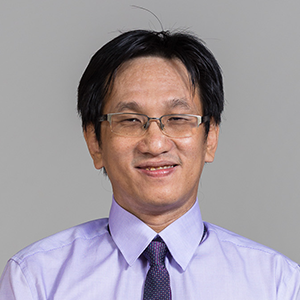
Jorge Gil is an Associate Professor in Urban Analytics and Informatics at Chalmers University of Technology's Department of Architecture and Civil Engineering. His research focuses on integrated urban models, Smart Cities, City Information Modelling (CIM), and Urban Digital Twins, with applications in sustainable mobility, social inclusion, energy transition, and circular economy. He develops GIS solutions and open science methodologies. Teaching includes GIS, sustainable mobility, and spatial data science courses. He supervises Bachelor, Master's, and PhD students. Current projects include LogiNets (logistics network flows analysis), ComCy (cycling safety), and FlowSense (traffic flow data). Key research outputs span agent-based modeling of waste sorting behavior, mobility equity analysis, and multimodal urban network frameworks. He co-authored over 50 publications and actively contributes to interdisciplinary urban planning initiatives.
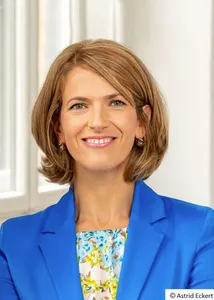
Prof. Dr. Enkelejda Kasneci is a Distinguished Professor at the Technical University of Munich (TUM), leading the Chair of Human-Centered Technologies for Learning. She holds dual affiliations within TUM School of Social Sciences and Technology and TUM School of Computation, Information and Technology. Her research integrates AI, eye-tracking, and immersive technologies to advance educational paradigms. She directs the TUM Center for Educational Technologies and chairs the MSc program 'AI in Society.' Education: PhD in Computer Science from University of Tübingen (2013), M.Sc. from University of Stuttgart (2007). Earlier roles include Assistant Professor and Dean of Studies at University of Tübingen. Research Focus: Human-centered AI applications in education, multimodal interaction design, and privacy-preserving eye-tracking. Her work bridges technology and pedagogy through projects like AI tutor PEER, VR Classroom, and Privacy-Preserving Eye-tracking. Key Projects: Leads EU-funded projects VIVA (€1.125M), DigiProMIN (€163K), and SARA Kids (€244.8K). Active in policy initiatives like Europe’s AI Imperative. Awards: TUM Heinz Maier-Leibnitz Medal (2024), Liesel Beckmann Distinguished Professorship (2022), and Südwestmetall Research Prize (2014). Grants & Advising: Over €5M in secured funding across 12+ projects. Supervises 14+ PhD researchers and mentors postdocs in AI education and HCI. Labs & Teams: IT-Stiftung EdTech Lab houses advanced VR/eye-tracking setups. Research group includes 20+ members spanning AI, HCI, and educational technology.
Fu-Kuo Chang is a Professor in the Department of Aeronautics and Astronautics at Stanford University, with a secondary affiliation in the Bio-X program. His research focuses on multifunctional materials, intelligent structures, and structural health monitoring (SHM), emphasizing applications in aerospace, robotics, and medical devices. He has pioneered work on embedded sensors, self-diagnostic systems, and energy storage composites. Academic Appointments: Professor (Stanford), Editor-in-Chief of International Journal of Structural Health Monitoring (since 2012), and Chair of the International Workshop on Structural Health Monitoring (since 1997). Honors: Multiple lifetime achievement awards in SHM, AIAA and ASME Fellowships, and the NSF Presidential Young Investigator Award (1988). Research interests include bio-inspired sensory materials, autonomous systems (e.g., 'fly-by-feel' vehicles), and multidisciplinary integration of structural mechanics, electrical engineering, and materials science. His recent work addresses challenges in smart skins for robotics, thermoplastic composites, and predictive modeling of material degradation. Publications span structural health monitoring, advanced composites, and robotics, reflecting expertise in both theoretical and applied domains. His lab, the Structures and Composites (SACL) laboratory, drives innovation in smart materials and system integration. Advising: Supervises doctoral and master’s students in aeronautics and materials science. Grants/Contributions: Active in industry and government collaborations, including roles on the US Army Research Laboratories Advisory Board and leadership in SHM industry initiatives.
William Wadsworth is Professor of Physics at the University of Bath, affiliated with the Centre for Photonics and Photonic Materials. His research focuses on photonic crystal fibres (PCFs) and hollow-core fibre technologies, with applications spanning quantum information, medical imaging, and fundamental metrology. Research Expertise Professor Wadsworth designs and fabricates microstructured optical fibres enabling unprecedented light control. His work centers on: Development of hollow-core anti-resonant fibres for deep ultraviolet guidance Supercontinuum generation across UV-to-infrared spectra Medical applications including UV light therapies and malaria diagnostics Quantum optical systems using alkali-metal vapours in fibres Research Impact His recent publications (2024-2025) demonstrate cutting-edge advances in hollow-core fibre technology for deep-UV applications and medical diagnostics. Key trends include resonance-free supercontinuum generation, integration of AI with photonics for malaria detection, and novel fibre designs enabling quantum applications. These innovations directly support UN Sustainable Development Goals in health and clean energy. Grants and Supervision Professor Wadsworth leads 24 research projects including: U-Care (2021-2026): Deep Ultraviolet Light Therapies (EPSRC) International Collaboration Awards (2020-2023): Clean Air (Royal Society) Plasmon-Enhanced Alkali-metal Vapours (2017): Quantum optical applications He has supervised 18 doctoral students and currently accepts new PhD candidates in photonics and fibre optics. Research Environment As core faculty in Bath's Centre for Photonics and Photonic Materials, he collaborates internationally with institutions in quantum optics, air pollution analysis, and medical instrumentation, maintaining active partnerships across Europe and Asia.
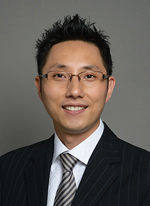
Jung Hyup Kim is an Associate Professor in the Department of Industrial and Systems Engineering at the University of Missouri, College of Engineering. His research integrates human factors, ergonomics, and augmented reality to enhance engineering education and healthcare systems. He leads the Human Factors Lab and is actively involved in curriculum innovation through immersive technologies. Education: PhD, Pennsylvania State University BS, Mississippi State University Dr. Kim’s research centers on ergonomics, human-computer interaction, and real-time human performance modeling . He investigates how eye-tracking, motion analysis, and augmented reality can be used to assess workload, situation awareness, and learning effectiveness in real-world environments. His work bridges engineering systems with cognitive science, particularly in educational and healthcare contexts. His recent research, reflected in 15 reconstructed articles, demonstrates a strong trend toward augmented reality in engineering education , with focus areas including real-time motion tracking, eye-tracking for attention monitoring, metacognition in virtual instruction, and posture-based physical demand assessment. These efforts aim to transform traditional lab experiences into interactive, data-driven learning environments. Scientific Awards: No awards explicitly mentioned in the text. Dr. Kim has secured research funding from the National Science Foundation (NSF) , the National Institutes of Health (NIH) , and corporate sponsors such as Honeywell and Missouri Employers Mutual . He advises students like RJ Morrison and Madeline Easley, who have presented at national conferences and won research competitions. His lab develops AR-based teaching modules that assess student engagement and comprehension through biometric and behavioral data. His lab, the Human Factors Lab ( humanfactorslab.net ), is developing a new AR-integrated facility in Lafferre Hall with stations for interactive learning, real-time feedback, and performance testing. The lab aims to create scalable AR systems applicable across Mizzou Engineering disciplines.
Dr. Brett J. Borghetti is a Professor of Computer Science in the Department of Electrical and Computer Engineering at the Air Force Institute of Technology (AFIT), Graduate School of Engineering and Management, Wright-Patterson AFB, OH. He was promoted to Professor in July 2022, following prior appointments as Associate Professor (2017) and Assistant Professor (2008/2013). His expertise lies in artificial intelligence, machine learning, deep learning, cybersecurity, and human-machine teaming. Education: Ph.D. in Computer Science, University of Minnesota, Twin Cities (2008) M.S. in Computer Systems, Air Force Institute of Technology (1996) B.S. in Electrical Engineering, Worcester Polytechnic Institute (1992) Dr. Borghetti's research focuses on applying machine learning to physical science sensors (hyperspectral, seismic, RF), cybersecurity, and enhancing human-machine team performance. He teaches graduate courses in machine learning, AI, data security, and algorithm design, and advises numerous MS and PhD students in areas such as sensor exploitation, cognitive workload, and cyber situational awareness. His recent publications demonstrate strong trends in deep learning for multimodal sensor fusion, nuclear security, and neuroergonomics. Scientific Awards: AETC Educator of the Year (2021, Civilian) AFIT Ezra Kotcher Teaching Award (2021) AFIT Teaching Excellence Award (2019) AF STEM Outstanding Science and Educator Award (2015) Multiple Eta Kappa Nu Outstanding Instructor Awards Air Force Meritorious Service Medal and other military honors Dr. Borghetti has advised numerous graduate students and led research projects with significant funding and applications in defense and national security. He has directed research in AI-driven sensor analysis, cyber defense systems, and adaptive automation. His work often involves collaboration with national labs and DoD agencies. He has contributed to major research initiatives in human factors, cyber intruder detection, and machine learning for operational environments. Labs and Research Teams: His work is associated with AFIT's research in cyber security, sensor exploitation, and human-machine systems. He collaborates with teams working on the Cyber Intruder Alert Testbed (CIAT), neuroergonomic modeling, and machine learning for defense applications.
Aidong Zhang is the Thomas M. Linville Professor of Computer Science at the University of Virginia, with joint appointments in Biomedical Engineering and the School of Data Science. Her research focuses on machine learning, interpretable AI, federated learning, and generative AI applications in healthcare and bioinformatics. She holds a Ph.D. in Computer Science from Purdue University. Dr. Zhang has been honored with prestigious awards including the ACM Fellow (2017), IEEE Fellow (2009), and the 2025 Distinguished Researcher Award from UVA. Her work bridges computational methods with biomedical challenges, emphasizing fairness, robustness, and explainability in AI systems. Key research areas include federated learning frameworks, concept-based models, and large language models for scientific hypothesis generation. Dr. Zhang leads a lab offering PhD positions in machine learning, bioinformatics, and health informatics. Notable grants include NSF projects on explainable AI platforms and hardware-software co-design for extreme-scale machine learning. Education: Ph.D., Computer Science, Purdue University Affiliations: School of Engineering and Applied Science, School of Data Science Grants: NSF-funded projects on federated learning, multimodal analysis, and biomedical AI Labs/Teams: Zhang's Research Group focusing on interpretable machine learning and healthcare applications
Yang Liu is an Assistant Professor in the Department of Electrical and Computer Engineering at the Baskin School of Engineering, University of California, Santa Cruz. Previously, they were affiliated with Harvard University and earned their PhD in 2015 from the Department of EECS at the University of Michigan, Ann Arbor. Their research lies at the intersection of machine learning, fairness, and trustworthy AI, with a strong focus on large language models, federated learning, and causal reasoning. Their research interests include: Machine Learning and Fairness Federated and Privacy-Preserving Learning Large Language Model Safety and Unlearning Causal Inference and Counterfactual Reasoning Anomaly Detection and Robust Forecasting Human-AI Interaction and Ethical AI Recent publications (2024–2025) demonstrate a strong trend in developing methods for machine unlearning, fairness in LLMs, and robustness under label noise and distribution shifts. Their work frequently appears in top-tier venues such as NeurIPS, ICLR, ICML, AAAI, and KDD, often in collaboration with researchers like Zhaowei Zhu, Mingyan Liu, Jiaheng Wei, and Kun Zhang. Themes include algorithmic fairness, model accountability, and human-aligned AI systems. Scientific contributions include: Frameworks for LLM unlearning and model editing Methods for fair classification and recourse Robust time series forecasting under anomalies Test-time adaptation in multimodal models Causal approaches to debiasing and policy learning While no formal advising list is provided, the depth and volume of collaborative work suggest active mentorship of graduate students and postdocs. Their research program is highly active, with numerous ongoing projects in trustworthy and socially responsible AI.
Heiko Schuldt is a Full Professor of Computer Science at the University of Basel and leads the Databases and Information Systems (DBIS) group. His research spans databases, transaction management, cloud data systems, digital libraries, and multimedia retrieval, with a focus on distributed systems, data streams, and service-oriented architectures. He studied at the University of Karlsruhe (KIT) and received his PhD from ETH Zurich in 2001. From 2003-2006, he served as an associate professor at UMIT, Austria. Education: University of Karlsruhe (Computer Science), ETH Zurich (PhD, 2001) Research Interests: His work integrates databases, cloud computing, and multimedia retrieval, emphasizing scalable systems for lifelog data, sports analysis, and VR/AR environments. Projects include vitrivr, Polypheny-DB, and StreamTeam. Recent Publications: Trends focus on VR/AR multimedia retrieval, cross-modal analysis, and polystore systems. Key contributions include open-source frameworks for video/image retrieval and immersive analytics. Advising: Supervised over 50 theses in areas like mixed reality, polystore optimization, and gesture-based interfaces.
Michel Mandjes is a Professor at the University of Amsterdam's Faculty of Science and holds a Visiting Professor position at the Faculty of Economics and Business (FEB). His research focuses on stochastic processes, queueing theory, and probability theory, with applications in risk modeling, network analysis, and operations research. Recent publications highlight his contributions to multivariate Hawkes processes , Lévy-driven systems , and dynamic random graphs , emphasizing large deviations, rare event simulation, and statistical inference. His work bridges theoretical probability with practical challenges in traffic flow, financial risk, and social network modeling. The trends in his research include the development of stochastic models for network stability, appointment scheduling optimization, and inference techniques for non-stationary processes. His methodological innovations often leverage advanced probability theory and queueing frameworks to address real-world problems in transportation, healthcare, and finance.
Pouya Bashivan is an Assistant Professor in the Department of Physiology at McGill University's Faculty of Medicine. His research focuses on developing computational models to explain and regulate neural responses during visual tasks requiring memory, combining machine learning, neuroscience, and cognitive science. Education : Ph.D. in Computer Engineering (2016), Postdocs in Machine Learning (2020) and Computational Neuroscience (2016-2020) His lab investigates: Topographical neural networks for visual cortex simulation Massively-multitask models for prefrontal cortex Saccade-driven visual exploration models Predictive hippocampus models for episodic memory Recent publications explore adversarial robustness, memory-augmented networks, and brain-state decoding. Current projects emphasize causal models, brain-AI alignment, and translating computational neuroscience into therapeutic applications. The lab is located in the McIntyre Medical Sciences Building, Room 1117, Montreal, Quebec.
Liadh Kelly is an Assistant Professor in the Department of Computer Science at Maynooth University's Faculty of Science & Engineering. She supervises PhD students in applied artificial intelligence, focusing on intelligent search, ubiquitous computing, and multimodal information access. She is affiliated with the ADAPT SFI Research Centre, SFI Centre for Research Training in Foundations of Data Science, and Human Health Institute. BSc in Computer Science MSc (Research) in Computer Science PhD in Computer Science Her research explores context-sensitive retrieval and evaluation methodology in AI-driven systems. Key areas include ubiquitous computing for personal data analysis, deep learning classification for mental wellness indicators, and multimodal lifelogging integration. Recent publications focus on urban mental wellbeing classification , contextual cue analysis , and AI-driven health search systems . Articles address smart city applications , consumer health search , and cross-lingual medical retrieval . Professional roles include Doctoral Consortium Chair at ECIR 2023 and Programme Committee member for SIGIR and ICWSM conferences. She leads grants for 4-year PhD studentships with stipend and fee coverage.
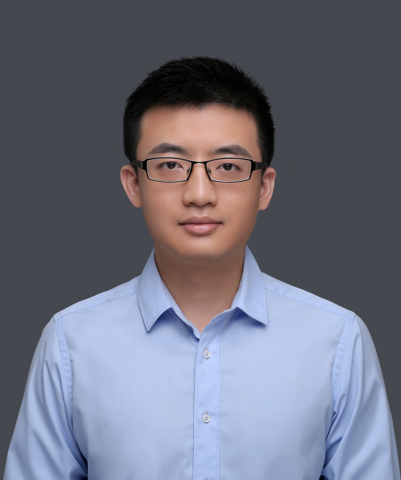
Kede Ma is an Associate Professor in the Department of Computer Science at City University of Hong Kong (CityUHK). He received his B.E. from the University of Science and Technology of China (USTC) in 2012, and MASc and Ph.D. degrees from the University of Waterloo in 2014 and 2017, respectively. From 2018 to 2019, he was a Research Associate with the Howard Hughes Medical Institute and New York University. Prof. Ma has been named to the Highly Cited Researchers list by Clarivate Analytics in 2024 and currently serves on the editorial boards of IEEE Transactions on Image Processing, IEEE Transactions on Information Forensics and Security, and IEEE Signal Processing Letters. Prof. Ma leads the Multimedia Analytics (MA) Laboratory, an interdisciplinary research group focused on computational vision, computational modeling of human visual perception, perceptual multimedia signal processing, quality assessment, and multimedia forensics. His research spans computational photography, high dynamic range imaging and rendering, omnidirectional video analysis, camera processing pipeline design, and artificial intelligence safety in multimedia systems. His work integrates machine learning techniques including reinforcement learning, generative modeling, self-supervised learning, and continual learning for multimedia signal processing applications. His recent publications demonstrate a strong focus on image quality assessment, deep learning for multimedia processing, and multimedia forensics. His work bridges theoretical computer vision principles with practical applications in multimedia systems. The research trends show increasing integration of foundation models with specialized multimedia processing tasks, particularly in quality assessment and security applications. Highly Cited Researchers list by Clarivate Analytics (2024) Best Paper Award at IEEE International Conference on Virtual Reality and Visualization (2021) Best Paper Runner-Up at International Joint Conference on Artificial Intelligence Workshop (2021) Top 10% Award at IEEE International Conference on Image Processing (2015) Finalist for the Governor General's Gold Medal, University of Waterloo (2017) Spotlight presentation at NeurIPS (2022) Highlight paper at ICCV (2025) Oral presentation at ICLR (2025) Prof. Ma advises numerous PhD students and postdoctoral fellows in the MA Laboratory. His research is supported by various grants enabling work in multimedia analytics, image processing, and computer vision. The laboratory maintains active collaborations with researchers at institutions including SUSTech, ZJU, and HIT. Current projects focus on advancing image quality assessment methodologies, developing more robust deep learning techniques for multimedia forensics, and exploring new approaches to HDR imaging and omnidirectional video processing. The Multimedia Analytics Laboratory maintains a strong focus on both theoretical foundations and practical applications of multimedia processing. Current research directions include integrating large language models with image quality assessment, developing more robust deepfake detection methods, and advancing techniques for continual learning in multimedia applications. The lab emphasizes rigorous evaluation methodologies and maintains multiple datasets for multimedia quality assessment research.
Anthony TUNG Kum Hoe is a Professor in the Department of Computer Science at the National University of Singapore (NUS), where he has established himself as a leading researcher in database systems and data mining. He is also affiliated with the NUS Graduate School for Integrative Sciences and Engineering and serves as a SINGA supervisor. His educational background includes a Ph.D. in Computer Science from Simon Fraser University (2001), an M.Sc. in Information Systems & Computer Science from NUS (1998), and a B.Sc. with 2nd Class Upper Honours in Information Systems & Computer Science from NUS (1997). Professor Tung's research spans several interconnected areas within database systems and data mining. His primary focus is on developing efficient methods for indexing and searching complex data structures including time series, trajectories, trees, graphs, and high-dimensional objects. He has pioneered work in visual query processing, keyword search, and ranking systems. His GENIE (Generic Inverted Index) and LAMP (semi-Lazy Mining Paradigm) projects represent significant contributions to big data analytics, particularly in handling the 'variety' aspect of big data by providing unified frameworks for processing diverse data structures while preserving semantic meaning. His research bridges theoretical database concepts with practical applications in visual data mining, collaborative analytics, and just-in-time model construction. His recent publications reveal a clear evolution from traditional database research toward more complex analytics on diverse data types. While maintaining his core expertise in database indexing and query processing, his work has expanded to incorporate machine learning techniques, particularly in areas like nearest neighbor search, anomaly detection, and predictive analytics. There's a noticeable trend toward interdisciplinary applications, with publications spanning computer vision, natural language processing, transportation systems, and social computing. His research group consistently publishes in top-tier venues including SIGMOD, VLDB, ICDE, and KDD, demonstrating both theoretical rigor and practical relevance. 2005 Best Paper Award for 'Indexing DNA Sequences Using q-grams' 2007 Invited panel speaker on 'Advice for a successful database researcher career in Asia' at SIGMOD 2010 Guest Lecturer for VLDB Database School 2012 VLDB 2012 Research PC Co-chairs 2015 10 Years Best Paper Award, DASFAA 2015 Invited to SIGMOD 2008 and SIGKDD 2008 Program Committees Professor Tung has supervised numerous PhD students and research associates throughout his career, including notable researchers like Zhang Zhenjie (recipient of the 2007 President Graduate Fellowship) and Wang Nan (published in SIGMOD'08). His research group has been consistently productive, with students publishing in top conferences including SIGMOD, ICDE, and VLDB. His professional service is extensive, having served as PC Chair for COMAD'06, Research PC Co-chair for VLDB 2012, and on program committees for virtually all major database and data mining conferences over the past two decades. His research has been supported by various grants that have enabled significant contributions to database technology. His GENIE and LAMP projects represent a cohesive research direction focused on developing systematic approaches to big data analytics. GENIE provides a unified platform for storage and retrieval of big data with various structures, while LAMP introduces a novel paradigm for predictive analytics that combines the strengths of lazy and eager learning approaches. These projects have evolved to incorporate GPU acceleration and parallel processing capabilities, reflecting his commitment to addressing real-world scalability challenges in data-intensive applications.
Ernest Davis is a Professor at the Department of Computer Science , Courant Institute of Mathematical Sciences , New York University . His research focuses on representing commonsense knowledge in AI systems , with an emphasis on spatial and physical reasoning , and he collaborates with Gary Marcus on integrating AI and psychological models. He has authored over 50 scientific papers and three books, including Linear Algebra and Probability for Computer Science Applications (2012). His teaching includes courses on Artificial Intelligence and Fundamental Algorithms. Research Trends: His recent work examines benchmarks for commonsense reasoning , limitations of large language models (e.g., GPT-4, DALL-E 2), mathematical reasoning in AI, and the Winograd Schema Challenge . Professional Activities: He has served as an ACM reviewer, program committee member for 50+ conferences, and area editor for ACM Transactions on Computational Logic . He contributes book reviews to Computing Reviews , SIAM News , Artificial Intelligence journal, and others. Non-Technical Writing: Davis writes for general audiences on topics spanning computer science, mathematics, cognitive psychology, and literary themes, published in outlets like The New Yorker , Wired , and The Times Literary Supplement .