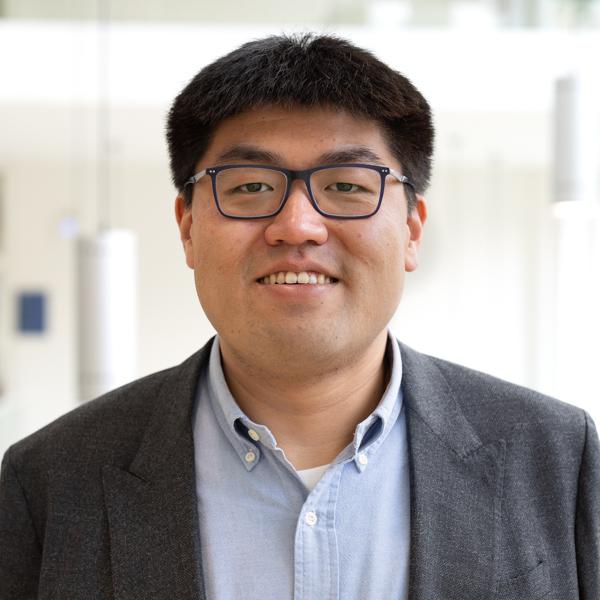
Jonathon P. Schuldt is a Professor in the Department of Communication and Brooks School of Public Policy at Cornell University, serving as Executive Director of the Roper Center for Public Opinion Research. His work bridges social psychology with public opinion on environmental and health issues. BS, Cornell University PhD, Social Psychology, University of Michigan Research explores social identity, communication processes, and public engagement with climate change, health, and U.S. politics. Focus areas include terminology effects, cultural determinants of environmental attitudes, and cross-platform climate discourse analysis. Recent publications analyze moral language in climate communication, citizen science labeling, transnational climate policy influence, and post-pandemic vulnerability frameworks. Articles appear in Proceedings of the National Academy of Sciences , Nature Climate Change , and Journal of Environmental Psychology . NSF Award, Collaborative Midterm Survey (2022) NSF Decision, Risk and Management Sciences RAPID award (2020) AAPOR Student-Faculty Diversity Pipeline Award (2019) Carnegie Junior Fellowship Nominee (2019) Top Faculty Paper Award, ICA Environmental Communication Division (2017) CALS Young Faculty Teaching Excellence Award (2015) Teaching emphasizes real-world application through courses like COMM 2850: Communication, Environment, Science, and Health and COMM 4200: Public Opinion and Social Processes . Outreach involves media engagement to inform public discourse on climate and health issues.
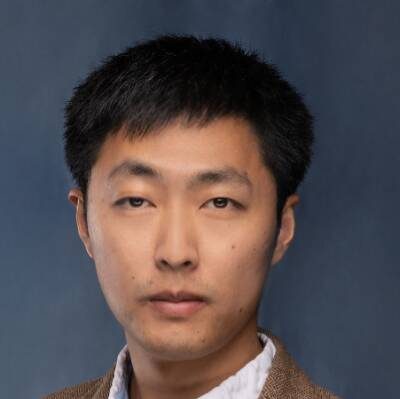
Dr. Yang Zhang is a tenured Professor at the CISPA Helmholtz Center for Information Security . His research focuses on Trustworthy Machine Learning , emphasizing privacy, safety, and security , with additional work on measuring misinformation and unsafe online content like hateful memes. He has published extensively at top conferences (CCS, NDSS, Oakland, USENIX Security) and received multiple awards including the Busy Beaver Award (2022) and NDSS Distinguished Paper Award (2019) . Research Interests : Trustworthy Machine Learning LLM Security, Privacy, and Safety Misinformation and Hate Speech Detection Social Network Analysis Recent Publications examine synthetic data auditing, hate speech detection in LLM-generated content, and privacy risks in curriculum learning, spanning conferences like USENIX Security , IEEE S&P , and ACM CCS . His work often intersects AI security with ethical considerations . Scientific Awards : Busy Beaver Award for “Privacy of Machine Learning” (2022) NDSS Distinguished Paper Award (2019) CCS Best Paper Runner-Up (2022) Best Machine Learning and Security Paper in Cybersecurity Award (2025) Best Paper Finalist at CSAW Europe (2023, 2024) Students in his group include Yixin Wu , Xinyue Shen , and Yiting Qu , the latter recently completing their Ph.D. defense. He actively recruits MSc and PhD students and has contributed to iDRAMA Lab for meme-related research.
Henrikki Tenkanen is an Assistant Professor in the Department of Built Environment at Aalto University, specializing in Geoinformatics. His research focuses on geospatial analysis, urban planning, transportation accessibility, and open data applications for sustainable development. His primary research interests include Geospatial Analysis , Urban Planning , Transportation Accessibility , and Population Dynamics . Tenkanen's work integrates mobile phone data, social media, and open geospatial sources to understand urban environments, accessibility patterns, and carbon emissions. His research contributes significantly to UN Sustainable Development Goals related to sustainable cities and communities. Tenkanen's recent publications demonstrate strong trends in high-resolution spatial analysis of urban environments, with particular emphasis on transport equity , carbon emissions mapping , and rural population representation . His work combines advanced geocomputing techniques with practical urban planning applications, often developing open-source tools to enhance reproducibility and accessibility of geospatial research. As an active member of the academic community, Tenkanen serves as a peer reviewer for journals including Big Data & Society and Environment and Planning B, and participates in conference committees such as the International Conference on Location Based Services. His research has garnered significant attention, with multiple publications featured in news outlets and academic platforms. Tenkanen leads several major research projects including Geo-R2LLM (developing geographic large language models), Geoportti (open geospatial infrastructure), MAPICO (mapping commute-related carbon emissions), and LIH: Location Innovation Hub. His work bridges academic research with practical applications for urban planning and sustainable mobility.
Raghavendra Selvan, an Assistant Professor (Tenure Track) at the University of Copenhagen, holds joint appointments in the Machine Learning Section (Department of Computer Science), Kiehn Lab (Department of Neuroscience), and the Data Science Laboratory. His academic journey includes a PhD in Medical Image Analysis (2018), MSc in Communication Engineering (2015), and BSc in Electronics and Communication Engineering (2009). PhD - Medical Image Analysis, University of Copenhagen (2018) MSc - Communication Engineering, Chalmers University (2015) BSc - Electronics and Communication Engineering, BMS Institute of Technology, India (2009) His research focuses on Bayesian Machine Learning with emphasis on Medical Image Analysis, Graph-based Learning, Tensor Networks, Approximate Inference, and Multi-Object Tracking Theory. Recent publications highlight his contributions to environmentally sustainable AI practices, efficient deep learning in medical imaging, and novel applications of tensor networks. Key research areas: Green AI and Environmental Sustainability Medical Image Analysis Graph Neural Networks Crystal Structure Prediction Model Compression Materials Science Applications
Dr. Armin Mustafa is an Associate Professor in Computer Vision and AI at the University of Surrey, where he holds a prestigious Royal Academy of Engineering Research Fellow position. He is affiliated with the Centre for Vision, Speech and Signal Processing (CVSSP), the School of Computer Science and Electronic Engineering, and the Surrey Institute for People-Centred Artificial Intelligence (PAI). His research focuses on developing AI systems for visual understanding of complex dynamic scenes, with applications in entertainment, autonomous systems, and augmented/virtual reality. Dr. Mustafa completed his PhD in general dynamic scene reconstruction from multi-view videos in 2016 from the University of Surrey under the supervision of Prof. Adrian Hilton. Prior to his doctoral studies, he worked for three years (2010-2013) at Samsung Research Institute in Bangalore, India, in the field of Computer Vision. His research expertise spans Computer Vision, Scene Understanding, 3D/4D Vision, Virtual Reality, Light Fields, Machine Learning, Video Captioning, Augmented Reality, Artificial Intelligence, and Audio-visual Video Understanding. Dr. Mustafa has pioneered advances in 4D vision, NLP, and Scene Understanding over the past decade, with a particular focus on enabling machines to model and interpret real-world environments for socially beneficial applications. His work bridges theoretical advances in computer vision with practical applications in media production, virtual reality, and autonomous systems. Analysis of Dr. Mustafa's recent publications reveals a strong focus on multimodal learning, particularly the integration of audio and visual information for scene understanding. His work spans diverse areas including shadow detection and removal, audio event classification, video captioning, person image generation, and dynamic scene reconstruction. A notable trend is his exploration of transformer architectures for both vision and audio tasks, as well as the application of self-supervised learning techniques to reduce dependency on labeled data. Dr. Mustafa has received numerous prestigious awards: 2018 - Research Fellowship, The Royal Academy of Engineering, UK 2017 - Young Researcher award, CVPR 2016 - Doctoral Consortium grant, CVPR 2015 - BMVA travel grant for ICCV 2014 - Set-Squared Research to Innovator grant 2013 - Overseas Research Scholarship, FEPS, The University of Surrey 2010 - Cadence Silver Medal, Indian Institute of Technology, Kanpur As a dedicated mentor, Dr. Mustafa supervises several PhD students working on cutting-edge topics including multi-person reconstruction, audio-visual scene understanding, and automatic storyboard generation. His research is supported by significant grants including a £15 million UKRI Prosperity Partnership with the BBC (AI4ME), a 5-year Royal Academy of Engineering fellowship (4D Vision for Perceptive Machines), and multiple projects with industry partners such as Figment Productions and Foundry. Dr. Mustafa is an active member of the Centre for Vision, Speech and Signal Processing (CVSSP), one of the world's leading research centers in vision, speech, and signal processing. He also contributes to the Surrey Institute for People-Centred Artificial Intelligence (PAI), where he serves as a Surrey AI Fellow. His work often involves collaboration with industry partners and other academic institutions across Europe.
Jonathan Ginzburg is a Researcher in the Department of Linguistics at Université Paris Diderot, affiliated with the CLILLAC-ARP research group. His work bridges linguistics, cognitive science, and computational models, focusing on dialogue semantics, pragmatic functions, and developmental language acquisition. Education details are not explicitly provided in the text, but his research spans formal semantics, syntax, and multimodal interaction. His studies on laughter dynamics and infant communicative behaviors have advanced understanding of pragmatic functions in early development. Key research interests include dialogue structure, question-response systems, and the integration of cognitive science with linguistic theory. Recent work explores neural correlates of language processing through type-theoretical semantics and corpus-based methodologies. He has pioneered the analysis of non-sentential utterances and their role in social interaction. His contributions to dialogue systems design for low-resource languages and the DUEL corpus (analyzing disfluencies, exclamations, and laughter) reflect his interdisciplinary approach. Current projects investigate laughter's pragmatic functions across developmental stages and cross-linguistic variations in exclamatory constructions. Laboratory affiliations include the CLILLAC-ARP laboratory, where he develops computational tools for analyzing dialogue semantics and cognitive interactions. His work on 'response spaces' for questions integrates machine learning and formal pragmatics to model conversational coherence.
Dr. Wei Shao is an Assistant Professor in the College of Medicine at the University of Florida, specializing in artificial intelligence applications in medical imaging. His work focuses on developing machine learning algorithms for medical image registration, segmentation, and diagnosis, with a particular emphasis on integrating these tools into clinical workflows. Dr. Shao holds a Ph.D. in Electrical and Computer Engineering from Stanford University (2022), preceded by M.S. degrees in Mathematics and Electrical and Computer Engineering from the University of Iowa (2019-2018). His postdoctoral training focused on deep learning and medical imaging. His research projects include: Machine learning algorithms for multimodal image registration and segmentation AI-driven disease diagnosis on medical images Integrating image processing into clinical practices Notable contributions include advancements in 3D medical image segmentation, text-guided models for radiology, and AI-enhanced micro-ultrasound for prostate cancer screening. His work bridges computational methods with clinical needs, aiming to improve diagnostic accuracy and patient care. Recent publications highlight innovations in diffusion models, vision-language integration for medical imaging, and robust artifact detection in 4DCT scans. These studies underscore his commitment to advancing AI-driven solutions in healthcare.
Zahraa Abdallah is a Senior Lecturer at the School of Engineering Mathematics and Technology, University of Bristol. She holds a PhD and BSc in relevant fields. Her research focuses on Machine Learning, Data Science, Time Series Analysis, and their applications in Health Informatics, Neuroscience, and Bioinformatics. She leads projects on wearable technology integration for diabetes management and EEG-based disease classification. Her work emphasizes explainable AI and multimodal approaches. Zahraa is affiliated with the Bristol Doctoral College Initiative (BDFI) as an Academic Co-Director and collaborates with experts like Prof. Raul Santos-Rodriguez. Contact: zahraa.abdallah@bristol.ac.uk | Website: zahraa-abdallah.com Research Interests: Time Series Clustering & Forecasting EEG-based Disease Detection (Parkinson’s, Alzheimer’s) Smartwatch-Driven Healthcare Systems Explainable AI in Biomedical Applications Key Projects: Development of the CSTS benchmark for time series clustering Investigating insulin needs using automated delivery data Gene essentiality classification via graph neural networks Collaborations: Professor Raul Santos-Rodriguez (BDFI) Lucia Marucci (Systems & Engineering Biology)
Dr. Yizi Chen is a Researcher affiliated with the Professorship for Cartography at ETH Zurich's Department of Civil, Environmental and Geomatic Engineering. Their work focuses on advancing cartographic techniques through AI-driven methods, historical map analysis, and geospatial technologies. Key contributions include automated map vectorization, semantic segmentation of historical maps, and integrating multimodal data for robotic systems. They have published extensively in top-tier journals and conferences, addressing challenges in deep learning applications for geomatic engineering. Education details are not explicitly provided in the text. Research interests include semantic segmentation, generative AI for cartography, and steganography in image translation. Notable publications span topics from eye-tracking segmentation to urban land use mapping, reflecting a strong interdisciplinary approach. Dr. Chen collaborates on projects involving historical map digitization and benchmarking datasets for computer vision tasks. No awards or grants are mentioned. Their work contributes to advancing geomatic engineering through innovative solutions in digital mapping and spatial data analysis.
Shunyuan Zhang is an Assistant Professor at Harvard Business School with research focusing on AI algorithms, economic inequality, and computer vision applications in business contexts. His work examines how algorithmic systems impact economic outcomes, particularly in sharing economy platforms like Airbnb. His research interests include AI algorithms, economic inequality, pricing algorithms, machine learning, computer vision, and the sharing economy. Zhang's work often combines technical computer vision approaches with economic analysis to understand platform dynamics. Zhang's recent publications demonstrate a strong focus on the intersection of AI, fairness, and economic outcomes. His work analyzes how algorithmic pricing affects racial disparities on platforms like Airbnb, and how visual content impacts demand in the sharing economy. His research employs sophisticated methodologies including deep learning, structural modeling, and causal inference. He has published in top journals and working paper series, with notable work including 'Can an AI Algorithm Mitigate Racial Economic Inequality? An Analysis in the Context of Airbnb' and 'What Makes a Good Image? Airbnb Demand Analytics Leveraging Interpretable Image Features.' Zhang collaborates extensively with leading researchers at Carnegie Mellon University and University of Toronto, particularly on topics related to algorithmic fairness and platform economics. His work has significant implications for both academic understanding and practical policy recommendations regarding algorithmic systems in marketplace contexts.
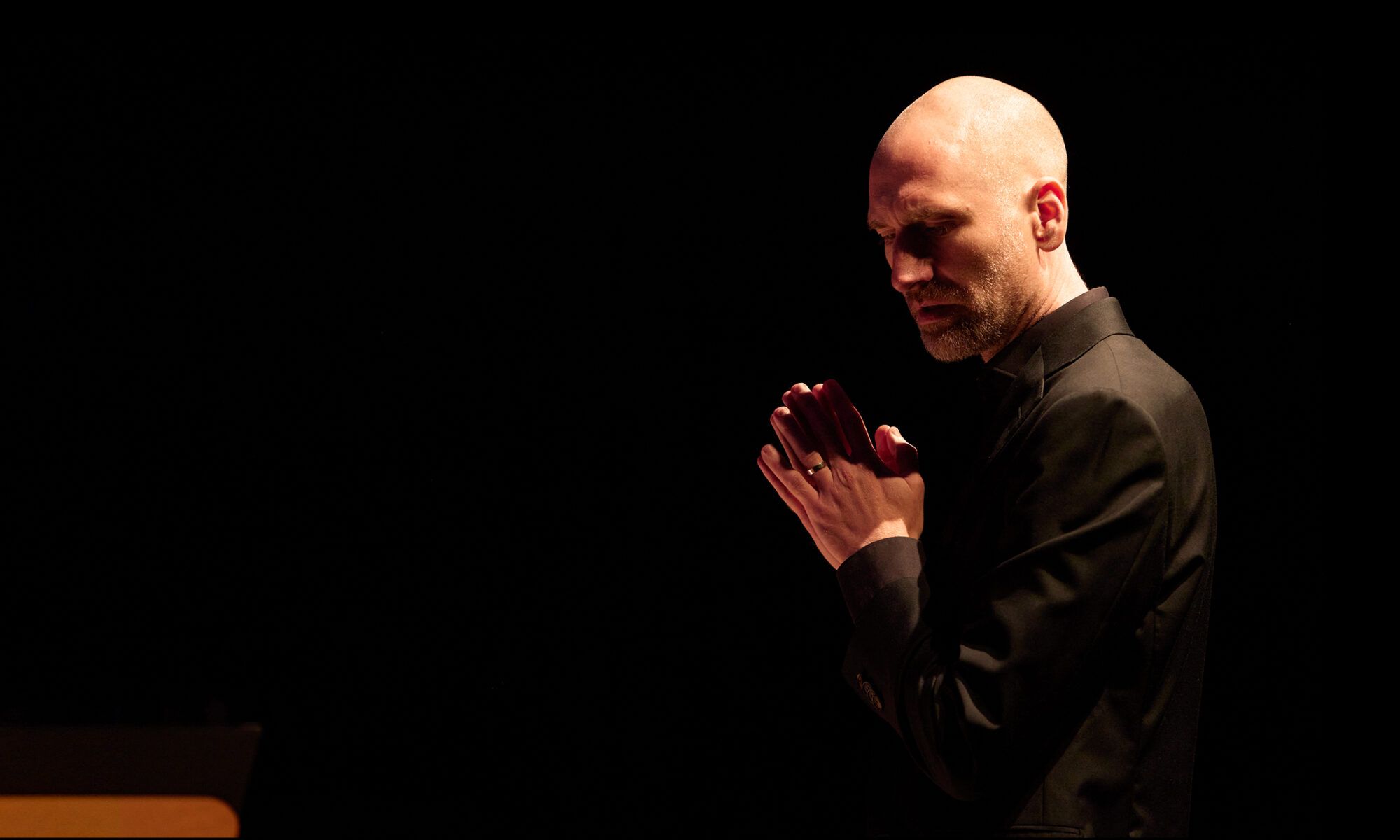
Aaron Cassidy is an American composer and conductor based in Berlin and Hannover. He serves as Professor of Composition and Director of Incontri – Institut für neue Musik at the Hochschule für Musik, Theater und Medien Hannover. His work emphasizes innovative graphical notations prioritizing physical sound production and non-geometrical rhythm theory. Cassidy’s compositions have been performed globally across 29 countries, with 12 commercial recordings on major labels like Kairos and NEOS. As a conductor, he specializes in contemporary and historical repertoire, leading over 100 world premieres with ensembles such as Ensemble Musikfabrik and ELISION. Notable engagements include the Munich Biennale and Melbourne Recital Centre. His recent research includes a 2025 reflection on non-geometrical rhythm and collaborative Erasmus+ residencies in Klagenfurt. Current projects include works for bassoon, violin-piano duet, and ANAM residency with ELISION in Melbourne (2025). Cassidy’s academic focus bridges compositional theory and performance practice. His research explores notation’s role in shaping musical interpretation, with particular attention to rhythm’s non-metric frameworks. Recent works like Reassessing Non-Geometrical Rhythm (2025) synthesize a decade of theoretical development. His teaching integrates experimental techniques and historical context, fostering innovation in Hannover’s new music institute.
Kourosh Davoudi is an Associate Professor of Computer Science at Ontario Tech University's Faculty of Science. He holds a PhD in Computer Science from York University with a focus on Machine Learning and Data Mining. Prior to joining Ontario Tech in 2019, he was a postdoctoral research fellow at the University of Waterloo's Department of Management Sciences. His research interests span Natural Language Processing, Deep Learning, Reinforcement Learning, Graph Mining, and Machine Learning. He actively supervises graduate students in these areas and teaches courses such as Data Mining and Artificial Intelligence. His research emphasizes practical applications of AI techniques in areas like outbreak detection, sentiment analysis, and automated grading systems. Recent work includes innovations in neural document segmentation, vision-language models, and hybrid outbreak detection using social media data. His publications consistently address challenges in algorithm design, explainable AI, and domain-specific NLP applications. Dr. Davoudi has contributed to conferences such as COLING, EMNLP, and IEEE transactions, focusing on interdisciplinary applications of machine learning. His work bridges theoretical advancements with real-world problems in healthcare, education, and social media analysis.
Cristobal Pagan Canovas is a Permanent Professor (tenure-track) at the Department of English Philology, University of Murcia, where he co-directs the Daedalus Lab and the Murcia Center for Cognition, Communication, and Creativity. He is also a member of the international consortium Red Hen Lab, focusing on multimodal communication research. Education includes: PhD in Ancient and Modern Greek Literature from University of Murcia BA+MA in Classics and BA+MA in English from University of Murcia MA in Classics from University College London His research explores human cognition and communication through interdisciplinary approaches combining humanities and sciences. Primary interests include: Conceptual integration networks in emotional expression Multimodal communication patterns across language, gesture, and prosody Temporal representation in creative artifacts Cognitive foundations of poetic metaphor and verbal art Cultural evolution of integrative patterns in social interactions Recent publications demonstrate consistent focus on temporal cognition, multimodal communication, and creativity across domains including poetry, music, and gesture. Research employs corpus analysis, big data approaches, and cognitive modeling to examine how humans integrate perceptions into meaningful wholes. Scientific awards and fellowships: Ramón y Cajal Grant (elite national scheme) Alexander von Humboldt Fellowship in Quantitative Linguistics EURIAS Fellowship at Netherlands Institute for Advanced Studies FBBVA Leonardo Fellowship Marie Curie Fellowship ENSAYA'10 Award for scientific essay He leads multiple research grants including ERASMUS PLUS KA220-HED (MULTIDATA) and national grants MULTIFLOW and CREATIME. Supervised trainees include postdoctoral researchers (Marie Curie, Juan de la Cierva), MA students, undergraduates, and data scientists. The Daedalus Lab develops interdisciplinary methods to study cognition and communication, while Red Hen Lab enables large-scale multimodal dataset analysis through international collaboration.
Marina L. Gavrilova is a Professor at the University of Calgary, Canada. Her research focuses on biometric systems, computer vision, and machine learning with an emphasis on multimodal recognition and security applications. She has authored numerous publications in top journals and conferences, contributing to advancements in fields like emotion-aware de-identification, generative adversarial networks, and ethical AI frameworks in healthcare. Her work spans social behavioral biometrics, gait recognition, masked face recognition, and aesthetic-based person identification. Key contributions include frameworks for ethical AI in care systems, fusion algorithms for multi-biometric systems, and innovations in visual and audio signal processing. Collaborations with experts like Osvaldo Gervasi, Jon G. Rokne, and Padma Polash Paul highlight her interdisciplinary approach. Publications emphasize practical applications such as privacy-preserved biometrics, emotion detection from social media, and adaptive systems for template aging. Despite no explicit mention of grants or labs, her extensive co-author network and frequent citations indicate significant academic influence.
Talal Shaikh is an Associate Professor at Heriot-Watt University's School of Mathematical and Computer Sciences in Dubai. He serves as Director of Undergraduate Studies and Programme Director for BSc Computer Science, BSc CS (AI), and MSc Software Engineering. With a decade of industry experience as a Chief Information Officer and Software Engineer, he bridges practical insights with academic research. Research Interests: Pervasive Computing, IoT/M2M, AI/ML, WiFi Sensing for Healthcare, Financial Machine Learning, Educational Technology Awards: Teaching Excellence Awards (2017/18), Fellow of the Higher Education Academy (FHEA), multiple Learning and Teaching Oscars (2016, 2017, 2018) His work spans Ubiquitous Computing and IoT , focusing on sensor networks and WiFi-based sensing for healthcare. In Artificial Intelligence , he applies ML to robotics, financial analytics, and educational innovation. Recent articles analyze Reinforcement Learning , Emotion Recognition , and WiFi Sensing applications. His teaching emphasizes student-centric learning, with over 100 supervised dissertations achieving distinctions. Collaborations include international conferences and interdisciplinary research in smart environments and adaptive systems.