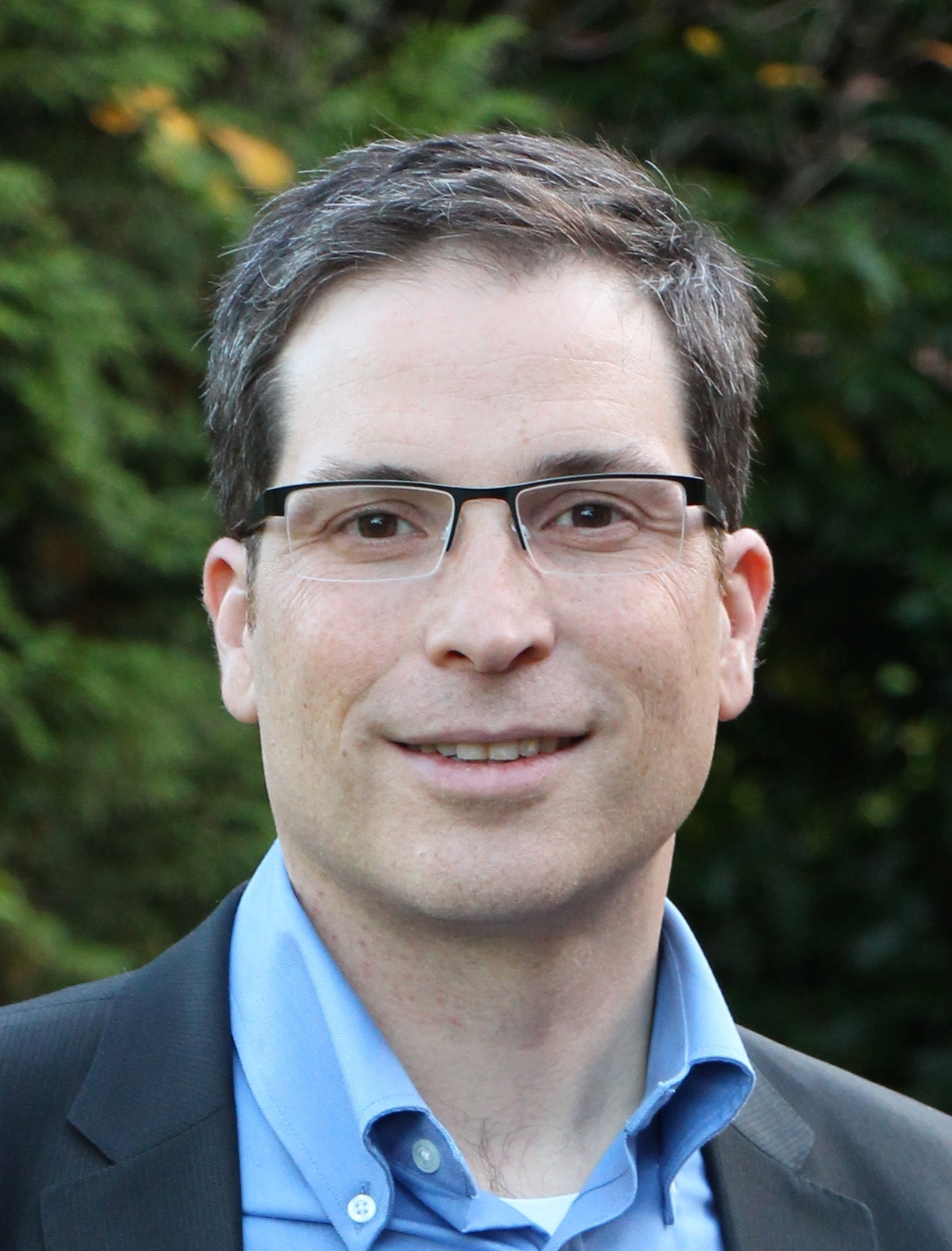
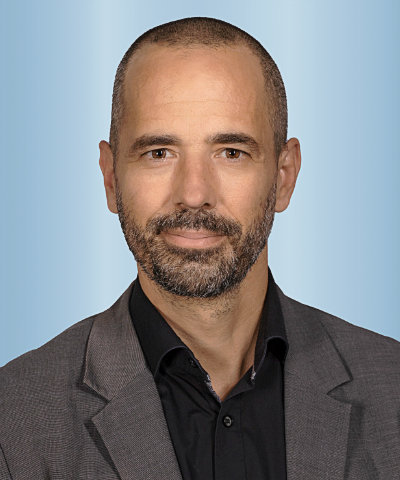
Dr. Srikanth Madikeri is a Lecturer and Senior Researcher at the University of Zurich's Department of Computational Linguistics. He holds a Ph.D. in Computer Science from IIT Madras (2013) and a Bachelor of Engineering from Anna University (2008). Before joining UZH, he spent 11 years at Idiap Research Institute as a Postdoctoral Researcher and Research Associate. His research focuses on low-resource speech technologies, including Automatic Speech Recognition (ASR), Speaker Diarization, Language Recognition, and Spoken Dialog Systems. He specializes in adapting models for challenging domains like air traffic control and criminal investigations. Recent publications demonstrate strong trends in multimodal systems, domain adaptation for ASR, and efficient data selection techniques. His work frequently integrates speech processing with NLP tasks and criminal network analysis. Awards: Best Paper Award in Signal Processing Track (NCC 2011) International Create Challenge 2017 Winner He teaches Speech Technology and Machine Learning for Computational Linguistics at UZH. Professional activities include serving as Area Chair for Interspeech (2021-2022) and developing open-source toolkits like pkwrap for LF-MMI training.
Mathias Müller is a postdoctoral researcher at the University of Zurich, where he works on sign language translation and natural language processing (NLP) with a focus on scientific integrity and accessibility. He collaborates with Sarah Ebling , Annette Rios , and others as part of the EU-funded project EASIER . His research interests span Sign language processing Scientific reproducibility Robustness of NMT systems Teaching neural machine translation (NMT) Markup technologies (XML, XSLT, etc.) Phonetics and acoustics His recent publications highlight trends in sign language translation, including multimodal approaches, gloss-based translation, and Signwriting integration. These works emphasize evaluation protocols and addressing bias in NLP systems. Scientific awards include Outstanding Paper Award at ACL 2023 Best Paper Award at AfricaNLP 2023 Best Poster Award at Swisstext 2023 He advises students like Shester and collaborates with teams on NMT system development. His work is supported by a 4-year Bridge Postdoc grant funded by the University of Zurich's Digital Society Initiative (DSI).
Abraham Bernstein is a Full Professor of Informatics at the University of Zurich (UZH), where he serves as Head of the Dynamic and Distributed Information Systems Group and Director of the UZH Digital Society Initiative. He leads a university-wide initiative with over 180 faculty members investigating the interplay between society and digitalization. His work bridges social science foundations (organizational psychology/sociology/economics) and technical disciplines (computer science, artificial intelligence), creating a unique interdisciplinary approach to digital transformation challenges. Education: Diploma in Computer Science from ETH Zurich Ph.D. in Management with concentration in Information Technologies from MIT's Sloan School of Management Professor Bernstein's research spans the Semantic Web, data mining/machine learning, recommender systems, crowd computing, and collective intelligence. His work uniquely integrates social science perspectives with technical computer science approaches, examining how social and technical elements interact in digital systems. Recent work focuses on explainable AI, ethical decision-making with AI systems, and the societal implications of digital transformation, reflecting his commitment to addressing both technical challenges and their broader societal context. His publication record shows a strong trajectory in multimodal information retrieval, knowledge representation, and human-AI collaboration, with increasing focus on ethical considerations and societal impact of AI technologies. The research demonstrates consistent innovation in bridging technical AI capabilities with human-centered design principles, particularly in areas like explainable recommender systems and democratic applications of AI. Scientific Recognition: Nominated Digital Shaper by Bilanz magazine (2017) Professor Bernstein has supervised over 30 PhD students whose work spans semantic technologies, data mining, recommender systems, and human-AI interaction. His research group has secured significant funding for projects related to digital society, knowledge representation, and AI ethics. As Director of the Digital Society Initiative, he coordinates cross-disciplinary research across UZH's faculties, bringing together scholars from humanities, social sciences, law, economics, and STEM fields to address complex digital transformation challenges. He leads the Dynamic and Distributed Information Systems Group at UZH, which maintains strong international collaborations and contributes significantly to both theoretical advances and practical applications in information systems. The group's work has influenced standards in semantic web technologies and continues to shape discourse on responsible AI development and deployment in society.
Prof. Dr. Moritz Daum is the Director of the Jacobs Center and holds the Professorship of Developmental Psychology at the Department of Psychology, University of Zurich . His academic career includes a Licentiate Degree (2001) and PhD (2005) in Psychology from the University of Zurich, and a Habilitation (2011) from the University of Leipzig. Previously, he led the Infant Cognition and Action Research Group at the Max Planck Institute and worked as a Senior Researcher in Munich/Leipzig.
Prof. Mackenzie Weygandt Mathis is Tenure-Track Assistant Professor and Bertarelli Foundation Chair of Integrative Neuroscience at EPFL’s Brain Mind Institute . Leading the Mathis Lab since 2020, she unites machine learning and systems neuroscience to decipher how brains learn and control movement. Education : PhD in Neuroscience, Harvard University (2017, advisor Naoshige Uchida) Post-doctoral training, University of Tübingen with Matthias Bethge (2017) Rowland Fellow, Harvard University (2017-2020) Research Focus : the lab develops open-source AI tools ( DeepLabCut , CEBRA , AmadeusGPT ) and combines them with large-scale neural recordings in behaving mice to uncover the neural basis of adaptive motor control. Core themes include sensorimotor learning, proprioception, and brain-inspired algorithms for robotics. Publications Trend : recent work spans robust machine-learning methods (ICLR, AISTATS 2025), foundational models for pose estimation ( SuperAnimal , 2024), and integrative studies linking neural population dynamics to muscle-level control ( Nature 2023, Cell 2024). Scientific Awards : Swiss Science Prize Latsis 2024 Robert Bing Prize 2024 Eric Kandel Young Neuroscientist Prize 2023 FENS EJN Young Investigator Prize 2022 Vallee Scholar, ELLIS Scholar, NSF Graduate Fellow Advising & Funding : she mentors 4 current PhD students and several postdocs, supported by SNSF Starting Grant (1.5 M CHF), CZI, Novartis, Radala Foundation, and Kavli Foundation grants. Labs & Teams : the Mathis Lab is located at Campus Biotech , Geneva, and actively collaborates with the Alexander Mathis group, Allen Institute, and international consortiums on open-source neuroscience tools.
Chabbi Houda is a Full Professor at the Fribourg School of Engineering and Architecture, University of Applied Sciences and Arts Western Switzerland. She leads research at the iCoSys Institute for Complex Systems, focusing on AI-driven solutions for industrial and societal challenges. Her work bridges computer vision, deep learning, and practical applications from medical imaging to construction materials. Her research explores: Advanced computer vision for industrial inspection and monitoring Deep learning architectures for anomaly detection and predictive modeling Multimodal data fusion in surveillance systems AI applications in material science and healthcare She leads significant projects including: HIGH-ROAD (2025-2026): Hierarchical AI for road asset inventory using orthoimagery VideoCognition (2023-2025): Explainable AI for surveillance systems with Morphean SA SoNIT (2025-2028): Sonography nerve tracking with FHNW Concrete AI (2022-2025): Machine learning for recycled concrete optimization Her lab at iCoSys Institute collaborates with academic partners including University of Applied Sciences Northwestern Switzerland and industry leaders in medical tech, surveillance, and construction.
Sylvia Bendel Larcher serves as a Lecturer at the Institute for Communication and Marketing within the School of Business at Lucerne University of Applied Sciences and Arts. With appointments spanning multiple institutions including the University of Bern and University of Innsbruck, her academic career demonstrates deep expertise in linguistic analysis of professional communication. She maintains active research collaborations while contributing to editorial work at the Reformed Church of Uri since 2024. Her educational background includes a Dr. phil. from the University of Zurich and a PD Dr. habil. from the University of Bern, establishing her scholarly foundation in linguistic analysis. These qualifications support her extensive research in conversation patterns across various professional contexts. Bendel Larcher's research focuses on the intersection of linguistic theory and practical business communication. Her work examines conversation structures in agile teams, institutional discourse patterns, and historical advertising rhetoric. Recent publications reveal growing interest in technology-mediated communication, particularly how AI tools like ChatGPT interact with traditional linguistic analysis methods. She investigates how personality manifests in professional interactions and how communication quality can be systematically evaluated in organizational settings. Her 15 most recent publications demonstrate consistent output across multiple formats - books, journal articles, and conference presentations - with increasing attention to digital communication environments. The research shows evolution from traditional discourse analysis toward hybrid methodologies incorporating computational approaches while maintaining core linguistic principles. Her professional activities extend beyond academia to practical applications in organizational settings. She has served as Public Relations Officer for the Evangelical-Reformed Parish of Einsiedeln (2012-2016) and currently edits for the Reformed Church of Uri. Her work bridges theoretical linguistic research with real-world communication challenges in business and institutional contexts. Bendel Larcher leads several research initiatives including 'Videotaped professional practice for the business world,' 'Business book summary using natural language generation,' and 'Interaction profile and personality.' These projects reflect her commitment to applying linguistic analysis to contemporary business communication challenges while exploring the relationship between individual personality and professional discourse patterns.