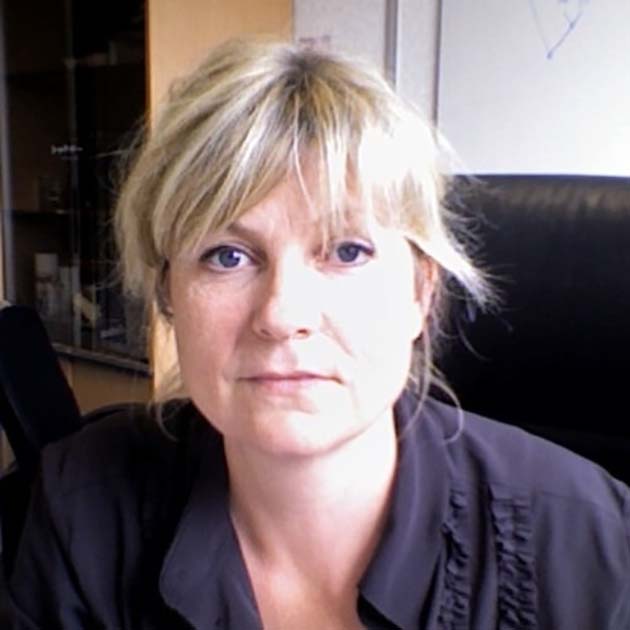
Françoise Détienne is a Research Director (DR CNRS) at Télécom Paris, co-directing the Interaction, Technology, Activity (Interact) research team within the Interdisciplinary Institute of Innovation (i3). Her academic career includes roles at INRIA (1989-2007) and a postdoctoral fellowship at Yale University (1987-1988). She holds a PhD in Cognitive Psychology (1986, Paris Sorbonne University) and an HDR (2000, Paris Sorbonne University). Her research focuses on collaborative design processes, technological mediation effects, and cognitive ergonomics. Key themes include online epistemic communities, intercultural collaboration, and the role of values in design. She leads projects like DIALLS (EU H2020), SocialTouch (ANR), and TEEC (French-Quebec collaboration). Publications span over 170 articles and 2 books, including Software Design: Cognitive Aspects (Springer, 2001). She serves on editorial boards for journals like CoDesign and chairs the Work With Computing Systems (WWCS) committee. Current co-supervised PhD students include Robin Heron, Maude Quinio, Zhuoming Zhang, and Samuel Lacroix. Labs/Teams: Interact team (Sorbonne University), i3 lab. Research emphasizes innovation through interdisciplinary approaches to human-centered design and social interaction dynamics.
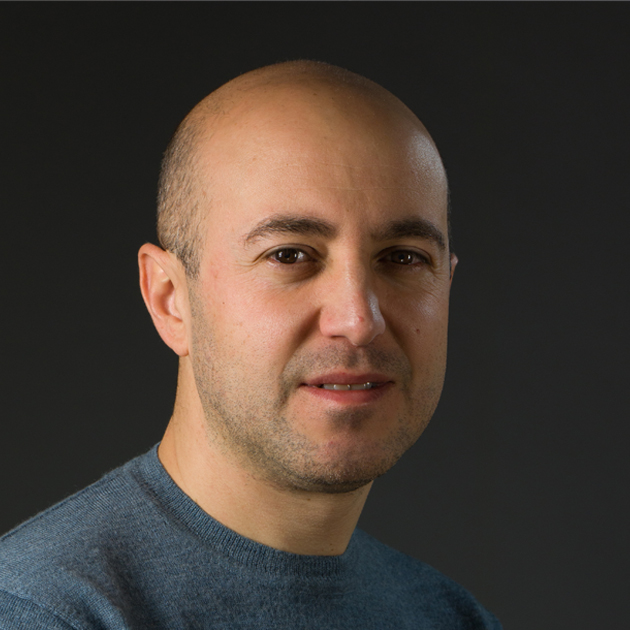
Slim Essid is a Full Professor at Télécom Paris and coordinator of the Audio Data Analysis and Signal Processing (ADASP) group. He holds a PhD and HDR from Université Pierre et Marie Curie (UPMC). His research focuses on machine learning, artificial intelligence, and signal processing applied to temporal data analysis, including multiview learning, representation learning, and structured prediction. Applications span music content analysis (MIR), multimodal perception (e.g., EEG data analysis), and human behavior analysis. He has advised 15 PhD students and collaborated on over 14 post-doctoral projects. Education: PhD in Signal Processing, Université Pierre et Marie Curie (2005) Habilitation (HDR), Université Pierre et Marie Curie (2015) M.Sc. in Digital Communication Systems, Télécom ParisTech (2002) Engineer Degree, École Nationale d’Ingénieurs de Tunis (2001) Research interests emphasize multimodal learning, self-supervised representation learning, and audio-visual fusion. Key projects include sound-prompted segmentation, zero-shot audio captioning, and EEG-based auditory attention decoding. Over 150 peer-reviewed publications exist across conferences like NeurIPS, ICML, and journals like IEEE Transactions. Active in reviewing for top-tier venues and advising French/EU research projects. Labs/Teams: Member of the Signal, Statistics and Learning (S2A) research team and the Information Processing and Communication Laboratory (LTCI).
Omri Abend is an Associate Professor at The Hebrew University of Jerusalem, affiliated with the School of Computer Science and Engineering and serving as Chair of the Department of Cognitive and Brain Sciences. His research lies at the intersection of Computational Linguistics, Natural Language Processing, and Cognitive Science, with a focus on semantic representation and language acquisition modeling. His primary research interests include: Computational modeling of child language acquisition Semantic representation frameworks, particularly Universal Conceptual Cognitive Annotation (UCCA) Statistical learning and machine translation Unsupervised grammar learning and lexical relation induction Cross-lingual and cross-domain alignment in language models Evaluation methodologies for NLP systems His recent publications demonstrate a strong trend toward analyzing large language models (LLMs), exploring human-like patterns in AI, improving evaluation metrics, and applying NLP to humanitarian domains such as Holocaust testimony analysis. His work combines theoretical linguistic insights with practical machine learning applications. Scientific awards include: Outstanding Paper Award at ACL 2017 Area Chair Award for Best Paper in the Track at ACL 2023 He has supervised and collaborated with numerous researchers and students across projects in semantic parsing, machine translation, and cognitive modeling. His work has been supported by community-wide initiatives such as the MRP shared tasks, which he co-organized. He also leads research on ethical AI, open human feedback, and the computational analysis of historical narratives. Omri Abend leads several research teams focused on: The development and application of the UCCA framework for semantic annotation Cross-lingual and cross-domain knowledge representation in LLMs Computational modeling of language acquisition Evaluation and improvement of NLP systems Application of NLP to digital humanities and historical testimony analysis
Michael Alexander Riegler is a full-time Professor at Oslo Metropolitan University's Faculty of Social Sciences, specifically in the Department of Social Work, Child Welfare and Social Policy. While his formal academic affiliation focuses on social sciences, his research interests span interdisciplinary domains including computer technology, information and communication systems, medical technology, and mathematics/natural sciences. Current research projects: Strengthening solidarity for democratic unity across border (SOLIDEM) addressing trust erosion in European welfare states, and Artificial intelligence in assisted reproduction technology improving embryo/sperm selection Recent publications (2025) focus on AI applications in healthcare (wearable sensors, ECG reconstruction), anomaly detection in time-series data, multimodal healthcare data analysis, and psychiatric motor activity datasets
Stephan Werner is a researcher at the Department of Electrical Engineering and Information Technology, Technische Universität Ilmenau, leading the Electronic Media Technology Group as acting head. His work focuses on auditory perception, spatial audio processing, and binaural synthesis for augmented/virtual reality applications. Research Interests Werner's research explores spatial audio, room acoustics, and perceptual modeling. Key areas include audiovisual coherence in AR, reverberation time estimation, and auditory adaptation in immersive environments. His projects address applications in education, intergenerational communication, and human-robot interaction. Publication Trends Recent work spans acoustic modeling for AR/VR, perceptual analysis of room divergence, and privacy-preserving mixed reality systems. Collaborative efforts with institutions like IEEE and Audio Engineering Society highlight technical and societal implications of audio technology. Laboratory As head of the Electronic Media Technology Group, he leads interdisciplinary research in auditory illusions, spatial audio quality, and immersive media production, often collaborating with international conferences and technical committees.
Tim Schneider is a Ph.D. student at the Intelligent Autonomous Systems lab of Technische Universität Darmstadt , working in collaboration with École Centrale de Lyon under the Aristotle project. His research focuses on robotics , particularly at the intersection of active perception , tactile sensing , and robotic manipulation . His work investigates how robots can develop environmental understanding through physical interaction , drawing parallels to children's exploratory behavior . Key projects include tactile reinforcement learning , active inference for manipulation , and visuo-tactile sensor fusion in dynamic tasks. Recent publications emphasize foundation models for tactile learning , sensor simulation (TacEx), and multi-modal control systems (AllmAN). He supervises theses on topics ranging from teleoperation feedback to haptic MNIST benchmarks , with a focus on reinforcement learning applications in robotic systems.
Prof. Dr. Andreas Bulling is Full Professor of Computer Science at the University of Stuttgart , leading the Collaborative Artificial Intelligence research group at the Institute for Visualization and Interactive Systems. He is also a founding director of the Stuttgart ELLIS Unit and serves on multiple prestigious boards including IEEE Transactions on Visualization and Computer Graphics . Education: MSc in Computer Science (KIT), PhD in Information Technology (ETH Zurich) Research Interests: Human-Computer Interaction, Eye Tracking, Wearable Computing, Computer Vision, and Privacy-Preserving AI Scientific Leadership: UbiComp Steering Committee member, ACM ETRA General Chair (2020), and extensive editorial/guest editor roles Key Awards: ERC Starting Grant (2018), Henriette Herz Scout (2024), and multiple best paper awards at CHI, ETRA, and UIST Technical Contributions: Developed datasets (LPW, VisRecall++), created novel methods for gaze estimation, mental face reconstruction, and saliency prediction in visualizations His work bridges AI and Human-Computer Interaction with applications in immersive systems and healthcare technologies.
Michael Sedlmair is a Professor at the Institute for Visualization and Interactive Systems (VIS) within the College of Engineering at the University of Stuttgart. He serves as Managing Director of VIS and leads research in augmented reality (AR), virtual reality (VR), human-computer interaction, and visualization. His work spans collaborative fabrication, motion guidance systems, educational AR/VR applications, and situated analytics. Research Themes : AR/VR for industrial tasks, haptic feedback systems, situated visualization, cross-reality transitions, music composition tools, and inclusive avatar design. Recent Articles : Focus on AR for collaborative tasks, motion guidance feedback, molecular structure learning in AR, music visualization, and accessibility studies in VR environments. His team collaborates with institutions like Mercedes-Benz AG, IMPRS-IS, and ACM/IEEE conferences. No specific awards or student advisories are mentioned in the provided texts.
Felix Bergmann is a research associate at the Institute of Communication Science, Faculty of Humanities, University of Duisburg-Essen. He is part of the research group on Multimodal Communication, Social Interaction & Technology led by Prof. Dr. Karola Pitsch and affiliated with the Center for Assistive Technologies Rhein-Ruhr. He is currently pursuing his PhD and contributes to a DFG-funded project on multimodal person reference. His research centers on the empirical analysis of face-to-face interaction, focusing on how language and nonverbal behavior are coordinated in real-world contexts. Key areas include medical simulations, role-playing games, queer identity in public spaces, and linguistic landscapes. His methodological approach is grounded in conversation analysis and multimodal interaction analysis. The recent publications reflect a strong interdisciplinary focus bridging communication science, linguistics, and technology. Themes include the rhythm of gameplay in tabletop role-playing, patient agency in emergency triage simulations, and the integration of qualitative and quantitative methods in multimodal research. His work often examines how identity, technology, and social structure are co-constructed through interaction. Felix is actively involved in teaching, including courses like ‘Ökokommunikation’ at the bachelor’s level. He participates in academic conferences such as the GAL annual meeting and the Applied Conversation Research workshop. His collaborative work with Prof. Pitsch and other team members highlights a strong research network within the department.
Dr. Marcus Handte is a Senior Researcher at the University of Duisburg-Essen, focusing on networked embedded systems, context-aware computing, and sustainable mobility. His academic journey includes a Habilitation in Computer Science (2013) and a PhD in Natural Sciences (2009) from Universität Stuttgart, alongside a Master's degree from Georgia Institute of Technology (2002). Research Interests Context-aware applications Localization and location-based systems Sustainable mobility solutions Internet of Things (IoT) Smart city infrastructure Privacy-preserving technologies His recent work involves developing platforms for multimodal mobility analysis (MOBYDEX), wireless EV charging systems (TALAKO, FAIR), and innovative approaches to indoor localization. Publications span journals like Machine Vision and Applications and conferences in pervasive computing. Scientific Recognition Best Poster Award at ACM KMIS 2023 Dr. Handte has contributed to projects such as ATMo2, INNAMORUHR, and GAMBAS, and maintains active collaborations across institutions. His expertise in adaptive middleware and distributed systems continues to shape research in smart mobility and ambient intelligence.
John Gaspar serves as Director of Human Factors Research at the University of Iowa's Driving Safety Research Institute within the College of Engineering. His work bridges the Department of Industrial and Systems Engineering and the National Advanced Driving Simulator (NADS), where he leads critical research on driver-vehicle interactions. With a PhD in Psychology from the University of Illinois Urbana-Champaign, his academic foundation supports interdisciplinary work spanning engineering, cognitive science, and transportation safety. Gaspar's research focuses on human factors in vehicle automation systems, drowsy driving countermeasures, and driver monitoring technologies. He employs multimodal methodologies including high-fidelity simulation, naturalistic driving studies, and physiological monitoring to examine driver behavior in automated vehicles. His work specifically investigates mental model development around ADAS technologies, transition of control in conditional automation, and fatigue management strategies during long-haul driving. Analysis of his recent publications reveals dominant research themes in drowsy driving countermeasures (25% of recent work), ADAS mental model development (20%), driver monitoring system validation (15%), and rural automated vehicle deployment challenges (10%). His methodological approach consistently integrates simulation with real-world validation, particularly through NHTSA-funded projects examining human-automation interaction. As principal investigator on three active NHTSA projects, Gaspar leads research on automated vehicle HMIs, drowsiness countermeasures, and driver state detection systems. His work directly informs transportation safety policy through collaborations with the Transportation Research Board, Human Factors and Ergonomics Society, and Society of Automotive Engineers. The Driving Safety Research Institute under his direction operates multiple high-fidelity simulators including NADS-1 and NADS-2, supporting both fundamental human factors research and applied vehicle safety development. Gaspar's laboratory infrastructure includes the National Advanced Driving Simulator complex with motion-base platforms, instrumented on-road vehicles, and rural driving scenario capabilities. His team specializes in multimodal data collection combining eye-tracking, physiological monitoring, vehicle dynamics, and behavioral coding to create comprehensive driver state models. Current projects emphasize real-world applicability of laboratory findings, particularly for vulnerable populations including older drivers and those operating in rural environments.
Dr. Ana Rita Farias is an Invited Assistant Professor and Auxiliary Researcher at Universidade Lusófona 's School of Psychology and Life Sciences and HEI-Lab . She holds a PhD in Psychology (2013, ISCTE-IUL) and has transitioned her research focus from social psychology to Behavioral Economics . Her work bridges Psychology , Climate Policy , and Consumer Behavior , with international collaborations at institutions like Utrecht University and the University of Wisconsin. PhD in Psychology (ISCTE-IUL, 2013) Currently affiliated with HEI-Lab (Universidade Lusófona) Collaborations in Psychology , Business & Economics , and Climate Science Her research explores: Behavioral Economics of biopolymer adoption and gambling Climate Risk Perception and disaster preparedness Consumer Decisions influenced by eco-labels and social norms Virtual Reality applications in cybersecurity education Temporal Discounting in environmental choices Recent publications address biopolymer commercialization (2025), climate adaptation (2025), and online gambling datasets (2025). She has received three major awards, including the ITEA4 Label for sustainable urban systems in 2025. Selected scientific impacts include: Contributing to the Human Development Report 2025 on AI and personal choice Developing a Climate Intervention Webapp with public policy implications Advising on Advanced Modular Reactors safety protocols
Michael Neff is a Professor at the University of California, Davis, affiliated with the Department of Computer Science and Department of Cinema and Digital Media. He directs the Motion Lab, an interdisciplinary research group exploring the intersection of computation and human movement. Education: PhD in Computer Science from the University of Toronto (2005), Certified Laban/Bartenieff Movement Analyst (CLMA, 2009) Research Interests: Focus on character animation tools, gesture and nonverbal communication modeling, physics-based animation, and applying performing arts concepts to virtual character movement. His work bridges art and science through collaborations with robotics, psychology, and dance departments. Recent Research Trends: Over the past five years, his publications demonstrate a focus on speech-driven gesture synthesis, physics-based character control in VR environments, and multimodal analysis of movement perception. Key themes include tension modeling, motion style transfer, and avatar trust dynamics. Awards & Recognition: NSF CAREER Award (2009-14) Isadora Duncan Award for Visual Design (2009) Best Paper Awards at Intelligent Virtual Agents (2007), Motion in Games (2015, 2016) Alain Fournier Memorial Award (2005) IBM PhD Fellowship for advisee Simbarashe Nyatsanga Advising & Collaborations: Has mentored 18 graduate students (PhD/Masters) and numerous undergraduates. Collaborates across disciplines with computer scientists, dancers, and psychologists. Currently chairs the Department of Cinema and Digital Media. Laboratory Facilities: Established a motion capture lab in 2007 featuring a 12-camera optical system in a 750 sq ft studio, supporting interdisciplinary research in movement analysis.
Chris Callison-Burch is a Professor of Computer and Information Science at the University of Pennsylvania , where he leads research in Natural Language Processing , Large Language Models , and Multimodal Learning . Previously, he worked at Johns Hopkins University’s Center for Language and Speech Processing for six years. Research Areas Automated paraphrasing and natural language understanding Machine translation without bilingual parallel corpora Crowdsourcing for NLP and social justice applications Generative AI and vision-language models Recent work focuses on LLM soundness guarantees, multimodal reasoning, AI-generated text detection, and ethical applications of language models. His research has been cited over 25,000 times, and he testified before Congress in 2023 on generative AI and copyright law. Awards & Funding Sloan Research Fellow Faculty awards from Google, Microsoft, Amazon, Facebook, and Roblox Grants from DARPA, IARPA, and NSF He chairs major NLP conferences (ACL 2017, EMNLP 2015) and contributes to editorial boards of TACL and Computational Linguistics .
Li Jiannan is a Full-time Assistant Professor of Computer Science at the School of Computing and Information Systems, Singapore Management University (SMU). He is part of the SMU HCI community and holds a PhD from the University of Toronto (2024). His research focuses on human-machine collaborative systems, pervasive sensing, and human-computer interaction applications in health, wellbeing, and future work paradigms. Research interests include: Language-driven robotic telepresence systems Large language models for visualization and design studies Mixed reality collaboration tools Immersive environments for skill teaching Recent publications demonstrate expertise in: Robot-assisted physical task guidance Generative AI for VR scene creation Camera control through subtle human cues 360° video navigation techniques Scientific recognition includes: Best Paper Award at ACM/IEEE HRI 2025 Best Paper Honorable Mention at CHI 2025 Best Paper Honorable Mention at CHI 2021 Best Paper Honorable Mention at CHI 2018