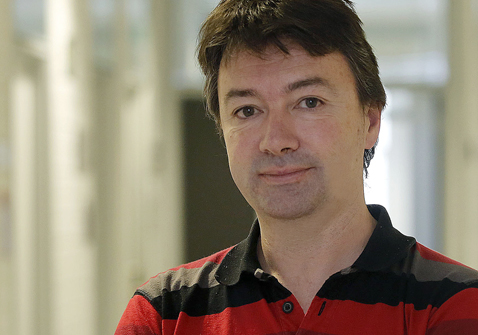
Xavier Serra is a Full Professor at the Department of Engineering at Universitat Pompeu Fabra (UPF), Barcelona. He is the founder and director of the Music Technology Group (MTG), and leads the UPF-BMAT Chair on AI and Music. He also coordinates the Master in Sound and Music Computing and serves as President of the Phonos Foundation. His research focuses on audio signal processing, sound and music computing, and computational musicology, emphasizing open science and open innovation. Education: BSc in Biology, University of Barcelona (1981) Master in Music, Florida State University (1983) PhD in Computer Music, Stanford University (1989) Research Interests: Audio Signal Processing Data-Driven and Knowledge-Driven Methodologies Music Information Retrieval Cultural Music Analysis (e.g., Carnatic/Turkish/Andalusian Music) Music Education Technology Notable Projects: CompMusic (ERC Advanced Grant, 2010-2017): Multicultural computational music analysis Open datasets: Freesound, Saraga, FSD50K Technologies: Reactable, Vocaloid, Essentia API Recent Trends in Articles: Focus on AI-driven audio processing (neural fingerprints, generative models), cross-cultural music analysis, and explainable music difficulty estimation. Awards: ERC Advanced Grant (2010) for CompMusic Project. Labs/Teams: Director of MTG, Phonos Foundation, and UPF-BMAT Chair. Active in open-source projects and international collaborations.
Dr. Jose Manuel Sánchez Peña is a Full Professor at Universidad Carlos III de Madrid (UC3M), affiliated with the Grupo Universitario de Tecnologías de Identificación (GUTI). His research focuses on precision agriculture technologies, optoelectronics, and neuroscientific interfaces. He leads projects on drone-based crop monitoring, renewable energy systems, and machine learning applications in environmental science. Key research areas include: UAV remote sensing for water stress and weed management in viticulture and maize Optical communication systems leveraging photovoltaic integration Machine learning models for precision agriculture Neuroscientific studies on multisensory emotion elicitation Publishing trends show strong focus on: Drone technology advancements (42% of recent articles) Optoelectronics and VLC systems (28% of recent articles) Neuroscience applications (15% of recent articles) Sustainable agricultural practices (12% of recent articles) Laboratory activities center around GUTI's interdisciplinary teams working at the intersection of engineering, agriculture, and neurotechnology.
Horacio Saggion is the Chair in Computer Science and Artificial Intelligence at the Department of Information and Communication Technologies, Universitat Pompeu Fabra. He leads the TALN Group and the Large Scale Text Understanding Systems Lab. His research focuses on Computational Linguistics, with specialties in Text Summarization, Information Extraction, and Semantic Analysis. He coordinates the Horizon Europe iDEM project on inclusive democratic spaces and previously led the SignON project for Sign Language Translation. Key technologies include the SUMMA Summarization system and the Dr Inventor Text Mining Library. Education: PhD, MSc, and Licenciatura in Computer Science. Research Interests: Text simplification for accessibility, sign language translation, misinformation detection, and ethical AI applications. His work bridges natural language processing with societal needs such as clear communication in public administration. Grants & Projects: Coordinator of iDEM (Horizon Europe), PI of SignON, Simplext, and Able to Include. Involved in BEA shared tasks and CLEF labs. Active in organizing workshops like TSAR at EMNLP. Labs & Teams: Head of TALN Group and Text Understanding Lab. Collaborations include Universitat Pompeu Fabra's interdisciplinary initiatives and industry partnerships for technology commercialization.
Silvia Jiménez Fernández is an Associate Professor in the Department of Signal Theory and Communications at Universidad Autónoma de Madrid. Her research focuses on optimization algorithms, smart grids, renewable energy systems, telemedicine, and machine learning applications. She holds a Ph.D. from Universidad Politécnica de Madrid (2009), supervised by Dr. Francisco del Pozo Guerrero and Dr. Paula de Toledo Heras. Her work integrates interdisciplinary approaches, such as combining evolutionary algorithms with engineering challenges in energy systems and healthcare. Key contributions include advancements in coral reefs optimization algorithms for energy management, machine learning for battery health estimation, and telemedicine systems for chronic disease monitoring. Recent research trends emphasize hybrid learning models in education, multi-objective optimization in renewable energy systems, and risk analysis in smart grids with electric vehicles. She is affiliated with the GHEODE Research Group (Modern Heuristics and Network Design).
Julian Fierrez is a Full Professor at the School of Engineering, Universidad Autonoma de Madrid. With an h-index of 74 and over 20,000 citations, his work spans biometrics, signal/image processing, artificial intelligence, and human-computer interaction. Key research areas include: Biometric anti-spoofing and DeepFakes detection Mobile and behavioral biometrics Bias/fairness in AI systems Biometric applications in e-health and education Security in multimodal biometric systems His recent publications show strong focus on deep learning applications for biometric security, with specific subfields including fake detection, keystroke authentication, facial analysis for Parkinson detection, and privacy-preserving AI. He serves as Associate Editor for multiple IEEE and Elsevier journals. Scientific distinctions include: IAPR Young Biometrics Investigator Award (2017) Miguel Catalan Award to Best Researcher under 40 (2017) EURASIP Best PhD Award (2012) EBF European Biometric Industry Award (2006) Prof. Fierrez leads the BiDA Lab and supervises students like Ruben Tolosana and Aythami Morales. Current projects include BBforTAI (Biometrics and Behavior for Unbiased & Trustworthy AI) and PRIMA (Privacy Matters). He also contributes to standardization efforts in biometric evaluation.
Luis Miguel Bergasa is a Full Professor at the Department of Electronics, University of Alcalá (UAH), with a career spanning over 25 years. He leads the RobeSafe Lab (since 2010) and serves as Director of Digital Transformation at UAH (since 2022). His academic roles include heading the Department of Electronics (2004–2010) and coordinating multiple educational programs. He teaches Perception Systems (Master in Industrial Engineering) Intelligent Control Systems (Computer Science) Computer Vision (Computer Science) His research focuses on Perception Systems for Intelligent Vehicles , emphasizing driver behavior analysis, scene understanding, and sensor fusion via deep learning. He has authored over 300 papers and holds 9 patents. Notable recognitions include being ranked #81 in Computer Science (Spain) by Research.com (2025) and receiving 30+ awards in Robotics/Automotive fields. Recent publications highlight advancements in Transformer-based driver action recognition (2025) Infrastructure-vehicle cooperative frameworks (2025) 3D semantic segmentation for autonomous perception (2024) Simulation-to-reality gap bridging (2024) Scientific Leadership Senior Editor, IEEE Transactions on ITS (2025) International Program Committee roles in 15+ conferences (2024–2025) Co-founder of Vision Safety Technologies Ltd (2009–2016) He supervises 9 active PhD students and has advised 14 former PhD candidates. His group collaborates with institutions in Germany, USA, China, and Spain, including KIT, UC Berkeley, and Northwestern Polytechnic University.
Belen Masia is a tenured Associate Professor in the Computer Science Department at Universidad de Zaragoza , Spain. She is affiliated with the Graphics & Imaging Lab (part of the I3A Institute ) and the Vision, Image and Neurodevelopment Group (within the IIS Aragon Institute ). Her research bridges computational imaging , applied perception , and virtual reality , focusing on modeling human visual behavior and improving graphics/vision algorithms through perceptual insights. Education : Ph.D. in Computer Science (Eurographics PhD Award 2015), postdoctoral work at Max Planck Institute for Informatics . Research Highlights : Virtual Reality : Studying user behavior, saliency prediction, multimodal perception, and cinematography in VR. Appearance Modeling : Developing intuitive material representations and metrics for editing. Applied Perception : Leveraging human vision insights to diagnose defects in non-verbal patients. Computational Displays : Exploring HDR imaging and display optimization. Scientific Awards : Eurographics Young Researcher Award 2017 Eurographics PhD Award 2015 MIT Technology Review Top Ten Innovators Below 35 in Spain 2014 NVIDIA Graduate Fellowship 2012 Leonardo Fellowship from BBVA Foundation 2020 Leadership & Editorial Roles : Co-chair of Full Papers track at Eurographics 2026 Associate Editor for ACM Transactions on Graphics, Computers and Graphics, and ACM Transactions on Applied Perception Co-founder of DIVE Medical , a startup for automated visual function diagnosis PhD Students : Dario Lanza (2025, Modeling, Perception and Editing of Volumetric Materials ) Daniel Martin (2024, Computational Models of Visual Attention in VR , Best PhD Thesis Award EGSE) Julia Guerrero-Viu (2023, WiGRAPH Rising Star) Sandra Malpica (2023, VR Gaze Behavior ) Manuel Lagunas (2021, BBVA/SCIE Young Researcher Award) Ana Serrano (2019, Eurographics PhD Award & Unizar Outstanding Thesis) Collaborations & Grants : Involved in the EU-funded PRIME Innovative Training Network (predictive rendering and appearance reproduction) and leading projects on deep learning for pediatric visual diagnosis.
Maria de Los Angeles Rodriguez Alonso is a Professor at the Universidad de Murcia , affiliated with the Faculty of Arts and Humanities within the Department of Spanish Literature, Literary Theory and Comparative Literature . Her academic work focuses on critical discourse analysis and contemporary Spanish theater studies. Doctoral thesis: El discurso crítico sobre el teatro del franquismo a la transición (1966-1982) Research group: History and Epistemology of Literary Theory Research Interests span: Spanish Literature and Francoist Memory Comparative Dramaturgical Analysis Post-Transition Theater Evolution Critical Discourse Theory Publication Trends over the last decade reveal deep engagement with: Memory and Trauma in Spanish Theater Metaphorical Language in Performance Transatlantic Cultural Exchange Body Politics under Censorship
Rubén Pérez Elvira is a Researcher at the Universidad Pontificia de Salamanca , affiliated with the Faculty of Psychology and Department of Biological and Health Psychology . His work focuses on neuropsychology , psychophysiology , and neurofeedback interventions for clinical populations. Research Interests His research explores quantitative EEG patterns in disorders like ADHD , learning disabilities , and fibromyalgia , with methodological expertise in decision-tree modeling , systematic reviews , and operant conditioning principles . Notably, he investigates how neurofeedback protocols (e.g., Live Z-Score Training) modulate theta/beta ratios and alpha peak frequency biomarkers in developmental and neurological conditions. Key Articles Recent studies include EEG activation during mindfulness for memory encoding (2024), factorial models of attention in ADHD (2024), and physical activity's cognitive effects in aging (2024). Earlier work (2020-2021) examines neurofeedback efficacy , comorbidities in ADHD , and deep encoding benefits in Alzheimer's .
Ignacio Arganda Carreras is an Associate Professor at the Universidad del País Vasco/Euskal Herriko Unibertsitatea (UPV/EHU) and an Ikerbasque Research Associate, affiliated with the Donostia International Physics Center (DIPC). His research focuses on biomedical computer vision, with a strong emphasis on deep learning applications in microscopy and medical imaging. Key areas include bioimage analysis pipelines, domain adaptation for cross-modal image segmentation, and AI-driven solutions for healthcare diagnostics. He has contributed extensively to open-source tools like BiaPy, CartoCell, and DL4MicEverywhere, which advance accessibility to deep learning in bioimaging. His work bridges computational methods with biological and medical challenges, addressing issues like 3D object detection, super-resolution imaging, and automated classification in microscopy and clinical settings. Research highlights include developing the MitoEM and Nucmm datasets for mitochondria and neuronal nuclei segmentation, as well as innovative applications in wound healing modeling and aquaculture monitoring. His methodologies emphasize reproducibility, generalization, and mitigation of overfitting in deep learning models.
Gustavo Deco is a Research Professor at the Institució Catalana de Recerca i Estudis Avançats (ICREA) and holds a Professorship (Catedrático) at Pompeu Fabra University (UPF). He leads the Computational Neuroscience Group and directs the Center of Brain and Cognition at UPF. His research focuses on computational models of brain dynamics, integrating biophysics, neuroimaging, and complex systems principles. Deco’s academic journey includes a PhD in Physics (1987, thesis on Relativistic Atomic Collisions), postdoctoral work at the University of Bordeaux (France) and University of Giessen (Germany), and a Habilitation in Computer Science (1997, Technical University of Munich). He has led computational neuroscience research at Siemens Corporate Research Center (1990–2003) and pioneered whole-brain modeling frameworks like The Virtual Brain (TVB). His research interests span critical brain dynamics, non-equilibrium thermodynamics in neural systems, psychedelics’ effects on brain hierarchy, and clinical applications of computational models in disorders such as Alzheimer’s and depression. Recent work emphasizes turbulence-like dynamics in healthy and diseased brains, and biomarker discovery using AI-driven simulations. Deco’s articles (2024–2025) explore topics like entropy production in brain networks, psychedelics-induced flattening of functional hierarchies, sleep-like dynamics post-stroke, and the role of long-range connections in global brain communication. His work bridges theoretical models with clinical insights, aiming to advance personalized neurology and digital brain research.
Ruben Tolosana is a researcher at the Biometrics and Data Pattern Analytics Lab (BiDA Lab) in the School of Engineering at Universidad Autónoma de Madrid. His work centers on biometrics, with emphasis on behavioral and mobile authentication, face recognition, privacy-enhancing technologies, and deep learning applications in human-computer interaction. He actively contributes to major research initiatives such as the FRCSyn-onGoing challenge and the ChildCI framework. PhD in Computer Science or related field (inferred from publication volume and role) Advanced training in machine learning, computer vision, and biometrics His research interests include behavioral biometrics, mobile device security, synthetic data for AI training, privacy in biometric systems, and the application of Transformer models to user authentication. Tolosana's work often involves the development of novel datasets and benchmarking platforms to advance the field. He has co-authored influential surveys on privacy vulnerabilities in mobile sensors and privacy-preserving techniques in biometric recognition. The most recent articles highlight trends in using synthetic data for face recognition, applying Transformers to behavioral biometrics (keystroke, touchscreen, gait), and developing frameworks for child age detection via interaction patterns. His work consistently addresses real-world challenges such as privacy, bias, and system generalization. Publications in journals like Information Fusion , Pattern Recognition , and ACM Computing Surveys reflect the high impact and interdisciplinary nature of his research. Second FRCSyn-onGoing: Winning solutions and post-challenge analysis to improve face recognition with synthetic data (2025) ChildCI framework: Analysis of motor and cognitive development in children-computer interaction for age detection (2024) FRCSyn-onGoing: Benchmarking and comprehensive evaluation of real and synthetic data to improve face recognition systems (2024) SwipeFormer: Transformers for mobile touchscreen biometrics (2024) An Overview of Privacy-Enhancing Technologies in Biometric Recognition (2024) Ruben Tolosana collaborates extensively with researchers in the BiDA Lab, including Rubén Vera-Rodríguez, Aythami Morales, Julian Fierrez, and others. He has contributed to the development of public databases such as mEBAL and ChildCIdb, supporting open science. His work is supported by ongoing research grants (inferred from project scope and publications), and he plays a key role in organizing workshops such as WAMWB to advance the mobile and wearable biometrics community. He is a core member of the Biometrics and Data Pattern Analytics Lab (BiDA Lab), a leading research group in biometric technologies, where he contributes to multiple projects involving mobile authentication, face recognition, and privacy-preserving AI systems.
Eneko Agirre is a Full Professor at the Faculty of Computer Science of the University of the Basque Country UPV/EHU, where he serves as the director of the HiTZ Centre on Language Technology. He is an active member of the Ixa Research Group and has established himself as a leading figure in Natural Language Processing, particularly in multilingual and low-resource language settings. His work bridges theoretical advances with practical applications for language technology. Agirre received his PhD from the University of the Basque Country in 1999 with a thesis on conceptual relationships and ontologies, supervised by Dr. Kepa Sarasola Gabiola and Dr. Arantza Díaz de Ilarraza Sánchez. His academic journey has been marked by significant contributions to computational linguistics and language technology. His research primarily focuses on Natural Language Processing challenges, with special emphasis on Word Sense Disambiguation, cross-lingual transfer learning, dialogue systems, and Large Language Models for low-resource languages. He has pioneered work on Basque language technology and has consistently addressed the challenges of multilingual AI systems, particularly examining how language models perform across different linguistic contexts and cultural settings. Analysis of his recent publications reveals a strong trajectory toward advancing Large Language Models for low-resource languages, with particular attention to Basque. His work spans vision-language models, information extraction techniques, and rigorous evaluation methodologies for NLP systems. A recurring theme is the exploration of how language models handle low-resource languages compared to high-resource ones, with groundbreaking findings about cultural knowledge transfer between languages. Fellow of the ACL (2021), one of only 74 research leaders worldwide National Research Prize on Informatics (2021) Best resource paper award at ACL 2024 Honourable mention paper award (top 1%) at EMNLP (2020) Outstanding Paper award (top 2%) at COLING (2020) Recipient of three Google Faculty Research Awards (2017, 2018, 2019) Agirre has supervised over 25 PhD students, many of whom have received prestigious awards including the EurAI Artificial Intelligence PhD Dissertation Award. His research has been supported by numerous European projects including LIHLITH (2018-2020) on lifelong learning for dialogue systems, and he has served as principal investigator for multiple CHIST-ERA and FP7 projects. His work with Google includes collaborative projects on entity dictionaries and conversational question answering systems. As director of the HiTZ Centre on Language Technology and member of the Ixa Research Group, Agirre leads a vibrant team focused on advancing language technology for Basque and other under-resourced languages. The center has developed significant resources including Latxa, an open language model for Basque, and has established itself as a hub for multilingual NLP research. His group actively collaborates with international institutions including Stanford, NYU, and various European universities, fostering a global network for language technology research.
Dr. Daniel Pizarro Pérez is a Professor in the Department of Electronics at the University of Alcalá, Spain. He is a member of the GEINTRA research group, which focuses on Electronic Engineering applied to Intelligent Spaces and Transport. He holds a doctoral degree from the University of Alcalá, completing his thesis on 'Localización de robots móviles en espacios inteligentes utilizando cámaras externas y marcas naturales' (2008), supervised by Dr. Manuel Ramón Mazo Quintas and Dr. Enrique Santiso Gómez. His research interests span computer vision, medical imaging, smart grid technologies, acoustic signal processing, and control systems. Notable projects include augmented reality applications in laparoscopic surgery, non-intrusive load monitoring using smart meters, and advanced control methodologies for power electronics. His work bridges theoretical advancements with practical applications in healthcare, energy systems, and robotics. Recent publications highlight contributions to neural radiance fields for minimally-invasive surgery, distributed acoustic sensing in submarine environments, and deep learning-based activity recognition via energy consumption. His research frequently integrates interdisciplinary approaches, such as combining computer vision with medical robotics and leveraging machine learning for real-time control systems. Dr. Pizarro’s work has been supported by grants and collaborations within the GEINTRA group, with applications in intelligent spaces, robotic navigation, and sensor fusion. He has also contributed to educational initiatives like the GEMS Erasmus+ project, emphasizing sensory module development for robotics education.
Alberto Sanfeliu Cortés is a Full Professor of Computational Sciences and Artificial Intelligence at the Universitat Politècnica de Catalunya (UPC), where he has been a faculty member since 1981. He is affiliated with the Institut de Robòtica i Informàtica Industrial (IRI), a joint center of UPC and CSIC, and serves as the Scientific Director of the Unit of Excellence Maria Maeztu at IRI. He leads the Mobile Robotics research line and coordinates the Artificial Vision and Intelligent Systems Group (VIS). He previously served as director of IRI and the UPC Department of Automatic Control. Research interests: His work spans Artificial Intelligence, Robotics, Computer Vision, Pattern Recognition, SLAM, Human-Robot Interaction, Autonomous Systems, and Networked Robotics . He focuses on both theoretical and applied aspects, including urban robotics, autonomous navigation, and the integration of large language models in robotic systems. His research is deeply interdisciplinary, bridging engineering, AI, and societal applications. The recent publications highlight a strong trend toward human-centered robotics , particularly in urban environments, last-mile delivery, and cybernetic avatars. There is growing emphasis on large language models for explainability and personalization, collaborative robotics , and context-aware navigation using vision transformers. His work increasingly addresses societal integration of robots in smart cities and sustainable systems. Scientific Awards: Technology Prize from Generalitat de Catalunya Fellow of the International Association for Pattern Recognition (IAPR) Advising and Grants: He has supervised multiple PhD students, with current advisees working on topics like human intention learning and LLM-enhanced interaction. He has led 45 R&D projects, including 16 EU-funded ones, and was coordinator of the URUS project. Current projects include TORNADO (foundation models for robots handling deformable objects) and SOCIAL PIA (cybernetic avatars). He has also collaborated with Volkswagen Research on autonomous driving initiatives. Labs and Teams: He leads the Artificial Vision and Intelligent Systems (VIS) group and the Mobile Robotics research line at IRI, a premier robotics institute in Spain. His team is actively involved in EU and national projects, focusing on real-world deployment of intelligent robotic systems.