Assoc. Prof. Nhien An Le Khac is an Associate Professor at the School of Computer Science, University College Dublin. He serves as Programme Director for the MSc in Forensic Computing & Cybercrime Investigation, which has trained over 1,500 law enforcement officers globally. His research focuses on cybersecurity, digital forensics, AI security, and secure healthcare IT systems. He holds a PhD from Institut National Polytechnique de Grenoble (France) and has supervised 9 PhD students. His work includes pioneering contributions to electromagnetic side-channel analysis (EM-SCA) for IoT forensics, blockchain forensics, and AI-based fraud detection. Education: BSc/MSc: Vietnam National University, Ho Chi Minh City PhD: Institut National Polytechnique de Grenoble, France Professional Certificate in University Teaching & Learning: UCD Research Interests: Cybersecurity, Digital Forensics, AI Security, Machine Learning, Cloud Computing, Big Data Analytics, Healthcare IT Security. Recent Article Trends: Focus on EM-SCA for IoT device forensics, illicit Bitcoin transaction tracking, and cross-device ML portability. His work bridges theoretical AI advancements with practical forensic applications, emphasizing privacy preservation and explainable AI. Awards & Recognition: World’s Top 2% Scientists (2024) UCD Teaching Excellence Awards (2022, 2018) Best Paper Awards at Elsevier, AI-2022, and DFRWS conferences Grants & Advising: Principal Investigator on grants like Cloud Atlas, CERBERUS, and Urban ARK. Advised 9 PhD students who now work in academia/research globally. Active in funding initiatives like ML-Labs (SFI-funded). Labs & Teams: Leads ASEADOS Lab and maintains datasets like EM-SCA and InSDN. Collaborates globally on forensic frameworks and cybersecurity tools.
Prof. Dr. Anne Lauscher is an Associate Professor of Data Science at the University of Hamburg Business School, specializing in fair, inclusive, and sustainable conversational AI systems. Her research focuses on improving algorithmic fairness through demographic factors in NLP systems and exploring ethical implications of large language models. She holds a PhD from the University of Mannheim, where her work on computational argumentation was awarded summa cum laude, and has conducted research at Grammarly and the Allen Institute for AI. Key contributions include gender-fair machine translation datasets (e.g., Building Bridges), bias detection frameworks (e.g., SHADES), and multilingual benchmarking tools like MultiQ. Her work has been recognized with the Maria Gräfin von Linden-Award and inclusion in the '100 Brilliant Women in AI Ethics' list. Research spans ethical NLP, multilingual AI, and societal impacts of AI technologies. Education: PhD in Data and Web Science (University of Mannheim, 2021), Postdoc at Bocconi University's NLP group (2021-2022). Academic roles include adjunct positions and international collaborations across Europe and the US. Research Interests: Conversational AI fairness, multilingual NLP systems, ethical AI evaluation, bias mitigation in LLMs, and interdisciplinary applications of machine learning in scientific discovery. Publications (select highlights): Over 55 peer-reviewed works in top-tier venues like ACL, EMNLP, and AAAI. Recent focus on LLM hallucination analysis, cross-cultural NLP benchmarks, and gender-neutral language resources. Awards: 2021 Maria Gräfin von Linden-Award (Baden-Württemberg), 2023 '100 Brilliant Women in AI Ethics', 2022 Dissertation Award Nominee (GI). Labs/Teams: Leads the UHH Data Science Research Group, collaborating with industry partners like Grammarly and academic institutions worldwide. Active in initiatives promoting gender equity in STEM and sustainable AI development.
Dr Sudip Mittal is an Assistant Professor in Computer Science & Engineering at Mississippi State University and Associate Research Director of the PATENT Lab. His research spans cybersecurity, artificial intelligence, and cyber-physical systems, with a focus on building self-protecting systems and predictive security for unmanned vehicles. He leads the SECRETS Lab and has published over 70 papers in top venues, with work featured in The LA Times and WIRED. Research interests include: Autonomous intrusion response systems AI-driven threat detection in IoT/CPS Adversarial machine learning His publications (2019-2025) show a strong emphasis on AI security applications, particularly in malware detection, healthcare compliance, and anomaly detection using large language models. Recent articles explore MLOps security, adaptive cyber defense, and synthetic data generation for critical systems.
Laura Sanchez is an Associate Professor in the Department of Chemistry and Biochemistry at the University of California, Santa Cruz (UCSC). She leads a research lab focused on imaging mass spectrometry and natural products discovery, with a particular emphasis on microbial interactions, metabolomics, and applications in women’s health. Previously, she was at the University of Illinois at Chicago (UIC) before relocating to UCSC in 2021. Education: B.A. in Chemistry from Whitman College (Walla Walla, WA) followed by a Ph.D. in Chemistry at UCSC under Professor Phil Crews. Postdoctoral training included work under Professors Roger Linington (UCSC) and Pieter Dorrestein (UC San Diego as an NIH IRACDA Fellow). Her research integrates advanced mass spectrometry techniques with biological systems to study small molecule communication in microbial communities and cancer metabolism. Research Interests : Specialization in imaging mass spectrometry (MALDI-TIMS-MS2), microbial metabolomics, and development of novel techniques like SICRIT (Soft Ionization by Chemical Reaction in-Transfer). Her lab investigates how microbial interactions influence metabolite production and explores metabolomic signatures in ovarian cancer progression. Recent work includes spatial quantification of signaling molecules (e.g., c-di-GMP in biofilms) and the role of neurotransmitters like norepinephrine in cancer cell survival. Awards : K12 BIRCWH Scholar (2016–2017) 2019 UIC Rising Star in the Life Sciences 2022 ACS Infectious Diseases Young Investigator Award 2022 American Society for Pharmacognosy Matt Suffness Young Investigator Award Grants & Collaboration : Developed the Natural Products Atlas (open-access knowledge base) and contributed to workflows like TIMSCONVERT. Collaborations span microbiology, oncology, and bioinformatics, with a focus on translational research in women’s health. Current projects include analyzing fallopian tube-ovary cross-talk in high-grade serous ovarian cancer and optimizing mass spectrometry for high-throughput screening. Labs & Teams : Directs an interdisciplinary lab at UCSC, emphasizing open-source method development and collaborative microbiome research. Her team includes graduate students and postdocs working on microbial communication, cancer metabolomics, and imaging technology innovation.
Yuan-Fang Li is an Associate Professor in the Department of Data Science & AI at Monash University's Faculty of Information Technology. He also serves as Associate Dean International. His research focuses on knowledge graphs, natural language processing, multimodality, and graph representation learning. He holds a PhD from National University of Singapore (2006) and a Bachelor of Computing (Honours) from the same institution (2002). Affiliations: Monash University (since 201?), National University of Singapore (PhD 2002-2006) Key Projects: Leading research on neuro-symbolic systems (HARNESS project), large-scale multimodal knowledge management, and maritime knowledge graphs Teaching: Taught courses including FIT4002, FIT4004, and supervised over 20 PhD students Research interests include complex question answering over knowledge graphs, knowledge extraction from text/images, and structural/temporal graph learning. He has published 152+ works with notable contributions to scene graph generation, event extraction, and LLM-based reasoning. Key awards include the 2020 Best Student Paper Award and 2017 Kurzweil Prize. Grants: ARC Discovery Projects, industry collaborations (e.g., Outotec Oy) Labs/Teams: Active in Monash's Data Science & AI research groups, leading neuro-symbolic AI initiatives
Doug L. James is a Full Professor of Computer Science at Stanford University since 2015, following roles as Associate Professor at Cornell University (2006-2015) and Assistant Professor at Carnegie Mellon University (2002-2006). He holds a PhD in Applied Mathematics from the University of British Columbia (2001), alongside earlier degrees from the same institution and the University of Western Ontario. His research focuses on computer graphics, sound synthesis, and physically-based modeling, with notable contributions to fluid simulation, cloth animation, and medical modeling. Key achievements include the 2012 Technical Achievement Award from the Academy of Motion Picture Arts and Sciences for 'Wavelet Turbulence,' and the 2013 Katayanagi Prize. He serves as a consulting Senior Research Scientist at Pixar Animation Studios and has led roles like Technical Papers Chair at SIGGRAPH 2015. His work integrates physics-based principles with interactive systems, emphasizing real-time applications and data-driven methods. Research interests span sound synthesis for animations (e.g., cloth, water, impact sounds), deformable models for medical simulation, and tools like 'svMorph' for virtual surgery planning. His publications reflect a blend of algorithmic innovation and practical applications in film, gaming, and healthcare.
Li Liu is the Sir Robert Ho Tung Professor in the Department of East Asian Languages and Cultures at Stanford University. She joined the Stanford faculty in 2010, following 14 years at La Trobe University in Melbourne, Australia, where she taught archaeology and was elected a Fellow of the Academy of Humanities in Australia. Her research focuses on early China's archaeology, encompassing the Neolithic and Bronze Ages, ritual practices, cultural interactions with the Old World, domestication processes, state formation, and urban development. She holds a B.A. in Archaeology from Northwestern University (Xi'an), an M.A. in Anthropology from Temple University (Philadelphia), and a Ph.D. in Anthropology from Harvard University (1994). Dr. Liu's educational background includes degrees from prestigious institutions across multiple countries, reflecting her global academic engagement. Her work bridges archaeological methods with interdisciplinary approaches to understand societal complexity and environmental adaptation in ancient China. Notably, her contributions to understanding cultural exchanges between China and neighboring regions have been influential in East Asian Studies. Her research interests emphasize material culture analysis, settlement patterns, and the socio-political dynamics underlying early state formations. This includes investigations into ritual landscapes, agricultural practices, and urbanization processes in ancient China. Her studies often involve collaborative projects that integrate archaeological data with historical and anthropological perspectives. Dr. Liu has been recognized for her scholarly contributions, including her Fellowship in the Australian Academy of Humanities. Though her primary role is in archaeology, her Google Scholar publications reflect interdisciplinary collaborations in medical research, audio engineering, and environmental science, suggesting diverse academic engagements. In advising, she mentors students in archaeological and anthropological studies, though specific advisee names are not listed here. Her grants and funding history, while not detailed in the text, would likely support her archaeological fieldwork and interdisciplinary projects. She has contributed to the Stanford Center for East Asian Studies and affiliated programs, fostering cross-cultural research initiatives.
Joseph Ramsey is a Researcher in the Department of Philosophy at Carnegie Mellon University , affiliated with the Dietrich College of Humanities and Social Sciences . He serves as Director of Research Computing and has been instrumental in developing computational infrastructure and algorithms for causal inference. Core projects: Tetrad (causal search algorithms), AProS (proof generator for logic), Causality Lab , and Laboratory for Symbolic and Educational Computing . His research spans causal modeling, algorithm design, and applications in neuroscience, bioinformatics, and education. He has contributed to software tools like Causal-learn and Py-Tetrad , enabling scalable causal discovery in high-dimensional datasets. He has received funding from NASA, NSF, and the University of Pittsburgh for projects ranging from Martian rover software to glaucoma detection models. His work integrates philosophy, computer science, and applied statistics.
Paul Midgley is the Professor of Materials Science at the University of Cambridge , affiliated with the Department of Materials Science & Metallurgy . His research focuses on advancing electron microscopy techniques for nanoscale structural analysis. BSc, MSc, PhD from the University of Bristol Research Interests: Development of 3D electron tomography, precession electron diffraction (PED), and multi-dimensional imaging techniques to study materials at atomic and nanoscale resolutions. Applications span semiconductor nanowires, catalysts, pharmaceuticals, and metal-organic frameworks (MOFs). Notable Trends: Recent work emphasizes nanoscale heterogeneities in halide perovskites, mechanochemical amorphisation of MOFs, and structural analysis of pharmaceutical formulations using 3D electron diffraction. Collaborations integrate machine learning and advanced reconstruction algorithms. Scientific Awards: Fellow of the Royal Society (FRS) Honorary Fellow of the Royal Microscopical Society (HonFRMS) MAE (Materials Ageing and Environment) Award Labs & Teams: Leads the Electron Microscopy Group at Cambridge. Research involves dual beam SEM-FIB, EDX, and EBSD techniques for mesoscale tomography. Collaborates with institutions in the UK, Europe, and globally.
Lexin Li is a Professor in the Department of Biostatistics and Epidemiology at the University of California, Berkeley School of Public Health, with additional affiliations at the Helen Wills Neuroscience Institute, the UC Berkeley-UCSF Joint Program on Computational Precision Health, and the Center for the Theoretical Foundations of Learning, Inference, Information, Intelligence, Mathematics and Microeconomics at Berkeley (CLIMB). He received his BE in Electrical Engineering from Zhejiang University (1998) and PhD in Statistics from the University of Minnesota (2003), followed by postdoctoral training at UC Davis School of Medicine. He joined North Carolina State University as Assistant Professor in 2005, was promoted to Associate Professor in 2011, and served as visiting faculty at Stanford University and Yahoo Research Labs (2011-2013) before joining UC Berkeley as Associate Professor in 2014, where he was promoted to Full Professor in 2018. Dr. Li's research spans statistical methodology development for neuroimaging data analysis, tensor statistics, and machine learning applications to biomedical problems. His work focuses on brain connectivity and network analysis, imaging causal inference, tensor regression, dimension reduction, and statistical machine learning with applications to Alzheimer's disease, Parkinson's disease, and other neurological disorders. His methodological innovations bridge theoretical statistics with practical neuroscience applications, particularly in multimodal neuroimaging analysis and brain network modeling. His recent publications demonstrate a strong trajectory in integrating deep learning with classical statistical inference, particularly in tensor analysis, functional data modeling, and causal inference. The research shows increasing sophistication in handling high-dimensional, complex neuroimaging data while developing rigorous statistical frameworks for inference. His work increasingly focuses on multimodal data integration and developing methods that can handle the complexity of real-world neurological data. Dr. Li has received numerous prestigious honors including being elected as a Fellow of the American Statistical Association (2017), Fellow of the Institute of Mathematical Statistics (2021), Elected Member of the International Statistical Institute, and Fellow of the American Association for the Advancement of Science (2024). Fellow, American Statistical Association (2017) Fellow, Institute of Mathematical Statistics (2021) Elected Member, International Statistical Institute Fellow, American Association for the Advancement of Science (2024) Editor-in-Chief, Annals of Applied Statistics (2025-2027) As an academic leader, Dr. Li serves as Co-Director of the Biostatistics Program (2019-) and Director of Graduate Admissions (2015-) at UC Berkeley. He is an active editor, currently serving as Editor-in-Chief of the Annals of Applied Statistics (2025-2027), and has held associate editor positions at multiple top statistical journals including the Journal of the American Statistical Association and Journal of Computational and Graphical Statistics. He also serves as a Standing Member of the NIH Emerging Imaging Technologies in Neuroscience Study Section (2023-2027). His research has been supported by various NIH grants focused on statistical methodology for neuroimaging analysis. Dr. Li leads a vibrant research group focused on statistical neuroimaging and machine learning methodology, with strong connections to the Helen Wills Neuroscience Institute and collaborations across multiple departments at UC Berkeley. His team develops innovative statistical methods that address real challenges in neuroscience research while maintaining rigorous theoretical foundations. The group maintains active collaborations with neuroscientists and clinicians working on Alzheimer's disease, Parkinson's disease, and other neurological conditions.
Professor Bruce N. Walker holds a joint appointment in the School of Psychology and School of Interactive Computing at Georgia Institute of Technology, within the College of Sciences. His research focuses on human-centered technology design, emphasizing accessibility, auditory displays, and human-AI interaction. He leads the Sonification Lab, pioneering multimodal interfaces and inclusive technology solutions. He earned his Ph.D. in Human Factors and Human-Computer Interaction from Rice University in 2001. Research Interests: Trust in technology, accessible interfaces, sonification, AI-human collaboration, and HCI in non-traditional environments. Current projects include the AccessCORPS VIP initiative to enhance course accessibility and studies on automated vehicle interaction. Awards: Best Paper Award at AudioMostly 2014 for auditory weather reports research. Active in professional organizations like the International Community for Auditory Display and Human Factors and Ergonomics Society. Teaching: Courses include Research Methods for Human Factors, Sensation and Perception, and HCI Foundations. Supervises interdisciplinary teams in the Sonification Lab R&D Studio and AccessCORPS VIP. Labs/Teams: Sonification Lab (multimodal data exploration) and AccessCORPS (disability-inclusive course design). Collaborates on international projects like the Mwangaza initiative for learners with vision impairment in Kenya.
Dawn Mannay is Professor of Creative Research Methodologies at Cardiff University's School of Social Sciences. Her research examines education, identity, and inequality using participatory, visual, and creative methods with communities. She leads projects on care-experienced children's educational experiences and employs innovative methods including film, artwork, and digital media. Her work emphasizes participatory approaches that amplify marginalized voices in research. Her publications demonstrate extensive methodological innovation in qualitative research. Recent books develop frameworks for creative data analysis and sandboxing techniques in qualitative interviewing. Health and Care Research Wales Public Involvement Award (2017) Social Research Association Innovation Award (2017) Learned Society of Wales Dillwyn Medal (2018) Cardiff University Celebrating Excellence Award (2019) She mentors doctoral researchers studying youth identity, educational experiences, and gender norms. Her research has informed national policies supporting care-experienced young people in Wales.
Parisa Kordjamshidi is an Associate Professor of Computer Science and Engineering at Michigan State University (MSU), leading the Heterogeneous Learning and Reasoning (HLR) Lab. Her research focuses on Neuro-Symbolic AI, spatial language understanding, and structured learning, with notable contributions to frameworks like Saul for declarative programming. She joined MSU in 2019 after roles at Tulane University and the Florida Institute for Human and Machine Cognition. Education: Ph.D. in Computer Science from KU Leuven (2013), postdoctoral research at UIUC's Cognitive Computation Group, and work in the KnowEng project. Research Interests: Artificial Intelligence, Machine Learning, Natural Language Processing, Neuro-Symbolic systems, spatial semantics extraction, structured output learning, and multimodal reasoning. Key projects include NSF CAREER awards for spatial language understanding and ONR grants for integrating domain knowledge into AI. Awards: NSF CAREER (2019), Amazon Faculty Research Award (2022), Fulbright Scholar (2025), and Rising Stars at MIT EECS (2015). Grants: Active projects on Neuro-Symbolic compositional generalization (ONR), spatial language learning (NSF), and collaborations with the Department of Media and Information for health misinformation management. Professional Activities: Editorial roles at JAIR, TACL, and Frontiers journals; service on program committees for ACL, EMNLP, and AAAI; organization of workshops like Spatial Language Understanding (SpLU) and CLeaR. Lab and Software: HLR Lab develops Saul (declarative learning-based programming framework) and tools for spatial role labeling. Her team emphasizes mentoring, with structured weekly meetings, reading groups, and conference participation for students.
Zhu-Tian Chen is an Assistant Professor in the Department of Computer Science and Engineering at the University of Minnesota, Twin Cities, where he leads research in data visualization, human-computer interaction, and augmented reality. Prior to this, he held postdoctoral positions at Harvard University and UC San Diego, working with leading researchers in visual computing and interactive design. Ph.D. in Computer Science, Hong Kong University of Science and Technology B.Eng. in Software Engineering, South China University of Technology His research focuses on augmenting human intelligence through hybrid human-AI systems, particularly in everyday and outdoor environments. He specializes in designing intelligent AR interfaces, embedded visualizations, and language-oriented interactions for applications in sports analytics, education, and data analysis. His work integrates human-centered design with applied machine learning to create intuitive and effective visualization tools. The recent trend in his publications shows a strong emphasis on intelligent AR systems for dynamic scenes, LLM-based code generation interfaces, and real-time augmentation of sports videos using natural language and gaze-based interactions. His work frequently appears in top-tier venues such as IEEE VIS, ACM CHI, and UIST. Best Paper Award, ACM CHI'23 Best Short Paper Honorable Mention, EuroVis'23 Best Paper Honorable Mention, IEEE VIS'22 (twice) Certificate of Distinction and Excellence in Teaching, Harvard University Hong Kong Ph.D. Fellowship Dr. Chen actively mentors undergraduate, master’s, and PhD students, as well as visiting scholars and interns, and is building a new research lab focused on visualization for intelligent AR systems. He has served on program committees for major conferences including ACM CHI, IEEE VIS, and EuroVis, and has been invited to speak at institutions such as Apple, JP Morgan, and multiple universities worldwide. He also contributes to the academic community through grant reviewing for NSF and the Department of Energy. He leads research projects in intelligent AR systems for sports, language-oriented interactions with LLMs, and immersive data visualization, often in collaboration with institutions like Harvard, UC San Diego, and HKUST. His lab welcomes students and collaborators interested in visualization, HCI, and applied AI.
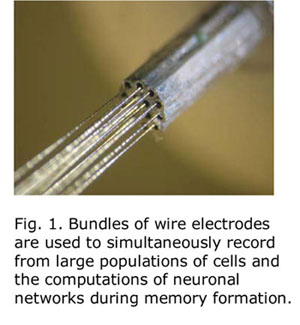
Stefan Leutgeb is a Professor in the Department of Neurobiology at the University of California San Diego (UCSD), affiliated with the School of Biological Sciences. His research focuses on the neural mechanisms underlying long-term memory storage, particularly the role of coordinated neuronal activity and synaptic plasticity in hippocampal and cortical networks. His work investigates how spatial and nonspatial information is encoded, how memory systems degrade in aging and neurodegenerative disorders like dementia, and the translational implications of these findings. Key research areas include hippocampal ensemble dynamics, temporal organization of neuronal activity, and the impact of Alzheimer’s-related proteins (e.g., APP) on neural networks. Leutgeb employs multi-electrode recordings, optogenetics, and computational modeling to study these processes. His lab has discovered critical mechanisms such as pattern separation in the dentate gyrus and the role of theta oscillations in memory encoding. Notable recent contributions include studies on how hippocampal network dysfunction due to APP expression disrupts spike timing ( 2022 ), theta oscillation roles in memory phases ( 2021 ), and the necessity of dentate gyrus activity for spatial working memory ( 2018 ). Despite no explicitly listed awards, his prolific publication record reflects significant contributions to systems neuroscience. Leutgeb’s research also explores cognitive aging and cross-species comparisons of neural processes. His lab emphasizes translational research, aiming to bridge basic neuroscience discoveries with clinical applications for neurodegenerative diseases. Current projects include investigating hippocampal ensemble dynamics during memory retention and developing biomarkers for cognitive flexibility.