Dimah Dera is an Endowed Assistant Professor at the Chester F. Carlson Center for Imaging Science, College of Science, Rochester Institute of Technology (RIT). She holds a Ph.D. and M.S. in Electrical and Computer Engineering, and an M.A. in Mathematics from Rowan University. Her research focuses on robust and trustworthy machine learning, integrating Bayesian theory and statistical signal processing into modern ML frameworks for healthcare, remote sensing, and surveillance systems. She is an NVIDIA Deep Learning Institute University Ambassador and active in IEEE Signal Processing and ACM SIGHPC. Dr. Dera has received prestigious awards including the NSF CRII Award (2023), NSF REU Supplement (2024), and IEEE Benjamin Franklin Key Award (2021). Her work emphasizes Bayesian uncertainty propagation for robust AI systems, with applications in sequential time-series analysis and medical imaging. Her scholarly contributions span robust image classification, uncertainty-aware neural networks, and Bayesian vision transformers. Teaching includes courses like Mathematical Methods for Imaging and Image Processing & Computer Vision II . She actively mentors students and leads research initiatives funded by NSF and industry collaborations.
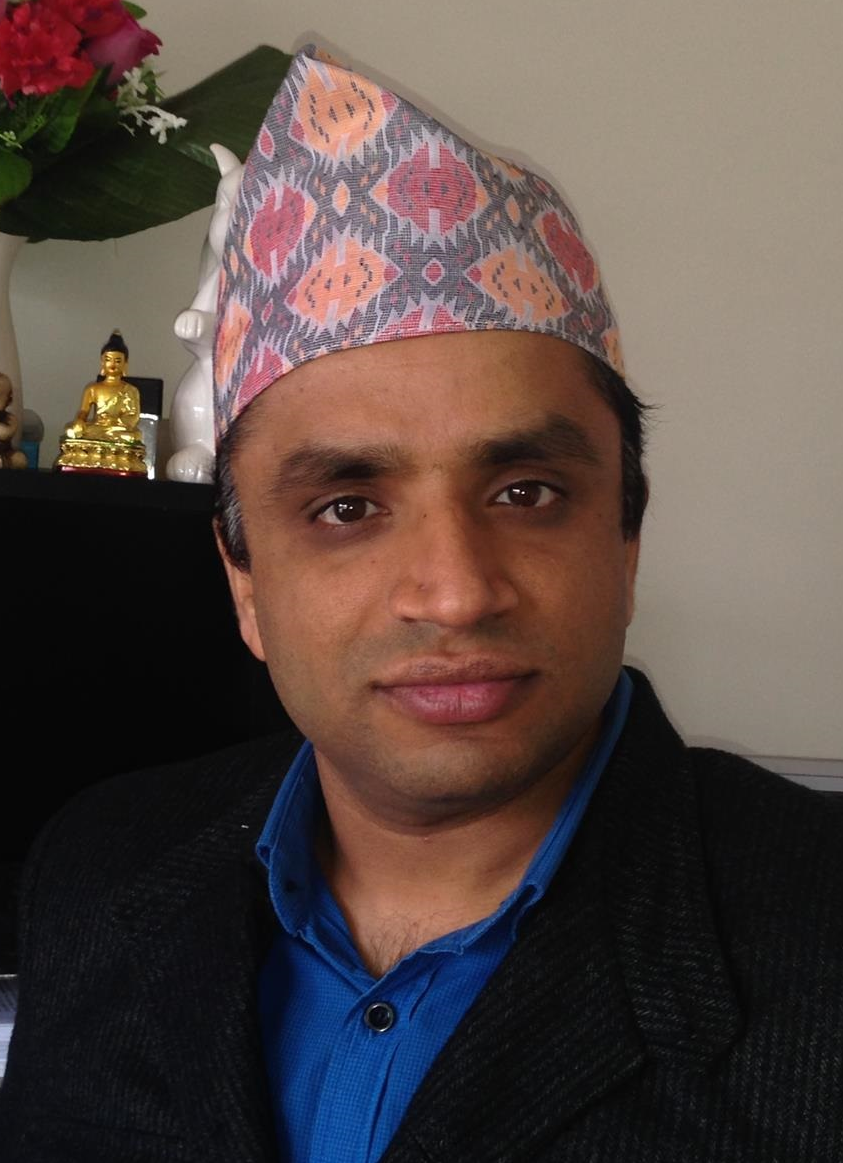
Sunil Aryal is an Associate Professor of Data Science at the School of Information Technology, Faculty of Science Engineering and Built Environment, Deakin University, Australia. He received his PhD and Master by Research degrees from Monash University Australia and has published over 70 papers in top-tier international venues in Artificial Intelligence, Machine Learning and Data Mining. Dr. Aryal's educational background includes: Graduate Certificate of Higher Education Learning and Teaching, Deakin University (2020) PhD in Computer Science, Monash University (2017) Master of Information Technology (Research), Monash University (2012) Master of Information Technology (Coursework), University of Southern Queensland (2008) Bachelor of Information Technology, Purbanchal University, Nepal (2005) His primary research interests focus on making Machine Learning and Data Mining algorithms robust and flexible to handle heterogeneous, noisy and uncertain data in real-world problems. His work spans across several specific areas including anomaly detection, clustering, kernel/similarity-based learning, ensemble methods, learning from limited data, reinforcement learning, natural language processing, and computer vision. Dr. Aryal is particularly interested in applying these techniques to solve challenges in Defence, National Intelligence, Engineering, Manufacturing, Healthcare and Education. Dr. Aryal co-leads the Machine Learning for Decision Support (MLDS) Research Group at Deakin University and has secured over AUD 4.5 million in external research funding. His research is supported by diverse organizations including US and Australia Defence Agencies, the Australian Office of National Intelligence, Worksafe Victoria, the Victorian State Department of Education and Training, the Technology Innovation Institute (TII) UAE, and Table Tennis Australia (TTA). His notable awards include multiple Deakin University research and teaching awards, the Australian Postgraduate Award for his PhD studies, and several student travel awards during his doctoral candidature. Dr. Aryal actively supervises numerous PhD and Master's students and has contributed significantly to teaching in various courses at Deakin University and previously at Federation University. He serves on several university committees and contributes to the research community as a reviewer, program committee member, and editor for various journals and conferences.
Professor Yuan Miao is a distinguished academic at Victoria University (VU), serving as Professor in the College of Arts, Business, Law, Education & IT and Head of the Information Technology Program. With a PhD from Tsinghua University's Automation Department, his academic journey spans prestigious institutions including the University of Melbourne and Nanyang Technological University in Singapore before settling at VU where he has been Professor since January 2010, following his Associate Professorship from August 2004 to December 2009. Education: BSc, Shandong University, China MEng, Tsinghua University, China PhD, Tsinghua University, Automation Department, China Professor Miao's research centers on Large Language Models (LLMs) and Generative AI, where he has identified critical barriers in practical applications including limited memory length in systems like ChatGPT and Gemini, contradictory explanations, lack of local knowledge integration, and significant errors in text-data hybrid reasoning (up to 38%). His innovative solutions involve cognitive map graphs and rational intelligence models to create customized AI systems. His work spans diverse application areas including human knowledge modeling, multimodal interaction, healthcare analytics (particularly dementia detection), cybersecurity, and robotics powered by rational intelligence. Analysis of Professor Miao's recent publications reveals a strong focus on integrating LLMs with specialized knowledge domains across healthcare, cybersecurity, and social media analysis. His research consistently addresses practical limitations of current AI systems while developing novel frameworks for more reliable and context-aware applications. The interdisciplinary nature of his work is evident in publications spanning medical informatics, cybersecurity analytics, and educational technology. Scientific Recognition: Two articles in fuzzy cognitive map modeling ranked among top 10 most cited works since 2000 (Google Scholar 2000-2016) Development of adversarial dataset based on SQuAD 2.0 that reduced BERT and ELECTRA accuracy from ~90% to ORCID identifier 0000-0002-6712-3465 with 138 peer-reviewed publications Professor Miao actively supervises PhD and Master's students across diverse research topics including access control systems, healthcare analytics, cybersecurity, and social behavior analysis. His research has secured substantial funding from both industry giants (Microsoft, Amazon, Oracle, Google) and government bodies (Australia Research Council, Data61, Singapore's NRF), with recent projects including Digital Transformation for Construction Industry ($1.258 million), Western Health SharePoint Development ($68,000), and Big Data Analysis for Domestic Violence Research (US$100,000). His current grant portfolio demonstrates strong industry-academia collaboration addressing real-world challenges. Professor Miao leads research teams focused on rational intelligence systems that overcome current LLM limitations, with particular emphasis on creating practical AI solutions for healthcare, cybersecurity, and smart city applications. His work with Maribyrnong City Council on the Smart City at Footscray Park project ($850,000) exemplifies his commitment to applying advanced AI research to community-level challenges.
Shui Yu is a Professor of the School of Computer Science in the Faculty of Engineering and Information Technology at the University of Technology Sydney (UTS), where he also serves as the Deputy Chair of the UTS Research Committee. His academic career spans over 20 years in Australia and 7 years in China, with additional teaching experience in Hong Kong and Indonesia. He has developed more than 10 units in cybersecurity, computer science, data analytics, and computer games, serving as the Course Director for Computer Science undergraduate programs. Professor Yu's research interests center on cybersecurity, privacy, networking aspects of Big Data, and applied mathematics for computer science. He pioneered the field of 'networking for big data' in 2013 and edited the seminal book 'Networking for Big Data' published in 2015. His work has practical applications in industry, including Amazon Cloud's auto-scale strategy against distributed denial-of-service attacks. Current research focuses include privacy and security concerns associated with big data, security issues in smart grids, anonymous transactions on Blockchain, and anonymous communication for web browsing privacy. Analysis of his recent publications reveals a strong research trajectory spanning cybersecurity, privacy-preserving technologies, networking for big data, and applied mathematics. His work shows increasing focus on quantum-resistant cryptography, federated learning security, and adversarial robustness in AI systems. The interdisciplinary nature of his research bridges theoretical foundations with practical applications in IoT, blockchain, and cloud environments. Fellow of IEEE (2023) Distinguished Lecturer of IEEE Communications Society (2018-2021) Distinguished Visitor of IEEE Computer Society (2022-2024) Professor Yu has secured numerous research grants from the Australian Research Council, including current projects on privacy and fairness in high intelligence models (DP240100955), improved security and privacy for online platforms (LP220200808), and secure blockchain for financial applications (LP220100453). He has served on editorial boards of multiple IEEE journals including IEEE Communications Surveys and Tutorials, IEEE Communications Magazine, and IEEE Internet of Things Journal. His service extends to organizing major conferences such as IEEE Globecom 2015 and IEEE INFOCOM 2016-2017.
Iwan Schie serves as Working Group Leader at the Leibniz Institute of Photonic Technology (Leibniz-IPHT) in Jena, Germany, where he leads the Spectroscopy / Imaging Multimodal Instrumentation research group. His work bridges analytical chemistry, biomedical engineering, and clinical applications with a focus on developing Raman spectroscopy-based diagnostic tools. Dr. Schie maintains an active research program with numerous publications in high-impact journals across multiple disciplines. Dr. Schie's research centers on Raman spectroscopy applications in medical diagnostics and environmental monitoring. His work demonstrates particular expertise in developing multimodal imaging systems that combine Raman spectroscopy with complementary techniques like optical coherence tomography and fluorescence imaging. His research spans both fundamental methodological development and clinical translation, with several studies focusing on cancer diagnostics across multiple organ systems including head and neck, bladder, and colon cancers. The environmental applications of his work include microplastic detection and pollen analysis. Analysis of Dr. Schie's publication record reveals a clear trajectory toward clinical implementation of Raman spectroscopy technologies. His recent work increasingly focuses on regulatory-compliant medical device development, with multiple studies conducted in accordance with European Medical Device Regulation standards. The publications demonstrate progression from ex vivo validation studies to in vivo clinical applications, with particular emphasis on workflow integration within surgical settings. His collaborative approach is evident through extensive co-authorship networks spanning physics, engineering, and clinical medicine. Dr. Schie has made significant contributions to advancing Raman spectroscopy methodology, with publications addressing critical challenges in device stability, spectral analysis, and multimodal integration. His work on establishing clinical workflows represents important steps toward routine clinical adoption of these technologies. The practical impact of his research is demonstrated through development of systems like the invaScope Raman endoscopy platform for bladder tumor diagnosis. As Working Group Leader at Leibniz-IPHT, Dr. Schie oversees research activities in spectroscopy and multimodal imaging instrumentation. His team develops advanced optical systems for biomedical applications with particular focus on real-time tissue characterization during surgical procedures. The research environment supports both fundamental methodological development and applied clinical translation, with strong emphasis on regulatory compliance for medical device development.
Mengdi Huai is an Assistant Professor in the Department of Computer Science at Iowa State University. She earned her Ph.D. in Computer Science from the University of Virginia under Prof. Aidong Zhang. Her research focuses on trustworthy AI, including explainable machine learning, adversarial robustness, privacy preservation, and fairness. She holds grants such as an NSF award for security in machine unlearning and has been recognized with the AAAI New Faculty Highlights (2024), Rising Star awards in EECS and Data Science (2021), and the John A. Stankovic Research Award (2021). Her educational background includes a Ph.D. from UVA (2021) and earlier degrees from institutions like the University of Science and Technology of China. She teaches courses like Machine Learning (COM S 573) and Advanced Topics in Computational Intelligence (COM S 672). Dr. Huai’s research spans security/privacy in machine unlearning, adversarial attacks on diffusion models, and attention mechanisms in vision transformers. Her work has been published in top venues like ICML, AAAI, KDD, and NeurIPS. She serves on program committees for AAAI, IJCAI, CVPR, and others, and reviews for journals like IEEE Transactions on Neural Networks and TKDE. Her lab focuses on advancing AI systems that are robust, interpretable, and privacy-aware. Recent grants include NSF support for machine unlearning security. She advises numerous students in these areas and collaborates internationally on projects like predictive diffusion models for healthcare and federated learning robustness.
Ling Liu is a Professor in the School of Computer Science at Georgia Institute of Technology's College of Computing. She directs the Distributed Data Intensive Systems Lab (DiSL) and conducts research in big data systems, cloud computing, distributed systems, privacy, and trust. An IEEE Fellow and recipient of the IEEE Computer Society Technical Achievement Award, Liu has published over 300 papers with best paper awards at major conferences. Her research develops scalable systems for AI and data analytics with emphasis on performance, security, and privacy. Current projects include federated learning, adversarial robustness, and trustworthy distributed AI. Liu has served as Editor-in-Chief for IEEE Transactions on Service Computing and ACM Transactions on Internet Technology.
Marcus Specht is a Professor affiliated with Delft University of Technology and Leiden University, Netherlands. His research focuses on Educational Technology, Learning Analytics, and Artificial Intelligence in Education. He has contributed to projects involving agent-based social skills training, hybrid intelligence for cognitive process analysis, and computational thinking assessment in higher education. His work spans mobile learning, collaborative learning analytics, and gamification in MOOCs. He collaborates extensively with researchers like Marco Kalz, Roland Klemke, and Hendrik Drachsler. Notable contributions include the Presentation Trainer for public speaking feedback and the DojoIBL platform for inquiry-based learning. His research emphasizes multimodal learning systems, including AR/VR applications and sensor-based training tools. He explores the integration of AI into educational platforms, as seen in projects like JELAI and the ARTES architecture for social skills training.
Prof. Dr. Bernd Wollscheid is a Lecturer at the Department of Health Sciences and Technology (D-HEST) at ETH Zurich, Switzerland. He leads the Wollscheid Lab and the Proteomics Plattform D-HEST , focusing on decoding the extracellular interactome and the cell surfaceome's nanoscale organization. His work bridges biology, chemistry, medicine, and bioinformatics, developing cutting-edge technologies like LUX-MS and TRICEPS-based LRC to study cellular communication and signaling pathways. Research interests include understanding how the surfaceome influences cellular functions, particularly in disease contexts such as cancer and metabolic disorders. Key projects involve creating resources like the Cell Surface Protein Atlas and PROTTER , tools for visualizing proteoforms and analyzing multi-omics datasets. His lab also explores precision medicine applications, including biomarker discovery and tumor profiling for clinical decision support. Publications highlight advancements in multi-omics integration, drug repurposing, and functional proteomics. The lab collaborates on initiatives like the Swiss Personalized Health Network (SPHN) and the Personalized Health and related Technologies (PHRT) strategic focus area. Funding comes from public grants and strategic partnerships. Recruitment for motivated researchers is ongoing, emphasizing contributions to molecular health and surfaceome research.
Bharat Biswal is a Distinguished Professor in the Department of Bio-Medical Engineering at New Jersey Institute of Technology (NJIT), serving as Director of the Center for Brain Imaging. His primary affiliation is with the College of Engineering, where he leads neuroimaging research initiatives. Biswal’s work focuses on functional magnetic resonance imaging (fMRI), brain connectivity analysis, and translational applications in neuropsychiatric disorders. Research Interests: Functional and Resting-State fMRI Methodology Neurovascular Coupling Mechanisms Connectomics and Network Neuroscience Clinical Applications in ADHD, OCD, and Neurodegenerative Diseases Post-COVID Neuroimaging White Matter Function Grant Activity: NIH-funded projects on laminar-specific connectivity (2022–2025) National Science Foundation MRI infrastructure grants (2019–2021) Longitudinal HIV brain studies (2015–2018) Recent Articles Highlight: Biswal’s 2025 work advances understanding of cocaine use disorder neurobiology, obsessive-compulsive disorder network dysregulation, and standardized PET nomenclature. His lab also innovates in AI-driven defect detection and transcriptomic-neuroimaging integrations. Awards: Recipient of NJIT’s 2024 Excellence in Research Award for pioneering contributions to resting-state fMRI and brain connectivity research. Labs/Teams: Leads the Center for Brain Imaging at NJIT, collaborating internationally on neuroimaging standards and translational neuroscience projects.
Georg Groh is an Adjunct Professor at the Technical University of Munich (TUM), affiliated with the TUM School of Computation, Information and Technology . His research focuses on modeling social context, social interaction mediated by IT systems, and ML-based natural language processing. He holds a doctorate (2005) and habilitation (2012) from TUM, with prior studies in physics and computer science. Key research areas include social signal processing, network analysis, and bias detection in AI systems. Notable awards include the 2019 Supervisory Award and 2016 Honorary Teaching Certificate. His work bridges computational methods with societal impacts, particularly in health informatics and ethical AI. Recent projects explore LLM hallucination detection, bias profiling, and cross-lingual text classification. Education: PhD in Computer Science (2005), TUM Habilitation in Computer Science (2012), TUM Studies in Physics (University of Kaiserslautern) and Computer Science (Universities of Hamburg, Kaiserslautern, TUM) Research Interests: Groh’s work spans social computing, NLP, and ethical AI . Current projects address bias in language models, hate speech detection, and data-driven health interventions. His methodologies emphasize contextual analysis of social interactions, leveraging ML and graph-based techniques. Awards: 2nd place Supervisory Award (2019) Best Paper Awards (2016, 2008) Advising & Grants: Advised on projects like Nutrilize (nutrition recommender system) and contributed to EU-funded initiatives on mHealth systems. Active in designing AI systems for dietary logging and stress management.
Benjamin Bach is a Lecturer in the School of Computer Science at the University of St Andrews, specializing in data visualization and visual analytics. His research focuses on creating interactive systems that enhance how people understand and engage with complex data through visualization. Dr. Bach's research interests span data visualization, information visualization, interactive systems, human-computer interaction, visual analytics, responsive design, and collaborative visualization. His work bridges theoretical foundations with practical applications, developing novel techniques for data exploration and communication that have implications across various domains including scientific research, education, and decision-making processes. His recent publications demonstrate a strong focus on responsive visualization design, collaborative storytelling through data, and the integration of narrative techniques with visualization. Notably, his work on 'Visualization Atlases' and 'Discursive Patinas' explores how to create more engaging and meaningful visualization experiences that support both individual exploration and group discussion. Dr. Bach's research has appeared in top-tier visualization venues including IEEE Transactions on Visualization and Computer Graphics (TVCG), demonstrating both the quality and impact of his contributions to the field. His work often involves interdisciplinary collaborations, as evidenced by his participation in projects spanning from immunology to cultural heritage. Within the visualization research community, Dr. Bach is recognized for his methodological rigor and innovative approaches to visualization design challenges, particularly in the areas of responsive design for diverse devices and facilitating collaborative engagement with visualized data.
Soon Lay Ki is an Associate Professor at the School of Information Technology, Monash University Malaysia, where she also serves as Associate Head (Graduate Research) since November 2018. Her academic journey began with roles at Multimedia University (MMU), where she was a Senior Lecturer and Deputy Dean (Research and Innovation) from 2016 to 2018. PhD in Web Engineering, Soongsil University, Korea Master of Science in Database, Universiti Putra Malaysia Bachelor of Computer Science, Universiti Putra Malaysia Her research centers on applied natural language processing and data management , with a focus on analyzing domain-specific and social media content. Her work spans aspect-based sentiment analysis , cyberbullying detection , misinformation detection , and relation extraction from conversational texts. Recently, her research has expanded into digital health , particularly emotion-aware mental health chatbots and emotion detection via video data. The most recent articles highlight a strong trend in AI for social good , including legal reasoning, mental health, accessibility, and public health. Her publications appear in high-impact journals and conferences such as Artificial Intelligence and Law , IEEE Transactions on Dependable and Secure Computing , and ACL-affiliated workshops. She has received notable scientific awards, including: ITEX'24 Silver Award for 'MOBOT' mental health chatbot (2024) Silver Medal at Malaysia Technology Expo 2023 for the same innovation The Incubator Grant: Bolster Category (2023) Dr. Soon has graduated seven PhD and three Master’s students, one of whom received the MMU Best Master Thesis Award in 2015. She leads multiple research grants, including FRGS-funded projects and industry collaborations with Telekom Malaysia and Intel . She is currently a Chief Investigator or Primary Chief Investigator on six active projects, including WHinc, WAge, and Epsilon, often in collaboration with Monash Australia and SEACO. She is part of key research teams such as the Action Lab at Monash University Australia and the South East Asia Community Observatory (SEACO) , contributing to inclusive research infrastructure and public health data access initiatives.
Michael Alexander Riegler is a full-time Professor at Oslo Metropolitan University's Faculty of Social Sciences, specifically in the Department of Social Work, Child Welfare and Social Policy. While his formal academic affiliation focuses on social sciences, his research interests span interdisciplinary domains including computer technology, information and communication systems, medical technology, and mathematics/natural sciences. Current research projects: Strengthening solidarity for democratic unity across border (SOLIDEM) addressing trust erosion in European welfare states, and Artificial intelligence in assisted reproduction technology improving embryo/sperm selection Recent publications (2025) focus on AI applications in healthcare (wearable sensors, ECG reconstruction), anomaly detection in time-series data, multimodal healthcare data analysis, and psychiatric motor activity datasets
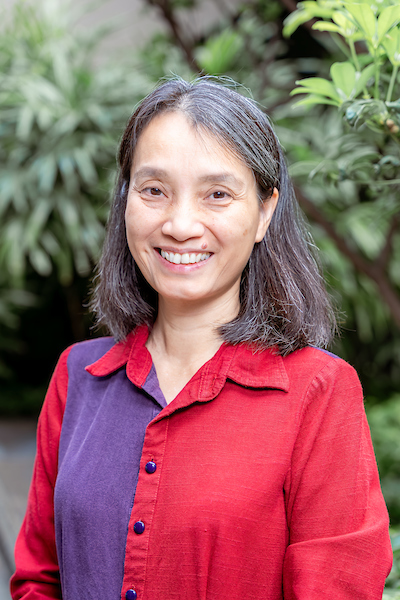
Hanh Thi Nguyen is a Professor of Applied Linguistics in the Department of English and Applied Linguistics at Hawaii Pacific University, College of Liberal Arts. She earned her Ph.D. in English Language and Linguistics from the University of Wisconsin-Madison and holds a B.A. from the University of Hue, Vietnam. Her research centers on conversation analysis, interactional competence, second language acquisition, pragmatics, classroom and workplace discourse, learner identity, and Vietnamese linguistics . She explores how language learners develop communicative abilities across contexts, from classrooms to professional settings, using detailed interactional data. Her work bridges theory and pedagogy, informing language teaching and assessment practices. Dr. Nguyen has published extensively, including books such as Developing Interactional Competence at the Workplace (2024) and Developing Interactional Competence: A Conversation Analytic Study of Patient Consultations in Pharmacy (2012), and co-edited volumes on conversation analysis and Vietnamese pragmatics. Her recent articles examine epistemic stance, language ideologies in family talk, and computer-mediated language learning, showing a growing interest in longitudinal development and multimodal interaction. She has received numerous awards and grants, including the Golden Apple Award for Excellence in Scholarship (2019), multiple Faculty Development Grants, and a 2024 U.S. Department of State grant as Principal Investigator. She has served on editorial boards for journals such as RELC Journal and TESOL International Journal . Dr. Nguyen mentors students and collaborates widely, with frequent co-authorship with scholars like Taiane Malabarba and Minh Thi Thuy Nguyen. She teaches courses in sociolinguistics, discourse analysis, corpus linguistics, and language assessment. She also leads research labs and teams focused on conversation analysis and language socialization, and continues to present at major international conferences through 2025.