Dr. Richard Jiang is a Senior Lecturer (Associate Professor) at Lancaster University's School of Computing and Communications. His research focuses on Artificial Intelligence, Neurocomputing, Quantum AI, Privacy Computing, and Medical Computing. He has pioneered secure pattern recognition in encrypted domains and quantum neuromorphic computing. With over £1M in research grants from EPSRC and others, he has authored 100+ publications and supervised over 20 PhD students. Dr. Jiang's work includes the Face2Brain method for neurodegenerative assessment and explainable models for brain aging analysis. He contributes actively to academic committees, editorial boards, and conferences like the World Conference on eXplainable AI. His research spans ethical AI frameworks, quantum algorithms for medical imaging, and privacy-preserving biometric systems.
Zhu-Tian Chen is an Assistant Professor in the Department of Computer Science and Engineering at the University of Minnesota, Twin Cities, where he leads research in data visualization, human-computer interaction, and augmented reality. Prior to this, he held postdoctoral positions at Harvard University and UC San Diego, working with leading researchers in visual computing and interactive design. Ph.D. in Computer Science, Hong Kong University of Science and Technology B.Eng. in Software Engineering, South China University of Technology His research focuses on augmenting human intelligence through hybrid human-AI systems, particularly in everyday and outdoor environments. He specializes in designing intelligent AR interfaces, embedded visualizations, and language-oriented interactions for applications in sports analytics, education, and data analysis. His work integrates human-centered design with applied machine learning to create intuitive and effective visualization tools. The recent trend in his publications shows a strong emphasis on intelligent AR systems for dynamic scenes, LLM-based code generation interfaces, and real-time augmentation of sports videos using natural language and gaze-based interactions. His work frequently appears in top-tier venues such as IEEE VIS, ACM CHI, and UIST. Best Paper Award, ACM CHI'23 Best Short Paper Honorable Mention, EuroVis'23 Best Paper Honorable Mention, IEEE VIS'22 (twice) Certificate of Distinction and Excellence in Teaching, Harvard University Hong Kong Ph.D. Fellowship Dr. Chen actively mentors undergraduate, master’s, and PhD students, as well as visiting scholars and interns, and is building a new research lab focused on visualization for intelligent AR systems. He has served on program committees for major conferences including ACM CHI, IEEE VIS, and EuroVis, and has been invited to speak at institutions such as Apple, JP Morgan, and multiple universities worldwide. He also contributes to the academic community through grant reviewing for NSF and the Department of Energy. He leads research projects in intelligent AR systems for sports, language-oriented interactions with LLMs, and immersive data visualization, often in collaboration with institutions like Harvard, UC San Diego, and HKUST. His lab welcomes students and collaborators interested in visualization, HCI, and applied AI.
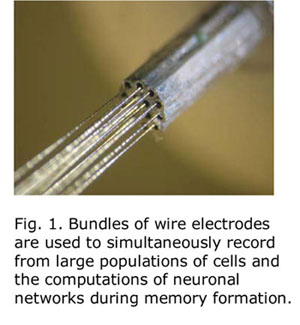
Stefan Leutgeb is a Professor in the Department of Neurobiology at the University of California San Diego (UCSD), affiliated with the School of Biological Sciences. His research focuses on the neural mechanisms underlying long-term memory storage, particularly the role of coordinated neuronal activity and synaptic plasticity in hippocampal and cortical networks. His work investigates how spatial and nonspatial information is encoded, how memory systems degrade in aging and neurodegenerative disorders like dementia, and the translational implications of these findings. Key research areas include hippocampal ensemble dynamics, temporal organization of neuronal activity, and the impact of Alzheimer’s-related proteins (e.g., APP) on neural networks. Leutgeb employs multi-electrode recordings, optogenetics, and computational modeling to study these processes. His lab has discovered critical mechanisms such as pattern separation in the dentate gyrus and the role of theta oscillations in memory encoding. Notable recent contributions include studies on how hippocampal network dysfunction due to APP expression disrupts spike timing ( 2022 ), theta oscillation roles in memory phases ( 2021 ), and the necessity of dentate gyrus activity for spatial working memory ( 2018 ). Despite no explicitly listed awards, his prolific publication record reflects significant contributions to systems neuroscience. Leutgeb’s research also explores cognitive aging and cross-species comparisons of neural processes. His lab emphasizes translational research, aiming to bridge basic neuroscience discoveries with clinical applications for neurodegenerative diseases. Current projects include investigating hippocampal ensemble dynamics during memory retention and developing biomarkers for cognitive flexibility.
Martin Nordal Petersen is an Associate Professor at the Department of Electrical and Photonics Engineering , Technical University of Denmark (DTU) . His work spans Internet of Things (IoT) , optical networking , and wireless communication systems, with notable contributions to LoRa , NB-IoT , and LPWAN technologies. He actively supervises PhD projects on topics such as machine learning in IoT edge devices , secure 5G communication , and smart community architectures . Active projects (2024–2027): Machine Learning in IoT Edge Devices , Deterministic and Secure 5G Communication Finished projects (2021–2024; 2018–2021; 2015–2018): Reliable M2M/IoT Communication , Smart Communities , IoT 100% , Network Slicing His research explores: IoT Reliability : Multi-RAT communication, backup systems, and signal propagation Optical Networks : Alien wavelength integration, SDN control, and network emulation platforms Wireless Innovation : GPS-free geolocation, maritime NB-IoT use cases, and multimode fiber distribution Current collaborations emphasize cross-disciplinary applications of IoT in healthcare , industrial ergonomics , and smart environments .
Riccardo Tommasini is an Associate Professor at INSA Lyon , a leading engineering institution in France. He leads the Stream Processing and Knowledge Graphs research within the DB Team at LIRIS laboratory under Professor Angela Bonifati. His academic journey began with a PhD in Computer Science from Politecnico di Milano under Emanuele Della Valle, with a dissertation titled Velocity on the Web to be published as a Springer book. Research Interests : Advancing stream processing for real-time data systems Extending knowledge graphs with dynamic data Designing graph databases for big data applications Creating query languages for heterogeneous data environments Building data engineering pipelines with Apache Airflow Enabling big graph processing in distributed settings Key Contributions : Developed Zodiac framework for Datalog reasoning under rule amendments (ICDE 2025) Co-authored foundational Streaming Linked Data book with Springer (2023) Created RSP4J API for RDF stream processing (ESWC 2021) Designed challenge-based learning curriculum for Data Engineering courses Scientific Recognition : Received ANR JCJC grant for POLYFLOW project (2024) Awarded Best Resource at ESWC 2021 Managed industrial collaborations with Neo4j, InfluxData, and Confluent Advising & Teaching : Supervises Mohamed Ragab (PhD candidate at University of Tartu) Course Leadership : Foundational Data Engineering course at INSA Lyon and University of Tartu Structured around Apache Airflow , Docker, and graph databases
Kushal Dey serves as an Assistant Professor in the Computational and Systems Biology Program at Memorial Sloan Kettering Cancer Center (MSKCC), part of the Graduate School of Medical Sciences in partnership with Weill Cornell Medicine. His research integrates statistical and machine learning approaches with genomic data to understand the regulatory architecture of complex diseases. Dr. Dey's research focuses on developing computational methods that integrate human disease genetics with functional genomics data. His work spans immune-related diseases including Alzheimer's and inflammatory bowel disease, as well as heritable cancers like breast and prostate cancer. His lab develops models to prioritize variants, genes, and cell states for disease using genetic, genomic, and perturbation data, with emphasis on causal directed graphs and benchmarking pipelines informed by disease genetics. His recent publications highlight expertise in GWAS, colocalization, spatial transcriptomics, Perturb-seq, and RNA+ATAC multiome analysis. His work frequently appears in top journals like Nature Genetics, with a focus on single-cell multi-omics approaches to understand disease mechanisms at cellular resolution. Scientific Awards: Josie Robertson Investigator (2023–2028) K99/R00 Pathway to Independence Award (NIH/NHGRI) (2022–2026) NIH/NHGRI Early Stage Investigator R01 (2025-2030) NCI P30 CCSG supplement – 'LLMs in cancer research' (2023-2024) Catalog Working Group Co-chair + Disease Focus Group Lead: IGVF consortium (2023-) Dr. Dey mentors several graduate students through the Weill Cornell Graduate School (WGS), including Thahmina Ali, Pretty Garcia, Karthik Guruvayurappan, Louis Liu, Sarthak Tiwari, Berk Turhan, and Harry Zhang. His lab has received multiple grants including the AWS IMAGINE Grant Children's Health Innovation Award 2024-2025 (as Project Co-lead) and PSRP Developmental Funds Awards (2025: Co-lead). The lab actively collaborates with consortia including ENCODE, ADSP, MorPhiC, and IGVF, maintaining strong ties with Columbia University, Stanford University, and Harvard T.H.Chan School of Public Health. The Kushal Dey Lab is part of the vibrant Tri-Institutional Research campus adjacent to Rockefeller University and Weill Cornell Medical College, offering a collaborative environment focused on computational genomics and disease mechanisms.
Pascal Vincent is an Associate Professor at the Department of Computer Science and Operational Research , University of Montreal, and a key member of the Montreal Institute for Learning Algorithms (MILA) . He holds a PhD in Computer Science from the University of Montreal and has been pivotal in advancing machine learning and artificial perception. Education: PhD in Computer Science (University of Montreal, 2003) His research spans machine learning , deep learning , representation learning , and neural networks , focusing on unsupervised methods and geometrically inspired algorithms. He explores how intelligent systems can autonomously build meaningful representations from raw data, driven by principles like the manifold hypothesis . Key projects include generative stochastic networks , contractive autoencoders , and high-dimensional sequence transduction . His work has resulted in 15+ recent publications in top venues like NIPS, ICML, and CVPR. Scientific Awards : Best student-paper award at ICML 2012 Honorable mention at NIPS 2011 Funded by FCI, FRQNT, CRSNG, CIFAR, and IBM Pascal has supervised 15+ doctoral and Master’s students , including Florian Bordes, Tom Bosc, and Nicolas Boulanger-Lewandowski, across topics like representation learning and generative models . He is also a co-founder of the UNIQUE (Union Neurosciences & Intelligence Artificielle Québec) research consortium.
Jean-François Godbout is a Professor in the Department of Political Science at the Université de Montréal and an Associate Academic Member of Mila - the Quebec AI Institute. He directs the undergraduate program in Big Data Analytics in Social Sciences and Humanities at UdeM and conducts interdisciplinary research through the Complex Data Lab. Affiliated with IVADO (AI Consortium) Member of CÉRIUM (International Research Centre) and CECD (Democratic Citizenship Centre) His research focuses on: Data Science applications in political institutions AI Safety and generative AI's impact on political attitudes Misinformation Mitigation through large language models Comparative Political Development in Canadian and Lower Canada contexts Legislative Institutions and voting records analysis Political Polarization in online societies Recent publications analyze social media disinformation, AI persuasion on harmful topics, and education-focused text simplification. His articles frequently combine graph mining , machine learning , and political science methodologies. Scientific collaborations include: Mila researchers (Andreea Musulan, Maximilian Puelma Touzel) IVADO data science initiatives McGill University interdisciplinary projects He supervises students in: Political science (Julien Robin, Matthew Taylor) Artificial Intelligence (Kellin Pelrine, Camille Thibault) Computational social science applications
Natalie Carlson is an Assistant Professor of Management at the Wharton School, University of Pennsylvania. Her work bridges entrepreneurship, human capital, and computational methods with a focus on emerging economies. Ph.D., Management - Columbia Business School B.A., Economics - Yale University Research Interests: Entrepreneurship in informal economies Impact of immigrant talent on multinational strategies Text-as-data and machine learning methodologies Field experiments in Zimbabwe and Colombia Notable Scientific Awards: Wharton Teaching Excellence Award (2021-2024) Kauffman Dissertation Fellowship (2017-2018) Deming Center Doctoral Fellowship (2018-2019) Her work analyzes productivity drivers in microenterprises and explores computational approaches to leadership communication. She teaches courses on global growth of emerging firms at undergraduate and MBA levels.
Amir Shmuel is a Professor at McGill University's Faculty of Medicine, holding appointments in the Department of Neurology and Neurosurgery, Department of Biomedical Engineering, and Department of Physiology. He serves as Director of the Brain Imaging Signals Lab and Core Faculty at the McConnell Brain Imaging Centre of the Montreal Neurological Institute. His leadership includes chairing the 2018 International Society for Brain Connectivity conference and securing an $18.7M Canada Foundation for Innovation grant for Quebec's first large-bore 7 Tesla MRI scanner. Dr. Shmuel's research focuses on understanding neuronal mechanisms underlying functional brain imaging signals and visual information processing. His integrative approach combines fMRI, optical imaging, multi-channel neurophysiological recordings, and optogenetics across multiple spatial and temporal scales. Current research priorities include resting-state functional connectivity mechanisms, cortical lamina-resolved neurophysiology, and computational modeling of brain signals. His lab emphasizes parallel model development with experimental data acquisition. Recent publications demonstrate strong trends in multimodal neuroimaging integration, with emphasis on high-resolution fMRI techniques (especially 7T applications), resting-state connectivity analysis across species, and computational modeling of neurovascular coupling. Key subfields include laminar-specific activity mapping, artifact detection in medical imaging using deep learning, and cross-species functional connectivity frameworks. Dr. Shmuel's research is currently funded by the Canadian Institutes of Health Research (CIHR), Natural Sciences and Engineering Research Council of Canada (NSERC), and the US Department of Defense. His lab maintains active collaborations through initiatives like the International Society for Brain Connectivity and the PRIME-DE database consortium. Operating within the Brain Imaging Signals Lab at the Montreal Neurological Institute, Shmuel's team develops and applies advanced multimodal techniques including simultaneous fMRI-electrophysiology, voltage-sensitive dye imaging, and computational modeling frameworks. The lab maintains strong ties with the McConnell Brain Imaging Centre and participates in major open-science initiatives including the Tanenbaum Open Science Institute.
Zachi Attia, Ph.D., M.B.A., is an Associate Professor at the Mayo Clinic College of Medicine and Science, Rochester, Minnesota. His research focuses on applying artificial intelligence (AI) and machine learning to cardiac biosignals, particularly for early disease detection and prediction. He holds primary and joint appointments as Consultant in AI within the Department of Cardiovascular Medicine, collaborating with the Center for Digital Health and the Robert D. and Patricia E. Kern Center for the Science of Health Care Delivery. Education: Ph.D. in Electrical Engineering from the University of Minnesota, Rochester; BSc and MSc in Electrical Engineering from Ben Gurion University, Israel. Dr. Attia's work centers on developing AI models that analyze multimodal cardiac data (ECGs, echocardiograms, angiograms) to detect silent diseases. His research includes pragmatic clinical trials to validate AI's impact on patient outcomes, explainable AI for biological insights, and integrating AI dashboards into medical records for clinical usability. Recent publications highlight AI applications in detecting atrial fibrillation, hypertrophic cardiomyopathy, and pulmonary hypertension via ECG analysis. Scientific Awards: No explicit awards mentioned in the text. Email: attia.itzhak@mayo.edu
Dr. Gianluca Demartini is a leading researcher in Human-in-the-loop AI Systems with significant contributions to Crowdsourcing , Information Retrieval , and Generative AI applications. His work bridges Machine Learning and Human-Computer Interaction , focusing on Bias Management , Fact-Checking , and Ethical AI . Major Affiliations : L3S Research Center, ScienceWISE platform, and collaborations with institutions like University of Queensland and University of Padua Over 15 years, his research has explored Crowdsourcing Quality Control (Mechanical Cheat 2012), Entity Ranking (2008-2013), and Semantic Search . Recent work (2024-2026) focuses on Generative AI Impacts in domains like Media Literacy , Data Curation , and Visual Analytics . Scientific Recognition : Best Paper Award (Top 1.4%) at ICTIR 2023 Best Short Paper Award (Top 0.6%) at ECIR 2020 Honorable Mention (Top 2%) at CSCW 2020 Best Demo Award at ISWC 2011 3rd Best Paper at LA-WEB 2008 His 15 most recent publications (2024-2026) demonstrate expertise in LLM-based Content Moderation , Immersive Data Visualization , and Trustworthy AI Systems . He has pioneered methods for Bias Detection in Wikipedia (2013), Entity Ranking (2008-2013), and Human-AI Collaboration frameworks. His work consistently addresses ethical challenges in AI for Social Good and Responsible Data Science .
Louis Collins is a Professor in the Department of Biomedical Engineering and Department of Neurology and Neurosurgery at McGill University, with associate membership at the Center for Intelligent Machines. His work focuses on advanced medical imaging techniques for neurological applications. Key Expertise: Non-linear image registration, model-based segmentation, neuroimaging, MRI analysis Applications: Alzheimer's disease, Parkinson's disease, multiple sclerosis, epilepsy, schizophrenia Methodology: Development of computer vision algorithms for image-guided neurosurgery (IGNS), automated atlasing, and biomarker quantification Collins' research combines computational neuroanatomy with clinical translation, particularly in: Quantifying brain atrophy and anatomical variability across populations Optimizing MRI templates for improved diagnostic accuracy Developing tools like SEEGAtlas for surgical electrode classification Exploring neurophysiological fingerprints of neurodegenerative diseases His lab (NIST-Lab) actively pursues CIHR-funded projects on ultrasound-based image-guided neurosurgery and machine learning applications in clinical trials.
Craig Jones is an Assistant Professor of Computer Science at Johns Hopkins University's Whiting School of Engineering. He is affiliated with the Malone Center for Engineering in Healthcare and contributes to the Precision Medicine Analytics Platform's Imaging and Data Science Subcommittees. BSc in Computer Science and Mathematics from Simon Fraser University MSc in Medical Biophysics from the University of Western Ontario PhD in Physics from the University of British Columbia His research focuses on applying artificial intelligence and neural networks to medical image processing, particularly for MRI, CT, optical coherence tomography (OCT), and ultrasound datasets. Key areas include 2D/3D image processing, anomaly detection, segmentation, and uncertainty quantification, with clinical applications in neurosurgery, ophthalmology, and oncology. Projects span robotic imaging, neuroendoscopic guidance, and cancer boundary detection. Recent publications highlight advancements in vision-language models for 3D medical imaging, automated segmentation of venous malformations, and AI-guided neurosurgical tools. Articles emphasize multimodal data fusion, self-supervised learning, and federated learning for rare cancer analytics. He received a $310,000 Department of Defense grant in 2022 to develop AI-guided treatments for venous malformations. His work bridges clinical imaging domains and computer vision as a member of the Radiology AI Lab (RAIL), a collaborative effort across Johns Hopkins Hospital, the Whiting School of Engineering, and the Applied Physics Laboratory.
Lisa Beinborn is a Professor for Human-Centered Data Science at the University of Göttingen, leading the Human-Centered Data Science group. Her research bridges natural language processing with cognitive science, focusing on multilingual models and interpretability. PhD in Computer Science (2016), Technische Universität Darmstadt MSc in Computational Linguistics (2010), Saarland University & Bolzano, Italy BSc in Computational Linguistics (2008), Saarland University & Barcelona, Spain Her research explores cognitive plausibility in NLP, analyzing how language models process language differently from humans. Key areas include multilingual model interpretability, semantic drift, eye-tracking, and readability prediction. Recent work examines input representation stability in neural models, cross-lingual transfer of complexity, and aligning language models with human cognitive patterns. Her team has presented findings at EMNLP, CoNLL, ACL, and CoLING. VENI Grant for "Interpretability of Transfer in Multilingual Models" Early Career Partnership by Royal Dutch Academy of Science "Most Interesting Paper" Award at BabyLM Challenge "Best Project Award" by Network Institute She has taught courses like Language as Data and Advanced NLP at University of Göttingen, VU Amsterdam, and TU Darmstadt. Her group collaborates with institutions like Gemeente Amsterdam and NT2 on multilingual text simplification and learner correction.