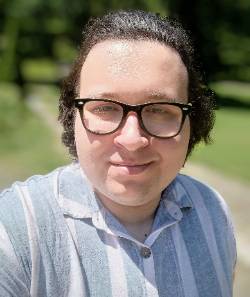
Dr. Jean-Luc Zarader is a Professor at Sorbonne University's Faculty of Engineering , serving as Deputy Director of the UFR of Engineering. Based at ISIR (Institute of Intelligent Systems and Robotics) in Paris, his research focuses on speech processing , neural networks , and binaural sound localization with applications in humanoid robotics and aircraft diagnostics. Key research areas: Speech coding, Nonlinear signal processing, Humanoid auditory systems, Fault diagnosis Active collaborations with teams: ACIDE, MLIA, IRIS Research Trends (2017-1996): 2017-2012: Whale bioacoustics, Aircraft diagnostics, Binaural localization 2007-2000: Speaker verification, Predictive coding, Neural network applications 1999-1996: Doppler lidar analysis, Speech compression His scientific contributions span multiple disciplines, including: Neural network optimization for signal processing Acoustic feature extraction Humanoid robot perception systems Aerospace fault detection Bioacoustic pattern recognition
Dr. Mukesh Prasad is an Associate Professor at the School of Computer Science , University of Technology Sydney (UTS). With expertise in Machine Learning , Artificial Intelligence , and Computer Vision , his research addresses applications in healthcare, biomedical science, and smart infrastructure. He holds a Ph.D. in Computer Science from National Chiao Tung University, Taiwan, and an M.S. in Computer and Systems Sciences from Jawaharlal Nehru University, India. Key research areas: Machine Learning, AI, Brain-Computer Interfaces, IoT, and Evolutionary Computation Industry experience: Principal Engineer at TSMC (2016-2017), Postdoctoral Researcher at National Chiao Tung University Dr. Prasad has secured competitive grants for AI applications in disaster response, conversational agents, and medical diagnostics. His work has been published in high-impact venues like IEEE , ACM Transactions , and Springer Nature , with over 200 peer-reviewed papers. He serves on editorial boards for journals including Frontiers in Neurorobotics and ACM Computing Surveys . Scientific Awards: Vice Chancellor Teaching and Learning Citation Award (2019) Alumni Fellowship for Ph.D. (2014) Golden Bamboo NCTU Fellowship (2010) Professional Members: IEEE (2011), ACM (2019)
Yury Matveev is a Professor at ITMO University’s Faculty of Information Technologies and Programming. He serves as Head of the Department of Speech Information Systems and leads two research laboratories: the International Research Laboratory 'Multimodal Biometric and Speech Systems' and the Corporate Laboratory of Human-Machine Interaction Technologies. His academic work spans over three decades, with 90 research papers and 16 patents. Education: DSc, PhD (1985), LITMO (1978) His research focuses on the development of software architecture for speech information systems, multimodal biometric systems, and algorithmic/hardware design for digital processing. His expertise intersects disciplines like computer science, biometrics, and human-machine interaction. Matveev’s career includes roles as a researcher at LITMO and Baltic State Technical University 'Voenmek' (D.F. Ustinov). Since joining ITMO University in 2011, he has driven advancements in speech technologies and biometric systems through leadership positions and interdisciplinary collaboration. As head of two research laboratories, he oversees cutting-edge projects in human-machine interaction and multimodal biometric systems. His contributions to digital signal processing and software architecture have been recognized through 16 patents and extensive publication output.
Paulo Noriega is an Assistant Professor at Universidade de Lisboa's Faculdade de Arquitectura, where he researches human-environment interactions through virtual reality. As Vice-Director of ergoUX Lab, he leads studies in cognitive ergonomics, emotional design, and safety systems. His affiliations include: Research Centre for Architecture, Urbanism and Design (CIAUD) Interactive Technologies Institute UNIDCOM/IADE ADUUX (Association of Development of Usability and UX) His research examines how environmental variables influence behavior across three levels: perceptual responses to stimuli like light/color, decision-making in architectural spaces, and emotional engagement. Current projects include FEELS (VR study of home office ergonomics) and VR applications for building safety design. Noriega's 130+ publications demonstrate consistent focus on VR methodologies applied to evacuation behaviors, automotive interfaces, and cultural heritage. Recent work explores multimodal alarms in emergencies (2025), non-anthropomorphic AI agents (2026), and tangible interfaces in vehicles (2024). Key trends include human factors in safety-critical systems, affective computing, and cross-cultural UX evaluation. He teaches extensively in Design programs, covering cognitive ergonomics, emotional design, and neuroscience applications. As supervisor, he has guided multiple master's and PhD theses in Design and Ergonomics. His funded research includes 9 grants from Fundação para a Ciência e a Tecnologia, focusing on VR's role in safety systems and environmental interaction studies. At ergoUX Lab, Noriega's team develops VR protocols for evaluating architectural spaces, emergency responses, and user experiences. The lab's multidisciplinary approach integrates psychophysics, biosensors, and behavioral analysis to advance human-centered design.
Dr. Caleb Vatral serves as an Assistant Professor in the Department of Computer Science within the College of Engineering at Tennessee State University, where he maintains an office in McCord Hall 005F on the main Nashville campus. His academic appointment positions him at the intersection of artificial intelligence research and educational innovation. His educational foundation includes: Ph.D. in Computer Science from Vanderbilt University, Nashville, TN B.Sc. in Computer Science from Eastern Nazarene College, Quincy, MA Dr. Vatral's research program pioneers human-AI teaming in educational contexts , uniquely merging distributed cognition theory with multimodal learning analytics. His work systematically examines how AI systems can complement human strengths in training environments, with particular focus on nurse education simulations and collaborative STEM learning . By prioritizing stakeholder needs throughout the design process, he develops practical AI integration frameworks that enhance rather than replace human capabilities in experiential learning. Analysis of his recent publications (2022-2024) reveals a consistent trajectory in multimodal learning analytics applied to high-stakes training environments. His research spans healthcare simulation, collaborative problem solving, and confidence assessment, demonstrating methodological sophistication through Bayesian modeling and mixed-reality frameworks. The work consistently targets real-world educational challenges with measurable performance outcomes. Dr. Vatral's research excellence has been recognized through: Best Paper Award, Human Performance Analysis Subcommittee at I/ITSEC (2022) Best Long Paper Award at International Conference on Computer-Supported Collaborative Learning (2024) While current advising details aren't specified, his active publication record suggests ongoing research projects with student involvement opportunities. His teaching portfolio spans core AI and data science courses alongside specialized topics in educational technology. Dr. Vatral maintains productive research collaborations, primarily with Vanderbilt University colleagues, as evidenced by co-authored publications across multiple high-impact venues.
Dr. Michael Dietz is a Researcher at the Chair of Human-Centered Artificial Intelligence ( University of Augsburg , Faculty of Applied Informatics, Institute of Informatics). His work focuses on Human-Computer Interaction , Mobile Assistive Systems , and Signal Processing with Machine Learning applications. Key research trends include: Development of mobile frameworks for real-time affective feedback (SSJ Framework, SenseEmotion) Augmented reality applications for public spaces and ambient media Privacy-preserving machine learning on mobile devices Physiological signal analysis for stress detection in older adults Eye-tracking innovations for visual search detection Explainable AI techniques in facial expression recognition Projects: EmmA (Emotional mobile Avatar) Glassistant (Smart Glasses for MCI patients) SenseEmotion (Multisensorial emotion recognition) SSJ Framework (Social Signal Processing)
Susana Tereno serves as Associate Professor at the Institute of Psychology of the University of Paris and is a full member of the Laboratory of Psychopathology and Processus de Santé (EA 4057). She additionally co-directs the Post-Graduation program "L'Attachement: Concepts et applications thérapeutiques" at the University of Paris Faculty of Medicine, demonstrating significant leadership in both academic instruction and therapeutic training programs. Her academic foundation includes a Clinical Systemic Psychology degree from the University of Lisbon's Faculty of Psychology and Educational Sciences, followed by Master's and PhD work in Health Psychology and Clinical Psychology at the University of Minho's Institute of Psychology. Her doctoral research examined "Intergenerational Transmission of Attachment: the role of marital relationship", establishing her early focus on relational dynamics. Dr. Tereno's research centers on developmental psychopathology with specialized expertise in attachment theory applications. She has pioneered evidence-based parent-infant intervention protocols for high-risk populations, particularly through the CAPEDP-Attachment project evaluating home-visiting interventions for Parisian multi-risk families. Her contemporary work integrates neurophysiological measurements and biometric assessment to address multi-complex trauma in military and parental populations, advancing trauma-informed clinical approaches through interdisciplinary methodologies. Analysis of her publication record reveals consistent innovation in attachment research spanning theoretical frameworks, clinical applications, and technological assessment tools. Her collaborative work bridges psychology with affective computing, particularly in developing cross-cultural biometric attachment evaluation methods, while maintaining strong clinical relevance through randomized intervention trials and therapeutic protocol development. As research coordinator of the CAPEDP-Attachment randomized controlled trial and developer of family intervention protocols for complex trauma, she demonstrates substantial grant leadership. Her co-directorship of a specialized post-graduation program indicates active mentorship in training clinicians for attachment-based therapeutic practice, though specific advisees are not documented in available materials. Based at the Laboratory of Psychopathology and Processus de Santé, she collaborates within a multidisciplinary research environment focused on translating psychopathology research into clinical practice. Her team integrates clinical psychologists, neuroscientists, and computational researchers to develop and validate interventions targeting attachment security in vulnerable populations through biometric and behavioral assessment methodologies.
Dr Shahana Bano is a Lecturer in the School of Computing, Engineering & Technology at Robert Gordon University, specializing in interdisciplinary applications of Artificial Intelligence. Her research spans biomedical imaging, environmental monitoring, infrastructure analytics, and socio-technical systems through the Machine Vision Research Group and Cybersecurity Research Group. Her educational background includes a PhD in Computer Science and Engineering, M.Tech in Computer Science and Engineering, MSc in Information Systems, and BCA - all completed full-time. Her research philosophy centers on convergence, bringing together diverse data types, technologies, and disciplines to create impactful, adaptive systems that bridge academic innovation with societal relevance. Dr Bano's research interests focus on Computer Vision, Image Analysis, Machine Learning, Data Analytics, Internet of Things, Text to Speech Systems, and Social Media Threat Intelligence. Her recent work demonstrates strong application of these interests to medical diagnostics (CAR-T cell classification), environmental monitoring (geothermal reservoir modeling), infrastructure analytics (pipeline defect detection), and social systems (hate detection in football communities). Her publication record shows consistent output with 32 research outputs from 2015-2025, demonstrating increasing focus on medical and environmental applications of AI in recent years. The work spans theoretical computer vision advancements to practical implementations addressing UN Sustainable Development Goals. Associate Fellow (AFHEA) 2023 from Advance HE Dr Bano actively supervises PhD students and mentors interns on diverse projects. Current PhD supervision includes research on morphological classification of CAR-T cell images for leukemia diagnosis and acoustic emission-based pipeline defect detection. She also guides students on projects involving AR-based navigation, NDVI vegetation mapping, hate detection in football communities, multimodal sensor fusion, and airport runway object detection. Her lab resources are supported through university research groups and collaborations focused on machine vision and cybersecurity applications.
Professor Eyad Elyan is a leading academic and researcher at Robert Gordon University's School of Computing, Engineering and Technology, where he serves as a Professor in Machine Learning and Computer Vision. He is the founder and head of the Machine Vision Research Group, driving innovative research in applied computer vision and deep learning with significant industry impact. Professor Elyan's research focuses on converting complex and unstructured data into knowledge and actionable insights, with particular emphasis on learning from images, videos, and other forms of unstructured data. His work spans engineering diagrams processing, remote inspection for oil and gas installations, intelligent condition monitoring of offshore assets, predictive maintenance, biometric applications, and medical datasets analysis. His expertise in ensemble-based learning and learning from unstructured and imbalanced datasets has been successfully implemented in various real-world applications. Professor Elyan was awarded the UK Knowledge Transfer Partnership Academic of the Year Award in 2023 for his transformative work in developing pioneering AI solutions for the oil and gas sector, and was a finalist for the Scottish Knowledge Exchange Award in 2024. These recognitions highlight his exceptional ability to bridge academic research with practical industry applications. His research has been supported by various public funding bodies including Innovate UK, the Data Lab Innovation Centre, Oil and Gas Innovation Centre (OGIC), NetZero Technology Centre (NTZ), and Historic Environment Scotland. Professor Elyan has supervised twelve PhD students to completion and examined more than fifteen others. He plays an active role in the academic community as a Fellow of the British Higher Education Academy and The International Neural Network Society, and serves as the Scotland Data Lab Innovation Centre Ambassador. Under Professor Elyan's leadership, the Machine Vision Research Group has developed innovative solutions including an end-to-end system for processing Piping and Instrumentation Diagrams (P&ID), AI-driven inspection systems for oil and gas assets, and defect recognition technologies. His work demonstrates a consistent commitment to translating cutting-edge research into practical tools that address real-world challenges, particularly in the energy sector.