Jean-Baptiste Alayrac is a Researcher at DeepMind, focusing on structured learning from video and natural language. His academic background includes a PhD from the Sierra and Willow groups at Ecole Normale Supérieure and Telecom ParisTech, where he explored machine learning and computer vision. He has held teaching roles as a Teaching Assistant at Ecole Normale Supérieure and other universities, contributing to courses in statistical machine learning and mathematics. His research interests span multimodal learning, vision-language models, self-supervised learning, and efficient retrieval systems. Notable projects include the Flamingo model for few-shot learning and the Perceiver IO architecture for structured data processing. He has also contributed to foundational works like HowTo100M, leveraging large-scale video-text embeddings. Alayrac's publications emphasize cross-modal interactions, with key contributions in adversarial robustness, layered video representations, and weakly supervised learning. His work often bridges computer vision and natural language processing, with applications in instructional video analysis and cross-lingual translation.
Ramana Vinjamuri is an Associate Professor in the Department of Computer Science and Electrical Engineering at the University of Maryland, Baltimore County (UMBC). He holds a secondary appointment as Visiting Professor at the Indian Institute of Technology, Hyderabad, India. His academic journey includes a Ph.D. in Electrical Engineering from the University of Pittsburgh (2008), M.S. in Bioinstrumentation from Villanova University (2004), and B.Tech. in Electrical and Electronics Engineering from Kakatiya University (2002). Dr. Vinjamuri's research focuses on Brain-Machine Interfaces (BMIs) for upper-limb prostheses control , neuroprosthetics and exoskeletons , machine learning in motor control , and neurophysiological signal processing . His work extends synergy-based models to control 37-dimensional hand movements, addresses human-robot interaction through emotionally intelligent systems, and develops neurotechnologies for substance use disorder using wearable sensors and AI. NSF CAREER Award (2019) NSF IUCRC BRAIN Center Planning Grant (2020) Harvey N Davis Distinguished Teaching Assistant Professor Award (2018) His publications demonstrate expertise in EEG and EMG signal analysis , deep learning for motor decoding , synergy modeling , and humanoid robot control . The Vinjamuri Lab at UMBC involves graduate, undergraduate, and high school researchers, with international collaborations in India and the US.
Dr. Vagelis Papalexakis is an Associate Professor and Ross Family Chair in the Computer Science & Engineering Department at the University of California, Riverside. His research focuses on data science, machine learning, and tensor methods, with applications in multi-aspect/multi-modal data analysis. He holds a Ph.D. from Carnegie Mellon University and a Diploma/M.Sc. from the Technical University of Crete. Affiliations: Ross Family Chair, Bourns College of Engineering, UCR Education: Ph.D. in Computer Science, Carnegie Mellon University M.Sc./Diploma in Electronic & Computer Engineering, Technical University of Crete His work emphasizes interpretable insights from complex datasets, including tensor-based defenses against adversarial attacks, graph representation learning, and scalable algorithms for high-dimensional data. Notable awards include the NSF CAREER Award (2021), IEEE DSAA Next Generation Award (2021), and ICDM Tao Li Award (2022). Grants include NSF funding for railway safety (CISE MSI: RPEP CPS), USDOT transportation research, and NVIDIA GPU grants. He leads projects in AI ethics, misinformation detection, and gravitational wave analysis. His lab collaborates with industry (e.g., Cisco, Instacart) and national labs (e.g., Lawrence Livermore).
Ling Zhao is a distinguished Professor at the School of Management, Huazhong University of Science and Technology, China, with extensive research contributions spanning artificial intelligence, machine learning, information systems, and biomedical applications. With over 150 publications since 2008, Dr. Zhao has established herself as a leading researcher in multiple interdisciplinary domains, particularly in applying computational methods to solve complex real-world problems. Dr. Zhao's research interests encompass a broad spectrum of cutting-edge topics including artificial intelligence, machine learning, data mining, control systems, and information systems. Her work demonstrates exceptional versatility, bridging theoretical computer science with practical applications in healthcare, transportation, cybersecurity, and business management. Notably, she has made significant contributions to sentiment analysis, medical image processing, algorithmic management, and privacy-preserving data analysis. Her research methodology often combines deep learning approaches with domain-specific knowledge to develop innovative solutions. Analysis of Dr. Zhao's recent publications (2023-2025) reveals a strong focus on interdisciplinary applications of AI, with particular emphasis on healthcare informatics (medical image analysis, disease diagnosis), human-computer interaction (algorithmic management effects), and advanced machine learning techniques (graph neural networks, multimodal learning). Her work shows a consistent trend toward increasingly complex and integrated systems that address real-world challenges across multiple domains. Dr. Zhao has made substantial contributions to academic advising and research mentorship, though specific student names aren't detailed in the available publications. Her research has been supported by various grants enabling work in AI applications, biomedical engineering, and information systems. Dr. Zhao maintains active collaborations with researchers across China and internationally, as evidenced by her co-authorship patterns. While specific laboratory information isn't explicitly mentioned in the publication records, Dr. Zhao appears to lead or be significantly involved in research groups focusing on AI applications in management and healthcare. Her work on medical imaging, sentiment analysis, and control systems suggests involvement in multiple specialized research teams addressing different application domains through computational approaches.
Zhaolin Chen is an Associate Professor in the Department of Data Science & AI at Monash University's Faculty of Information Technology. He holds a PhD in Biomedical Imaging from Monash University and has held roles at the University of Melbourne, Florey Neuroscience Institutes, and the medical imaging industry in Europe. He is an Australian Research Council MCR Industry Fellow and leads Australia's first Point-of-Care MRI network at the National Imaging Facility. His research focuses on AI-driven medical imaging, MRI/PET methods, and multimodal data analysis. He has secured over $8M in research funding, including leadership roles in major projects like the National Mobile MRI Network. Education: PhD in Biomedical Imaging, Monash University Research Fellowships at University of Melbourne and Florey Neuroscience Institutes Research Interests: Deep learning and machine learning in medical imaging MRI/PET acquisition/reconstruction methods Multimodal imaging (e.g., simultaneous MR-PET) Translational research with 10+ patents (5 commercialized) Awards & Grants: ARC Discovery Project (Primary Chief Investigator) 5 highly cited papers (top 10% worldwide in 2021) 2021 SciVal: 90% publications in top 10% journals Recipient of Douglas Lampard Research Prize, ISMRM Magna Cum Laude Leadership & Service: President-Elect, ANZ Chapter of ISMRM (2024) Associate Editor for IEEE ISBI (2022-2023) Program Committee Member for ISMRM (2018-2021) Labs & Teams: Monash Biomedical Imaging leadership National Mobile MRI Network project leadership Collaborations across global institutions (e.g., Hyperfine Inc., University of Queensland)
Bohan Chen is a Postdoctoral Scholar Research Associate in the Department of Computing and Mathematical Sciences. Their work focuses on advancing graph-based machine learning techniques and their applications in environmental science, remote sensing, and AI-driven analysis. Research interests include graph neural networks, active learning strategies, hyperspectral image analysis, and knowledge graph integration. Notable contributions include the development of the GLL layer for neural networks, the CUSP permafrost dataset, and hybrid models for multispectral image processing. Key research trends span theoretical advancements in graph-based learning and practical applications such as environmental monitoring, SAR data analysis, and pandemic modeling. Their work bridges computational methodologies with real-world environmental and societal challenges. Advising and grants: No student advisees listed. Contributions include foundational research without explicit grant mentions in provided text. Labs/teams: No specific lab or team affiliations mentioned in the text.
Dr. Kieran O'Halloran is a Reader in Applied Linguistics at King's College London, based in the School of Education, Communication & Society within the Faculty of Social Science & Public Policy. He holds a BA from the University of Cambridge and a PhD in Applied Linguistics from University College London. His research focuses on critical thinking, posthumanism, and digital pedagogy, integrating corpus linguistics and posthumanist theory. Key interests include creative teaching methods, digital text analysis, and the intersection of technology with education. He teaches modules such as 'Critical Posthumanism, Digital Data' and 'Film, Poetry, Style' in the BA English Language and Linguistics program. O'Halloran's work emphasizes innovative approaches to literary interpretation using AI and digital tools, as seen in his recent articles on AI-driven creative analysis and posthumanist stylistics. He leads initiatives like the King’s Festival of Artificial Intelligence, exploring AI's role in education and creativity. His research is affiliated with the Research Centre for Language, Discourse & Communication, focusing on descriptive linguistics and applied linguistic practices. Publications include books like Posthumanism and Deconstructing Arguments (2017) and Posthumanism and Corpus Linguistics (2022), alongside peer-reviewed articles in Language and Literature and Discourse, Context & Media . His pedagogical contributions highlight digital literacy and creative problem-solving in higher education.
Arash Eshghi is an Assistant Professor in the School of Mathematical & Computer Sciences at Heriot-Watt University, specializing in the Department of Computer Science. His research focuses on multimodal interaction, embodied AI, and dialogue systems, with applications in human-AI collaboration, vision-language models, and incremental processing. He leads projects like the EMMA and AlanaVLM frameworks, which explore embodied agents in 3D environments and egocentric video understanding. His work emphasizes ethical considerations in conversational AI, including dementia-friendly voice assistants and faithfulness in large language models. He collaborates internationally, with contributions to benchmarks like the BURCHAK corpus and the Block World repair framework. Eshghi’s research bridges computational linguistics, cognitive science, and robotics, addressing challenges in ambiguity resolution, spatial reasoning, and incremental dialogue processing. Key collaborations involve institutions like the University of Edinburgh and MIT, focusing on multimodal learning, dynamic syntax, and interactional semantics. His lab develops tools for grounded language learning and real-time interaction, with a focus on systems that adapt to human feedback and contextual dynamics.
Edward Kim is an Associate Professor in the Department of Computer Science at Drexel University's College of Computing & Informatics. His research spans computer vision, sparse coding, neuromorphic computing, and AI, with a focus on neuro-inspired machine learning and robust, interpretable models. Research Interests: Computer Vision Sparse Coding and Dictionary Learning Neuromorphic and Spiking Neural Networks Explainable and Adversarially Robust AI Multimodal Learning Medical Image Processing His recent publications highlight a strong trend in developing biologically inspired, robust, and interpretable machine learning models, particularly using sparse coding and spiking neural networks. Themes include adversarial robustness, model confidence calibration, and cross-modal integration. His work often bridges neuroscience and AI, aiming to create more human-like and trustworthy systems. Scientific Awards: NSF CAREER Award (2019) Longsview Fellow (collaborative project, 2021) Dr. Kim advises several graduate students in the SPARSE Lab and has secured significant research funding from the NSF, DARPA, and the Bill & Melinda Gates Foundation. His grants focus on ethical AI, racial bias in ML, and digital health platforms. He also contributes to academic leadership as a Provost Fellow at the Drexel Solutions Institute and co-chair of computer vision tracks at major conferences. Labs and Teams: He leads the SPARSE (SPiking And Recurrent SOFTwarE) Coding Lab, which investigates biologically inspired learning models beyond traditional deep learning. The lab integrates neuroscience principles to improve stability, interpretability, and robustness in AI systems.
Kaidi Xu is an Assistant Professor in the Department of Computer Science at Drexel University's College of Computing & Informatics. His research focuses on Trustworthy AI, with expertise in formal verification of neural networks, adversarial attacks (especially in the physical world), and certified defenses. He actively publishes in top-tier conferences including NeurIPS, ICML, ICLR, CVPR, and AAAI, and leads the award-winning research team 'alpha-beta-crown'. PhD in Computer Science, Northeastern University (2021) MS in Computer Science, University of Florida (2017) BS in Computer Science, Sichuan University (2015) Dr. Xu's research spans critical areas in AI security and robustness. He investigates formal methods to verify neural network behavior, develops techniques to defend against real-world adversarial manipulations (such as the famous 'Adversarial T-shirt'), and explores model compression and explainability. His work bridges theoretical guarantees with practical applications in healthcare, material science, and autonomous systems. His recent publications reflect a strong trend toward certified robustness, interdisciplinary applications, and formal verification across vision, language, and multimodal systems. He has consistently published at NeurIPS, ICML, CVPR, and ACL, demonstrating sustained impact in both machine learning and computer vision communities. Winner of VNN-COMP'21 with highest score Three-time VNN-COMP champion (2021–2023) with team alpha-beta-crown Faculty Research Excellence Award, CCI@Drexel (2024) Recipient of multiple Carleone Faculty Awards (2025) NSF grant recipient for projects on transit systems and material synthesis Dr. Xu advises PhD students, including Jinhao, and has secured significant external and internal funding, including multiple NSF grants and Drexel internal awards. He is actively recruiting motivated students with strong machine learning backgrounds. He also contributes to the academic community as an Area Chair for NeurIPS 2025, organizer of workshops like GenAI4Health@AAAI 2025, and frequent program committee member. He leads the 'alpha-beta-crown' research team, known for its leadership in neural network verification and repeated success in the VNN-COMP competitions. The team focuses on developing scalable, sound, and complete verification tools for deep learning models, pushing the frontier of AI safety and reliability.
Michael Krauthammer is a Professor of Medical Informatics and Chair of the Department of Quantitative Biomedicine at the University of Zurich, affiliated with the University Hospital of Zurich. His lab focuses on Clinical Data Science and Translational Bioinformatics, leveraging AI and machine learning to address healthcare challenges. Key areas include cancer genomics, federated learning, and automated medical imaging analysis. Education and affiliations: Krauthammer leads an interdisciplinary team supported by major funding agencies. His research spans bioinformatics, clinical decision support systems, and multimodal data integration. Notable projects include AI-assisted diagnosis in rheumatology and prime editing efficiency prediction. Recent work emphasizes longitudinal cfDNA analysis, drug interaction modeling, and personalized oncology. The lab collaborates across disciplines, with projects funded by Swiss and international grants. Students and postdocs work on topics like machine learning for radiology reports, longitudinal disease trajectories, and protein design. Key projects include the NTCIR-18 RadNLP challenge, prime editing prediction models (Nature Biotechnology 2024), and vision transformers for capillaroscopy analysis. The lab advocates for reproducible data science and ethical AI in healthcare.
Abhinav Dhall is an Associate Professor in the Department of Data Science & AI at Monash University. His research focuses on computer vision, affective computing, and human-centered AI, with a particular emphasis on deepfake detection, multimodal analysis, and ethical AI applications. He is actively involved in organizing workshops like the Multimodal and Responsible Affective Computing (MRAC) and chairs conferences such as ACCV. Dhall accepts PhD students and has contributed significantly to datasets like AV-Deepfake1M and EmotiW challenges. His work spans topics including HDR imaging, facial expression recognition, and AI ethics in multimedia systems.
Professor Nikolaos Koutsouleris serves as a Research Group Leader for the Max Planck Fellow Group for Precision Psychiatry at the Max Planck Institute of Psychiatry and holds a position as Senior Physician in the Department of Psychiatry and Psychotherapy at Ludwig Maximilian University (LMU) Munich. His work bridges clinical practice with advanced computational approaches to transform psychiatric diagnostics and treatment. Dr. Koutsouleris specializes in predictive psychiatry, focusing on extracting meaningful patterns from neurobiological, neurocognitive, and clinical data to improve early recognition of functional psychoses. His research employs structural MRI, neuropsychological testing, and clinical evaluations within cross-sectional and longitudinal studies, utilizing advanced machine learning methods to identify and validate biomarkers for single-subject prediction of psychosis. As head of the Early Psychosis Studies and the Workgroup for Neurodiagnostic Applications, he drives initiatives to implement predictive models across healthcare settings for personalized management of high-risk individuals. His publication record reveals a consistent focus on machine learning applications in psychiatry, with recent work addressing critical issues like the generalizability of clinical prediction models, brain aging patterns in large populations, and multimodal approaches to psychosis prediction. His research spans from fundamental methodological challenges to clinical applications, demonstrating how AI and machine learning are transforming psychiatric practice toward precision medicine. Dr. Koutsouleris actively trains pre- and post-doctoral investigators in advanced data analysis techniques, emphasizing comprehensive analysis of complex, high-dimensional datasets using multivariate methods. His leadership in the PRONIA Consortium and other collaborative efforts highlights his commitment to advancing the field through international cooperation and rigorous scientific inquiry.
Dr. Richard Segall is a Professor in the Department of Information Systems and Business Analytics at Arkansas State University , affiliated with the Beck College of Sciences & Mathematics . He is also affiliated faculty in the Master of Engineering Management (MEM) Program , the Environmental Sciences Program , and serves on thesis committees at the University of Arkansas at Little Rock (UALR) . Education: Ph.D. in Operations Research, University of Massachusetts at Amherst (1984) M.S. in Operations Research and Statistics, Rensselaer Polytechnic Institute (1975) M.S. in Mathematics, Rensselaer Polytechnic Institute (1973) B.S. in Mathematics, Rensselaer Polytechnic Institute (1971) Dr. Segall's research spans data mining, text mining, web mining, big data analytics, bioinformatics, supercomputing applications, and mathematical modeling . His work bridges business analytics and computational biology , with a focus on transdisciplinary applications in agriculture, healthcare, and space systems. His recent publications emphasize genomic data analysis , plant disease diagnostics , AI-driven healthcare solutions , and space technology forecasting . The integration of machine learning , data visualization , and open-source tools is a recurring theme across domains. Scientific Awards & Grants: Three research awards from the National Research Council (NRC) Software grants from Oracle Corporation and SAS Institute, Inc. Dr. Segall has served on the editorial boards of the International Journal of Data Science , International Journal of Data Mining, Modelling and Management , and International Journal of Fog Computing . He previously contributed to the Arkansas Center for Plant-Powered Production (P3) and currently participates in the Center for No-Boundary Thinking (CNBT) .
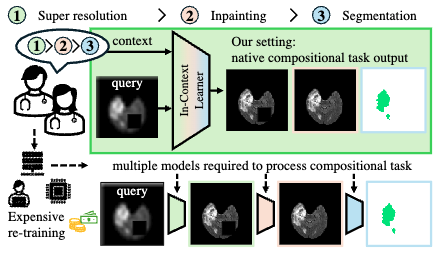
Prof. Dr. Erik Rodner is a faculty member at the University of Applied Sciences Berlin (HTW Berlin), where he serves as a Professor for Machine Learning and Data Science. He also contributes to the School of Engineering Sciences - Technology and Life. His research spans computer vision, machine learning, and biomedical applications, with a focus on learning with limited data, robust visual recognition models, and medical image analysis. He has developed innovative methods for medical diagnostics, industrial classification, and anomaly detection. Recent publications (2025-2016) highlight his expertise in visual in-context learning, semi-weakly segmentation, and active learning frameworks. He has collaborated with institutions such as ZEISS Group, Friedrich Schiller University Jena, and UC Berkeley. Scientific Awards: Award for Excellent Teaching (2023)