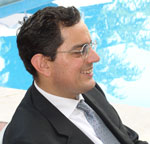
Ken Choi is a Professor of Electrical and Computer Engineering at Illinois Institute of Technology's Armour College of Engineering. He joined Illinois Tech in 2007 after working as a senior CAD engineer and technical consultant at Samsung and Sequence Design. His research focuses on ultra-low-power VLSI design, nanoscale circuit optimization, and carbon nanotube FET applications. Education: Postdoctoral Research Associate at University of Tokyo (2005), Ph.D. in ECE from Georgia Tech (2003). Key research interests include Design for Power (DFP) and Design for Manufacturing (DFM) in VLSI systems, as well as low-power SOC design for multimedia applications. He has received multiple awards, including Best Paper Awards from the International Symposium on Wireless Sensor Networks and IEEE ISOCC conferences. His work spans topics like radiation-hardened latch designs, energy-efficient encoder architectures, and clock-gating techniques for ultra-low-power applications.
Mathias Wien is a Professor and Head of the Chair of Image Generation and Image Processing at RWTH Aachen University. He specializes in video and image communication, with a focus on compression standards, 3D video technology, and perceptual quality metrics. His work spans medical imaging applications, adaptive coding techniques, and algorithm optimization for real-time video processing. Research interests include video coding algorithms, immersive media standards (e.g., VVC), point cloud quality assessment, and efficient template matching methods for reference picture padding. He actively contributes to MPEG and IEEE initiatives, co-authoring standards and reviewing emerging technologies. Recent publications (2021–2025) emphasize advancements in template-based video coding, medical image segmentation using deep learning, and viewer training protocols for visual assessment. He leads a research team addressing challenges in scalable compression, dynamic mesh coding, and 3D LiDAR odometry. His team collaborates with institutions like the RWTH Aachen University Medical Department and industry partners, focusing on clinical applications of imaging technology.
Dr. Sriparna Saha is an Associate Professor in the Department of Computer Science and Engineering at the Indian Institute of Technology Patna, India. She holds a Ph.D. from the Indian Statistical Institute Kolkata and has held leadership roles including Head of Department (2021-2023) and Associate Dean for Research and Development (2019-2021). Her research focuses on AI, machine learning, natural language processing, bioinformatics, and multiobjective optimization. She has authored over 400 publications with an h-index of 38 and received awards such as the NASI Young Scientist Platinum Jubilee Award and Google India Women in Engineering Award. Her work spans multimodal systems, medical image analysis, and computational social systems. Education: M.Tech (2005) and Ph.D. (2011) in Computer Science from Indian Statistical Institute Kolkata. Research Interests: Multimodal information processing, NLP, machine learning, bioinformatics, and optimization techniques. Awards: Includes Lt. Rashi Roy Memorial Gold Medal, BIRD Award, and multiple fellowships (Humboldt, CNRS, etc.). Administrative Roles: IEEE Student Branch Councilor, Senate Member, and Visvesvaraya Nodal Officer at IIT Patna. Her recent work includes advancements in multimodal recommendation systems, breast cancer prognosis models, and computational social systems for crisis management. She has also contributed to hate speech detection in multilingual contexts and medical imaging diagnostics.
Zhou Wang is a Professor in the Department of Electrical and Computer Engineering at the University of Waterloo. He is a leading researcher in image and video quality assessment, with contributions to foundational metrics like Structural Similarity (SSIM) and Multiscale SSIM. His work bridges signal processing, human perception, and computational vision. Key Contributions: Development of SSIM and CW-SSIM metrics Creation of Waterloo IVC 3D databases for stereoscopic quality assessment Pioneering studies on perceptual evaluation of compression artifacts and distortion types Research interests include: Image/video quality metrics, perceptual modeling, medical image processing, and 3D/VR quality evaluation . Over 124,000 citations highlight his global impact in multimedia signal processing.
Roles and Affiliations: Professor at Griffith University's School of Environment and Department of Information Technology. Active in interdisciplinary research spanning health informatics, mobile computing, and human-computer interaction. Collaborates with organizations like the Young and Well Cooperative Research Centre (CRC) on digital health interventions. Education & Background: Extensive background in computer science and multimedia systems, with a focus on applying technology to healthcare and well-being. Holds multiple editorial roles in academic journals and conferences. Research Interests: Specializes in mobile health (mHealth) applications, wearable sensors for activity monitoring, emotion recognition via facial expressions and physiological signals, and user-centric design of multimedia systems. Her work emphasizes practical solutions for mental health, alcohol moderation, and physical activity promotion. Key Projects: Co-developed the Mobile App Rating Scale (MARS) for evaluating health apps. Led projects like 'Ray's Night Out' (alcohol intervention app) and 'music eScape' (emotion regulation tool). Labs/Teams: Involved in Griffith's Menzies Health Institute and cross-disciplinary teams focused on digital health innovations. Supervised numerous projects in multimedia quality assessment and sensor-based health monitoring. Grants/Awards: Secured funding for health technology projects through CRC partnerships and grants. Recognized for contributions to mobile health interventions and user experience research.
Adamu Muhammad Buhari is a Lecturer at the School of Information Technology, Monash University. His expertise spans Computer Vision, Artificial Intelligence, Real-Time Machine Learning, and IoT integration in smart systems. He holds a PhD in Engineering (Computer Vision) from Multimedia University, alongside advanced degrees in Engineering and Telecommunication. Research interests include micro-expression recognition using graph-based features, real-time emotion analysis algorithms, and scalable video coding with watermarking. His work bridges theoretical advancements with practical applications in embedded systems and energy-efficient IoT networks. Recent collaborations focus on smart building HVAC automation and solar-powered sensor networks for smart homes. He has been awarded the School Research Grant 2022 for contributions to clinical pharmacy education research. His publications span journals like Journal of Imaging and Multimedia Tools and Applications , with a focus on real-time systems and machine learning applications. Research output highlights include: Invisible emotion magnification algorithms for micro-expression detection IoT-based HVAC systems using machine learning Scalable video coding with low-complexity watermarking His work emphasizes real-world impact through embedded systems and energy harvesting solutions.
P.P. Jonker is a full Professor in the Department of Biomechatronics & Human-Machine Control within the Faculty of Mechanical Engineering at Delft University of Technology. His research bridges robotics, intelligent systems, and human-centered control technologies, with a strong emphasis on practical applications in automation and machine perception. His research interests span Robotics , Biomechatronics , Human-Machine Interaction , Computer Vision , Machine Learning , and Adaptive Filtering . He focuses on enabling robots to operate autonomously in unstructured environments through active vision, sensor fusion, and intelligent control strategies. The recent publications highlight a consistent trend in applying deep learning to visual data synthesis, optimizing hardware-efficient signal processing, and advancing robotic perception and control. These works reflect a strong integration of theoretical control methods with real-world engineering implementation, particularly in autonomous systems and industrial automation. Active contributor to IEEE and ACM publications Research featured in public media on autonomous vehicles and robot coworkers Supervised 19 academic works, indicating active mentorship His work has been supported through academic grants and collaborative projects, with applications in autonomous driving, industrial robotics, and smart sensing. He collaborates across disciplines, particularly in control theory, computer vision, and embedded systems. Jonker is involved in pioneering research on human-robot collaboration, where biomechatronic principles are applied to enhance robot adaptability and safety in shared workspaces. His lab likely focuses on real-time control systems, sensor integration, and machine learning for robotic autonomy.
Bian Yang is a Professor at the Department of Information Security and Communication Technology , Norwegian University of Science and Technology (NTNU), Faculty of Information Technology and Electrical Engineering. His research focuses on biometric data protection , privacy-enhancing technologies , and healthcare cybersecurity since joining NTNU in 2008. Education: Ph.D. (2006), M.S. (2002), B.S. (2000) Research Interests: Secure health data management, privacy-preserving computing, human factors in security, secure biometrics, and multimedia security His work includes establishing the eHealth and Welfare Security (eHWS) group under NTNU's Center for Cyber and Information Security (CCIS) in 2016, aiming to bridge cybersecurity and healthcare sectors. Recent publications emphasize privacy-preserving continuous authentication , generative AI in biometrics , and consent management in IoT . Articles span journals like Pattern Recognition , IEEE Access , and Journal of Personalized Medicine , reflecting interdisciplinary applications of machine learning , GANs , and policy frameworks to healthcare security. Scientific Contributions: Over 15 recent publications address topics such as AI-driven stress detection , security for wearable devices , and cybersecurity in low-income healthcare , with a focus on privacy barriers , adaptive protocols , and multi-party data governance .
Dr Shahedur Rahman is a Senior Lecturer in Computer Science at Middlesex University , with extensive contributions to telecommunications engineering, image processing, and bioinformatics. His research focuses on wireless network optimization, perceptual distortion metrics for video coding, and molecular biology database integration. Research Interests : Interference management in LTE/5G networks Perceptual quality assessment in multimedia systems Computer vision for accessibility and mobility aids Integration of biological and medical databases Wavelet-based image compression Genomic data analysis Selected Scientific Publications highlight trends in: Dynamic channel allocation techniques for LTE networks SSIM/SATD hybrid distortion metrics Gene mutation data modeling Image processing for visual impairment assistance Database interoperability in medical systems Optimization algorithms for hardware systems
Markos Stamatakis is a Researcher at the German National Library of Science and Technology (TIB) within the Research and Development Department, specifically working in the Visual Analytics Research Group. His office is located at Lange Laube 28, 30159 Hannover (Room: 2.04), with postal address Welfengarten 1 B, 30167 Hannover. Dr. Stamatakis' research focuses on the automatic processing of educational videos with the purpose of generating questions related to the topic. His work integrates multiple modalities including images, audio, and speech transcripts/subtitles. Key aspects of his research include dataset creation, implementation of object detection algorithms, and application of large language models to recognize video content and enable subsequent question generation. His publication record demonstrates consistent contributions to the fields of educational technology and AI, with recent work examining vision-language models for educational video question generation, analysis of student drawings in chemistry classes, and predicting knowledge gain from MOOC video consumption. His research shows a clear trajectory toward developing AI systems that enhance educational experiences through multimodal analysis of learning materials. As part of the TIB's research infrastructure, Stamatakis collaborates with colleagues including R. Ewerth, A. Hoppe, and others across multiple projects focused on scholarly communication and educational technology.
Jun Luo is an Associate Professor in the School of Computer Science and Engineering at Nanyang Technological University (NTU), Singapore. He earned his PhD in Computer Science from EPFL under the supervision of Prof. Jean-Pierre Hubaux and completed postdoctoral research at the University of Waterloo. He joined NTU in 2008 as an Assistant Professor and was promoted to Associate Professor in 2014. He served as Deputy Director of the Centre for Multimedia and Network Technology from 2010 to 2013. Education: PhD in Computer Science, Swiss Federal Institute of Technology in Lausanne (EPFL), 2006 MS in Electrical Engineering, Tsinghua University, 2000 BS in Electrical Engineering, Tsinghua University, 1997 Research Interests: Jun Luo's research focuses on mobile and pervasive computing, wireless networking, machine learning, and applied operations research. His primary research thrusts include: Contact-free Sensing Driven by Deep Learning : Leveraging RF, acoustic, and visible light signals for human activity recognition, respiration monitoring, and localization without wearable devices. Visible Light Communication and Sensing : Exploring LED-camera systems for data transmission, occupancy inference, and indoor broadcasting. Indoor and Outdoor Localization and Tracking : Developing systems using WiFi, geomagnetism, and crowdsourced data for precise positioning. Machine Learning for Mobile Networking : Applying deep learning and optimization to improve wireless network performance, mobile crowdsensing, and resource allocation. Publication Trends: His recent publications (2021–2023) demonstrate a strong focus on deep learning-enhanced sensing using RF and acoustic signals, particularly for health monitoring (e.g., respiration, heartbeat), multi-person tracking, and privacy-preserving techniques. He frequently collaborates with researchers in signal processing, computer vision, and networking, publishing in top venues like IEEE Transactions on Mobile Computing, MobiCom, and INFOCOM. His work emphasizes practical deployment on commodity devices and integration of sensing with communication systems. Scientific Recognition: IEEE Fellow Advising and Grants: Dr. Luo has advised numerous PhD and Master's students, as evidenced by the extensive list of student co-authors across his publications. He has led significant research projects in wireless sensor networks, mobile computing, and IoT systems, likely supported by competitive grants from Singaporean and international funding agencies. His role as Deputy Director of a research center indicates leadership in managing research teams and collaborative efforts. Labs and Teams: He leads a research group focused on mobile and distributed computing, deep learning, and computer vision. His team actively publishes in top-tier conferences and journals, working on projects involving RF sensing, acoustic platforms, visible light communication, and privacy-aware systems. The group collaborates with researchers both within NTU and internationally, particularly in Canada and China.
Anastasios Tefas is a Professor at the Department of Informatics, Aristotle University of Thessaloniki. He received his B.Sc. (1997) and Ph.D. (2002) in Informatics from the same university. His academic career includes progressive roles from Postdoctoral Researcher (2002-2006) to Lecturer, Assistant Professor, Associate Professor, and ultimately Professor (2022-present). Education Ph.D. in Informatics, Aristotle University of Thessaloniki (2002) B.Sc. in Informatics, Aristotle University of Thessaloniki (1997) Professional Experience Professor (2022-present) Associate Professor (2017-2022) Assistant Professor (2013-2017) Lecturer (2008-2013) Assistant Professor at TEI of Kavala (2006-2008) His research focuses on computational intelligence, deep learning, and pattern recognition, with applications in multimedia data analysis, computer vision, and robotics. He has contributed to over 170 journal papers, 300 conference papers, and 17 book chapters. Currently coordinating the Energy Efficient and Trustworthy Deep Learning (DeepLET) project, he has participated in 25 national/European-funded research initiatives. Prof. Tefas serves as Area Editor for Signal Processing: Image Communications and has co-organized 15+ workshops. His work has garnered >12,000 citations with an H-index of 53 (Google Scholar).
Marco Bertini is an Associate Professor at the Department of Information Engineering, University of Florence, where he teaches in the School of Engineering. He is affiliated with the Media Integration and Communication Center (MICC) and is a member of GIRPR (Group for Image Recognition and Pattern Recognition). His research focuses on computer vision, multimedia, and pattern recognition with applications in video analysis and semantic processing. Laurea Degree in Electronics Engineering from University of Florence (1999) Ph.D. (2004) Dr. Bertini's research spans automatic video analysis, annotation, semantic transcoding, and social media analysis. He has led multiple EU-funded research projects including ASSAVID, DELOS Network of Excellence, VIDI-Video, IM3I, ORUSSI, and euTV. His current work focuses on smart museums and smart cities funded by the Italian Ministry of University, Instruction and Research, along with semantic video coding applications. As an active contributor to the academic community, he serves as Associate Editor for IEEE Transactions on Multimedia and has organized major conferences including European Conference on Computer Vision 2012 and ACM Multimedia 2010. He has also guest-edited special issues for Multimedia Tools and Applications journal. Associate Editor, IEEE Transactions on Multimedia Organizer, European Conference on Computer Vision 2012 Organizer, ACM Multimedia 2010 Guest Editor, Multimedia Tools and Applications Special Issue Dr. Bertini teaches undergraduate and graduate courses including Programming (OOP, C++, design patterns), Parallel Computing, and GPU Programming. He has previously taught Unix Fundamentals, CISCO CCNA, Multimedia Databases, and Information Technologies Laboratory. His research is conducted primarily at the Media Integration and Communication Center (MICC), where he collaborates with industry partners including SELEX ES on Terrestrial Trunked Radio video communication systems.
Steven Alexander Hicks is an Associate Professor in the Department of Computer Science at Oslo Metropolitan University's Faculty of Technology, Art and Design. His research focuses on applying computer vision and machine learning techniques to medical imaging problems, particularly in gastrointestinal endoscopy and reproductive medicine. He is an active contributor to the medical AI community through his involvement in organizing challenges and workshops such as ImageCLEFmedical and MediaEval. Hicks' research interests center on medical image analysis, with particular emphasis on gastrointestinal endoscopy and reproductive health applications. His work spans medical image segmentation, polyp detection, sperm tracking systems, and explainable AI for medical applications. He has developed innovative approaches for medical image analysis including diffusion models for synthetic data generation, visual question answering systems for gastrointestinal tract analysis, and frameworks for evaluating explanation methods in neural networks. His research bridges the gap between computer science and clinical medicine, aiming to develop practical AI tools that can be integrated into medical workflows. Analysis of Hicks' recent publication record reveals a strong focus on medical image analysis challenges, particularly in gastrointestinal endoscopy and reproductive medicine. He has been instrumental in organizing and contributing to the ImageCLEFmedical challenges, which have become important benchmarks in the field. His work shows a progression from basic image analysis techniques to more sophisticated approaches incorporating explainability, multimodal learning, and generative models. The consistent publication output across top venues demonstrates his active role in advancing medical AI research. Hicks has made significant contributions through his leadership in organizing evaluation campaigns and challenges that have shaped research directions in medical image analysis. His work with the MediaEval and ImageCLEF communities has provided valuable benchmarks and datasets for researchers worldwide. He has been involved in several large-scale collaborative projects addressing important problems in medical imaging, including polyp segmentation, instrument detection in endoscopy, and sperm analysis. As part of the broader research ecosystem at Oslo Metropolitan University, Hicks contributes to a vibrant research environment focused on applying computing technologies to healthcare challenges. His work often involves interdisciplinary collaboration between computer scientists, medical professionals, and domain experts to ensure that technical solutions address real clinical needs. His research group appears to focus on developing practical AI solutions that can be translated into clinical practice, with particular attention to validation methodologies and explainability requirements in medical contexts.
Vanessa Ribeiro-Rodrigues is a university professor at Lusófona University of Porto, an independent journalist, documentary filmmaker, and media literacy educator. She is affiliated with CICANT (Centre for Communication and Society Studies) and serves as an invited member of the IAMCR (International Association for Media and Communication Research). She co-develops the Dici-Educa project focused on digital citizenship and civic skills, and coordinates the podcast 'Feminisms in Action' under FemGlocal, CICANT, and FCT. Education: Ph.D. in Communication Studies for Development (FCT Fellowship) Master in Communication Sciences - Information and Journalism (Universidade do Minho) Degree in Journalism (Escola Superior de Jornalismo do Porto) Specialization in Documentary Film (Academia Internacional de Cinema, São Paulo; EICTV, Cuba; Museum of Image and Sound, Brazil) Her research explores intersections between documentary filmmaking and journalism, with emphasis on humanizing narratives, media literacy, cultural communication, and sustainable development. She investigates audiovisual storytelling's role in resilience, postcolonial memory, and gender equity. Her recent publications and documentaries analyze feminist rural mobilization in Guinea-Bissau, sustainable journalism, transmedia narratives for human development, and media's ethical responsibilities in democratic processes. Awards include Best Woman Director (2018 European Cinematography Awards), Best Cinematography (2019 Hollywood Women's Film Festival), and UNESCO Journalism award recognition (2014 Honorable Mention). Vanessa teaches Journalism at Lusófona University and serves as a certified media literacy instructor for Portugal's Directorate-General for Education. She has worked as a foreign correspondent in Brazil and Jordan, and collaborates with production houses like Real Ficção and Golpe Filmes.