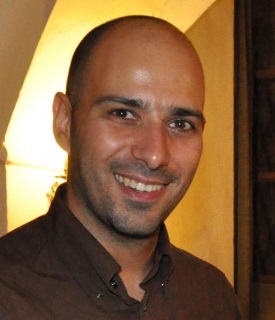
Carlos Vianna Lordelo is a Visiting Professor at Queen Mary University of London's School of Electronic Engineering and Computer Science. His research focuses on Audio Signal Processing and Machine Learning, particularly in music-related applications such as source separation, instrument recognition, and deep learning architectures. He contributes actively to music information retrieval through projects like harmonic-percussive source separation and dataset development for folk music analysis. Key research interests include developing algorithms for music audio processing, adversarial domain adaptation, and CNN-based models. His work integrates theoretical advancements with practical applications in audio engineering and multimedia systems. Lordelo's GitHub repository showcases contributions to instrument prediction, source separation techniques, and open-source tools for music research. Notable projects include the 'source-separation-AHS' repository and collaborations on datasets like 'Tap & Fiddle'.
Yu Sun is a Professor in the Department of Computer Science and Engineering at the University of Central Arkansas (UCA). He holds a Ph.D. in Computer Science & Engineering from the University of Texas at Arlington. His research focuses on Multimedia Computing, Video Compression and Communication, Image Processing, and Wireless Videos. His work emphasizes optimizing video coding standards like HEVC, AVS2, and SHVC, with contributions to algorithms for rate control, intra prediction, and scalable video techniques. Research interests include developing efficient algorithms for 360-degree videos, generative adversarial networks (GANs) for image classification, and real-time video transmission over wireless systems. His publications span over two decades, addressing challenges in video compression efficiency, bufferless rate control, and neural network applications in multimedia systems. Dr. Sun’s articles highlight trends in hybrid coding strategies, probability-based optimization, and spatial/temporal scalability in video coding. His work bridges theoretical advancements and practical implementations for emerging technologies such as virtual reality video streaming and collaborative robotics. His academic webpage is available at https://faculty.uca.edu/yusun/ .
Dr. Mohammad Hasan is a Senior Lecturer in Digital, Tech, Innovation & Business at Staffordshire University with extensive expertise in cybersecurity, cloud computing, and network engineering. His educational background includes a PhD in Mobile Ad-hoc Networks, MSc in Computer and Network Engineering, and BSc in Computer Science. His primary research focuses on: Computer networks including wireless systems and IoT Cybersecurity frameworks and threat analysis Cloud computing infrastructure and virtualization Machine learning applications in data analytics Recent publications demonstrate strong trends in machine learning applications for pattern recognition (eSports analytics), network security (XSS prevention), and biomedical signal processing (brain source localization). Dr. Hasan maintains professional certifications including CCSK, CompTIA Security+, and Cisco CyberOps Associate, and holds Senior Fellow status with the Higher Education Academy.
Chen Chang-Wen is a Chair Professor of Visual Computing at The Hong Kong Polytechnic University (2021–present). Previously, he was Empire Innovation Professor at the University at Buffalo (2008–2021) and held leadership roles including Dean of the School of Science and Engineering at CUHK Shenzhen (2017–2020). His research focuses on multimedia systems, signal processing, and communication. He is a Fellow of IEEE and SPIE, and has received numerous awards including the Alexander von Humboldt Research Award (2010) and the SUNY Chancellor's Award (2016). Chen has authored over 420 publications and holds three US patents. His work emphasizes interdisciplinary applications in visual computing, including contributions to autonomous systems, edge networks, and video quality assessment. He currently serves as Editor-in-Chief of IEEE Transactions on Systems, Man, and Cybernetics: Systems and leads initiatives in global university rankings and accreditation for engineering programs.
Dr.-Ing. Henryk Richter is a postdoctoral scientific assistant at the University of Rostock, affiliated with the Communications Engineering research group. His work spans multimedia engineering, focusing on video coding and real-time systems. Education : PhD in Electrical Engineering from University of Rostock (2006), thesis on cross-standard video decoding concepts. Research Interests : Data compression, image/video coding, multistandard video decompression, and real-time signal processing. Publications : 15 most recent articles (2005–2024) highlight advancements in video codecs, biomedical signal processing, and hardware optimization. Contact : henryk.richter@uni-rostock.de
Zhonghang Xia is a Professor in the Department of Computer Science at Western Kentucky University. His primary affiliations include the WKU COHH building (office 4141). His research focuses on Bioinformatics, Data Mining, Machine Learning, Multimedia Computing, and Combinatorial Optimization. He teaches advanced courses such as Machine Learning, Data Mining, Artificial Intelligence, and Thesis Research/Writing. His work emphasizes algorithm development for bioinformatics applications, kernel methods, and multimedia systems optimization. Research interests span peptide identification using machine learning, collaborative filtering prediction, and automation frameworks. His recent work addresses challenges in proteomics data analysis and distributed media systems. Advising focuses on distributed service systems and cloud computing infrastructure. He has contributed to over 20 peer-reviewed publications since 2005, with notable contributions in BMC Bioinformatics , IEEE Transactions , and Journal of Proteome Research . Teaching responsibilities include graduate and undergraduate courses in computer science fundamentals and specialized topics such as research methods and thesis guidance. His lab activities involve interdisciplinary projects combining machine learning with biological data analysis and network optimization.
Riccardo Lancellotti is an Associate Professor at the Department of Engineering 'Enzo Ferrari' of the University of Modena and Reggio Emilia, Italy. His primary research focuses on Fog/Edge computing, Cloud IaaS infrastructure management, and scalable resource allocation strategies. He actively contributes to international conferences and journals in computer science and networking. Research Interests: Current: Fog and Edge computing, Virtual elements management in SDN data centers, Cloud monitoring, IaaS optimization Past: Performance evaluation of web clusters, Social network analysis, P2P systems, cooperative caching His work emphasizes energy-efficient algorithms, load balancing in distributed systems, and genetic approaches for service placement. He has received a Best Paper Award for his 2014 publication on adaptive VM clustering techniques. Lancellotti collaborates closely with industry partners, including those involved in smart city infrastructure projects and multimedia processing optimization. Teaching Activity: Reti di calcolatori e lab (Computer Networks) Applicazioni Distribuite e Mobili (Distributed and Mobile Applications) Sistemi e Applicazioni Cloud (Cloud Systems and Applications) Lancellotti has advised on projects involving VM behavior analysis and cloud monitoring, though no formal student names are listed. He participates in significant initiatives like the SAMMClouds project and has a strong focus on open-source software advocacy, as seen in his contributions to Linux Day events. He is part of the Department’s research group exploring cloud and edge computing solutions, with a lab focusing on infrastructure optimization and sustainable computing practices.
Dick H J Epema is a Professor at Delft University of Technology (TU Delft) in the Distributed Systems Group, part of the Faculty of Electrical Engineering, Mathematics, and Computer Science. His work focuses on distributed systems, performance evaluation, and cloud computing. He has organized major conferences like HPDC and contributed to ACM/IEEE initiatives. PhD: Decay-usage scheduling in multiprocessors (1998) Key roles: Conference Chair (HPDC 2012/2013), Workshop Organizer (LSAP) Research interests include distributed architectures, peer-to-peer systems, and scheduling algorithms. Notable projects involve edge-centric computing, gamification in education, and blockchain anonymity analysis. Over 130+ publications across conferences/journals like IEEE TPDS, ACM Transactions, and SIGCOMM. Labs/Teams: Core member of TU Delft's Distributed Systems Group, collaborating with institutions like Chinese Academy of Sciences and University of Trento.
Shu-Ching Chen is a Professor and Executive Director of the Data Science and Analytics Innovation Center (dSAIC) at the University of Missouri-Kansas City (UMKC), School of Science and Engineering. He holds a Ph.D. in Electrical and Computer Engineering from Purdue University and has extensive experience in data science, multimedia big data, disaster information management, AI/ML, and AR/VR. He leads a multi-university research center focused on data analytics, AI, and societal impact. Research Interests: His research spans data science , multimedia big data , disaster informatics , AI/ML , and spatial computing . He has pioneered work in multimodal data fusion, multimedia retrieval, and intelligent systems for disaster response and climate modeling. His recent work emphasizes AI-driven solutions for public health, transportation, and environmental resilience. The 15 most recent publications reflect a strong trend in AI for societal challenges , including pandemic response, disaster management, climate modeling, and transportation analytics. His work integrates deep learning , graph neural networks , remote sensing , and multimodal data fusion , often applied to real-world problems in public safety, healthcare, and infrastructure. There is a clear emphasis on practical software systems (e.g., hurricane loss modeling) and interdisciplinary collaboration . Scientific Honors: IEEE Fellow (2016), AAAS Fellow (2016), AIMBE Fellow (2025), AAIA Fellow (2021), SIRI Fellow (2009) ACM Distinguished Scientist (2011) Best Paper Awards (2006, 2016, 2022) IEEE TCMC Impact Award (2024), Service Award (2019) FIU Top Scholar (2011, 2012), Eminent Scholar (2014–2019) Research Leadership and Grants: Dr. Chen has secured major funding from NSF, NIH, DHS, DOE, NOAA, DoD, and industry partners (Microsoft, IBM). He is PI of a U.S. Department of Education Center of Excellence in AI-Empowered Spatial Computing and leads the dSAIC. His grants focus on AI for disaster management, pandemic response, transportation, and secure computing. He actively mentors students and collaborates across institutions. Labs and Centers: He leads the Data Science and Analytics Innovation Center (dSAIC) , a University of Missouri System-wide center. He is also PI of the AI-Empowered Spatial Computing Center of Excellence funded by the U.S. Department of Education.
Philip Leroux is a Postdoctoral Researcher at Ghent University's Faculty of Engineering and Architecture, Department of Information Technology. He serves as an IOF Innovation Officer at IMEC, focusing on smart city technologies and IoT infrastructure. His research interests span Smart Cities Internet of Things (IoT) Wireless Networks Context-Aware Systems Resource Provisioning Electromagnetic Field Monitoring . His recent publications analyze RF-EMF exposure sensing networks IoT-based resource provisioning frameworks 5G network anomaly detection semantic intelligence for media automation mobile application usage prediction . These works emphasize wireless network optimization, smart city infrastructure, and cross-disciplinary IoT solutions.
William J. Giraldo is a researcher in the fields of human-computer interaction, model-driven engineering, and interactive systems design. He has published extensively from 2007 to 2019, collaborating with prominent researchers such as Manuel Ortega, César A. Collazos, Ana I. Molina, and Oscar Pastor. His work appears in journals like Software Quality Journal , Information Systems , and Journal of Systems and Software , as well as conferences including Interacción, CAiSE, and CRIWG. His research interests include: Human-Computer Interaction (HCI) Model-Driven Engineering (MDE) Usability and quality in software modeling Interactive and groupware system design Educational technology and e-learning interfaces User interface development frameworks His recent publications focus on evaluating modeling language quality, integrating technical debt into MDE, participatory design for educational systems, and creating frameworks for UI development—especially for older adults and video-based systems. The articles show a consistent trend toward improving software quality, usability, and accessibility through model-based approaches. While no scientific awards are listed in the provided text, his collaborative work indicates strong integration within academic research networks in software engineering and HCI. He has contributed to advising and research teams, particularly in projects involving model-driven development of groupware and educational systems. His work often involves empirical studies and tool development, suggesting active engagement in both theoretical and applied research. William J. Giraldo has been involved in the development of frameworks such as the Activity Taxonomy (ATx) and tools for Android code generation from conceptual models, indicating a focus on practical, implementable solutions in software engineering and HCI.
Paul Sheridan is an Assistant Professor at the School of Mathematical and Computational Sciences, University of Prince Edward Island, specializing in text analysis and ontologies for computational literary studies. He develops novel term weighting schemes through statistical significance testing to improve document retrieval, classification, and summarization methods. His Literary Theme Ontology (LTO) provides the first controlled vocabulary of literary themes for media annotation and information retrieval. Research Grants: AI/machine learning for engine maintenance (2024), keyword extraction efficacy analysis (2023–2024), GPT-2 unnatural language generation (2022–2025) Academic Leadership: Statistics and Analytics Program Lead (2024–present), ACENET Research Directorate member His recent publications focus on lexical diversity analysis, term dispersion quantification, and statistical foundations of TF-IDF. He supervises students in projects spanning energy-efficient NLP, causal inference in finance, and low-resource language embeddings. Paul actively contributes to open-source projects like stoRy and PAFit packages.
Suzana Loshkovska, PhD , is a Full Professor at the Faculty of Computer Science and Engineering of Ss. Cyril and Methodius University in Skopje , Macedonia. Since 1992 she has held continuous academic appointments, interrupted only by a visiting-researcher stay at the Academy of Sciences of Lower Austria (1993–1994) where she designed a medical information system for Krems Hospital. Education : BSc (1989) and MSc (1992) in Computer Science and Automation, Faculty of Electrical Engineering, Skopje PhD (1995) in Technical Sciences, Technical University of Wien, Austria Research Interests span programming, visualization, human–computer interaction, virtual reality, medical imaging, and modelling/visualization of medical processes. Her work integrates advanced algorithmic techniques—such as hierarchical multi-label classification, support-vector machines, predictive clustering trees, and Bayesian networks—into practical medical and multimedia applications. Across more than one hundred peer-reviewed publications, her recent articles concentrate on content-based medical image retrieval , annotation of medical images , visual concept detection , and interactive medical systems . These contributions collectively advance computer-aided diagnosis, clinical decision support, and efficient management of large-scale medical data sets. Scientific Awards & Recognition : Member, Editorial Board, INFORMATICA (international journal, Slovenia) Projects & Funding : Principal investigator or participant in bilateral and EU-funded projects including SEE-ERA.NET Plus, TEMPUS DL@WEB, TEMPUS M.Sc. E-Learning, and multiple Macedonian Ministry of Science grants covering medical imaging, environmental modelling, distance learning, and electromagnetic-effects visualisation. While no specific research group or laboratory name is provided, her sustained involvement in national and international projects indicates active leadership within the university’s medical-informatics and multimedia-research community.
Riccardo Lazzeretti serves as Associate Professor at Sapienza University of Rome since September 2022, following progression from Assistant Professor roles (RTD-A/B) at the same institution from 2017-2022. His academic trajectory includes post-doctoral research at the University of Siena's VIPP group, a research grant at the University of Padua, and industry experience at Italian startup Cynny s.p.a. His educational foundation comprises: MSc in Computer Science Engineering, University of Siena (2007) PhD in Information Engineering, University of Siena (2012) Lazzeretti's research centers on privacy-preserving technologies with emphasis on Secure Multi-Party Computation for encrypted signal processing. His work spans biometric security (including multi-biometric authentication), IoT security protocols, blockchain applications in healthcare, and social network misinformation detection. Recent publications demonstrate deep integration of cryptographic techniques with machine learning for resource-constrained devices and critical infrastructure protection. Analysis of his 15 most recent publications reveals dominant trends in IoT/drone security (32% of works), browser/API vulnerabilities (13%), and privacy-preserving architectures (27%). His research consistently bridges theoretical cryptography with practical system implementations, particularly for emerging technologies like NDN and programmable data planes. His scholarly recognition includes: SIGMM Test of Time Paper Honourable Mention (2021) for Multimedia Security contributions IET Biometrics Premium Best Paper Award (2021) Lazzeretti has supervised graduate students at the University of Siena and secured research funding through collaborations with NATO's CMRE, Digital Catapult (UK), and IMT Lucca. Current projects include privacy-preserving consensus algorithms for IoT and blockchain-based health applications. He maintains active partnerships with European research entities including Centre for Maritime Research and Experimentation and Digital Catapult. His laboratory affiliations encompass the VIPP research group at University of Siena and ongoing collaborations with Sapienza's cybersecurity initiatives, focusing on cross-disciplinary teams integrating signal processing, cryptography, and machine learning expertise.
Dionisios Politis serves as an Assistant Professor at the Department of Informatics, School of Sciences, Aristotle University of Thessaloniki, where he has established a distinguished interdisciplinary career since his appointment in 2009. His academic foundation includes a BS in Physics (1992), MSc in Physical Electronics (1990), Graduate Diploma in Computing Studies from Royal Melbourne Institute of Technology (1991), and a PhD in Informatics (1998), all from Aristotle University except for the Australian diploma. His professional journey demonstrates steady progression within the university: 1993-2002: Laboratory Teaching Staff at Aristotle University 1993-2002: Research Associate & Programmer at Center of International and European Economic Law 1999-2006: EU Expert on Computer Law for South Eastern Europe & Cyprus 2002: Lecturer at Department of Informatics 2009-Present: Assistant Professor at Aristotle University Dr. Politis's research creates a unique synthesis across computer science, musicology, and law. His primary interests include Computer Music, Mobile Device Interfaces, Bio-Technology applications for Special Education, Interactive Multimedia, and Computer Law. A distinctive hallmark of his work is the connection between ancient musical traditions and modern technology, particularly through groundbreaking projects like ARION for Ancient Greek Music synthesis, Byzantine Server, and various interfaces for Byzantine music notation. Analysis of his scholarly output reveals several converging research trajectories: chromaticism in music theory with mathematical classification methods; digital music libraries and their ethical/legal frameworks; brain-computer interfaces with growing biomedical applications (particularly cochlear implants); and computer law with emphasis on e-justice. His recent publications show an increasing integration of medical technology with music interfaces, demonstrating the evolution of his interdisciplinary approach. Among his significant scholarly contributions is a Best Short Paper Award for his innovative work on variPiano™. He has edited major publications including "Digital Tools for Computer Music Production and Distribution" (2016), "E-Socioeconomic and Legal Implications of Electronic Intrusion" (2009), and "E-Learning Methodologies and Computer Applications in Archaeology" (2008), establishing himself as a thought leader in multiple domains. Dr. Politis has made substantial contributions to educational technology across diverse fields. Through the SEEArchWeb project, he developed virtual learning environments for archaeology incorporating mobile displays and GIS implementations. In medical education, he has pioneered otorhinolaryngology e-learning textbooks and specialized interfaces for healthcare practitioners. His research group, frequently collaborating with M. Tsaligopoulos, G. Kyriafinis, and D. Margounakis, continues to push boundaries at the intersection of music technology, human-computer interaction, and biomedical applications while maintaining strong connections to cultural heritage preservation through projects like Mediterranean Colors, Kalliope Server, and Meteora Server.