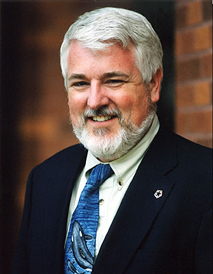
Charles Owen is an Associate Professor in the Department of Computer Science and Engineering (CSE) at Michigan State University's College of Engineering. He serves as Associate Chair for Undergraduate Studies and directs the Media and Entertainment Technologies Laboratory. He is also a member of the MSU Media, Interface, and Network Design (M.I.N.D.) Laboratory. Education: Ph.D., Computer Science, Dartmouth College (1998) M.S., Computer Science, Western Illinois University (1993) B.S., Computer Science, Louisiana Technical University (1980) Research Interests: His work focuses on multimedia systems, multimedia databases, image/signal processing, and authoring systems. Key areas include QoS-aware networking, augmented reality applications, and retail technology integration. Publications: Recent work spans mobile ad hoc networks, augmented reality displays, and e-commerce systems. His research bridges theoretical computer science with practical applications in retail and human-computer interaction. Awards: Withrow Award for Teaching Excellence (2004, 2001) Teacher-Scholar Award (2003) Lilly Teaching Fellow (2002-2003) His lab collaborations emphasize interdisciplinary approaches to media technologies and educational innovation.
Ana Isabel Loureiro Lopes is an Assistant Professor at the Department of Communication Sciences, Faculty of Social Sciences and Humanities, Vrije Universiteit Amsterdam. She holds a PhD in Applied Economics from the University of Antwerp and previously worked as a Researcher at the igMIP project (University of Minho/Bosch Car Multimedia). Her roles also include Assistant Professor positions at the Network Institute and Communication Choices, Content and Consequences (CCCC) group. Her research focuses on corporate communication, social responsibility, sustainable consumption, and the impact of online reviews and webcare on business performance. She actively explores how organizations can leverage communication strategies to enhance social responsibility and foster sustainable practices. Ana has published in prestigious journals and contributed to interdisciplinary studies, such as applying social science theories to sustainability initiatives. Teaching responsibilities include courses on Public Relations and Reputation Management at both BA and MA levels. She supervises master’s theses and is the Principal Investigator for the ongoing project 'CSR efforts: corporate approaches and consumers' attitudes' (2023–2029), examining how corporate social responsibility strategies influence consumer behavior. Ana’s work intersects marketing, consumer behavior, and digital communication, with notable contributions to understanding managerial response strategies to online reviews and their effects on consumer decisions. Her research bridges theoretical frameworks with practical applications, emphasizing real-world business challenges.
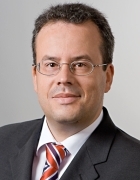
Hans van den Berg is a Full Professor at the Design and Analysis of Communication Systems and Digital Society Institute , focusing on advanced communication network design and optimization. His work bridges theoretical modeling with practical applications in wireless systems and edge computing. Active research in drone-based communication infrastructure Expertise in QoS management and cross-layer network design Key contributor to 5G and cellular network optimization Research Trends : Recent publications emphasize drone-mounted base stations for emergency scenarios (2024), 5G network scheduling (2023), and edge computing architectures (2022). Work often combines cellular network optimization with data-driven positioning and real-time resource allocation . Scientific Awards : Best Paper Award (2008) Best Paper Award (2011) Professional Contributions : Presented at major conferences on topics including QoS control in IP networks (2001), CDMA interference analysis (2003), and bandwidth provisioning (2003).
Prof. Dr.-Ing. Eckehard Steinbach is a Full Professor of Media Technology at the Technical University of Munich (TUM), affiliated with the TUM School of Computation, Information and Technology. His research focuses on haptic communication, the Tactile Internet, multimedia systems, and machine learning-driven analysis of sensory data. He holds an IEEE Fellowship (2015) for contributions to visual and haptic communications and has led projects like the Centre for Tactile Internet with Human-in-the-Loop (CeTI). Education: Studied Electrical Engineering at the University of Karlsruhe, University of Essex, and ESIEE Paris. Earned a Ph.D. from Friedrich-Alexander University of Erlangen-Nuremberg (1999). Postdoc at Stanford University (2000–2002). Research Interests: Haptic data compression, teleoperation, networked multimedia systems, and applications of machine learning in sensory data analysis. Key projects include the IEEE 1918.1.1-2024 standard for haptic codecs and 5G-based teleoperation systems. Awards: ERC Starting Grant (2011–2015), Alcatel-Lucent Research Award (2011), VDE-ITG Publication Award (2009). Grants and Projects: Led initiatives in tactile internet, 5G testbeds for eHealth, and radar-based human activity monitoring. Collaborates on robotics and remote collaboration systems via platforms like the Munich 5G Research Hub. Labs/Teams: Chair of Media Technology at TUM, contributing to TUM-IAS and the Munich Institute of Robotics and Machine Intelligence (MIRMI).
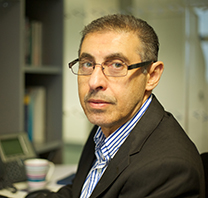
Abdel-Hamid Soliman is a Professor in the Department of Digital, Tech, Innovation & Business at Staffordshire University, UK. His academic roles include teaching, research leadership, and industrial collaboration. He holds a PhD in Image Processing and multiple postgraduate certifications in research supervision and methods. Education Background: PhD in Image Processing MSc in Information Systems and Data Acquisition Systems BEng (Hons) Distinction in Electronics and Communications PGC in Research Supervision PGC in Research Methods Research focuses on bridging academia and industry through automation technologies (Smart Cities, Energy Management, Safety Systems), fibre optics, IoT, and advanced signal/image processing. He leads EU-funded projects like CERES-TEMPUS, PEACE Erasmus Mundus, and WatERP-FP7. His work emphasizes community impact through innovation. Industrial Collaboration: Consultant for oil companies (VIBA, AGIP, etc.) Co-founder of ICentrica Ltd (spin-out company) Delivered projects for Sturge Industries, Universal Systems, and Direct Radio Response Grants & Partnerships: Secured EU funding via FP7 and Erasmus Mundus programs National/international partnerships in North Africa/Middle East Labs/Teams: Involved with Staffordshire's research groups and ICentrica Ltd's innovation activities. Active in training programs for industry professionals and university collaborations.
Mohammed Atiquzzaman is the Edith Kinney Gaylord Presidential Professor of Computer Science at the University of Oklahoma’s School of Computer Science. He holds a Ph.D. in Electrical Engineering from the University of Manchester (1987), an M.Sc. from the same institution (1984), and a B.Sc. in Electrical and Electronic Engineering (1982). Research Interests: His work focuses on advanced network systems, including next-generation computer networks, wireless/mobile networks, satellite networks, switching/routing protocols, optical communications, and multimedia over networks. He also explores security, disaster response networking, and quality of service optimization. Awards & Recognition: IEEE ICC’13 Best Paper Award 2006 IEEE Fred W. Ellersick Prize IET Premium Award (2002) Regents’ Award for Research Excellence (2007) University of Oklahoma Alumni Teaching Award (2008) Edith Kinney Gaylord Presidential Professorship (2010) Advising & Grants: His research is supported by the NSF, NASA, and U.S. Air Force. He leads the Telecom and Network Research Lab and has authored books on TCP/IP over ATM networks and satellite mobility architectures. Editorial Roles: Editor-in-Chief of Journal of Network and Computer Applications and Vehicular Communications , and associate editor of multiple IEEE journals.
Athanasios Koutras is an Associate Professor at the Department of Electrical and Computer Engineering, University of Peloponnese. He holds a PhD in Electrical and Computer Engineering from the University of Patras (2001), focusing on blind speech separation. His career includes roles as Deputy Head and Head of the Department of Informatics and Media at TEI of Patras (2008–2018) and academic positions at institutions like the University of Ioannina and Aristotle University of Thessaloniki. He has supervised over 160 theses and teaches courses in digital signal processing, biomedical engineering, and multimedia technologies. Research Interests: Digital sound/image processing, biomedical signal analysis, machine learning, computer-aided diagnosis, EEG/MEG analysis, deep learning, brain-computer interfaces (BCI), and tourism data forecasting. Founding Director of the Signal, Image Processing & Pattern Recognition (SIPPRE) Research Group, he explores applications in healthcare, audiovisual technologies, and smart cities. His work spans interdisciplinary collaborations, including medical neuroscience and tourism analytics. Awarded editorial roles in journals like Advances in Signal Processing and MDPI Electronics , he actively mentors through IEEE programs. Office hours: Monday 13:00–14:00, Tuesday 11:00–13:00 (Teams).
Professor Tasos Dagiuklas is a Visiting Professor in the Department of Computer Science at London South Bank University, leading the Smart Internet Technologies Hub research group. He holds a Ph.D. in Electrical Engineering from the University of Essex (1995), with earlier degrees from the University of Manchester (M.Sc.) and the University of Patras (Engineering Degree). His research focuses on next-generation networking (4G/5G/6G), edge computing, federated learning, and programmable networks. He has led over 30 international R&D projects and published extensively in top journals/conferences. Education Background: Bachelor's in Electrical Engineering, University of Patras, Greece (1989) M.Sc. in Electrical Engineering, University of Manchester, UK (1991) Ph.D. in Electrical Engineering, University of Essex, UK (1995) Research Interests: 6G Network Architectures Edge Cloud Computing & Virtualization Secure Federated Learning Systems Energy-Efficient Edge Solutions AI-Driven Network Optimization Smart Farming Technologies Key Contributions: Over 300 publications in networking/security domains Technical Editor for IEEE/Springer journals Guest editor for special issues on QoE and Multimedia Architect of frameworks like VFCSIM and Supereye Lab/Team Affiliations: Active in the Smart Internet Technologies Hub, focusing on edge-cloud innovations and next-gen wireless systems. Collaborates with industry through capacity-building projects.
Reza Zafarani is an Associate Professor in the Department of Electrical Engineering and Computer Science at Syracuse University, where he directs the Data Lab. He holds a Ph.D. from Arizona State University. His research focuses on the intersection of data mining, machine learning, and social sciences, particularly in analyzing large-scale networks and social media data. Key areas of interest include big data analytics, social network analysis, and behavior modeling. He has authored influential works such as the textbook Social Media Mining: An Introduction (Cambridge University Press, 2014) and pioneered research in fake news detection, network robustness, and graph representation learning. Notable awards include the NSF CAREER Award (2020) and NVIDIA/Google education grants. His work spans theoretical advancements (e.g., spectral network analysis) and applied solutions (e.g., noise-enhanced machine learning). Recent research highlights include higher-order network models, adversarial graph attacks, and interpretable network representations. He advises students like Shengmin Jin and Xinyi Zhou, whose work addresses critical challenges in network science and misinformation detection. Reza Zafarani actively contributes to the academic community through tutorials (e.g., WWW/SDM conferences) and open-source datasets like CHECKED, enabling reproducible research in misinformation studies.
SAKAUE Fumihiko is an Associate Professor at the Faculty of Engineering, Department of Information Engineering at Okayama University. He holds a Doctor of Engineering degree from Okayama University, awarded in 2006. His research focuses on innovative computer vision and computational photography techniques, aiming to develop novel methods for 3D measurement and real-time motion analysis without relying on conventional cameras or computers. His work integrates light-ray processing and spatiotemporal modulation to enhance visual information extraction and has contributed significantly to fields such as pattern recognition and imaging systems. Education background includes graduation from Okayama University's Faculty of Engineering in 2001, followed by earning his Doctor of Engineering degree from the same institution in 2006. His research interests span several key areas in informatics and engineering, including: Perceptual information processing for dynamic visual analysis Computer vision applications in 3D reconstruction and motion capture Computational photography techniques for advanced imaging systems Pattern recognition methodologies in unstructured environments Development of light-based measurement systems without conventional sensors Integration of light projection and observation for real-time data interpretation SAKAUE has received numerous awards, including: MIRUインタラクティブ発表賞 (2024) Best student paper award at International Workshop on Frontiers of Computer Vision (2022) Best paper award at INTERNATIONAL WORKSHOP ON ADVANCED IMAGE TECHNOLOGY (2022) MIRU2018長尾賞 (2018) 山下記念研究賞 (2018) CGVI研究会優秀研究発表賞 (2017) ICPR Best Student Paper Award (2016) MIRUインタラクティブ発表賞 (2019) MRU2016インタラクティブ発表賞 (2016) In terms of advising, SAKAUE has guided notable students including Toshiki Kamiya (recipient of 2022 Best Student Paper Award) and Yuma Nishikawa (2024 Best Student Paper award recipient). He has secured multiple grants from the Japan Society for the Promotion of Science (JSPS), including a 2020-2023 grant focused on 3D motion visualization through spatiotemporal light-ray integration, and a 2016-2019 grant on 5D light field display technologies. Additional funding includes a 2022-2025 project with Aichi Prefecture for AI-driven textile inspection systems. SAKAUE collaborates with interdisciplinary research teams at Okayama University, focusing on developing innovative imaging systems and sensorless vision technologies. His work often involves partnerships with industry through patents and applied research projects, such as the 'Position Measurement Device' (2016) and 'Three-Dimensional Information Presentation Device' (2014), demonstrating practical applications of his theoretical research.
Dr. Gkamas Apostolos is an Associate Professor of Computer Applications in the Department of Chemistry at the University of Ioannina, Greece. His research focuses on cutting-edge topics in computer networks, telematics, IoT, and cross-layer design, with a particular emphasis on multimedia transmission optimization and 5G MIMO systems. He holds a Diploma, Master’s Degree, and Ph.D. in Computer Engineering and Informatics from the University of Patras, Greece. Dr. Gkamas has contributed over 130 publications in international journals and conferences, co-authored three books on computer networks and specialized network topics, and actively participated in EU-funded projects such as FP6, FP7, and Intereg eLearning initiatives. His work spans energy efficiency in 5G networks, adaptive beamforming techniques, and latency reduction strategies for IoT applications. Recent studies include groundbreaking research on copolymer architecture for drug delivery systems and simulation-based optimization of network slicing in 5G environments. His research interests also extend to machine learning applications in network resource allocation, chatbot technology assessment (with 40 case studies in Greece), and agent-based energy-saving models for large ships. He has pioneered systems like GuideMe for indoor navigation and long-range IoT search-and-rescue solutions using LoRaWAN technology. Dr. Gkamas has collaborated on projects such as the EU's IST initiative and Greek national programs like PENED and EPEAEK, demonstrating a strong commitment to both academic research and applied technology development. His work bridges theoretical advancements with practical implementations in telecommunications and materials science.
Dr. Harley R. Myler is a Professor in the Department of Electrical & Computer Engineering at Lamar University, serving as Department Chair. His research focuses on advanced robotics, including the SeaDog project for invasive species remediation and the Plumebot swarm for environmental plume monitoring. He also develops the War of the Worlds robot targeting invasive fire ants. His teaching emphasizes digital logic, computer architecture, and adaptive learning technologies like the LUEE Digital eLearning system. He holds the William B. and Mary G. Mitchell Endowed Chair and has won multiple awards for teaching and research, including Educator of the Year (1993) and Researcher of the Year (1988–1992). Education: PhD in Electrical & Computer Engineering (New Mexico State University, 1985), MSEE (New Mexico State University, 1981), BSC Chemistry with a double major in Electrical Engineering (Virginia Military Institute, 1975). Research Interests: Machine Consciousness, autonomous robotics, environmental monitoring systems, digital control engineering, and innovative pedagogical approaches in engineering education. Current projects include the AARISE-funded aquatic robot and the Plume Monitoring Swarm to map chemical plumes in water. Publications span over 30 years, including books like Fundamentals of Machine Vision and Fundamentals of Engineering Programming , as well as peer-reviewed articles on video quality analysis, genetic algorithms, and neural networks. He holds patents in traffic information systems and digital video measurement techniques. Awards also include Tau Beta Pi and Eta Kappa Nu honors, alongside the CRC Freshman Chemistry Award (1973). His work integrates robotics with environmental solutions and education technology, reflecting his dual focus on innovation and pedagogy.
Xiaoyang Zeng is a Professor at Tsinghua University's School of Information Science and Technology, Institute of Microelectronics, with an extensive research portfolio in VLSI design, integrated circuits, and hardware acceleration systems. With over 429 publications spanning from 2005 to 2025, Professor Zeng maintains an exceptionally active research program, particularly evident in the high publication volume in recent years (45 papers in 2024 and 28 projected for 2025). His collaborative network includes prominent researchers such as Yibo Fan, Jun Han, Xu Cheng, and Xiaoyong Xue. Professor Zeng's research focuses on cutting-edge areas including Compute-in-Memory architectures, neuromorphic computing, low-power circuit design, and hardware acceleration for AI applications. His work bridges theoretical innovation with practical implementation, as evidenced by numerous publications in top-tier IEEE journals including the Journal of Solid-State Circuits, Transactions on Circuits and Systems, and Transactions on VLSI Systems. Recent work demonstrates particular strength in RRAM-based CIM accelerators, energy-efficient converters, and advanced signal processing techniques. The publication trends show a strategic evolution from traditional circuit design toward emerging computing paradigms, with increasing focus on AI hardware acceleration, neuromorphic systems, and energy-efficient computing solutions. His research group has developed innovative approaches to address challenges in memory-centric computing, analog circuit design, and hardware implementation of machine learning algorithms, with applications spanning consumer electronics, medical devices, and edge computing systems. Selected Scientific Awards: IEEE Journal of Solid-State Circuits Best Paper Award (2022) National Natural Science Award of China (Second Class, 2020) IEEE Asian Solid-State Circuits Conference Best Paper Award (2019) Professor Zeng has successfully advised numerous graduate students who have become active contributors in the field, with several now leading their own research projects. His research has been supported by multiple national-level grants from the National Natural Science Foundation of China and the Ministry of Science and Technology, focusing on next-generation computing architectures and advanced circuit design methodologies. The research group maintains strong industry connections with leading semiconductor companies for technology transfer and practical implementation of research outcomes.
Petros Marangos is a Professor of Electrical and Computer Engineering at the National Technical University of Athens (NTUA), affiliated with the Department of Signals, Control and Robotics. He holds leadership roles as Director of the NTUA Lab on Intelligent Robotics and Automation and the newly launched Hellenic Robotics Center of Excellence. His career includes professorships at Harvard University (1985–1993) and Georgia Tech (1993–1998), alongside visiting positions at MIT, UPenn, and USC. He has supervised over 30 PhD students, 10 postdocs, and 130 MEng/MSc students. Research Interests: His work focuses on computer vision, image processing, speech and language processing, robotics, machine learning, and nonlinear systems. He has authored/co-authored over 400 publications, earning prestigious awards such as the IEEE Fellow (1995) and EURASIP Fellow (2010). Grants & Leadership: As Principal Investigator or Scientific Director, he has led over 50 projects, including EU Horizon 2020 initiatives like EASIER and SoftGrip. He co-founded the CVSP Lab and served as director of the NTUA Division of Signals, Control and Robotics for a decade. Awards & Recognition: Notable honors include the IEEE SPS Senior Best Paper Award (1994), the IEEE W.R.G. Baker Prize (1995), and election as IEEE Life Fellow (2023). Teaching: Teaches courses such as Computer Vision, Signals and Systems, Robotics, and Nonlinear Systems at NTUA, building on his extensive academic experience at Harvard and Georgia Tech. Lab Leadership: Directs the CVSP Lab and Robotics Lab at NTUA, advancing interdisciplinary research in perception, interaction, and automation.
Dr. Saad Ali Amin serves as the Post-graduate Programme Manager and Principal Lecturer in Network Computing within Coventry University's Faculty of Engineering and Computing. With extensive experience in academic leadership and research, he directs postgraduate programs while maintaining an active research portfolio focused on health informatics and computing technologies. His work bridges theoretical computer science with practical healthcare applications, particularly in biomedical image processing and distributed computing systems. Education: Pg.Cert., Learning and Teaching in Higher Education, Coventry University Ph.D., Computer Science, Loughborough University M.Phil., Computer and Control Systems, Brunel University Dr. Amin's research spans multiple interconnected domains within health informatics and computing. His primary focus centers on the design of biomedical image processing algorithms and multimedia applications for parallel and distributed computing environments, with implementation on Clusters of Workstations (CoW). He has made significant contributions to context-aware multimedia information systems for e-health decision support, creating technological solutions that adapt to user and environmental contexts. His work in parallel processing, particularly with systolic arrays and VLSI implementations, demonstrates a strong foundation in hardware-aware algorithm design. The integration of neural networks with biomedical applications represents another key thread in his research portfolio, showing how advanced computational models can enhance healthcare delivery systems. Analysis of Dr. Amin's publication record reveals a consistent trajectory from foundational work in parallel computing and image processing toward increasingly healthcare-focused applications. His early work (2004-2006) established technical capabilities in medical visualization and knowledge management, while his middle period (2010) demonstrated the application of context-aware systems to e-health decision support. The most recent publications (2011-2013) show expansion into performance evaluation systems, steganography applications, and comprehensive surveys of pervasive healthcare systems. This progression illustrates a researcher who has successfully adapted core computing expertise to address evolving healthcare technology challenges, with particular emphasis on culturally sensitive implementations as evidenced by his work in UAE and Arab contexts. Dr. Amin has secured multiple competitive research grants that reflect the practical impact of his work: Breast cancer detection research funded by BUiD Research Funding (UAE) Parallel computing and medical imaging collaboration with Midlands region hospitals (UK) European Community funding for collaboration with European institutes UNESCO funding as Project Manager for Computerised Documentation Bank Prime Minister Initiative 2 (UK) for Context-Aware Multimedia Information System for e-Health Decision Support Knowledge Exchange and Enterprise Network (KEEN UK) for Reliable and Energy Cognitive Radio Multichannel MAC Protocol development As an academic leader, Dr. Amin has supervised 4 completed PhD students with 3 currently under supervision. His professional service includes membership on the IEEE Committee for Signal Processing Chapter for the UK and Ireland, Vice-Chairmanship of the British Computer Society/Middle East section, and roles on the Executive Council of Dubai Government Excellence Projects. He has organized major international conferences including the 4th International Conference on Developments in e-Systems Engineering (DeSE'11) and served on program committees for numerous biomedical engineering and signal processing conferences.