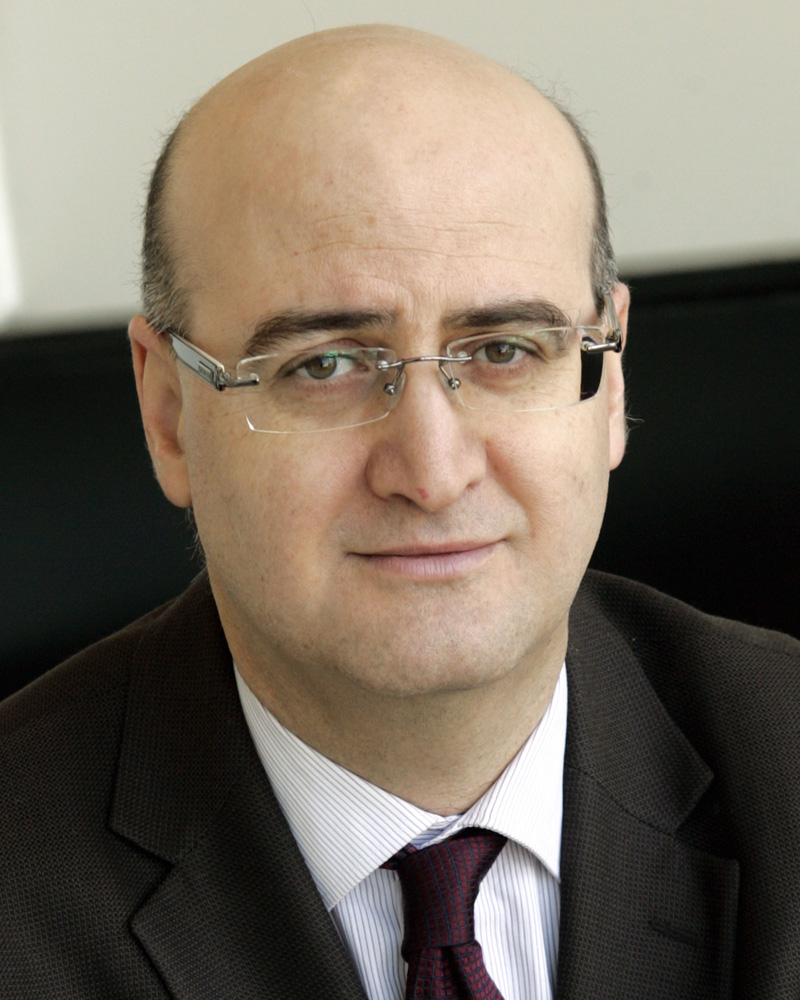
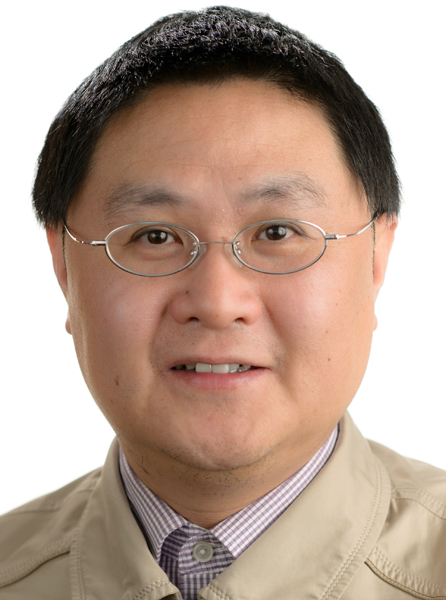
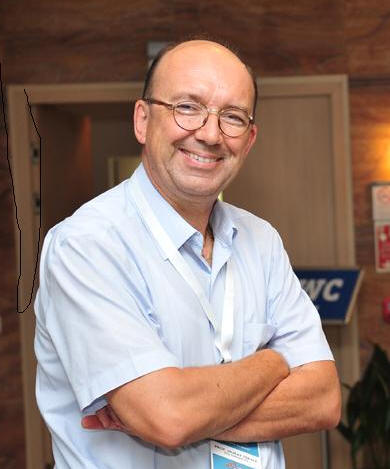
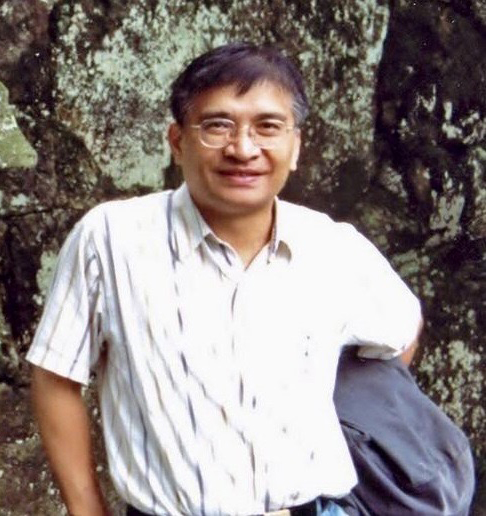
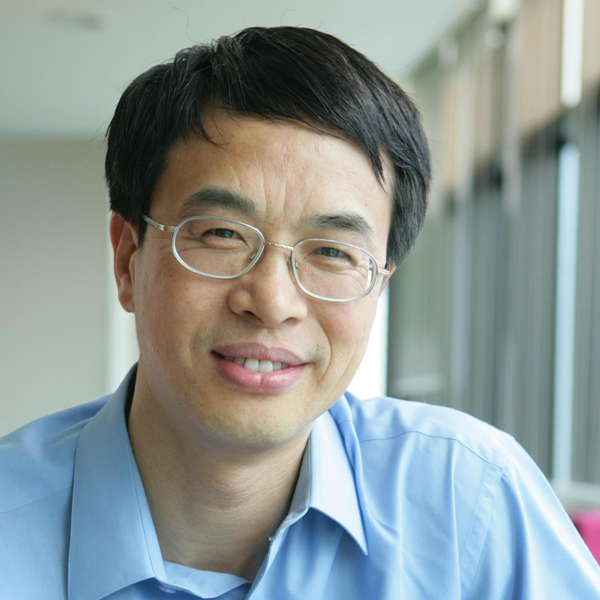
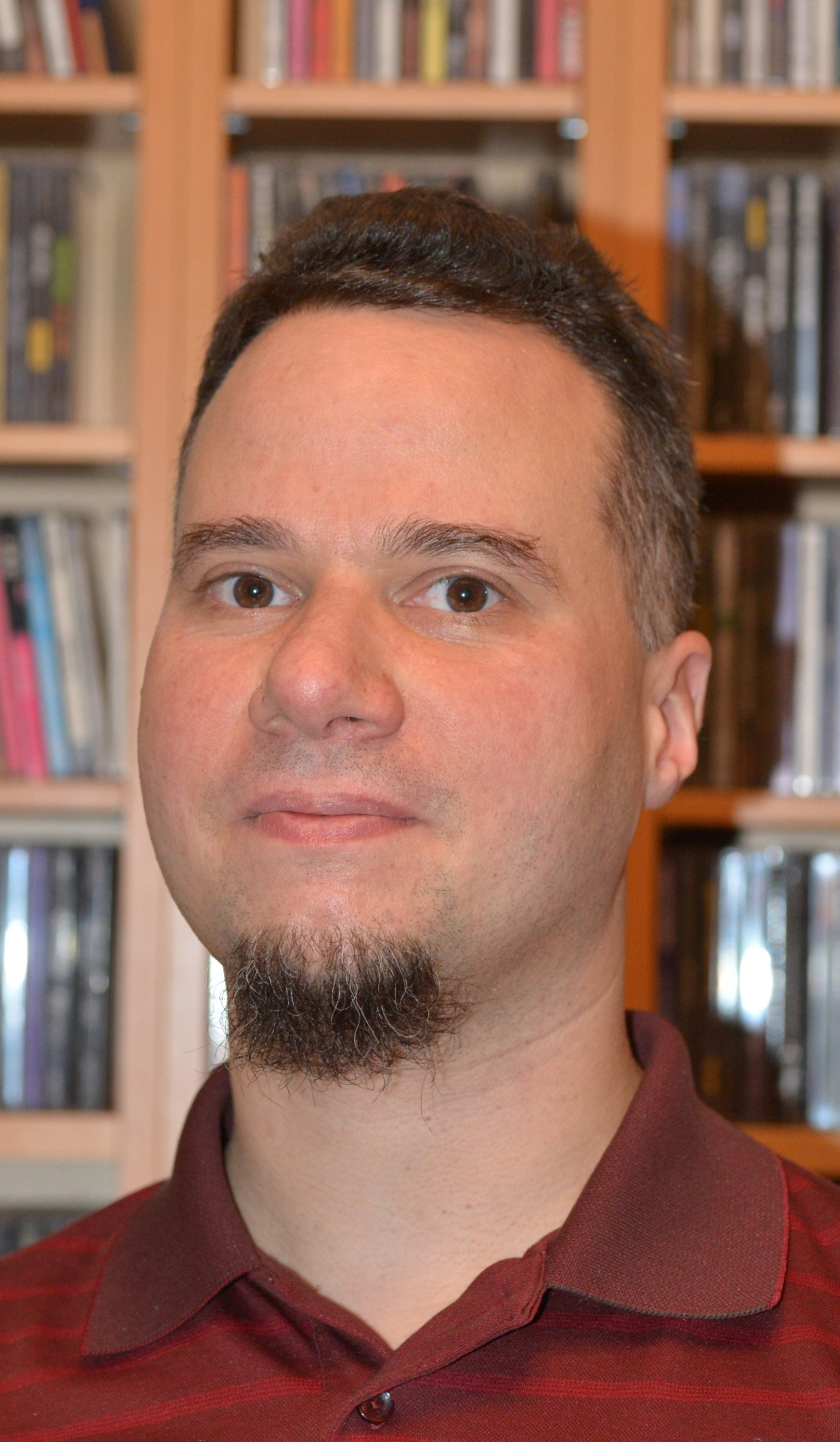
Dominik Schörkhuber is a PreDoc Researcher at the Vienna University of Technology (TU Wien) in the Computer Vision department. With a background in Informatics (BSc, Dipl.-Ing.), he focuses on computer vision applications for autonomous driving, robotics, and human-machine interaction. His work spans driver action recognition, pedestrian prediction, and adaptive lighting systems. Current projects: Empathic Vehicle (2024–2026), SyntheticCabin (2021–2025), SmartProtect (2020–2025) Research themes: Video transformers, synthetic data transfer learning, multi-task learning, and sensor-lighting integration Specializes in 3D sensing, nighttime driving analysis, and mobile video creation tools
Professor Moncef Gabbouj is a distinguished academic and researcher currently serving as Professor of Signal Processing at the Department of Computing Sciences, Faculty of Information Technology and Communication Sciences, Tampere University, Finland. Previously, he held the same position at Tampere University of Technology before the merger in 2019. He has also held visiting professorships at prestigious institutions including Hong Kong University of Technology and Science, University of Southern California, and Purdue University. Ph.D. and MSc. in Electrical Engineering from Purdue University, USA (1989 and 1986) B.Sc. in Electrical Engineering from Oklahoma State University, USA (1985) Prof. Gabbouj's research spans multiple domains within signal and image processing, with a strong focus on machine learning applications. His primary research interests include artificial intelligence, machine learning, Big Data analytics, multimedia content-based analysis, indexing and retrieval, nonlinear signal and image processing, voice conversion, and video processing and coding. His work bridges theoretical advancements with practical applications across various industries, particularly in multimedia communications and biomedical applications. His extensive publication record demonstrates a clear evolution from traditional signal processing techniques toward more sophisticated machine learning and deep learning approaches. Recent work shows increasing focus on convolutional neural networks for various applications including ECG classification, video processing, financial time-series analysis, and image recognition tasks, reflecting the broader trend in the field toward deep learning methodologies while maintaining strong foundations in signal processing theory. IEEE Fellow (2011) Member, Finnish Academy of Science and Letters (2014) Knight, First Class, of the Order of the White Rose of Finland (2006) Nokia Foundation Recognition Award (2005) Nokia Foundation Visiting Professor Award (2012) Finnish Cultural Foundation for Art and Science Award (2017) TUT Foundation Grand Award (2015) Prof. Gabbouj has supervised 64 doctoral and 72 Master's theses, demonstrating his significant contribution to academic mentoring. His research has been supported by substantial funding, including research grants totaling 8.5 million Euro (2001-2015). He has served as Academy of Finland Professor during 2011-2015 and has been involved in numerous EU research projects including Horizon, ESPRIT, HCM, IST, COST, Tempus and Erasmus programs. As Editor, Guest Editor or member of the Editorial Board of 6 international scientific journals, he has significantly influenced the academic discourse in his field. He leads the Signal Analysis and Machine Intelligence (SAMI) research group at Tampere University and serves as the Finland Site Director of the NSF IUCRC funded Center for Visual and Decision Informatics. His research unit focuses on applying advanced machine learning techniques to solve complex problems in signal processing, computer vision, and multimedia analytics, with applications ranging from healthcare to multimedia communications and financial analysis.
Professor Dong Xu is a Tenured Professor in the Department of Computer Science at the University of Hong Kong (HKU), part of the School of Computing and Data Science. He holds a B.Eng. and Ph.D. from the University of Science and Technology of China (USTC). His career includes tenured roles at Nanyang Technological University and the University of Sydney, alongside postdoctoral research at Columbia University. His research focuses on Artificial Intelligence, Computer Vision, Multimedia, and Machine Learning , with applications in autonomous driving, AR/VR, medical image analysis, and video surveillance. Xu has authored over 150 papers in top journals and conferences, including CVPR, ICCV, and IEEE Transactions. He actively contributes to the academic community as an editorial board member for journals like ACM Computing Surveys and IEEE Transactions, and through leadership roles in conferences such as ACM Multimedia and ICME. Notable awards include Fellowships from IEEE and IAPR, and the IEEE Signal Processing Society Distinguished Lecturer title (2021–2022). Education: B.Eng. (USTC, 2001), Ph.D. (USTC, 2005) Professional Service: Program Coordinator of ACM Multimedia 2024, Guest Editor of over ten special issues.
Ahmet Tekalp is a Professor in the Department of Electrical and Computer Engineering at Koc University's College of Engineering since 2001. He holds dual citizenship in Turkey and the USA, with prior academic roles at the University of Rochester (1986-2005) and research positions at Eastman Kodak (1984-1987) and Rensselaer Polytechnic Institute (1981-1984). He chairs the Electronics and Informatics Group at TUBITAK since 2004 as a part-time position. B.S. (1980) in Electrical Engineering & Mathematics, Bogaziçi University M.S. (1982) and Ph.D. (1984) in Electrical, Computer, and Systems Engineering, Rensselaer Polytechnic Institute His research focuses on digital image and video processing, including video compression, motion-compensated filtering for high-resolution applications, video segmentation, object tracking, content-based video analysis, multi-camera surveillance processing, and digital content protection. He has led numerous European and U.S. grants, including FP7 STREP projects and NSF awards, emphasizing applications in sensor networks, visual databases, and medical imaging. His scholarly work spans diverse areas such as superresolution reconstruction, head gesture animation, 3DTV streaming, and reversible data hiding. He has played pivotal roles in editorial boards, including serving as Editor-in-Chief of Signal Processing: Image Communication, and has contributed to major standards bodies like ISO MPEG and ANSI NCITS. Member, Turkish Academy of Sciences (TUBA) Fellow, IEEE Fulbright Senior Scholarship (1999) TUBITAK Science Award (2004) IEEE Signal Processing Society Distinguished Lecturer (1998) He has led multiple international research collaborations and projects, including European FP6/FP7 networks and NATO programs, with substantial grant funding from NSF, NYSTAR, and industry partners like Eastman Kodak, Xerox, and Siemens.
Chang Chin-Chen is a Chair Professor at the Institute of Information Engineering and Computer Science, Feng Chia University, Taiwan. He holds multiple prestigious fellowships, including IEEE Fellow (1998), IET Fellow (2000), CS Fellow (2020), and AAIA Fellow (2021). His research focuses on information security, cryptography, multimedia image processing, and algorithms. He has published hundreds of papers and 30 books, with over 40,340 citations and an h-index of 93 (Google Scholar). He has mentored 7 postdoctoral, 64 PhD, and 197 master’s students. Professor Chang has led numerous national and international projects, including collaborations with Taiwan’s Ministries of Science, Education, and Transportation. He founded the Chinese Information Security Association (CISA) and served as Editor-in-Chief of multiple journals. He has received over 20 major awards, including the Wolf Foundation Prize in Medicine (though likely a misattribution, as per text), and delivered invited talks globally at institutions like the Chinese Academy of Sciences and Stanford University. His contributions include pioneering work in steganography, e-business security, and neural network applications. He holds 17 patents and is a leader in advancing information security policies in Taiwan.
Ahmet M. Tekalp is a Professor of Electrical and Computer Engineering at Koc University , Istanbul, Turkey, since 2001. Previously, he held a full-time professorship at the University of Rochester (1986-2005) and part-time roles such as Chair of the Electronics and Informatics Group at TUBITAK, Turkey. His work bridges academic and industrial research, with affiliations to institutions like Eastman Kodak Company and Rensselaer Polytechnic Institute. Education: BS (1980), Electrical Engineering & Mathematics (High Honors), Bogaziçi University MS (1982) & PhD (1984), Electrical, Computer, and Systems Engineering, Rensselaer Polytechnic Institute (RPI) Research Interests: Digital image and video processing Video compression and streaming Motion-compensated video filtering for high-resolution Video segmentation and object tracking Content-based video analysis and summarization Multi-camera surveillance video processing Digital content protection Scientific Awards: Member, Turkish Academy of Sciences (TUBA) Fellow, IEEE Fulbright Senior Scholarship (1999) TUBITAK Science Award (2004), Turkey's highest science award Grants and Contracts: FP6 Network of Excellence, SIMILAR (2003-2007), Euro 6 Million FP6 Network of Excellence, 3DTV (2004-2008), Euro 6 Million FP7 STREP projects (DIOMEDES, SARACEN) with Euro 3 Million budgets NSF grants spanning wireless sensor networks, visual databases, and MRI motion artifact suppression Industry partnerships with Eastman Kodak, Xerox, Siemens Corporate Research Professional Activities: Editor-in-Chief, Signal Processing: Image Communication (Elsevier) Member, ERC-Advanced Panel on Informatics Editorial roles in IEEE journals and other publications Active in ISO/IEC and ANSI standards committees
Wenwu Zhu is a Professor and Vice Chair of the Department of Computer Science and Technology at Tsinghua University. He has held prominent positions at Microsoft Research Asia, Intel Research China, and Bell Labs, establishing himself as a leading figure in multimedia computing and networking with international recognition as a FOREIGN member of the Academy of Europe (elected 2018). His educational background includes: Ph.D. in Electrical and Computer Engineering from New York University (1996) Professor Zhu's research focuses on the intersection of multimedia systems, networking, and big data. His work has pioneered advancements in internet video streaming, multimedia cloud computing, and social-aware content distribution. He has made significant contributions to understanding how multimedia content can be efficiently delivered across diverse network environments, from traditional wired networks to modern mobile and social platforms. His research bridges theoretical computer science with practical applications, with his work on social-aware video content distribution being transferred to Tencent company. His publication record shows a clear evolution from foundational work on internet video streaming in the early 2000s, through multimedia cloud computing in the early 2010s, to more recent work on social-aware multimedia and network embedding using deep learning approaches. This progression reflects the changing landscape of multimedia computing from infrastructure-focused to socially-aware and AI-driven systems. Professor Zhu has received numerous prestigious honors: AAAS Fellow (2016) SPIE Fellow (2013) IEEE Fellow (2010) Minister of Education's Natural Science Award, 1st prize (2017) Chinese Institution of Electronics's Natural Science Award, 1st prize (2015, 2012) National Natural Science Award, 2nd prize (2012) Chief Scientist for NSFC Major Project (2016) Chief Scientist for Ministry of Science and Technology's 973 Project (2014) Multiple Best Paper Awards including ACM Multimedia 2012 As Editor-in-Chief of IEEE Transactions on Multimedia since 2017 and through leadership roles as General Co-Chair for ACM CIKM 2019 and ACM Multimedia 2018, Professor Zhu has significantly shaped the multimedia research community. His research has been supported by major grants including NSFC Major Projects and Ministry of Science and Technology's 973 Projects, demonstrating both academic and national strategic importance. He has published over 300 referred papers with an H-Index of 55, including 6 Best Paper Awards and 7 books or book chapters. Professor Zhu leads a research group at Tsinghua University focused on multimedia big data computing, with strong industry connections. His team has made pioneering contributions to structural network embedding using deep learning and social contextual recommendation systems, bridging theoretical advances with practical applications in social media platforms.
Stephan Alexander Weiss is a Researcher affiliated with the Department of Networked and Embedded Systems at the Faculty of Technical Sciences, Alpen-Adria-Universität Klagenfurt. His work focuses on robotics, computer vision, and sensor networks, with applications in agricultural technology and drone systems. He leads projects such as Heterogeneous multi-agent localization and multimodal object tracking in GPS-disturbed areas (FFG-funded) and Technology for Optimized Monitoring and Analysis of Tomato Outcomes . His research emphasizes real-world implementations in robotics, embedded systems, and environmental sensor networks. Education: Not explicitly stated in available texts. Research Interests: Includes swarm robotics, sensor fusion, autonomous systems, and interdisciplinary applications in agriculture and industry. Recent publications explore topics like swarmalator systems and noise-aware radar frameworks. He collaborates with institutions like Infineon Technologies and the Austrian Research Promotion Agency (FFG). No awards are listed, but his active project involvement highlights his contributions to applied research in embedded and networked systems.
Michael Bleyer is a Researcher in the Department of Computer Vision at the Technische Universität Wien (TU Wien), affiliated with the Faculty of Informatics. His work focuses on advanced imaging technologies, particularly in stereo matching, sensor design, and applications in augmented/mixed reality. He has contributed to projects funded by the Vienna Science and Technology Fund (WWTF), Austrian Science Fund (FWF), and the Federal Ministry of Transport, Innovation, and Technology (bm:vit). Education: Diplom-Ingenieur (Dipl.-Ing.) from TU Wien (2002), followed by a Dr.techn. (PhD) thesis on 'Segmentation-based stereo and motion with occlusions' (2006). He has supervised four students, including Armin Haßlacher (2012), Gregor Braun (2011), Roman Gross (2009), and Christian Rhemann (2005). Research Interests: Bleyer’s work bridges theoretical computer vision and practical sensor engineering. Recent trends emphasize SPAD-based imaging systems for low-light environments and head-mounted displays, addressing challenges like dark current compensation and temporal filtering. Earlier contributions include global stereo matching algorithms, optical flow estimation, and 3D scene reconstruction. Grants and Advising: Projects include Temporal-Consistent Stereo Matting (2009–2015, WWTF) Energy Functions for Global Stereo Matching (2007–2012, FWF) Video Engine Design Methodology (2006–2015, bm:vit) His advising spans topics like color in stereo matching and image filtering optimization.
Elisabeth André is a Full Professor of Computer Science and Chair of Multimedia Concepts and Applications at University of Augsburg, where she has been faculty since 2001. She previously served as Managing Director of the Institute for Computer Science at Augsburg University from 2004 to 2006. Professor André has received multiple prestigious professorship offers, including W3-Professorships in Human-Computer Interaction and Cognitive Systems from University of Stuttgart and Human-Machine Interaction from Otto-Friedrich-Universität Bamberg in 2009. Her academic journey began with a Diploma in Computer Science (1988) and Dr. rer. Nat. (1995) from Saarland University. Before joining Augsburg, she spent over a decade as a Scientific Researcher at DFKI GmbH (German Research Center for Artificial Intelligence), where she rose to Principal Researcher and was appointed a DFKI Research Fellow. Professor André's research focuses on designing and evaluating interactive multimodal user interfaces, experimental learning environments with animated characters, and affective computing. She is internationally recognized as a pioneer in embodied conversational agents, having organized one of the first international workshops on the topic in 1997. Her work stands out for its empirical foundation, including extensive corpus studies of human behaviors to inform virtual agent behavior modeling. Notably, she has conducted significant cross-cultural research with Japanese partners to develop culture-specific behaviors in virtual agents. Her publication record shows a consistent trajectory of innovation in human-computer interaction, with particular emphasis on multimodal analysis, gaze behavior simulation, and emotion recognition systems. The research trends in her recent work demonstrate increasing sophistication in input recognition methods and the development of practical toolboxes (AuBT, EmoVoice, SSI) that have been adopted by research institutions worldwide. 2007 Alcatel-Lucent Fellowship at Universität Stuttgart Best Paper Finalist at International Conference on Intelligent Virtual Agents (2007-2009) 2005 Convivio Best Demo Award 2000 Best Paper Award at International Conference on Intelligent User Interfaces 1998 RoboCup Scientific Award Multiple student projects winning international awards including GALA Awards and TEI conference awards Professor André has supervised 2 completed dissertations and is currently guiding 11 PhD students and 1 Habilitation candidate. Her leadership extends to major research projects including EU-funded initiatives (METABO, E-Circus, IRIS, DynaLearn, CALLAS) and DFG projects (CUBE-G, OC-Trust). She serves on numerous editorial boards and has held significant organizational roles in major conferences including IUI, IVA, and CASA. Her laboratory has developed multiple software toolkits that are used internationally in large-scale research projects, demonstrating the practical impact of her work. Current research directions include advanced emotion recognition systems, culture-adaptive virtual agents, and applications of her technology to educational and healthcare domains.
Prof. Matthias Harders is a Professor at the Department of Computer Science, University of Innsbruck. His work focuses on medical imaging, haptic systems, virtual reality, and data-driven simulation. He leads research in interactive visualization tools, medical device development, and machine learning applications in healthcare and environmental engineering. Research areas include haptic augmented reality for surgical training, deformable medical image registration, and synthetic data generation for retinal imaging. Notable projects include SPBView for eye movement analysis and the PoRi device for post-stroke rehabilitation. His work bridges computer science with biomedical applications, emphasizing real-world impact in healthcare technology. Publications span medical simulation, machine learning for biogas prediction, and perceptual interfaces. He collaborates on EU-funded projects involving VR/AR systems and has contributed to open-source tools for point cloud analysis and surgical planning.
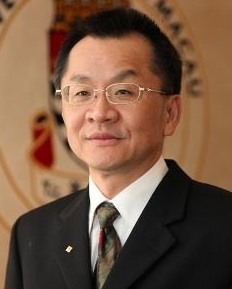
Philip Chen is a Chair Professor and former Dean (2009–2017) of the Faculty of Science and Technology at the University of Macau, China. He has held significant roles such as Editor-in-Chief of IEEE Transactions on Systems, Man, and Cybernetics: Systems (2014–present), President of the IEEE Systems, Man, and Cybernetics Society (2012–2013), and Vice President of the Chinese Association of Automation (2017–present). His career spans institutions in the U.S. and China, including leadership positions at the University of Texas, San Antonio, and Wright State University. Chair Professor, University of Macau (2009–present) Dean, Faculty of Science and Technology, University of Macau (2009–2017) Editor-in-Chief, IEEE Transactions on Systems, Man, and Cybernetics: Systems (2014–present) His research focuses on Systems and Cybernetics , Computational Intelligence , Machine Learning , and Data Science , with applications in signal processing, decision systems, and hybrid intelligence. He has contributed to over 420 publications, including 240 SCI journal papers and 120 in IEEE Transactions, alongside three U.S. patents and a book. Dr. Chen has received prestigious accolades such as the 2018 IAPR Fellow , 2009 AAAS Fellow , and 2007 IEEE Fellow . He earned the 2017 Natural Science Research Award (2nd place) in Liaoning Province and the 2016 Purdue University Outstanding Electrical and Computer Engineering Award. His 32 top 1% Highly Cited Papers (Web of Science) and recognition as one of the top 14 most cited authors in computer science (2018) highlight his global impact. As an educator, he spearheaded the accreditation of the University of Macau’s engineering and computer science programs under the Washington Accord and Seoul Accord , elevating their global rankings to top 200 (Times Higher Education) and top 161 (U.S. News and World Report). His service includes leadership in IFAC’s Technical Committee 9.1 (Economic, Business, and Financial Systems, 2015–2017).
Heinz Hofbauer is a Senior Scientist at the University of Salzburg specializing in Artificial Intelligence and Human Interfaces, with research concentrated in computer vision, biometrics, and multimedia forensics. His work focuses on face detection systems, anti-spoofing for biometric security, and image/video encryption techniques, demonstrated through extensive publication and project leadership. His research spans computer vision, biometrics, artificial intelligence, and image processing, with notable contributions to cultural heritage analysis (e.g., face detection in the Wenceslas Bible), biometric sensor forensics, and visual security assessment. Recent work increasingly addresses cross-disciplinary applications in biomedical imaging and material science. Analysis of his 2023-2025 publications reveals three dominant trajectories: (1) AI-driven cultural heritage preservation through manuscript analysis, (2) biomedical image processing for single-cell segmentation, and (3) practical security/quality assessment for smartphone-based material classification and video encryption systems. Hofbauer has secured funding for six major research projects including: IDENTITY: Computer Vision Enabled Multimedia Forensics (2016-2019) Biometric Sensor Forensics (2014-2018) Visual Security Metrics for Image/Video Encryption (2015-2018) Traceability of Roundwood via Digital Imaging (2012-2017) Anti-Spoofing Software Evaluation for Facial Recognition (2018) Unspecified 2011 research project He actively participates in the academic community through peer review for the Journal of Visual Communication and Image Representation and conference presentations at IEEE ICIP, while collaborating closely with Andreas Uhl's research group on biometric security applications.
Markus Schedl is a Full Professor at Johannes Kepler University Linz , Austria, where he leads the Multimedia Mining and Search (MMS) group within the Institute of Computational Perception . He also heads the Human-centered Artificial Intelligence (HCAI) group at the Linz Institute of Technology (LIT) AI Lab . Education: Computer Science (TU Wien), PhD (JKU Linz), Master's in International Business Administration (WU Wien, University of Gothenburg) Research Interests span recommender systems , information retrieval , algorithmic fairness , user modeling , and machine learning . His recent publications focus on: Multimodal and hybrid AI for human-centric personalization Context-aware music recommendation and emotion recognition Graph neural networks for session-based recommendation Technical and regulatory compliance in fair, transparent, and privacy-preserving systems Projects are funded by the Austrian Science Fund (FWF) , Austrian Research Promotion Agency (FFG) , and European Commission (EC) . He maintains industry collaborations with Siemens, Spotify, and Deezer. Teaching includes courses like Introduction to Machine Learning and Social Media Mining and Analysis at JKU, with guest lecturing experiences at Pompeu Fabra, Queen Mary London, and KTH Stockholm. Labs & Teams: MMS group at JKU's Institute of Computational Perception and HCAI group at LIT AI Lab.
Maja Osojnik is a lecturer for composition at the Salzburg University of Applied Sciences since 2018 and teaches improvisation/KEP Contemporary Music Performance at the Music and Arts Private University of the City of Vienna (MUK) since 2020 within the Faculty of Music. Her research interests span experimental sound art, electroacoustic composition, and contemporary improvisation. Osojnik deconstructs sonic boundaries through lo-fi electronics, field recordings, and unconventional instruments including Paetzold bass recorders, cassette players, and broken sound libraries. Her work explores the limbo between analog and digital, virtual and real spaces, combining experimental techniques with elements of noise, rock, early music, and traditional forms. Her most recent publications reveal trends in radio play hacking, networked performance, and graphic score production. Osojnik's work consistently investigates sound degradation, circuit bending, and the transformation of broken instruments into new sonic palettes. 2023: hörspiel_hacking (radio play composition) 2020: DRUCK (collaborative circuit-bending project) 2018: Berlin Radio Play Festival First Prize (WENDY PFERD TOD MEXICO) 2014: City of Vienna Composition Prize 2009/2019: Austrian State Composition Scholarship Osojnik leads multiple ensembles including Rdeča Raketa, Broken.Heart.Collector, and the Maja Osojnik Band. She founded MAMKA RECORDS in 2018 for self-produced recordings and graphic sound scores. Her sound installations and performance projects often involve custom-built electronics, field recordings, and collaborative networks across Austria, Slovenia, and international festivals.