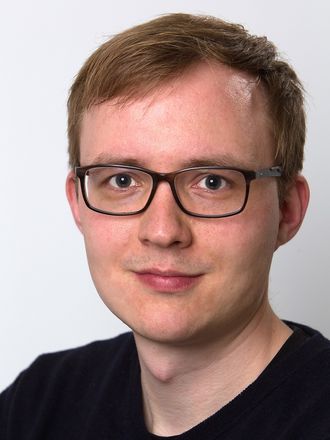
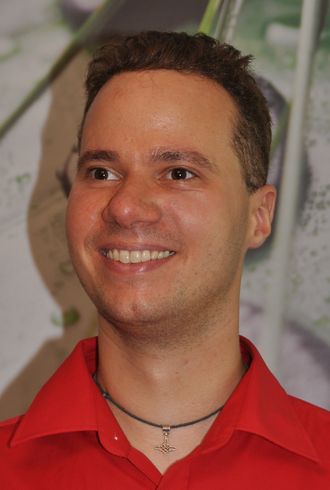
Stefan Balke is a Researcher at the AudioLabs Erlangen, Friedrich-Alexander-Universität Erlangen-Nürnberg (FAU), focusing on wind music research and Music Information Retrieval (MIR). Previously, he held a PostDoc position at the Institute of Computational Perception, JKU Linz (2018–2019) and later worked as a Data Scientist and Team Lead in industry. He temporarily served as a professor at Hochschule Weserbergland in 2023/24. Education: PhD (Dr.-Ing.) in MIR from FAU (2018), Electrical Engineering studies at Leibniz Universität Hannover (2008–2013). Research Interests: Music Information Retrieval, Deep Learning, Jazz and Wind Music Analysis, Dataset Development. His work includes creating datasets like ChoraleBricks (wind music) and JSD (jazz structure analysis), and tools like trackswitch.js for audio visualization. Grants & Projects: Secured 35k€ funding for his orchestra through the 'Engagiertes Land' program (2024). Collaborated on exhibits such as 'The Listening Machine' (Ars Electronica) and 'Con Espressione!' (mathematics of music exhibition). Contributions: Active on GitHub with repositories for datasets (choralebricks, jsd) and tools. Co-developed web-based audio tools and contributed to open-source projects like Sonic Visualiser and librosa.
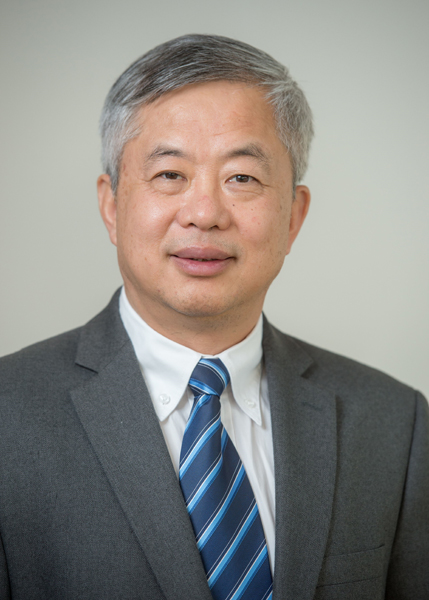
Chen Chang-Wen is a Chair Professor of Visual Computing at The Hong Kong Polytechnic University (2021–present). Previously, he was Empire Innovation Professor at the University at Buffalo (2008–2021) and held leadership roles including Dean of the School of Science and Engineering at CUHK Shenzhen (2017–2020). His research focuses on multimedia systems, signal processing, and communication. He is a Fellow of IEEE and SPIE, and has received numerous awards including the Alexander von Humboldt Research Award (2010) and the SUNY Chancellor's Award (2016). Chen has authored over 420 publications and holds three US patents. His work emphasizes interdisciplinary applications in visual computing, including contributions to autonomous systems, edge networks, and video quality assessment. He currently serves as Editor-in-Chief of IEEE Transactions on Systems, Man, and Cybernetics: Systems and leads initiatives in global university rankings and accreditation for engineering programs.
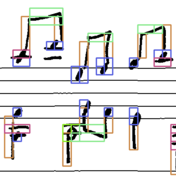
Horst Eidenberger is an Associate Professor at the Technische Universität Wien (TU Wien), affiliated with the Institute for Visual Computing and Human-Centered Technology within the Faculty of Informatics. He holds part-time status at the university. His research focuses on computational perception of audiovisual media, forensic biometrics, multimedia systems, machine learning, and virtual/augmented reality. He leads projects like the Virtual Jumpcube and Vreeclimber hybrid systems, integrating sensory stimuli in VR environments. Eidenberger supervises numerous student theses, covering topics from AI political agents to plant detection with machine learning. He teaches courses on deep learning, VR design, and multimedia retrieval. His work bridges technical innovation with practical applications, including cybersecurity, healthcare, and immersive storytelling. Roles: Associate Professor, Expert Witness in IT/Sigproc, VR Project Lead. Research Interests: Biometric media analysis, hybrid VR systems, optical music recognition, and machine learning. Projects: Vreeclimber climbing wall, Virtual Jumpcube, DeepOMR, and forensic biometrics. Publications span over 50 peer-reviewed articles, emphasizing multimedia retrieval, VR systems, and cognitive modeling. His Handbook of Multimedia Information Retrieval (2012) remains a foundational text. Eidenberger actively mentors students and contributes to interdisciplinary collaborations in AI, HCI, and digital media.
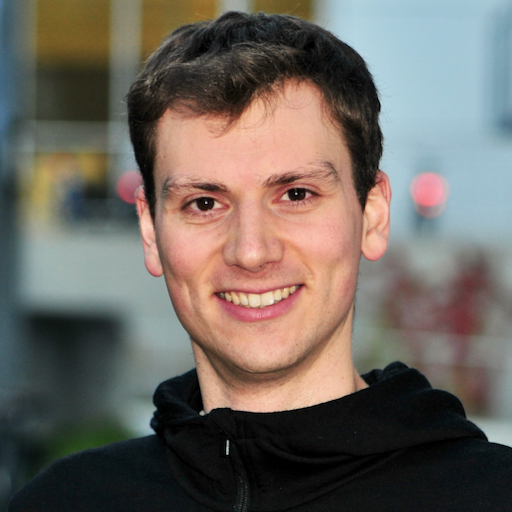
Dr. Benedikt Lorch is a researcher currently affiliated with the Security and Privacy Lab at the University of Innsbruck, Austria. His professional journey includes roles as a Postdoctoral Fellow (2023–2024) and Research Assistant (2022–2023) at the same institution, preceded by research and academic roles at Friedrich-Alexander-Universität Erlangen-Nürnberg (FAU), Germany, including a Ph.D. in Computer Science (2018–2023) focused on cybercrime and forensic computing. He has also held visiting researcher positions at Dartmouth College (USA) and Imperial College London (UK). His research interests center on steganography, steganalysis, multimedia forensics, and machine learning applications in digital security. Notable work includes analyzing JPEG image directionality for security implications, improving steganalysis techniques using leaked cover thumbnails, and developing reliable machine learning models for forensic image analysis. His contributions address challenges in digital forensics, such as detecting image tampering, authenticating multimedia content, and enhancing degraded license plate recognition. Key academic awards include the ASQF award for outstanding studies (2019) and a DAAD scholarship for international research (2017). His work spans projects like UNCOVER and emphasizes compliance with regulations like the Artificial Intelligence Act in forensic analysis. Beyond technical contributions, Lorch has explored medical imaging applications, including motion artifact detection in MRI and heart rate estimation using wearable sensors. His research trends reflect a focus on leveraging probabilistic methods and deep learning to enhance forensic reliability, with a particular emphasis on JPEG-based steganalysis and digital image security. Collaborations with institutions like the Pattern Recognition Lab and Biomedical Image Analysis Group highlight interdisciplinary engagement in computer science and medical imaging.
Sanjit K. Mitra is a Distinguished Professor Emeritus at the University of California, Santa Barbara (UCSB), and a Life Fellow of the IEEE. He holds memberships in prestigious academies including the U.S. National Academy of Engineering, European Academy of Arts & Sciences, and Bavarian Academy of Sciences and Humanities. His career includes roles as Distinguished Professor and Professor at UCSB, UC Davis, and Cornell University, alongside contributions at Bell Labs. Key Positions: Distinguished Professor Emeritus (UCSB), Member of Technical Staff (Bell Labs), 1962–2006. Education: Not explicitly detailed in texts, but his academic lineage spans decades of mentorship. Research focuses on digital and analog signal processing, filter design, and image/video compression. He authored 14 books and over 700 publications, cited 31k+ times (h-index 73). His work has been translated into multiple languages and influenced global engineering curricula. Awards include the IEEE Education Medal (2006), Golden Jubilee Medal (1999), and recognition as a 'Pioneer in Signal Processing' (1998 & 2017). His 48 Ph.D. students include 9 IEEE Fellows and a U.S. NAE member.
Prof. Silvia Miksch is a full professor in the Department of Visual Analytics at TU Wien. Her research focuses on visual analytics, time-oriented data visualization, and human-computer interaction. She leads projects in cultural heritage analysis, fraud detection, and pandemic data visualization. Her work bridges computer science with digital humanities, emphasizing user-centric design and uncertainty modeling. Key contributions include guidance systems for VA environments and network visualization frameworks for art history. Affiliations: TU Wien (since 2000+) Research Labs: Network Lab, Visual Analytics Research Group Recent projects explore temporal patterns in artist exhibitions, parameter space exploration, and pandemic data communication. She has advised over 20 PhD/Master’s students, many contributing to VA systems like COVIS and NEVA. Awarded the VGTC Visualization Technical Achievement Award (2024) for foundational work in temporal visualization. Active in IEEE VAST and serves on journal editorial boards. Her labs develop open-source tools for interactive data exploration.
Peter Reichl is a Professor in the Faculty of Computer Science, leading the Research Group Cooperative Systems. His work spans interdisciplinary research in Human-Computer Interaction, IoT systems, and Digital Ethics. He actively contributes to the UN Sustainable Development Goals through innovative technology solutions. Key projects include the European Distributed Data Infrastructure for Energy, COMPASS, and symbIoTe. Research interests include mobile computing, tangible interfaces, quantum computing education, and ethical implications of digital transformation. Over 134 publications since 2008 reflect his work in music technology, IoT frameworks, and socio-technical systems analysis. Recent articles highlight creative tech solutions like LEGO-based music sequencers and philosophical explorations of Digital Humanism. He has organized major events like the Dagstuhl Workshop on Quality of Experience (QoE Vadis?) and contributed to policy discussions on digital democracy in Austria. Key Projects: symbIoTe (2016-2018), COMPASS (IoT solutions), European Energy Data Infrastructure (2023-2025) Notable Activities: Panellist on Digital Transformation Ethics (2024), Poster Presenter for Muco app (2022) Labs/Teams: Research Group Cooperative Systems focuses on IoT interoperability and human-centered tech design.
Dieter W. Fellner is a distinguished Professor of Computer Science at Technical University of Darmstadt, Germany, where he serves as Director of the Fraunhofer Institute of Computer Graphics (IGD). He also holds a concurrent position as Professor of Computer Science and Founding Director of the Institute of Computer Graphics and Knowledge Visualization at Graz University of Technology, Austria. With a career spanning over three decades, Fellner has established himself as a leading figure in computer graphics, digital libraries, and related fields. Education: Diploma in Technical Mathematics, Graz (1981) Doktorate (Ph.D.) in Technical Mathematics, Graz (1984) Habilitation, Graz (1988) Professor Fellner's research spans multiple domains within computer science, with a primary focus on computer graphics and its applications. His work encompasses computational geometry, 3D modeling and rendering, virtual and augmented reality, and digital libraries with emphasis on cultural heritage preservation. He has made significant contributions to algorithms for integrating modeling and rendering processes, efficient visualization techniques, and generative modeling approaches. His research extends to practical applications in internet-based multimedia systems, where he coordinated a strategic initiative funded by the German Research Foundation that supported approximately 50 researchers across 21 groups from 1997 to 2005. An analysis of Professor Fellner's publication record reveals a consistent trajectory of innovation in computer graphics and digital document systems. His early work focused on foundational graphics algorithms and videotex systems, evolving toward more complex 3D document modeling, visualization techniques, and digital library architectures. A notable trend is his interdisciplinary approach, bridging computer graphics with applications in cultural heritage, bioinformatics, and brain-computer interfaces. His research demonstrates a progression from theoretical algorithms to practical implementations addressing real-world challenges in information visualization and knowledge management. Scientific Awards: Fellow of the Eurographics Association (2000) Member of the IST Advisory Group for the European Commission (ISTAG) (2007) Best Technical Paper Award (Günther Enderle Award) at Eurographics'98 Conference Honorary Doctorate from the University of Rostock (2019) Throughout his career, Professor Fellner has supervised numerous students and researchers, though specific names are not documented in the available sources. His leadership extends to significant grant activities, most notably coordinating the German Research Foundation's strategic initiative on distributed processing and mediation of digital documents from 1997 to 2005. This major project provided funding for approximately 50 researchers annually across 21 research groups, demonstrating his capacity to lead large-scale collaborative research efforts. He has also served on editorial boards of leading journals and program committees of international conferences, shaping the direction of research in his fields of expertise. Professor Fellner directs the Fraunhofer Institute of Computer Graphics (IGD) in Darmstadt, a prominent research institution focused on applied computer graphics. He also founded and chairs the Institute of Computer Graphics and Knowledge Visualization at Graz University of Technology. These institutions serve as hubs for interdisciplinary research, bringing together computer scientists, domain experts, and industry partners to advance the state of the art in visualization, digital libraries, and knowledge management systems. The teams under his leadership have produced influential work in 3D document processing, cultural heritage digitization, and advanced visualization techniques.
Professor Yrjö Neuvo is a distinguished academic and technology leader, currently serving as Professor and Research Director at the Aalto School of Science and Technology (formerly Helsinki University of Technology). He previously held the position of Professor at Tampere University of Technology from 1976 to 1993. In addition to his academic roles, he served as Chief Technology Officer (CTO) and Member of the Group Executive Committee at Nokia Corporation from 1993 to 2005, where he led global mobile R&D efforts. Education: Ph.D. in Electrical Engineering, Cornell University , 1974 Research Interests: Professor Neuvo's research spans digital signal processing , multimedia signal processing , and wireless communications . His work has significantly influenced both academic research and industrial innovation, bridging theory and application in signal processing systems for mobile and multimedia technologies. Scientific Awards & Honors: IEEE Life Fellow Four Honorary Doctorates Asteroid 1938 DN officially named Neuvo in his honor Leadership & Governance Roles: Professor Neuvo has held numerous leadership and advisory positions, including: Chairman of the ARTEMIS JTI Governing Board (2007–2008) Bureau Member of the European Science and Technology Assembly (ESTA) (1994–1997) General Chairman of the IEEE International Symposium on Circuits and Systems (1988) Member of the Governing Board and Executive Committee of the European Institute of Innovation and Technology Board Member of Metso , Vaisala , and three high-tech startups Labs & Teams: As Research Director at Aalto School of Science and Technology, Professor Neuvo leads strategic research initiatives in signal processing and wireless technologies, fostering collaboration between academia and industry.
Hans Musmann is a Professor at the University of Hannover, where he leads the Institute for Theoretical Information Technology. His research focuses on advanced communication technologies, including source coding, facsimile digitization, fax transmission optimization, and satellite-based audio/video signal transmission. He has contributed significantly to methodologies for transmitting moving images efficiently. Key Research Areas: Source Coding & Data Compression Facsimile and Satellite Communication Systems Signal Processing for Multimedia Transmission While no specific grants or advising records are documented, his academic contributions span foundational work in information technology and telecommunications since 1972.
FH-Prof. Priv.-Doz. Dr. Matthias Zeppelzauer is a Professor of Computer Vision and Machine Learning at the University of Applied Sciences St. Pölten, leading the Media Computing Research Group at the Institute of Creative Media Technologies. His work focuses on human-centered AI, explainable machine learning, and clinical gait analysis. He holds a habilitation in Computer Science from TU Wien and has authored/co-authored over 90 publications. Education: PhD in Computer Science (2011, TU Wien) Habilitation (2020, TU Wien) Bachelor/Master in Media Informatics (1999-2006, TU Wien) Research Interests: Human-centered AI, computer vision, multimodal learning, explainable AI, clinical gait analysis, and social media analysis. Cross-cutting themes include interactive machine learning and trustworthy AI. Key Contributions: Developed methods for gait analysis (GaitRec dataset), explainable AI frameworks (KAVAGait), and multimodal fake news detection. Coordinated the Center for Artificial Intelligence at FH St. Pölten since 2021. Recognition: 2024 EuroVA Best Paper Award 2021 MTD Award for ReMoCapLab 2020 CVPR Outstanding Reviewer 2018 Austrian Open Source Award Grants & Projects: Coordinator of FAIRAI, TrustAI, and ReMoCapLab projects. Involved in EU-funded initiatives like Visual Heritage and Center for Digital Health. Labs/Teams: Leads Media Computing Research Group and collaborates with the Center for Artificial Intelligence and Center for Digital Health.
Markus Schedl is a Full Professor at Johannes Kepler University (JKU) Linz, Austria, leading the Multimedia Mining and Search (MMS) group at the Institute of Computational Perception. He also heads the Human-centered Artificial Intelligence (HCAI) group at the Linz Institute of Technology (LIT) AI Lab. His expertise spans recommender systems, information retrieval, algorithmic fairness, and music technology. He holds a PhD from JKU and degrees from TU Wien, WU Wien, and the University of Gothenburg. His research focuses on hybrid AI for personalization, ethical AI, and music data mining, with industry collaborations at Siemens, Spotify, and Deezer. Key projects include the FAME challenge for face-voice association and work on bias mitigation in recommendation systems. He teaches courses such as Introduction to Machine Learning and Multimedia Search at JKU, and has guest-lectured internationally. Publications emphasize AI ethics, music playlist analysis, and multimodal learning. His work addresses fairness, transparency, and user-centric design in AI systems.
Dr. Erik Schleef is a Professor of English Linguistics at the Department of English and American Studies, University of Salzburg. He has held academic positions at the University of Manchester, University of Edinburgh, and University of Iowa, and earned his PhD in Linguistics from the University of Michigan (2005). His work bridges theoretical and applied sociolinguistics with emphasis on language variation, perception, and social meaning. Current Role: Professor at University of Salzburg (since 2016) Education: PhD in Linguistics from University of Michigan Key Collaborations: Co-organizer of DiPVaC and HiSoN conferences (2026) Research Interests: Focus on (1) Language variation in the UK and its acquisition, (2) Language attitudes/perception, (3) Language & gender/sexuality, (4) Cross-cultural communication, and (5) Language standardization. Recent projects examine language monitoring, pragmatic markers, and multilingual service encounters through experimental and sociolinguistic frameworks. FWF-funded sociolinguistic monitor study AHRC-funded discourse markers research ESRC-supported projects on immigrant language acquisition Publications: Authored/edited works on sociolinguistic methods, discourse markers, and World Englishes. His 2025 book Double Standards: Codified Norms and Norms of Usage in European Languages (1600-2020) explores historical language norms. Awards: Recognized with the University of Salzburg Excellence in Teaching Award (2018). Teaching: Offers courses on Varieties of English, Sociolinguistics, and Pragmatic Markers. His methods emphasize student involvement through multimedia resources and practical research skills training.
Khaled Koutini is a Post-Doctoral Researcher at the Institute of Computational Perception, Johannes Kepler University Linz. His research focuses on developing general-purpose audio representations using deep neural networks, addressing challenges in audio classification, tagging, and machine listening. He investigates inductive biases in neural architectures and training processes to enhance generalization on small datasets, as well as transfer learning from large-scale models to specialized tasks. Affiliation: Institute of Computational Perception, JKU Linz Supervisor of PhD project: Gerhard Widmer PhD project period: January 2020 – Ongoing His work spans applications in content-based multimedia retrieval, context-aware devices, and environmental monitoring systems. The research emphasizes overcoming data scarcity issues in machine audio recognition.
Peter Pavel Arthur Petráš is a Tutor at the Institute for Intelligent System Technologies within the Faculty of Technical Sciences at the University of Klagenfurt. His research focuses on interdisciplinary applications of artificial intelligence, robotics, and systems engineering, with contributions to fields like swarmalator dynamics, automated systems design, and media literacy in digital environments. He is actively engaged in collaborative projects involving industry partners such as Infineon Technologies Austria AG and the Austrian Research Promotion Agency (FFG), emphasizing practical innovations in technology and education. While not listed as a project head, his role supports cutting-edge research in areas like radar simulation frameworks, garment sorting automation, and multi-agent localization systems. His work bridges theoretical advancements with real-world implementation, particularly in edge-cloud computing and interdisciplinary methodological innovations. Recent publications highlight his expertise in AI-driven solutions, robotics, and the societal implications of digital media. Notable themes include analyzing online political microtargeting avoidance, improving multi-robot exploration algorithms, and exploring poetry workshops in migration research. His contributions align with the University of Klagenfurt’s focus on fostering innovation through its Third Mission initiatives, emphasizing knowledge transfer to regional industries and public sectors. Petráš collaborates on projects addressing societal challenges, such as promoting media literacy through the #NoFakeFacts! Citizen Science initiative and enhancing wind turbine blade inspection via multimedia drones. His work reflects a commitment to both technical innovation and addressing ethical and educational dimensions of emerging technologies.