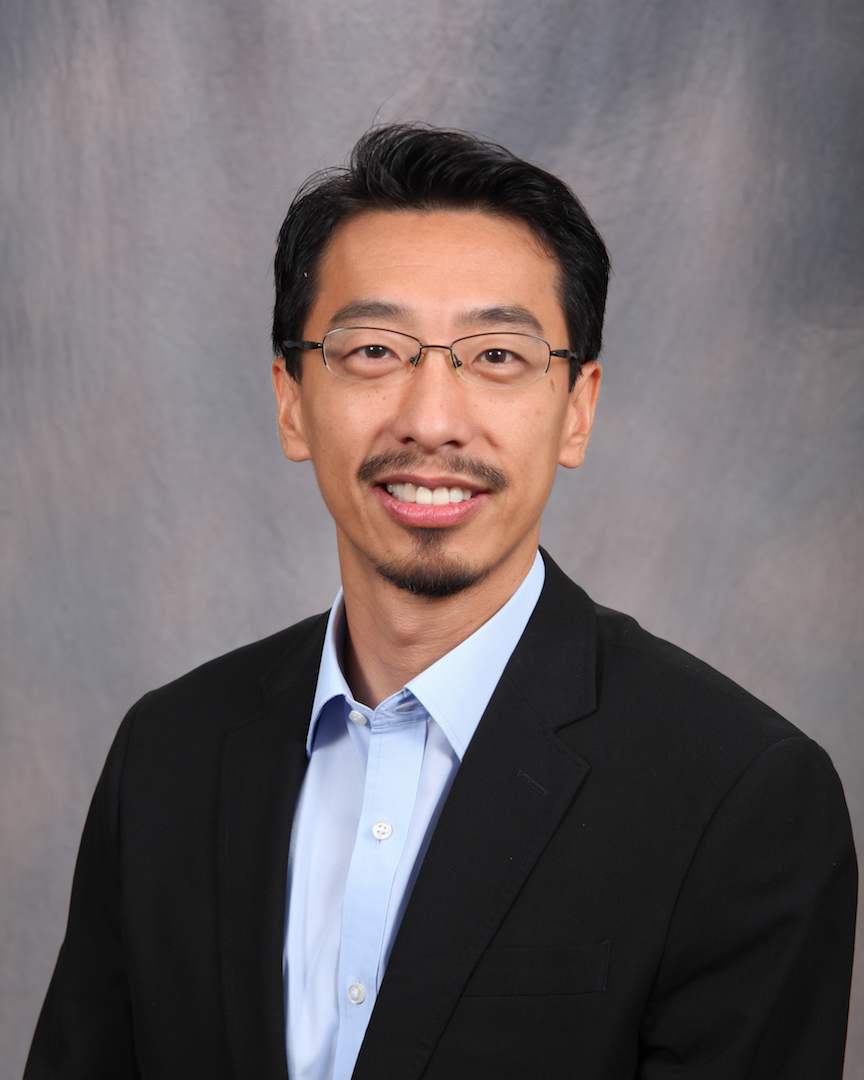
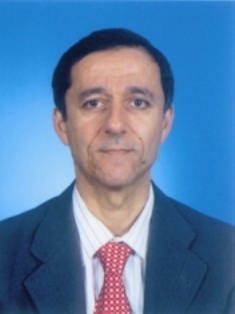
Dr. Abdelhak Bentaleb is an Assistant Professor in the Department of Computer Science and Software Engineering at Concordia University and founder/director of the IN2GM Lab. His research focuses on optimizing networked multimedia systems using machine learning, with emphasis on video streaming, edge computing, and 5G/6G networks. He holds a PhD from the National University of Singapore (awarded SIGMM and DASH-IF Best Thesis prizes) and completed a postdoctoral fellowship there. Education: PhD in Computer Science, National University of Singapore (2019) Postdoctoral Research Fellowship, National University of Singapore (2019-2022) Research Interests: AI-driven video streaming optimization, low-latency media delivery, network protocols, immersive media technologies, and IoT systems. Current projects explore end-to-end AI-enabled systems for QoE optimization in video delivery using reinforcement learning and deep learning techniques. Awards: SIGMM Award for Outstanding PhD Thesis DASH Industry Forum Best PhD Dissertation Award Multiple DASH-IF Excellence Awards His work includes over 50 publications in top venues (e.g., ACM MMSys, IEEE INFOCOM, USNIX NSDI) and 3 patents. The IN2GM Lab focuses on applied AI/ML solutions for networked systems challenges.
Phillip B. Gibbons is a Professor in both the Computer Science Department and Electrical & Computer Engineering Department at Carnegie Mellon University. He received his Ph.D. in Computer Science from the University of California at Berkeley in 1989 and has held research positions at AT&T Bell Laboratories, Lucent Bell Laboratories, and Intel Research Pittsburgh before joining CMU's faculty. His research spans parallel computing, distributed systems, databases, computer architecture, and machine learning. Gibbons' work bridges theory and systems, with publications in top-tier conferences including SOSP, OSDI, SIGMOD, VLDB, NeurIPS, and many others across computer science and engineering disciplines. His research has been supported by significant funding from NSF, Intel, and other organizations. Gibbons has made substantial contributions to streaming algorithms, parallel computing frameworks, distributed systems security, and large-scale machine learning systems. His work on data stream algorithms with Alon, Matias, and Szegedy has been particularly influential in the field. He has served in numerous leadership roles including Editor-in-Chief of ACM Transactions on Parallel Computing (2012-2018) and on the editorial boards of Journal of the ACM and IEEE Transactions on Cloud Computing. He has also been active on program committees for major conferences in systems, databases, and theory. IEEE Fellow (2014) - For contributions to parallel computing and databases ACM Fellow (2006) - For contributions to parallel computing, databases, and sensor networks Selected for Oral Presentation at NeurIPS '13 (only 20 selected out of 1420 submissions) Co-winner of the best paper award for NSDI '06 Gibbons has advised numerous students and mentored researchers who have gone on to make significant contributions in academia and industry. His research has been supported by major grants including the $15M Intel Science and Technology Center for Cloud Computing (2011-2015) where he served as Co-PI/Co-Director. He currently leads research projects on write-efficient algorithms, big learning systems, and visual cloud systems. His laboratory work focuses on bridging theoretical computer science with practical systems implementation, particularly in the areas of parallel and distributed computing. Current research directions include adapting algorithms for emerging memory technologies and optimizing machine learning systems for large-scale deployment.
Professor Jinho Choi is a Chair and Professor in Radio Frequency at the School of Electrical and Mechanical Engineering, University of Adelaide, Australia. He holds a B.E. (magna cum laude) from Sogang University, and M.S.E. and Ph.D. degrees from KAIST. His research focuses on advancing wireless communication and sensing technologies, particularly in IoT, 5G/6G, non-terrestrial networks, and cognitive satellite systems. He authored three books and has been recognized with the 1999 EURASIP Best Paper Award, IEEE Fellowship, and inclusion in Stanford's Top 2% Scientists list since 2020. He currently serves as a Senior Editor of IEEE Wireless Communications Letters and editorial roles in multiple journals. Education: B.E. (Electronics Engineering) - Sogang University, Seoul (1989) M.S.E. (Electrical Engineering) - KAIST (1991) Ph.D. (Electrical Engineering) - KAIST (1994) Research Interests: Professor Choi's work addresses connectivity challenges in non-terrestrial networks, leveraging statistical signal processing and machine learning. Current projects include UAV-assisted LEO satellite technologies, cognitive satellite radios, and semantic communication protocols. His research aims to enhance global connectivity and efficiency in terrestrial and satellite networks. Publications: His recent work spans semantic communication, satellite quantum key distribution, federated learning optimization, and coverage diversity in mega constellations. These studies reflect trends in 6G-ready technologies, AI-driven communication systems, and hybrid satellite-terrestrial networks. Awards: 1999 Best Paper Award for Signal Processing (EURASIP) IEEE Fellow (Leadership in technical excellence) World’s Top 2% Scientists (Stanford University, 2020–present) Grants & Supervision: As a senior academic, he oversees grants in wireless innovation and has advised numerous students on advanced communication systems. His lab focuses on next-generation networks, integrating theoretical insights with practical implementations. Labs/Teams: Active in interdisciplinary teams at the University of Adelaide, collaborating on projects funded by industry and government to bridge gaps between academic research and real-world applications.
Dr. Xiaohan Yu is a Lecturer in Artificial Intelligence at Macquarie University's School of Computing, joining in December 2023. Previously, he completed his doctoral studies at Griffith University and served as a Research Fellow at the ARC Research Hub for Driving Farming Productivity. His research focuses on Ultra-Fine-Grained Visual Categorization (Ultra-FGVC), Smart Farming, and Automated Crop Cultivar Identification, with over 70 publications in top-tier venues like ICCV, CVPR, and IEEE Transactions. He holds editorial roles at Pattern Recognition and SN Computer Science , and received the APRS Early Career Award (2022) and ACM MM 2024 Outstanding Area Chair distinction. Education: Completed doctoral studies in Artificial Intelligence at Griffith University, Australia. Research Interests: Ultra-Fine-Grained Visual Categorization (Ultra-FGVC) Smart Farming and Agricultural Robotics Computer Vision Applications in Healthcare (e.g., trachoma detection) Deep Learning, Continual Learning, and Domain Adaptation Key Contributions: Pioneered Ultra-FGVC research, developed frameworks like Mix-ViT and CLE-ViT, and contributed to benchmarking multi-object tracking in farming. His work bridges pattern recognition with real-world applications in agriculture and healthcare. Scientific Awards: Australian Pattern Recognition Society (APRS) Early Career Researcher Award 2022 ACM Multimedia 2024 Outstanding Area Chair Award Advising & Grants: Actively involved in editorial roles (Area Chair for ACM MM, IJCNN) and grant-funded research through ARC hubs. His work is supported by collaborations in agriculture and AI-driven solutions for crop cultivar identification. Labs & Affiliations: Member of Macquarie's Smart Green Cities Research Centre and Frontier AI Research Centre , advancing interdisciplinary AI applications.
Dr. Chao Tian is an Associate Professor in the Department of Electrical and Computer Engineering at Texas A&M University, part of the College of Engineering. He holds a Ph.D. from Cornell University (2005) and a B.E. from Tsinghua University (2000). His research focuses on information theory, distributed storage systems, coding theory, and machine learning applications, including large language models (LLMs) and privacy-preserving techniques like steganography and private information retrieval (PIR). He has received notable awards, including the 2017 IEEE Jack Wolf ISIT Best Student Paper Award and the 2014 IEEE ComSoc DSTC Best Paper Award. Dr. Tian’s work bridges theoretical foundations and practical applications, such as optimizing storage codes for distributed systems, developing secure PIR protocols, and exploring LLMs in energy and steganographic contexts. His group has pioneered methods for variable-order Markov chain modeling with transformers and designed quantization techniques for perceptual quality. Recent activities include a faculty development leave at MIT/Harvard and delivering distinguished lectures globally on AI and information theory. He advises students on cutting-edge topics like LLM-based steganography and diffusion models. His publications span journals like IEEE Transactions on Information Theory and conferences such as NeurIPS and ISIT, with a focus on coding theory, privacy, and machine learning. He has also contributed to open-source tools like the CAI toolbox for investigating information-theoretic limits. Current projects include optimizing cryptocurrency mining in energy markets and advancing federated learning with adversarial robustness.
Riccardo Lancellotti is an Associate Professor at the Department of Engineering 'Enzo Ferrari' of the University of Modena and Reggio Emilia. His research focuses on Edge/Fog/Cloud Computing, Cyber Security, and Resource Management in distributed systems. He has extensive contributions in optimizing infrastructure performance, load balancing, and energy efficiency in cloud and fog environments. His work often combines theoretical models with practical simulations, addressing challenges like stale information in edge systems and heterogeneous resource allocation in smart cities. Key research areas include: Fog/Edge computing infrastructure design and optimization Cloud resource provisioning and SLA compliance Security for Industry 4.0 and automotive systems Genetic algorithms for service placement Scalable VM clustering and resource allocation Publications highlight trends in cloud/fog integration, robust game theory for microservices, and distributed load balancing under dynamic conditions. His work emphasizes practical applications, such as pharmaceutical distribution routing and smart city sensor management. No awards are explicitly listed, but his extensive publication record reflects recognition in the field.
F. Donelson (Don) Smith is a Research Professor in the Department of Computer Science at the University of North Carolina at Chapel Hill . He holds a Ph.D. in Computer Science (1978) from UNC-Chapel Hill, with prior degrees in Chemistry (1962) and Industrial Management (1964) from the University of Tennessee. Key research areas: Computer networking, multimedia systems, distributed systems Collaboration with: Kevin Jeffay , Jasleen Kaur , and the DiRT Lab Notable contributions include: Co-inventor of U.S. Patents 7,444,720 (2008) and 5,892,754 (1999) Key roles at IBM (1965-1997) in network architecture , protocol development , and multimedia networking Active in professional service: Program Chair, TriComm '91 Co-chair, ACM CSCW '94
Alan J. Smith is a Professor in the Electrical Engineering and Computer Sciences department at the University of California, Berkeley, within the College of Engineering. With a distinguished career spanning several decades, he has made significant contributions to computer architecture, system performance analysis, and memory systems. Dr. Smith received his S. B. from MIT and a Ph.D. from Stanford University. His educational background provided the foundation for his extensive research in computer systems. Professor Smith's research focuses on computer architecture and engineering, particularly in system performance analysis, I/O systems, cache memories, and memory systems. His work has profoundly influenced how computer systems are designed and evaluated, with particular emphasis on optimizing storage systems, cache performance, and energy efficiency in computing platforms. His research has bridged theoretical analysis with practical implementation, resulting in numerous influential publications and real-world applications. His publication record shows a consistent focus on computer system performance, evolving from early work on cache memory and paging algorithms to more recent research on multimedia workloads, energy management, and storage systems. The breadth of his work spans fundamental computer architecture principles to applied system design, with particular emphasis on measurement-based analysis and optimization techniques. Harry Goode Award of the IEEE Computer Society (2006) IEEE Reynold B. Johnson Information Storage Systems Award (2008) A. A. Michelson Award of the Computer Measurement Group (2003) Fellow of the American Association for the Advancement of Science (2001) Fellow of the ACM (2000) Fellow of the IEEE (1988) Throughout his career, Professor Smith has actively contributed to the academic community through editorial roles, conference organization, and professional society leadership. He has served as Subject Area Editor for the Journal of Parallel and Distributed Computing since 1989, chaired ACM SIGARCH and SIGOPS, and participated in numerous technical committees. His research has been supported by various grants that enabled extensive experimental work and system development. Professor Smith has been instrumental in developing benchmarking methodologies and performance analysis techniques that have become standard practices in computer system evaluation. His work on cache memory systems, in particular his influential 1982 Computing Surveys paper "Cache Memories," has shaped the field for decades.
Professor Petri Vuorimaa is a faculty member at the Department of Computer Science, Aalto University. His research spans web technologies, digital television, and human-computer interaction. Research Interests: Web Engineering and Development Edge Computing and Serverless Architectures Smart Home Systems and Semantic Interoperability Blockchain Applications in E-commerce Publication Trends: Recent work focuses on serverless edge computing, resumability in web applications, disappearing frameworks, and blockchain-based reputation systems. Earlier research includes declarative languages, XML frameworks for digital TV, and mobile computing.
Raymond Cheng is a Researcher and blockchain lecturer with a focus on security, privacy, and distributed systems. He earned his Ph.D. in Computer Science from the University of Washington and holds degrees in Physics, Electrical Engineering, and Computer Science from MIT. His research spans blockchain scalability, privacy-preserving protocols, and decentralized infrastructure. Key projects include Kariba Labs , MASQ Foundation , and Open Source Observer , where he works on tools for public goods funding, secure smart contracts, and open-source analytics. Raymond's publications highlight advancements in blockchain-based databases (FalconDB), confidential smart contracts (Ekiden), and privacy-preserving messaging (Talek). His work often intersects with internet freedom and secure, scalable systems. He co-founded multiple organizations, including the Decentralization Institute and Public Goods Foundation , and has been featured in Forbes , Wired , and MIT Technology Review for his contributions to privacy and blockchain innovation.
Chris J. GauthierDickey is an Associate Professor and Chair of the Department of Computer Science at the University of Denver's Ritchie School of Engineering and Computer Science. He also serves as Director of Game Development Programs and is a member of the Colorado Research Institute for Security and Privacy. His research focuses on peer-to-peer networking, secure consistency, and multiplayer game systems. He holds a PhD (2007) and B.S. (2001) in Computer Science from the University of Oregon, supported by an NSF Graduate Research Fellowship (2002-2005). Key research areas include: Peer-to-peer architecture for games and voice communication Networked virtual environments Distributed simulation systems Game development pedagogy He has received grants totaling over $700k, including leadership in IA workforce development initiatives. Courses taught span graduate/undergraduate levels in networking, security, and game programming. Notable publications include work on multiplayer game measurement (NetGames 2010), peer-to-peer voice protocols (VRST 2009), and distributed stream processing frameworks (NPC 2010).
Simon S.Y. Shim is a Professor in the Computer Engineering Department at San Jose State University (SJSU). He holds a PhD in Computer Science from the University of Minnesota (1997). His research focuses on Internet Computing, Database Management, Machine Learning, and Information Retrieval. He has extensive industry experience as a Director at SAP Labs, working on in-memory database systems. Shim has served on the editorial board of IEEE Computer, including a 5-year tenure as Area Editor for Internet Computing. He has guest-edited special issues on High-Speed Security (2004), CAP Theorem (2012), and Next-Gen Memory (2013). He co-authored one technical book and holds multiple patents. His professional contributions include organizing IEEE Data Engineering workshops, IEEE Mobile Commerce, and IEEE Electronic Commerce events. Shim has published over 50 peer-reviewed articles and actively participates in academic service roles. His work emphasizes interdisciplinary applications of computer science in e-commerce, distributed systems, and multimedia technologies.
Prof. Dr. Yaşar Güneri ŞAHİN serves as the Dean of the Faculty of Engineering and Computer Sciences at Izmir University of Economics, where he also holds a professorship in the Department of Software Engineering. With over two decades of experience in both academia and industry, he has established himself as a prominent figure in software engineering, real-time systems, and educational technologies. His academic journey began with a Bachelor's degree in Computer Engineering from Middle East Technical University in 1994, followed by a Master's in Computer Education from Gazi University in 1999, and culminated with a Ph.D. in Industrial Technology from Gazi University in 2005. Prior to joining Izmir University of Economics in 2008, he served as a faculty member at Yaşar University starting in 2005, and before that, he gained nearly a decade of industry experience in high-level management roles overseeing numerous software projects for both public and private sectors. Prof. ŞAHİN's research spans several interconnected domains with a strong emphasis on practical applications. His work in software engineering focuses on project management methodologies, team building models for educational contexts, and database systems. In real-time systems, he has made significant contributions to forest fire detection technologies using innovative approaches like animal-based biological sensors and radio-acoustic sounding systems. His educational technology research addresses challenges in nursing education, special education for individuals with autism, and internet resource utilization by university students. Notably, his interdisciplinary approach bridges computer science with healthcare applications, particularly in medical informatics where he has developed public health information systems and tools for medical data entry. His scholarly output demonstrates a consistent trajectory of innovation across multiple domains, with particular concentration in the period from 2007-2013. While his early work focused on foundational software engineering concepts and database systems, his research evolved to address pressing societal challenges including forest fire detection, healthcare information systems, and educational technologies. This evolution reflects his ability to identify emerging technological needs and apply software engineering principles to diverse real-world problems. His contributions have been recognized through multiple prestigious awards: TÜBİTAK Scientific Publication Awards (2008-2012) İzmir University of Economics Scientific Publication Awards (2008-2011) As an academic advisor, Prof. ŞAHİN has supervised doctoral and master's theses on diverse topics including heart failure management, triage algorithms for multiple injuries, and software project selection metrics for small and medium enterprises. His administrative leadership extends beyond his deanship to include serving on juries for national art, design, and architecture competitions, as well as evaluating research projects for TEYDEB and TÜBİTAK. His grant activities include serving as a project reviewer and monitor for various technology development initiatives including "Bulut," "ARAGES," "SADE," and "SWH-ATLANTIS." Prof. ŞAHİN maintains an active research laboratory environment focused on real-time systems and software engineering applications. His work often involves interdisciplinary collaboration, particularly with medical professionals on health informatics projects and with education specialists on technology-enhanced learning initiatives. Current research directions appear to focus on the intersection of software engineering principles with healthcare applications and environmental monitoring systems.
Prof. Dr. Hadi Işık Aybay is a distinguished Professor of Computer Engineering at Eastern Mediterranean University (EMU), North Cyprus. He has held academic roles including Department Chairman of Computer Engineering (1994–2004 and 2013–present) and Director of EMU's Distance Education Institute (2000–2013). He earned his PhD in Electrical and Electronic Engineering from METU (1989) and served as an Assistant/Associate Professor before becoming a full Professor in 2013. His research spans neural networks, distributed systems, and e-learning technologies. Education: PhD, Electrical and Electronic Engineering, Middle East Technical University (1989) M.Sc., Electrical and Electronic Engineering, METU B.Sc., Electrical and Electronic Engineering, METU Research Interests: Prof. Aybay's work focuses on computer engineering innovations, including neural network hardware, distributed multimedia systems, and wireless communication protocols. He pioneered EMUOnline, a blended learning platform, and contributed to science park development in North Cyprus. His research also addresses challenges in video streaming optimization and adaptive resource allocation in cellular networks. Key Achievements: He led over 15 projects, including EU-funded initiatives like 'Deep Farm' (2024–2025). His publications (80+ papers) span IEEE journals and conferences, with 281 Google Scholar citations. Awards include the 1973 National Project Contest First Prize and the 1990 Best Thesis Award (supervised). Grants and advising: Supervised 3 PhD and 28 MSc students. Current projects include AI-driven agriculture (Erasmus+). Grants include EU funding (€1M) and Turkish Republic of Northern Cyprus initiatives. Labs/Teams: Active in the EMU Computer Engineering Department's research groups, focusing on distributed systems and e-learning infrastructure.
Dr. Jagruti Sahoo is an Associate Professor in Computer Science and Academic Program Coordinator for the Cybersecurity Program at South Carolina State University (SCSU), USA. Her research focuses on Internet of Things (IoT) , cybersecurity , machine learning , vehicular networks , and network functions virtualization . Ph.D. in Computer Science and Information Engineering from National Central University, Taiwan (2013) Postdoctoral research at University of Sherbrooke and Concordia University, Canada (2013-2016) Her research lab explores optimization, security, and privacy in IoT and cyber-physical systems, particularly in smart transportation and smart farming domains. She has published extensively in IEEE journals and conferences, with expertise in fog node placement, vehicular network protocols, and VNF management. Dr. Sahoo serves on technical program committees for major conferences (IEEE ICC, Globecom, CCNC, LCN) and as Associate Editor for IEEE Access . She is certified by CompTIA Security+ and contributes to professional organizations like ACM, N² Women, and Women in Cybersecurity (WiCyS).