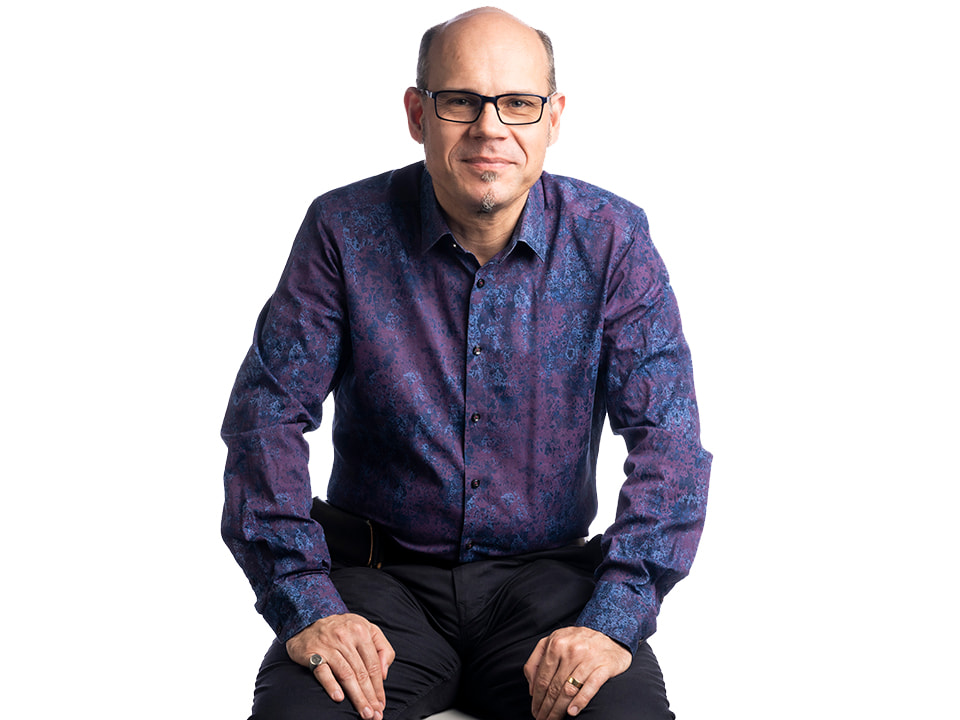
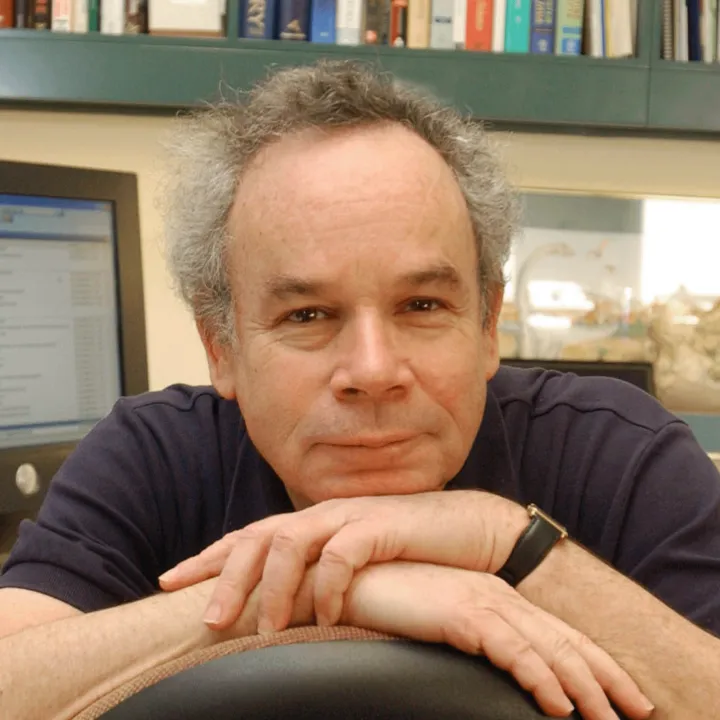
Dr. Siwei Lyu is a SUNY Distinguished Professor and SUNY Empire Innovation Professor in the Department of Computer Science and Engineering at the University at Buffalo. He serves as Co-Director of the Center for Information Integrity (CII) and Director of the UB Media Forensic Lab (UB MDFL). His research focuses on digital media forensics, computer vision, and machine learning, with significant contributions to counter-deepfake technologies. Education includes a PhD in Computer Science from Dartmouth College (2005), MS from Peking University (2000), and BS in Information Science from Peking University (1997). He has held academic positions at the University at Albany and New York University. His work spans media forensics, adversarial machine learning, and AI security. Notable achievements include developing the Celeb-DF dataset, leading NSF-funded projects, and testifying before U.S. and NYS legislative bodies on disinformation threats. Over $11.3M in grants have supported his research on AI-generated media detection, including a $5M NSF Convergence Accelerator grant. Key awards include IEEE and IAPR Fellowships, Google Faculty Award, and SUNY Chancellor's Research Award. He has authored 230+ papers, 4 patents, and serves on editorial boards of top journals and conferences (e.g., CVPR, ICCV).
Professor Ian Ruthven is a Professor of Information Seeking and Retrieval in the Department of Computer and Information Sciences at the University of Strathclyde. He chairs the Scottish Library and Information Council (SLIC) and the Steering Committee of the Information Seeking in Context (ISIC) conference series. His research focuses on human information interaction, including information seeking in health, migration, and cultural heritage contexts. He authored Dealing With Change Through Information Sculpting , proposing a theory explaining how people use information behaviors to adapt during life transitions. Education: PhD in Abduction, Explanation, and Relevance Feedback (University of Glasgow, 2001), MSc (University of Birmingham, 1993), BSc in Computing Science (University of Glasgow, 1992). Research Interests: Information seeking theory, interface design for information access, user studies. His work bridges human-computer interaction with socio-technical systems, emphasizing ethical and inclusive design. Publications: Over 170 peer-reviewed papers, including influential works on information resilience, digital divides, and pandemic impacts on international students. Recent work includes Grey Digital Divide: Factors Associated with Older People’s Use of the Internet for Financial Transactions (2025) and Information Avoidance: A Critical Conceptual Review (2025). Awards: Tony Kent Strix Memorial Award (2020), Fellow of the Royal Society of Arts (2010), and multiple best paper awards. His contributions span academic and policy realms, addressing societal challenges through information science. Projects: Co-investigator in the Participatory Harm Auditing Workbenches and Methodologies (PHAWM) project (2024–2028) and leader of the Scottish Network on Digital Cultural Resources Evaluation (ScotDigiCH) (2015–2016). These projects emphasize participatory design and cultural heritage evaluation. Professional Activities: Editorial roles for major conferences, visiting researcher at the University of Pretoria (2021), and advisory roles in library and information science initiatives. His work fosters collaboration between academia and cultural institutions.
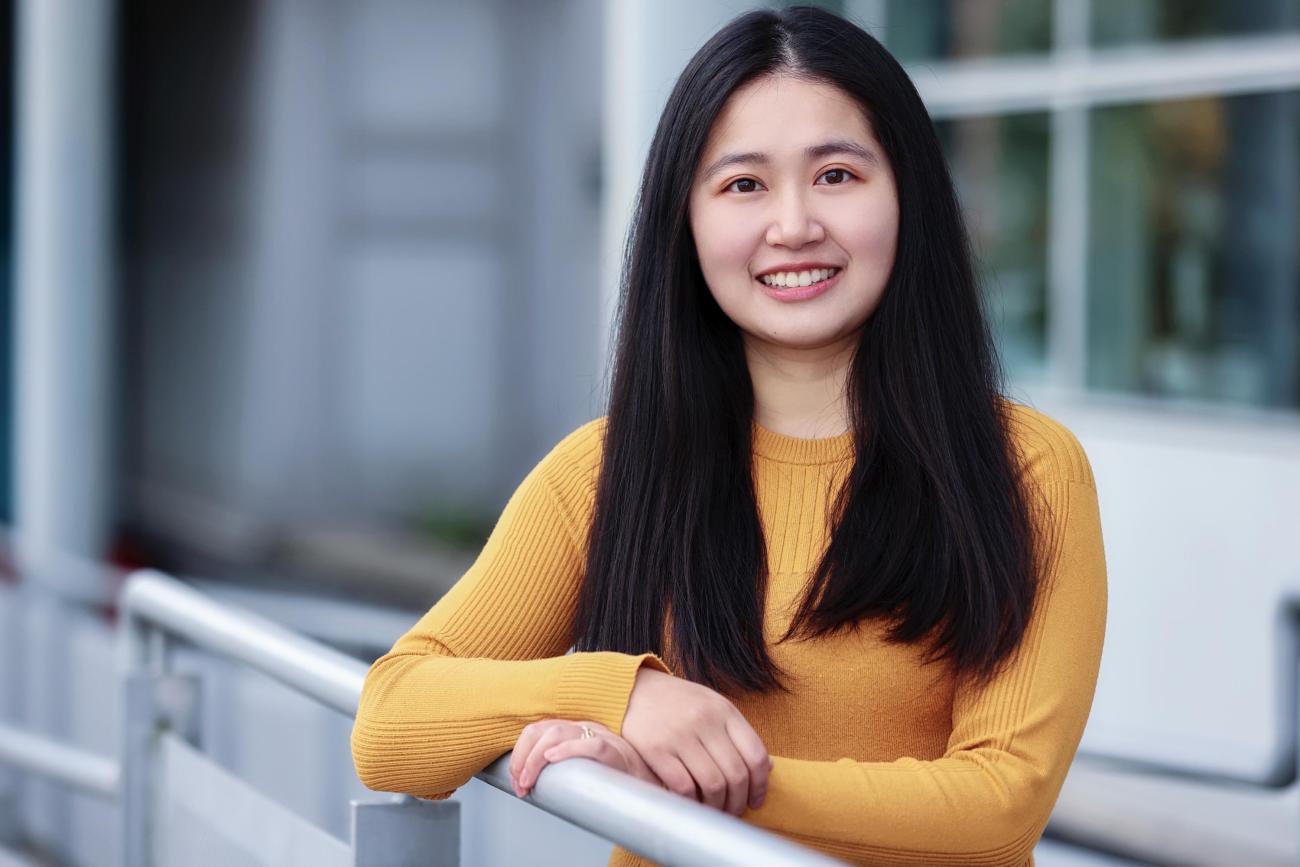
Lizi Liao is an Assistant Professor at the School of Computing and Information Systems , Singapore Management University (SMU) , specializing in Artificial Intelligence and Conversational AI . Her research bridges Machine Learning , Natural Language Processing , and Multimodal Systems , focusing on proactive dialogue systems, multimodal conversational search, and task-oriented interactions. Education : PhD in Computer Science (2019) from the National University of Singapore (NUS) , advised by Professor Tat-Seng Chua . Research Interests center on principles of human conversational understanding and machine implementation, particularly in proactive conversational agents , multimodal dialogue systems , and target-driven conversation planning . Key applications include emotional support systems , intelligent shopping assistants , and learning companions . Recent Publications (2024-2025) highlight her work on LLM-based proactive dialogue , multimodal emotion recognition , and dynamic graph modeling , often integrating NLP , Multimedia , and Knowledge Graphs . Collaborative projects with her CoAgent Lab team emphasize human-AI interaction and ethical response generation . Scientific Awards : Google South Asia & Southeast Asia Research Award 2023 Lee Kong Chian Fellow Teaching includes Visual Analytics for Business Intelligence (undergraduate) and Text Analytics and Application (graduate). She also serves as Associate Editor for TOIS and TOMM , and organizes tutorials at ACL , SIGIR , and WSDM .
Professor Axel Bruns is a Research Professor at Queensland University of Technology’s (QUT) Digital Media Research Centre (DMRC), an institution renowned for its leadership in media and communication studies. His work focuses on the digital transformation of media, the role of social media in public communication, and the dynamics of political polarization in online environments. Bruns is an internationally recognized innovator in computational methods for social media analysis, emphasizing interdisciplinary mixed-methods approaches to study complex societal phenomena. Research Interests: His research addresses critical challenges such as polarization’s threat to democracy, the role of algorithms in shaping public discourse, and the spread of disinformation. Notable areas include filter bubbles, platform governance, and the interplay between social media and political systems. He has pioneered concepts like 'gatewatching' to analyze news curation practices of digital intermediaries. Key Achievements: Bruns leads a prestigious Australian Laureate Fellowship project examining polarization drivers and dynamics. His work combines rigorous methodological innovation with policy relevance, evidenced by submissions to parliamentary committees on social media regulation. He has mentored numerous doctoral students who have become leading methodologists in their fields. Awards and Collaborations: Recipient of the Australian Laureate Fellowship (2023), Bruns collaborates widely with institutions globally, including Algorithm Watch, the Centre for Responsible Technology, and the Alexander von Humboldt Institute for Internet and Society. These partnerships enable cross-border research into digital media’s societal impacts.
Ming Lin is a Distinguished University Professor at the University of Maryland, College Park, holding joint appointments in Computer Science (Department of Computer Science), the Institute for Advanced Computer Studies (UMIACS), Electrical and Computer Engineering (ECE), and the Maryland Robotics Center. She holds the Dr. Barry Mersky and Capital One E-Nnovate Endowed Professorships. Her research focuses on physically-based modeling, virtual environments, haptics, robotics, and AI applications in healthcare and urban computing. Education: Ph.D., M.S., and B.S. in Electrical Engineering & Computer Sciences from UC Berkeley. She previously spent 20 years at UNC Chapel Hill before joining UMD in 2018. Research interests include collision detection algorithms (e.g., Lin-Canny algorithm), real-time physics simulation, virtual/augmented reality systems, and medical imaging applications. Her work has led to over 2 million downloads of her group's software tools and licenses with 60+ companies. Notable contributions include the Oculus Rift-related VR technologies and Amazon's virtual try-on system. Awards: IEEE Fellow (2012), ACM Fellow (2011), NAI Fellow (2022), and Washington Academy of Sciences Distinguished Career Award (2020). Active in professional service, she serves on the CRA Board and chairs the Committee on Widening Participation in Computing Research. Advising: Supervises 12+ PhD/Master's students. Her lab (GAMMA Group) focuses on AI-driven robotics, autonomous systems, and physically-based simulations. Key projects include traffic simulation frameworks, medical VR applications, and 3D garment modeling.
Sabine Süsstrunk is a Full Professor and Director of the Images and Visual Representation Laboratory (IVRL) at EPFL's School of Computer and Communication Sciences. She holds a BS in Scientific Photography from ETH Zürich, MS from Rochester Institute of Technology, and PhD from University of East Anglia. Her career includes positions at Hewlett-Packard Labs and Corbis Corporation. Her research explores computational imaging, computational photography, color processing, computer vision, and image quality. Key interests include near-infrared applications, multispectral imaging, and computational aesthetics. Her work bridges hardware and software solutions for imaging challenges. Publications demonstrate consistent focus on advancing generative models (diffusion models, neural cellular automata), 3D reconstruction (NeRF variants), and media integrity (DeepFake detection). Recent trends show increased emphasis on 3D vision, robustness in generative AI, and video analysis. Awards & Honors: IS&T/SPIE Electronic Imaging Scientist of the Year (2013) Raymond C. Bowman Teaching Award (2018) EPFL AGEPoly IC Polysphere Award (2020) 8 Best Paper/Demo Awards Fellowships: IEEE, IS&T, ELLIS, AIIA She leads the IVRL lab and advises PhD candidates while serving as President of the Swiss Science Council. Research is supported through competitive grants and industry collaborations.
Prof Raphaël Phan is a Professor and Deputy Head of the School of IT at Monash University Malaysia. His expertise spans security, cryptography, malicious AI, emotion recognition, motion analysis, and generative AI. He has published over 220 papers and led significant projects including privacy-preserving data mining funded by UK MoD and Malaysian government grants exceeding RM4 million. He co-designed the BLAKE hash function (SHA-3 finalist) and has an h-index of 50. Education: PhD in Cryptography (Multimedia University, 2005), MEngSci (2001), BEng (Hons) Computer Engineering (1999). Research focuses on adversarial AI, brain networks, and secure systems. Current projects include Æmbience: emotion-aware virtual assistants using motion magnification. Supervised 15 PhD graduates and 19 current students. Professional affiliations: Chartered Engineer (IET, UK), HEA Fellow, Board of Engineers Malaysia. Recent work emphasizes causal bias detection in micro-expressions, brain tumor detection via advanced YOLOv8, and generative adversarial networks for medical imaging. His work bridges cybersecurity with neuroscience applications.
Mohd Fikree Hassan is a Lecturer at the School of Information Technology, Monash University Malaysia, joining in June 2023. He holds a Ph.D. and Master's from the University of Malaya, and a B.Eng. in Electronics Engineering from Multimedia University. With over 14 years of academic experience, he is actively engaged in research, teaching, and supervision. B.Eng. in Electronics Engineering (Telecommunications), Multimedia University, 2004 M.Eng. in Engineering (Telecommunications), University of Malaya, 2015 Ph.D. in Signal and Systems, University of Malaya, 2018 His research focuses on image and signal processing , particularly in image enhancement, restoration, computer vision, and human color vision . His work contributes to improving image visibility, removing color casts, and developing algorithms for noisy or degraded images. He applies mathematical and computational techniques to solve real-world imaging challenges. The recent publication trends (2021–2025) show a strong focus on image restoration using variational methods (e.g., total variation, ℓ0 regularization), color enhancement in HSI space, and video analysis for sports applications. His work bridges theoretical optimization and practical computer vision systems. He actively contributes to the academic community through peer review for journals such as Neurocomputing , Journal of Imaging , and International Journal of Computational Intelligence Systems , as well as for IEEE conferences. Mohd Fikree is currently accepting PhD students and serves as an external examiner for academic programs. His consistent research output and editorial service reflect a growing impact in the field of image processing and computer vision. While no formal lab or team is mentioned in the text, his collaborations with researchers like R. Paramesran, T. Adam, and G. Krishnasamy suggest active research partnerships in signal and image processing.
Yuanbo Xiangli is a postdoctoral researcher at Cornell University , advised by Prof. Noah Snavely. Previously, he obtained his Ph.D. from the Multimedia Lab in the Department of Information Engineering at the Chinese University of Hong Kong (CUHK) , supervised by Prof. Dahua Lin. His research focuses on 3D computer vision and deep generative modeling for urban scene reconstruction. 3D scene reconstruction from sparse images Neural rendering and Gaussian splatting Deep generative modeling for urban environments Multi-source geospatial data processing City-scale modeling and synthetic datasets His recent work includes advanced NeRF extensions (BungeeNeRF, GridNeRF), Gaussian splatting enhancements (GSDF, Scaffold-GS), and urban scene datasets (MatrixCity, OmniCity). A pioneer in combining classical vision techniques with modern deep learning approaches. ICLR 2020 Spotlight Award Collaborates with leading researchers in photorealistic rendering, including Noah Snavely and Dahua Lin. Develops systems enabling efficient 3D reconstruction from diverse data sources like satellite imagery and street-level panoramas.
Esa Ollila serves as Associate Professor in the Department of Signal Processing and Acoustics at Aalto University, Finland, and holds an adjunct professorship in Statistics at the University of Oulu. His academic appointments include Academy of Finland Research Fellow (2010-2015) and prior senior research/lecturing roles at both institutions. His educational background features: M.Sc. in Mathematics, University of Oulu (1998) Ph.D. in Statistics (with honors), University of Jyväskylä (2002) D.Sc.(Tech) in Signal Processing (with honors), Aalto University (2010) Professor Ollila's research centers on statistical signal processing and robust statistical methodologies , with significant contributions to array processing, high-dimensional data analysis, and covariance matrix estimation. His work bridges theoretical statistics with practical applications in radar systems, wireless communications, and big data analytics, emphasizing robustness against outliers and computational efficiency in modern data-intensive environments. Current focus areas include compressed sensing, sparse approximation, and blind source separation techniques. Analysis of his 15 most recent publications (2024-2025) reveals three dominant trends: (1) robust covariance learning for massive random access systems, (2) integrated sensing and communications (ISAC) for 6G networks using advanced beamforming, and (3) geometric approaches to elliptical distributions in statistical inference. His work increasingly incorporates deep learning (GANs, graph neural networks) while maintaining strong foundations in classical signal processing theory. Key recognitions include: Academy of Finland Postdoctoral Fellowship (2004-2007) Academy of Finland Research Fellowship (2010-2015) His research has been supported through prestigious Academy of Finland grants totaling over a decade of continuous funding. Professor Ollila currently leads an active research group at Aalto University, supervising doctoral candidates and collaborating internationally with institutions including Princeton University (where he served as Visiting Post-doctoral Research Associate during 2010-2011). He maintains strong ties with the University of Oulu through his adjunct professorship and has contributed to EURASIP's Special Area Team on Theoretical and Methodological Trends in Signal Processing. The Esa Ollila Research Group focuses on cutting-edge challenges in statistical signal processing, with current projects spanning robust DOA estimation under non-Gaussian noise, covariance matrix learning for massive MIMO systems, and machine learning-enhanced radar-communication integration. The group actively develops open-source tools like the fitHeavyTail R package for heavy-tailed distribution modeling and maintains collaborations with industry partners in wireless communications.
Francis Y. Yan is an Assistant Professor of Computer Science at the University of Illinois Urbana-Champaign (UIUC), holding an affiliate appointment in Electrical & Computer Engineering within the Grainger College of Engineering. He leads the Illinois Networked Systems and AI (NSAI) research group, focusing on building intelligent networked systems that are safe, robust, and performance-optimized through practical machine learning integration. Prior to joining UIUC in January 2025, he served as a Senior Researcher at Microsoft Research Redmond under Victor Bahl. His educational background includes: Ph.D. in Computer Science from Stanford University (2020), advised by Keith Winstein and Philip Levis B.S. in Computer Science (Yao Class) and B.A. in Economics from Tsinghua University (2015) Additional undergraduate studies at MIT Yan's research adopts a holistic approach to practical machine learning for networked systems, emphasizing judicious application rather than indiscriminate use. He builds real-world systems and research platforms to lay ML foundations, devises deployable algorithms using domain insights, and validates performance through extensive empirical evidence. His work consistently addresses operator concerns regarding ML deployment—focusing on safety, robustness, generalization, and efficiency—while strategically combining ML with classical networking and systems techniques. Analysis of his 15 most recent publications (2023-2025) reveals dominant themes in resource allocation for microservices (DeDe, Autothrottle), real-time video optimization (Mowgli, GRACE), and LLM-driven network algorithm design. His work bridges theoretical advances with industrial deployment, evidenced by platforms like Puffer (400,000+ users) and OpenNetLab that have become community standards for validating congestion control algorithms. His research has been recognized with top honors: USENIX NSDI Outstanding Paper Award (2024) for Autothrottle APNet Best Paper Award (2022) IRTF Applied Networking Research Prize (2021) USENIX NSDI Community Award (2020) USENIX ATC Best Paper Award (2018) for Pantheon Yan actively recruits master's and undergraduate researchers for his NSAI group, prioritizing self-motivated students for projects in networked systems and AI. His research is supported by industry collaborations (notably Microsoft) and manifests in deployable platforms like Puffer—which has enabled award-winning research at NSDI and SIGCOMM—and OpenNetLab for real-time communications. His work directly impacts production systems including Microsoft Teams and Bing. He founded and directs the Illinois Networked Systems and AI (NSAI) research group, which operates critical infrastructure including Puffer (a live TV service and research platform) and OpenNetLab. These platforms facilitate community-wide validation of novel algorithms, with Puffer alone supporting multiple best-paper awards at top conferences. Current workstreams span cloud resource management (Teal, Autothrottle, DeDe), low-latency video (Puffer, Tambur, Mowgli), and LLM-augmented systems (Nada, Designing Network Algorithms via LLMs).
Dr. Dongyun Nie is an Assistant Professor at Dublin City University's School of Computing. She holds a PhD in Computer Science with a specialization in Customer Relationship Management. Her core research explores customer lifetime value, forecasting, data mining, and record linkage. Her recent publications demonstrate interdisciplinary work spanning health informatics, sports analytics, and environmental data engineering. Research predominantly focuses on machine learning applications for real-world data challenges including eye-tracking systems, lifelog analytics, and public health data infrastructure. Teaching responsibilities include modules on Machine Learning (CA4109), Enterprise Systems Configuration (CA2049), and Web Design (CA106), integrating research expertise into computing education.
Dr. Chutima Boonthum-Denecke is a Professor in the Department of Computer Science at Hampton University's School of Science. She joined Hampton University in 2006 as an Assistant Professor and now serves as Director of the Information Assurance and Cyber Security Center (IAC@HU). She leads the NSF CyberCorps Scholarship for Service program and has contributed to NSF initiatives like ARTSI and STARS Alliances. Her educational background includes a Ph.D. in Computer Science from Old Dominion University (2007), an MS in Applied Computer Science from Illinois State University (2000), and a BS in Computer Science from Srinakharinwirot University (1997). Dr. Boonthum-Denecke's research integrates artificial intelligence, natural language processing, and cybersecurity. Key interests include: Developing intelligent tutoring systems and educational games Secure coding practices for software engineering NLP applications in information retrieval and assessment tools Cyber-physical security for IoT and robotics Her recent publications (2016-2021) focus on machine learning applications in cybersecurity, including sentiment analysis for threat detection, blockchain-enhanced IoT security, and vulnerability assessments of emerging technologies. Collaborative work with students frequently addresses privacy ethics in AI assistants, RFID implants, and cloud systems. She mentors students through the IAC@HU lab, resulting in award-winning conference presentations on cybersecurity topics. As Principal Investigator of NSF CyberCorps, she oversees scholarship programs that bridge academic research with national security needs.
Abraham Silberschatz is the Sidney J. Weinberg Professor of Computer Science at Yale University. He previously served as Vice President of the Information Sciences Research Center at Bell Laboratories and held a chaired professorship at the University of Texas at Austin. His research focuses on database systems, operating systems, and network management. Silberschatz has advised over a dozen PhD students, many now in academia and industry. Education: Ph.D., Computer Science, Stony Brook University (SUNY) Research Interests: His work spans database systems, operating systems, storage systems, and network management. Notable contributions include foundational textbooks like Operating System Concepts and Database System Concepts , which have become industry standards. He has also developed innovative systems like DataPlay and contributed to projects such as NetInventory. Publications: His 15+ years of research include influential papers on database architecture, network routing, and distributed systems. Recent work explores leveraging non-volatile memory technologies in systems design. Awards: ACM Karl V. Karlstrom Outstanding Educator Award (1998) IEEE Taylor L. Booth Education Award (2002) VLDB Test of Time Award (2019) Multiple Bell Laboratories President's Awards for innovation Grants & Patents: Recipient of over two dozen grants and over four dozen patents, including foundational IP in multimedia storage and distributed systems. His team's HadoopDB project merged MapReduce and DBMS technologies. Labs/Teams: Collaborates with Prof. Robert Soulé on projects in database systems and networking, focusing on next-gen memory technologies. Active in mentoring graduate students and postdocs in their research group.
Gil Serrancoli Masferrer is an Associate Professor in the Department of Mechanical Engineering at the School of Engineering of East Barcelona (EEBE), part of the Polytechnic University of Catalonia (UPC). He is affiliated with the InSup - Research Group in Surface Interaction in Bioengineering and Materials Science and the LAM - Multimedia Applications and ICT Laboratory. His work focuses on biomechanics, computational modeling, and telerehabilitation systems development for clinical applications. Dr. Serrancoli's research spans multisolid dynamics, dynamic optimization, movement simulation, and telerehabilitation systems. His expertise lies in applying computational techniques to solve complex problems in orthopedics, gait analysis, and rehabilitation engineering. His work bridges mechanical engineering with biomedical applications, particularly in musculoskeletal modeling and simulation of orthopedic procedures. He has developed novel computational frameworks for estimating internal musculoskeletal loading and muscle adaptation in various conditions, including hypogravity environments. His recent publications demonstrate a strong focus on in-silico modeling of orthopedic procedures, particularly knee osteotomies (proximal fibular osteotomy versus high tibial osteotomy), with detailed analysis of joint pressure redistribution. He has also pioneered the application of machine learning techniques, particularly recurrent neural networks, to biomechanical problems including cycling biomechanics and running dynamics prediction. His work consistently integrates computational efficiency with clinical relevance. Technical Award - OpenSim+ Advanced Workshop March 2024 Accésit del XLV Congreso de la Sociedad Ibérica de Biomecánica y Biomateriales European Society of Biomechanics Travel Award OpenSim Virtual Workshop - Technical Award OpenSim Visiting Scholar 2017 Enginyers BCN 2018 Dr. Serrancoli leads several competitive R&D projects including 'Muvity: a novel physical telerehabilitation system' for vulnerable populations and 'Simulaciones predictivas in silico para cirugías ortopédicas' (Predictive in-silico simulations for orthopedic surgeries). He collaborates extensively with researchers across Europe, particularly with Jordi Torner, Josep Maria Font Llagunes, and Joan Carles Monllau, and has secured funding from national and regional programs including Plan Estatal de Investigación Científica y Técnica y de Innovación. He is actively involved in the BIOMEC - Biomechanical Engineering Lab and the TecSalut - Research Group in Health Technologies, where he contributes to the development of innovative solutions for healthcare challenges, particularly in the areas of telerehabilitation and computational biomechanics for orthopedic applications.