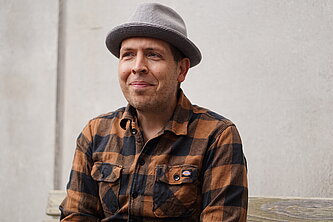
Dr. Dirk Jahn is a Researcher at the University of Würzburg's Center for Scientific Education and Teaching (ZBL), working on the WueCAST project since May 2024. Previously, he was a Research Assistant at the Friedrich-Alexander-University Erlangen-Nürnberg (FAU) from 2012-2023, focusing on higher education development. His academic journey includes a doctorate in Business Education (2011) with a dissertation on fostering critical thinking. Key research interests include critical thinking promotion, AI integration in education, self-directed learning strategies, and innovative teaching methodologies. He has designed workshops like 'Critical Thinking: Fostering Critical Thinking in Teaching' and explores topics such as AI ethics in education and visible learning frameworks. His work bridges theory and practice through design-based research and meta-analysis syntheses. Publications span 27 works, emphasizing critical thinking frameworks, digital media applications, and educational innovation. He co-authored books on critical thinking didactics and contributes to debates on ethical teaching practices in the attention economy. Collaborations include projects like 'CT goes ChatGPT' addressing AI's role in education.
Prof. Dr. Silke Mikelskis-Seifert is a Professor of Physics and its Didactics at the Pedagogical University Freiburg since 2008 and Dean of Studies for the Faculty of Mathematics, Natural Sciences and Technology. Her research focuses on empirical teaching research , digital learning environments , and inclusive science education , particularly in physics instruction. PhD supervision: Betreut Promotionsprojekte in ProMatNat, DiaKom, CURIOUS, and HeLPS Key projects: Physik im Kontext (teacher professionalization), SINUS Transfer , INEXdigital (inclusive experiments), and EU-project COMPASS Her work explores modeling in physics education , digital scaffolding , and teacher noticing of student cognition . Recent publications emphasize gender-neutral pedagogical agents , barrier-free experiments , and comic-based learning environments for improving scientific self-concept and literacy. She leads professional learning communities for inclusive experimentation and investigates the intersection of analytical physics didactics with empirical research . Her methodological approaches include Delphi studies, classroom evaluations, and design-based research for context-oriented teaching materials.
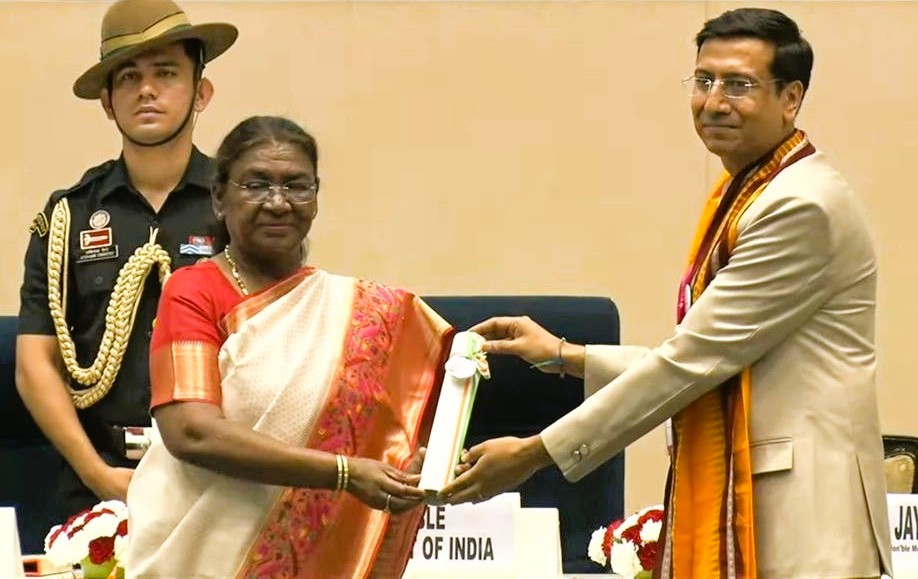
Prof. Kapil Ahuja is a Full Professor in the Department of Computer Science & Engineering at the Indian Institute of Technology Indore (IIT Indore), where he heads the Mathematics of Data Science and Simulation (MODSS) research lab. After completing dual Master's degrees and a Ph.D. from Virginia Tech (USA) followed by postdoctoral work at the Max Planck Institute in Germany, he has held visiting positions at UT Austin, IMT Atlantique, Sandia National Labs, TU Dresden, and TU Braunschweig. His administrative roles include founding Dean of International Affairs and former Head of Computer Science & Engineering at IIT Indore. Education: Ph.D. in Mathematics, Virginia Tech (2011) M.S. in Mathematics, Virginia Tech (2009) M.S. in Computer Science, Virginia Tech (2007) B.Tech. in Mechanical Engineering, IIT (BHU) Varanasi (2001) Research Focus: Prof. Ahuja's work bridges theoretical advances with real-world applications, emphasizing machine learning algorithms for plant/cancer studies, game-theoretic poverty reduction models, exascale climate modeling solvers, and drone trajectory optimization. His interdisciplinary approach integrates numerical linear algebra with network science to solve complex systems problems across healthcare, agriculture, and climate science, supported by 4.85 Crores INR in external funding. Publication Trends: Recent work demonstrates growing emphasis on AI-driven optimization for physical systems (drones, climate models) and biomedical applications (cancer classification). His publications increasingly feature cross-disciplinary collaborations between computer science, biology, and economics, with notable contributions in explainable AI for healthcare and resource allocation algorithms for social networks. Scientific Recognition: National Teacher's Award (2024) from the President of India Five-time recipient of IIT Indore's Best Teacher Award (2013-2023) Best Poster Award at International Workshop on Game Theory & Networks (2019) Steeneck Graduate Research Fellowship (Virginia Tech, 2011) Multiple SIAM travel awards for international conferences Mentorship & Service: Prof. Ahuja has graduated 5 Ph.D. and 4 M.S. (Research) students while mentoring 75 B.Tech. projects. He serves as Associate Editor for Applied Intelligence Journal (Springer Nature) and Knowledge and Information Systems, organizes international conferences, and reviews for 35+ academic sources. His administrative leadership significantly expanded IIT Indore's global partnerships through the Research Park initiative. Research Infrastructure: The MODSS lab maintains active collaborations with Oak Ridge National Lab, Sandia National Labs, and European institutions. Current projects include AI-optimized drone swarms for agricultural monitoring and game-theoretic models for poverty intervention, utilizing high-performance computing resources for large-scale simulations.
Dr. Amélie Tessartz is a Researcher in the Department of Biology Didactics at the University of Bonn, focusing on combating plant blindness through educational strategies. Her work bridges plant science perception, biodiversity conservation, and innovative teaching methods. Education Master of Education in Biology and French for Gymnasium and Comprehensive School (2017) Bachelor of Arts in Biology and French (2014) Voluntary social year in education (2010-2011) Research Interests center on enhancing botanical awareness through extracurricular experiences, leveraging digital tools to engage youth, and fostering appreciation for plant biodiversity. A key focus is addressing the cognitive and educational challenges of plant blindness. Scientific Contributions Developed design-based interventions to counter plant blindness Explored digital media's role in informal learning settings (e.g., zoos) Advocated for nature-based education to strengthen conservation values Awards & Grants Supported by the Dr. Hans Riegel Foundation for biodiversity education research Current Role involves project coordination, teaching, and research at the University of Bonn. Contact: a.tessartz@uni-bonn.de
Prof. Dr. Pascal Klein is a faculty member at the University of Göttingen , specializing in physics education research within the Department of Physics. His work bridges theoretical physics with pedagogical innovation. Research focuses on the digital transformation of physics education , leveraging eye tracking and multimedia tools to enhance learning. Key projects include developing smartphone-based experiments for introductory mechanics and studying cognitive load during diagram-equation coordination. He contributes to empirical effectiveness analysis and discipline-specific didactics in higher education. Recent publications highlight his exploration of vector field concepts through simulations, strategic analysis of equation-diagram interactions, and stress dynamics in first-year physics students. His methodology emphasizes eye movement tracking to decode learning processes and optimize teaching strategies. The Digiphyslab Project (2022) exemplifies his efforts to integrate digital tools like Jupyter notebooks and smartphone sensors into laboratory settings, both on-campus and for distance learning. He also investigates the effects of dynamic visualizations and augmented reality on comprehension and engagement. His work extends to teacher training and public outreach , including projects on plant identification for student teachers and innovative approaches to non-inertial frames of reference . Collaborative efforts with institutions in Finland and Croatia further underscore his international impact in physics education.
Fang Zhao serves as Junior Research Group Leader of the Multimedia group at FernUniversität Hagen's Center of Advanced Technology Assisted Learning and Predictive Analytics (CATALPA) since April 2021. As a cognitive and educational psychologist, she conducts interdisciplinary research on multimedia learning and multitasking within this university-funded research center, collaborating with partners across psychological and educational domains. Her academic credentials include a 2024 Habilitation from FernUniversität Hagen, a Ph.D. in Psychology from University of Koblenz Landau (2012-2015), an M.A. in Linguistics and Translation Studies from Durham University, U.K. (2010-2012), and a B.A. in Linguistics and English Language from Henan University, China (2006-2010). Dr. Zhao's research examines how individuals process multimedia information through text-picture integration, interactive simulations, and video-based instruction, with particular focus on exploration-exploitation dynamics in learning environments. Her sequence learning investigations extend to multitasking scenarios involving basic sequences, timing patterns, and complex hierarchical structures like Origami folding. This work bridges cognitive theory with practical educational technology applications through rigorous experimental methodologies. Recent publication analysis reveals consistent emphasis on optimizing visual representations for data comparison, measuring cognitive load in online learning, and evaluating guidance structures in asynchronous courses. Her research demonstrates that while interactive elements are generally preferred by learners, their educational benefits remain context-dependent with significant individual differences in effectiveness. Leading the Multimedia junior research group at CATALPA, Dr. Zhao directs investigations into how interactive and multimedia components influence learning processes across diverse student populations. The team operates within an interdisciplinary framework that integrates psychological theory with technological innovation to develop predictive analytics for learning enhancement.