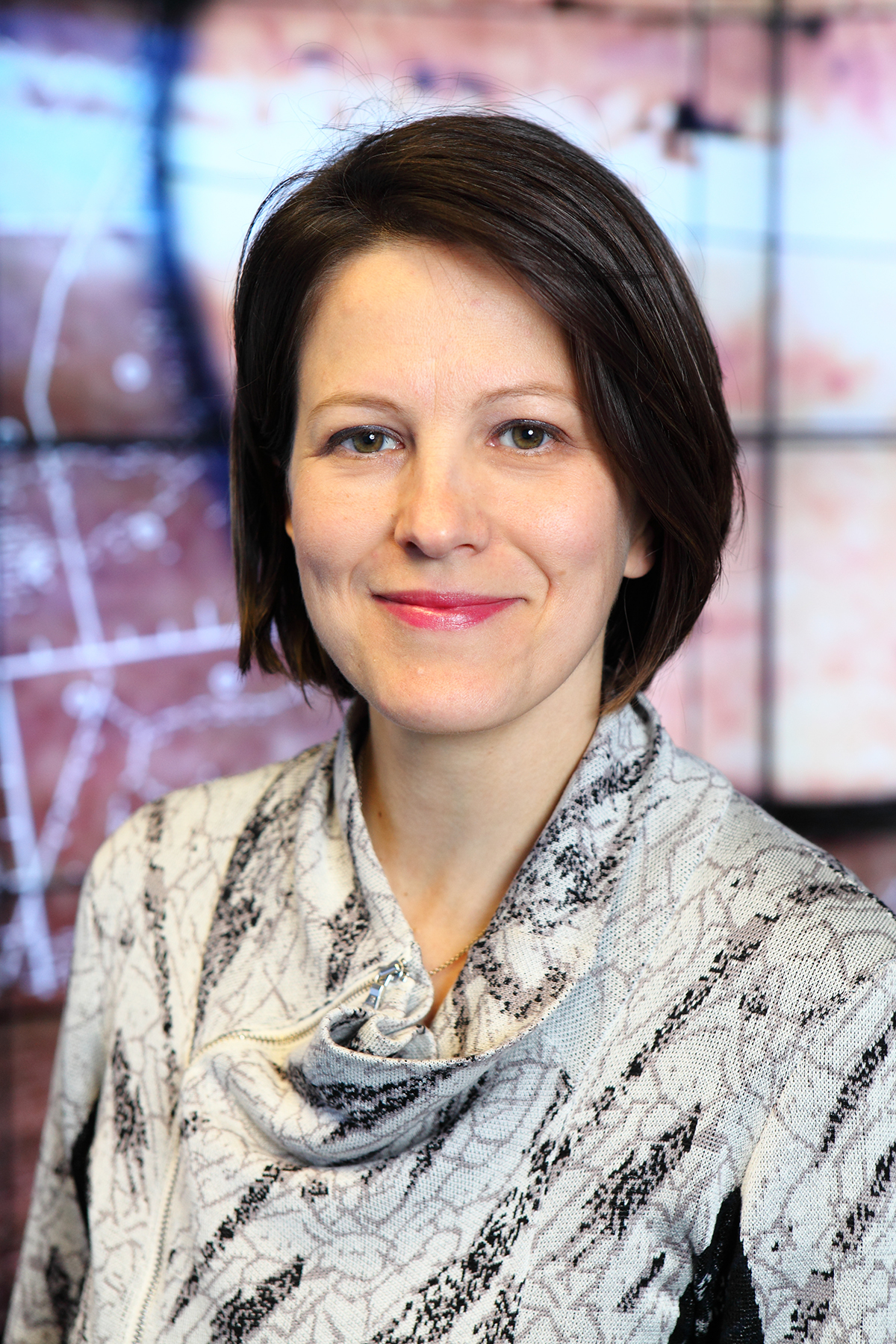
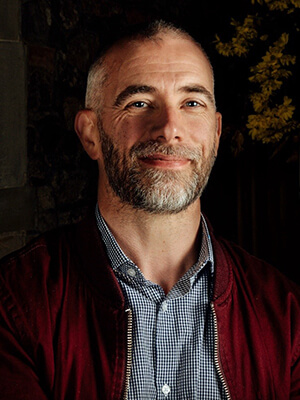
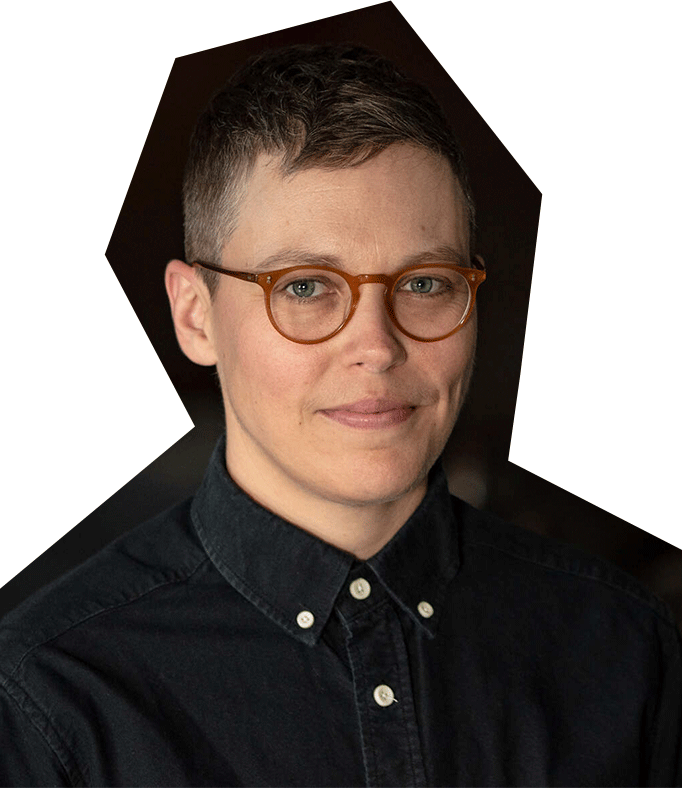
Dr. Sam Ferguson is a Senior Lecturer at the School of Computer Science, University of Technology Sydney (UTS), with a multidisciplinary background in music performance, cognitive science, and psycho-acoustics. His research explores the intersection of sound, music, and human experience through creative coding, machine learning, and interactive systems. Key Research Areas: Sound and Music Computing, Human-Computer Interaction, Creative Coding, Cognitive Science, Installation Art, and Acoustics. Current Projects: ARC Linkage project on creative coding and multiplicitous media; industry collaborations on IoT-based audiovisual systems. Recent Publications: Focus on spatial audio complexity, gestural interaction with networked sound, music emotion recognition frameworks, and robotic performance through genre-based cultural platforms. Leadership Roles: Director of Teaching & Learning Engagement; former Deputy Head of School (Teaching and Learning); active in ACM Creativity and Cognition Steering Committee. Teaching: Courses like Digital Media Studio , Prototyping Physical Interaction , and Data Processing using R within UTS's interdisciplinary Software Development Studio.
Dina Danish (b. 1981, Paris) is an Egyptian-Danish artist and educator working at the intersection of language, historical reinterpretation, and conceptual practice. She holds a Lecturer position at the Fine Arts department of KABK in The Hague and serves as a teaching mentor at the Rietveld Academy, Amsterdam . Guest teaching roles include the Sandberg Institute and American University in Cairo . Education : BA from American University in Cairo; MFA from California College of the Arts (San Francisco) Residencies : Rijksakademie Amsterdam, Spinola Banna Italy, PiST/// Istanbul, A.i.R. Dubai, Affiliated Fellow at American Academy in Rome Her research explores humor, mistranslation, and overlooked historical moments , often through video art, performance, and text-based installations . Key themes include linguistic structures, cultural memory, and Dadaist methodologies . Recent projects examine ancient motifs in contemporary art (e.g., Jean-Baptiste Maitre) and political commentary through playful abstraction . Notable exhibitions at SFMOMA, Stedelijk Museum Schiedam, and Kunsthall Oslo highlight her focus on translation errors, sound poetry, and archival interventions . Volkskrant Award finalist Abraaj Art Prize nominee Illy Present Future Prize recipient Celeste Award nominee Barclay Simpson Award nominee Dina collaborates with institutions like Hotel Maria Kapel and De Nederlandsche Bank , and co-curated a Rijksakademie anniversary exhibition. Her work is represented by galleries in Amsterdam, Milan, and Zurich.
Max Hattler is a media artist and Associate Professor at the School of Creative Media , City University of Hong Kong . He previously held Lecturer positions at Goldsmiths, University of London (2006-2014) and the Royal College of Art (2012-2014). His work explores intersections of abstraction/figuration , sound/image relationships , and creative media through experimental animation and audiovisual performance. Current Research Focus: Abstracted moving images as frameworks for rethinking power relations Recent Curatorial Work: Relentless Melt series (2021-2025) showcasing Hong Kong experimental animation Key Publications Trends : Recent articles examine stereoscopic innovation , graphical sound techniques , and abstract animation semiotics . His curatorial research in Hong Kong digital art and VR animation demonstrates technical and theoretical contributions. Major Awards : Cannes Lions (2013) Visual Music Awards (2010, 2011, 2014) CityU Teaching Excellence Award (2021-22) President's Award (2022) for research contributions Best Experimental Film at Reanima Festival (2017) International Presence : Regularly participates in Ars Electronica , Animafest Zagreb , and Society for Animation Studies conferences. Has conducted workshops at CalArts , Geneva University of Art and Design , and Floating Projects Hong Kong .
Daria Tsoupikova is a Professor of Digital Media Design at the University of Illinois Chicago's School of Design. She serves as Co-Founder and Design Chair of the bachelor's in computer science and design program and is affiliate faculty in the UIC Electronic Visualization Laboratory (EVL). Her work bridges artistic expression and technological innovation, focusing on virtual reality and interactive media applications across multiple domains. Her educational background includes: MFA in Computer Art from Syracuse University BFA in Graphic Design from Moscow State Academy Positioned at the crossroads of artistic and technological innovation, Tsoupikova's research explores the potential of new media and interactivity in relation to traditional arts. Through development of virtual reality art projects and networked multiuser exhibitions for VR projection systems like the CAVE and CAVE2, her work applies computer graphics to diverse research domains including educational multimedia, cultural heritage, and virtual rehabilitation for stroke survivors. Her approach integrates theater methodologies, design principles, and coding to create immersive experiences that address global challenges while preserving cultural heritage. Analysis of her publication history reveals an evolving trajectory from foundational VR art installations toward increasingly sophisticated therapeutic applications. Her recent work demonstrates a strong focus on the intersection of art, healthcare, and virtual reality, with particular emphasis on collaborative multiuser environments that transform traditional storytelling and therapeutic practices. The progression shows movement from artistic exploration to clinically validated therapeutic interventions with measurable patient outcomes. Her notable awards include: Session's Best Paper at IMCIC 2019 and QRMS/IMCIC 2016 Fulbright Scholar Award (2011) and Intercountry Lecturing Award Communication Arts Award of Excellence and Creative Quarterly Excellence Award National Endowment for the Arts grant and Presidential Award from University of Illinois Tsoupikova has secured significant research funding from the National Science Foundation, National Institute on Disability and Rehabilitation Research (NIDILRR), and the Department of Education for projects including MARS2 (2007-2012) and MARS3 (2012-2018). She has developed innovative courses including Mobile App Design where students collaborate with professional partners such as Caterpillar, UIC medical departments, and clinics. Her work with stroke survivors at the Shirley Ryan AbilityLab has demonstrated improvements in patients' daily lives, regained trust in their hands, and increased therapy motivation. She is deeply involved with the UIC Electronic Visualization Laboratory, collaborating on advanced visualization projects including IBM partnerships exploring sustainable development goals through VR. Her leadership in establishing the computer science + design undergraduate program positions UIC as the only public university in the United States offering such a specialized degree, reflecting her commitment to interdisciplinary education at the technology-art intersection.
Gloria Sutton is an Associate Professor of Contemporary Art History and New Media at Northeastern University, with an affiliation in the Art, Culture, and Technology Program at MIT. She holds a PhD from UCLA and has held fellowships at the Getty Research Institute and Whitney Museum. Her research focuses on durational media’s impact on visual art since the 1960s, with particular attention to expanded cinema, digital networks, and post-internet art. Primary affiliations: Northeastern University (main appointment), MIT (affiliate) Key roles: Carpenter Center Scholar-in-Residence (2017-2018), co-curator of How Many Billboards Education: Doctorate in Art History from UCLA (specific year not stated). Research interests include: Critical analysis of network culture in visual art Material histories of time-based media Intersection of art, architecture, and technology (e.g., Le Corbusier studies) Publications include The Experience Machine (MIT Press) and edited volumes on Sara VanDerBeek and Renée Green. Current projects explore immersive art critique and Shigeko Kubota’s work. Awards: Andy Warhol Foundation Arts Writers Grant (recent) Emily Hall Tremaine Award (2008) Grants and residencies: Carpenter Center residency (2017-2018) Whitney Museum Independent Study Program fellowship Lecturing and collaborations include engagements at SFMoMA, Walker Art Center, and Harvard’s Carpenter Center for Visual Arts.
Dr. Alexander Hunter is a Lecturer and Composition Convenor at the School of Music, Australian National University (ANU). He holds a PhD in composition from Edinburgh Napier University (2014) and has taught composition, theory, and music history since relocating to Canberra in 2014. Hunter founded ANU's Experimental Music Studio, focusing on open-form compositions that engage performers in fluid interpretive roles. His research spans open musical forms, spectralism, acoustic ecology, and intersectional feminism, with a commitment to disability and autistic advocacy in the arts. Education includes studies at Northern Illinois University (BA 2006) and HNC from Colaisde Bheinn na Faoghla (2007). His work integrates multimedia collaborations with artists like Mike Parr and Martyn Jolly, exploring themes of dis/ability, environmental health, and Métis cultural heritage. Key projects include Helping the River Sing (2018–2021), linking river health with artistic expression, and AI-driven music composition research with Charles Martin. Hunter’s performance-led projects often involve magic lantern technology, reimagining 19th-century projection as a medium for contemporary ecological and historical narratives. Research interests also encompass New York School music, reductionist improvisation, and anarchist philosophies in composition. His collaborations with ensembles like Ensemble Dal Niente and the Edinburgh Quartet highlight his commitment to experimental performance practices. Recent publications (2023–2025) explore AI applications in music creation and interdisciplinary performance frameworks.
Jez Coram is a Lecturer in Digital Media Practice at the University of Leeds , School of Media and Communication. He holds a practice-led PhD in Fine Art, Film, and Digital Cultures from Newcastle University, supervised by leading figures in the field. With a background in the third sector, he has extensive experience in multimedia design, research, and community engagement. Research Focus: Expanded essay film, socio-cultural-techno perceptions, climate futures, hybrid documentary practices, and sustainability. Current Projects: Co-Investigator on the Polycrisis Research Network (Horizons Institute); leads the longitudinal study Essaying the Gare with Mick Schofield. Teaching and Professional Roles: Currently teaches on the BA Digital Media programme. Previously a Teaching Assistant at Newcastle University and a facilitator in community art projects like For the Love of People . Professional memberships include the Priestley Centre for Climate Futures and Advance HE (FHEA). Artistic Outputs: 15+ films/installations (2012–present) blending personal testimony, archive material, and speculative environments. Notable works: The Black Prince , Capteur , The Derealisation Effect , and We're All Someone's Daughter, We're All Someone's Son (Grenfell solidarity project). Grants and Collaborations: Funded by Horizons Institute, Arts Council England, Screen Yorkshire, and Freedom Studios. Collaborations span institutions like West Yorkshire Playhouse, Justice4Grenfell Campaign, and Purple Patch Arts board.
Dr Peter Batchelor is a Senior Lecturer in Music and Music Technology at De Montfort University, affiliated with the Leicester Media School and the Music, Technology and Innovation – Institute of Sonic Creativity (MTI²). He serves as Programme Leader for the BA Music Technology programme and is actively involved in research, teaching, and creative practice. Education: BMus, University of Wales, Bangor (1996) MPhil, University of Wales, Bangor (1997) PhD, University of Birmingham (2004) FHEA (2024) His research and creative work focuses on electroacoustic composition, multichannel sound installations, public art, and aural landscape construction. He explores sound spatialisation, immersion, theories of space and place, and audience engagement through large-scale sonic artworks. His practice integrates technical innovation with artistic inquiry, often using custom Max/MSP tools for spatial audio and generative systems. The 15 most recent publications reflect a consistent trajectory in immersive sound art, emphasizing environmental sonification, spatial perception, and public engagement. Key themes include multichannel deployment (up to 288 channels), interactive and solar-powered installations, and blending natural and synthetic soundscapes. Projects like Dendrophone and Contraption highlight his focus on accessibility, sustainability, and audience interaction in sonic environments. Scientific Awards and Recognitions: Finalist, Sounds Electric ’07 Competition Mention, Concours de Musique Electroacoustique de Bourges (2007, 1998, 1997) 2nd Prize, CIMESP'99, São Paulo Honourable Mention, CIMESP'97, São Paulo Prize, 'Residences' category, Bourges 1997 Peter Batchelor supervises several PhD students including Stefano Catena, Cristiana Palandri, and Michael Uwins. He has secured external funding as Co-Investigator on projects such as Interfaces (EU Culture Project, 2016–2019) and Sensing the Forest (AHRC Early Career Research Grant, 2023–2025). He has delivered keynote and invited talks internationally and serves as a reviewer for Organised Sound and for REF panels. His creative installations have been exhibited globally, from Helsinki to São Paulo, and he develops open-source Max/MSP tools like N-CHAN and CLATTER to support multichannel sound design. He leads the Dendrophone project, a solar-powered, DIY sound installation in Alice Holt Forest that sonifies environmental data (humidity, sunlight, CO2), offering both on-site and live-streamed access. This project exemplifies his commitment to public engagement, ecological awareness, and accessible sonic art.
Dr. John Hails is a Senior Lecturer and Reader in Music at Edinburgh Napier University , where he teaches aesthetics, music psychology, composition, and ethnomusicology. He holds a PhD in Music from Durham University (2008) and has trained under notable composers like Brian Ferneyhough and Richard Barrett. His research focuses on experimental composition, marginal musical practices, and interdisciplinary aesthetics. Educations: Bachelor’s and Master’s training at Durham University and University of Huddersfield PhD by Portfolio of Compositions (Durham University, 2008) Research Interests: John’s work explores unorthodox intonations, fixed media installations, and the intersection of composition with philosophy and ethnomusicology. He actively presents at international conferences on topics like post-structuralist critiques in music education and communal performance practices. Notable Works: His compositions have been performed by ensembles like the London Sinfonietta and broadcast on BBC Radio 3. Key pieces include enlightenment (microtonal trumpet and media) and Nine for ones in nine , reflecting his experimental approach. Awards & Grants: While no explicit awards are listed, his research is funded by Edinburgh Napier University. He is a core member of the Applied Music Research Centre . Supervision & Grants: He has supervised over 15 postgraduate projects, including PhDs on topics like Musical Cultures of Melanesia and Dialogical Music Systems . His supervisory roles span composition, ethnomusicology, and interdisciplinary studies. Labs/Teams: Active in the Applied Music Research Centre , focusing on creative practice and experimental music dissemination.
Laila Shereen Sakr is an Assistant Professor of Film & Media Studies and Faculty Affiliate in Feminist Studies at the University of California, Santa Barbara. She co-founded Wireframe, a digital media studio focusing on critical game design, data visualization, VR/AR, and digital activism. Her research explores algorithmic culture, media theory/practice, and feminist Middle East studies through creative coding, data visualization, and immersive worldbuilding. Key projects include the VJ Um Amel data-body and R-Shief software system. Education: PhD in Media Arts + Practice (USC), M.F.A. in Digital Arts (UC Santa Cruz), M.A. in Arab Studies (Georgetown). Research interests span technocultural intersections, digital humanities, and global human rights. Her work examines social media's role in shaping virtual political identities and has been exhibited globally (e.g., SF MoMA, Jordan National Gallery of Art). She co-edits Media Theory and After Video , and collaborates with MIT's Global Media Technologies & Cultures Lab. Publications analyze Arab Spring media dynamics, digital dissidence in MENA, and feminist digital praxis. Her work has been featured in The Wall Street Journal , Science , and The Guardian . Her creative research bridges art and activism, emphasizing open-source Arabic localization. Current projects explore the ethical implications of data-driven narratives in post-revolutionary contexts.
Nica Ross is an Associate Professor of Video & Media Design and Director of The Frank-Ratchye STUDIO for Creative Inquiry at Carnegie Mellon University's School of Drama in Pittsburgh, Pennsylvania. With a background in cinema and advanced photographic studies, Ross brings a unique interdisciplinary approach to their work, blending technology, performance, and critical theory to explore how social constructions are reinforced by technology and performance. Ross holds a B.A. in Cinema from San Francisco State University and an M.F.A. in Advanced Photographic Study from The International Center of Photography-Bard College program. Their educational background has informed their practice as both an artist and educator, with a focus on critical applied learning and transdisciplinary collaboration. Through humor and play, Nica Ross creates participatory video installations and games that challenge social constructions reinforced by technology and performance. Their creative research focuses on “social machines” that reveal and interrogate cultural constructs, with particular attention to queer theory, gender non-conforming experiences, and the politics of visibility. Ross emphasizes liveness, human connection, and critical examination of tools and contexts in their teaching and artistic practice. Ross's recent work shows a trajectory moving from traditional video and media design toward increasingly interactive and participatory forms that engage audiences directly in questioning social constructs. Their projects increasingly incorporate game mechanics, queer theory, and critical examinations of surveillance technologies, often using RGB color systems and immersive environments to challenge perceptions of reality. Ross has received notable recognition including the Frank-Ratchye Fund for Art @ the Frontier, the Lighthouse Fellowship, and residency at Baxter Street CCNY. These awards support their innovative work at the intersection of technology, performance, and social critique. As Director of The Frank-Ratchye STUDIO for Creative Inquiry, Ross connects with researchers and creators across Carnegie Mellon University, fostering transdisciplinary practice and critical engagement with technology. Their leadership in this space has created opportunities for collaborative projects that challenge conventional boundaries between art, technology, and social inquiry. Ross's work often involves collaborative teams and labs, including partnerships with musicians like Geo Wyeth, artists like Ginger Brooks Takahashi, and technical collaborators at Carnegie Mellon's Panoptic Dome. These collaborations result in immersive installations, interactive games, and critical explorations of technology's role in shaping social reality.
Angus Carlyle is a Professor of Sound Arts Practice and Sound Landscape at the London College of Communication, part of the University of the Arts London. His research explores soundscapes, environmental acoustics, and interdisciplinary art practices. He holds degrees in Law (LLB, University of Hull), Political Theory (MA, University of Manchester), and a PhD in Political Theory/Philosophy (University of Manchester). Carlyle’s creative work bridges documentary and poetic registers through field recordings and collaborations, including projects like Air Pressure and Zawawa , which investigate sound in contested environments. He has authored/co-authored influential books such as On Listening (2013), In the Field (2013), and Sound Arts Now (2021). His teaching focuses on sound arts education, designing courses like The Politics of Noise and supervising over 50 student projects. He has secured major grants, including the Arctic Auditories project (2021–2024) and the Positive Soundscape Project (2006–2010), exploring soundscapes’ social and environmental impacts. Carlyle is a member of the Creative Research into Sound Arts Practice (CRiSAP) research centre. Key research interests include sonic ecology, post-natural soundscapes, and decolonial listening practices. His work frequently engages with anthropological, environmental, and political frameworks to critique and reimagine auditory environments.
Dr. Pao-chen Tang is an Assistant Professor in Film Studies at the University of Sydney, affiliated with the School of Arts and Social Sciences. He holds a Joint PhD in Cinema and Media Studies & East Asian Languages and Civilizations from the University of Chicago. His research focuses on the intersection of film aesthetics and ecopolitics, particularly in East Asian cinema, exploring animism, nonhuman agency, and environmental humanities. Education: PhD (University of Chicago), Joint PhD in Cinema and Media Studies & East Asian Languages and Civilizations. Research Interests: Ecocinema, animal studies, transnational cinema, film production culture, health humanities, and East Asian media. Current projects include studies on neo-industrialization in Chinese cinema and the aesthetics of technology in genres like martial arts and sci-fi. Recent Articles: Recent works include Producing a Future on a Wandering Earth (2023), analyzing the sci-fi film The Wandering Earth , and Cinema Wears the Mask (2023), exploring animism in French documentary. His 2025 book The Animist Imagination in East Asian Cinema theorizes animist filmmaking modes. Awards: Includes the Nexus Asia Travel Grant (2025), Overseas Pioneers Grants (2024), and multiple fellowships. Shortlisted for the Screen Award (2024) and BAFTSS Best Journal Article (2024). Teaching & Grants: Teaches courses like FILM1000 and supervises Chenlei Xiao. Grants include the USyd-NTU Ignition Grant (2024) and Franke Institute Dissertation Fellowship (2019). Labs/Teams: Member of the China Studies Centre and Sydney Environment Institute, collaborating on interdisciplinary projects.
Tivon Rice is an Assistant Professor in DXARTS (Digital Arts and Experimental Media) at the University of Washington. His work critically examines digital culture's impact on representation, communication, and environmental systems. Rice holds a PhD from UW (2016) and an MFA in Sculpture (2006), with a BFA in Sculpture & Electronic Media (2000). He is a Fulbright Scholar (Korea, 2012) and collaborated with Google's Artists + Machine Intelligence program. Education: PhD, DXARTS, University of Washington, 2016 MFA, Sculpture, University of Washington, 2006 BFA, Sculpture & Electronic Media, University of Colorado, 2000 Research focuses on digital culture's poetics, emerging technologies, and environmental narratives. Projects use AI, 3D scanning, and experimental film to explore how new technologies shape visual communication and social systems. Recent exhibitions include venues in New York, Seoul, Berlin, and São Paulo. Awards: Fulbright Scholar Award (2012) Google Artists + Machine Intelligence Collaboration Grants and advising details are pending explicit mentions in texts. Affiliated with UW eScience Institute, exploring computational methods in artistic research.
Kristine Stiles is the France Family Distinguished Professor of Art, Art History, and Visual Studies at Duke University since 2010, with joint appointments in Theater Studies (2021–Present) and previous roles as Associate Professor with Tenure (1995–2006) and Assistant Professor (1988–1995) in Art, Art History & Visual Studies. She holds a Ph.D. (1987), M.A. (1976) from University of California, Berkeley, and B.A. (1970) from San Jose State University. Her research interests span experimental art, performance and conceptual art, destruction and trauma studies, feminist theory, gender and race studies, and global art practices. She has contributed extensively to Fluxus studies, destruction art theory, and trauma's role in visual culture. Her publications from 2013–2022 reveal a focus on radical aesthetics, artists' writings, and sociopolitical contexts in performance art across Europe, Africa, and the U.S. Key subfields include trauma representation, anti-art movements, digital documentation, and feminist interventions in visual studies. Stiles has chaired or served on committees for over 20 doctoral students in Art History, Visual Studies, and related fields, including notable graduates like Camila Maroja (Brown University), Kency Cornejo (University of New Mexico), and Octavian Esanu (American University of Beirut). She has served on editorial boards for journals like Art and Documentation (2011–2014) and Transmission: Annual (2009), and delivered lectures globally at institutions including Stanford University, MoMA, and Royal Academy of Fine Arts/Ghent University.