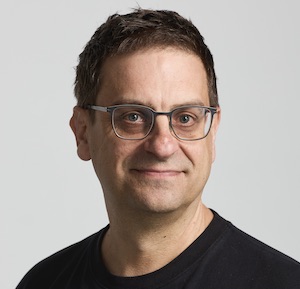
Michael Alexander Riegler is a full-time Professor at Oslo Metropolitan University's Faculty of Social Sciences, specifically in the Department of Social Work, Child Welfare and Social Policy. While his formal academic affiliation focuses on social sciences, his research interests span interdisciplinary domains including computer technology, information and communication systems, medical technology, and mathematics/natural sciences. Current research projects: Strengthening solidarity for democratic unity across border (SOLIDEM) addressing trust erosion in European welfare states, and Artificial intelligence in assisted reproduction technology improving embryo/sperm selection Recent publications (2025) focus on AI applications in healthcare (wearable sensors, ECG reconstruction), anomaly detection in time-series data, multimodal healthcare data analysis, and psychiatric motor activity datasets
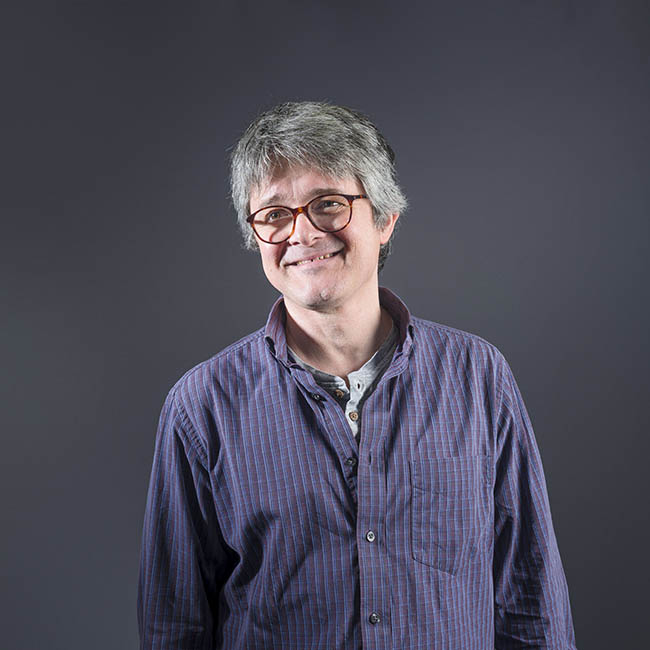
Caleb Kelly is an Associate Professor in the Faculty of Arts, Design and Architecture at the University of New South Wales (UNSW). His research focuses on sound in the fields of media arts, gallery arts, and music, leading to a rethinking of how art is listened to, historically and in contemporary practice. Kelly coordinates the research group Sound, Energies and Environments (SEE), which explores the intersection of sound, energy, and environmental concerns in contemporary art practices. His educational background includes: Bachelor of Arts in Art History & Philosophy from the University of Otago, New Zealand (1993) Master of Arts (Hons) in Art History from the University of Auckland, New Zealand (1996) Doctor of Philosophy in Creative Communications from the University of Canberra, Australia (2007) Kelly's research centers on sound studies , particularly examining the role of sound in contemporary art and gallery contexts. His work explores cracked media (the sound of malfunction), imperfection in experimental instruments , and feedback systems in artistic practice. He investigates how sound functions within visual art spaces, challenging traditional distinctions between visual and auditory experience. His research has led to significant contributions in understanding gallery sound , audio installations , and the materiality of sound in contemporary art. Kelly's approach combines art historical analysis with practical experimentation, often working directly with artists to understand the technical and conceptual dimensions of sound-based art. Kelly's publications reveal a consistent focus on the intersection of sound, media, and contemporary art practices. His work traces the historical development of sound art exhibitions while simultaneously exploring cutting-edge sonic art practices. A notable trend is his sustained interest in imperfection, malfunction, and error as creative forces within media art. His research spans from historical examinations of sound art exhibitions to contemporary investigations of ecological concerns in media practices. Kelly's writing frequently addresses the material dimensions of sound, examining how physical substances and technological systems shape auditory experiences in gallery settings. Among his notable recognitions: Edgard Varèse Guest Professor at the Technische Universität Berlin (2015) Kelly has supervised numerous doctoral and master's students working at the intersection of sound, art, and technology. His current and completed students have explored diverse topics including cello performance with long-throw speakers, improvisational feedback systems, underwater sound experiences, electro-acoustic feedback, neural networks in music, sound surveillance, ecological sound practices, video feedback art, electromagnetic constellations in radio, and organizational structures in experimental music. His supervision emphasizes practice-based research, encouraging students to develop both theoretical frameworks and creative outputs. While specific grant information isn't detailed in the provided text, his research activities suggest involvement in substantial funding projects supporting his publications, exhibitions, and research group activities. Kelly coordinates the research group Sound, Energies and Environments (SEE), which serves as a hub for interdisciplinary research on sound in contemporary art. The group brings together artists, curators, and scholars to explore how sound functions within gallery contexts and beyond. SEE has facilitated numerous exhibitions, publications, and collaborative projects examining the relationship between sound, energy systems, and environmental concerns. The group's work has contributed significantly to the field of sound studies, particularly in understanding how sound operates within institutional art spaces.
Jie Wang is a Professor of Computer Science at the University of Massachusetts Lowell's R. Miner School of Computer and Information Sciences. He joined UMass Lowell in 2001 as a Full Professor and chaired the department for 9 years from 2007 to 2016. He serves as Director for China Partnership of the US-based Consortium for Mathematics and Its Applications (COMAP) since 2011. Prior to UMass Lowell, he was Assistant Professor and then Associate Professor of Computer Science at the University of North Carolina. Professor Wang's research spans multiple areas including text mining algorithms and systems, data modeling, combinatorial optimizations, network security, wireless sensor networks, and computational complexity theory. His work has evolved from theoretical foundations in computational complexity (1980s-early 2000s) to practical applications in data analysis, intelligent text automation, and AI systems. His recent publications focus on AI-Oracle machines, LLMs, text mining, document engineering, and network security. His research portfolio demonstrates a clear evolution from theoretical computer science to applied research with practical impact. The publications show increasing focus on AI, text mining, and document engineering in recent years, while maintaining foundations in algorithm design and network security. His work bridges theoretical computer science with real-world applications across multiple domains. Honorary Advisor (2013) - NeoUnion Hong Kong Education Science Culture Organization MHE Scholar (2012) - Ministry of Higher Education, China PMYR Award for Major New Initiatives (2010) - University of Massachusetts Lowell Teaching Excellence Award (2002) - University of Massachusetts Lowell Nominee of Board of Governors' Teaching Excellence Award (2000) - University of North Carolina Professor Wang has graduated 18 PhD students and is currently directing 5 PhD students. His research has been funded by the National Science Foundation, IBM, Intel, and other companies totaling approximately $4.8 million. He is active in professional service, including chairing conference program committees, serving as journal editors, and as editor-in-chief of a book series on mathematical and interdisciplinary modeling. His laboratory work focuses on text mining systems, network security applications, and computational models for practical problems.
Professor Kwon Oh-jin is affiliated with Sejong University , where he serves in the Department of Electronic Engineering . His academic career spans over three decades, including a PhD in Electrical and Computer Engineering from University of Maryland (1994) and MS in Signal/Image Processing from University of Southern California (1991). His research focuses on image/video analysis , compression algorithms , watermarking systems , and steganography . Recent work explores machine learning-driven compression , 360-degree imaging , and JPEG standards implementation . His 15 most recent articles address topics like cybersecurity using CNNs , dynamic gesture recognition , and novel multimedia platforms for emerging standards. Professor Kwon leads the Visual Communication Research Lab (Chung923), supervising numerous PhD and MS students working on point cloud coding , JPEG privacy , and AI-based image coding . He has received multiple government and industry grants from organizations including the Agency for Defense Development and Ministry of National Defense .
Johan Andréas Rohdin is an Assistant Professor at the Department of Computer Graphics and Multimedia , Faculty of Information Technology , Brno University of Technology. His research focuses on Speaker Recognition , Biomedical Image Analysis , and Signal Processing , with applications in forensic speaker comparison and retinal disease diagnosis. University: Brno University of Technology Role: Assistant Professor Research Groups: Speech Data Mining Research Group, BUT Speech@FIT His work addresses speaker diarization , embedding extractor optimization , and automated retinal symmetry analysis using GANs. Recent publications emphasize self-supervised learning, anti-spoofing techniques, and forensic multimodal datasets. Key projects include contributions to NIST Speaker Recognition Evaluations and development of the ROXSD multimodal dataset. He actively collaborates with the Speech Data Mining Research Group and participates in doctoral examination commissions.
Jose A. Ruiperez Valiente is an Associate Professor at the Information and Communications Engineering Department of the University of Murcia. His academic journey includes a B.Eng. and M.Eng. in Telecommunications, followed by an M.Sc. and Ph.D. in Telematics from UC3M, with research conducted at IMDEA Networks. He completed research stays at MIT and the University of Edinburgh, and a postdoc at MIT Teaching Systems Lab/Playful Journey Lab. He has held academic appointments at Complutense University of Madrid and industry roles at Multimedia Vocento, Accenture, and ExoClick. Current role: Associate Professor, University of Murcia Previous institutions: UC3M, IMDEA Networks, MIT, University of Edinburgh, Complutense University of Madrid Industry experience: Multimedia Vocento, Accenture, ExoClick His research focuses on computational social science, educational technology, cyberdefence, and data science. Key methodologies include learning analytics, game-based assessment, and serious games for skill evaluation. Recent publications analyze trends in educational technology, develop frameworks for game-based assessments, and explore disinformation detection. His work combines machine learning with educational innovation, particularly in stress detection and competency evaluation through biometric data. Scientific awards include: BBVA Award as Outstanding Young CS Researcher Humboldt Research Fellowship He has co-authored over 100 publications with 2100+ citations and participated in 20+ funded projects like DEFENDER, SEMANTIC, and EU-GUARDIAN, focusing on cybersecurity training and decentralized AI systems.
Dr. Paul Aleixo is a Senior Lecturer in Psychology at the Sheffield Institute of Social Sciences, part of Sheffield Hallam University's College of Social Sciences and Arts. He holds a BSc and PhD, and is a Fellow of the Higher Education Academy (FHEA). His career spans over two decades, including 14 years at De Montfort University where he taught modules like Psychology & Education and Biopsychology. He joined Sheffield Hallam in 2013. Education: BSc, PhD (1993) Affiliations: Sheffield Hallam University (2013–present), De Montfort University (previous role) His research focuses on applying psychology to educational contexts, with a recent emphasis on comic books as instructional tools. He authored a biopsychology textbook in comic format for undergraduates and explores moral reasoning development in educational settings. His work bridges cognitive science, developmental psychology, and pedagogical innovation. Publications span topics like comic book efficacy in education, dyslexia interventions, and juvenile offender psychology. His research demonstrates interdisciplinary approaches to understanding learning, memory, and moral development across diverse populations. Advising: Supervises Masters projects in Developmental, Educational, and Applied Psychology. Consulting experience includes work with Lincolnshire Social Services and commercial organizations. His contributions highlight practical applications of psychological principles in both academic and real-world contexts.
Dr. Amna Qureshi is an Assistant Professor in Cybersecurity at the Department of Computer Science, University of Bradford. Previously, she served as a Senior Researcher at Universitat Oberta de Catalunya in Barcelona. Her research focuses on secure cryptographic protocols, distributed systems, IoT security, privacy preservation, and cyberbullying detection. She holds a Fellowship from the Higher Education Academy (FHEA) and received a 2018 grant from Spain’s INCIBE for cybersecurity research. Her teaching includes modules like Ethical Hacking (COS7029-B) and ISO27000 Framework (COS7030-B). Research highlights include over 25 peer-reviewed publications in systems security and privacy, with a focus on Zero Trust Architecture, blockchain integration in finance, and AI-driven cybersecurity solutions. She actively reviews for JCR-indexed journals and serves on conference program committees. Key contributions include frameworks for multi-layered DDoS defense in 5G networks, AI-based fake news detection, and Urdu-language cyberbullying identification. Her work bridges theoretical cryptography and practical applications in IoT, cloud computing, and financial systems. Grants: Advanced Cybersecurity Team Excellence Grant (INCIBE, 2018) Awards: FHEA Fellowship Her publications emphasize Zero Trust models, blockchain applications, and privacy-preserving techniques. Current research trends focus on integrating AI with cybersecurity to address emerging threats in distributed systems and social media.
Ramanathan Subramanian is an Associate Professor in the Department of Information Technology & Systems, AI and Robotics at the University of Canberra. His past affiliations include IIT Ropar and UIUC, Singapore. He has received notable awards including the IEEE Transactions on Affective Computing Best Paper Award (2019) and Multimedia Rising Star nomination (2015). His research focuses on Human-centered computing, AI systems leveraging non-verbal behavioral cues, and applications in health analytics and virtual reality. He actively supervises PhD and Master’s students in areas like Human-Computer Interaction, Data Science, and VR for healthy aging. Research interests: Human perception modeling, intelligent interfaces, health-focused VR, and applied machine learning Key projects: Driver sentiment prediction, distraction awareness campaigns, and robotics for waste management His work contributes to UN SDGs related to health and well-being, particularly through technologies improving aging care and mental health monitoring. Recent projects include developing explainable AI for emotion inference and multimodal data fusion systems. Awards: IEEE Best Paper Award, Multimedia Rising Star Grants: Lead or Co-Investigator on three major grants totaling over AUD 4M Labs/Teams: Collaborates extensively with the University's robotics and health tech groups, contributing to interdisciplinary projects in AI ethics and medical signal processing.
Associate Professor Wong Kok Sheik is the Deputy Head (Research) at the School of Information Technology, Monash University Malaysia. He holds a Doctor of Engineering from Shinshu University (Japan) and advanced degrees in Computer Science and Mathematics from Utah State University (USA). His research focuses on multimedia signal processing, cybersecurity, and digital health, with contributions to data hiding, encryption, and smart grid security. He leads a EU-funded WAge project on post-pandemic workplace health interventions. Education: PhD in Engineering, Shinshu University, Japan (2009) Masters in Computer Science & Mathematics, Utah State University, USA (2005-2004) Bachelor of Science, Utah State University, USA (2002) Professional Roles: Associate Editor, IEEE Signal Processing Letters Member, IEEE Signal Processing Society’s IFS Technical Committee Board Member, APSIPA Multimedia Security and Forensics (MSF) Committee His research interests span multimedia forensics, encrypted domain processing, and cybersecurity frameworks. Notable projects include recovery of missing coefficients in compression standards and HDR imaging enhancement. Recent work integrates digital health, addressing workplace mental/physical health in post-pandemic environments. Publications reflect expertise in watermarking, encryption, and biometric security. Key contributions include encryption-resistant data embedding and secure smart grid analytics. Awards include IEEE CES Service Awards (2015, 2016) and Best Paper recognitions. He supervises over 20 PhD/MSc students, focusing on topics like biometric recognition, data hiding, and anomaly detection. Grants include a €2M EU Horizon 2020 project (IDENTITY) and a RM146k smart grid initiative. His teaching emphasizes foundational IT research methods and theoretical computer science.
Tom Fincham Haines is a Senior Lecturer in the Department of Computer Science at the University of Bath. He is affiliated with the UKRI Centre for Doctoral Training in Accountable, Responsible and Transparent AI, the Centre for Mathematics and Algorithms for Data (MAD), and multiple interdisciplinary institutes including Visual Computing, IAAPS, the Bath Institute for the Augmented Human, and the Institute for Digital Security and Behaviour (IDSB). He is actively accepting doctoral students and maintains a strong research presence in machine learning and its applications. Research Interests: Dr. Haines applies machine learning to computer vision and graphics, with a focus on graphical models, Bayesian non-parametric models, directional statistics, and active learning. His current interests include developing tools for artists, machine learning for education, online/real-time machine learning, causality, and scaling non-parametric methods for big data. His work contributes to several UN Sustainable Development Goals, particularly in health and security domains. Recent Research Trends: His recent publications (2024–2025) reflect a strong interdisciplinary focus, combining machine learning with applications in sonar imaging, drug detection, and creative media. He leverages deep learning and hybrid spectroscopic techniques for portable forensic devices and explores tangible interfaces for virtual film production, demonstrating a blend of technical innovation and societal impact. Scientific Awards: No specific awards mentioned in the provided text. Advising and Grants: Dr. Haines supervises doctoral students and has contributed to 8 supervised works. He is actively involved in multiple funded research projects, including as Principal Investigator (PI) on a Defence Science and Technology Laboratory project for synthetic opioid detection, and as Co-Investigator on EPSRC, MRC, Innovate UK, and National Police Chiefs' Council projects related to healthcare, chronic pain, and radicalization. His grant portfolio reflects strong collaboration across engineering, health, and security sectors. Labs and Teams: He is embedded in several research centers at the University of Bath, including the Centre for Mathematics and Algorithms for Data (MAD), the Institute for the Augmented Human, and the Institute for Digital Security and Behaviour (IDSB), where he contributes to AI, machine learning, and visual computing initiatives. His work spans collaborative teams in healthcare technology, digital forensics, and creative computing.
Prof. Dr. rer. nat. habil. Stephan Kopf is a faculty member at the Faculty of Spatial Information, where he holds the Professorship in Informatics and Geoinformatics. He actively contributes to research in geographic information systems (GIS), computer graphics, computer vision, and multimedia technologies. His academic leadership roles include serving as Dean and as a member of the Faculty Council, with advisory roles in the Senate. His research spans crowd simulation , image/video retargeting , augmented reality platforms , and interactive learning systems . He focuses on algorithm development for GIS, temporal effects in re-captured video, and scalable solutions for classroom interactivity. His work frequently integrates machine learning, mobile computing, and geospatial data. For teaching, he oversees courses such as Internet Technologies, Informatics, and Programming in degree programs like Geoinformatics/Management and Surveying. He supervises theses involving programming-centric topics like mobile app development , VR applications , and astronomical analysis of geospatial data .
Jussara M. Almeida is an established computer science researcher specializing in social network analysis, misinformation detection, and human mobility modeling. Her extensive publication record (1996–2025) demonstrates active research in web science, political communication on messaging platforms (WhatsApp/Telegram), and cloud systems. She frequently collaborates with Brazilian institutions and international partners on large-scale data projects. Research Focus: Her core interests include: Modeling information diffusion in encrypted messaging apps (WhatsApp/Telegram) Predicting human mobility patterns and privacy implications Analyzing political discourse and election-related coordination online Developing computational methods for misinformation detection Optimizing cloud/edge computing performance Publication Trends: Recent work (2021-2025) shows intensified focus on: Telegram's role in political mobilization and information dissemination Advanced techniques for identifying fake news websites and image-based misinformation Privacy-preserving mobility analysis and edge computing Child safety in live-streaming platforms Collaborations & Impact: Key collaborators include Marcos André Gonçalves, Fabrício Benevenuto, and Marco Mellia. Her research provides critical insights into real-world problems like election integrity, platform governance, and user privacy.
İclal Çetin Taş is an Assistant Professor in the Computer Engineering department at Başkent University. She holds a PhD (2019), Master's (2012), and Bachelor's (2009) in Electrical and Electronics Engineering from Çukurova University. Her research spans three core domains: Artificial Intelligence : Applications in predictive modeling, classification, and deep learning systems. Image Processing : Focus on medical imaging (brain tumors, dental X-rays), forgery detection, and aerial image analysis. Signal Processing : Techniques for noise reduction and signal decomposition in medical and technical contexts. Recent publications (2022–2025) demonstrate a strong emphasis on deep learning applied to interdisciplinary challenges. Key themes include healthcare (cancer diagnosis, dementia classification), sustainability (battery life estimation), agriculture (crop detection), and digital security (image forgery). Her work frequently employs convolutional neural networks (CNNs) and regression models. She advises Master's students on topics like deep learning, image analysis, and software quality, though specific student names are not listed.
Alex 'Sandy' Pentland is a Professor at the Massachusetts Institute of Technology (MIT) Media Lab and a HAI Fellow at Stanford University . He has pioneered foundational work in computational social science , organizational engineering , and privacy-preserving data analytics , co-leading the development of the EU’s GDPR and advancing decentralized AI systems. Research Interests: Focus on Reality Mining , Social Physics , and Human-AI Coevolution , blending behavioral science, blockchain, and machine learning to reshape digital economies. Awards: MIT Toshiba Endowed Chair U.S. National Academy of Engineering McKinsey Award (Harvard Business Review) DARPA 40th Anniversary of the Internet Brandeis Award for Privacy Spin-offs: Co-founded companies like Ginger.io (mental health), Cogito Corp (AI coaching), and Prosperia (fairness in social services). Advisory Roles: Member of UN Secretary General’s advisory board, former advisor to OECD, Google, and AT&T. His recent publications emphasize blockchain interoperability , decentralized AI , and trust frameworks , reflecting his commitment to democratizing data governance.