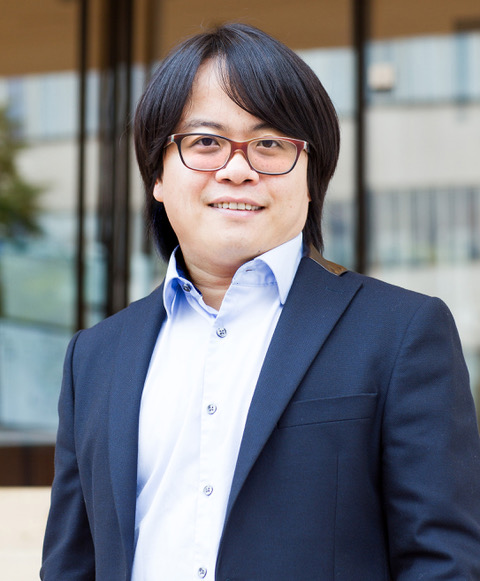
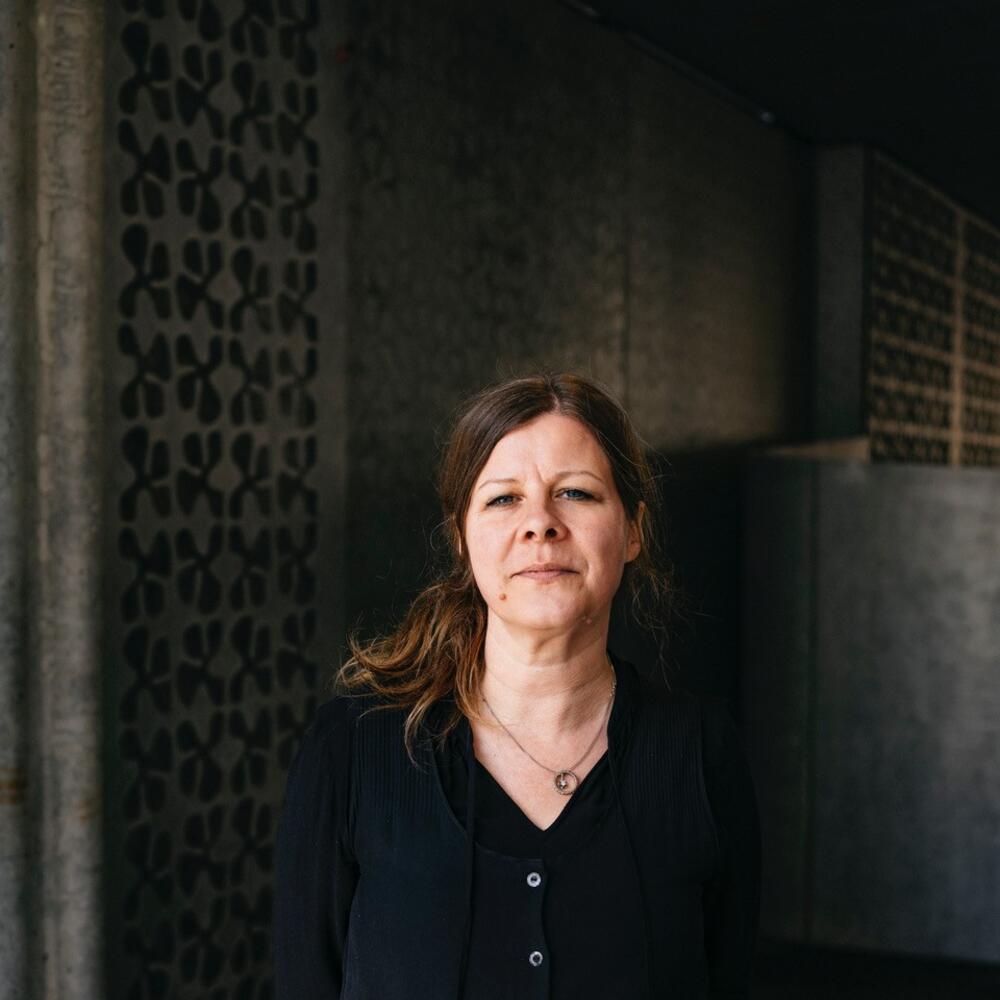
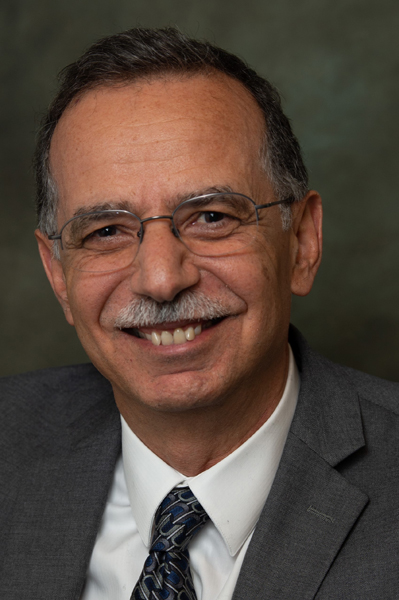
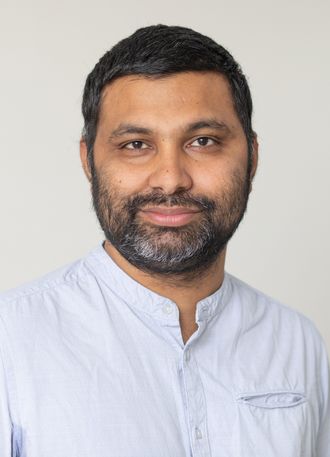
Dominik Schörkhuber is a PreDoc Researcher at the Vienna University of Technology (TU Wien) in the Computer Vision department. With a background in Informatics (BSc, Dipl.-Ing.), he focuses on computer vision applications for autonomous driving, robotics, and human-machine interaction. His work spans driver action recognition, pedestrian prediction, and adaptive lighting systems. Current projects: Empathic Vehicle (2024–2026), SyntheticCabin (2021–2025), SmartProtect (2020–2025) Research themes: Video transformers, synthetic data transfer learning, multi-task learning, and sensor-lighting integration Specializes in 3D sensing, nighttime driving analysis, and mobile video creation tools
Hui Pan is a distinguished academic holding dual positions as Nokia Chair in Data Science and Professor of Computer Science at the University of Helsinki, and Chair Professor of Computational Media and Arts at the Hong Kong University of Science and Technology (HKUST). His research spans networking, mobile computing, augmented reality, and computational social science. He earned his Ph.D. in Computer Science from the University of Cambridge in 2007. His work bridges social networks with mobile systems, pioneering fields like mobile social networks and opportunistic forwarding algorithms. Research interests include data science, complex networks, and innovative applications of augmented reality. His recent publications focus on low-latency AR frameworks, blockchain for computation offloading, and mobile web visualization. He has received prestigious awards, including IEEE Fellow (2018), ACM Distinguished Scientist (2016), and the Nokia Chair Endowment (2017). He has supervised over 15 PhD and 12 MPhil graduates, with 13 current Ph.D. students and 2 MPhil students. His editorial roles include Associate Editorships at IEEE Transactions journals and guest editorships at top venues like IEEE JSAC and ACM Transactions. He has organized conferences such as WWW Track Chair and ExtremeCom General Chair.
Claudia Lehmann is a University Professor of Film Art & Visual Communication at the Institute for Open Arts, Department of Scenography at Mozarteum University Salzburg. She has been a professor at Mozarteum University since 2019 and previously served as a visiting professor at the Berlin Weissensee Art Academy. As a faculty member, she contributes to the Institute management, teaches as a Teacher, and serves on the Curricular Commission. Dr. Lehmann holds a doctorate in physics (Dr. rer. nat.) with her dissertation "GAUGE COVARIANT MULTISCALE ANALYSIS OF COMPLEX SYSTEMS" published through DESY-Publications in 2004. Her academic journey reflects a unique interdisciplinary trajectory from scientific research to artistic practice. Claudia Lehmann's research interests center around the intersection of art and science, with particular focus on perception, reality, and systemic phenomena. Her work spans documentaries, feature films, music videos, art videos, installations, and performances, constantly searching for new forms and formats. She develops visual concepts, video stage sets, and unique live video performances, often in collaboration with Nicolas Stemann. Through her work, she explores diverse possibilities for new structures, especially in the form of artistic collaboration. Her recent artistic output shows a consistent trend toward interdisciplinary work that blends theater, film, and digital media. Lehmann frequently collaborates with Nicolas Stemann and Konrad Hempel, creating innovative performances that integrate video technology with traditional stagecraft. Her work often addresses social and political themes while experimenting with form and presentation. The Institute for Experimental Affairs (IXA), which she co-founded with Konrad Hempel, serves as a platform for exploring the interfaces between science and art through various projects and research initiatives. Dr. Lehmann has received several prestigious awards for her work: Samsung Smartfilm Award 2013 Shocking Shorts Award 2007 Nomination for German Documentary Film Music Prize 2013 Nomination for Studio Hamburg Young Talent Prize for Best Screenplay As an educator and researcher, Lehmann has developed numerous collaborative projects and performances that have been featured at major international festivals including the Berlin International Film Festival, Leipzig Documentary Film Festival, and various theater festivals. Her work with IXA represents a significant research initiative at the intersection of science and art. Lehmann co-founded the Institute for Experimental Affairs (IXA) with visual artist and composer Konrad Hempel. Through IXA, she conducts research and realizes projects at the interfaces between science and art. Her collaborative work spans theater productions, film projects, and interactive installations that have been presented at venues including the Schauspielhaus Zürich, Münchner Kammerspiele, Opéra Comique Paris, and various international festivals.
Wolfgang Klas is a Professor at the Faculty of Computer Science, leading the Research Group Multimedia Information Systems. His research focuses on multimedia systems, data management, and information retrieval, with significant contributions to multimedia content analysis and database systems. He has been actively involved in multiple research projects, including TP2 PRECIOUS (2013-2016), SciLink (2011-2014), and OptFI (2010-2013). His work intersects with emerging technologies like blockchain, as seen in his public engagements and talks on topics such as 'From Blockchain to Web' and IT4S Forum presentations. His research interests span multimedia systems, database design, and the application of declarative programming for security and data integrity. Recent projects emphasize fake review detection and sentiment analysis using advanced algorithms and neural models. He has collaborated internationally, contributing to workshops like SMAP 2020 and publishing in journals like Algorithms and Applied Sciences . Grants/Projects: TP2 PRECIOUS (2013-2016), SciLink (2011-2014), OptFI (2010-2013) Activities: Speaker at IT4S Forum (2024), Blockchain-related talks (2020–present) Labs/Teams: Research Group Multimedia Information Systems
Armin Kirchknopf serves as a Junior Researcher at the Media Computing Research Group within the Institute of Creative Media/Technologies, Department of Media and Digital Technologies at the University of Applied Sciences St. Pölten. His interdisciplinary work bridges artificial intelligence, computer vision, and social media analysis, with significant contributions to misinformation detection and disaster response systems. Based at Campus-Platz 1 in St. Pölten, Austria, he actively collaborates on EU-funded projects and publishes in top-tier AI venues. His educational journey spans humanities and technology: a Bachelor of Arts in Egyptology and Master of Arts in Classical Archaeology from the University of Vienna (including fieldwork at excavation sites across Austria, Germany, and Egypt), followed by a Bachelor of Science in Media Technology from FH St. Pölten. This unique background informs his human-centered AI research approach. Kirchknopf's research centers on explainable multimodal AI systems for real-world challenges. His recent work demonstrates expertise in transformer-based architectures for cross-lingual fake news detection, sexism identification, and flood monitoring through social media imagery. He pioneers techniques like Grad-CAM for object detection explainability and develops visualization tools for complex data interpretation, emphasizing transparency and social impact in AI deployment. Analysis of his 13 publications (2017-2022) reveals a strategic shift toward applied AI in societal contexts , particularly using social media data for disaster management and combating online toxicity. His projects consistently integrate computer vision with natural language processing, showing increasing sophistication in multilingual capabilities and model interpretability frameworks. His scientific recognition includes: Creative Business Award for co-developing the Tenjin learning quiz application No documented student advisement or grant leadership appears in current records, though he actively mentors through project-based collaborations. His work with the Media Computing Research Group drives innovation in educational technology and public safety applications. Kirchknopf contributes to the Media Computing Research Group's portfolio including Fake News Detection, SAiEX (Safe AI with explainable integrity), InfraBase (building footprint segmentation), and Ressel Center music therapy projects. His cross-disciplinary collaborations span computer scientists, archaeologists, and social scientists, reflecting the group's commitment to human-centric technological solutions .
Ivan Viola is an Associate Professor at the Institute of Computer Graphics and Algorithms, part of the Faculty of Informatics at TU Wien, Austria. He holds a leave of absence until December 2024 while also being affiliated with King Abdullah University of Science and Technology (KAUST) as an Associate Professor funded by the Vienna Research Groups program. His research focuses on visualization techniques in medicine, biological sciences, and earth sciences, with a specialty in illustrative visualization and DNA-nanotechnology applications. Viola has contributed over 100 scientific works and serves as a reviewer and panelist for major conferences in computer graphics and visualization. Education: M.Sc. (2002) and Ph.D. (2005) in Computer Graphics from TU Wien. Postdoctoral research at the University of Bergen (2006-2011), where he became Full Professor before returning to TU Wien. Research Interests: Whole-cell visualization Molecular modeling Interactive 3D environments Biomedical visualization Data-driven colormap techniques Awards: IEEE VIS 2017 Best Paper Honorable Mention, 'Best Overall Concept' for CellView, and multiple visualization awards. Active in EuroVis and IEEE VIS organizing roles. Grants & Supervision: Leads the Visualization Group at TU Wien, supervising student projects and master’s theses. Involved in grants like the Vienna Research Groups program. Labs/Teams: Visualization Group at TU Wien, collaborating on projects like CellView and Molecumentary.
Dr. Martin Rötting is an Associate Professor at the College of Interreligious Studies , Paris Lodron University of Salzburg. His work focuses on interreligious dialogue, systematic theology, and spiritual practices across traditions. Primary Affiliation : College of Interreligious Studies, University of Salzburg Key Roles : Project staff member for Jewish-Christian dialogue initiatives Research Interests Dr. Rötting specializes in: Interreligious dialogue frameworks Spatial analysis of religious practices Comparative spirituality across faith traditions Modern Templar movements Religious education methodologies Third-space theology 2024-2025 Research Themes His recent publications explore: Theological implications of migratory religious landscapes Fractal patterns in interfaith interactions Esoteric Christianity in modern contexts Cross-cultural spiritual identity formation Interactive educational tools for religious studies Leadership & Projects Co-founder and manager of College of Interreligious Studies Staff member, RPJCD project (2020-2027) Co-organizer, PNJCP conferences (2021-2023)
Mostafa Ammar is a Regents' Professor and Interim Chair of the School of Computer Science at the Georgia Institute of Technology. He has held leadership roles including Associate Chair (2006–2012) and has been a faculty member since 1985. His research focuses on network architectures, protocols, and services, with contributions to mobile cloud computing, network virtualization, and disruption-tolerant networks. He has advised 39 Ph.D. students and secured funding from agencies like NSF, DARPA, and industry partners such as Cisco and IBM. Education : S.B. and S.M. from MIT, Ph.D. from the University of Waterloo. Research Interests : Network architectures, mobile cloud computing, overlay networks, video streaming, and network simulation. His work bridges theoretical advancements with practical implementations, emphasizing scalable and efficient network solutions. Publications : Over 214 publications with a focus on network virtualization, mobile edge computing, and distributed systems. Recent work explores encrypted traffic analysis and femto-cloud resource sharing. Awards : ACM/IEEE Fellowships (2002–2003), Best Paper Awards (2012, 2018), and multiple teaching excellence recognitions. Service : Editor-in-Chief of IEEE/ACM Transactions on Networking (1999–2003), conference co-chair roles, and steering committee memberships. Advising & Grants : Mentored 39 Ph.D. students and secured multi-million-dollar grants. His research has influenced industry standards and academic curricula. Labs/Teams : Active in Georgia Tech’s networking research groups, contributing to open-source network simulators and collaborative projects with global institutions.
Shah Nawaz is an Assistant Professor at the Institute of Computational Perception , Johannes Kepler University Linz. His research focuses on multimodal systems, deep learning applications in healthcare, and cross-modal learning frameworks. He leads projects addressing challenges like missing modalities in machine learning, face-voice association, and medical image analysis. Key research interests include machine learning for medical diagnostics (e.g., breast cancer detection, skin lesion segmentation), speech recognition, and adaptive neural network architectures. He has contributed to frameworks like Chameleon for robust multimodal learning and the FAME challenge for face-voice association in multilingual environments. Publications emphasize practical applications, such as bilingual healthcare chatbots for pregnant women and light-weight speech recognition models for resource-constrained systems. His work bridges theoretical advancements and real-world deployment in healthcare and security domains. Shaw Nawaz actively participates in academic communities through workshops like DaQuaMRec@RecSys2025 and has developed open-source frameworks for image restoration and multimodal fusion. His lab focuses on scalable solutions for multimodal data challenges in both technical and clinical contexts.
Heitor Alvelos is a Full Professor of Design at the University of Porto's School of Fine Arts, where he has held academic positions since 2003. He serves as Course Director for the PhD in Design program (since 2011), Director of ID+ Institute for Research in Design, Media and Culture (since 2007), and Curator of FuturePlaces Medialab for Citizenship (since 2008). His institutional roles extend to the Foundation for Science and Technology (Portugal), where he chairs the Scientific Board for Humanities and Social Sciences. His academic journey includes a PhD in Design/Media Studies from the Royal College of Art (2003), an MA in Visual Communication from the School of the Art Institute of Chicago (1992), and a BA in Communication Design from the University of Porto (1989). His educational path was supported by prestigious awards including a Fulbright scholarship and FCT grant. Alvelos' research spans sound design, new media, cultural criminology, and citizen engagement through media. He explores the intersection of perception, technology, and cultural practices, with particular focus on lexical implications of digital media and ecological approaches to perception. His work often bridges artistic practice with academic research, creating innovative frameworks for understanding contemporary media culture. His recent publications reveal a trajectory from theoretical explorations of graffiti and street art toward more complex investigations of algorithmic identity, digital citizenship, and the materiality of sound in digital contexts. The publications show strong interdisciplinary connections between design, media studies, cultural theory, and sound art, reflecting his dual identity as both academic researcher and creative practitioner. Elected Vice-President, Scientific Board (HSS), Foundation for Science and Technology, Lisbon, Portugal (2010-present) Elected Board Member, Fundação Gomes Teixeira, Portugal (2007-2013) FCT Scholarship, London, UK (1997-1999) Fulbright scholarship, trustee scholarship (SAIC), JNICT grant (1992) As an academic advisor, Alvelos has supervised over 20 PhD students across diverse topics in design, media, and cultural studies. His research is supported through institutional roles including Director of ID+ Institute, which facilitates collaborative research between the University of Porto and University of Aveiro. His work with FuturePlaces Medialab has created unique opportunities for community engagement and citizen science initiatives. Alvelos directs ID+ Institute for Research in Design, Media and Culture, a collaborative research entity between the University of Porto and University of Aveiro. He also curates FuturePlaces Medialab for Citizenship, which has evolved into a significant platform for exploring digital citizenship and community engagement through media arts. His leadership in these organizations demonstrates a commitment to bridging academic research with practical applications in community contexts.
Prof. Hermann Hellwagner is a Full Professor at the Department of Information Technology, University of Klagenfurt. He has held roles such as Vice President (Natural and Technical Sciences) at the Austrian Science Fund (FWF) and Vice Dean of the Faculty of Technical Sciences. His research focuses on multimedia communication, network engineering, and future internet architectures. Notable projects include work on adaptive streaming, edge computing, and drone networks. He holds a Ph.D. in Systolic Architectures from the University of Linz (1988). Research interests span distributed multimedia systems, information-centric networking (ICN), and optimizing video streaming quality-of-experience (QoE). Recent work emphasizes edge computing solutions for low-latency streaming and dynamic codec adaptation. His contributions include frameworks like ALPHAS and MEDUSA for bitrate optimization, and studies on point cloud streaming in augmented reality. Publications (2021–2025) highlight advancements in edge-assisted streaming, hybrid P2P-CDN architectures, and transcoding techniques. His work often bridges theoretical models with real-world implementations, addressing challenges in latency, cost, and device adaptability. Current projects involve 6DoF video streaming and multi-robot system optimization. Labs/Teams: Part of the Institute of Information Technology (ITEC), Klagenfurt. Collaborates on EU-funded projects and industry partnerships in 5G edge computing and drone networks. Active in standards groups for HTTP adaptive streaming protocols.
Timo Fleischer is an Associate Professor in the Chemistry Didactics Working Group at the University of Salzburg, affiliated with both the Faculty of Natural and Life Sciences and the School of Education. He leads key educational innovation projects including EXBOX-Digital, ChemGerLab-VR, and RECC Salzburg, and plays a significant role in digital science education development. Education: Bachelor of Science in Geography and Chemistry, University of Kiel (2011) Master of Education in Geography and Chemistry, University of Kiel (2013) PhD in Science Education, TUM School of Education (2017) Habilitation in Chemistry Didactics, University of Salzburg (2024) His research focuses on the effectiveness of digital media in teacher education and chemistry classrooms, the development of digital teaching and learning materials, and the integration of experimentation and modeling in science education. He is particularly interested in how digital tools support the learning of chemical language and representations. His work bridges educational theory and practical classroom innovation. His recent publications demonstrate a strong emphasis on digital scaffolding, augmented and virtual reality in chemistry labs, eye-tracking during experiments, and the use of fiction as an anchor in science teaching. These works reflect a trend toward immersive, technology-enhanced, and student-centered learning environments in science education. Scientific Awards: Ehrenurkunde Polytechnik-Preis 2022 – Projekt EXBOX-Digital Kulturfondspreis 2020 für das Projekt MINT:labs Science City Itzling Comenius-EduMedia-Siegel für EXBOX-Digital (2020) Qualitätslabel „Regional Educational Competence Centre“ (RECC) (2018–2021) Junior-Fellowship, Kolleg Didaktik:digital (2016–2017) Timo Fleischer has supervised various research projects and collaborated with numerous colleagues and students, though specific advisees are not listed. He has secured recognition and funding for initiatives such as EXBOX-Digital and MINT:labs, indicating successful grant acquisition. He is actively involved in teacher training, curriculum development, and science communication. He leads several innovative labs and teams, including ChemGerLab-VR (a virtual reality chemistry lab), EdTechAll, and the development of MINT:labs Science City Itzling. These initiatives focus on creating digital, hands-on, and inclusive science learning environments for both students and teachers.
Ines Zeitlhofer is a PhD student and Research Assistant at the Department of Educational Science, University of Salzburg, affiliated with the School of Education. Her research focuses on metacognition and problem-solving in digital learning environments, with a particular emphasis on pedagogical agents and multimedia learning. Prior to this role, she earned a Master of Educational Sciences from the University of Salzburg and worked as a teacher at Group Scolarie Sophie Barat in Paris and a lecturer for Business German at the Université Paris Cité’s Faculty of Law and Economics. Her work explores cognitive and metacognitive strategies to enhance learning performance, leveraging digital tools and multimedia approaches. Recent publications highlight her contributions to understanding appraisal processes in multimedia learning, the impact of pedagogical agents on motivation, and the application of cognitive prompts in digital platforms. Ines is part of the Digital Learning Research Group (DLRG), collaborating on projects that bridge educational theory and technological innovation. She holds no explicitly stated awards but is actively engaged in advancing evidence-based practices in digital education.
Morgane Chevalier is an Associate Professor at Vaud Teacher Training College (HEP Vaud) working within the Media, Digital Uses and Computer Science Teaching unit (UER MI). She specializes in multimedia pedagogical engineering, combining project management with e-learning scripting. Her work bridges educational theory and practical implementation of digital technologies in classroom settings, with particular focus on primary education. With prior experience teaching in primary schools in Seine-Saint-Denis (France), working in human resources in Montreal (Canada), and teaching in the Canton of Vaud, Chevalier brings diverse perspectives to her academic work. She holds a Master's degree in e-learning from IPM, Lille 1 and is currently pursuing a MAS in 'Theories, practices and training devices for teachers' to refine her understanding of institutional and social contexts of teacher training in French-speaking Switzerland. Her research interests focus on three complementary areas: online homework implementation in blended learning environments and fostering teacher communities of practice; how e-learning supports teacher professionalization; and robotics as a medium for knowledge, specifically examining how classroom robot integration impacts student learning and teaching practices. She is particularly interested in emerging communities of practice around educational technology. Analysis of her recent publications reveals a strong emphasis on educational robotics as a vehicle for developing computational thinking in primary education. Her work consistently explores scaffolded learning approaches, intervention methods, and teacher perspectives on implementing robotics in classrooms. A recurring theme is the development of models to help teachers identify relevant computational thinking concepts during different phases of educational robotics activities. Chevalier serves in several organizational roles including as an Associate HEP Professor, delegate of the intermediate body to the HEP Council, delegate of the Specialized Pedagogy Study Commission, and scientific collaborator at EPFL's LSRO. She is also a member of the educanet2 Community. Her teaching spans Bachelor primary programs, MASPE education, and continuing education courses covering image creation and processing, media education, Thymio II robotics, and flipped classroom methodologies. She collaborates extensively with EPFL researchers, particularly on projects involving the Thymio educational robot, and has developed frameworks for creative computational problem solving through robotics. Her work demonstrates a commitment to translating research into practical classroom applications while supporting teacher development in the digital age.
Chang Chin-Chen is a Chair Professor at the Institute of Information Engineering and Computer Science, Feng Chia University, Taiwan. He holds multiple prestigious fellowships, including IEEE Fellow (1998), IET Fellow (2000), CS Fellow (2020), and AAIA Fellow (2021). His research focuses on information security, cryptography, multimedia image processing, and algorithms. He has published hundreds of papers and 30 books, with over 40,340 citations and an h-index of 93 (Google Scholar). He has mentored 7 postdoctoral, 64 PhD, and 197 master’s students. Professor Chang has led numerous national and international projects, including collaborations with Taiwan’s Ministries of Science, Education, and Transportation. He founded the Chinese Information Security Association (CISA) and served as Editor-in-Chief of multiple journals. He has received over 20 major awards, including the Wolf Foundation Prize in Medicine (though likely a misattribution, as per text), and delivered invited talks globally at institutions like the Chinese Academy of Sciences and Stanford University. His contributions include pioneering work in steganography, e-business security, and neural network applications. He holds 17 patents and is a leader in advancing information security policies in Taiwan.