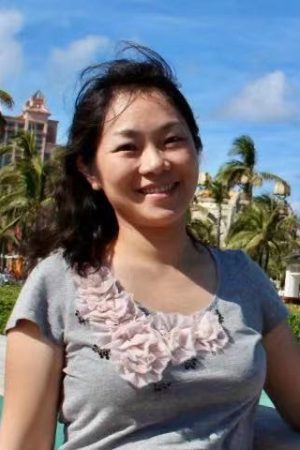
Farah Kamw is an Assistant Professor in the Department of Computer Science at Wayne State University. With a PhD in Computer Science (2019) from Kent State University, her expertise spans 18 years of software development, academic teaching, and research in information visualization and database management. Education : PhD (Kent State), MSc (University of Zakho), BSc (University of Baghdad) Her research focuses on Information Visualization and Visual Analytics of spatial-temporal data, particularly through 8 publications (2013-2021) addressing urban mobility patterns, trajectory analysis, and geospatial data integration. She has developed several open-source visual analytics tools including TrajAnalytics and SparseTrajAnalytics, applying both document and graph database techniques. Farah teaches core Computer Science courses such as Algorithm Design , Programming Languages , and Database Systems . Her technical skills include Python, C++, Java, SQL, NoSQL databases, and GIS technologies.
Arnab Nandi is a Professor of Computer Science and Engineering at The Ohio State University, with a courtesy appointment in Biomedical Informatics. He holds leadership roles including Steering Committee Member for the Human-in-the-Loop Data Analytics (HILDA) Workshop and has served as Workshops co-chair for SIGMOD 2025-26 and Demonstrations co-chair for SIGMOD 2024. His research focuses on bridging human interaction and data infrastructure, spanning database systems, human-in-the-loop data analytics, and next-generation query interfaces. Nandi's work emphasizes interactive data exploration through projects like DICE (Distributed Interactive Cube Exploration), GestureDB (Querying Beyond Keyboards), and Omni (Multimodal Data Exploration). His recent research explores integrating LLMs into database education, augmented reality interfaces for data analytics, and multimodal approaches to video querying. Nandi has received numerous honors including the NSF CAREER Award, Google Faculty Research Award, IEEE TCDE Early Career Award, and the University's Alumni Award for Distinguished Teaching. He was also named to Columbus Business First's '40 under 40' and became an ACM Distinguished Member in 2024. As an educator, he teaches courses including CSE 3241 (Introduction to Database Systems), CSE 5242 (Advanced Database Systems), and CSE 5251 (Introduction to Software Startups). His educational innovations include DBTutor, which integrates LLMs into database systems education. At Ohio State, Nandi co-founded the OHI/O Program, which fosters tech culture through hackathons, and The STEAM Factory, an interdisciplinary research collaboration network. Prior to academia, he was founder and CEO of Mobikit, a connected vehicles data analytics startup acquired by Azuga Inc. (a Bridgestone company). His research has been supported by the NSF and industry partnerships, with applications spanning precision agriculture (CropFusion), clinical data pipelines (ICARUS), and interactive visualization systems (Perceptvis).
Fabrizio Falchi is a researcher at the Artificial Intelligence for Media and Humanities (AIMH) Lab of the Institute of Information Science and Technologies (ISTI) within Italy's National Research Council (CNR). He also maintains an associate position at the Biorobotics Institute of Scuola Superiore Sant'Anna. His work focuses on developing advanced multimedia retrieval systems, with the VISIONE platform being his most notable contribution, which has won international competitions including the Video Browser Showdown in 2024 and placed second in 2023. Falchi's educational background includes: Ph.D. in Information Engineering from University of Pisa (Italy) Ph.D. in Informatics from Faculty of Informatics of Masaryk University of Brno (Czech Republic) M.B.A. from Scuola Superiore Sant'Anna in Pisa His research spans deep learning, convolutional neural networks, deep features extraction, similarity search algorithms, distributed indexing systems, multimedia information retrieval, computer vision applications, and peer-to-peer systems. Falchi has made significant contributions to fine-grained visual understanding, cross-modal retrieval (particularly image-text matching), and robustness of deep learning systems against adversarial attacks. His work demonstrates a strong focus on practical applications of these technologies, particularly in video retrieval systems and safety monitoring solutions. Analysis of Falchi's recent publications reveals a strong focus on video and image retrieval systems, with the VISIONE platform being central to his work. His research shows increasing emphasis on fine-grained understanding in computer vision, cross-modal retrieval, and addressing practical challenges like cross-resolution face recognition. Recent work demonstrates innovation in making these systems more efficient through techniques like knowledge distillation (ALADIN) and leveraging virtual worlds for training data. His publications consistently bridge theoretical advances with practical applications in surveillance, safety monitoring, and multimedia search. Falchi's work has received significant recognition: Best paper award at CBMI 2024 for 'Is ClLIP the main roadblock for fine-grained open-world perception?' VISIONE 2024 won the Video Browser Showdown competition in Amsterdam VISIONE obtained second place at Video Browser Showdown 2023 in Bergen Best Paper Award for 'Learning Safety Equipment Detection using Virtual Worlds' at CBMI 2019 Falchi collaborates extensively with researchers at ISTI-CNR, particularly within the AIMH Lab. His work on VISIONE involves collaboration with Giuseppe Amato, Paolo Bolettieri, Fabio Carrara, Claudio Gennaro, Nicola Messina, Lucia Vadicamo, and Claudio Vairo. As co-chair of Ital-IA 2023, the 3rd National Conference on Artificial Intelligence, he plays an active role in the academic community. He is a member of ACM (since 2012), the Computer Vision Foundation, the Italian Association for Computer Vision Pattern Recognition and Machine Learning (CVPL), and the CINI Lab on Artificial Intelligence and Intelligent Systems. Falchi is a key member of the Artificial Intelligence for Media and Humanities (AIMH) Lab at ISTI-CNR, where he leads research on video retrieval systems. The lab has developed the award-winning VISIONE platform, which combines multiple scientific results in content-based video retrieval. His team focuses on developing systems that enable users to search for target videos using textual prompts, drawing objects and colors, or images as query examples. The lab's work demonstrates strong interdisciplinary collaboration, bridging computer science with practical applications in media, safety monitoring, and urban environments.
Willem Jonker is a Full Professor at the Digital Society Institute, specializing in Semantics, Cybersecurity & Services. His research focuses on encryption schemes, access control, and privacy-preserving technologies. He has contributed to over 120 publications, with recent work addressing CVE-to-CWE mapping, anomaly detection in network traffic, and functional encryption systems. His expertise aligns with UN Sustainable Development Goals related to secure digital systems and privacy. Jonker has supervised 10 students and actively participates in academic conferences, presenting on topics like secure data management and cryptographic protocols. Research interests include cryptographic protocols, secure data management, and cybersecurity solutions. Notable projects involve developing methods for detecting covert channels, enhancing data privacy in healthcare, and improving secure search over encrypted data. He has also contributed to standards in digital rights management and forensic image recognition.
Vassilis Christophides is a Professor of Computer Science at the University of Crete and holds an advanced research position at Inria Paris, where he leads work in the MiMove team. His research spans databases, web information systems, big data processing, and IoT analytics, with a strong emphasis on entity resolution, data integration, and scalable data mining. He has supervised numerous research projects funded by the European Union and the Greek State, and has published over 130 articles in top-tier conferences and journals. Research Interests: His primary research areas include Databases, Web Information Systems, Big Data Processing and Analytics, and Information Systems for the Internet of Things. He also focuses on entity resolution, knowledge graphs, streaming data, and explainable AI, particularly in the context of anomaly detection and fairness-aware data systems. His recent work explores hybrid attention models for entity alignment and causal analysis in time series classification. Recent Research Trends: Analysis of his recent publications (2021–2025) reveals a strong focus on entity resolution with fairness constraints, explainable anomaly detection, and adaptive scheduling in IoT edge analytics. He also investigates deepfake detection, crop type mapping using satellite data, and structural bias in knowledge graphs, demonstrating a broad and impactful research portfolio at the intersection of data management and machine learning. Scientific Awards: 2004 SIGMOD Test of Time Award Best Paper Award, ISWC 2003 Best Paper Award, ISWC 2007 Advising and Grants: While specific student names are not listed in the provided texts, Christophides has co-authored numerous papers with researchers such as Vasilis Efthymiou, Ioannis Tsamardinos, and Nikolaos Myrtakis, suggesting active mentorship. He has been the scientific coordinator of multiple EU and national research projects, indicating substantial grant leadership and project management experience. Labs and Teams: He is affiliated with the MiMove team at Inria Paris, a research group focused on mobility and data-intensive systems. His work bridges academic and applied research, leveraging Inria’s infrastructure for large-scale data experimentation and innovation in IoT and edge computing environments.
João Magalhães is a Full Professor in the Department of Computer Science at the Faculty of Science and Technology, Universidade NOVA de Lisboa, Portugal. He serves as Group Coordinator of the Multimodal Systems Group at the NOVA Laboratory for Informatics and Computer Science and leads the NOVASearch research group at FCT/UNL. His research focuses on vision and language information understanding, with particular emphasis on multimodal information understanding, multimodal conversational AI, multimedia search and summarization, temporal and memory models, and social media information quality. His work spans both theoretical foundations and practical applications across web, social media, and clinical domains. Analysis of his recent publications reveals a strong trajectory in multimodal conversational AI systems, with increasing sophistication in handling both voice and visual inputs. His research has evolved from foundational work in cross-modal embeddings to advanced large language models for dual-goal conversational settings, demonstrating consistent innovation in the field of multimodal understanding. 1st prize winner of the second Alexa TaskBot Challenge (2023) Award-winning solution in the Alexa TaskBot Challenge (2022) Best paper award at the Portuguese NLP conference (PROPOR) (2020) Best paper nominations at ACM conferences (2018) Professor Magalhães has advised numerous graduate students through the NOVASearch group and has secured substantial research funding through projects including Amazon Alexa TaskBot Challenge (2021-2023), iFetch (2020-2023), SmartyFlow (2017-2020), COGNITUS (2016-2019), GoLocal (2016-2020), QSearch (2012-2015), ImTV (2010-2013), and CS4SE (2010-2013). He actively serves the research community as ACM Multimedia 2026 Program Committee Chair and has held leadership roles in numerous conferences including ACM Multimedia 2022 General Chair and ECIR2020 General Chair. He leads the Multimodal Systems Group within the NOVA Laboratory for Informatics and Computer Science, where his team develops cutting-edge solutions for multimodal understanding with applications in conversational AI, multimedia search, and social media analysis.
Marina Milovanović is a Professor at the University of Singidunum, Faculty of Informatics and Computing, Department of Mathematics. She holds dual doctoral degrees from the Faculty of Science, University of Kragujevac (Department of Mathematics, 2014) and Faculty of Entrepreneurial Business, Union University (2008), along with Master's and Bachelor's degrees from the Faculty of Mathematics, University of Belgrade (2000-2005 and 1995-2000 respectively). Faculty of Science, University of Kragujevac, Department of Mathematics (PhD, 2014) Faculty of Entrepreneurial Business, Union University (PhD, 2008) Faculty of Mathematics, University of Belgrade (Master's, 2000-2005) Faculty of Mathematics, University of Belgrade (Bachelor's, 1995-2000) Svetozar Marković High School, science and mathematics major (1991-1995) Professor Milovanović specializes in Mathematics Education and Educational Technology, with particular expertise in interactive multimedia applications for teaching mathematics. Her research consistently bridges theoretical mathematics with practical educational technology solutions, evolving from traditional multimedia approaches to incorporating cutting-edge AI and machine learning techniques. She has authored multiple books including 'Interactive multimedia in mathematics teaching' (2015) and collections of solved mathematics problems for entrance exams. Her recent publication record through 2025 demonstrates active engagement in interdisciplinary research, particularly at the intersection of educational technology, artificial intelligence, and practical applications in fields ranging from software engineering to medical diagnostics. Her work shows a clear trajectory from foundational educational technology research toward more sophisticated AI-enhanced learning systems. Professor Milovanović has made significant contributions to semantic web applications in education, particularly through Moodle LMS enhancements, and has explored SCADA applications in industrial contexts. Her collaborative research spans multiple countries and institutions, reflecting an international scholarly network. She has extensive experience developing computer tools for engineering education and has published on diverse topics including petroleum industry processes, environmental management, and financial mathematics. Her work demonstrates consistent application of computational approaches to solve domain-specific problems across multiple disciplines.
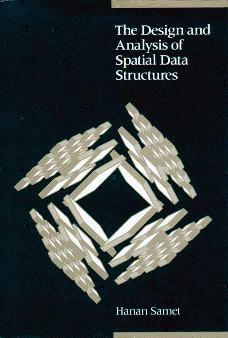
Hanan Samet is a Distinguished University Professor at the University of Maryland's Computer Science Department, affiliated with the Institute for Advanced Computer Studies (UMIACS) and the Center for Automation Research. He holds a Ph.D. from Stanford University (1975) and specializes in spatial databases, data structures, and geographic information systems. His research bridges computer science and geospatial analytics, with applications in image databases, computer vision, and spatio-temporal data management. Education: Ph.D., Computer Science, Stanford University, 1975 Research Interests: Focuses on spatial data structures, GIS, spatio-textual systems like NewsStand and CoronaViz, trajectory analysis, and metric indexing. His work emphasizes scalable algorithms for spatial networks and multimedia databases. Notable Projects: CoronaViz : Tracks disease spread via spatio-temporal data visualization NewsStand : Maps news articles geospatially SAND: Spatial browser for digital government Awards: ACM Paris Kanellakis Award (2014), IEEE McDowell Award (2015), UCGIS Research Award, and Fellowships in ACM/IEEE/AAAS. Recognized for advancing spatial database theory and practice. Grants/Advising: Leads NSF-funded projects on spatio-textual extraction and similarity search. Advises graduate students (e.g., Nicole Schneider, Montana Hoover) and undergraduate researchers. Labs/Teams: Active in UMIACS and the Center for Automation Research, collaborating on projects like VASCO (spatial visualization tools) and MARCO (image database systems).
Dr. Latifur Khan is a Professor in the Department of Computer Science at the University of Texas at Dallas' Erik Jonsson School of Engineering and Computer Science. He directs the Database and Data Mining Laboratory and conducts research in data mining, cybersecurity, and semantic web technologies. Research domains include: Large language models for threat detection Fairness in machine learning Vulnerability analysis in software systems Graph-based information retrieval Recent publications focus on AI security applications in transportation systems, political conflict analysis using NLP, and federated learning for IoT security. His work consistently bridges theoretical algorithms with practical cybersecurity implementations. Research grants include funding from NSF, NASA, Raytheon, Nokia, and SUN Microsystems. Teaching includes courses in Plant Breeding (PBG 450/550) and Breeding Clonal Crops (PBG 551).
Ehud Sharlin is a Professor in the Department of Computer Science at the University of Calgary, Faculty of Science. His research focuses on Human-Computer Interaction (HCI) with specializations in human-robot interaction, tangible interfaces, virtual/augmented reality, and autonomous vehicle interactions. He holds a Ph.D. in Computing Science from the University of Alberta (2003), and M.Sc. and B.Sc. degrees in Electrical and Computer Engineering from Ben-Gurion University of the Negev (1997 and 1990). Teaches CPSC 481: Human-Computer Interaction I Recipient of the NSERC Discovery Accelerator Award (2019), ACM Creativity & Cognition Honourable Mention (2018), and multiple academic excellence awards Active in industry collaborations, particularly in medical simulation (e.g., VRSpineSim) and geosciences (e.g., PLANWELL) Research explores: Embodied interaction through robotics and wearables Autonomous vehicle-pedestrian communication systems Immersive tools for creative and professional domains Accessibility in human-technology interfaces Publications span over 100 peer-reviewed works, emphasizing design methodologies, user experience in XR systems, and ethical considerations in sociotechnical systems. His work bridges technical innovation with human-centered design principles.
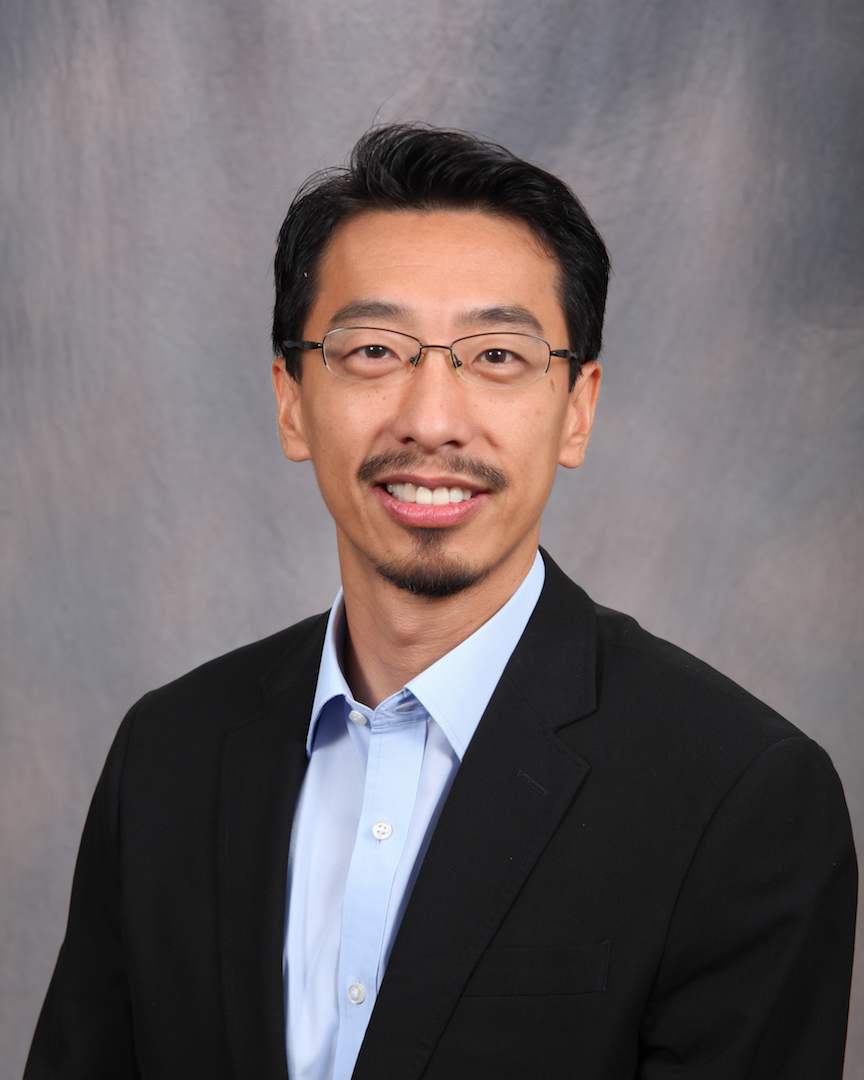
Dr. Chao Tian is an Associate Professor in the Department of Electrical and Computer Engineering at Texas A&M University, part of the College of Engineering. He holds a Ph.D. from Cornell University (2005) and a B.E. from Tsinghua University (2000). His research focuses on information theory, distributed storage systems, coding theory, and machine learning applications, including large language models (LLMs) and privacy-preserving techniques like steganography and private information retrieval (PIR). He has received notable awards, including the 2017 IEEE Jack Wolf ISIT Best Student Paper Award and the 2014 IEEE ComSoc DSTC Best Paper Award. Dr. Tian’s work bridges theoretical foundations and practical applications, such as optimizing storage codes for distributed systems, developing secure PIR protocols, and exploring LLMs in energy and steganographic contexts. His group has pioneered methods for variable-order Markov chain modeling with transformers and designed quantization techniques for perceptual quality. Recent activities include a faculty development leave at MIT/Harvard and delivering distinguished lectures globally on AI and information theory. He advises students on cutting-edge topics like LLM-based steganography and diffusion models. His publications span journals like IEEE Transactions on Information Theory and conferences such as NeurIPS and ISIT, with a focus on coding theory, privacy, and machine learning. He has also contributed to open-source tools like the CAI toolbox for investigating information-theoretic limits. Current projects include optimizing cryptocurrency mining in energy markets and advancing federated learning with adversarial robustness.
Jing Yang is a full Professor and Director of MS CS Program in the Computer Science Department at the University of North Carolina at Charlotte (UNCC). She has been actively involved in data visualization and visual analytics research since joining UNCC in 2005 after completing her PhD at Worcester Polytechnic Institute. Dr. Yang earned her Bachelor's degrees in Engineering Mechanics and Computer Science from TsingHua University in 1997 and completed her Ph.D. in Computer Science from Worcester Polytechnic Institute in May 2005 under advisors Matthew O. Ward and Elke A. Rundensteiner. Her research focuses on developing visual analytics techniques for abstract data including multidimensional data, time-oriented data, networks, hierarchies, text documents, and trajectory data. She conducts design studies for application domains such as sports, bioinformatics, finance, network security, and health, while exploring fundamental visualization topics like interactions, insight management, clustering-based approaches, and animations. Her recent work emphasizes sports analytics, urban data, and multivariate time series visual analytics. Analysis of Dr. Yang's publication record reveals a strong focus on practical applications of visualization techniques across diverse domains. Her work consistently bridges theoretical visualization frameworks with real-world data challenges, particularly in transportation (taxi trajectories), sports (tennis match analysis), financial transactions, and bioinformatics. The publications demonstrate an evolution from foundational visualization techniques to increasingly sophisticated domain-specific applications. Dr. Yang has secured substantial research funding from NSF, EPA, DHS, and industry partners including Google and Bank of America. Her grants portfolio includes significant projects like TrajAnalytics (NSF, $200,950), Visualizing Event Dynamics (NSF EAGER, $75,317), and Visualizing High Dimensional Categorical Datasets (Google Faculty Research Award, $60,000), among others totaling over $4 million in research support. As an educator, Dr. Yang has taught numerous courses including Visual Analytics, Information Visualization, and Database Design. She directs the Charlotte Visualization Center and has mentored numerous students through research projects. Her collaborative approach is evident in her extensive co-authorship network spanning multiple institutions and disciplines. Current research directions include narrative animation for streaming text visualization and advanced techniques for exploring high-dimensional categorical datasets.
Ronald J. Glotzbach is an Associate Professor at Purdue University's West Lafayette campus within the School of Applied and Creative Computing . His work focuses on web programming and development , leading projects that integrate dynamic content, databases, and educational technologies . He has taught courses such as CGT 356 (Web Programming), CGT 353 (Interactive Media), and CGT 456 (Advanced Web Programming). B.S. in Computer Graphics Technology M.S. in Technology Ph.D. in Curriculum and Instruction (pursuing) His research explores leading-edge web technologies for delivering interactive content, emphasizing web-enabling software, dynamic media integration, and mobile programming . Key trends in his publications include RSS technologies in education , web-based evaluation systems , and geospatial data tools for environmental sciences. Scientific awards include: Outstanding Professor (2003, 2004) CGT Dwyer Award for Outstanding Undergraduate Teaching (2005) CGT Outstanding Un-Tenured Faculty Award (2008) Professor Glotzbach has led numerous student teams in CGT projects , served as SIGGRAPH Student Volunteer Chair (2003-2005) , and collaborated with industry partners like Boeing (F-15 Distributed Mission Trainer) and Microsoft (XML Documents Testing Team) . He also provided expert testimony in a copyright case (2006) for Wargo & French, LLP.
Tania Cerquitelli is a Full Professor in the Department of Control and Computer Science (DAUIN) at Politecnico di Torino, where she leads research in data science, concept-drift management, and inclusive AI technologies. She is a member of SmartData@PoliTO, the GEDI Observatory for Gender Equality, and serves in leadership roles related to social affairs and community policies at the university level. She also acts as a scientific advisor for the partnership with Accenture. Her research interests span Data Science , Concept-Drift Management , Database Systems , Conversational Data Science , and Industry 4.0 . She applies AI and machine learning to industrial, societal, and ethical challenges, particularly in promoting inclusive communication and gender equality in research. The most recent publications highlight her work in explainable AI, concept drift detection, multimodal diagnostics, and AI for social good. Her research integrates machine learning, natural language processing, and computer vision to address real-world problems in manufacturing, healthcare, agriculture, and education. She is an Associate Editor for several prestigious journals including Expert Systems with Applications , Computer Networks , Future Generation Computer Systems , and Knowledge and Information Systems . She has served on the program committees of major conferences such as ECML PKDD, EDBT/ICDT, and ACM KDD, and has been a reviewer and selection committee member for ETH Zurich and EMPA. She actively supervises PhD students and teaches a wide range of courses including Data Science and Database Technologies, Business Intelligence for Big Data, and Gender and Diversity in Research. She is involved in multiple national and international research projects such as E-MIMIC, WEBFARE, and EnABLES, focusing on inclusive AI, smart data, and industrial applications. Her lab affiliations include the DBDM - Database and Data Mining Group (DAUIN) and the Interdepartmental Center SmartData@PoliTO - Big Data and Data Science Laboratory , where she contributes to advancing data science methodologies and their societal impact.
Chris Clifton is a Professor of Statistics (Courtesy) at Purdue University, affiliated with the Department of Computer Sciences and the Department of Statistics. He holds a Ph.D. from Princeton University (1991) and has over 30 years of experience in academia and industry. His research focuses on data privacy, data mining, and database security, with notable contributions to privacy-preserving techniques and differential privacy. Education: B.S./M.S. in Computer Science and Engineering, MIT (1986) M.A./Ph.D. in Computer Science, Princeton University (1988/1991) Research Interests: Data privacy (including anonymization, disclosure limitation), machine learning fairness, privacy-preserving data mining, database security, and interdisciplinary applications in healthcare and logistics. Awards: IEEE Fellow (2020) ACM Distinguished Member (2017) Multiple College of Science Awards (Teaching, Teamwork, Mentoring) Grants & Advising: Led NSF-funded research on algorithmic bias and privacy metrics. Advised numerous graduate students in data science and security. Played roles such as Interim Department Head (2023–2024) and served on NSF program director teams. Labs/Teams: Active in Purdue’s Data Privacy Research Group and collaborations with industry partners like MITRE and NSF initiatives.