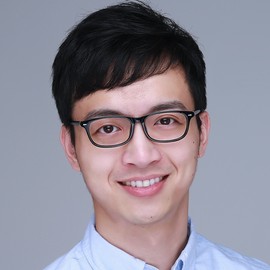
Daniel Sierra Ramos is an Adjunct Professor at IE University, Spain, and Co-Founder of Fitizens, a startup developing AI-driven wearables for physical activity quantification. He has over 6 years of experience as a Lead Data Scientist at Telefónica and Synergic Partners, specializing in AI applications for industries like banking, retail, and telecommunications. His expertise includes machine learning models for customer segmentation, predictive maintenance, and demand forecasting, alongside Big Data and cloud technologies (AWS/Azure). Education: Master in Telecommunication Engineering (Carlos III University, 2015) Master in Multimedia and Communications (Carlos III University, 2015) Bachelor in Telematic Engineering (Carlos III University, 2013) His research focuses on integrating AI into wearable devices and industry-driven data solutions. He trains professionals in AI from technical and business perspectives, emphasizing autonomy in data-centric environments. Active in corporate roles since 2015, he bridges technological innovation with practical business applications.
Miguel Ángel Bernal Merino serves as a Part-Time Lecturer in the Department of Modern Philology, Translation and Interpretation at the University of Las Palmas de Gran Canaria. Concurrently, he acts as convener of the MA in Translation at the University of Roehampton in London, managing its Specialised Translation, Audiovisual Translation, and Intercultural Communication pathways since 2005. His academic profile bridges theoretical research and industry application in localization disciplines. PhD in The Localisation of Video Games, Imperial College London MSc in The Localisation of Multimedia Interactive Entertainment Software, Imperial College London Certificate in Software Localisation, University of Limerick CELTA, University of Cambridge MPhil in Lip-Synched Dubbing, Universidad de Alicante MA in Hispanic Literature, University of Rhode Island BA in English & Spanish Linguistics, Universidad de Alicante Bernal Merino's research pioneers the expansion of Translation Studies into interactive media domains. His work on video game localization examines interactivity, cultural adaptation, glocalisation, and playability, while his audiovisual translation research investigates creativity in lip-synched dubbing, subtitling, and audiodescription. He extends these frameworks into gaming-based language learning through haptic environments and multisensory reinforcement, exploring physiological aspects of multilingual cognition and polysemiotic neural networks. This multidisciplinary approach fundamentally challenges traditional boundaries in translation theory. His publication trajectory reveals evolving industry-academia integration, shifting from foundational game localization frameworks (2008-2015) toward user-centered research and educational applications (2018-2024). Recent work emphasizes measurable business impacts through quality localization, regional market adaptations, and crowd-sourced methodologies, demonstrating consistent influence on professional standards across gaming and translation sectors. Fellow of the Higher Education Academy Bernal Merino supervises doctoral research on mobile game localization, transmedia fan experiences, and historical game content translation while developing industry-academia pipelines through projects like AHRC's Media Across Borders. His funded initiatives—including Maximising ROI through Quality Game Localisation and Video Games for Language Learning—bridge theoretical innovation with commercial implementation, focusing on glocalisation strategies, interactivity metrics, and playability optimization. These collaborations connect European universities, gaming studios, and localization service providers. As chair of the IGDA Localization SIG and member of GIR Discourse, Communication and Society, he directs international forums for game localization discourse. His work with Routes into Languages promotes audiovisual media in language education, while REF-readiness collaborations enhance research excellence across European institutions through his professional network spanning industry conferences like GDC Summit and Game Global.
Gil Serrancoli Masferrer is an Associate Professor in the Department of Mechanical Engineering at the School of Engineering of East Barcelona (EEBE), part of the Polytechnic University of Catalonia (UPC). He is affiliated with the InSup - Research Group in Surface Interaction in Bioengineering and Materials Science and the LAM - Multimedia Applications and ICT Laboratory. His work focuses on biomechanics, computational modeling, and telerehabilitation systems development for clinical applications. Dr. Serrancoli's research spans multisolid dynamics, dynamic optimization, movement simulation, and telerehabilitation systems. His expertise lies in applying computational techniques to solve complex problems in orthopedics, gait analysis, and rehabilitation engineering. His work bridges mechanical engineering with biomedical applications, particularly in musculoskeletal modeling and simulation of orthopedic procedures. He has developed novel computational frameworks for estimating internal musculoskeletal loading and muscle adaptation in various conditions, including hypogravity environments. His recent publications demonstrate a strong focus on in-silico modeling of orthopedic procedures, particularly knee osteotomies (proximal fibular osteotomy versus high tibial osteotomy), with detailed analysis of joint pressure redistribution. He has also pioneered the application of machine learning techniques, particularly recurrent neural networks, to biomechanical problems including cycling biomechanics and running dynamics prediction. His work consistently integrates computational efficiency with clinical relevance. Technical Award - OpenSim+ Advanced Workshop March 2024 Accésit del XLV Congreso de la Sociedad Ibérica de Biomecánica y Biomateriales European Society of Biomechanics Travel Award OpenSim Virtual Workshop - Technical Award OpenSim Visiting Scholar 2017 Enginyers BCN 2018 Dr. Serrancoli leads several competitive R&D projects including 'Muvity: a novel physical telerehabilitation system' for vulnerable populations and 'Simulaciones predictivas in silico para cirugías ortopédicas' (Predictive in-silico simulations for orthopedic surgeries). He collaborates extensively with researchers across Europe, particularly with Jordi Torner, Josep Maria Font Llagunes, and Joan Carles Monllau, and has secured funding from national and regional programs including Plan Estatal de Investigación Científica y Técnica y de Innovación. He is actively involved in the BIOMEC - Biomechanical Engineering Lab and the TecSalut - Research Group in Health Technologies, where he contributes to the development of innovative solutions for healthcare challenges, particularly in the areas of telerehabilitation and computational biomechanics for orthopedic applications.
Luo Mai is an Assistant Professor at the University of Edinburgh's School of Informatics , with an upcoming promotion to Associate Professor (UK Reader) in August 2025. He leads the Large-Scale Machine Learning Systems Group and co-leads the UK EPSRC Centre for Doctoral Training in Machine Learning Systems and an ARIA Project on Scaling AI Compute by 1000X . PhD in Computer Science (Imperial College London, 2018) MRes in Advanced Computing (Imperial College London, 2012) His research focuses on the intersection of computer systems , machine learning , and data management . Key contributions include award-winning systems like WaferLLM (wafer-scale LLM inference), Tenplex (elastic ML), and ServerlessLLM (serverless LLM serving), published at top venues (OSDI, SOSP, ICML, NeurIPS, JMLR). Recent publications demonstrate trends in GPU-based distributed systems , LLM optimization , and adaptive machine learning . His team has developed groundbreaking open-source projects including TensorLayer , TorchOpt , and ServerlessLLM . Awarded Microsoft Research StarTrack Scholar (2024) , secured ARIA grant (2024) with Imperial College & Cambridge University, and received Google Fellowship during PhD (2012-2016). As an educator, he designed Edinburgh's popular Machine Learning Systems course (150+ students). His group supervises multiple PhD students including Yao Fu (recognized as 2024 Rising Star in ML & Systems) and Leyang Xue .
Dr. Miguel Mascaró Portells is a Senior Lecturer at the University of the Balearic Islands in the Department of Mathematics and Computer Science. He holds a PhD in Computer Science and actively contributes to research groups focused on computer graphics, AI, and multimedia technologies. Research Focus: His work encompasses web development, cloud computing, Big Data applications, neural vision systems, multimedia content management, and geolocation technologies. Specific interests include: Object-Oriented Programming (OOP) and SOA services Mobile device programming and TDT visualization Cloud-based multiprocessing systems Home automation and control systems Teaching: Current courses include: Advanced Algorithms Programming - Computer Science I Final Degree Project supervision SOA solutions for tourism Affiliations: Active member of: Computer Graphics, Vision and AI Unit (UGIVIA) Multimedia Information Technology (TIM) Research Group
Ramón Luis Rizo Aldeguer is a University Professor in the Department of Computer Science and Artificial Intelligence at the Higher Polytechnic School of the University of Alicante. He has held this position since 1996 and continues to be actively involved in teaching and research as recently as 2025. He previously served in various leadership roles including Director of the Department of Computer Science and Artificial Intelligence (1997-2004) and Deputy Director of the Institutional Projects Area at the University of Alicante (2012-2020). His educational background includes a PhD in Computer Science from the Polytechnic University of Valencia (1992) and a degree in Mathematics from the University of Valencia (1977). He has been a member of the Spanish Association for Artificial Intelligence since 1990 and has held leadership positions within the organization. Rizo Aldeguer's research focuses on artificial intelligence with particular emphasis on swarm robotics, UAV deployment, and deep reinforcement learning. His work bridges theoretical foundations with practical applications in robotics and autonomous systems. He has made significant contributions to educational methodologies, particularly in integrating computational tools into engineering education. His publication record shows a consistent trajectory in swarm intelligence and robotics, with recent publications (2018-2023) demonstrating increasing sophistication in applying deep reinforcement learning to complex multi-agent systems. His research spans both theoretical advancements and practical implementations in robotics and autonomous systems. Fifteen five-year research periods (trienios) Six teaching merit periods Five six-year research periods (sexenios) President of Organizing Committee of VI Conference of Spanish Association for Artificial Intelligence (1995) President of Scientific Committee of CAEPIA (1999) Rizo Aldeguer has supervised 14 doctoral theses, with many receiving the highest honors (SOBRESALIENTE CUM-LAUDE). He has participated as a researcher in over 30 competitive public research projects, serving as principal investigator in 12 of them. His educational projects include innovative teaching methods and the development of computational tools for engineering education. He has been instrumental in the design and implementation of computer science programs at both the University of Alicante and the Polytechnic University of Valencia. He is a founding member of the University Institute for Computer Research and directed the Industrial Computing and Artificial Intelligence research group from 1992 to 2004. His current research continues to focus on swarm robotics and intelligent systems, with active participation in the Valencian Graduate School and Research Network of Artificial Intelligence since 2021.
Francisco Benigno Yus Ramos is a full professor at the University of Alicante, Spain, specializing in Pragmatics. He holds a PhD in English Philology and focuses on applying Relevance Theory to media discourses, conversational analysis, and Internet-mediated communication. His work spans interdisciplinary areas including humor, irony, and digital communication. Doctor of Philosophy and Letters (English Philology) - University of Alicante (1995) Graduate in Philosophy and Letters (English Philology) - University of Alicante (1993) Bachelor of Arts (English Philology) - University of Granada (1987) Diploma in Teaching (English Philology) - University of Granada (1984) His research applies Relevance Theory to diverse contexts such as alternative comics, mass media, and digital communication. Key areas include conversational cooperation, gender discourse, written-oral interfaces, and the pragmatic analysis of humor and irony in online environments. He has pioneered the concept of Cyberpragmatics to explain digital communication dynamics. Recent publications highlight his focus on digital communication trends, including books on Cyberpragmatics (2001, 2011), Smartphone Communication (2021), and Emoji Pragmatics (2025). His work bridges theoretical pragmatics with real-world applications in social media, mobile technology, and multimedia discourse. Scientific Activities: Editor-in-chief of the journal Internet Pragmatics (John Benjamins). Current director of the Department of English Philology at the University of Alicante and member of research groups Professional and Academic English (IPA) and Irony and Humor in Spanish (GRIALE) .
Lluís Codina Bonilla is an Associate Professor at Pompeu Fabra University's Faculty of Communication, specializing in Journalism and Audiovisual Communication. As a founding member of the DigiDoc Research Group (SGR-01103) and Director of the Cybermedia Observatory, he bridges Information Science and Digital Communication through research on SEO, content curation, and digital media systems. PhD in Information Science (Universitat Autónoma de Barcelona) Co-founder of academic journal Hipertext.net Principal Investigator for multiple Spanish national R&D projects Research Interests: His work focuses on Search Engine Optimization (SEO) for news media, Semantic Web applications in journalism, and content curation systems. Recent studies explore AI applications in content creation and academic research. Academic Contributions: With over 200 articles and 6 books (including Design and SEO for Content-Intensive Websites ), his publications analyze digital media quality assessment, information architecture, and media verification. His 21 doctoral theses (all cum laude) highlight his role as a mentor in digital communication. Premio Roblón 2021 for Investigator of the Year Multiple UPF Social Council Awards for Teaching Quality Nominated Scimago Best Scientific Article Recognized Researcher Tranches (CNEAI/AQU) Academic Infrastructure: Leads the Cybermedia Observatory and contributes to UPF's SEO Media Lab, while maintaining affiliations with the Catalan Society of Communication and Institute of Catalan Studies. His teaching spans Journalism, Audiovisual Communication, and Research Master's programs.
Pablo Calleja is a Research Fellow at the Faculty of Computer Science, Polytechnic University of Madrid (UPM), where he has been a member of the Ontology Engineering Group (OEG) since March 2014. His research focuses on Natural Language Processing (NLP), medical terminology mapping, and legal domain applications. He holds a degree in Computer Engineering from San Pablo CEU University (2013) and has prior industry experience as a software developer at IECISA (2008–2011) and a collaboration grant at the Open Access Classroom, San Pablo CEU University (2011–2013). Key contributions include projects like Drugs4covid for pandemic drug discovery, TermitUp for terminological enrichment, and esT5s , a Spanish text summarization model. His work spans legal knowledge graphs, multilingual compliance systems, and NER techniques for academic content analysis. He has also explored accessibility multimedia services and semantic graph applications in tourism ( DBtravel ). Professional roles include collaboration grants at UPM and active participation in interdisciplinary projects such as SNOMED-CT annotation for medical technical sheets. Research trends emphasize cross-domain adaptation (e.g., K-Flares), data augmentation (Widaug), and multilingual NLP solutions. Advising and grants: His current position is supported by a collaboration grant at OEG. Earlier grants include work at San Pablo CEU University. No formal advisees are listed, but he contributes to collaborative research teams. Labs and teams: Core member of the Ontology Engineering Group (OEG), focusing on knowledge representation, NLP, and applied informatics in healthcare and law domains.
Juan Carlos Torres Zafra is a Visiting Professor at Universidad Carlos III de Madrid. His research focuses on optoelectronics, liquid crystal technologies, visible light communication (VLC), and sensor systems. His work spans interdisciplinary areas including energy-harvesting IoT nodes, indoor positioning systems, and optical communication interfaces for high-definition media transmission. Torres Zafra has contributed to advancements in semiconductor materials (e.g., perovskites), low-cost sensor networks, and hybrid RF-VLC positioning systems. His research also extends to educational technology, exploring tools like Telegram and Google Workspace for improving student engagement in cybersecurity engineering programs. Notable projects include the GUTI group's work on optical vortices using liquid crystal devices and the development of tunable resonators based on liquid crystal capacitance. His publications from 2020–2025 highlight trends in VLC system optimization, AI-driven disinformation detection (SmartVote-AI initiative), and medical studies on amyloidosis therapy outcomes. Torres Zafra’s work often emphasizes practical applications in robotics, automotive systems, and sustainable energy solutions. While no formal awards are listed, his extensive publication record (over 80 entries from 2004–2025) reflects sustained contributions to photonics, sensor engineering, and liquid crystal device innovation. His research integrates hardware design, algorithm development, and material science to address challenges in modern communication systems and assistive technologies for visually impaired patients.
Carlos Iván Del Valle Morales is an Adjunct Professor at Carlos III University of Madrid. His research focuses on visible light communication (VLC), Li-Fi systems, and energy-harvesting technologies. He leads projects in the Grupo Universitario de Tecnologías de Identificación (GUTI), developing optical communication interfaces for IoT, high-power LED characterization, and indoor positioning systems using trilateration and angular diversity. Recent work emphasizes perovskite photovoltaic applications for self-powered IoT nodes and hybrid RF-VLC positioning systems. His publications span 2020–2024, addressing energy efficiency, bandwidth optimization, and hardware design for VLC systems in automotive and multimedia contexts.
Francisco Javier Oliver Bernal is a Lecturer at the University of Deusto in Bilbao, Spain, within the Faculty of Education and Sport and the Department of Physical Activity and Sports Sciences. He teaches across Computer Engineering, Physical Activity and Sports Sciences, and Primary Education bachelor's programs, as well as the Master's in Secondary Education. He earned his Doctor of Medicine and Surgery from the University of the Basque Country. His research spans Human-Computer Interaction, Educational Technology, and Science Education, with a strong emphasis on accessibility for visually impaired users. He has developed tools for e-learning, digital resource centers, and innovative teaching methodologies in computer science and natural sciences, aiming to enhance educational experiences through technology. His scholarly output, spanning from the 1990s to 2023, demonstrates a consistent focus on technology-enhanced learning, evolving from early work in 3D interfaces and computer graphics to recent applications in health, music, and interdisciplinary educational contexts. Key trends include the integration of accessibility features, the development of domain-specific educational tools (e.g., for biology and astronomy), and responses to contemporary challenges like the COVID-19 pandemic. He has supervised multiple theses on digital accessibility and cooperative systems, though student names were not listed. Details on research grants were not provided in the available text. As a member of the eVida research group (officially recognized by the Basque Government), he contributes to projects advancing accessible educational technologies, including the ACCE project for audiovisual accessibility and READIS digital resource centers for visually impaired users.
Pere Millán Marco is an Associate Professor in the Department of Computer Engineering and Mathematics (DEIM) at Universitat Rovira i Virgili (URV), Tarragona, Spain. He serves as coordinator for Non-permanent lecturers. His research focuses on computer communications, mobile/sensor networks, and IoT, with emphasis on quality prediction and performance optimization in wireless environments. Education: M.Sc. in Computer Engineering (Polytechnic University of Catalonia, 1992); PhD in Computer Engineering (URV, 2018). Research Interests : Specializes in mobile and sensor network architectures, underwater acoustic networks, real-time communication protocols, and low-cost hardware solutions for educational and environmental applications. His work integrates time series analysis, predictive modeling, and social behavior patterns to enhance network efficiency. Publications Trends : Recent work emphasizes IoT applications in environmental monitoring (e.g., deep aquifer pumping systems), optimization of underwater acoustic networks, and low-cost multicomputer systems for teaching. Consistently explores predictive techniques for network topology and quality-of-service improvements in ad hoc and community networks. Awards & Recognition : Holds a granted US patent related to location-based information systems. Advising & Infrastructure : Involved in DEIM's teaching laboratory development. Active in organizing international conferences like UCAmI and VISIGRAPP. Member of the CloudLab research group, advancing cloud and distributed computing solutions.
Lluís Vicent Safont is a Senior Lecturer and Director of the Postgraduate Program in Data Management at the UPF Barcelona School of Management. He has held prominent roles such as Rector of Universitat Oberta La Salle (2008–2012) and academic leadership positions at institutions like Universitat Ramon Llull and Universidad La Salle. His research focuses on data science, education technology, and innovative teaching methodologies, with over 70 publications and 50 projects as Principal Investigator. He specializes in curriculum design, educational assessment, and the integration of technology in higher education, including hybrid learning systems and adaptive learning tools. Education background includes a Doctorate in Engineering and Architecture, alongside master’s and technical engineering qualifications. His work emphasizes bridging education and technology, addressing challenges like early school leaving and digital education readiness. He has contributed to international conferences (IEEE, Erasmus+) and authored books on topics like fuzzy logic in assessment and multimedia in education. As a leader, he has directed postgraduate programs, research groups, and institutional initiatives, focusing on innovation, internationalization, and educational policy. His projects often involve collaboration across universities and institutions to enhance educational quality and accessibility. Recent work includes the H2O Learn project on hybrid education analytics and initiatives reinforcing engineering leadership in societal contexts.
Ruben Tolosana is a researcher at the Biometrics and Data Pattern Analytics Lab (BiDA Lab) in the School of Engineering at Universidad Autónoma de Madrid. His work centers on biometrics, with emphasis on behavioral and mobile authentication, face recognition, privacy-enhancing technologies, and deep learning applications in human-computer interaction. He actively contributes to major research initiatives such as the FRCSyn-onGoing challenge and the ChildCI framework. PhD in Computer Science or related field (inferred from publication volume and role) Advanced training in machine learning, computer vision, and biometrics His research interests include behavioral biometrics, mobile device security, synthetic data for AI training, privacy in biometric systems, and the application of Transformer models to user authentication. Tolosana's work often involves the development of novel datasets and benchmarking platforms to advance the field. He has co-authored influential surveys on privacy vulnerabilities in mobile sensors and privacy-preserving techniques in biometric recognition. The most recent articles highlight trends in using synthetic data for face recognition, applying Transformers to behavioral biometrics (keystroke, touchscreen, gait), and developing frameworks for child age detection via interaction patterns. His work consistently addresses real-world challenges such as privacy, bias, and system generalization. Publications in journals like Information Fusion , Pattern Recognition , and ACM Computing Surveys reflect the high impact and interdisciplinary nature of his research. Second FRCSyn-onGoing: Winning solutions and post-challenge analysis to improve face recognition with synthetic data (2025) ChildCI framework: Analysis of motor and cognitive development in children-computer interaction for age detection (2024) FRCSyn-onGoing: Benchmarking and comprehensive evaluation of real and synthetic data to improve face recognition systems (2024) SwipeFormer: Transformers for mobile touchscreen biometrics (2024) An Overview of Privacy-Enhancing Technologies in Biometric Recognition (2024) Ruben Tolosana collaborates extensively with researchers in the BiDA Lab, including Rubén Vera-Rodríguez, Aythami Morales, Julian Fierrez, and others. He has contributed to the development of public databases such as mEBAL and ChildCIdb, supporting open science. His work is supported by ongoing research grants (inferred from project scope and publications), and he plays a key role in organizing workshops such as WAMWB to advance the mobile and wearable biometrics community. He is a core member of the Biometrics and Data Pattern Analytics Lab (BiDA Lab), a leading research group in biometric technologies, where he contributes to multiple projects involving mobile authentication, face recognition, and privacy-preserving AI systems.