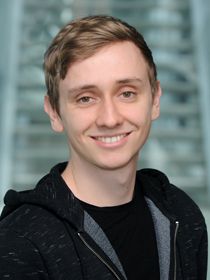
Manfred Jürgen Primus is affiliated with the Faculty of Technical Sciences at the University of Klagenfurt , specifically within the Institute of Information Technology . His research focuses on Computer Science and Medical Informatics , particularly in Endoscopic Video Analysis and Human-Computer Interaction . Research themes: Medical video datasets, smoke detection in surgical footage, collaborative video retrieval systems Key technologies: Computer vision, machine learning, real-time image processing Applications: Surgical workflow optimization, medical education support Recent publications (2016-2018) demonstrate his work at the intersection of multimedia systems and healthcare, including advanced video analysis tools for laparoscopic surgery and endoscopic procedures. Despite a lack of explicit awards or student advisement records in the provided data, his contributions to Medical Imaging and Human-Computer Interaction are evident through technical publications and interdisciplinary collaborations.
Konstantin Warneke is a Senior Researcher at the Department of Computer Science, Alpen-Adria-Universität Klagenfurt. His work focuses on robotics, multi-agent systems, and automation. While his formal teaching role at the university has concluded, he remains active in research projects such as 'Heterogeneous multi-agent localization' and 'Wind Turbine Blade Inspection Using Multimedia Drones,' funded by agencies like FFG and OeAD. His research spans radar technology, swarm intelligence, and edge-cloud computing, with recent publications in journals like Physical Review E and IEEE Sensors Journal. He collaborates on interdisciplinary projects addressing sustainability, automated systems, and media studies. Notably, his work emphasizes applied research with industry partners such as Infineon Technologies and NOI AG, contributing to practical innovations in fields like agricultural monitoring and renewable energy.
Simon Wimmer is a Researcher at the University for Continuing Education Krems, affiliated with the Center for Applied Game Studies. His work focuses on (Interactive) Storytelling, Qualitative Research Methodology, Low-Code/Zero-Code Development, Game Design, Game Development Prototyping, and Localization/Culturalization of Video Games. He has contributed to numerous research projects including Unlock Digital , Fair:Play , and CosTechPlay , funded by agencies like FFG and the EU. Notable publications include works on serious games for emotion regulation, cultural heritage mediation through escape rooms, and climate-friendly mobility strategies. Wimmer's research bridges game studies, education technology, and sustainability, with a focus on applying game mechanics to real-world challenges. His projects address topics ranging from pandemic-era life simulations to STEM education apps for parents. Key collaborations involve developing gamified interventions for healthcare, environmental policy, and refugee communication. Wimmer actively participates in academic conferences and has presented at DiGRA 2024 and INTED conferences. While currently not listed as an advisor to formal students, his work engages with educational frameworks and participatory methodologies.
Victor Adriel de Jesus Oliveira is a Lecturer at the Department of Media and Digital Technologies , Institute of Creative Media and Technologies , St. Pölten University of Applied Sciences . He holds a PhD in Computer Science (2018) and MSc/BSc in Computer Science from Brazilian institutions. Research Focus: Haptics, 3D user interfaces, virtual reality, tactile communication systems, and tele-rehabilitation technologies. Projects: Involved in EU-funded initiatives like AniVision , CLEA , and IoT4LAC , focusing on smart data applications and environmental action. His recent publications emphasize multimodal visualization for facility management, sonification in rehabilitation, and data experience through comics. He contributes to IEEE and Springer conferences, bridging human-computer interaction and clinical applications .
Alexander Schindler is an External Lecturer at the Department of Information Systems Engineering at Technische Universität Wien. His research focuses on audio signal processing, music information retrieval, and deep learning applications in multimodal analysis. He coordinates the approacH project (2010–2013) funded by the European Commission, exploring audio-visual search engines. His academic background includes a Dipl.-Ing. in Technical Engineering and a Dr.techn. from TU Wien. Key research areas include acoustic scene classification, deepfake detection, and music video analysis. He has supervised students on topics like bird song identification and machine outage prediction. Notable publications span from unsupervised cross-modal learning (2020) to multi-modal MIR frameworks (2019). He holds a Bakk.techn. and advanced technical qualifications. Recent work includes advancements in deepfake audio detection (2025) and audio-visual surveillance systems (2024). His projects bridge theoretical research with practical applications in forensic analysis and industrial predictive maintenance. He contributes to international conferences like ACM SAC and DCASE, focusing on neural network architectures for audio analysis.
Matthias Zeppelzauer is a Lecturer at TU Wien's Faculty of Engineering and Informatics, affiliated with the Visual Analytics group (E193-07). His research portfolio spans multimedia retrieval systems , biomedical signal analysis , and visual interactive machine learning at the intersection of human-centered technology and computer vision. Research domains include: Video content analysis for ecological/medical applications Deep learning for physiological signal interpretation Topological methods for 3D surface analysis Supervised works include doctoral theses on human gait analysis using ML and visual labeling frameworks. Funded projects address unusual sequence detection in video corpora (WWTF) and elephant vocalization analysis (FWF).
Michael Gervautz is an Associate Professor at the Department of Computer Graphics, Faculty of Informatics, Technische Universität Wien (TU Wien). His primary research areas include Computer Graphics and Virtual Reality , with a focus on applications in cultural heritage, historical replication, and interactive visualization. Research Interests : Gervautz's work bridges advanced 3D visualization techniques with practical implementations in archaeological documentation, cultural heritage preservation, and educational simulations. His projects often integrate multimedia tools and interactive systems to solve complex visualization challenges. Supervision : He has supervised numerous student theses, including projects like Wheelie (2006), Der Türkische Schachspieler (2004), and Image-based rendering of forests (2004), indicating his mentorship in virtual environments and augmented reality. Publications : His research spans topics such as virtual models for archaeology, multimedia excavation tools, and historical simulations, reflecting a consistent application of VR/AR technologies to interdisciplinary challenges.
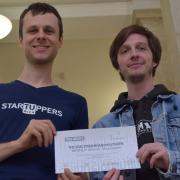
Martin Ilcik is a Researcher at the Department of Computer Graphics within the Faculty of Informatics at Vienna University of Technology (TU Wien). His work focuses on procedural modeling, shape grammars, and related computer graphics techniques. He serves as a Scientist in the Rendering and Modeling workgroup and has been actively involved in research projects since 2008, including GameWorld, PAMINA, Wohnen 4.0, AgroEco, and currently Room Imageer and GreenFDT projects. Ilcik's research interests prominently feature procedural modeling techniques, with specializations in shape grammars, layout generation, semantic modeling, 3D reconstruction, and music generation. His work bridges computer science with practical applications in architecture, urban planning, and creative arts. He has made significant contributions to layer-based procedural design of building facades and collaborative modeling systems. His publication record spans from 2007 to 2024, with a strong focus on procedural modeling techniques. The research trajectory shows evolution from flow visualization to sophisticated procedural modeling systems, with increasing emphasis on shape grammars, collaborative design, and applications in architecture and music generation. His work demonstrates consistent innovation in making procedural modeling more intuitive and accessible. VC CultTech Hackathon winner category 'Vienna State Opera challenge' (2017) INiTS Award 2016 Ilcik has supervised student research, including Lukas Eibensteiner's 2021 Diploma Thesis on polyphonic music composition with grammars. He has been instrumental in organizing the Central European Seminar on Computer Graphics (CESCG) since 2008, which has grown into an important annual event for undergraduate students in computer graphics, vision, and visual computing across Central Europe. His community work includes creating educational resources and organizing EXPO events and Academy Videos through CESCG. He leads research in the Rendering and Modeling workgroup at TU Wien's Computer Graphics department, focusing on developing innovative procedural modeling techniques with applications in architecture, urban planning, and creative domains. His current projects (Room Imageer and GreenFDT) continue his longstanding interest in practical applications of procedural modeling techniques.
Jiebo Luo is a Professor of Computer Science at the University of Rochester, where he has been since 2014. Prior to this, he spent over 15 years at Kodak Research Laboratories, rising to Senior Principal Scientist. His research spans computer vision, natural language processing, machine learning, and computational social science. BS and MS in Electrical Engineering from University of Science and Technology of China (USTC), 1989 and 1992 PhD in Electrical Engineering from University of Rochester, 1995 Dr. Luo's work focuses on bridging computer vision with social science through multimedia analysis, social media modeling, and digital health. His research includes innovative approaches to unsupervised learning, event recognition in videos, and multi-label classification. His publications highlight trends in deep learning for medical imaging, social media as sensors, and video analytics. Key subfields include semantic understanding, attention mechanisms, and multimodal fusion. 2021 ACM SIGMM Technical Achievement Award 2018 IEEE Region 1 Technological Innovation in Academic Award 2004 Eastman Innovation Award Fellowships: ACM, AAAI, IEEE, IAPR, SPIE Dr. Luo serves as Editor-in-Chief for IEEE Transactions on Multimedia (2020-2022) and has held leadership roles in multiple IEEE Technical Committees. He is a Data Science CoE Distinguished Researcher at the Goergen Institute for Data Science and a Board Member of the Greater Rochester Data Science Industry Consortium.
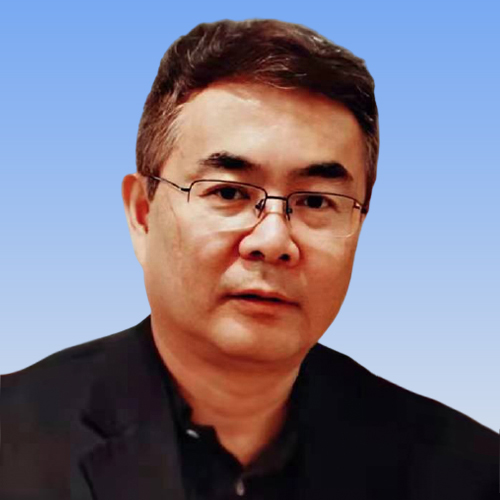
Shen Heng Tao is a Distinguished Professor and Dean of the School of Computer Science and Engineering at the University of Electronic Science and Technology of China (UESTC). He is also the Executive Dean of the AI Research Institute and Chief Scientist of Vision Intelligence at the Peng Cheng Laboratory. His academic journey includes a BSc (First Class Honours) and PhD from the National University of Singapore (2000 and 2004), followed by roles at the University of Queensland, where he became a Professor in 2011. His research focuses on artificial intelligence, multimedia computing, and computer vision, with notable contributions to cross-media intelligent analysis and real-time video retrieval systems. He has published over 400 peer-reviewed papers, including 160+ IEEE/ACM Transactions, and holds an H-index of 78. His work has been recognized with awards such as the IEEE Fellow, ACM Fellow, OSA Fellow, and Clarivate Highly Cited Researcher. He has led 15 major research grants, including projects from the Ministry of Science and Technology of China and National Natural Science Foundation. His service includes roles as Associate Editor for journals like ACM Transactions of Data Science and IEEE Transactions on Multimedia, and conference chairs like ACM Multimedia 2021. His lab, the Center for Future Media, explores advanced topics like multimodal learning, trustworthy AI, and human-robot interaction. Current research emphasizes cross-modal reasoning and real-world applications in metaverse, autonomous systems, and smart cities.
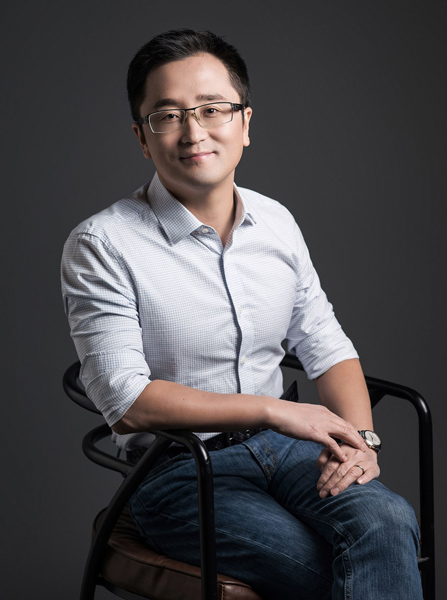
Dacheng Tao is a Professor of Computer Science at the University of Technology Sydney (UTS), where he has been employed since 2010 and holds an ARC Future Fellowship since 2013. His work bridges statistics, mathematics, and advanced data analytics, with a focus on machine learning, computer vision, and multimedia technologies. Research Interests : Deep learning, computer vision, image processing, data mining, pattern recognition, geoinformatics, and video surveillance. Academic Contributions : Author of one monograph and over 400 publications in prestigious journals and conferences, with multiple best paper awards, including the 2014 ICDM 10 Year Highest Impact Paper Award. Honors and Recognition : 2015 ESI Highly Cited Researchers in Engineering and Computer Science. 2015 Australian Scopus-Eureka Prize, ACS Digital Disruptors Award (Gold Disruptor), and UTS Vice-Chancellor’s Medal for Exceptional Research. Fellowships in IEEE, IAPR, SPIE, OSA, IET, and BCS. Leadership and Service : Guest editor for 10+ special issues, editor for 10+ journals (including 7 IEEE Transactions), 4 conference keynote speeches, 60+ conference chairmanships, and service on 150+ major conferences and 60+ international journals.
Jiebo Luo is a Professor of Computer Science at the University of Rochester, where he has held this position since 2014. He earned his BS and MS in Electrical Engineering from the University of Science and Technology of China (1989 and 1992) and a PhD in Electrical Engineering from the University of Rochester (1995). Prior to academia, he spent 15+ years at Kodak Research Laboratories as a Senior Principal Scientist. His research focuses on computational social science, natural language processing, digital health, computer vision, data mining, and multimedia. Dr. Luo’s work has been recognized through numerous awards, including the ACM SIGMM Technical Achievement Award (2021), Fellowships from ACM, AAAI, IEEE, IAPR, and SPIE. He has authored over 500 peer-reviewed papers, holds 90+ patents, and serves as Editor-in-Chief of the IEEE Transactions on Multimedia. He actively contributes to conference organization (e.g., ACM Multimedia, CVPR) and editorial roles for top journals. Key contributions include pioneering work in social media analytics, sentiment analysis, and digital health, as well as foundational research in multi-label classification and action recognition datasets like UCF 101. His labs and collaborations span the Goergen Institute for Data Science and the Greater Rochester Data Science Industry Consortium.
Georg Pölzlbauer is a researcher affiliated with the Department of Information and Software Engineering at Vienna University of Technology (TU Wien). His work focuses on machine learning, data visualization, and artificial intelligence, particularly leveraging self-organizing maps (SOM) for exploratory data analysis. He holds a Dipl.-Ing. (Diploma in Engineering) and a Dr.techn. (Doctor of Technical Sciences). His research emphasizes advanced visualization techniques for SOMs, including vector fields and graph-based methods, applied to diverse domains like petroleum data and political datasets. He has contributed to supervised learning algorithms inspired by self-organization, such as Decision Manifolds. Publications span algorithm design, cluster analysis, and pattern recognition, with applications in music feature extraction and industry-specific data visualization. No scientific awards are explicitly mentioned, but his work reflects sustained engagement with computational and visual data analysis. While no advising or grant information is provided, his affiliation with TU Wien’s research unit suggests active participation in collaborative academic projects.
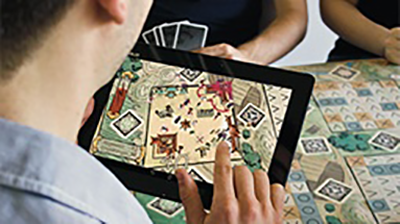
Radomir Dinic is a lecturer and researcher at Salzburg University of Applied Sciences, specializing in Multimedia Technology. He holds a BSc and MSc in Media Informatics from the same institution. Research Interests: His work focuses on Augmented and Virtual Reality applications Computer vision for health monitoring Mobile food portion estimation systems Game development for educational purposes Scientific Recognition: Austrian CG Award (2015, 2016) State of Salzburg Science Award (2017) Key Projects: YoKaisho (AR board game hybrid) NIVA (VR exploration art game) EatAR (nutritional assessment AR app) SmartSignCapture (sign language to 3D avatars) Ecomedicine VR (therapeutic waterfall simulation)
Sarah Friedl serves as a Lecturer in the Department of Creative Technologies at Salzburg University of Applied Sciences, with her primary workplace located at Campus Urstein (Room Urstein - 328). She holds a Bachelor of Arts (BA) and Master of Arts (MA) degree, though specific institutions and graduation years are not provided in the source material. Her research spans interdisciplinary domains at the intersection of technology and creativity, with core emphases on: Creative Technologies Digital Media production and theory Interactive Systems design Game Design methodologies Multimedia integration Human-Computer Interaction principles No scientific awards or honors are documented in the available information. Details regarding graduate student supervision, research grants, or collaborative projects remain unspecified in the provided text. Similarly, laboratory affiliations or research team memberships are not mentioned.