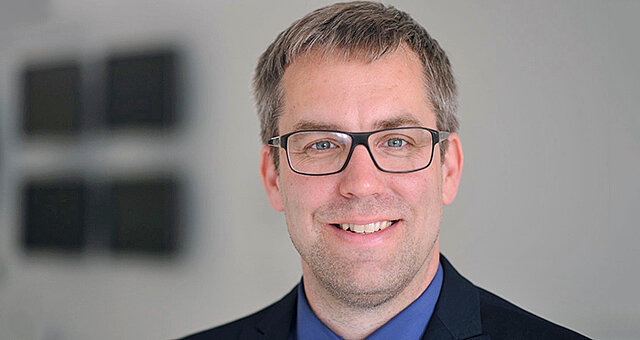
Yago Sánchez de la Fuente is a Research Associate at the Image Communication Group of Prof. Thomas Wiegand at Technische Universität Berlin and a guest researcher at Fraunhofer HHI . His work focuses on adaptive streaming services for IPTV/OTT and mobile networks, with technical expertise in HEVC/SHVC, LTE optimization, and satellite backhauling. Key research areas: Adaptive streaming over LTE, compressed domain video processing, and standardization protocols (IETF, 3GPP, MPEG) Project leadership: FP7 OPTIBAND (adaptive streaming optimization), ESA COSAT (satellite backhauling for LTE) Standardization contributions: Co-author of the IETF RTP Payload Format for H.265/HEVC Video Current projects: Mobile TV over LTE, Virtual Reality 360° video, and VVC system integrations He previously collaborated with Alcatel Lucent-Bell Labs (USA) on low-delay HTTP streaming optimization and is actively involved in international research groups like the Multimedia Communications team.
Dr. Fabio Verdicchio is a Lecturer in the School of Engineering at the University of Aberdeen, UK, holding this position since August 2010. He serves as EEE Programme Leader (January 2022–present) and is a member of the Electronics and Optical Engineering research group. Education: Electronic Engineering (summa cum laude), Universita degli Studi Federico II, Naples, Italy (2002) PhD in Applied Sciences, Vrije Universiteit Brussel, Brussels, Belgium (2007) His research spans signal processing, information theory, and multimedia systems with focus on distributed computing, peer-to-peer networks, and video transmission over unreliable networks. Current work addresses distributed sensing for disaster response and rural connectivity, plus multiview processing for 3D video synthesis and super-resolution. He investigates scalable coding, motion-vector techniques, and rate-distortion modeling for video standards. Publications from 2003–2006 reveal deep expertise in video coding standardization (MPEG), error resilience, and motion-compensated temporal filtering. His work pioneered embedded multiple description quantization and scalable motion-vector coding, contributing directly to international standards. Scientific awards: None documented in source materials. Teaching includes course coordination for Computer/Software Engineering and Electrical & Electronics Design. He supervises student projects and maintains collaborations with UCLA, University College London, Ghent University, and industrial partners ST Microelectronics/IMEC. His IEEE membership supports ongoing research in resilient multimedia systems. Research infrastructure involves the Electronics and Optical Engineering group with academic-industrial partnerships targeting wireless video distribution, remote monitoring, and vehicular telemetry applications.
Niccolò Pretto is a Researcher at the Faculty of Engineering, Free University of Bozen-Bolzano, Italy, based at NOI Techpark in Bolzano. He teaches Engineering of Mobile Systems for Bachelor in Computer Science students and Research Methods for Doctoral candidates in computer science. His research specializes in audio cultural heritage preservation, focusing on AI-driven solutions for analog magnetic tape restoration and international standardization efforts. Key projects include developing computer vision algorithms for audio tape anomaly detection, creating capacitive interfaces for stone artifacts, and co-authoring the MPAI/IEEE Audio Recording Preservation (ARP) standard. His work bridges musicology, archival science, and engineering to address challenges in electroacoustic music preservation and interactive heritage experiences. Analysis of his 15 most recent publications reveals three dominant themes: (1) Technical innovation in audio restoration (e.g., digital filters for speed/equalization correction), (2) Human-centered interaction design for cultural artifacts (e.g., submersible textile interfaces), and (3) Ethical AI standardization for heritage preservation. His publications consistently emphasize "active preservation" methodologies that combine philological rigor with computational approaches. Dr. Pretto maintains active collaborations with the Computational Sonology Center (CSC) at the University of Padova, where he has contributed to projects preserving Luciano Berio's audio archives and developing the FONTI 4.0 transcription system for historical oral sources. His teaching in mobile systems and research methods directly informs his applied work in heritage technology development. He operates from NOI Techpark, a leading Alpine innovation hub, where his laboratory focuses on sensor development for cultural heritage applications. Current projects include magnetoresistive textile interfaces for underwater interaction and AI-based anomaly detection systems for archival audio tapes, positioning his team at the forefront of preservation technology research.
Jonas Gamalielsson is an Associate Professor in Computer Science at the Department of Information Technology , University of Skövde. He leads software engineering research projects and serves as course coordinator for advanced master's programs in information technology. Academic affiliation: School of Informatics, University of Skövde Research focus: Open Source Software, ICT Standardization, Digital Government Active in: Empirical Software Engineering, Standards for Smart Systems, Open Collaboration His research explores intersections between open standards and open source implementations, with recent projects analyzing: Public sector open source governance Swedish procurement of SaaS solutions PDF/A document standard compliance Industrial IoT ecosystem standardization Open source business adoption strategies Publications span 2014-2025, with key contributions in the Journal of Standardisation , Empirical Software Engineering , and International Journal of Standardization Research . Collaborates extensively with Björn Lundell and other scholars in software standardization and open source analysis.
Wen-Chen Hu is an Associate Professor in the Department of Computer Science at the University of North Dakota's School of Electrical Engineering and Computer Science. He has held academic positions at Auburn University (Assistant Professor, 1998–2002) and the University of North Dakota (Assistant/Associate Professor since 2002). His teaching spans courses like .NET/Web Programming, Computer Architecture, Electronic Commerce Systems, and Advanced Database Systems, with over 100 graduate students advised. Education PhD in Computer and Information Science and Engineering, University of Florida (1998) MS in Computer Science, University of Iowa (1993) ME in Information Science and Electronic Engineering, National Central University, Taiwan (1986) BE in Computer Science, Tamkang University, Taiwan (1984) Research Interests : Dr. Hu's work focuses on handheld/mobile/smartphone/spatial computing, location-based services (LBS), web-enabled information systems (e.g., search engines, web mining), database-driven systems (electronic/mobile commerce), and web technologies. His publications emphasize privacy-preserving LBS, spatial trajectory prediction, mobile security, and big data applications. Publication Trends : His recent work (2020–2023) explores pandemic response via mobile analytics, privacy in LBS, and smartphone computing. Earlier (2014–2017), he addressed geometric LBS algorithms, cognitive radio networks, and super-resolution image processing. Foundational work (1998–2005) includes XML search engines, handheld programming languages, and mobile commerce security. Scientific Awards : Best Paper Award, MICS 2015 Best Paper Award, ACM Southeast Conference 2003 Best Reviewer Awards Community Service Awards Advising & Academic Leadership : Dr. Hu has advised over 100 graduate students and served as General Chair for ICETA 2018 and Associate Editor for the Journal of Information Technology Research . He has organized editorial/review roles for over 100 journals and conferences.
Thierry Eude is a Visiting Professor at the University of Burgundy, affiliated with the Computer Science Department of the IUT of Dijon. He holds a Doctorate in Physical Sciences (Industrial Computing) and has held academic roles including Director of the IUT's Computer Science Department (1999–2002). His research focuses on image compression, quality assessment, and perceptual metrics, with notable contributions to medical imaging and human vision models. Education includes a DEA in Instrumentation and Control, and a Master's in Advanced Maintenance Techniques. He collaborates with institutions like Laval University and University of Paris 13, and leads projects on digital twin technology, automated evaluation systems, and content-based image retrieval. Key research areas span image compression techniques, subjective/psychovisual quality metrics, and segmentation algorithms. His work integrates human visual system models to enhance compression efficiency and quality evaluation. Over 30 peer-reviewed articles since 1993 reflect his expertise in digital imaging and multimedia systems. Awards include membership in the Order of Engineers of Quebec and academic qualification for lecturer roles. He advises students on projects in image coding, quality metrics, and machine learning applications. Current initiatives include hybrid learning models and biometric authentication for remote evaluation. Laboratory affiliations include LE2I (UMR CNRS 5158) and LVSN, focusing on interdisciplinary projects in signal processing and database systems.
Patrick Le Callet is a full professor at Polytech Nantes (University of Nantes), leading the Image & Video Communication (IVC) group at the CNRS IRCCyN lab. His academic journey includes roles as an assistant professor (1997–1999) and lecturer (1999–2003) at the University of Nantes. He earned credentials in electronics from École Normale Supérieure de Cachan. His research focuses on human vision modeling applied to image/video processing, including 3D quality assessment, visual attention modeling, watermarking, and medical imaging. He coordinates major projects (e.g., EU Marie Curie ITN PROVISION, UHD4U) totaling over $5M in grants. He co-chairs VQEG’s HDR and 3DTV initiatives and serves on editorial boards for IEEE Transactions and EURASIP journals. Key contributions include databases like IRCCyN/IVC-Toyama and Eyetracker SD 2009, advancing standards in 3DTV and QoE. Over 20 students have been advised, with notable alumni working on topics like medical imaging and 3DTV discomfort metrics. Projects involve collaborations with Orange Labs, Thomson, and cultural heritage institutions. Labs/teams: IVC group at IRCCyN, managing a 3D visualization platform and eyetracking facilities. Research emphasizes interdisciplinary applications in consumer electronics, healthcare, and cultural preservation.
Dr. Stuart Cunningham is a Senior Lecturer in Computer Science at the University of Chester, where he also serves as Programme Leader for the MSc Advanced Computer Science, REF Unit of Assessment 11 co-ordinator, and Senior Postgraduate Research Tutor. Previously, he held roles at Manchester Metropolitan University (Visiting Research Fellow and Senior Lecturer) and Glyndwr University (Reader in Audio and Affective Computing, Head of Department, and Lecturer/Senior Lecturer). With 20+ years in higher education, his expertise spans academic leadership, teaching, and research in computing and creative technology hybrids. He holds a PhD in Computer Science from the University of Wales (2009), an MSc in Multimedia Communications from the University of Paisley (2003), and a BSc in Computer Networks (2001). Cunningham’s research focuses on affective technologies, audio compression (e.g., ACER codec), and interdisciplinary applications of sound design in fields like healthcare, gaming, and film. He chairs the Audio Mostly steering committee and contributed to the MPEG-SMR working group developing ISO/IEC 14496-23:2008. His work bridges technical and creative domains, exploring biofeedback sensors for emotional state analysis, Foley artistry in 3D animation, and auditory alerts in safety systems. He advocates for practice-led research methodologies that combine creative outputs with empirical validation. Cunningham has authored numerous publications, including research articles, book chapters, and creative works, and actively participates in peer reviewing for journals like IEEE Transactions and Personal and Ubiquitous Computing . In teaching, he emphasizes interactive/collaborative learning and portfolio-based assessment across undergraduate and postgraduate courses. He has designed and delivered degree apprenticeship programs, particularly during the pandemic, and teaches courses like Web Systems, Software Development, and User Experience Design. His research also extends to UX education, esports analytics, and assistive technologies for dementia care.
Xiaojun Zhai is a Lecturer in Computing at the Department of Electronics, Computing and Mathematics. His research focuses on machine learning, computer vision, FPGA design, and cybersecurity, with applications in biomedical engineering, embedded systems, and space exploration. He has collaborated extensively on projects involving real-time image processing, sensor networks, and hardware-accelerated solutions. His work emphasizes practical implementations on platforms like Zynq SoC and FPGAs. Zhai's research interests include privacy verification in multimedia systems, deep learning for visual content analysis, and efficient algorithms for planetary exploration. He has contributed to advancements in ECG encryption, gas classification systems, and automated number plate recognition. His publications span journals such as IEEE Access, Journal of Computational Science, and Future Generation Computer Systems. Zhai has co-authored over 25 papers, with topics ranging from biomedical signal processing to service-oriented architectures. His work on multi-sensor data fusion and heterogeneous system design highlights his expertise in interdisciplinary engineering solutions.
Michael Arnold is Professor of Business Informatics, specializing in Algorithmics and Software Development at Leibniz University of Applied Sciences. His research centers on digital watermarking, multimedia security, and information forensics, with extensive publications in IEEE Transactions and major security conferences. Professor Arnold's innovations include phase-based audio watermarking techniques robust to acoustic transmission and methods for evaluating watermark attacks. His seminal work established foundational approaches for protecting digital audio through quantization and modulation techniques. He has contributed to standardization efforts through benchmark comparisons and developed security frameworks adopted in copyright protection systems. His book 'Techniques and Applications of Digital Watermarking and Content Protection' remains a key reference in multimedia security.
Mislav Grgic is a Full Professor at the University of Zagreb's Faculty of Electrical Engineering and Computing (FER), where he has been working since 1997. He currently serves as President of the Deans' Club - Association of Deans of Croatian University Faculties (2022-present) and as the 10th Grand Master of The Society of Brethren of the Croatian Dragon (2021-present). Previously, he was Dean of FER (2014-2018), the youngest ever elected to this position, and served as Special Advisor to the Rector of University of Zagreb (2015-2022). His educational background includes B.Sc. (1997), M.Sc. (1998), and Ph.D. (2000) degrees in electrical engineering, all from University of Zagreb's Faculty of Electrical Engineering and Computing. He was a visiting researcher at University of Essex, United Kingdom (1999-2000). Professor Grgic's research focuses on image processing, biometrics, digital video communications, and medical imaging applications. His work spans digital mammography for breast cancer detection, face recognition systems, image compression, and computer-aided diagnosis. He has published over 200 papers in books, journals and conference proceedings, with significant contributions to the field of image quality assessment and medical imaging analysis. His recent publications demonstrate continued leadership in image processing, with emphasis on image quality assessment, medical imaging applications, and educational outreach. His work bridges theoretical research with practical applications, particularly in healthcare technology and engineering education. Among his numerous honors and awards are: Croatian State Science Award for 2018 for popularization of technical sciences Order of the Croatian Star with the Effigy of Rudjer Boskovic IEEE Croatia Section Distinguished Service Award Fran Bosnjakovic Award - highest award in technical sciences of University of Zagreb Multiple Josip Loncar medals from FER Professor Grgic has been actively involved in professional service, including as Chair of IEEE Croatia Section (2013-2016) and as a full member of the Croatian Academy of Engineering since 2012. He has served as a guest editor for special issues in prestigious journals focusing on facial image processing and pattern recognition-based methods for biometric re-identification.
Ashraf A. Kassim is a Professor at the Singapore University of Technology and Design (SUTD) and serves as Associate Provost for the Office of Education and Innovation. He holds a PhD from Carnegie Mellon University and previously held positions including Professor of Electrical & Computer Engineering at the National University of Singapore (NUS), where he also served as Vice-Provost (Research) and Vice-Dean of Engineering. His industry experience includes research at Texas Instruments developing machine vision systems. His research spans computer vision , medical image analysis , machine learning , and deep learning . Key applications include diagnostic radiography, generative adversarial networks (GANs) for image synthesis, facial landmark detection, and attribute-based fashion retrieval systems. His work integrates advanced neural architectures with real-world challenges in healthcare and multimedia. Publications (170+ articles) emphasize deep learning-driven solutions: recent works focus on medical imaging (cell classification, radiograph analysis), generative models (text-to-image synthesis, GANs), and computer vision applications (facial analysis, fashion retrieval). Awards and Honors: Mendaki Foundation’s Anugerah Cemerlang (Academic Excellence Award) Institution of Engineers Singapore Award (2011) Public Administration Medal (Bronze, 2012) National Day Long Service Award (2018) NUS Annual Teaching Excellence Award Administrative service includes board memberships at Singapore Science Centre, Singapore Synchrotron Light Source, and Centre for Maritime Studies. He contributes to academic committees and journal editorial boards internationally.
Miralem Mehić is a researcher in network security and quantum cryptography, affiliated with VSB-Technical University of Ostrava (Czech Republic) as a doctoral graduate. He holds a Senior Member status in IEEE and has conducted studies at AGH University of Science and Technology (Poland), Alpen-Adria-Universität Klagenfurt (Austria), and the Austrian Institute of Technology (AIT) in Vienna and Klagenfurt. His research focuses on quantum key distribution (QKD), network security, routing protocols, and steganography. He has led projects like NATO SPS G5894 (QUANTUM5) as Project Director and Horizon 2020 OpenQKD as Local Principal Investigator. Education: PhD (VSB-TUO, Czech Republic), studies at AGH University, AIT, and Alpen-Adria-Universität. Research Interests His work centers on securing telecommunications networks through quantum cryptography, QKD network architecture, and hybrid systems integrating quantum protocols with 5G/6G. Key areas include: - Quantum Key Distribution (protocols, network emulation, security) - Network Security (DDoS mitigation, QoS provisioning) - Artificial Intelligence (mobility prediction via CNNs, neural network applications) - Telecommunication Infrastructure (IoT, 5G integration, FSO laser communications) Publications Recent works emphasize QKD network ecosystems, mobility prediction in 5G, and cybersecurity frameworks. Over 40 peer-reviewed articles span journals like ACM Computing Surveys (IF 23.8), IEEE Network (IF 6.8), and IEEE Transactions on Networking. Awards Best Paper Award at Multimedia Communications, Services and Security (MCSS) 2017 for 'QSIP: A Quantum Key Distribution Signaling Protocol.' Grants & Projects Lead roles in major initiatives: - NATO QUANTUM5: Developing quantum-secure 5G networks. - Horizon 2020 OpenQKD: Deploying EU-wide quantum communication infrastructure. - COST Actions (CA1405, CA18232): Cross-border research collaborations in quantum tech and network dynamics. Labs & Teams Contributes to AIT’s Optical Quantum Technologies unit and collaborates with institutions like the University of Klagenfurt and AGH University on quantum network simulations and steganographic protocols.
Dr. Thomas Schierl is the Head of the Video Communication and Applications Department at Fraunhofer Heinrich Hertz Institute (HHI) in Berlin. Since 2010, he has led research groups in multimedia communications and video coding, co-developing key video coding standards such as H.264 SVC and HEVC. He currently heads the Video Coding & Analytics department since 2015, focusing on video compression, wireless transmission, and standardization. Education: Diplom-Ingenieur (Computer Engineering) from Berlin University of Technology, 2003 Dr.-Ing. in Electrical Engineering and Computer Science, Berlin University of Technology, 2010 Research interests span video over wireless networks, system integration of video codecs, and cellular network protocols. He contributed to MPEG-2 Transport Stream standards and co-authored IETF RFCs for video payload formats. In 2014, he received the Emmy Award for MPEG-2 Transport Stream development. Active in standardization bodies: JCT-VC, MPEG, IETF, 3GPP, and DVB. His work includes high-level syntax for HEVC parallelism and V2X resource pooling for 5G NR. Labs/Teams: Leads the Video Coding & Analytics team at HHI, specializing in cutting-edge video compression and communication technologies.
Michel KIEFFER is a Professor in Signal Processing for Communications at Paris-Sud University and a researcher at the Laboratoire des Signaux et Systèmes (L2S), Gif-sur-Yvette, France. He holds a Ph.D. (1999) and Habilitation (2005) from Université Paris-Sud. Previously, he served on part-time leave at Laboratoire de Traitement et Communication de l’Information (CNRS-Télécom ParisTech, 2009–2016) and was a junior member of the Institut Universitaire de France (2011–2016). His research focuses on joint source-channel coding, signal processing for communication networks, and robust control systems. Key contributions include works on multimedia transmission reliability, UAV localization, and fault identification in power grids. He co-authored over 100 publications and books like Applied Interval Analysis (Springer, 2001) and Joint Source-Channel Decoding (Academic Press, 2009). He serves as Associate Editor for Signal Processing (since 2008) and IEEE Transactions on Communications (2012–2016). His work spans interdisciplinary areas such as energy systems, robotics, and telecommunications, addressing challenges in real-time data transmission, network slicing, and distributed control.