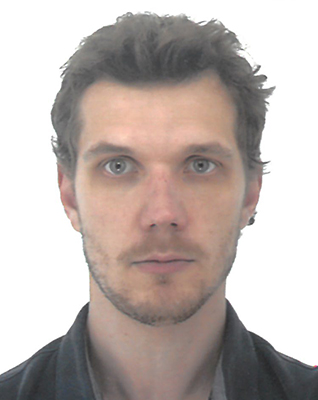
Vincent Itier serves as a Lecturer at IMT Nord Europe, where he is affiliated with the CRIStAL research laboratory (UMR CNRS 9189). His office is located in Building ESPRIT, Scientific City, at the Villeneuve d'Ascq campus. He is a member of the SIGMA research team and actively contributes to the academic community through teaching, research supervision, and scholarly publications. Dr. Itier's research interests span across multimedia security, digital forensics, and machine learning, with particular emphasis on detecting and understanding image manipulations. His work addresses critical challenges in digital media authenticity, including deepfake detection, photomontage identification, and steganalysis. He investigates how machine learning techniques can be leveraged to improve robustness against increasingly sophisticated image manipulation methods, with applications in combating 'fake news' and verifying digital content authenticity. His publication record demonstrates a consistent focus on digital image forensics, with recent work exploring deep learning approaches for detecting splicing, analyzing noise residuals in deepfakes, and developing robust steganalysis techniques. His research shows a clear evolution from traditional image processing methods toward more sophisticated deep learning frameworks that can handle the complex challenges of modern digital media manipulation. Supervised Minh Thong Doi's thesis on 'Deepfake detection: combining noise and semantic features and improving generalization to new generators' Currently offering M2 Internships and Post-doc positions for 2025-2026 Leading research within the ANR TSIA CI2(IA) project which aims to develop new tools for detecting and understanding image manipulation Dr. Itier maintains an active research presence through his GitHub profile (vitier) and professional website, and can be contacted via email at vincent.itier@imt-nord-europe.fr for potential collaborations or research opportunities.
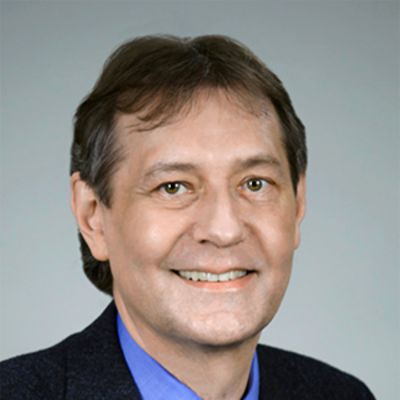
Dr. Ray R. Hashemi is a Professor in the Department of Computer Science within Georgia Southern University's College of Engineering and Computing. His academic career spans over 14 years of continuous research output from 2003-2017, with significant contributions as co-editor for four International Conferences on Information Technology and Knowledge Engineering (2005, 2010, 2014, 2017). His research focuses on innovative applications of data mining across diverse domains: Bioinformatics: DNA sequence analysis, organ toxicity prediction, and liver cancer predictive systems Medical Informatics: Bone mineral density analysis using DEXA data and dendrograms Financial Systems: Extraction of essential constituents from S&P500 index Environmental Science: Climate prediction using algae sedimentation patterns Computer Vision: Video mining for theatrical analysis and Android-based OCR for non-flat documents Methodologically, Dr. Hashemi specializes in neighborhood systems analysis, association rule mining, and grid-based approaches for sparse data. His work consistently bridges theoretical data mining concepts with practical applications, developing tools for signature-based prediction, record layout discovery, and intent analysis through web behavior. Recent publications (2015-2017) show increased focus on domain-specific applications in finance and toxicology while maintaining core data mining expertise. His collaborative work includes partnerships with international researchers across multiple continents, demonstrated through conference editorial roles and co-authored publications. Dr. Hashemi's research demonstrates sustained scholarly activity with practical implementations in medical diagnostics, financial analysis, and environmental prediction systems.
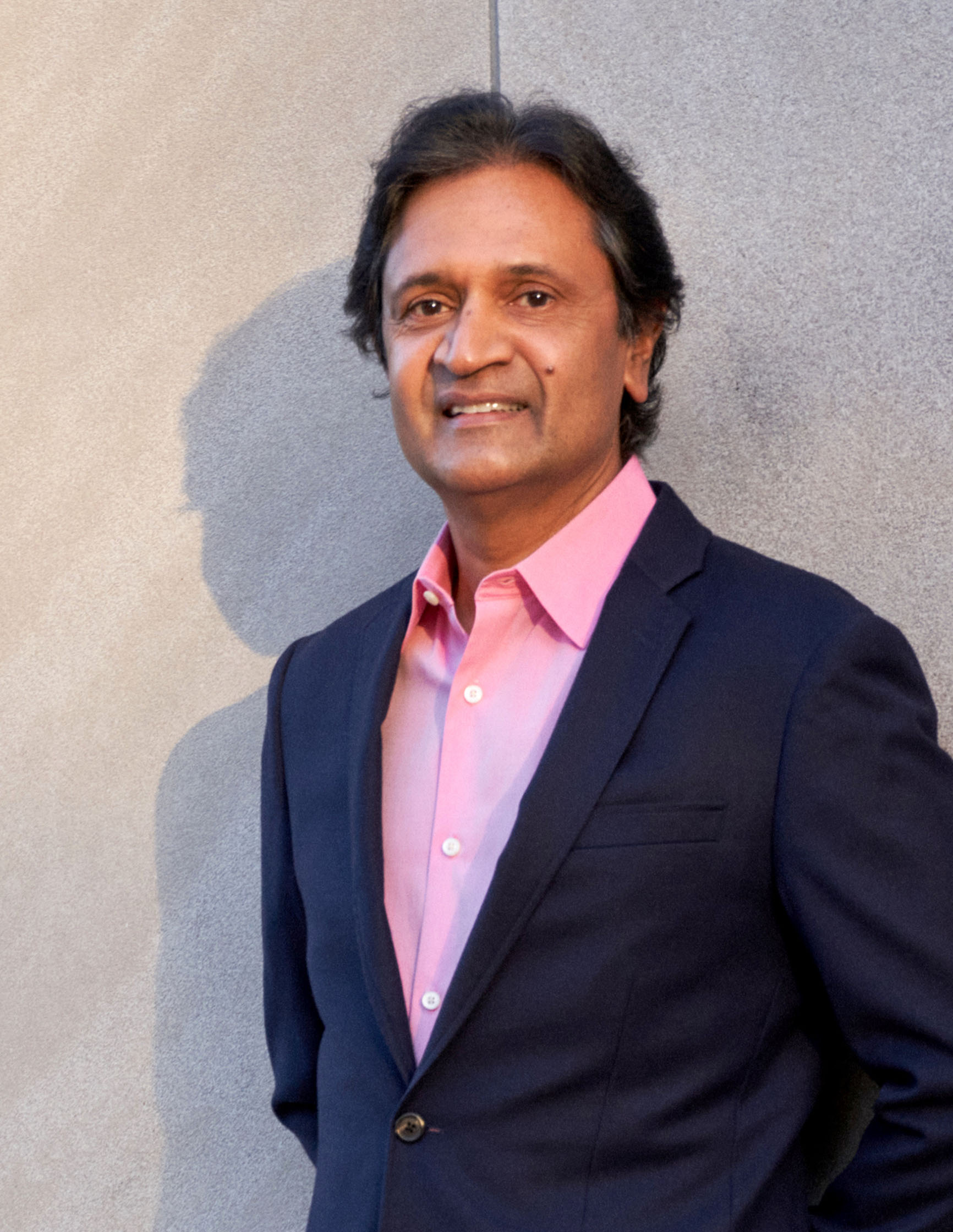
Shree K. Nayar is the T. C. Chang Professor of Computer Science in the School of Engineering at Columbia University, where he heads the Columbia Vision Laboratory (CAVE). He served as Department Chair from 2009-2012 and was Director of Research at Snap Inc. from 2018-2024. Nayar received his PhD from Carnegie Mellon University and has been at Columbia since 1991, progressing from Assistant to Full Professor. His educational background includes a PhD in Electrical and Computer Engineering from Carnegie Mellon University (1990), an MS from North Carolina State University (1986), and a BS from Birla Institute of Technology in India (1984). He began his career as a Research Engineer at Taylor Instruments in New Delhi before pursuing graduate studies. Nayar's research spans three interconnected areas: novel computational cameras that capture new forms of visual information, physics-based models for vision and graphics, and algorithms for scene understanding. His work in computational imaging has transformed digital photography, with applications in smartphones, robotics, virtual reality, and human-computer interfaces. His research has produced over 300 publications with nearly 60,000 citations and 80 patents. Analysis of his recent publications reveals a strong focus on computational imaging challenges including low-light vision, depth sensing, mobile interaction, and accessibility technologies. His work consistently bridges theoretical foundations with practical applications, as evidenced by commercial implementations of his assorted pixels technology in smartphone cameras. Elected to National Academy of Engineering (2008), American Academy of Arts and Sciences (2011), National Academy of Inventors (2014), and Indian National Academy of Engineering (2022) Okawa Prize (2023), IEEE PAMI Distinguished Researcher Award (2019) Two-time David Marr Prize winner (1990, 1995) - the highest honor in computer vision Multiple best paper awards at major conferences including SIGGRAPH Asia (2024) and ECCV (2024) National Young Investigator Award (1991), Packard Fellowship (1992) Nayar has supervised numerous PhD and Master's students throughout his career at Columbia. His lab has received continuous funding from NSF, industry partners, and foundations. The Columbia Vision Laboratory (CAVE) is known for its interdisciplinary approach, combining optics, hardware design, and algorithms to solve fundamental vision problems. Nayar's Bigshot Camera project demonstrates his commitment to education, providing hands-on learning experiences for students worldwide. The Columbia Vision Laboratory (CAVE) develops cutting-edge computational imaging and computer vision systems. Under Nayar's leadership, the lab has pioneered technologies including self-powered cameras, high dynamic range imaging systems, and novel computational cameras. The lab maintains strong industry connections, particularly through Nayar's role at Snap Research, and emphasizes translating research into real-world applications that benefit society.
Prof. Reinhard Schmidt serves as Professor, Associate Dean, and Dean of Studies for the School of Computer Science and Engineering at Esslingen University of Applied Sciences, where he has held faculty positions since 1993. He additionally leads the Multimedia and Virtual Reality Lab and maintains active roles in academic governance including membership on the Academic Affairs Committee. His educational foundation includes a Diploma in Electrical Engineering from the University of Erlangen-Nuremberg with specialization in multidimensional signal processing and communications systems, followed by doctoral research at the University of Karlsruhe under Prof. Kristian Kroschel focusing on computer vision for autonomous systems. Prof. Schmidt's research integrates technical and pedagogical domains, with core expertise in Virtual Reality, Multimedia systems, Computer Vision, and IT Security. His educational technology work pioneered ePortfolio implementation to enhance flexible study programs in computer science, specifically addressing challenges in student onboarding and self-directed learning during introductory academic phases. Analysis of his 2012-2015 publications reveals consistent focus on digital learning infrastructure within engineering education, demonstrating how ePortfolio systems facilitate adaptive curriculum design and student competency tracking in technical disciplines. Administrative leadership has defined his career trajectory, including tenure as Academic Director for Communications Systems (1998-2007), Vice Dean (2006-2011), and current directorship of the Software Engineering and Media Computing program since 2013. The Multimedia and Virtual Reality Lab under his direction develops applications spanning computer graphics, security engineering, and virtual environment design, maintaining strong industry connections through partnerships like the Fraunhofer Institute where he conducted sabbatical research on virtual actors.
Yannis Kyriakides is a Cypriot-born composer and sound artist currently teaching composition and multimedia at the Royal Conservatoire Den Haag. Born in Limassol, Cyprus in 1969, he emigrated to Britain in 1975 and has been living in the Netherlands since 1992. He studied musicology at York University and composition with Louis Andriessen and Dick Raaijmakers, earning his PhD from Leiden University on concepts of multimedia composition with his dissertation 'Imagined Voices'. As a composer, Kyriakides explores the creation of new forms and hybrids of media, particularly focusing on the relationship between words and music through systems of encoding information into sound, voice synthesis, and projected text. His recent work has moved into interactive and generative scores. He has composed nearly 200 works spanning music theatre, audiovisual installations, and electroacoustic compositions for chamber ensembles, large ensembles, and orchestra. Kyriakides is a founding member of the electro-acoustic ensemble Maze and co-founded the CD label Unsounds with Andy Moor and Isabelle Vigier. His compositional approach often involves creating immersive experiences that challenge conventional boundaries between performer, score, and audience. French Qwartz award for the CD 'Antichamber' Dutch Toonzetters prize for 'Paramyth' Willem Pijper prize for 'Dreams of the Blind' Honorary mention at Prix Ars Electronica for 'Wordless' First prize in International Rostrum of Composers for 'Words and Song Without Words' Johan Wagenaar prize for his oeuvre Kyriakides' recent works demonstrate a continued exploration of media scores, interactive systems, and the relationship between text and sound. His research into generative and interactive scores, as evidenced in works like 'Mutability' and 'Beyond Paper: Attributes of the Media Score,' reveals a sophisticated approach to expanding traditional musical notation. His work often incorporates technological innovation while maintaining deep connections to cultural and historical contexts, particularly his Cypriot heritage.
Bjarni Gunnarsson is a composer and computer scientist from Iceland currently serving as faculty at the Institute of Sonology, Royal Conservatoire The Hague. He teaches algorithmic composition and computer music courses including Programming and Music 1, Programming and Music 2, and Composing with Algorithms. His academic work bridges the technical field of computer science with artistic composition practices. His educational background includes computer science studies at the University of Reykjavík and composition training with Gerard Pape, Trevor Wishart, Agostino Di Scipio, and Curtis Roads at CCMIX in Paris. He completed his master's degree in Sonology under the guidance of Paul Berg, Kees Tazelaar, and Richard Barrett. Gunnarsson's research focuses on the intersection of sound and computational processes, with particular interest in process-based sound, digital synthesis, and algorithmic composition. His work explores how sound emerges from interacting behaviors and the relationship between algorithms and musical behavior. He creates compositions that foreground behaviors, actions, and fuzzy materials, often developing systems where sound materials form, shift, and dissolve through interaction, memory, and transformation. His recent research projects demonstrate a trajectory toward increasingly sophisticated integration of computational methods in musical creation, with significant emphasis on live coding, persistent synthetic environments, database systems, and machine listening applications for sound synthesis. These projects reveal his consistent exploration of how computational processes can generate and transform sound in novel ways. Presented work at major international conferences including ICMC, ICLC, SMC, and xCoAx Performed at notable festivals such as Tectonics, Rewire, Today's Art, Sonar, and Présences Électroniques Music released on respected experimental labels including SUPERPANG, SØVN, 3LEAVES, Flag Day Recordings, Tartaruga, and Shipwrec Gunnarsson actively contributes to the academic community through teaching, research projects with the Lectorate Music group, and participation in the Joint Research Day events. His work demonstrates a sustained commitment to exploring the generative potential of sound through computational processes, creating environments where sound materials evolve through interaction with complex systems.
Yu Cao, Ph.D., is a tenured full professor at the Miner School of Computer & Information Science, University of Massachusetts Lowell, where he also serves as Director of the UMass Center for Digital Health. His academic journey includes faculty positions at The University of Tennessee (2010-2013) and California State University (2007-2010), followed by a Visiting Fellowship at Mayo Clinic. Dr. Cao holds a Ph.D. in Computer Science from Iowa State University (2007), where he also earned his M.S. (2005), along with an M.Eng. from Huazhong University of Science and Technology (2000) and a B.Eng. from Harbin Engineering University (1997), all in Computer Science. His educational background includes: Visiting Fellow, Biomedical Engineering, Mayo Clinic (2007) Ph.D., Computer Science, Iowa State University (2007) M.S., Computer Science, Iowa State University (2005) M.Eng., Computer Science, Huazhong University of Science and Technology, China (2000) B.Eng., Computer Science, Harbin Engineering University, China (1997) Dr. Cao's research spans multiple domains of knowledge discovery from complex data, with particular focus on Medical Imaging, Multimodal Deep Learning, Computer Vision, Artificial Intelligence, and Digital Health. His work emphasizes intelligent, multi-modal, and data-intensive medical image analysis and retrieval; motion tracking, analyzing, and visualization; and intelligent data analysis for electronic medical records and pervasive healthcare monitoring. His research program has produced over 150 peer-reviewed publications with more than 8,000 citations and an h-index of 40+, appearing in top venues including IEEE CVPR, IJCAI, ICLR, ACM MM, and IEEE ICME, as well as prestigious journals like IEEE TNNLS, TBME, TPAMI, TSC, and JBHI. Analysis of Dr. Cao's recent publications reveals a strong focus on applying deep learning techniques to medical imaging problems, particularly in endoscopy and diagnostic imaging. His work spans multiple subfields including polyp detection in colonoscopy videos, tuberculosis detection in chest X-rays, diabetic retinopathy analysis, and food recognition systems for dietary assessment. The publications demonstrate a consistent pattern of applying cutting-edge AI techniques to solve practical healthcare challenges, with increasing emphasis on multimodal approaches and real-world deployment considerations. Dr. Cao has received numerous accolades for his work, including Best Paper Awards from ACM/IEEE CHASE (2023), IEEE IJCNN (2020), and IEEE NAS (2015). His paper was the most downloaded from Smart Health Journal by Elsevier (2017-2018), and he was recognized for having the highest number of peer-reviewed publications among faculty members in the College of Sciences (2017-2018). He was named a Senior Member of IEEE in 2013, an honor granted to only 8% of IEEE members worldwide. His research has been supported by dozens of NSF/NIH/Industry sponsored grants totaling approximately $10 million. Notable projects include NIH/NSF Award #1R01EB021900 ($1.29 million) as Principal Investigator, NSF Award #1547428 ($500,000) as Co-PI, and NSF Award #1541434 ($1 million) as Co-PI. Dr. Cao has successfully mentored numerous graduate and undergraduate students, with current advisees working on medical image retrieval, data analysis for body sensor networks, and motion tracking and visualization. He has served on organizing committees for over 30 international conferences and workshops, demonstrating strong leadership in the academic community. As Director of the UMass Center for Digital Health, Dr. Cao leads a multidisciplinary team focused on developing innovative solutions for healthcare challenges using digital technologies. His lab maintains active collaborations with medical institutions including Mayo Clinic, Harvard Medical School, and Erlanger Hospital, facilitating the translation of research findings into clinical practice. The center's work spans multiple research areas including medical video/image analysis, motion tracking and visualization, context-aware data analysis for body area sensor networks, and risk analysis for acute coronary syndromes.
Nikolay Dimitrov Tashkov is a Professor at Technical University of Gabrovo, Bulgaria, with extensive experience in telecommunications engineering and radio wave technology. He maintains offices in cabinets 2206 and 2213 and teaches Radio Wave Engineering at the bachelor's level. His research spans multiple domains of telecommunications with a particular focus on wireless networks, signal propagation, and broadcast systems. Professor Tashkov's research interests center around telecommunications engineering with specialization in radio wave propagation, wireless communication networks, and digital signal processing. His work examines various modulation techniques including QPSK, 16QAM, and 64QAM, and investigates signal behavior in different environments from urban settings to indoor spaces. He has made significant contributions to understanding radio frequency planning, monitoring systems for broadcast technologies, and the design of wireless networks for both municipal and office environments. His publication record shows a consistent focus on practical applications of telecommunications theory, with recent work analyzing DVB-T systems, IPTV streaming, DAB+ monitoring, and Wi-Fi coverage patterns. The research demonstrates a progression from fundamental radio wave theory to increasingly complex modern communication systems, with particular attention to quality of service metrics and real-world implementation challenges. Professor Tashkov has successfully supervised four PhD students to completion, with research topics including digital modulation format optimization, telecommunication network monitoring and control, radio frequency planning, and digital modulation schemes in wireless communications. His research has been supported by seven completed projects, including both internal university projects and external collaborations like the BG051 project supporting scientific personnel growth in engineering sciences. His laboratory work appears focused on practical telecommunications systems, with publications covering RF monitoring equipment, signal analysis tools, and network design methodologies. The research infrastructure likely includes facilities for testing wireless networks, broadcast systems, and signal processing equipment, though specific laboratory names are not mentioned in the available documentation.
Francois Xavier COUDOUX is a Professor in the Digital Communications group at IEMN DOAE and currently serves as Director of the Electronics Department at INSA Hauts-de-France since 2020. His academic career has been primarily associated with institutions in the Hauts-de-France region, including significant roles at the University of Valenciennes and now INSA Hauts-de-France. Within IEMN, he has held leadership positions including Deputy Director of IEMN-DOAE (2010-2018), member of the IEMN Laboratory Council (2001-2011), and current member of the Scientific Council of the IEMN (2019-present). His educational background includes a Doctorate in Electronics from the University of Valenciennes (1994), Magistère in Image Engineering (1991), DEA in Electronics: imaging and ultrasound (1991), Master's in Audiovisual Communication (1990), and DEUG in Sciences (1988). Professor COUDOUX's research focuses on four main areas: end-to-end optimization strategies for multimedia transmissions over wired or wireless networks; robust MIMO-OFDM transmission of video streams; video pre- and post-processing systems; and data transmission over electrical networks. His work integrates expertise in image/video processing with telecommunications to optimize quality of service in video communication systems. He has contributed significantly to the reduction of blocking artifacts in DCT-coded images and videos, developing perceptual approaches to enhance visual quality in compressed video. His scientific contributions have been recognized through numerous publications since the early 1990s, with consistent output in prestigious journals and conferences. His research shows a clear evolution from foundational work on blocking artifact reduction to more complex systems involving MIMO-OFDM transmission and cross-layer optimization approaches. The publications demonstrate expertise spanning signal processing, image/video coding, telecommunications, and perceptual quality assessment. Among his notable achievements are leadership of the ANR TOSCANE project (2007-2010), participation in the CPER 2009-2013 CISIT research program, and two research contracts with Philips Electronics Laboratories. He has also served as a scientific expert for the ANR, AERES, and for both Walloon and Flemish regions of Belgium. Professor COUDOUX has supervised 8 PhD theses throughout his career and has been actively involved in academic service, including organizing conferences like ISIVC 2012, serving on program committees for CISST and ITST conferences, and reviewing for journals including IEEE Communications Letters and IEEE Transactions on Broadcasting. His teaching responsibilities focus on telecommunication systems, digital communications, and signal processing, particularly in image and video domains.