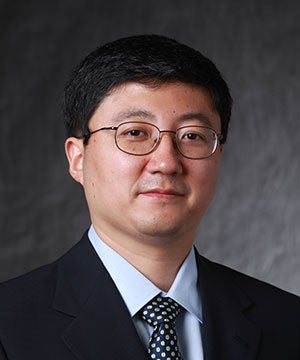
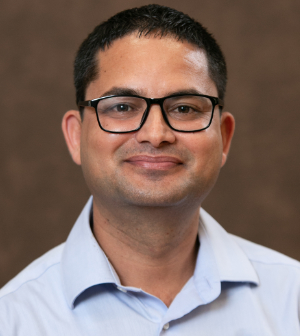
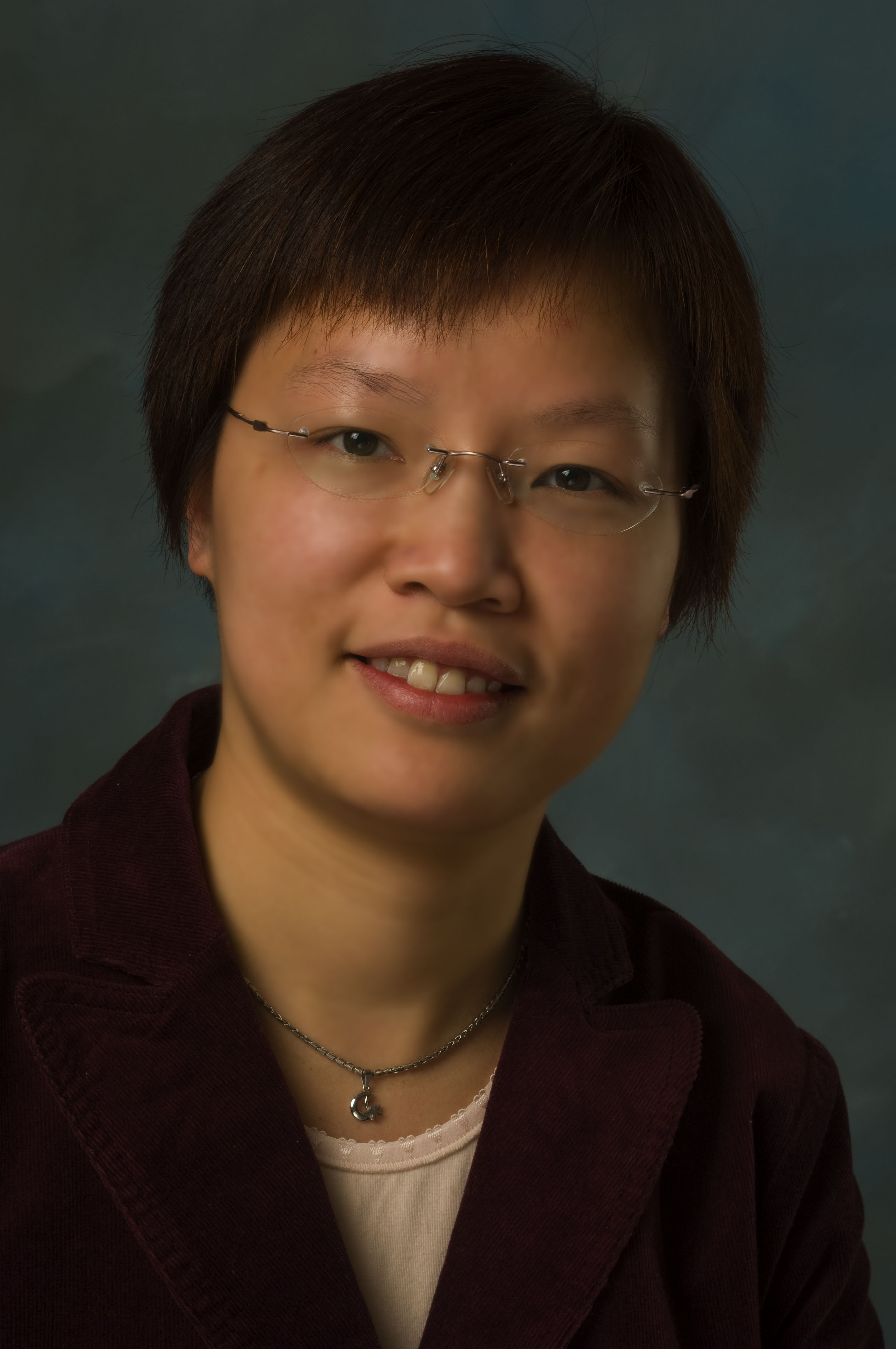
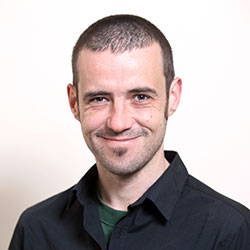
Tong Zhang is a Professor in the Electrical, Computer and Systems Engineering Department at Rensselaer Polytechnic Institute (RPI). He joined RPI in 2002 as an assistant professor, advancing to associate professor in 2008 and full professor in 2013. His research focuses on computer systems, particularly memory and data storage across software and hardware stacks, with interdisciplinary applications in computer architecture, VLSI signal processing, and error correction coding. He holds a B.S. and M.S. from Xian Jiaotong University (China) and a Ph.D. from the University of Minnesota. His work emphasizes energy-efficient storage solutions, transparent compression, and hardware-software co-design. Notable contributions include innovations in SSD arrays, computational storage drives, and database systems. He is an IEEE Fellow and maintains affiliations with RPI's Computer Science programs. Research interests span memory systems optimization, storage architectures, and emerging technologies like CXL-based AI acceleration. His publications highlight advancements in reducing energy consumption, improving data deduplication, and enhancing B+-tree performance on modern storage hardware. Awards: IEEE Fellow (2023) Grants/Advising: Extensive grant-funded research in storage systems; no student advisees explicitly listed. Labs/Teams: Engaged in interdisciplinary collaborations within RPI's computational storage and memory research groups.
Ehsan Namjoo serves as a Research Fellow in the Department of Electronics & Computer Engineering at the University of Limerick, with a primary affiliation at Lero – the Irish Software Research Centre. His multidisciplinary work bridges theoretical signal processing, machine learning applications, and hardware implementation for real-world systems. His research spans signal processing (DOA estimation under non-ideal noise conditions, EEG source imaging), machine learning (explainable AI for medical diagnostics, feature selection in cancer detection), and computer engineering (polar code decoders, visible light communication systems). Notable biomedical applications include breast cancer diagnosis and epileptic source analysis, while cybersecurity work focuses on intrusion detection in cloud environments. Recent publications (2021-2025) reveal a consistent trajectory toward developing lightweight, interpretable models for tabular medical data alongside robust signal processing frameworks for communication systems. His work increasingly integrates hardware-aware algorithms, particularly in polar coding implementations, and emphasizes practical validation through experimental demonstrations in visible light networks. As an active Lero researcher, Namjoo participates in Ireland's national software research ecosystem, contributing to interdisciplinary projects that connect theoretical innovations with healthcare, communications, and security applications through collaborative frameworks.
Joanna Masingila is a Laura J. and L. Douglas Meredith Professor for Teaching Excellence and Professor of Mathematics and Mathematics Education at Syracuse University. She holds a dual faculty appointment in the School of Education (Department of Teaching and Leadership) and the College of Arts and Sciences (Department of Mathematics). From January 2014 to July 2021, she served as Dean of the School of Education. Her extensive career combines mathematics education scholarship with international educational development work, particularly in Kenya where she has worked for over 20 years. Ph.D. Mathematics Education (Double Cognate: Mathematics), Indiana University, Bloomington, 1992 M.S. Mathematics Education (Major: Mathematics), Indiana University-Purdue University at Indianapolis, 1987 B.A. Mathematics, Goshen College, 1982 Masingila's research centers on bridging the gap between formal schooling and real-world mathematical practices. Her work examines teacher development, teacher educator development, mathematical knowledge for teaching teachers, and students' out-of-school mathematics practice. She has made significant contributions to understanding how mathematics is used in everyday contexts and how this knowledge can inform classroom instruction. Her research often takes an international perspective, particularly focusing on educational practices in Kenya and other African nations. Her publication record reveals a consistent focus on connecting school mathematics with real-world applications while addressing systemic challenges in mathematics education. Early work examined mathematics practices in everyday situations like carpet laying, while more recent research investigates teacher preparation, professional development, and international education comparisons. A significant portion of her scholarship addresses the challenges of teaching mathematics in resource-constrained environments, particularly in Kenya where she has conducted extensive fieldwork. Excellence in Graduate Education Faculty Recognition Award, Syracuse University, 2006 Martin Luther King, Jr. Unsung Hero Award, Syracuse University, 2005 Laura J. and L. Douglas Meredith Professor for Teaching Excellence, Syracuse University, 2003 Gateway Fellow, Syracuse University, 2002 Fulbright Scholar Award, Kenyatta University, Nairobi, Kenya, 1997-1998 Masingila has secured over $7 million in research funding from prestigious sources including six National Science Foundation grants, two United States Agency for International Development awards, and two International Research and Exchanges Board grants via the U.S. Department of State. She has advised numerous graduate students and developed more than 30 multimedia case studies examining issues in teaching practice. Currently, she serves on the Professional Standards and Practices Board for Teaching for New York State and remains active in policy and advocacy work for teacher and leader education at multiple levels. Her international work extends beyond research to include extensive professional development for teachers and teacher educators in Kenya. She has collaborated with Kenyatta University, the University of Embu, and various Kenyan secondary schools to improve mathematics education practices. Her recent study abroad programs have brought Syracuse University students to Kenya to examine educational systems and practices firsthand, creating reciprocal learning opportunities between American and Kenyan educators.
Patrick Bas serves as Research Director and Thematic Group Facilitator for the Data Intelligence Group (DatInG) at the University of Lille, France, where he leads the Signal and Images team within the CRISTAL laboratory. His office is located at ESPRIT in Lille's Scientific City, and he holds membership on the institution's Scientific Council. Bas earned his Electrical Engineering degree (1997) and Ph.D. in Signal and Image Processing (2000) from the Institut National Polytechnique de Grenoble. His academic journey includes postdoctoral work at Université Catholique de Louvain, CNRS research at Gipsa-Lab (2001-2009), and a visiting position at Helsinki University of Technology (2005-2008). His primary research centers on steganography, steganalysis, and digital watermarking, with significant contributions to image manipulation detection and neural network applications in multimedia security. He has organized major initiatives including the BOSS steganalysis contest (2010) and served as co-coordinator for the Ecrypt European NoE's watermarking virtual lab (2004-2008). While his Google Scholar profile indicates recent publications in graph theory and combinatorics (2021-2025), these appear inconsistent with his documented research focus on multimedia security as evidenced by his thesis supervision and professional activities. Bas has supervised seven doctoral theses including Rony Abecidan's work on robust image manipulation detection (2024) and Solène Bernard's research on neural network steganography (2021). He has held editorial roles for the Eurasip Journal on Information Security (since 2011) and IEEE Transactions on Information Forensics and Security (2013-2016), and co-organized the International Workshop on Information Hiding (IH07).
Dr. Kedar Nepal serves as Associate Professor of Mathematics in Mercer University's College of Liberal Arts and Sciences, specializing in undergraduate mathematics education since joining the faculty in 2014. His instructional portfolio includes calculus sequences, differential equations, probability, statistics, and advanced mathematics transition courses. His academic credentials feature: Ph.D. in Mathematics (specialization: Undergraduate Mathematics Education) from Oklahoma State University M.S. in Applied Mathematics from Oklahoma State University M.S. in Pure Mathematics from Tribhuvan University, Kathmandu, Nepal B.S. in Mathematics from Tribhuvan University, Kathmandu, Nepal Dr. Nepal's research investigates self-regulated learning mechanisms in undergraduate mathematics, with emphasis on self-assessment accuracy, metacognitive monitoring, and problem-solving execution. His work examines how students evaluate their mathematical competence and implement learning strategies, particularly in foundational courses. Current projects explore digital learning tools' impact on calculus comprehension and pre-K educational content development. His publication history (2014-2020) reveals consistent focus on self-regulation in mathematics education, with recurring themes in assessment literacy, problem-solving barriers, and instructor development. Key contributions analyze web-based homework efficacy, self-assessment/performance correlations, and cognitive obstacles in mathematical reasoning. Dr. Nepal maintains active engagement with collegiate mathematics education communities through conference presentations and collaborative research. Outside academia, he pursues travel, college football, and developing multimedia learning resources for early childhood education.
Syed Muhammad Anwar serves as an Associate Professor in Software Engineering at the University of Engineering and Technology (UET) Taxila, Pakistan. He maintains a significant dual affiliation with the Sheikh Zayed Institute at Children's National Hospital in Washington, DC, USA. Additionally, he holds leadership roles as Co-founder and CTO of Sense Digital PVT. Ltd. and Director of both the Virtual Reality and Machine Learning Lab and the Signal Image Multimedia Processing and Learning (SIMPLE) Group at UET Taxila. Dr. Anwar's research spans multiple cutting-edge domains at the intersection of signal processing, machine learning, and medical applications. His primary research interests include: Multimedia Communication and Signal Processing Image and Video Coding and Quality Assessment Biomedical Signal Processing and Brain-Computer Interfaces Medical Imaging including Segmentation, Detection, and Diagnosis Deep Learning applications in healthcare diagnostics Emotion Classification and Human Behavior Modeling His recent scholarly output demonstrates a strong emphasis on applying deep learning techniques to medical image analysis challenges, particularly in brain tumor segmentation, liver tumor detection, and Alzheimer's disease classification. There's also significant work in EEG-based applications including emotion recognition, stress quantification, and game expertise classification. His research effectively bridges theoretical machine learning advances with practical healthcare applications, showing particular strength in adapting deep learning architectures to medical imaging challenges across multiple organ systems. Dr. Anwar actively mentors the next generation of researchers through his leadership of the SIMPLE research group. His current advisees include: PhD Students: Sanay Muhammad Umar Saeed (Quantification of human stress), Romana Farhan (Security in body area networks), Nosheen Sohail (Medical Image Analysis), Amin Ullah (Knowledge extraction), and Saqib Mehboob (Structural health monitoring) MS Students: Haseeb Iftikhar (Doctor recommender system), Faizah Malik (Sentiment analysis), Samreena Aslam (Fashion image retrieval), Huma Shabbir (Fashion image tagging), Khola Rafiq (Ischemic stroke detection), and Saba Naseem (Blood vessel segmentation) As Director of the Virtual Reality and Machine Learning Lab and the SIMPLE research group, Dr. Anwar oversees a dynamic research environment focused on advancing signal processing, multimedia analysis, and machine learning applications, particularly in healthcare contexts. His lab maintains strong collaborations between UET Taxila and international institutions, including Children's National Hospital in Washington DC, facilitating technology transfer between academic research and clinical practice.
Dr. Burak Kizilkaya is a Lecturer in Computer Networking at the University of Glasgow's School of Computing Science, holding a PhD in Electrical and Electronics Engineering from the same institution (2023). His doctoral research focused on "Task-Oriented Joint Design of Communication and Computing for Internet of Skills" with applications in 5G-based teleoperation systems. His research spans four key areas: Telerobotics and Autonomous Systems for nuclear sites and healthcare 5G/6G wireless communications for real-time control systems Cybersecurity in human-robot interaction Smart cities and IoT applications for energy efficiency His publication trends show strong focus on teleoperation security (2023-2025), haptic communications (2023), and smart grid applications (2025), with interdisciplinary work bridging robotics, networking, and cybersecurity. Recent publications demonstrate increasing industry relevance in nuclear robotics, virtual power plants, and VR education. Dr. Kizilkaya actively supervises PhD students in robotics, immersive technologies, and cyber-physical systems, seeking candidates with backgrounds in computer/electrical engineering or computer science. He leads the Netlab (Networked Systems Research Laboratory) and collaborates with the Communications, Sensing and Imaging Hub. His work integrates practical applications in healthcare robotics, nuclear environments, and smart city infrastructure, with emphasis on real-world implementation of theoretical frameworks developed in his research.
François Chalet serves as an Artistic Professor at Lucerne University of Applied Sciences and Arts within the Design Film Art school, where he teaches Expanded Animation and has held academic positions since 2005. His professional profile combines academic instruction with an active practice as an independent visual artist, animator, and director spanning nearly three decades since 1997. Chalet's research and creative work centers on expanded animation techniques that transcend traditional screen boundaries. His practice integrates projection mapping, interactive installations, and immersive audiovisual performance, creating innovative experiences that merge digital technology with artistic expression. Recent projects demonstrate increasing sophistication in audience interaction and contextual awareness, particularly through his work with Context-aware AR and full-dome animation environments. As an educator, Chalet has supervised numerous student collaborations, most notably the Reizvoll immersive audio-visual performance that brought together HSLU animation students with the molto cantabile choir. His teaching philosophy emphasizes both technical mastery and conceptual development, encouraging students to explore animation beyond conventional formats and applications. Chalet leads significant research initiatives including Ludic Lab Lucerne (2019-2021), the ETH Zurich collaboration on Context-aware AR (2021-2022), and previous holography research with the National Filmboard of Canada (2018-2019). These projects consistently involve interdisciplinary teams combining animation expertise with music composition, technical development, and interactive design to create cohesive, boundary-pushing works. His professional recognition includes regular participation as a jury member and speaker at internationally relevant conferences and festivals, reflecting his standing within the global animation and visual arts community. Chalet's work continues to evolve toward more sophisticated integration of animation with live performance, audience participation, and responsive environmental systems.
Szabinka Dudevszky serves as Senior Lecturer in Inclusion at the Department of Social Work within the School of Behavior and Society at Rotterdam University of Applied Sciences. She leads the Stay on Track research team, a participatory practice-based study examining school careers of young people who cannot live at home temporarily, conducted in collaboration with young researchers with lived experience, Social Work students and lecturers, and six youth care and education institutions in the Rotterdam Rijnmond region. Her research interests focus on participatory action research methodologies, particularly with vulnerable youth populations. She specializes in inclusion strategies, diversity initiatives, and the intersection of mental health and educational outcomes. Her work emphasizes the importance of lived experience in research design and implementation, ensuring that youth with mental vulnerabilities have meaningful participation in studies affecting their lives. Drs. Dudevszky's publications reveal a consistent focus on youth mental health, participatory research methods, and inclusion strategies. Her work spans academic articles, research reports, educational modules, and multimedia formats including documentaries. The research demonstrates increasing sophistication in participatory methodologies, with recent work emphasizing student agency as social change agents and the complex interplay between vulnerability and strength in youth development. Scientific Recognition: ZonMw Pearl (2021) for research with societal and scientific impact (Koplopers project) As academic leader, Dudevszky serves as end editor of the Journal of Social Intervention: Theory and Practice since 2020 and is a member of the Knowledge Center for Talent Development advisory board. She collaborates with multiple research groups including 'Growing up in the City' and 'Forensic Care Craftsmanship,' demonstrating her commitment to interdisciplinary approaches to youth development challenges. Her work with bachelor students on the Stay on Track project exemplifies her dedication to incorporating student research into real-world applications. Dudevszky maintains active connections with youth care organizations through the Rotterdam Academic Workplace ST-RAW and the Diversity Workshop Academic Rotterdam City Region (DWARS), ensuring her research remains grounded in practical applications while addressing systemic issues in youth care and education systems.
Rachel Falconer is a Lecturer in the Department of Computing at Goldsmiths, University of London, and serves as Head of the Digital Arts Computing BSc program. She is also the Goldsmiths Digital Project Manager. Her work bridges digital art curation, feminist technoscience, and critical engagement with emergent technologies. Falconer holds an MA in Curating Contemporary Art from the Royal College of Art and a BA in Industrial Design and Multimedia Communications from UCL/Politecnico di Milano. Her research focuses on networked curatorial strategies, human-computer interaction, and decentralized technologies. She has curated exhibitions at institutions like Tate, Barbican, and V&A, and her writing appears in Frieze , British Journal of Photography , and The Guardian . Falconer supervises PhD students in computational arts and digital arts computing, including primary supervision of Yajuan Han. Her articles explore themes like distributed knowledge production and the societal implications of AI. She frequently speaks at events such as EVA London and the Institute of Network Cultures, advocating for critical perspectives on technology's role in culture and society.
Dr. Xiao Su is Associate Dean for Graduate Studies and Research at the Charles W. Davidson College of Engineering, San José State University, and a faculty member in the Computer Engineering Department. She joined SJSU in Fall 2002 after working at Inktomi Corporation. Dr. Su holds a Ph.D. from the University of Illinois, Urbana-Champaign (2001) and teaches courses in networking and security. Her research spans computer networking, multimedia communications, network security, and cloud computing. She has secured over $2.5M in research funding from NSF, NASA, Intel, and HP. Major grants include a $400K NSF CAREER Award (2006-2012) for multimedia streaming research and a $1.5M NASA grant for airport traffic optimization. Publications show strong focus on cloud-based media distribution, peer-to-peer networks, and security systems. Recent work emphasizes cloud storage optimization, mobile computing applications, and secure video transmission. Her 50+ publications demonstrate consistent innovation in distributed systems design and multimedia networking. Applied Materials Faculty Award for Excellence in Teaching (2012) College of Engineering Faculty Award for Excellence in Scholarship (2010) National Science Foundation CAREER Award (2006) As principal investigator, she has led 8+ major grants establishing research infrastructure and curriculum enhancements. She serves on NetApp's Academic Alliance advisory board and maintains active industry collaborations in Silicon Valley. A senior member of IEEE and ACM, Dr. Su has chaired technical committees for IEEE ICME and other international conferences.
Orlando Hernandez is an Associate Professor in the Department of Electrical and Computer Engineering at The College of New Jersey. He holds a Ph.D. in Electrical Engineering from Southern Methodist University (2002), an M.S.E.E. (1993) and B.S.E.E. (1991) from the University of South Florida. Prior to his academic career, he held industry positions at Texas Instruments and Maxim Integrated Products from 1993-2003, serving in design management roles for imaging systems, ASIC development, and microcontroller technologies. His research focuses on high-performance VLSI architectures for computer vision applications, including color image segmentation, digital signal processing, embedded systems, and mixed-signal design. Key research areas include hardware acceleration for image compression algorithms, real-time traffic monitoring systems, autonomous robotics, and advanced encryption implementations. His work consistently bridges theoretical algorithms with practical hardware implementations. Professional affiliations include Senior Membership in the Institute of Electrical and Electronics Engineers (IEEE). He has secured multiple research grants including a $93,320 National Science Foundation award for image processing instrumentation and several industry-sponsored equipment grants from Texas Instruments and Xilinx.
John Murphy is a Full Professor at the School of Computer Science, University College Dublin. He holds academic positions as an IBM Faculty Fellow and Fellow of multiple professional organizations, including the Institution of Engineering and Technology and Engineers Ireland. His research focuses on Performance Engineering, Telecommunication Systems, and Middleware, with a strong emphasis on cloud computing, distributed systems, and network optimization. Education: B.E. (Electronic Engineering) from University College Dublin (1988), M.Sc. (Electrical Engineering) from California Institute of Technology (1990), and Ph.D. (Electronic Engineering) from Dublin City University (1996). Research Interests: His work spans Performance Engineering, Telecommunication Systems, Enterprise Software, Middleware, Mobile Networks, and Queueing Theory. Notable contributions include energy-efficient cloud resource management and network-aware scheduling in data centers. Publications: Over 200 peer-reviewed articles, including recent work on intelligent computing in IoT, energy-efficient VM mapping, and load balancing in wireless networks. His research trends emphasize cloud optimization, distributed systems performance, and smart city infrastructure. Awards: Recognitions include the Real Time Correlation Engine award and prestigious fellowships. He has supervised 24 PhD students and secured over €9.5M in research grants. Teaching: Coordinates modules on Computer Networking, Databases, and Programming. He advocates for foundational learning to foster adaptability in students. Grants: Includes Horizon 2020 projects like NEO-QE and PRTLI grants for SimSci. Collaborates with industry partners for applied research. Labs: Leads the Performance Engineering Laboratory, advancing research in distributed systems and network performance.
Dr. Enda Bates is an Assistant Professor and Deputy Course Director in the Music and Media Technologies Programme at Trinity College Dublin. He leads research in spatial music, spatial audio for VR, and electroacoustic aesthetics while maintaining active roles as a composer, producer, and performer. His work bridges academic and artistic domains, with notable contributions to immersive media, accessibility in health data design, and interdisciplinary digital humanities projects. Educated at Trinity College Dublin, he completed a PhD titled *The Composition & Performance of Spatial Music* in 2010. His research has been supported by grants from Trinity College Dublin and Rode Microphones, focusing on projects like the Trinity 360 initiative producing immersive 360-degree music videos. He collaborates widely, including with the Spatial Music Collective and on virtual reality adaptations of Samuel Beckett’s works. Research interests span spatial audio technologies, VR audio design, and the aesthetics of contemporary electroacoustic music. He explores the intersection of sound and technology in performance contexts, such as augmented instruments and site-specific compositions. His work on accessibility includes evaluating health data representations for older adults, emphasizing user-centric design principles. Recent publications highlight advancements in ambisonic decoder methodologies, VR audio systems, and interdisciplinary arts. Awards include the Gaudeamus Music Prize shortlist (2009) and Música Viva Competition Prize (2010). His music has been performed globally by ensembles like the RTÉ National Symphony Orchestra and Crash Ensemble. Bates advises on audio engineering projects and leads collaborative initiatives like *Virtual Play, after Samuel Beckett*, merging theater, VR, and sound design. His lab’s work often explores the technical and creative potentials of 360 media and free-viewpoint video.
Dr. Xiangmin Zhou is a Senior Lecturer at the School of Computing Technologies, RMIT University, located at City Campus Australia. His research focuses on artificial intelligence, data management, distributed computing, and multimedia systems. He actively supervises Masters and PhD students in areas such as fairness-aware task recommendation in spatial crowdsourcing and adaptive multi-participant analytics. His teaching interests include social media analysis, multimedia databases, query optimization, and cloud data management. Dr. Zhou’s research interests span information systems, AI-driven recommendation frameworks, privacy-preserving techniques, and distributed computing solutions. His work emphasizes context-aware systems, ethical AI, and scalable data processing. Recent publications highlight innovations in federated learning, privacy preservation, and social media-based disaster detection. He is open to supervising students interested in his core research areas and collaborative projects. Dr. Zhou’s academic contributions include developing novel algorithms for recommendation systems, social media analysis, and real-time event detection. His projects often bridge theory and practice, addressing challenges in spatial crowdsourcing, video novelty detection, and multi-platform coordination. His work aligns with RMIT’s focus on technology-driven solutions for societal challenges.