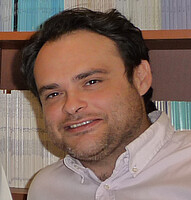
Evangelos Markakis is an Assistant Professor at the Department of Information & Communication Systems Engineering (Hellenic Mediterranean University) with over 20 years of experience in Cybersecurity, Distributed Systems, and Fog Computing . His career spans roles in the Research & Development of Telecommunications Systems Laboratory 'PASIPHAE', 'Pagni' Hospital (Network Architect), and Horizon 2020 projects as Dissemination Manager (FORTIKA) and Technical Manager (EMYNOS). He holds a PhD in P2P Constellations in Broadband Networks (University of the Aegean) and has contributed to 60+ publications (H-index 11). BSc (2003): Applied Informatics & Multimedia, Technological Educational Institute of Crete MSc (2005): Data Communication Systems, Brunel University PhD (2014): P2P Constellations in Broadband Networks, University of the Aegean His research focuses on Secure Network Virtualization (SDN/NFV), Quantum-Resistant Cryptography , and AI-Driven Cybersecurity . Recent work explores 6G Network Security , UAV Communication Protection , and Privacy-Preserving Healthcare Systems . Key project involvements include: H2020-FORTIKA (GA740690): Dissemination Manager H2020-SMILE (GA740931): Researcher H2020-SPHINX: Security Architect Scientific contributions: Editor of IET Book on 'Cloud and Fog Computing in 5G Mobile Networks' Workshop Co-Chair: IEEE SDN-NFV Conference Initiator of CYBERSEC4HEALTH Workshop (EU TDS-02-2018 Projects) Active in IEEE and IEEE ComSoc He has led work packages in 20+ EU/Greek research projects, with expertise in IoT Security Frameworks , Federated Learning , and Quantum Communication Analysis .
Professor Xezonakis Ioannis holds a prominent position at the Department of Electrical and Computer Engineering (E.M.E.) of the Hellenic Mediterranean University. He specializes in 'Software Engineering – Application Development' and has extensive academic contributions. His roles include academic director of courses such as 'Programming,' 'Data Structures,' and 'Pedagogy' in the Informatics Engineering curriculum, as well as teaching 'Advanced Programming with C' and co-teaching 'Data Structures and Algorithms' at the postgraduate level. Education: Bachelor's in Physics (University of Athens, 1977) Master's in Electronics and Radioelectrics (University of Athens, 1979) Master's in Electronic Automation (University of Athens, 1990) PhD in Informatics and Telecommunications (University of Athens, 1992) His research focuses on programming methodologies, algorithm development, and software engineering practices. He directed research programs under the ARCHIMEDES I and III initiatives and contributed to additional ARCHIMEDES projects. As the former director of the PAD (Programming and Algorithms Development Lab), he has produced 16 scholarly publications and developed teaching materials across multiple disciplines. Prior roles include service as a civil servant in the Ministry of National Defense and leadership positions at the TEI of Crete, including Head of the Computer Course Group, Director of Studies for the 'Medical Systems Technology' program, and Head of the 'Department of Applied Informatics and Multimedia.' His academic service includes roles such as President of the Ethics Committee, Member of the Permanent Scientific Committee for Study Programs, and President of the ELKE Appeals Committee.
Prof. Judy Van Raalte is a Professor of Psychology at Springfield College, USA. She holds a BS from Tufts University (1986), an MA (1988), and a PhD (1990) from Arizona State University. Her research focuses on self-talk, body image, and professional issues in sport and exercise psychology. She teaches courses such as PSYC 101 (undergraduate), PSYC 657 (Professional Studies in Athletic Counseling), and PSYC 705 (Doctoral Research Practicum). Her research interests emphasize practical applications of psychology in sports, including athlete counseling, team dynamics, and psychosocial development in youth sports. Recent publications explore topics like self-talk in tennis, hazing’s impact on team cohesion, and rehabilitation adherence post-ACL surgery. She has authored/co-authored books on sport psychology and contributed chapters to encyclopedias and handbooks. She has also produced educational multimedia content on sport psychology consulting and athlete mental skills. Prof. Van Raalte’s work bridges academic research and applied practice, addressing both clinical and performance aspects of sport psychology. She is actively involved in curriculum development and supervising doctoral research.
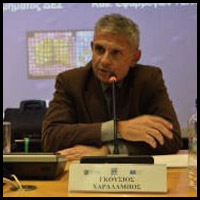
Charalampos Gousios is a Professor in the Department of International and European Studies at the University of Piraeus. He specializes in French terminology for international relations, European institutions, and the application of new technologies in language education. Since 2007, he has coordinated the Erasmus+ and Erasmus placement programs for the department. He is also a fellow at the Research Unit on Rhetoric, Communication, and Persuasion, focusing on France-related studies. **Education**: PhD in Social History (University of Sorbonne – Paris IV) B.A. in History (University of Ioannina) Masters in Social History (University of Nantes) B.A. in Greek and French Language/Literature (National and Capodistrian University of Athens) **Research Interests**: French language pedagogy, international relations terminology, EU policy frameworks, educational technology integration, and multilingualism strategies. His work emphasizes innovative teaching methods and the use of digital tools in foreign language instruction. **Grants & Programs**: Active in Jean Monnet European programs (e.g., 'Europestarts', 'YouthActive', and 'BEST teachers'), focusing on pedagogical innovation and teacher training in new technologies. His contributions include designing e-learning scenarios and promoting multilingualism. **Awards**: No specific scientific awards mentioned in the text. **Labs/Teams**: Affiliated with the Research Unit on Rhetoric, Communication, and Persuasion, contributing to studies on political discourse and media analysis.
Botsoglou Kafenia is a Professor of Pedagogy at the Department of Special Education, University of Thessaly (since 2002). She leads the Institute of Teaching and Teacher Education and IASON research center. Her research focuses on modern pedagogical approaches, early childhood education quality, bullying prevention, and innovative teaching methodologies. She holds a BSc from Aristotle University of Thessaloniki (1990), MSc in Research Methodology (2004), and PhD in Educational Sciences (1998). Key areas include: Development of intercultural competence evaluation tools Design of inclusive educational environments Integration of digital games and technology in classrooms Social pedagogical interventions for peer relationships Recent publications emphasize: Educational technology applications (e.g., flipped classrooms, AR books) Preschoolers’ executive functions and school readiness Teacher perceptions of digital tools and inclusive practices Her work bridges theory and practice through participatory research methods, emphasizing child-centered approaches. Current projects explore sustainable academic work environments and technology-enhanced learning spaces.
Dr. Anastasios Drosopoulos is a Professor in the Department of Electrical and Computer Engineering at the University of Peloponnese, where he has been since 2003. He previously worked at Nortel (1997-1999) and Atmel Multimedia and Communications (1999-2003), focusing on optical and wireless communication systems. His academic journey includes a BSc in Physics from the University of Patras (Greece) and an MSc in Physics and PhD in Electrical Engineering from McMaster University (Canada). Education: BSc (Physics) - University of Patras, Greece MSc (Physics) - McMaster University, Canada PhD (Electrical Engineering) - McMaster University, Canada His research interests span communication systems and energy systems , with a focus on modeling and applications. His recent publications analyze GFDM modulation , IRS-assisted wireless channels , and powerline communication training frameworks. Earlier work involved radar signal detection and microwave scattering in defense contexts. Scientific contributions include Advancing GFDM/OQAM modulation schemes Developing PAPR reduction techniques Optimizing channel estimation using multitaper methods Modeling photovoltaic systems for energy applications Training frameworks for powerline communication engineers He maintains active engagement in academic advising and collaborates with industry partners. His office hours are held in Building Z, 1st Floor, with appointments available via prior communication.
Manuel Serrano is a Research Professor at Inria Sophia-Antipolis, France, affiliated with Université Côte d'Azur. He is a leading researcher in programming languages, specializing in web programming, JavaScript compilation, and synchronous reactive systems. His work bridges theoretical computer science with practical applications, particularly in the development of innovative programming languages and tools. Dr. Serrano's research interests focus on programming language design and implementation, with particular emphasis on web technologies. He is the creator of several influential systems including Hop (a language for multitier web programming), HipHop.js (a synchronous reactive language for JavaScript), and Bigloo (an optimizing Scheme compiler). His work addresses fundamental challenges in making web programming more structured, efficient, and reliable, while maintaining the flexibility required by modern web applications. His publication record reveals a consistent focus on improving JavaScript performance through ahead-of-time compilation techniques, exploring novel concurrency models for web applications, and developing practical tools for real-world programming challenges. His recent work shows increasing interest in applying synchronous reactive programming to interactive music systems and IoT applications, demonstrating the versatility of his language design approaches. Dr. Serrano actively contributes to the academic community through service on program committees for major conferences including PLDI, ICFP, ECOOP, and SPLASH. He has served as General Chair for Programming 2018 and Scheme 2001, and is a member of the steering committees for the Scheme and Functional Programming workshop and the Dynamic Language Symposium. He leads the INDES research team at Inria Sophia-Antipolis, which focuses on innovative programming models for distributed and ubiquitous computing. His team has developed several open-source software projects including Hop, HipHop, Bigloo, and related tools that have influenced both academic research and practical web development.
George I. Xydopoulos is a Professor in the Department of Philology (Specialization in Linguistics) at the University of Patras, where he has served since 2008. He became a first-tier Professor in 2020 and has been Dean of the School of Humanities and Social Sciences since October 2024. Previously, he served as Department Chair (2018-2022) and Deputy Chair (2015-2018). His academic background includes: Greek and French Language and Literature from the University of Athens M.A. in Linguistics from SOAS Ph.D. from University College London (UCL) His research centers on lexicology (special/marginal vocabularies, borrowing, anglicism), lexical semantics, lexicography (electronic dictionaries/dialect databases), and educational linguistics. He actively debunks linguistic myths through public engagement while advancing academic discourse in these specialized domains. Analysis of his recent publications reveals dominant themes in anglicism studies within Modern Greek, computational lexicography for marginal vocabularies, and sociolinguistic investigations of taboo language. His work consistently bridges theoretical linguistics with practical educational applications, particularly in orthography perception and language awareness. He received institutional recognition for scholarly excellence: Panagiotis Kanellopoulos 2022 Outstanding Publication Award (University of Patras) Professor Xydopoulos has supervised 21 doctoral theses and numerous graduate theses while leading national and international research initiatives. He directs the innovative postgraduate program "Contemporary Trends in Linguistics for Teachers" at the Hellenic Open University, emphasizing remote education methodologies. He contributes to the Center for Digital Research and Study through development of electronic lexical resources, including tridialectal dictionaries and specialized vocabulary databases that document regional linguistic variations across Greece.
Dr. Spyros Panagiotakis serves as Associate Professor in the Department of Electrical and Computer Engineering at the Hellenic Mediterranean University (HMU), where he leads the Sensor Networks and Telematics group within the Multimedia, Networks and Communications Laboratory (MNCLab). He earned his PhD in Communication Systems from the University of Athens (2007), supported by a four-year postgraduate fellowship from the National Center for Scientific Research "Demokritos". His research spans Communications and Networking , Internet of Things , Pervasive and Physical Computing , Sensor Networks , Industrial Informatics , Location and Context Awareness , and Informatics in Education , with current applications in precision agriculture (Agro4Crete), industrial automation (AMK), agricultural resource management (Collecteur), and STEM education through robotics/cybersecurity (Erasmus+ projects: SysSTEM, InCyS4.0, CodeSkills4Robotics). With over 90 international publications, he actively contributes as a peer reviewer, technical program committee member, and research project evaluator. His MNCLab group focuses on developing practical telematics solutions for agricultural, industrial, and educational contexts through sensor network innovation.
Varouchakis Emmanouil is an Assistant Professor at the Technical University of Crete (TUC), affiliated with the School of Mineral Resources Engineering (MRE). His research focuses on geostatistical modeling, hydrogeology, and sustainable resource management. He actively contributes to projects like the IMMERSE initiative, which develops virtual excursions for critical raw materials education in the clean energy transition. His work integrates advanced statistical methods with environmental systems analysis. Key areas of expertise include groundwater dynamics, stochastic simulations for mining emissions reduction, and renewable energy potential assessment in the Mediterranean. He has developed decision support frameworks for water allocation optimization and circular economy strategies in mining waste management. His research often combines geostatistics with machine learning and remote sensing data to enhance environmental monitoring and predictive modeling. Emmanouil collaborates on EU-funded initiatives such as the OurMED project for sustainable water storage and the InTheMED project analyzing groundwater dynamics. He has authored numerous papers on topics like space-time correlations in mineral dissolution, spatial variability of precipitation, and probabilistic forecasting of extreme climate events. His academic contributions span both theoretical advancements (e.g., covariance models in multivariate geostatistics) and applied solutions (e.g., wave energy assessments in the Aegean Sea). He maintains an active role in advancing methodologies for climate resilience in energy infrastructure and groundwater resource management systems.
Vasileios Chasanis is a researcher at the Department of Computer Science & Engineering, University of Ioannina, specializing in machine learning applications for video analysis, summarization, and surveillance systems. His work bridges theoretical algorithms with practical implementations in multimedia processing. Educational background: Diploma in Electrical and Computer Engineering, Aristotle University of Thessaloniki (2004) PhD in Computer Science, University of Ioannina (2009) His research focuses on Machine Learning and Computer Vision with emphasis on video structure analysis and real-time processing . Core methodologies include support vector machines , spectral clustering , and multi-view feature extraction for tasks like shot boundary detection, key-frame extraction, and scene segmentation. Recent work extends to clinical data mining and tourism technology applications. Publication trends show consistent innovation in video summarization algorithms and efficient feature extraction , with increasing interdisciplinary applications in healthcare and tourism. His 2023 work demonstrates expansion into web-based augmented reality systems for tourism destinations. Scientific recognition: Best Scientific Paper Award at ICPR 2014 for key-frame extraction research Research funding includes EU-cofunded projects: PENED 2003 (machine learning for video analysis), ARTreat FP7 (clinical decision support), and ongoing VIDEOSUM (video storage/summarization platform). Collaborates extensively with the IP AN Group at University of Ioannina. He co-developed the VideoSum platform—a comprehensive system for video storage, processing, and summarization—integrating spectral clustering and temporal analysis techniques for industrial applications in media management.
George Xylomenos is a Professor in the Department of Informatics at Athens University of Economics and Business (AUEB), where he has been a faculty member since 2002, progressing from Lecturer to Professor. He serves as Scientific Coordinator of the Information Systems Management Center and previously held roles including Deputy Chair of the Department of Informatics and Deputy Rector for Financial Planning and Development. He is affiliated with the Mobile Multimedia Laboratory (MMlab) at AUEB and has made significant contributions to computer networking research. Professor (System Software) at AUEB, Department of Informatics (2020-present) Associate Professor at AUEB, Department of Informatics (2015-2020) Assistant Professor at AUEB, Department of Informatics (2007-2015) Lecturer at AUEB, Department of Informatics (2002-2007) Research Associate at University College London (2016-2017) Education Ph.D. in Computer Science, University of California, San Diego (1999) M.S. in Computer Science, University of California, San Diego (1996) Diploma in Applied Informatics, Athens University of Economics and Business (1993) Professor Xylomenos' research focuses on computer network and operating system design and implementation. His primary interests include Future Internet architecture, Information-Centric Networking, Quality of Service provisioning, communication protocols for wireless and mobile networks, and Network Music Performance systems. His work bridges theoretical networking concepts with practical implementations, particularly in the areas of content-centric networking and multimedia communications. He has pioneered research in multi-service link layers for wireless networks and has made significant contributions to the understanding of TCP performance over wireless links. His recent publications demonstrate a strong focus on Named Data Networking, decentralized identity systems, and Network Music Performance. The research trends show a progression from traditional IP networking toward information-centric architectures, with increasing emphasis on security, privacy, and multimedia applications in distributed environments. Scientific Awards Best demo award at ACM ICN Conference (2017) Future Internet Award from FP7 PURSUIT project (2013) Runner up for best local student paper at IEEE Symposium on Computers and Communications (2011) Best non-student paper award at European Wireless Conference (2007) National Semiconductor Corporation Graduate Fellowship (1996) Professor Xylomenos has supervised numerous research projects, including multiple EU-funded initiatives such as PURSUIT, PSIRP, and EIFFEL in the Future Internet domain, and MUSINET for Network Music Performance. He has served on the editorial board of IEEE Transactions on Mobile Computing (2016-2024) and has been active in numerous Technical Program Committees for major networking conferences. His research has attracted significant funding from European Union programs including FP7, H2020, and Horizon 2020. He is a core member of the Mobile Multimedia Laboratory (MMlab) at AUEB, which focuses on advanced networking technologies, multimedia systems, and future Internet architectures. The lab has been instrumental in Greece's participation in major European research initiatives related to Information-Centric Networking and Network Music Performance. The laboratory maintains strong collaborations with international research groups, particularly in Europe and the United States.
Michael Hatzopoulos is a Professor at the Department of Informatics and Telecommunications, University of Athens. He holds a BSc in Mathematics from the University of Athens (1971), an MSc in Computer Science (1972), and a PhD in Computer Science (1974) from Loughborough University of Technology. His career includes roles such as Visiting Associate Professor at Michigan Technological University (1981-1984) and Associate Professor at the University of Athens (1989-1991) before becoming a full Professor in 1991. His research focuses on database systems, multimedia technologies, parallel computing, and information management. He has led numerous EU-funded projects, including COSMOS, MISSION, ADDSIA, and MEMOIR, serving as project manager for the University of Athens group. Notable projects include developing hypermedia databases, parallel SQL processors, and systems for interoperability of heterogeneous information systems. His expertise spans interdisciplinary applications in biomedical research, office automation, and educational software development. He has contributed to both academic and industrial sectors through his extensive project management and research activities.
Stavros J. Perantonis serves as Research Director at the Institute of Informatics and Telecommunications, National Center for Scientific Research "Demokritos" in Athens, Greece. He is currently Head of the Computational Intelligence Laboratory and Chairman of the Scientific Consulting Board of the Institute. Additionally, he teaches graduate courses in Pattern Recognition at the Department of Informatics & Telecommunications, University of Athens. His educational background includes: Athens College Graduate (1979) Bachelor's degree in Physics, University of Athens (1984) M.Sc. in Computer Science, University of Liverpool, UK (1991) D. Phil. in Computational Physics, University of Oxford, UK (1987) Perantonis specializes in computational intelligence with research focusing on artificial neural networks, image and multimedia processing, pattern classification, and document analysis. His work bridges theoretical foundations with practical applications in document analysis, 3D object retrieval, and medical imaging systems. His research methodology often combines neural network approaches with traditional image processing techniques to solve complex pattern recognition problems. His recent publications demonstrate a strong focus on document analysis systems, 3D shape retrieval, and human behavior analysis. The trends in his work show consistent development in computational intelligence methods applied to practical problems, with increasing emphasis on real-world applications in historical document processing, medical imaging, and surveillance systems. His research has evolved from foundational neural network theory to sophisticated applications in multiple domains. His notable scientific recognitions include: First prize of Panhellenic mathematical contest (1979) Scholarship by National Scholarship Foundation (1979-82) Scholarship by Alexander S. Onassis Public Benefit Foundation for graduate research (1985-1986) Grant by Science and Engineering Research Council (SERC), UK, for postdoctoral research (1987-1990) Perantonis has supervised numerous PhD students in areas including optimization, neural networks, document analysis, and 3D modeling. His laboratory has secured significant research funding through multiple national and EU projects including D-SCRIBE (digitization of Greek manuscripts), EMEDI (virtual medical school), and SEMVEILLANCE (semantic analysis for surveillance applications). His Computational Intelligence Laboratory serves as a hub for interdisciplinary research connecting computer science with practical applications in cultural heritage, healthcare, and security domains.
Moumoutzis Nektarios is a Lecturer at the School of Electronic & Computer Engineering at the Technical University of Crete , affiliated with the Distributed Information Systems and Applications Laboratory (TUC/MUSIC) . His work bridges the gap between technology, education, and the arts. Email: nmoumoutzis@tuc.gr Office: 141B-65, Science Building/IMMY (L), 1st Floor Phone: 282103 7395 His research focuses on technology-enhanced learning , digital storytelling , and serious games , with a strong emphasis on interdisciplinary approaches that combine design thinking , digital technologies , and arts to create innovative educational experiences. His projects often target diverse audiences, including K-12 students , young children , and children with ADHD . In recent years, his work has explored block-based programming tools , gamification of learning , and collaborative learning environments . Notable contributions include the development of eShadow+ for mixed-reality storytelling, Block-C for teaching C programming, and ViSTPro for spatiotemporal process visualization in education. He has also contributed to frameworks for digital competency , interoperability of e-learning systems , and personalized learning experiences . His work aligns with the European and National Curricula and emphasizes project-based learning and community-driven education .